In Iran's city of Minab, families are still grieving months after a missile strike killed at least 175 people at a girls' elementary school on Feb. 28.
The attack on the Shajareh Tayyebeh Girls' School in Iran's southern province of Hormozgan was widely reported to be caused by a U.S. Tomahawk cruise missile. With a U.S. military investigation into the strike still ongoing, Washington has yet to take responsibility.
In Minab, the city's cemetery has become the resting place for the victims, most of them were schoolgirls.
Families are still mourning, and the city remains tense.
"I am Hamid Sadeghi, the father of Hami Sadeghi and the husband of Neda Solhizadeh. My wife was a fifth grade girls' teacher, and my son was in the fifth grade. My daughter was trapped under the rubble but survived. She has not come here during these 80 days because she cannot bear this atmosphere. Physically she is better, but psychologically she is still receiving counseling. She has nightmares and constantly feels as if a missile is coming," said Hamid Sadeghi, who lost his wife and son in the strike.
Some families said they lost the only child they had.
"We come here every night because he was everything to us. Reza was born after 12 years of trying, and he was a gift from Imam Reza. He passed away at the age of eight," said Ameneh Bayat, the mother of a young victim.
"I come here every day. Since the first day, I have come every day. I come both in the morning and in the afternoon. I have to come. The longing is too much," said the mother of another victim.
Many said the hardest moments are when they return home.
"I can't go somewhere where Fatemeh isn't. Without Fatemeh, I can't go home. Without Fatemeh and the sound of her voice, a house is no longer a home," said Masoume Farahizade, the mother of another victim.
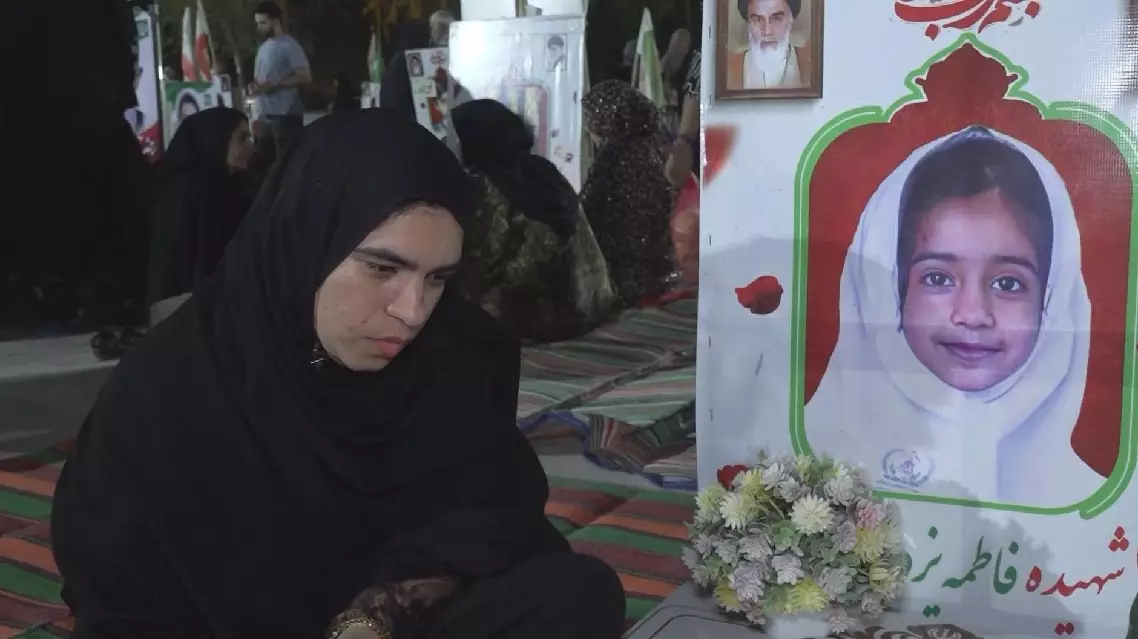
Grief lingers at cemetery where Iranian schoolgirls killed in missile strike are buried