HENDERSON, Nev. (AP) — Trading for quarterback Geno Smith and drafting running back Ashton Jeanty were two major offseason moves meant to put a jolt in the Raiders' anemic offense.
But whether those players succeed will largely rest on the five largely unproven linemen blocking for them.
That doesn't mean they won't get the job done, but it's one of Las Vegas' major questions as training camp winds down and a new season is about to begin.
“I think they’re getting a good feel for one another," coach Pete Carroll said. “It feels like there’s some continuity. Kolton (Miller) is doing a terrific job. I’m really fired up about what Jordan (Meredith) is doing in the middle. So it feels pretty solid right now. There’s still room for competition, but at this point, we’re feeling pretty good.”
The Raiders should be set on the left side.
Miller is the anchor, an eight-year veteran who last season was ranked by Pro Football Focus as the 14th-best tackle out of 140. The Raiders signed him to a three-year, $66 million extension on July 30, with $42.5 million guaranteed.
PFF ranked fourth-year pro Dylan Parham as the 24th best guard out of 136.
But there is uncertainty over the rest of the line.
Jackson Powers-Johnson and DJ Glaze started as rookies last season and showed promise, giving Las Vegas potential mainstays for years to come. Glaze has solidified his spot at right tackle, though pass rusher Maxx Crosby hasn't made his life easy in practice.
Powers-Johnson was expected to be the team's starting center after running with the first team in organized team activities and minicamp. Meredith, however, has taken over the position despite not playing that spot in a regular-season game in his three NFL seasons.
“It’s a learning curve, of course, but it’s a lot of fun going out there and just like making a call, getting it right, or seeing the other guys that they see something,” Meredith said. "It’s just great when you see other people also communicating.”
Now Powers-Johnson is at right guard and likely will start there, but free-agent acquisition Alex Cappa returned to practice on Wednesday after missing time because of a rib injury.
“When (Cappa) gets his chances, we know he’s going to have to make the most of them,” Carroll said. “JPJ is getting more comfortable. He continues to be really physical at the spot and he’s a strong and powerful guy, so he’s making progress.”
Depth is an issue throughout the roster, and that's especially true on the offensive line.
The Raiders might have seven players they feel comfortable playing up front, with former starter Thayer Munford and his ability to play guard and tackle almong them.
“We’re just so young on the second group,” Carroll said. “It’s just going to take time. We have good movement by the young guys. They get out of their stance and they get on people well. We’re just not as accurate with our calls. We’re not as clear with our technique, but that takes time, so I’m not worried about that.”
Smith and Jeanty were the shiny toys the Raiders added to their roster, but if the offensive linemen don't produce, then it will severely limit what Las Vegas can accomplish.
This is an offense that last season was 29th in scoring at 18.2 points per game and 27th in yardage with a 303.2 average. Their rushing offense, which averaged 79.8 yards, was last.
“I feel like I’m coming in just continuing to grow that connection with them, being able to talk, communicate,” Jeanty said of the line. “But also I want them to know, ‘Hey, you’re working hard and blocking. I’m going to take advantage of those blocks and those plays and make the big plays down the field.’”
The Raiders, like the other 31 teams, will have some difficult decisions to make in getting their roster down to 53 players by Tuesday.
Carroll said he tries to be clear with the players who were cut while also letting some know they could still return to the team.
“These guys are in this meeting room right here deserve to be part of this club,” Carroll said. "They have given everything they’ve got. I love the way that they’ve fought through maybe their old habits, old ways, to join us and be part of the mentality that we’re standing for here. They feel like they’re our guys, so when we have to do that, I’m going to try to open the avenue so that they have a sense of how they could wind up coming back to us.
"And it happens all the time, so we’ll see.”
Backup running back Raheem Mostert was given permission to miss Wednesday's practice to tend to a family matter.
Kyu Blu Kelly, who is battling Darien Porter for a starting cornerback spot, did not practice because of a hamstring issue.
AP NFL: https://apnews.com/hub/NFL

Las Vegas Raiders running back Ashton Jeanty (2) celebrates his rushing touchdown with teammates during the first half of a preseason NFL football game against the San Francisco 49ers, Saturday, Aug. 16, 2025, in Las Vegas. (AP Photo/David Becker)
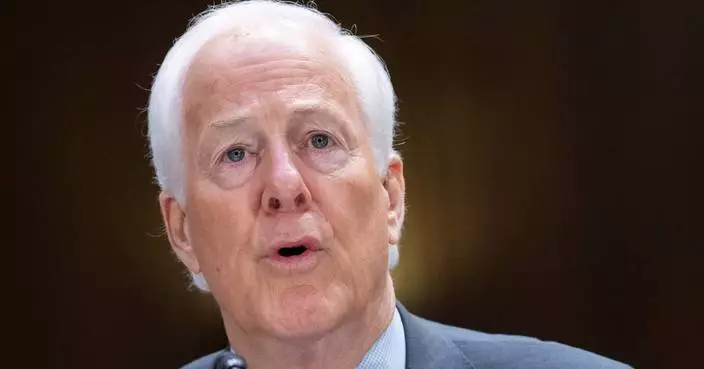
WASHINGTON (AP) — The Food and Drug Administration commissioner's effort to drastically shorten the review of drugs favored by President Donald Trump's administration is causing alarm across the agency, stoking worries that the plan may run afoul of legal, ethical and scientific standards long used to vet the safety and effectiveness of new medicines.
Marty Makary's program is causing new anxiety and confusion among staff already rocked by layoffs, buyouts and leadership upheavals, according to seven current or recently departed staffers. The people spoke to The Associated Press on the condition of anonymity because they were not authorized to discuss confidential agency matters.
At the highest levels of the FDA, questions remain about which officials have the legal authority to sign off on drugs cleared under the Commissioner’s National Priority Voucher program, which promises approval in as little as one month for medicines that support “U.S. national interests.”
Traditionally, approval decisions have nearly always been handled by FDA review scientists and their immediate supervisors, not the agency’s political appointees and senior leaders.
But drug reviewers say they've received little information about the new program's workings. And some staffers working on a highly anticipated anti-obesity pill were recently told they can skip certain regulatory steps to meet top officials' aggressive deadlines.
Outside experts point out that FDA drug reviews — which range from six to 10 months — are already the fastest in the world.
“The concept of doing a review in one to two months just does not have scientific precedent,” said Dr. Aaron Kesselheim, a professor at Harvard Medical School. “FDA cannot do the same detailed review that it does of a regular application in one to two months, and it doesn’t have the resources to do it.”
On Thursday Reuters reported that FDA officials have delayed the review of two drugs in the program, in part due to safety concerns, including the death of a patient taking one of the medications.
Health and Human Services spokesman Andrew Nixon said the voucher program prioritizes “gold standard scientific review” and aims to deliver “meaningful and effective treatments and cures."
The program remains popular at the White House, where pricing concessions announced by the Republican president have repeatedly been accompanied by FDA vouchers for drugmakers that agree to cut their prices.
For instance, when the White House announced that Eli Lilly and Novo Nordisk would reduce prices on their popular obesity drugs, FDA staffers had to scramble to vet new vouchers for both companies in time for Trump's news conference, according to multiple people involved in the process.
That’s sparked widespread concern that FDA drug reviews — long pegged to objective standards and procedures — have become open to political interference.
“It’s extraordinary to have such an opaque application process, one that is obviously susceptible to politicization,” said Paul Kim, a former FDA attorney who now works with pharmaceutical clients.
Many of the concerns around the program stem from the fact that it hasn't been laid out in federal rules and regulations.
The FDA already has more than a half-dozen programs intended to speed up or streamline reviews for promising drugs — all approved by Congress, with regulations written by agency staff.
In contrast, information about the voucher program is mostly confined to an agency website. Drugmakers can apply by submitting a 350-word “statement of interest.”
Increasingly, agency leaders such as Dr. Vinay Prasad, the FDA’s top medical officer and vaccine center director, have been contacting drugmakers directly about awarding vouchers. That’s created quandaries for FDA staffers on even basic questions, such as how to formally award a voucher to a company that didn’t request one.
Nixon, the HHS spokesman, said that voucher submissions are evaluated by “a senior, multidisciplinary review committee,” led by Prasad.
Questions about the legality of the program led the FDA’s then-drug director, Dr. George Tidmarsh, to decline to sign off on approvals under the pathway, according to several people with direct knowledge of the matter. Tidmarsh resigned from the agency in November after a lawsuit challenging his conduct on issues unrelated to the voucher program.
After his departure, Sara Brenner, the FDA’s principal deputy commissioner, was set to have the power to decide, but she also declined the role after looking further into the legal implications, according to the people. Currently the agency’s deputy chief medical officer, Dr. Mallika Mundkur, who works under Prasad, is taking on the responsibility.
Giving final approval to a drug carries significant legal risks, essentially certifying that the medicine meets FDA standards for safety and effectiveness. If unexpected safety problems later emerge, both the agency and individual staffers could be pulled into investigations or lawsuits.
Traditionally, approval comes from FDA drug office directors, made in consultation with a team of reviewers. Under the voucher program, approval comes through a committee vote by senior agency leaders led by Prasad, according to multiple people familiar with the process. Staff reviewers don't get a vote.
“It is a complete reversal from the normal review process, which is traditionally led by the scientists who are the ones immersed in the data,” said Kesselheim, who is a lawyer and a medical researcher.
Not everyone sees problems with the program. Dan Troy, the FDA’s top lawyer under President George W. Bush, a Republican, says federal law gives the commissioner broad discretion to reorganize the handling of drug reviews.
Still, he says, the voucher program, like many of Makary’s initiatives, may be short-lived because it isn't codified.
“If you live by the press release then you die by the press release,” Troy said. “Anything that they’re doing now could be wiped out in a moment by the next administration.”
Initially framed as a pilot program of no more than five drugs, it has expanded to 18 vouchers awarded, with more under consideration. That puts extra pressure on the agency’s drug center, where 20% of the staff has left through retirements, buyouts or resignations over the past year.
When Makary unveiled the program in October there were immediate concerns about the unprecedented power he would have in deciding which companies benefit.
Makary then said that nominations for drugs would come from career staffers. Indeed, some of the early drugs were recommended by FDA reviewers, according to two people familiar with the process. They said FDA staffers deliberately selected drugs that could be vetted quickly.
But, increasingly, selection decisions are led by Prasad or other senior officials, sometimes unbeknownst to FDA staff, according to three people. In one case, FDA reviewers learned from GlaxoSmithKline representatives that Prasad had contacted the company about a voucher.
Access to Makary is limited because he does not use a government email account to do business, according to people familiar with the matter, breaking with longstanding precedent.
Once a voucher is awarded, some drugmakers have their own interpretation of the review timeline — creating further confusion and anxiety among staff.
Two people involved in the ongoing review of Eli Lilly's anti-obesity pill said company executives initially told the FDA they expected the drug approved within two months.
The timeline alarmed FDA reviewers because it did not include the agency's standard 60-day prefiling period, when staffers check the application to ensure it isn’t missing essential information. That 60-day window has been in place for more than 30 years.
Lilly pushed for a quicker filing turnaround, demanding one week. Eventually the agency and the company agreed to a two-week period.
Nixon declined to comment on the specifics of Lilly's review but said FDA reviewers can “adjust timelines as needed.”
Staffers were pushed to keep the application moving forward, even though key pieces of data about the drug's chemistry appeared to be missing, according to one person involved in the process. When reviewers raised concerns about some of the gaps during an internal meeting, the person said, they were told by a senior official: “If the science is sound then you can overlook the regulations.”
Former reviewers and outside experts say that approach is the opposite of how FDA reviews should work: By following the regulations, staffers scientifically confirm the safety and effectiveness of drugs.
Skipping review steps could also carry risks for drugmakers if future FDA leaders decide a drug wasn’t properly vetted. Like other experts, Kesselheim says the program may not last beyond the current administration.
“They are fundamentally changing the application of the standards, but the underlying law remains what it is,” he said. “The hope is that one day we will return to these scientifically sound, legally sound principles.”
The Associated Press Health and Science Department receives support from the Howard Hughes Medical Institute’s Department of Science Education and the Robert Wood Johnson Foundation. The AP is solely responsible for all content.
FILE - The Food and Drug Administration seal is seen at the Hubert Humphrey Building Auditorium in Washington, April 22, 2025. (AP Photo/Jose Luis Magana, File)
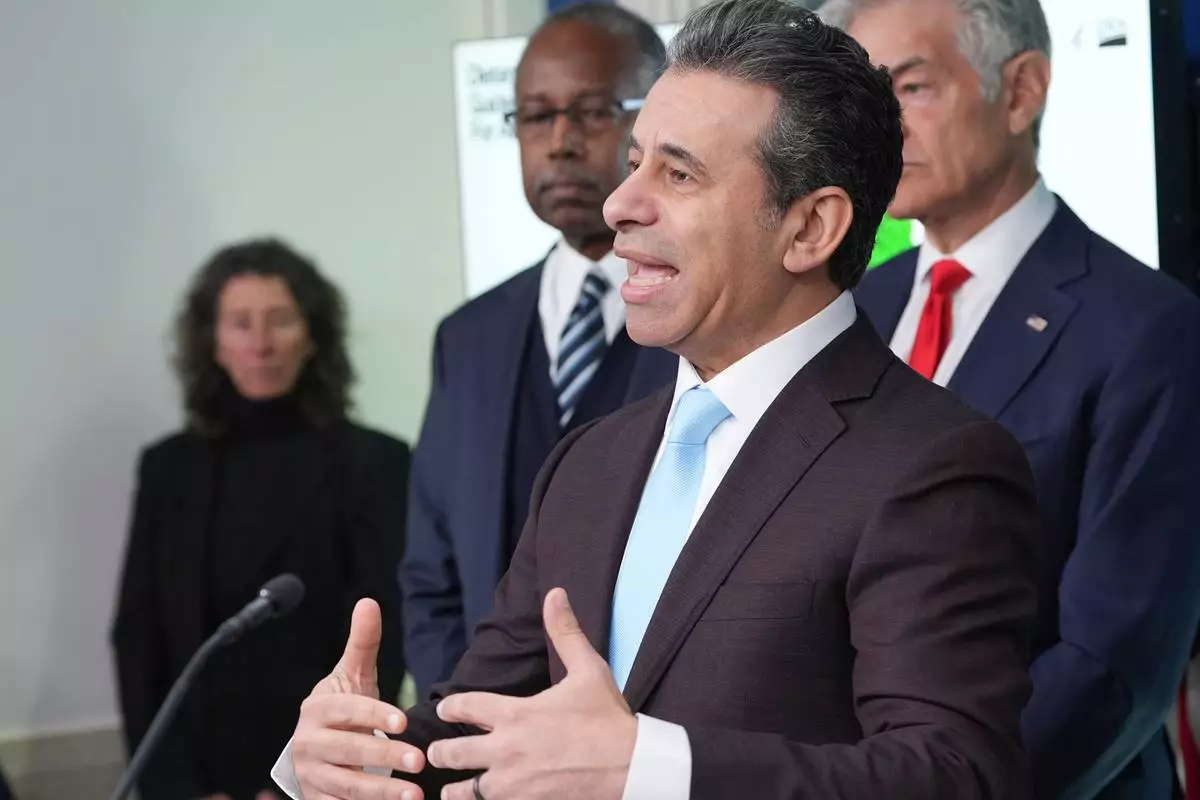
Dr. Marty Makary, commissioner of the Food and Drug Administration, speaks during a press briefing at the White House, Wednesday, Jan. 7, 2026, in Washington. (AP Photo/Jacquelyn Martin)