KAWASAKI, Japan--(BUSINESS WIRE)--Aug 20, 2025--
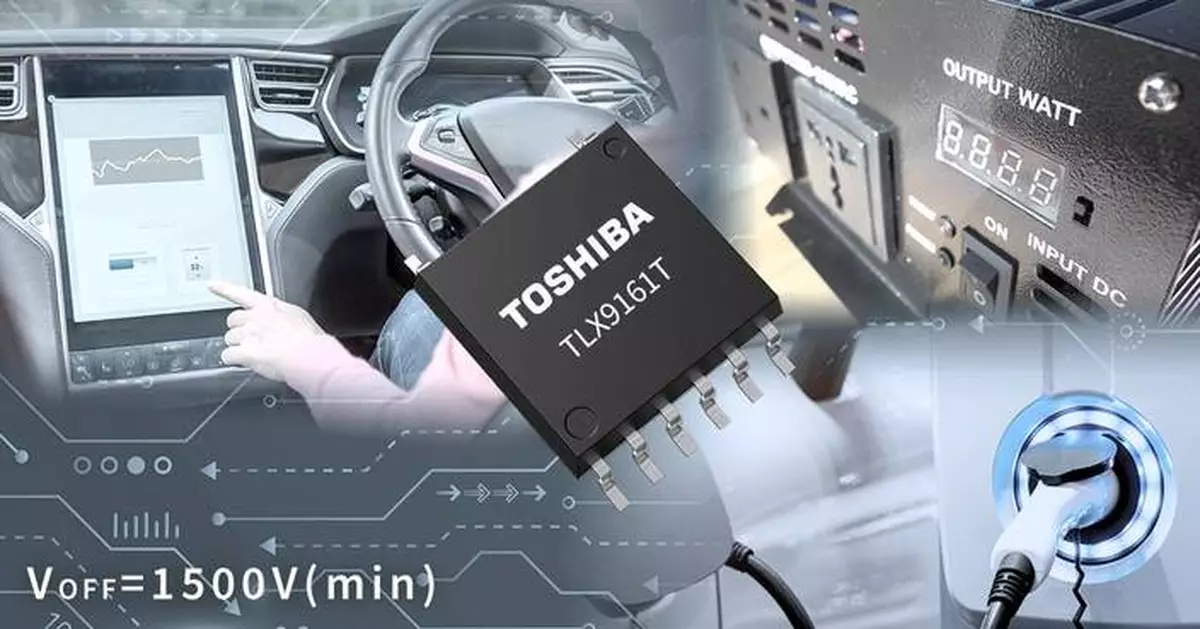
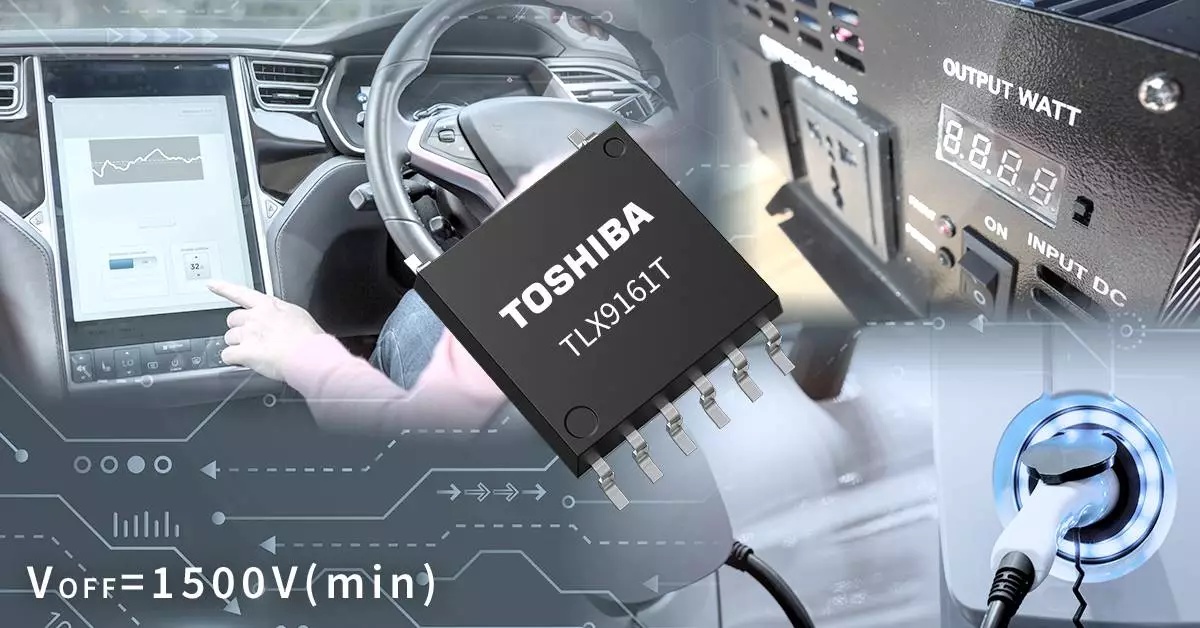
Toshiba Electronic Devices & Storage Corporation ("Toshiba") has launched an automotive photorelay [1], " TLX9161T," in a small SO12L-T package, that achieves an output withstand voltage of 1500V (min), the level required to support high voltage automotive batteries. Volume shipments start today.
This press release features multimedia. View the full release here: https://www.businesswire.com/news/home/20250820514873/en/
Key challenges in popularizing electric vehicles include reducing charging times and improving cruising range. Addressing these requires efficient operation of the battery system. This is done by the battery management system (BMS), which monitors the battery’s charge status to enable high-efficiency system operation, and also monitors isolation between the battery and the vehicle body to ensure the safe use of high-voltage batteries. Electrically isolated photorelays are used in BMS that handle high voltages.
Toshiba’s new product, a high-voltage photorelay with an output withstand voltage of 1500V (min), is a miniaturized version of Toshiba's TLX9160T photorelay. Miniaturizing the TLX9160T’s built-in MOSFET chip has achieved integration into the SO12L-T package, which has a mounting area approximately 25% [2] smaller than the TLX9160T’s SO16L-T package. This size reduction also contributes to miniaturization and cost reduction of the BMS. The pin pitch and pin layout are the same as those of the SO16L-T, enabling use of the same circuit board pattern design.
The new photorelay uses a resin with a Comparative Tracking Index (CTI [3] ) exceeding 600, which is classified under Material Group I [4] of the IEC 60664-1 [5] international standard. The pin configuration ensures a creepage distance of more than 5mm [6] on the detector side. This realizes compliance with IEC 60664-1, supporting an operating voltage of 1000V.
Toshiba will continue to expand its lineup of automotive photorelay products and provide solutions that address the challenges in popularizing electric vehicles, aiming to contribute to the realization of a carbon-neutral society.
Notes:
[1] Photorelay: The primary (control) and the secondary (switch) sides are electrically isolated. Switches connected directly to the AC line, and switches between equipment that differ in ground potential, can be controlled through insulating barriers.
[2] Comparison of SO16L-T package size (10.3×10.0×2.45 mm) with SO12L-T package size (7.76×10.0×2.45 mm).
[3] Comparative Tracking Index (CTI): An index that indicates the voltage withstand capability of an insulating material before an electrical track (conductive path) forms along its surface.
[4] Material Group I: A classification of molded materials in IEC 60664-1 that refers to materials with a Comparative Tracking Index (CTI [3] ) of 600 and more.
[5] IEC 60664-1: The standard that specifies principles, requirements, and test methods for insulation coordination for systems up to AC 1000V or DC 1500V.
[6] More than 5mm: The required creepage distance for an operating voltage 1000V, material group I, pollution degree 2 (the degree of pollution of the operating environment where electrical equipment is used; pollutants are entirely non-conductive, but could potentially be rendered conductive by condensation.)
Applications
Features
Main Specifications
Follow the link below for more on the new product.
TLX9161T
Follow the link below for more on Toshiba’s Isolators and Solid State Relays.
Isolators/Solid State Relays
Follow the link below for more on Toshiba’s Automotive Devices.
Automotive Devices
To check availability of the new products at online distributors, visit:
TLX9161T
Buy Online
* Company names, product names, and service names may be trademarks of their respective companies.
* Information in this document, including product prices and specifications, content of services and contact information, is current on the date of the announcement but is subject to change without prior notice.
About Toshiba Electronic Devices & Storage Corporation
Toshiba Electronic Devices & Storage Corporation, a leading supplier of advanced semiconductor and storage solutions, draws on over half a century of experience and innovation to offer customers and business partners outstanding discrete semiconductors, system LSIs and HDD products.
Its 19,400 employees around the world share a determination to maximize product value, and to promote close collaboration with customers in the co-creation of value and new markets. The company looks forward to building and to contributing to a better future for people everywhere.
Find out more at https://toshiba.semicon-storage.com/ap-en/top.html
Toshiba: "TLX9161T," a new photorelay with an output withstand voltage of 1500V, housed in a small package.