CHICAGO--(BUSINESS WIRE)--Aug 21, 2025--
According to the newly released Higher Education Insights Report from higher education marketing and research firm Validated Insights, higher education enrollments continue to grow – up more than 3% over 2024.
This press release features multimedia. View the full release here: https://www.businesswire.com/news/home/20250821159717/en/
According to the report, increasing enrollment benchmarks include:
“The data are remarkably clear that despite a whirlwind of pressures and distractions, students are increasingly showing up for college and continuing education,” said Brady Colby, Head of Market Research at Validated Insights. “The trend lines are not overly compelling, but they are unmistakable – students want college degrees or other credentials, which is lifting enrollments in almost all higher education programs everywhere you look.”
The report highlights not only the year-over-year growth from 2024 to 2025, but also overall enrollment growth since the Fall of 2020 — a span in which higher education enrollments have grown by approximately 500,000 students, an increase of nearly 3% overall.
“Enrollment growth in higher education is nearly universal over the past few years, with the lone exception of master’s programs, which saw a modest dip this past year,” Colby said. “But everywhere else — for-profit colleges, online programs, associate degrees, and career training — the numbers are moving up.”
The new report collects and synthesizes information from multiple providers of enrollment data and highlights trends among degree level, type of institution, program focus, even geography.
According to the report, for example, “Enrollment in the West grew 2.8% but the trend varied widely across states in the region. Utah saw the fastest year-over-year growth at 9.4% while Idaho saw the steepest decline with enrollment dropping 6.2%.”
The report also contains intriguing data regarding online education enrollment trends, such as:
The report also includes in-depth data regarding international student enrollments, changes in search traffic for higher education, and the for-profit education sector.
“Data variations are normal and expected,” said Colby. “ Again here, at the top level of higher education, continuing education, the trendline is upwards. Higher education enrollments are not necessarily surging, but they are growing year over year, which is a really good sign for the sector, as well as for our workforce and economy.”
This report is the first from Validated Insights to examine overall enrollment trends in higher education. Previous reports have studied the market for online program management companies (OPM), MBA programs, nursing education, computer science programs, trade schools, and AI/ML programs.
Like its other benchmark education market research, the Higher Ed Insights Report will be updated regularly, including other timely and relevant information about higher education and the higher education market in general. To receive future reports from Validated Insights, follow Higher Ed News by VI on LinkedIn.
About Validated Insights
Validated Insights is an agile marketing agency specializing in helping higher education institutions achieve and exceed their goals. With a comprehensive suite of services, including digital marketing, paid search, paid social, and web strategy, Validated Insights delivers data-driven strategies and measurable results. The agency's agile testing approach enables short- and long-term growth through better creative, strategy, media execution and continuous brand building. Validated Insights is the only agency in the higher education space to offer a performance guarantee in KPIs in the first 60 days - and continuous growth beyond that.
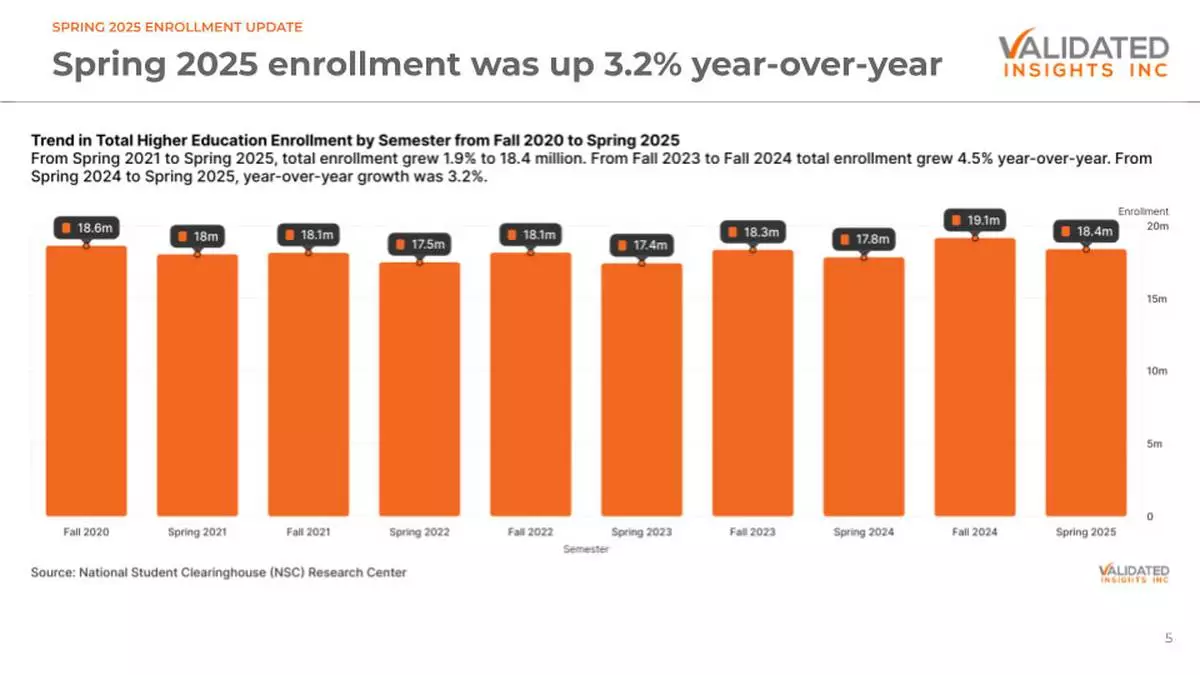
A new report from Validated Insights states that as of Spring 2025, total enrollment in higher education in the United States was up 3.2% year-over-year to 18.4 million. In Fall 2024 the year-over-year growth rate was slightly higher at 4.5% to a total of 19.1 million, just 0.5% below the most recent projection for Fall 2024 from the National Center for Education Statistics (NCES). Find the full report – including data about adult learners, international student enrollments, changes in search traffic for higher education, and data about the for-profit education sector – at https://vihigheredinsightsaug25.carrd.co/.
NEW YORK (AP) — U.S. stocks are hanging near their records Wednesday as oil prices fall and ease the pressure on households and businesses worldwide.
The S&P 500 slipped 0.1% below its all-time high set the day before. The Dow Jones Industrial Average was up 183 points, or 0.4%, as of 12:56 p.m. Eastern time, and the Nasdaq composite was 0.1% lower.
Stocks of companies with big fuel bills helped lead the way on hopes that lower oil prices will remove a big drag on their profits. Norwegian Cruise Line Holdings climbed 5.7%, and United Airlines rallied 7.3%. Delta Air Lines rose 3.7% and is on track to set an all-time high.
The price for a barrel of Brent crude oil fell 4.1% to $95.48 after the ceasefire between the United States and Iran appeared to hold despite the U.S. military launching what it called “self-defense” strikes in southern Iran. A barrel of benchmark U.S. crude fell even more, 4.2%, to $89.69 on hopes that the United States and Iran can reach an agreement to reopen the Strait of Hormuz and allow oil tankers to exit the Persian Gulf for deliveries again.
Stocks have been able to run to records despite the painful inflation and uncertainty caused by high oil prices largely because companies have reported surprisingly strong profits for the start of 2026, and the forecast is for them to continue.
Bath & Body Works rallied 11.2%, and Abercrombie & Fitch climbed 11.8% after both reported bigger profit for the latest quarter than analysts expected. That's even as U.S. consumers continue to say they're feeling discouraged about the economy and inflation.
Lululemon Athletica rose 3.6% after reaching a deal with its founder, Chip Wilson, where it will add a former chief marketing officer of ESPN and a former co-CEO of On to its board of directors.
On the losing side of Wall Street was Dick's Sporting Goods, which dropped 4.9% despite delivering a profit for the latest quarter that edged past expectations. Analysts pointed to how much profit it wrung out of each $1 in revenue, which some called a bit weak.
Oil-and-gas stocks also sank, hurt by the dropping prices for crude. Exxon Mobil fell 1.4%, and Chevron slipped 0.8%. Halliburton dropped 3% to bring its gain for the year so far back toward 40%.
In the bond market, Treasury yields eased after falling oil prices took pressure off inflation. The yield on the 10-year Treasury slipped to 4.48% from 4.50% late Tuesday and from 4.67% roughly a week ago.
It’s a respite following recent gains for yields in bond markets worldwide, which threatened to slow economies and undercut prices for stocks and all kinds of other investments. High yields have already forced the average long-term U.S. mortgage rate to its most expensive level since last summer, and they could curtail companies’ borrowing to build the artificial-intelligence data centers that have supported the U.S. economy’s growth recently.
In stock markets abroad, indexes were mixed across Europe and Asia. South Korea's Kospi was one of the world's best performers and jumped 2.3% after SK Hynix, which is a big beneficiary of the artificial-intelligence boom, soared 9.3%.
A day before, Micron Technology surged to become the latest Big Tech company to be worth more than $1 trillion on AI excitement. Its stock has more than tripled already in 2026, and analysts at UBS said Tuesday it could soar even more because of how fundamentally AI has improved demand for computer memory.
AP Business Writer Elaine Kurtenbach contributed to this report.

Trader Edward Curran, left, and specialist Meric Greenbaum, center, work on the floor of the New York Stock Exchange, Friday, May 22, 2026. (AP Photo/Richard Drew)

A person looks at an electronic stock board showing Japan's Nikkei index at a securities firm Monday, May 25, 2026, in Tokyo. (AP Photo/Eugene Hoshiko)
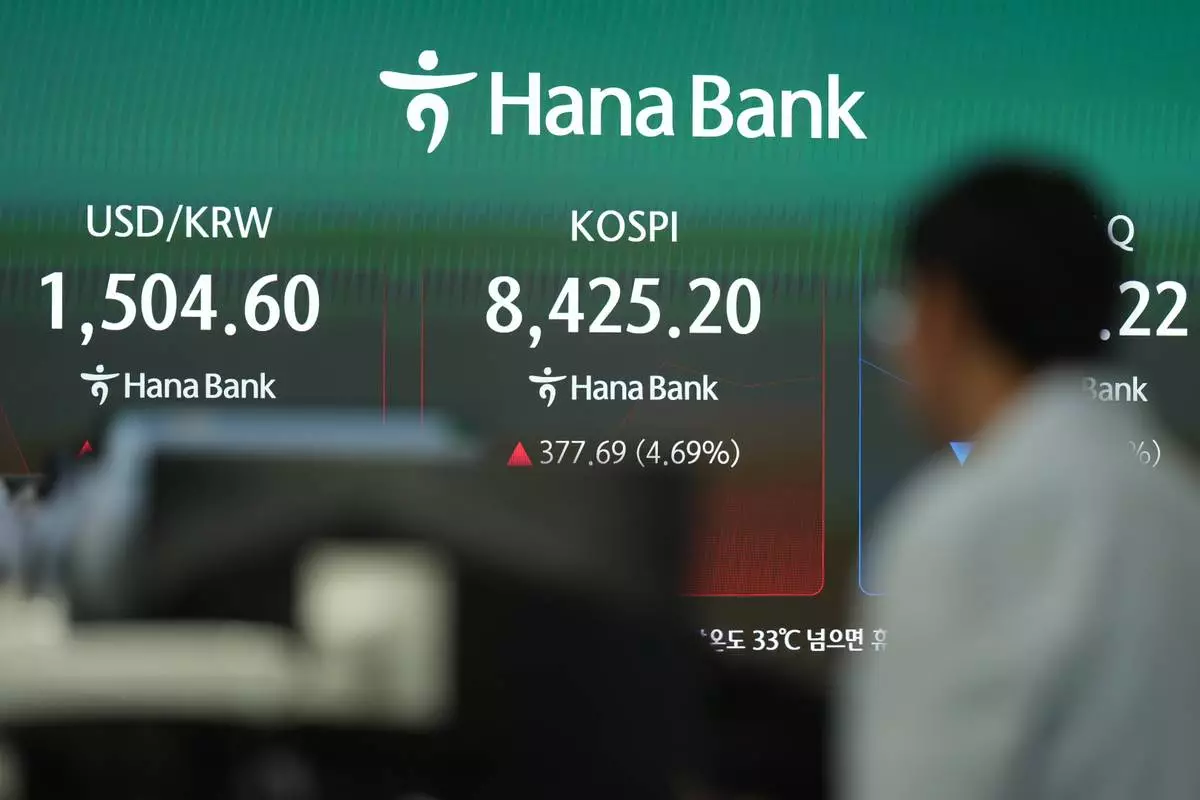
A dealer walks past near the screens showing the Korea Composite Stock Price Index (KOSPI) and the foreign exchange rate between U.S. dollar and South Korean won at a dealing room of Hana Bank in Seoul, South Korea, Wednesday, May 27, 2026. (AP Photo/Lee Jin-man)
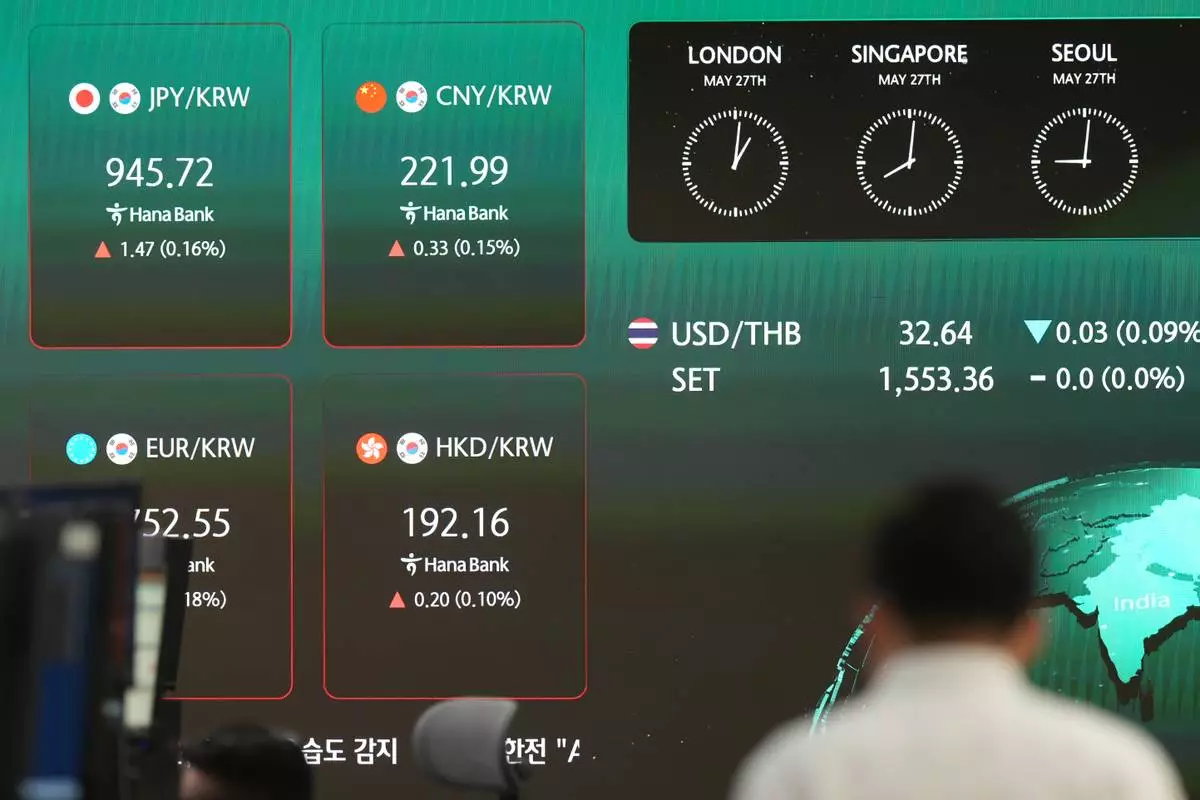
A dealer walks past near the screens showing the foreign exchange rates at a dealing room of Hana Bank in Seoul, South Korea, Wednesday, May 27, 2026. (AP Photo/Lee Jin-man)
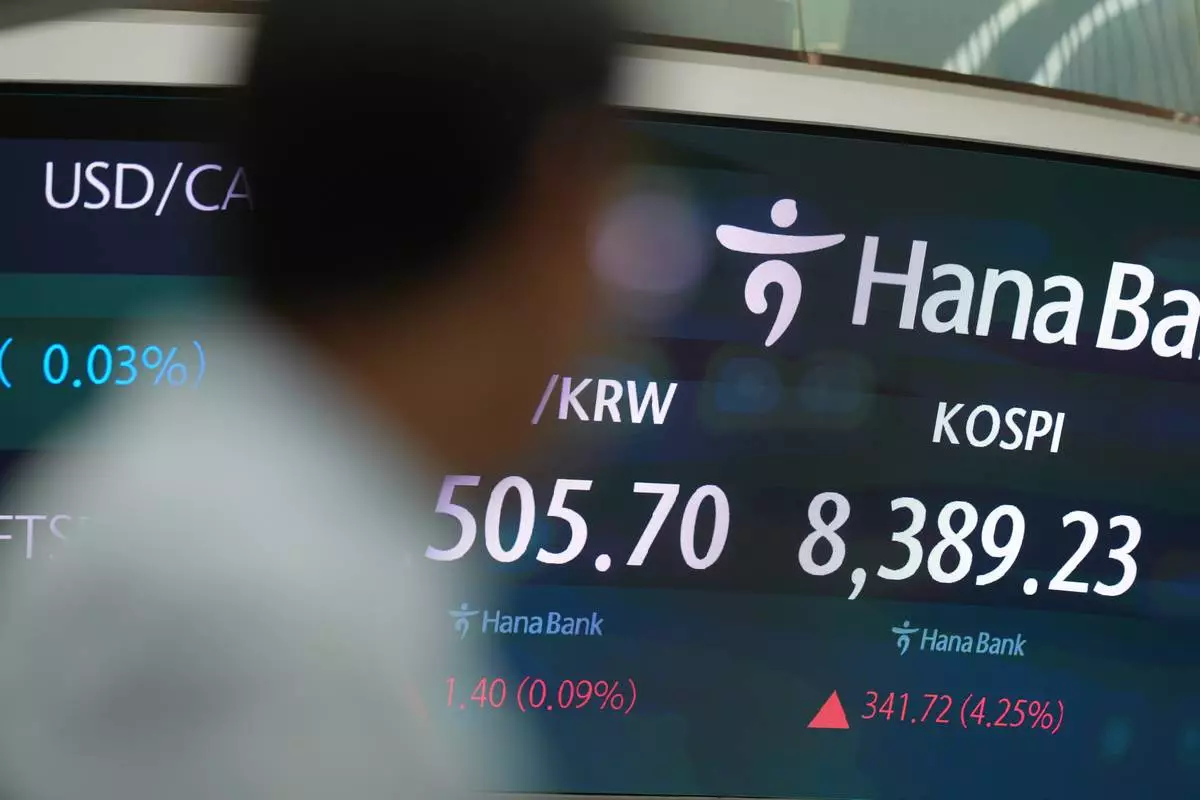
A dealer walks past near the screens showing the Korea Composite Stock Price Index (KOSPI) and the foreign exchange rate between U.S. dollar and South Korean won at a dealing room of Hana Bank in Seoul, South Korea, Wednesday, May 27, 2026. (AP Photo/Lee Jin-man)
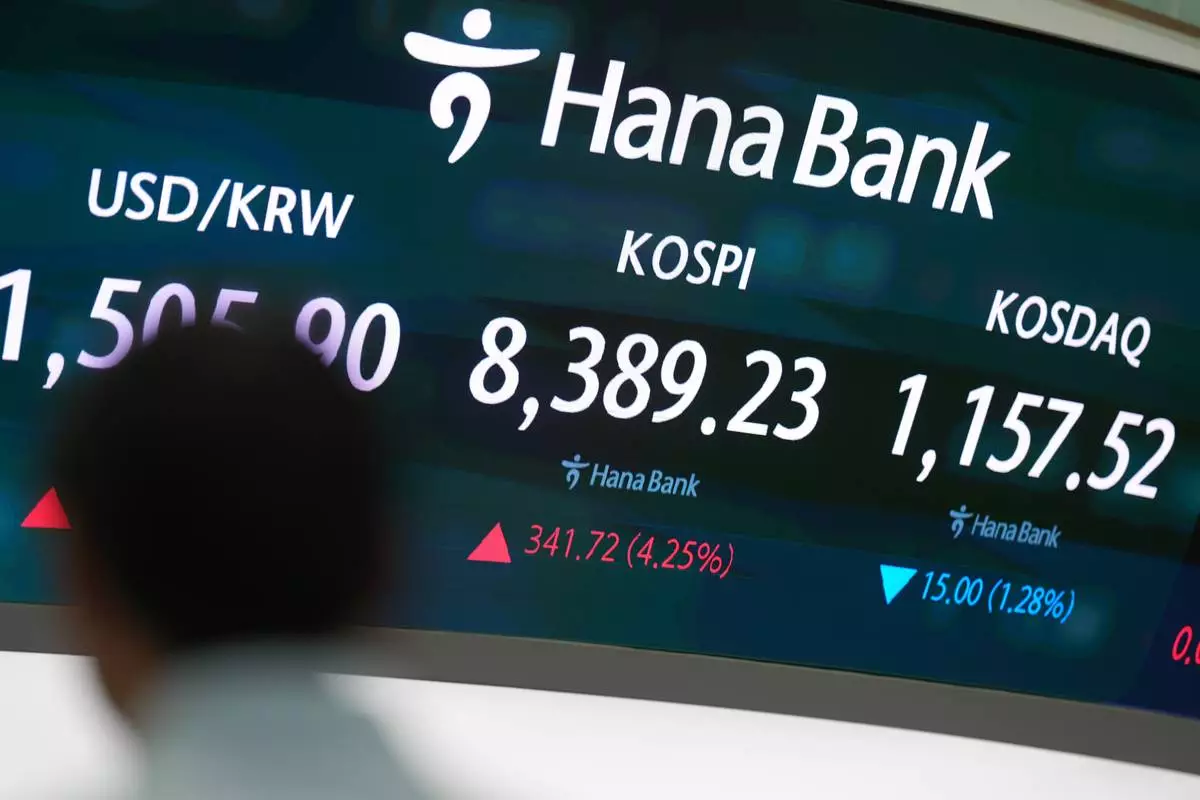
A dealer stands near the screens showing the Korea Composite Stock Price Index (KOSPI), the foreign exchange rate between U.S. dollar and South Korean won and the Korean Securities Dealers Automated Quotations (KOSDAQ) at a dealing room of Hana Bank in Seoul, South Korea, Wednesday, May 27, 2026. (AP Photo/Lee Jin-man)