Skip to Content Facebook Feature Image

Can empathy lead to sin? Some conservative Christians argue it can

News

Can empathy lead to sin? Some conservative Christians argue it can
News

News

Can empathy lead to sin? Some conservative Christians argue it can

2025-08-22 05:20 Last Updated At:05:30

WASHINGTON (AP) — Empathy is usually regarded as a virtue, a key to human decency and kindness. And yet, with increasing momentum, voices on the Christian right are preaching that it has become a vice.

For them, empathy is a cudgel for the left: It can manipulate caring people into accepting all manner of sins according to a conservative Christian perspective, including abortion access, LGBTQ+ rights, illegal immigration and certain views on social and racial justice.

“Empathy becomes toxic when it encourages you to affirm sin, validate lies or support destructive policies,” said Allie Beth Stuckey, author of “Toxic Empathy: How Progressives Exploit Christian Compassion.”

Stuckey, host of the popular podcast “Relatable,” is one of two evangelicals who published books within the past year making Christian arguments against some forms of empathy.

The other is Joe Rigney, a professor and pastor who wrote “The Sin of Empathy: Compassion and its Counterfeits.” It was published by Canon Press, an affiliate of Rigney’s conservative denomination, which counts Defense Secretary Pete Hegseth among its members.

These anti-empathy arguments gained traction in the early months of President Donald Trump’s second term, with his flurry of executive orders that critics denounced as lacking empathy.

As foreign aid stopped and more deportations began, Trump’s then-adviser Elon Musk told podcaster Joe Rogan: “The fundamental weakness of Western civilization is empathy.”

Even Vice President JD Vance, a Catholic convert, framed the idea in his own religious terms, invoking the concept of ordo amoris, or order of love. Within concentric circles of importance, he argued the immediate family comes first and the wider world last — an interpretation that then-Pope Francis rejected.

While their anti-empathy arguments have differences, Stuckey and Rigney have audiences that are firmly among Trump’s Christian base.

“Could someone use my arguments to justify callous indifference to human suffering? Of course,” Rigney said, countering that he still supports measured Christ-like compassion. “I think I’ve put enough qualifications.”

Historian Susan Lanzoni traced a century of empathy’s uses and definitions in her 2018 book “Empathy: A History.” Though it’s had its critics, she has never seen the aspirational term so derided as it is now.

It’s been particularly jarring to watch Christians take down empathy, said Lanzoni, a graduate of Harvard Divinity School.

“That’s the whole message of Jesus, right?”

The word empathy appeared in English for the first time in 1908, taken from a German word, meaning “in-feeling.”

Though the word is relatively new to English, the impulse behind it — to feel for or with another — is much older. It forms a core precept across many religions. “Do unto others as you would have them do unto you,” reads a common version of the Golden Rule.

Stuckey admits Jesus is an empathetic figure. In her book, the Southern Baptist from Texas writes, “In a way, Jesus embodied empathy when he took on flesh, suffered the human experience, and bore the burden of our sins by enduring a gruesome death.”

She's clear that empathy can be good. But she writes it has been co-opted “to convince people that the progressive position is exclusively the one of kindness and morality.”

“If you really care about women, you’ll support their right to choose,” she writes of this progressive line of thinking. “If you really respect people, you’ll use preferred pronouns. … If you’re really compassionate, you’ll welcome the immigrant.”

Rigney doesn't think empathy is inherently wrong, either. He finds fault with excessive or “untethered empathy” that's not tied to conservative biblical interpretations.

He has been talking publicly about these ideas since at least 2018, when he discussed the sin of empathy on camera with conservative Pastor Doug Wilson. Since 2023, Rigney has worked at Wilson’s Idaho church and seminary, affiliated with the Communion of Reformed Evangelical Churches.

Rigney said initially he experienced pushback from “certain corners of evangelicalism, that at the time were very dialed into questions of the #MeToo movement and abuse or critical race theory, social justice kind of stuff.”

This debate over empathy often devolves into arguments over word choices or semantics. Rigney prefers older terms like compassion, sympathy or even pity.

The Rev. Albert Mohler leads the flagship seminary of the Southern Baptist Convention, the largest U.S. Protestant denomination. He featured Rigney and Stuckey on his podcast this year and agrees with their empathy critiques.

Mohler prefers the word sympathy over empathy.

“There’s no market so far as I know for empathy cards,” he said. “There is a long-standing market for sympathy cards.”

In 2014, Mohler did encourage his audience to have empathy. His words came after a white police officer killed Michael Brown, a Black teenager in Ferguson, Missouri.

“I look back at that statement now, and I would say it’s nowhere near as morally significant as I intended it to be at the time,” Mohler said. Though expressing empathy for hurting people appeared to be “close to the right thing to do,” he sees it as less helpful now.

Stuckey traces her own anti-empathy awakening to the summer of 2020, when racial justice protests roiled the nation. She saw other Christians posting about racism out of an empathy she found misguided.

“I reject the idea that America is a systemically racist country,” she said.

When she said as much in the months after George Floyd’s murder, her audience grew.

Rigney echoes this critique of systemic racism but reserves most of his ire for feminism, which he blames for many of empathy’s ills. Because women are the more empathetic sex, he argues, they often take empathy too far.

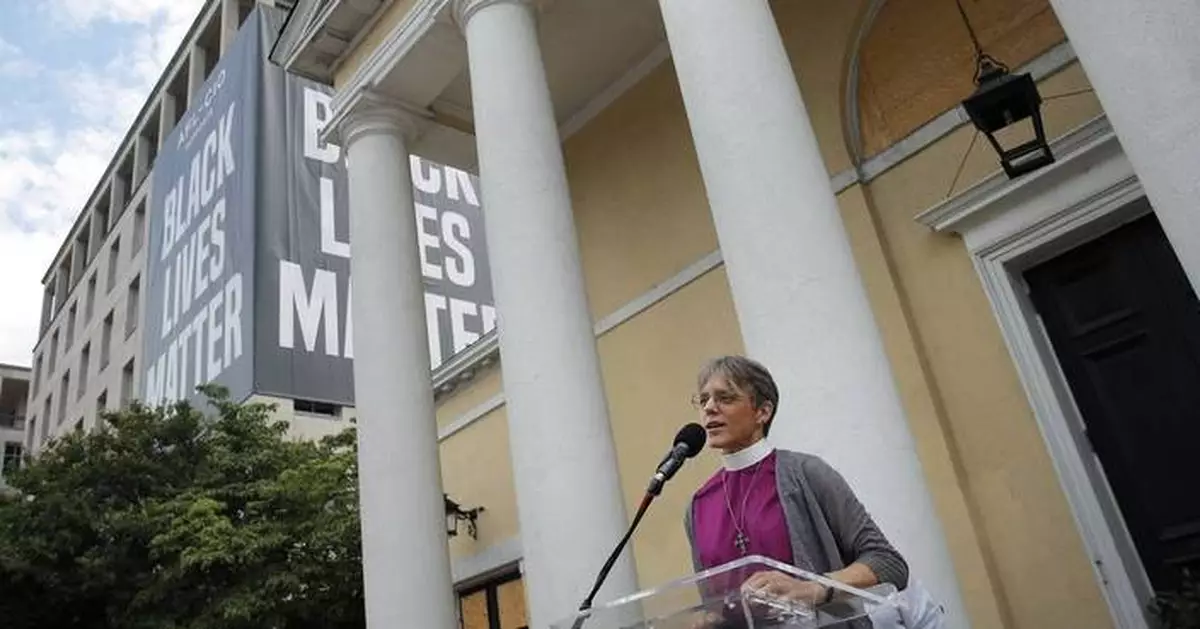
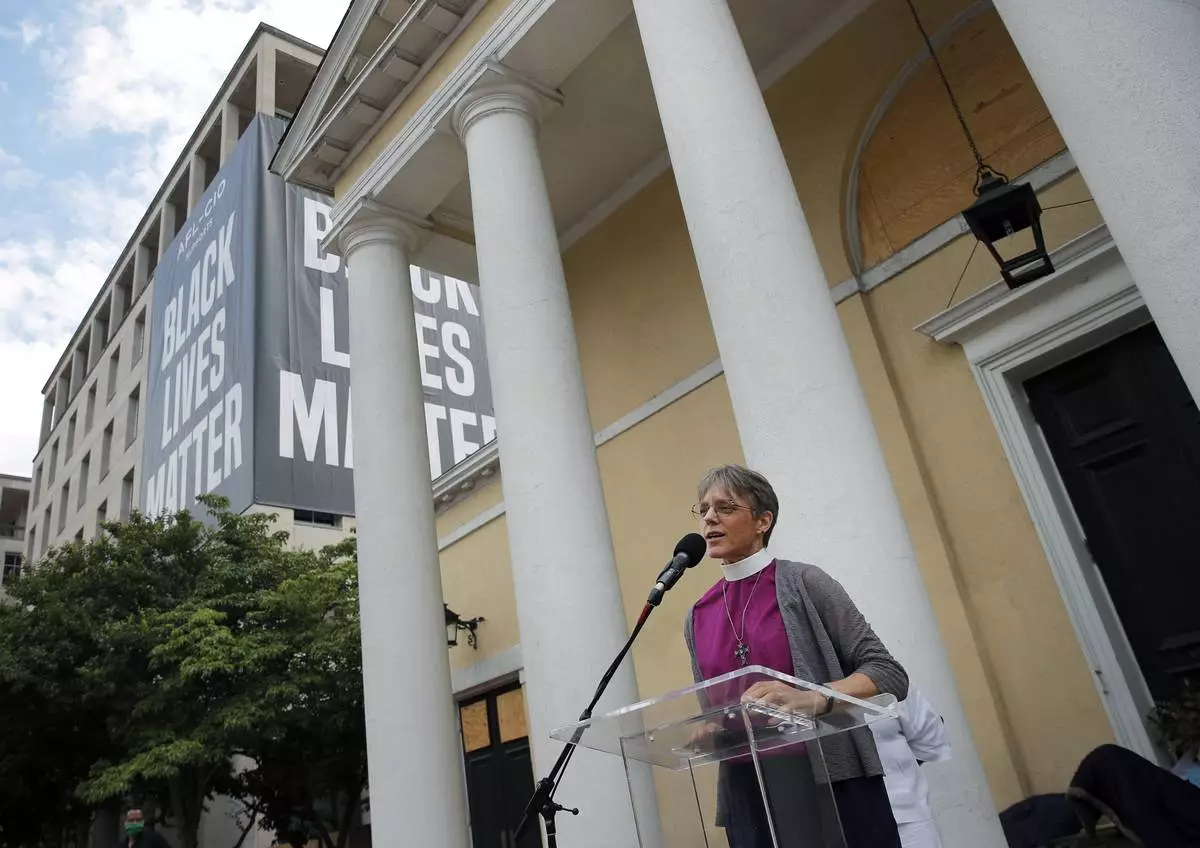
He found an encapsulation of this theory at Trump’s inaugural prayer service, where a woman preached from the pulpit. During a sermon that went viral, Episcopal Bishop Mariann Budde pleaded with the Republican president to “have mercy” on immigrants and LGBTQ+ people, prompting a conservative backlash.

“Budde’s attempt to ‘speak truth to power’ is a reminder that feminism is a cancer that enables the politics of empathetic manipulation,” Rigney wrote for the evangelical World magazine.

“Empathy is not toxic. Nor is it a sin,” said the Rev. Canon Dana Colley Corsello in a sermon at Washington National Cathedral, two months after Budde’s plea from that sanctuary.

“The arguments about toxic empathy are finding open ears because far-right-wing, white evangelicals are looking for a moral framework around which they can justify President Trump’s executive orders and policies,” Corsello preached.

“Empathy is at the heart of Jesus’ life and ministry,” Corsello wrote in a recent email exchange about the sermon.

She added, “It’s so troubling that this is even up for debate.”

In New York, the Rev. Micah Bucey first noticed Christian anti-empathy messages after Budde’s sermon. In response, he proposed changing the outdoor sign at Judson Memorial Church, the historic congregation he serves in Manhattan.

“If empathy is a sin, sin boldly,” he proposed it say, a catchphrase that borrows its last clause from the Protestant reformer Martin Luther.

A photo of the resulting church sign was shared thousands of times on social media.

“Our entire spirituality and theology at Judson are built around curiosity and empathy,” Bucey said. “We’ve always considered that our superpower.”

Associated Press religion coverage receives support through the AP’s collaboration with The Conversation US, with funding from Lilly Endowment Inc. The AP is solely responsible for this content.

FILE - Aiden Lougee, center left, kisses his boyfriend, Rex Resa, seen between signs held by opponents to gay marriage outside of the courthouse after a hearing in the Ninth Circuit Court of Appeals, Monday, Dec. 6, 2010, in San Francisco. (AP Photo/Jeff Chiu, File)
FILE - Aiden Lougee, center left, kisses his boyfriend, Rex Resa, seen between signs held by opponents to gay marriage outside of the courthouse after a hearing in the Ninth Circuit Court of Appeals, Monday, Dec. 6, 2010, in San Francisco. (AP Photo/Jeff Chiu, File)

FILE - The Rev. Mariann Budde, bishop of Washington's Episcopal diocese, speaks during a service outside St. John's Episcopal Church near the White House in Washington, on June 19, 2020, with a Black Lives Matter banner in the background. (AP Photo/Carolyn Kaster, File)
FILE - The Rev. Mariann Budde, bishop of Washington's Episcopal diocese, speaks during a service outside St. John's Episcopal Church near the White House in Washington, on June 19, 2020, with a Black Lives Matter banner in the background. (AP Photo/Carolyn Kaster, File)
WASHINGTON (AP) — Senate Republicans voted to dismiss a war powers resolution Wednesday that would have limited President Donald Trump’s ability to conduct further attacks on Venezuela after two GOP senators reversed course on supporting the legislation.

Trump put intense pressure on five Republican senators who joined with Democrats to advance the resolution last week and ultimately prevailed in heading off passage of the legislation. Two of the Republicans — Sens. Josh Hawley of Missouri and Todd Young of Indiana — flipped under the pressure.

Vice President JD Vance had to break the 50-50 deadlock in the Senate on a Republican motion to dismiss the bill.

The outcome of the high-profile vote demonstrated how Trump still has command over much of the Republican conference, yet the razor-thin vote tally also showed the growing concern on Capitol Hill over the president’s aggressive foreign policy ambitions.

Democrats forced the debate after U.S. troops captured Venezuelan leader Nicolás Maduro in a surprise nighttime raid earlier this month

“Here we have one of the most successful attacks ever and they find a way to be against it. It’s pretty amazing. And it’s a shame,” Trump said at a speech in Michigan Tuesday. He also hurled insults at several of the Republicans who advanced the legislation, calling Sen. Rand Paul of Kentucky a “stone cold loser” and Sens. Lisa Murkowski of Alaska and Susan Collins of Maine “disasters.” Those three Republicans stuck to their support for the legislation.

Trump’s latest comments followed earlier phone calls with the senators, which they described as terse. The president’s fury underscored how the war powers vote had taken on new political significance as Trump also threatens military action to accomplish his goal of possessing Greenland.

The legislation, even if it had cleared the Senate, had virtually no chance of becoming law because it would eventually need to be signed by Trump himself. But it represented both a test of GOP loyalty to the president and a marker for how much leeway the Republican-controlled Senate is willing to give Trump to use the military abroad. Republican angst over his recent foreign policy moves — especially threats of using military force to seize Greenland from a NATO ally — is still running high in Congress.

Hawley, who helped advance the war powers resolution last week, said Trump’s message during a phone call was that the legislation “really ties my hands.” The senator said he had a follow-up phone call with Secretary of State Marco Rubio Monday and was told “point blank, we’re not going to do ground troops.”

The senator added that he also received assurances that the Trump administration will follow constitutional requirements if it becomes necessary to deploy troops again to the South American country.

“We’re getting along very well with Venezuela,” Trump told reporters at a ceremony for the signing of an unrelated bill Wednesday.

As senators went to the floor for the vote Wednesday evening, Young also told reporters he was no longer in support. He said that he had extensive conversations with Rubio and received assurances that the secretary of state will appear at a public hearing before the Senate Foreign Relations Committee.

Young also shared a letter from Rubio that stated the president will “seek congressional authorization in advance (circumstances permitting)” if he engaged in “major military operations” in Venezuela.

The senators also said his efforts were also instrumental in pushing the administration to release Wednesday a 22-page Justice Department memo laying out the legal justification for the snatch-and-grab operation against Maduro.

That memo, which was heavily redacted, indicates that the administration, for now, has no plans to ramp up military operations in Venezuela.

“We were assured that there is no contingency plan to engage in any substantial and sustained operation that would amount to a constitutional war,” according to the memo signed by Assistant Attorney General Elliot Gaiser.

Trump has used a series of legal arguments for his campaign against Maduro.

As he built up a naval force in the Caribbean and destroyed vessels that were allegedly carrying drugs from Venezuela, the Trump administration tapped wartime powers under the global war on terror by designating drug cartels as terrorist organizations.

The administration has claimed the capture of Maduro himself was actually a law enforcement operation, essentially to extradite the Venezuelan president to stand trial for charges in the U.S. that were filed in 2020.

Paul criticized the administration for first describing its military build-up in Caribbean as a counternarcotics operation but now floating Venezuela’s vast oil reserves as a reason for maintaining pressure.

"The bait and switch has already happened,” he said.

Lawmakers, including a significant number of Republicans, have been alarmed by Trump’s recent foreign policy talk. In recent weeks, he has pledged that the U.S. will “run” Venezuela for years to come, threatened military action to take possession of Greenland and told Iranians protesting their government that “ help is on its way.”

Senior Republicans have tried to massage the relationship between Trump and Denmark, a NATO ally that holds Greenland as a semi-autonomous territory. But Danish officials emerged from a meeting with Vance and Rubio Wednesday saying a “fundamental disagreement” over Greenland remains.

"What happened tonight is a roadmap to another endless war," Senate Democratic leader Chuck Schumer said at a news conference following the vote.

More than half of U.S. adults believe President Donald Trump has “gone too far” in using the U.S. military to intervene in other countries, according to a new AP-NORC poll.

Last week's procedural vote on the war powers resolution was supposed to set up hours of debate and a vote on final passage. But Republican leaders began searching for a way to defuse the conflict between their members and Trump as well as move on quickly to other business.

Once Hawley and Young changed their support for the bill, Republicans were able to successfully challenge whether it was appropriate when the Trump administration has said U.S. troops are not currently deployed in Venezuela.

“We’re not currently conducting military operations there,” said Senate Majority Leader John Thune in a floor speech. “But Democrats are taking up this bill because their anti-Trump hysteria knows no bounds.”

Democratic Sen. Tim Kaine, who has brought a series of war powers resolutions this year, accused Republicans of burying a debate about the merits of an ongoing campaign of attacks and threats against Venezuela.

"If this cause and if this legal basis were so righteous, the administration and its supporters would not be afraid to have this debate before the public and the United States Senate," he said in a floor speech.

Kaine vowed to force votes on war powers resolutions that would apply to a number of potential military conflicts, including Greenland. House Democrats have also filed a similar war powers resolution and can force a vote on it as soon as next week.

Associated Press writers Josh Goodman, Lisa Mascaro, Mary Clare Jalonick and Joey Cappelletti in Washington and Bill Barrow in Atlanta contributed to this report.

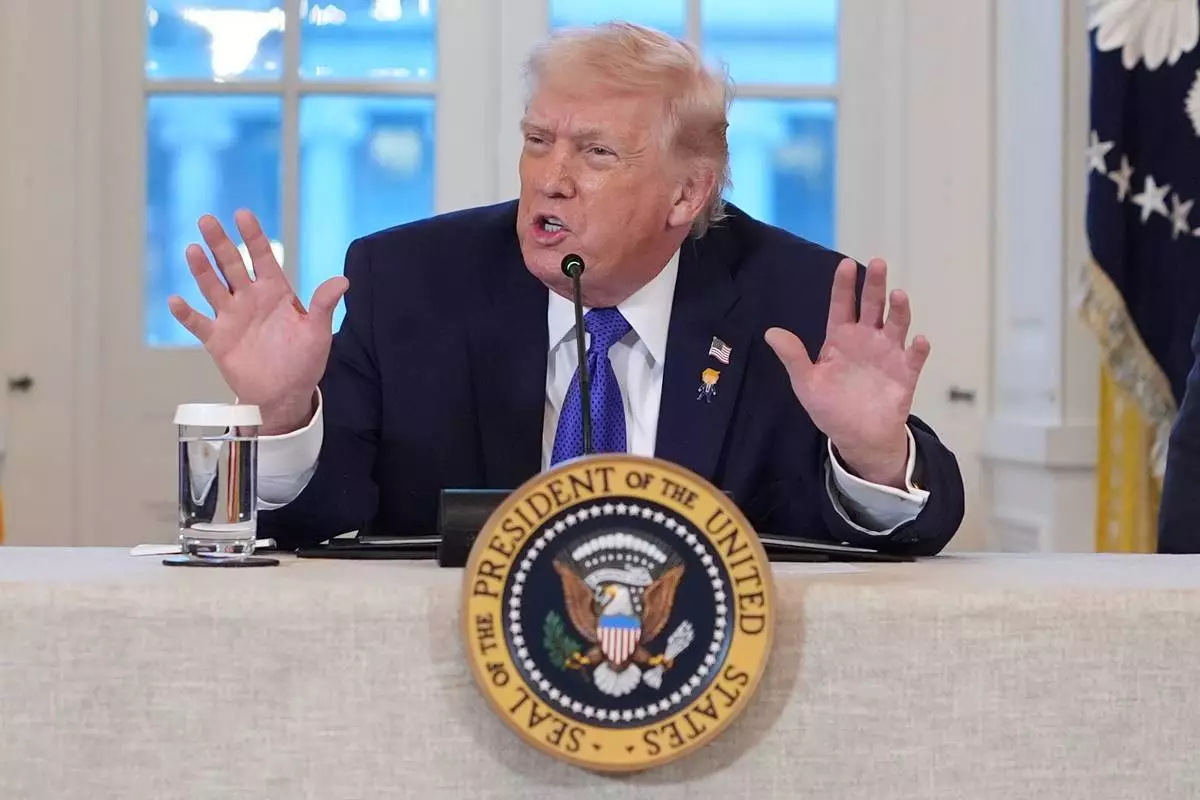
President Donald Trump speaks during a meeting with oil executives in the East Room of the White House, Friday, Jan. 9, 2026, in Washington. (AP Photo/Evan Vucci)

President Donald Trump speaks during a meeting with oil executives in the East Room of the White House, Friday, Jan. 9, 2026, in Washington. (AP Photo/Evan Vucci)

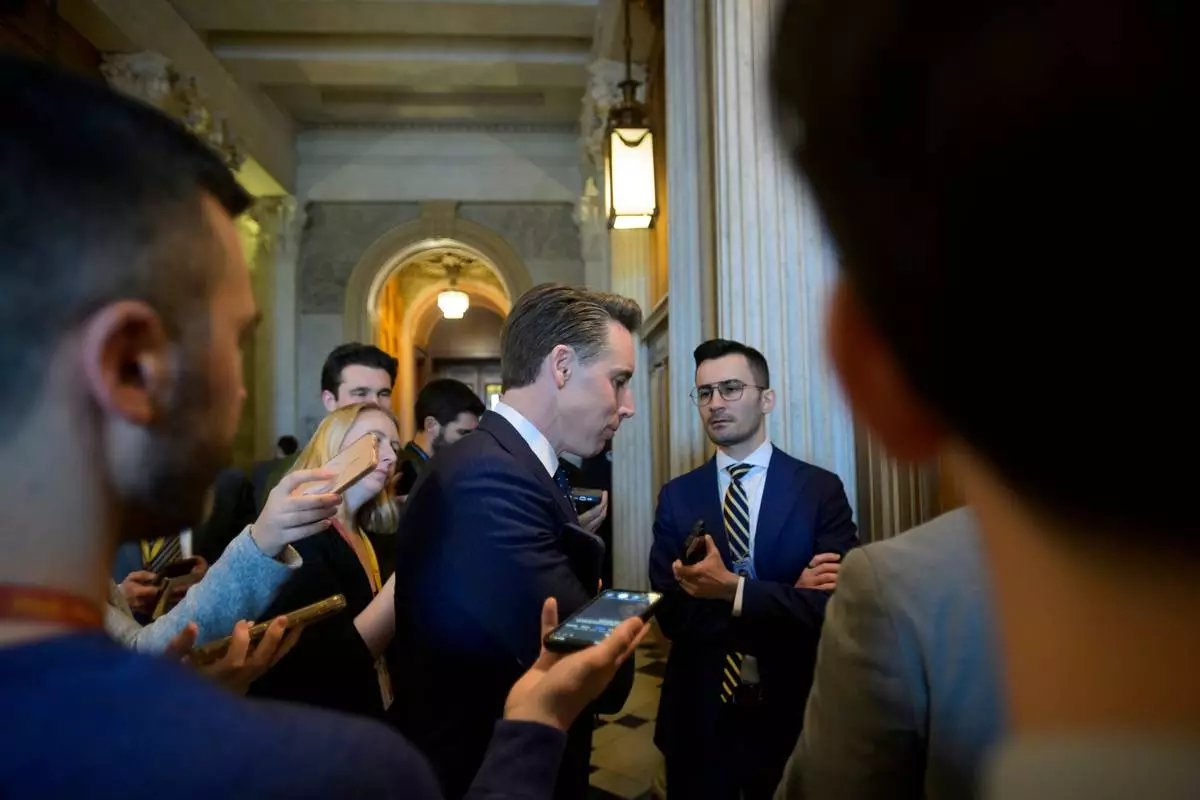
Sen. Josh Hawley, R-Mo., talks with reporters outside the Senate chamber during a vote at the Capitol, Tuesday, Jan. 6, 2026, in Washington. (AP Photo/Rod Lamkey, Jr.)

Sen. Josh Hawley, R-Mo., talks with reporters outside the Senate chamber during a vote at the Capitol, Tuesday, Jan. 6, 2026, in Washington. (AP Photo/Rod Lamkey, Jr.)

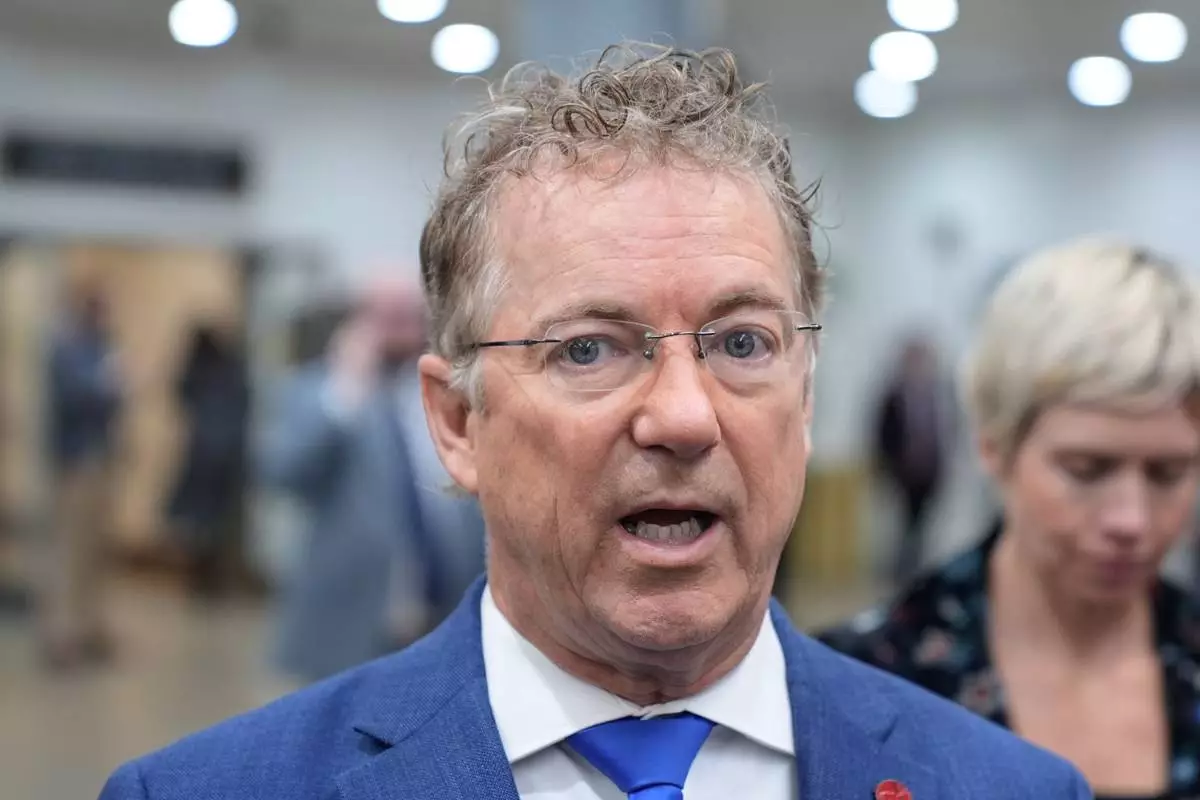
Sen. Rand Paul, R-Ky., speaks with reporters at the Senate Subway on Capitol Hill, Thursday, Jan. 8, 2026, in Washington. (AP Photo/Mariam Zuhaib)

Sen. Rand Paul, R-Ky., speaks with reporters at the Senate Subway on Capitol Hill, Thursday, Jan. 8, 2026, in Washington. (AP Photo/Mariam Zuhaib)

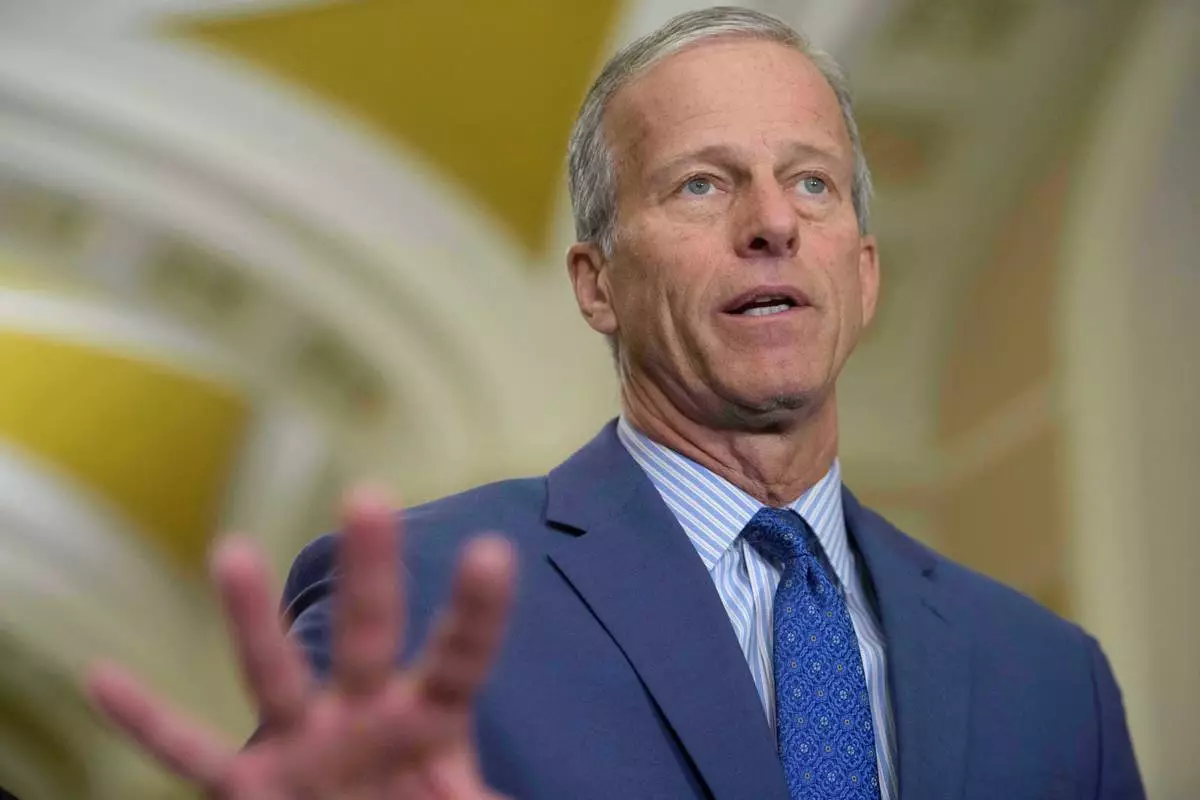
Senate Majority Leader John Thune, R-S.D., speaks during a news conference at the Capitol, Tuesday, Jan. 13, 2026, in Washington. (AP Photo/Rod Lamkey, Jr.)

Senate Majority Leader John Thune, R-S.D., speaks during a news conference at the Capitol, Tuesday, Jan. 13, 2026, in Washington. (AP Photo/Rod Lamkey, Jr.)

Recommended Articles