The National Museum of China will stage an exhibition in Hong Kong on August 27 to commemorate the 80th anniversary of the victory in the Chinese People's War of Resistance Against Japanese Aggression (1931-1945).
All 82 items for this event have arrived in Hong Kong.
The exhibition will display 183 items from the National Museum and the Hong Kong Museum of History, as well as from various other museums, cultural institutions, and collectors based in Hong Kong.
Among the 82 items from the National Museum, there are eight first-grade items, including "On Protracted War," written by Comrade Mao Zedong in June 1938, and a broadsword used by the Chinese troops during the Battle of Tai'erzhuang in 1938.
The Battle of Tai'erzhuang was the first major Japanese defeat since the beginning of the war, which shattered the myth of the Japanese military's invincibility and yielded a significant boost to Chinese morale.
"This iron plate was made of special material, which was melted from bullet shells used during the January 28th Incident. The words of Huang Yanpei, a democratic personage, were inscribed on the plate, reading: 'Why does the iron seem spotted? It's melted with blood of soldiers.' He said that as he witnessed the cruelty of war, as well as the bloodshed and sacrifice of our soldiers," said Huang Li, a senior research librarian of the National Museum.
Not long after the September 18th Incident in 1931, Japan launched an aggressive assault on Shanghai, known as the January 28th Incident, in an attempt to divert international attention and to bring China's national government to its knees. China's 19th Route Army, led by Generals Cai Tingkai and Jiang Guangnai, put up heroic resistance.
The brave resistance from the Chinese military and the people thwarted the attempt by the Japanese military to take the whole of Shanghai. After changing the command of the attacking forces three times to no avail, Japan had to settle for a negotiated solution and signed the Shanghai Ceasefire Agreement with China's national government.
On August 15, 1945, Japan announced unconditional surrender, 14 years after it invaded northeast China and eight years after its full-scale invasion of China.
On October 25, 1945, a ceremony to accept Japan's surrender in the Taiwan Province of the China war theater of the Allied powers was held in Taipei. From that point on, China regained control of Taiwan, both de jure and de facto.
A journalist named Chen Zhenfei was invited to attend the ceremony, and he treasured his entry pass over the years, eventually donating it to the National Museum.
"It is believed that the end of the Japanese occupation in Taiwan on Oct 25, 1945, marked the complete victory of the Chinese People's War of Resistance Against Japanese Aggression. This journalist was invited to attend the ceremony, where he was very moved. He kept the entry pass as a memorial and eventually donated it to our museum. It is a witness to the war and the recovery of Taiwan," Huang said.
Another exhibition titled "International Friends and China's War of Resistance against Japanese Aggression" is scheduled to open at the National Museum of China in Beijing in early September.
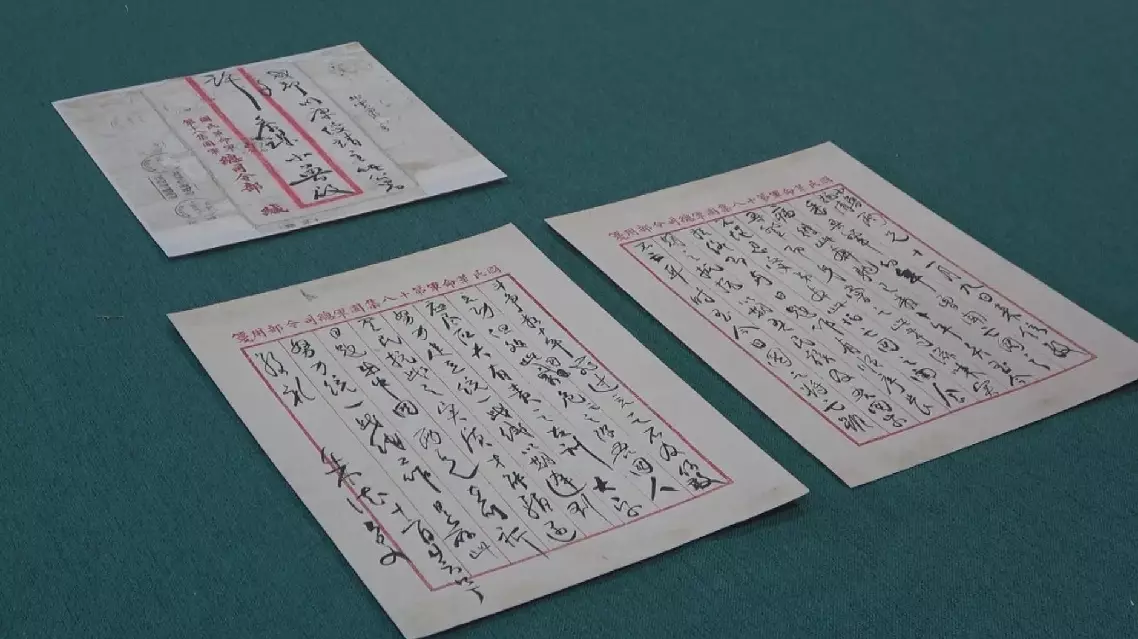
China's National Museum to hold exhibition on war against Japanese aggression in Hong Kong