ATLANTA (AP) — Lawyers for a Spanish-language journalist who has been held in federal immigration detention since June argue in a court filing that the government is retaliating against him for his news coverage and is holding him in violation of his constitutional rights.
Local police in DeKalb County, just outside Atlanta, arrested Mario Guevara while he was covering a protest June 14, and U.S. Immigration and Customs Enforcement took custody of him a few days later. He is being held in an immigration detention center in Folkston, in southeast Georgia, a five-hour drive from his family in suburban Atlanta.
A petition filed in federal court late Wednesday says the government is violating Guevara's constitutional rights to free speech and due process. It argues that he is being punished for filming police, which is legal, and that he is being subjected to unlawful prior restraint because he's unable to report while in custody.
The filing asks the court to order his release “so that he may rejoin his family and community and pursue his constitutionally protected journalistic activities.”
The filing names Department of Homeland Security Secretary Kristi Noem, U.S. Attorney General Pam Bondi and top ICE officials.
“Accusations that Mario Guevara was arrested by ICE because he is a journalist are completely FALSE,” DHS spokesperson Tricia McLaughlin said in an emailed statement. The Department of Justice declined to comment.
Guevara, 47, fled his native El Salvador two decades ago because he had suffered violence and harassment there for his work as a journalist. He has continued to work as a journalist since arriving in the Atlanta area. He attracted a large following while working for years for Mundo Hispanico, a Spanish-language newspaper, before starting a digital news outlet called MG News a year ago.
He frequently arrives on the scene where ICE or other law enforcement agencies are active, often acting on tips from community members. He regularly livestreams what he’s seeing on social media.
McLaughlin, the DHS spokesperson, said Guevara was placed in deportation proceedings because he is in the country illegally.
His lawyers have said he is authorized to work and remain in the U.S. A previous immigration case against him was administratively closed more than a decade ago. He has a pending visa petition and is eligible for a green card, the court filing says.
He was livestreaming video on social media from a “No Kings” rally protesting President Donald Trump’s administration when Doraville police arrested him.
Video from his arrest shows Guevara wearing a bright red shirt under a protective vest with “PRESS” printed across his chest. He could be heard telling a police officer, “I’m a member of the media, officer.” He was standing on a sidewalk with other journalists, with no sign of big crowds or confrontations around him, moments before he was taken away.
Police charged Guevara with unlawful assembly, obstruction of police and being a pedestrian on or along the roadway. His lawyers worked to get him released and he was granted bond in DeKalb County, but ICE had put a hold on him and he was held until they came to pick him up.
DeKalb County Solicitor-General Donna Coleman-Stribling on June 25 dismissed the charges, saying video showed Guevara was “generally in compliance and does not demonstrate the intent to disregard law enforcement directives.”
The sheriff’s office in neighboring Gwinnett County announced June 20, once Guevara was already in ICE custody, that it had secured warrants against him on charges of distracted driving, failure to obey a traffic control device and reckless driving. Gwinnett County Solicitor-General Lisamarie Bristol announced July 10 that she would not pursue those charges.
An immigration judge last month set a $7,500 bond for Guevara, but that order has been put on hold while the government appeals it.
His arrest and continued detention have been decried by journalism and press freedom groups, as well as by some public officials in Georgia. His adult children have been vocal in calling for his release.
“Mr. Guevara is a pillar of the Hispanic community in the Atlanta area, and his relationships with the Hispanic community, law enforcement, and civic and religious organizations allow him to serve as a bridge between various stakeholders in his community,” Wednesday's court filing says.
The government's arguments during his bond hearing in immigration court and subsequent filings in that case have relied “almost exclusively on Mr. Guevara's reporting as justification for his continued detention,” the filing says.
The government's filings detailed several occasions when Guevara had recorded or livestreamed law enforcement activities and posted videos that included undercover agents and their vehicles online, arguing that he's a danger to the community.
His lawyers counter that livestreaming, recording and publishing videos of law enforcement activity in public — even if those videos identify officers and their vehicles — is protected by the First Amendment. They also note that all charges against Guevara had been dismissed and he hasn't been convicted of any crimes during his two decades in the U.S.
The petition was filed in Brunswick by the American Civil Liberties Union, the ACLU of Georgia, the University of Georgia law school's First Amendment Clinic and Guevara's individual attorneys.
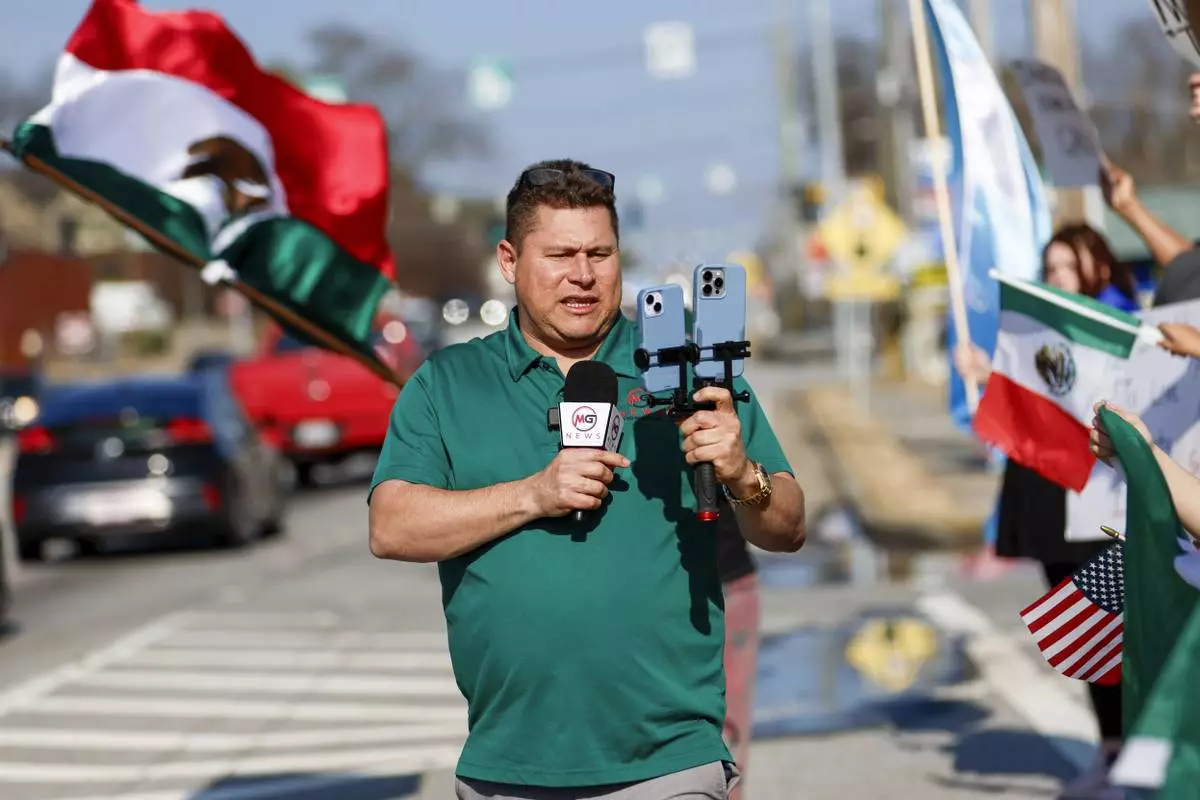
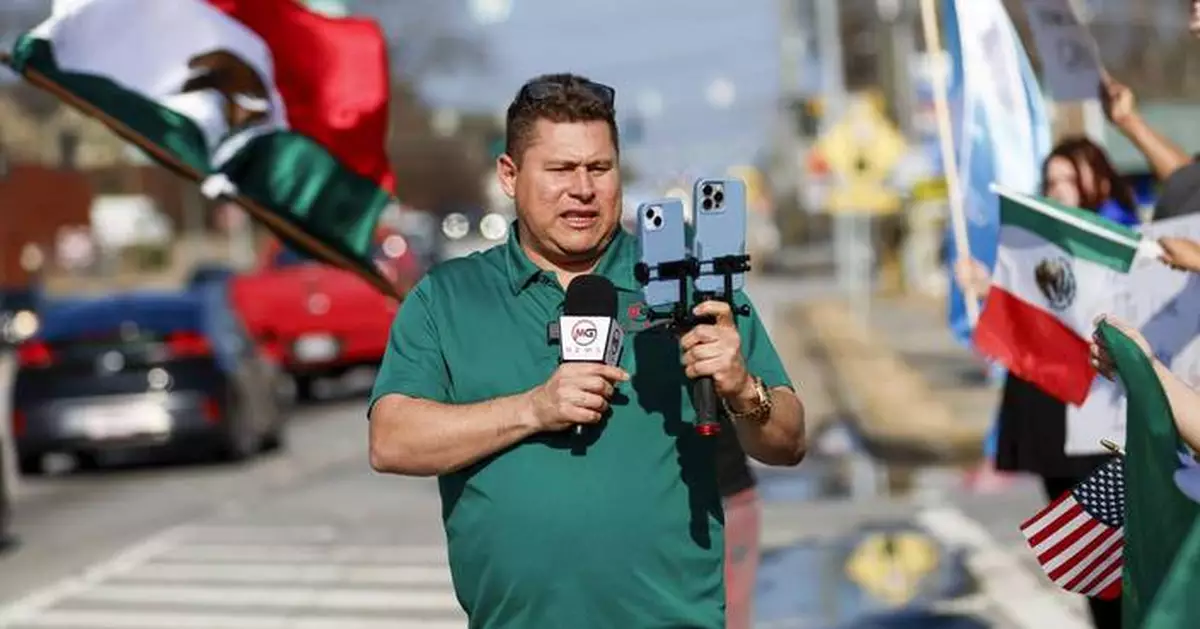
Mario Guevara, the metro Atlanta-based Spanish-language reporter, covers a protest against immigration enforcement on Buford Highway, Ga., on Saturday, Feb. 1, 2025. (Miguel Martinez/Atlanta Journal-Constitution via AP)