Skip to Content Facebook Feature Image

China discovers large shale gas reserves

China

China

China

China discovers large shale gas reserves

2025-08-22 10:36 Last Updated At:11:37

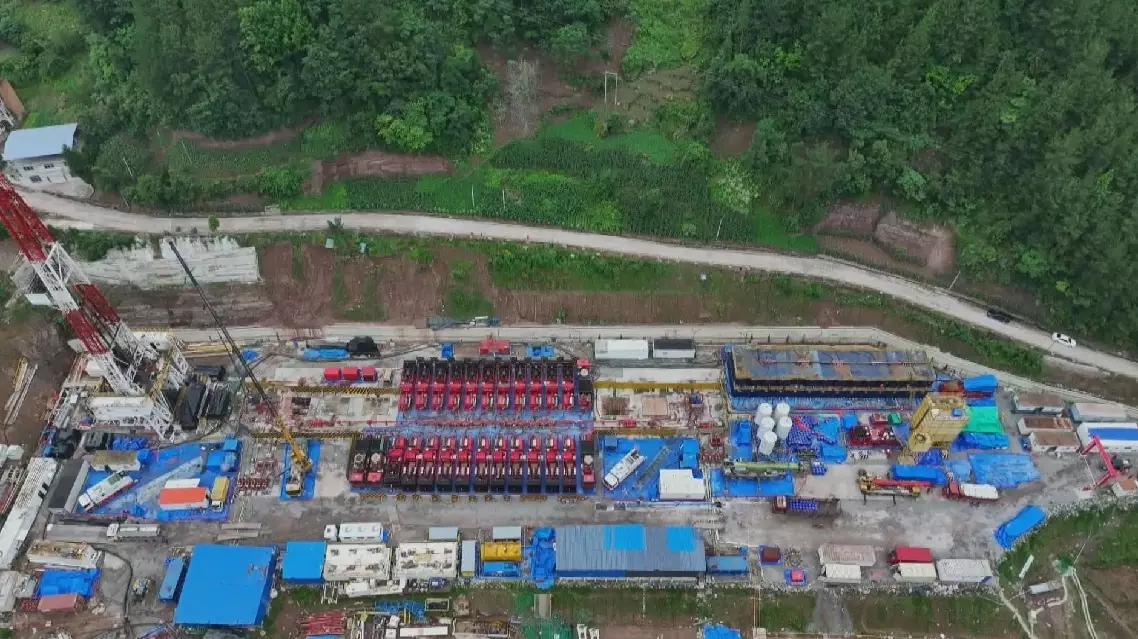
China on Thursday announced the discovery of major new shale gas reserves, with over 165 billion cubic meters of proven reserves found in a field located at the junction of the central province of Hubei and the southwest municipality of Chongqing.

This discovery marks the emergence of another large-scale shale gas field in China, with this find named the Hongxing shale gas field, said the China Petrochemical Corporation (Sinopec), one of the country's three biggest oil companies.

The shale gas reserves at this site were found at depths between 3,300 and 5,500 meters. The geological structure is complex, which poses significant challenges in terms of exploration and development, according to Sinopec.

"Based on past experience, both domestic and international research considers 30 meters as the minimum thickness for effective shale gas formations. However, the high-quality shale in the Hongxing shale gas field is only about 20 meters thick. However, the Hongxing shale is like a compressed biscuit, thin but dense. Therefore, we ultimately determined that the Hongxing shale had exploration value," said Liu Aiwu, deputy manager of Exploration Management Department of Sinopec Jianghan Oilfield.

With advancement in drilling technologies, the single-well test production increased from 89,000 cubic meters per day to 323,500 cubic meters per day.

"We've accelerated technological upgrades, opening up underground "highways" to continuously release shale gas and maximize production capacity," said Zhang Yuqiang, manager of Engineering Technology Management Department of Sinopec Jianghan Oilfield.

Currently, Sinopec has built up one shale gas field with reserves above 1 trillion cubic meters, namely the Fuling shale gas field in Chongqing, and four smaller and deep shale gas fields each with reserves exceeding 100 billion cubic meters, including the Hongxing field.
China discovers large shale gas reserves
China discovers large shale gas reserves

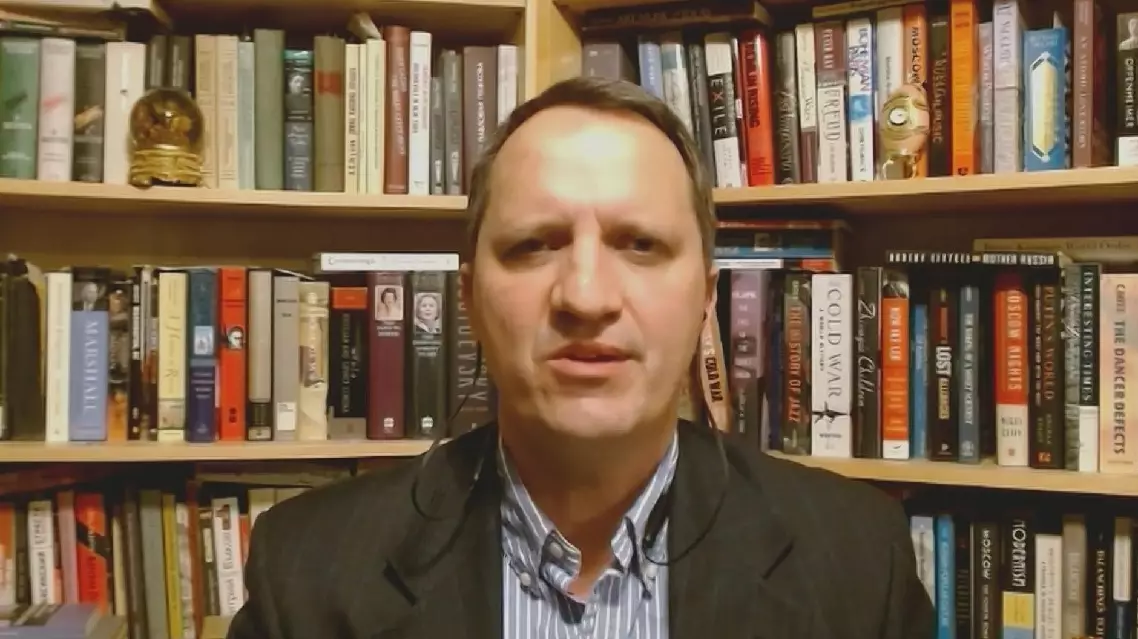
Washington's assertive moves, from attacks on Venezuela to threats against Iran and Greenland, reflect the final outburst of a declining unipolar order and may encourage countries in the Global South to band together as uncertainty grows, said American University history professor Anton Fedyashin.

U.S. President Donald Trump's policy agenda has drawn widespread criticism from governments around the world, as Latin American governments condemn the kidnapping of Venezuelan President Nicolas Maduro, and the European Union sharply rejects Trump's claims on Greenland, a territory of Denmark.

In a recent interview with China Global Television Network (CGTN), Fedyashin said that the U.S. president's brazen actions signal an impending end to America's excessive global influence.

"I think we are entering a period of global fragmentation, and that we are certainly entering a period when American hegemony is in relative decline. And I think that Donald Trump, by the way, is a manifestation. It's the 'extinction burst' of American hegemony, of the unipolar moment," he said.

Fedyashin predicted that stronger cooperation among Global South nations will become increasingly urgent as countries seek new pathways to accelerate development amid the renewed uncertainties from the U.S.

"What I think is more likely to start happening is that countries around the world will start banding together, in order to protect themselves against the United States, and against the West and whatever other outside actors there are. The world, the members of the Global South will start looking for alternatives to Western-dominated organizations, both economically and from the point of view of security. So I think that if the United States continues to be so unpredictable and aggressive, that the Global South, at least, will start coming together," said the historian.

US aggression signals hegemony faces "extinction burst": historian

US aggression signals hegemony faces "extinction burst": historian

Recommended Articles