Skip to Content Facebook Feature Image

Trump embraces tough-on-crime mantra amid DC takeover as he and Democrats claim political wins

News

Trump embraces tough-on-crime mantra amid DC takeover as he and Democrats claim political wins
News

News

Trump embraces tough-on-crime mantra amid DC takeover as he and Democrats claim political wins

2025-08-23 00:33 Last Updated At:00:40

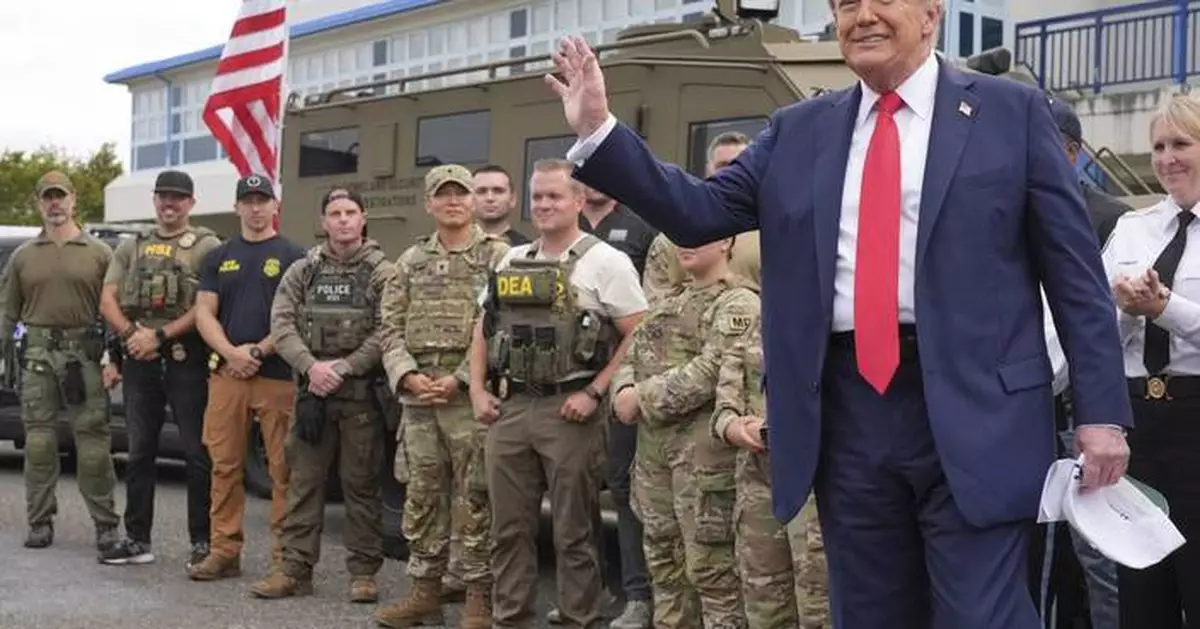
NEW YORK (AP) — President Donald Trump stood among several hundred law enforcement officers, National Guard troops and federal agents at a U.S. Park Police operations center in one of Washington, D.C.'s most dangerous neighborhoods. As the cameras rolled, he offered a stark message about crime, an issue he's been hammering for decades, as he thanked them for their efforts.

“We're not playing games,” he said. “We’re going to make it safe. And we’re going to then go on to other places.”

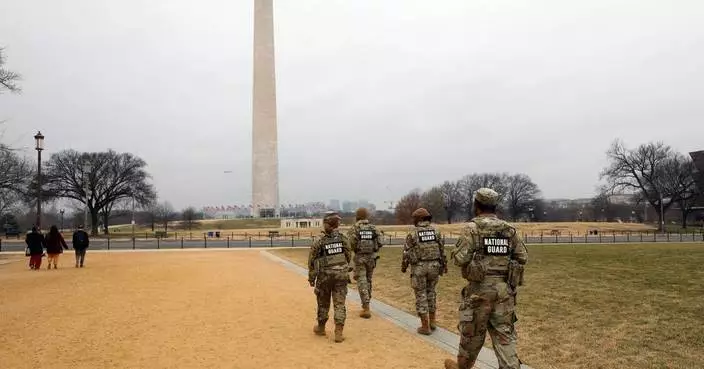
The Republican president is proudly promoting the work of roughly 2,000 National Guard troops in the city, loaned by allied governors from at least six Republican-led states. They're in place to confront what Trump describes as an out-of-control crime wave in the Democratic-run city, though violent crime in Washington, like dozens of cities led by Democrats, has been down significantly since a pandemic high.

Trump and his allies are confident that his stunning decision to dispatch troops to a major American city is a big political winner almost certain to remind voters of why they elected him last fall.

Democrats say this is a fight they’re eager to have.

Maryland Gov. Wes Moore, an Army veteran, cast Trump’s move as a dangerous political stunt designed to distract the American people from his inability to address persistent inflation, rising energy prices and major health insurance cuts, among other major policy challenges.

“I’m deeply offended, as someone who’s actually worn the uniform, that he would use the lives of these men and women and the activation of these men and women as political pawns,” Moore told The Associated Press.

Trump's extraordinary federal power grab comes as the term-limited president has threatened to send troops to other American cities led by Democrats, even as voters voice increasing concern about his authoritarian tendencies. And it could be a factor for both sides in elections in Virginia and New Jersey this fall — and next year’s more consequential midterms.

The president and White House see Trump's decision to take over the D.C. police department as a political boon and have been eager to publicize the efforts.

The White House offered a livestream of Trump’s Thursday evening appearance, and on Wednesday, Vice President JD Vance and Defense Secretary Pete Hegseth made a surprise visit to Union Station, D.C.’s busy transit hub, to thank members of the National Guard over Shake Shack burgers.

Each morning, Trump’s press office distributes statistics outlining the previous night’s law enforcement actions, including total arrests and how many of those people are in the country illegally.

The strategy echoes Trump’s crackdown on illegal immigration, which has often forced Democrats to come to the defense of people living in the country illegally, including some who have committed serious crimes.

A White House official, speaking on background to discuss internal deliberations, dismissed concerns about perceptions of federal overreach in Washington, saying public safety is a fundamental requirement and a priority for residents.

Trump defended his efforts during an interview on “The Todd Starnes Show" Thursday.

“Because I sent in people to stop crime, they said, ‘He’s a dictator.’ The real people, though, even Democrats, are calling me and saying, ‘It’s unbelievable' how much it has helped,” he said.

The White House hopes to use its actions in D.C. as a test case to inspire changes in other cities, though Trump has legal power to intervene in Washington that he doesn't have elsewhere because the city is under partial federal control.

“Everyday Americans who support commonsense policies would deem the removal of more than 600 dangerous criminals from the streets of our nation’s capital a huge success,” said White House spokesperson Taylor Rogers. “The Democrats continue to be wildly unpopular because they oppose efforts to stop violent crime and protect law-abiding citizens.”

Moore, Maryland's Democratic governor, suggested a dark motivation behind Trump's approach, which is focused almost exclusively on cities with large minority populations led by Democratic mayors of color.

“Once again, we are seeing how these incredibly dangerous and biased tropes are being used about these communities by someone who is not willing to step foot in them, but is willing to stand in the Oval Office and defend them,” Moore said.

Even before Trump called the National Guard to Washington, Democratic mayors across the country have been touting their success in reducing violent crime.

Cleveland Mayor Justin Bibb, who leads the Democratic Mayors Association, noted that over half of the 70 largest Democratic-led cities in the country have seen violent crime decrease so far this year.

“He’s stoking racial division and stoking fear and chaos,” Bibb said. “We need someone who wants to be a collaborator, not a dictator."

Democratic strategists acknowledge that Trump’s GOP has enjoyed a significant advantage in recent years on the issues of crime and immigration — issues Trump has long sought to connect. But as Democratic officials push back against the federal takeover in Washington, party strategists are offering cautious optimism that Trump's tactics will backfire.

“This is an opportunity for the party to go on offense on an issue that has plagued us for a long time,” said veteran Democratic strategist Daniel Wessel. “The facts are on our side.”

FBI statistics released this month show murder and nonnegligent manslaughter in the U.S. in 2024 fell nearly 15% from a year earlier, continuing a decline that’s been seen since a coronavirus pandemic-era crime spike.

Meanwhile, recent public polling shows that Republicans have enjoyed an advantage over Democrats on the issue of crime.

A CNN/SSRS poll conducted in May found that about 4 in 10 U.S. adults said the Republican Party’s views were closer to their own on crime and policing, while 3 in 10 said they were more aligned with Democrats’ views. About 3 in 10 said neither party reflected their opinions. Other polls conducted in the past few years found a similar gap.

Trump also had a significant edge over Democrat Kamala Harris on the issue in the 2024 election. About half of voters said Trump was better able to handle crime, while about 4 in 10 said this about Harris, according to AP VoteCast, a survey of the American electorate.

At the same time, Americans have expressed more concern about the scope of presidential power since Trump took office for a second time in January.

An AP-NORC poll conducted in April found that about half of U.S. adults said the president has “too much” power in the way the U.S. government operates these days, up from 32% in March 2024.

The unusual military presence in a U.S. city, which featured checkpoints across Washington staffed in some cases by masked federal agents, injected a sense of fear and chaos into daily life for some people in the nation's capital.

At least one day care center was closed Thursday as childcare staff feared the military action, which has featured a surge in immigration enforcement, while local officials raised concerns about next week’s public school openings.

Moore said he would block any push by Trump to send the National Guard into Baltimore.

“I have not seen anything or any conditions on the ground that I think would justify the mobilization of our National Guard,” he said. “They think they’re winning the political argument. I don’t give a s—- about the political argument.”

AP writers Amelia Thomson-DeVeaux and Chris Megerian in Washington contributed.
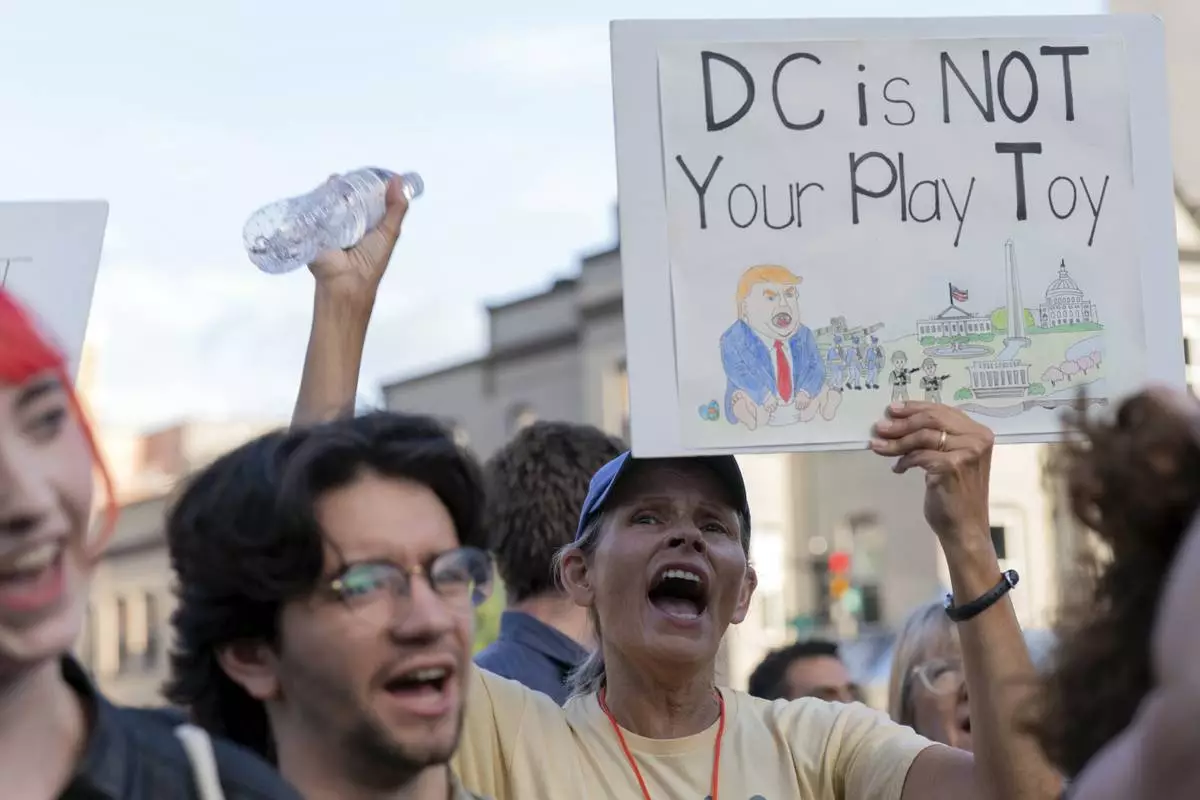
People rally against President Donald Trump's use of federal law enforcement and National Guard troops along the U street corridor in northwest Washington Thursday, Aug. 21, 2025. (AP Photo/Jose Luis Magana)
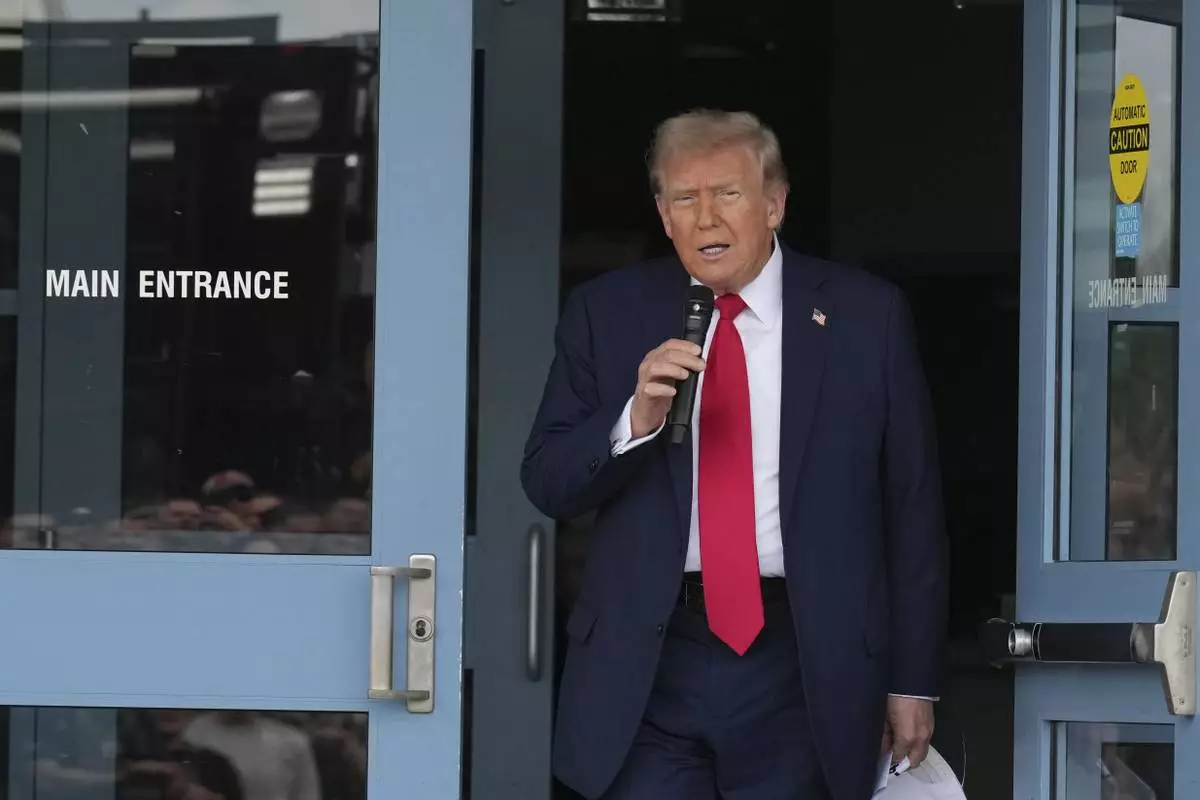
People rally against President Donald Trump's use of federal law enforcement and National Guard troops along the U street corridor in northwest Washington Thursday, Aug. 21, 2025. (AP Photo/Jose Luis Magana)

President Donald Trump speaks with members of law enforcement and National Guard soldiers, Thursday, Aug. 21, 2025, in Washington. (AP Photo/Jacquelyn Martin)
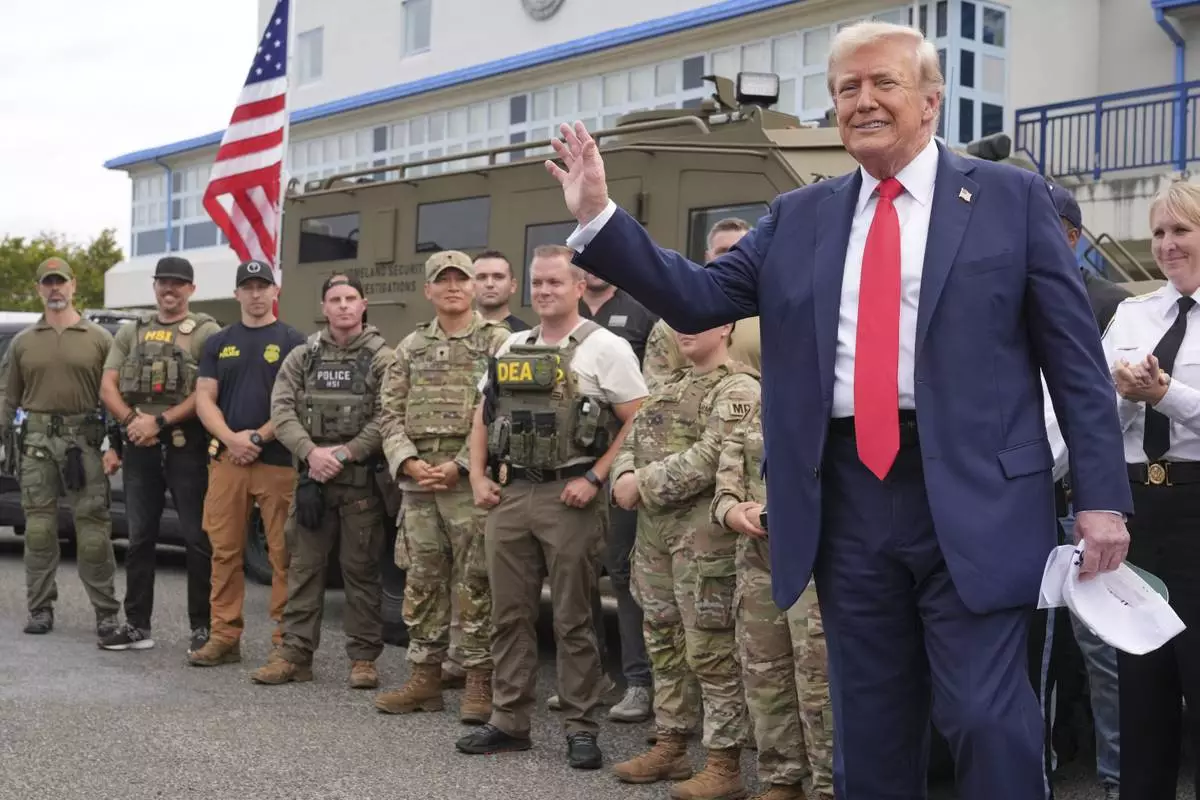
President Donald Trump speaks with members of law enforcement and National Guard soldiers, Thursday, Aug. 21, 2025, in Washington. (AP Photo/Jacquelyn Martin)
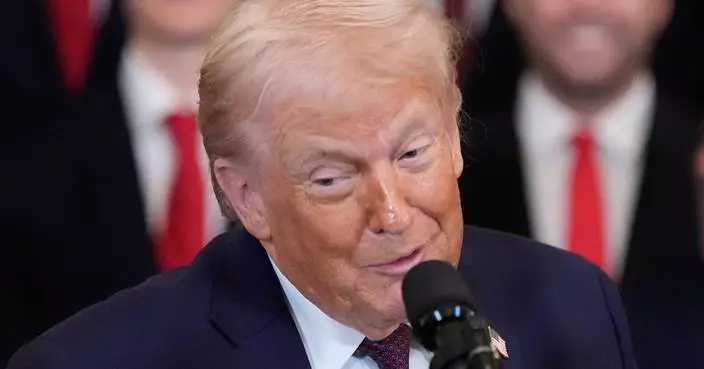
President Donald Trump speaks with members of law enforcement and National Guard soldiers, Thursday, Aug. 21, 2025, in Washington. (AP Photo/Jacquelyn Martin)

President Donald Trump speaks with members of law enforcement and National Guard soldiers, Thursday, Aug. 21, 2025, in Washington. (AP Photo/Jacquelyn Martin)
WASHINGTON (AP) — Before President Donald Trump's administration started dismantling the Education Department, the agency served as a powerful enforcer in cases of sexual violence at schools and universities. It brought the weight of the government against schools that mishandled sexual assault complaints involving students.

That work is quickly fading away.

The department’s Office for Civil Rights was gutted in Trump’s mass layoffs last year, leaving half as many lawyers to investigate complaints of discrimination based on race, sex or disability in schools. Those who remain face a backlog of more than 25,000 cases.

Investigations have dwindled. Before the layoffs last March, the office opened dozens of sexual violence investigations a year. Since then, it's opened fewer than 10 nationwide, according to internal data obtained by The Associated Press.

Yet Trump's Republican administration has doubled down on sexual discrimination cases of another kind. Trump officials have used Title IX, a 1972 gender equality law, against schools that make accommodations for transgender students and athletes. The Office for Civil Rights has opened nearly 50 such investigations since Trump took office a year ago.

Even before the layoffs, critics said the office was understaffed and moved too slowly. Now, many firms that handle Title IX cases have stopped filing complaints, calling it a dead end.

“It almost feels like you’re up against the void,” said Katie McKay, a lawyer at the New York firm C.A. Goldberg.

“It feels like a big question mark right now,” she said. “How are we supposed to hold a school accountable once it has messed up?”

An Education Department spokesperson said the office is working through its caseload, blaming President Joe Biden's Democratic administration for leaving a backlog and rewriting Title IX rules to protect LGBTQ+ students. Trump officials rolled back those rules.

“The Trump Administration has restored commonsense safeguards against sexual violence by returning sex-based separation in intimate facilities,” spokesperson Julie Hartman said. “OCR is and will continue to safeguard the dignity and safety of our nation’s students.”

The layoffs have slowed work at the Office for Civil Rights across the board, but it has an outsize impact on cases of sexual violence. Students who are mistreated by their schools — including victims and accused students alike — have few other venues to pursue justice.

Many are now left with two options: File a lawsuit or walk away.

One woman said she’s losing hope for a complaint she filed in 2024. She alleges her graduate school failed to follow its own policies when it suspended but didn't expel another student found by the school to have sexually assaulted her. No one has contacted her about the complaint since 2024.

The woman recently sued her school as a last resort. She said it feels like a David and Goliath mismatch.

“They have all the power, because there is no large organization holding them accountable. It’s just me, just this one individual who’s filing this simple suit," the woman said. The AP does not typically identify people who say they are victims of sexual assault unless they grant permission.

The civil rights office is supposed to provide a free alternative to litigation. Anyone can file a complaint, which can trigger an investigation and sanctions for schools that violate federal law.

In 2024, the agency received more than 1,000 complaints involving sexual violence or sexual harassment, according to an annual report.

It’s unclear how many complaints have been filed more recently. Trump's administration has not reported newer figures. In conversations with the AP, some staffers said cases are piling up so quickly they can’t track how many involve sexual violence.

In December, the department acknowledged the civil rights backlog and announced dozens of downsized workers would be brought back to the office amid a legal challenge to their layoffs. The workers' return offers some hope to those with pending civil rights complaints. Department officials have vowed to keep pushing for the layoffs.

Before Trump was elected to his second term, the office had more than 300 pending investigations involving sexual assault, according to a public database. Most of those cases are believed to be sitting idle as investigators prioritize easier complaints, according to staffers who spoke on the condition of anonymity for fear of retribution.

The details of past cases underscore the urgency of the work.

In 2024, the office took action against a Pennsylvania school system after a girl with a disability told staff she had been sexually touched by a bus driver. She was put back on that driver’s bus later that afternoon, plus the next two days. The district was required to designate a Title IX coordinator for its schools, review previous complaints and consider compensation for the girl's family.

That year, the office demanded changes at a Montana school where a boy was pinned down by other students and assaulted after a wrestling practice. The students had been suspended for three days after school officials treated it as a case of hazing instead of sexual assault.

In another case, the office sided with a University of Notre Dame student who had been expelled over accusations of sexual misconduct. The student said the college never told him precisely what he was accused of and refused to interview witnesses he put forward.

Cases that get attention from the federal office are being handled under federal rules created during Trump’s first term. Those rules were designed to bolster the rights of students accused of sexual misconduct.

Lawyers who work with accused students see little improvement.

Justin Dillon, a Washington lawyer, said some of his recent complaints have been opened for investigation. He tells clients not to hold their breath. Even before the layoffs, cases could drag on for years, he said.

Others gave up on the office years ago. The LLF National Law Firm said it stopped filing complaints in 2021 in favor of suing schools directly. Lawyers at the firm said the office had become incapable of delivering timely outcomes, which was only worsened by the layoffs.

Complaints can be resolved several ways. They can be dismissed if they don't pass legal muster. Many go to mediation, akin to a settlement. Some end in voluntary agreements from schools, with plans to rectify past wrongs and prevent future ones.

In 2024, under Biden, the office secured 23 voluntary agreements from schools and colleges in cases involving sexual violence, according to a public database. In 2018, during Trump’s first term, there were 58. Since Trump took office again last year, there have been none.

The dismantling of the Office for Civil Rights comes as a blow to Laura Dunn, a civil rights lawyer who was influential in getting President Barack Obama's Democratic administration to make campus sexual assault a priority. As the issue gained public attention, the office started fielding hundreds of complaints a year.

“All the progress survivors have made by sharing their story is being lost,” said Dunn, who's now a Democratic candidate for Congress in New York. “We are literally losing civil rights progress in the United States, and it’s pushing us back more than 50 years.”

The Associated Press’ education coverage receives financial support from multiple private foundations. The AP is solely responsible for all content. Find the AP's standards for working with philanthropies, a list of supporters and funded coverage areas at AP.org.

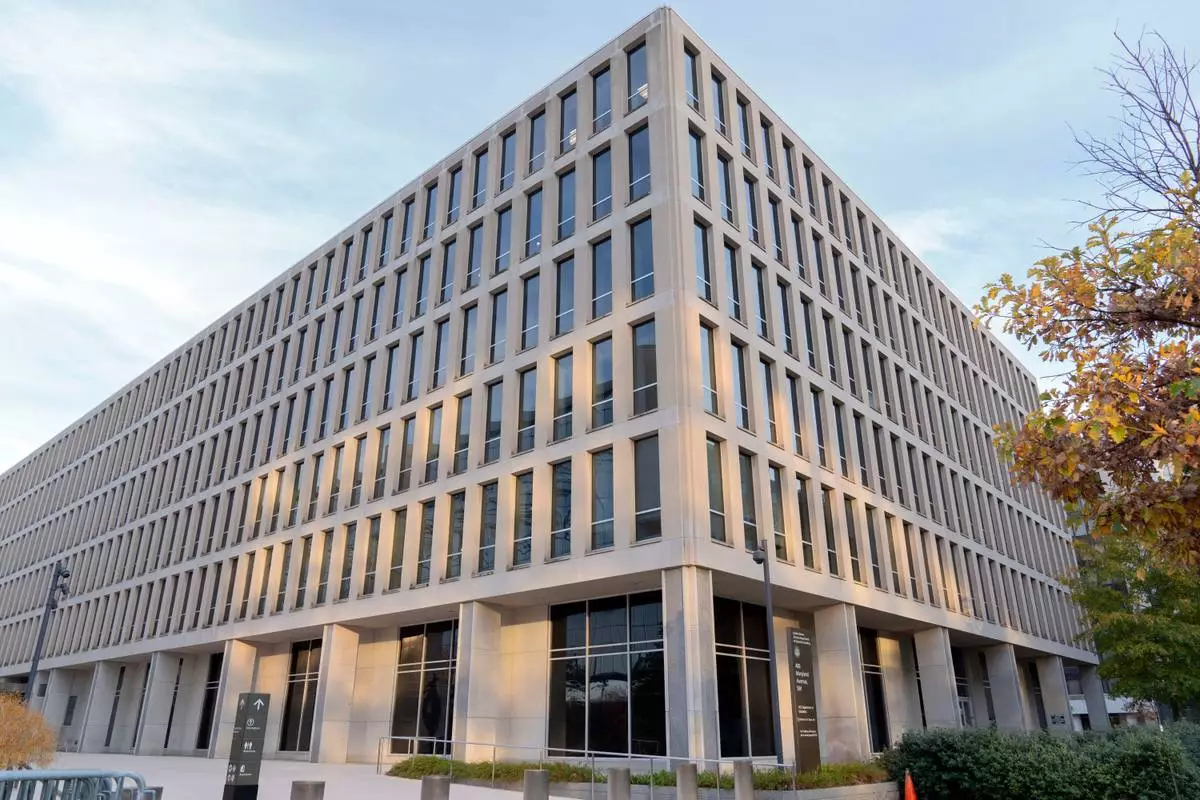
FILE - The U.S. Department of Education building is seen in Washington, on Nov. 18, 2024. (AP Photo/Jose Luis Magana, File)

FILE - The U.S. Department of Education building is seen in Washington, on Nov. 18, 2024. (AP Photo/Jose Luis Magana, File)

Recommended Articles