Skip to Content Facebook Feature Image

Justice Department won't defend grants for Hispanic-serving colleges, calling them unconstitutional

News

Justice Department won't defend grants for Hispanic-serving colleges, calling them unconstitutional
News

News

Justice Department won't defend grants for Hispanic-serving colleges, calling them unconstitutional

2025-08-23 08:21 Last Updated At:08:31

WASHINGTON (AP) — The Trump administration said Friday it will not defend a decades-old grant program for colleges with large numbers of Hispanic students that is being challenged in court, declaring the government believes the funding is unconstitutional.

In a memo sent to Congress, the Justice Department said it agrees with a lawsuit attempting to strike down grants that are reserved for colleges and universities where at least a quarter of undergraduates are Hispanic. Congress created the program in 1998 after finding Latino students were attending college and graduating at far lower rates than white students.

Justice Department officials argued the program provides an unconstitutional advantage based on race or ethnicity.

The state of Tennessee and an anti-affirmative action organization sued the U.S. Education Department in June, asking a judge to halt the Hispanic-Serving Institution program. Tennessee argued all of its public universities serve Hispanic students, but none meet the “arbitrary ethnic threshold” to be eligible for the grants. Those schools miss out on tens of millions of dollars because of discriminatory requirements, the lawsuit said.

On Friday, the Justice Department released a letter in which Solicitor General D. John Sauer notified Republican House Speaker Mike Johnson that the department “has decided not to defend” the program, saying certain aspects of it are unconstitutional. The letter, dated July 25, cited the 2023 Supreme Court decision outlawing affirmative action, which said “outright racial balancing” is “patently unconstitutional.”

The Justice Department declined to comment.

Tennessee is backed in the suit by Students for Fair Admissions, a conservative legal group that successfully challenged affirmative action in admissions at Harvard and the University of North Carolina. That suit led to a 2023 Supreme Court ruling that forbids universities from considering students’ race in admissions decisions.

Edward Blum, president of Students for Fair Admissions, said Friday the group would decline to comment.

More than 500 colleges and universities are designated as Hispanic-Serving Institutions, making them eligible for the grant program. Congress appropriated about $350 million for the program in 2024. Colleges compete for the grants, which can go toward a range of uses, from building improvements to science programs.

Former President Joe Biden made Hispanic-serving universities a priority, signing an executive action last year that promised a new presidential advisory board and increased funding. President Donald Trump revoked the order his first day in office.

Trump is taking steps to dismantle the Education Department and has called for massive funding cuts, yet his 2026 budget request preserved grants for Hispanic-serving colleges and even asked Congress for a slight increase. Even so, there have been doubts about his administration’s commitment to the funding.

A national association of Hispanic-serving universities filed a motion last month to intervene as a defendant in the Tennessee lawsuit, voicing concern that the federal government would not adequately represent the group’s members.

The Hispanic Association of Colleges and Universities said Trump’s agenda is “entirely adverse” to the group’s interests, citing the president’s aim to close the Education Department entirely. The administration is “on record denouncing programs like HSIs, that take account of and seek to redress ethnic or racial disparity,” the group wrote.

Tennessee and Students for Fair Admissions did not object to the group’s request to lead the legal defense.

Unlike historically Black or Native American tribal colleges and universities, which receive their designations based on their missions, any college can receive the HSI label and grants if its Latino enrollment makes up at least 25% of the undergraduate student body.

The list of HSIs includes flagship campuses like the University of Texas at Austin and the University of Arizona, along with many community colleges and smaller institutions.

In its court filing, the national association argues the grants are constitutional and help put its members on an even playing field.

The group’s schools enroll 67% of the nation’s Latino undergraduate students, yet studies find those schools receive far less in state and federal funding than other institutions. Hispanic-serving universities are open to students of all races — as an example, the association pointed to Southern Adventist University, a private school in Tennessee whose student body is 28% Hispanic and 40% white.

The Justice Department generally has a duty to uphold the Constitution and federal legislation, but in rare cases it can refuse to defend laws it believes are unconstitutional. The Obama administration did so in 2011 when it refused to enforce the Defense of Marriage Act. During his first term, Trump did the same with the Affordable Care Act.

The Trump administration has fought to end diversity, equity and inclusion policies in government, education and business, arguing that they discriminate against white and Asian American people.

Gecker reported from San Francisco.

The Associated Press’ education coverage receives financial support from multiple private foundations. AP is solely responsible for all content. Find AP’s standards for working with philanthropies, a list of supporters and funded coverage areas at AP.org.
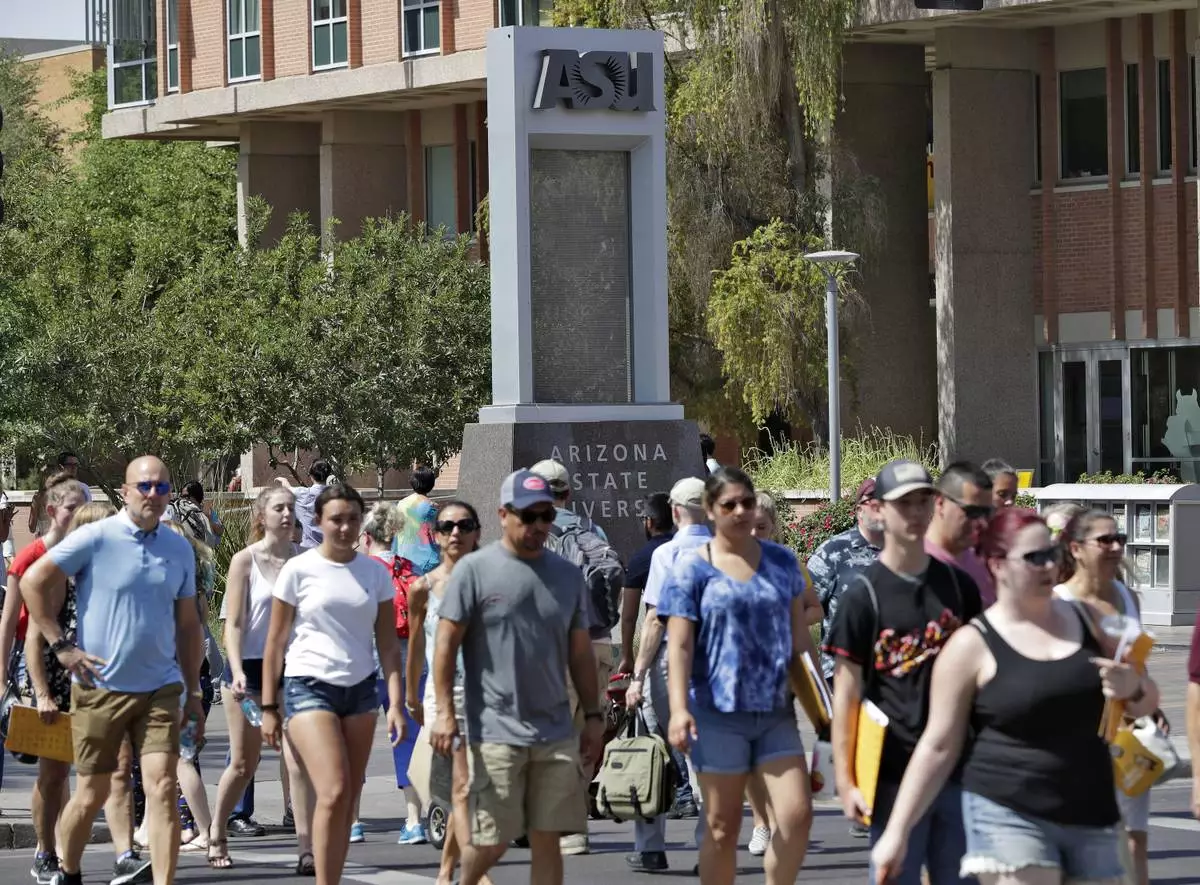
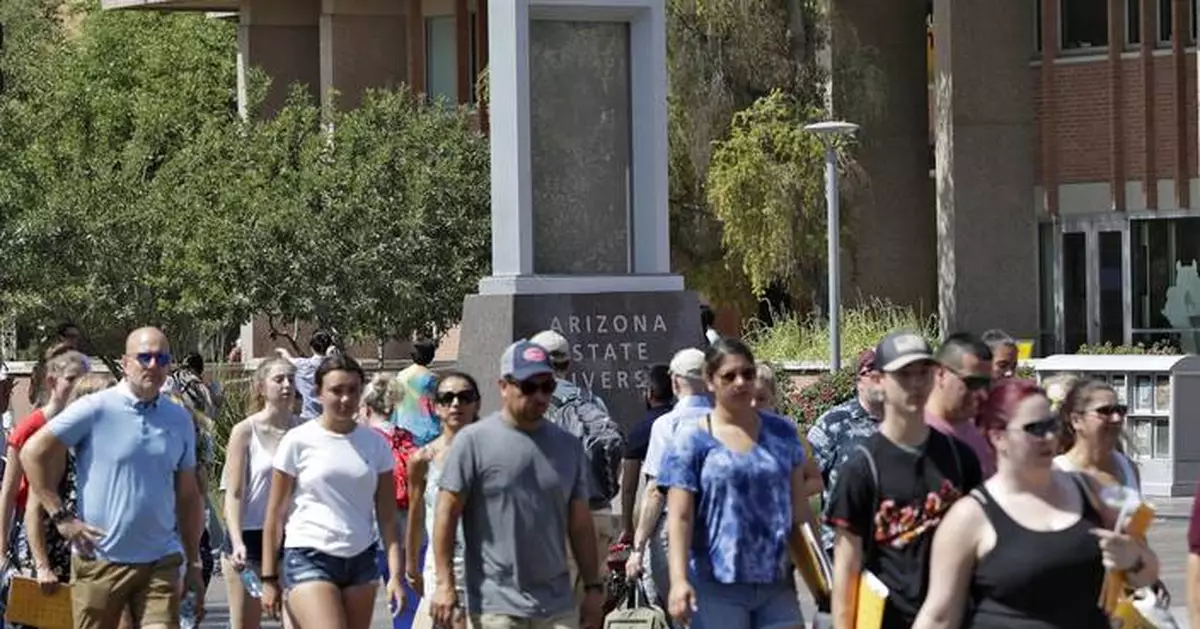
FILE - Pedestrians cross University Ave on the campus of Arizona State University in Tempe, Ariz., July 25, 2018. (AP Photo/Matt York, File)
FILE - Pedestrians cross University Ave on the campus of Arizona State University in Tempe, Ariz., July 25, 2018. (AP Photo/Matt York, File)
KAMPALA, Uganda (AP) — Voting began Thursday in Uganda’s presidential election despite a days-long internet shutdown that has been criticized as an anti-democratic tactic in a country where the president has held office since 1986.

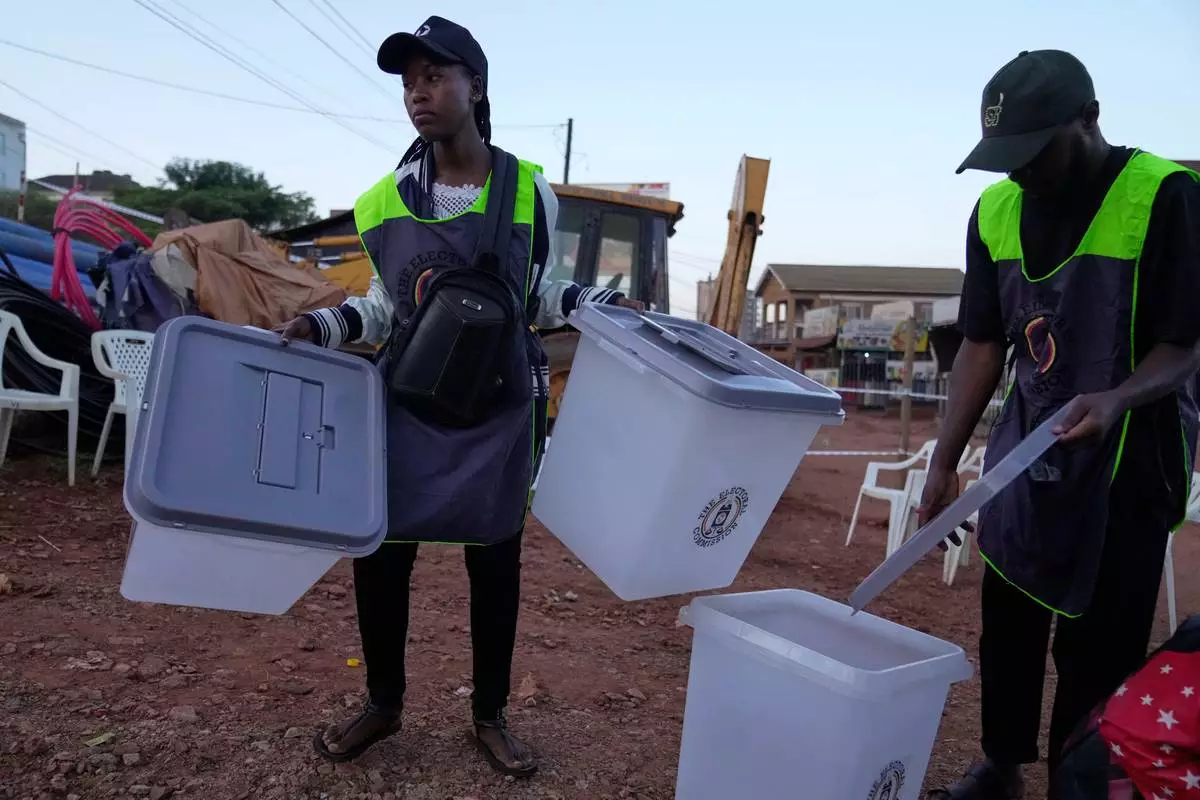
Crowds gathered and long lines formed in some areas as polling station openings were delayed and voting materials were seen being delivered after the scheduled 7 a.m. opening time.

President Yoweri Museveni, 81, faces seven other candidates, including Robert Kyagulanyi, a musician-turned-politician best known as Bobi Wine, who is calling for political change.

The East African country of roughly 45 million people has 21.6 million registered voters. Polls are expected to close at 4 p.m. Thursday, according to the electoral commission. Results are constitutionally required to be announced in 48 hours.

Impatient crowds gathered outside polling stations expressing concerns over the delays Thursday morning. Umaru Mutyaba, a polling agent for a parliamentary candidate, said it was “frustrating” to be waiting outside a station in the capital Kampala.

“We can’t be standing here waiting to vote as if we have nothing else to do," he said.

Ssemujju Nganda, a prominent opposition figure and lawmaker seeking reelection in Kira municipality, told The Associated Press he had been waiting in line to vote for three hours.

In addition to delayed voting materials, biometric voter identification machines were not working properly, Nganda said, adding that delays likely will lead to apathy and low turnout in urban areas where the opposition has substantial support.

“It’s going to be chaos,” he said.

Uganda has not witnessed a peaceful transfer of presidential power since independence from British colonial rule six decades ago.

Museveni has served the third-longest term of any African leader and is seeking to extend his rule into a fifth decade. Some critics say removing him through elections remains difficult, but the aging president’s authority has become increasingly dependent on the military led by his son, Muhoozi Kainerugaba.

Museveni and Wine are reprising their rivalry from the previous election in 2021, when Wine appealed to mostly young people in urban areas. With voter turnout of 59%, Wine secured 35% of the ballots against Museveni’s 58%, the president’s smallest vote share since his first electoral campaign three decades ago.

The lead-up to Thursday's election produced concerns about transparency, the possibility of hereditary rule, military interference and opposition strategies to prevent vote tampering at polling stations.

Uganda's internet was shut down Tuesday by the government communications agency, which cited misinformation, electoral fraud and incitement of violence. The shutdown has affected the public and disrupted critical sectors such as banking.

There has been heavy security leading up to voting, including military units deployed on the streets this week.

Amnesty International said security forces are engaging in a “brutal campaign of repression,” citing a Nov. 28 opposition rally in eastern Uganda where the military blocked exits and opened fire on supporters, killing one person.

Museveni urged voters to come out in large numbers during his final rally Tuesday.

“You go and vote, anybody who tries to interfere with your freedom will be crushed. I am telling you this. We are ready to put an end to this indiscipline,” he said.

The national electoral commission chairperson, Simon Byabakama, urged tolerance among Ugandans as they vote.

“Let us keep the peace that we have,” Byabakama said late Wednesday. “Let us be civil. Let us be courteous. Let’s be tolerant. Even if you know that this person does not support (your) candidate, please give him or her room or opportunity to go and exercise his or her constitutional right."

Authorities also suspended the activities of several civic groups during the campaign season. That Group, a prominent media watchdog, closed its office Wednesday after the interior ministry alleged in a letter that the group was involved in activities “prejudicial to the security and laws of Uganda.”

Veteran opposition figure Kizza Besigye, a four-time presidential candidate, remains in prison after he was charged with treason in February 2025.

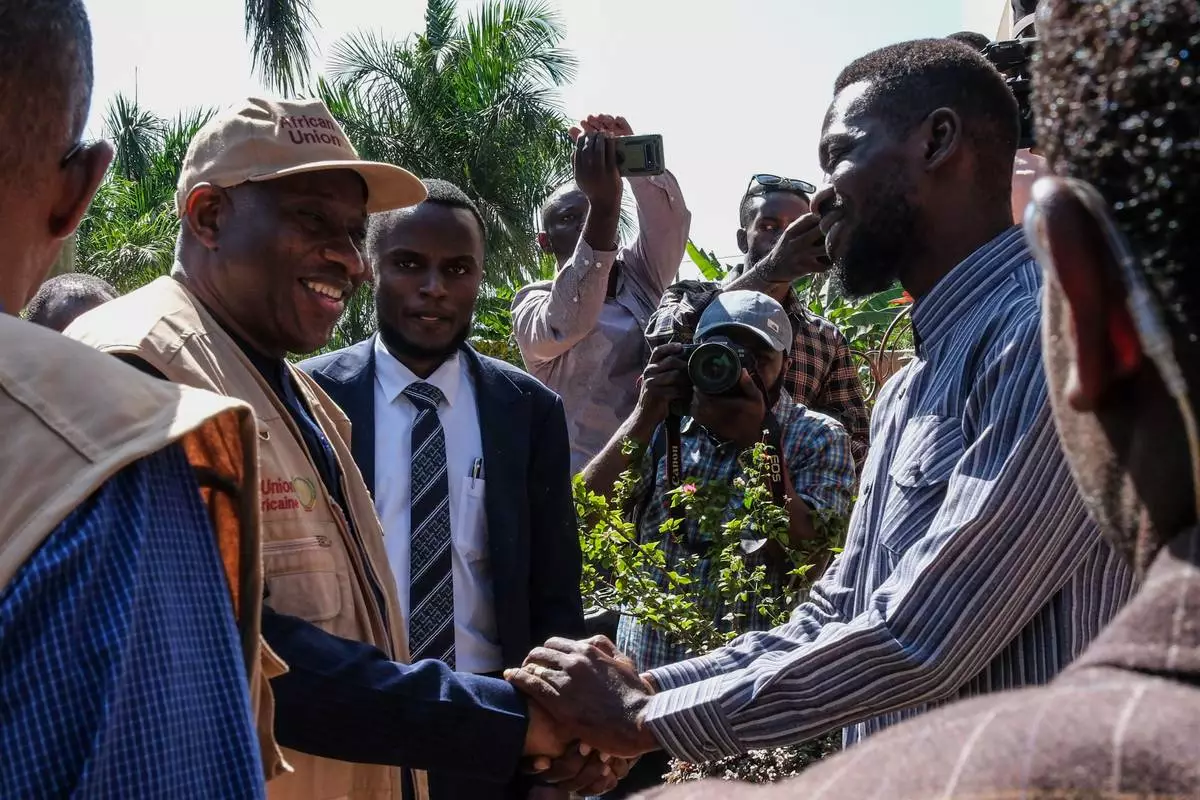
Uganda opposition presidential candidate Robert Kyagulanyi Ssentamu, known as Bobi Wine, right, greets election observers, including former Nigerian President Goodluck Jonathan, at his home in Magere village on the outskirts of Kampala, Uganda, Wednesday, Jan. 14, 2026. (AP Photo/Hajarah Nalwadda)

Uganda opposition presidential candidate Robert Kyagulanyi Ssentamu, known as Bobi Wine, right, greets election observers, including former Nigerian President Goodluck Jonathan, at his home in Magere village on the outskirts of Kampala, Uganda, Wednesday, Jan. 14, 2026. (AP Photo/Hajarah Nalwadda)

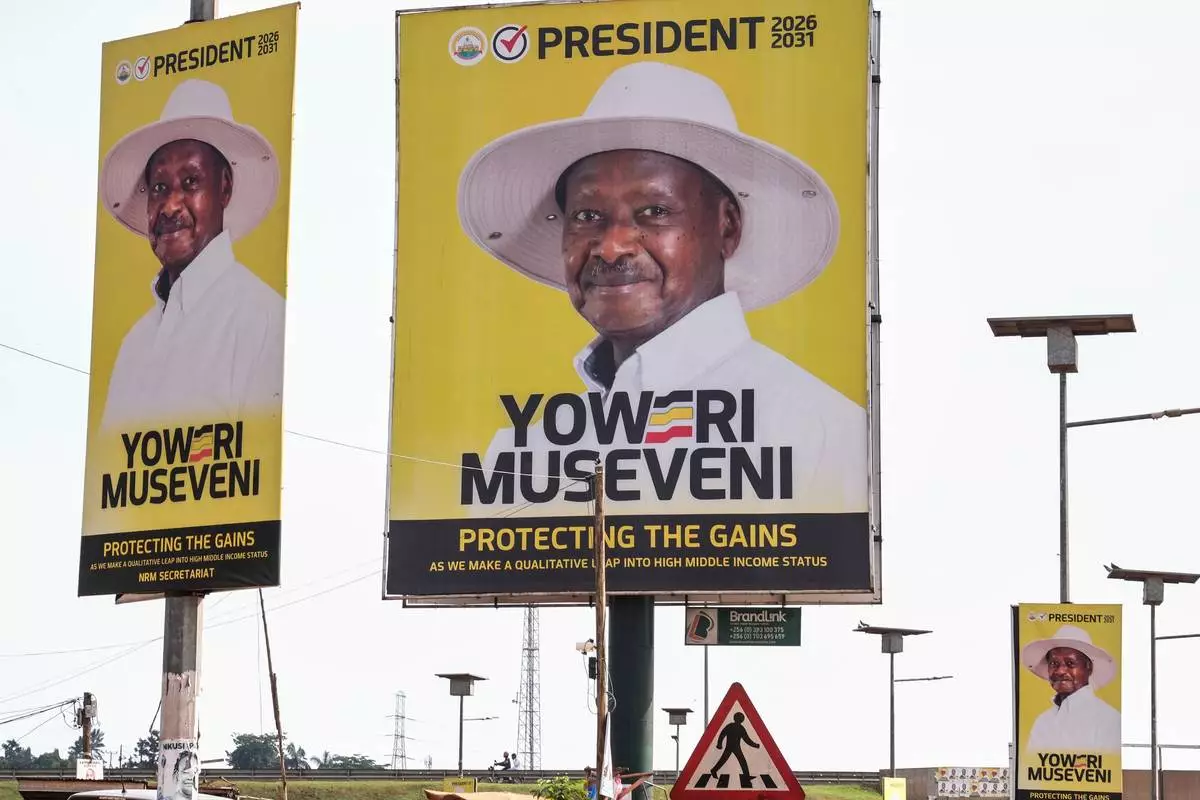
Billboards of Uganda President and National Resistance Movement (NRM) presidential candidate Yoweri Museveni are seen in Kampala, Uganda, Tuesday, Jan. 13, 2026. (AP Photo/Samson Otieno)

Billboards of Uganda President and National Resistance Movement (NRM) presidential candidate Yoweri Museveni are seen in Kampala, Uganda, Tuesday, Jan. 13, 2026. (AP Photo/Samson Otieno)

Electoral workers deliver ballot boxes to a polling station during presidential election in Kampala, Uganda, Thursday, Jan. 15, 2026. (AP Photo/Brian Inganga)

Electoral workers deliver ballot boxes to a polling station during presidential election in Kampala, Uganda, Thursday, Jan. 15, 2026. (AP Photo/Brian Inganga)

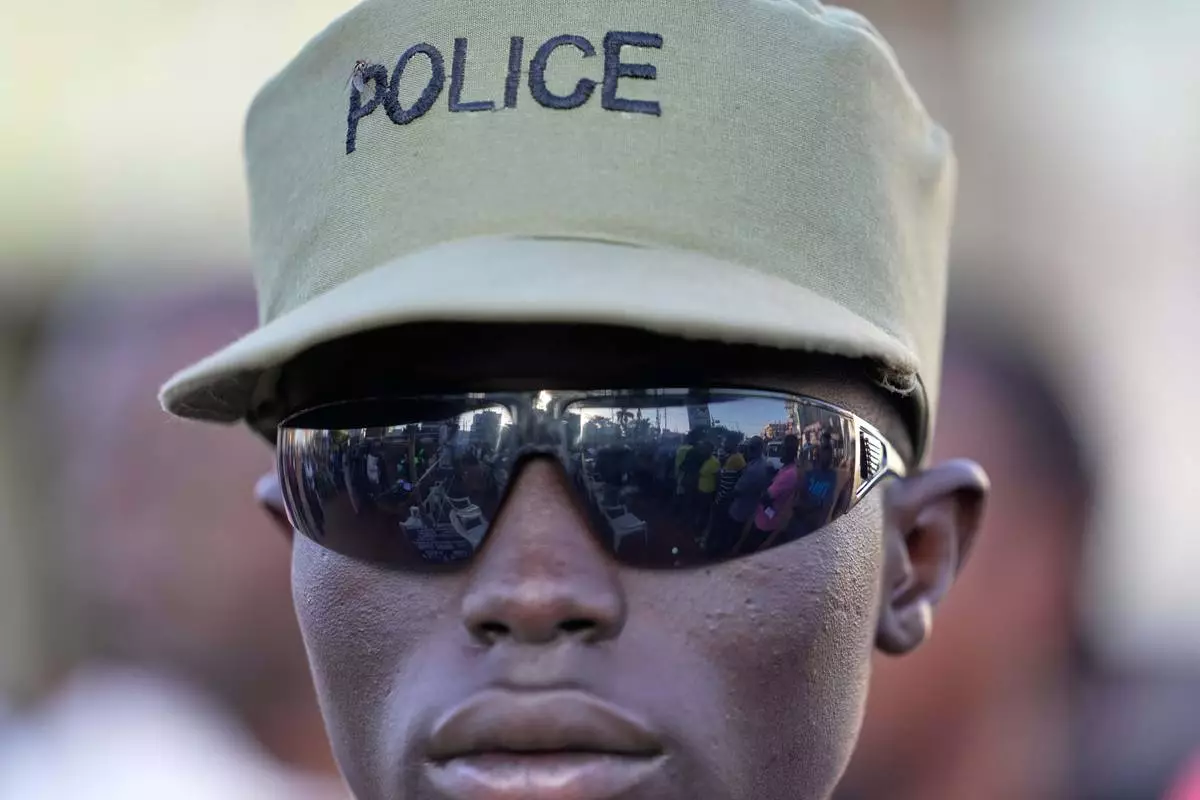
Voters are reflected in a police officer's sunglasses as they wait in line after voting failed to start on time due to system failures during presidential election in Kampala, Uganda, Thursday, Jan. 15, 2026. (AP Photo/Brian Inganga)

Voters are reflected in a police officer's sunglasses as they wait in line after voting failed to start on time due to system failures during presidential election in Kampala, Uganda, Thursday, Jan. 15, 2026. (AP Photo/Brian Inganga)

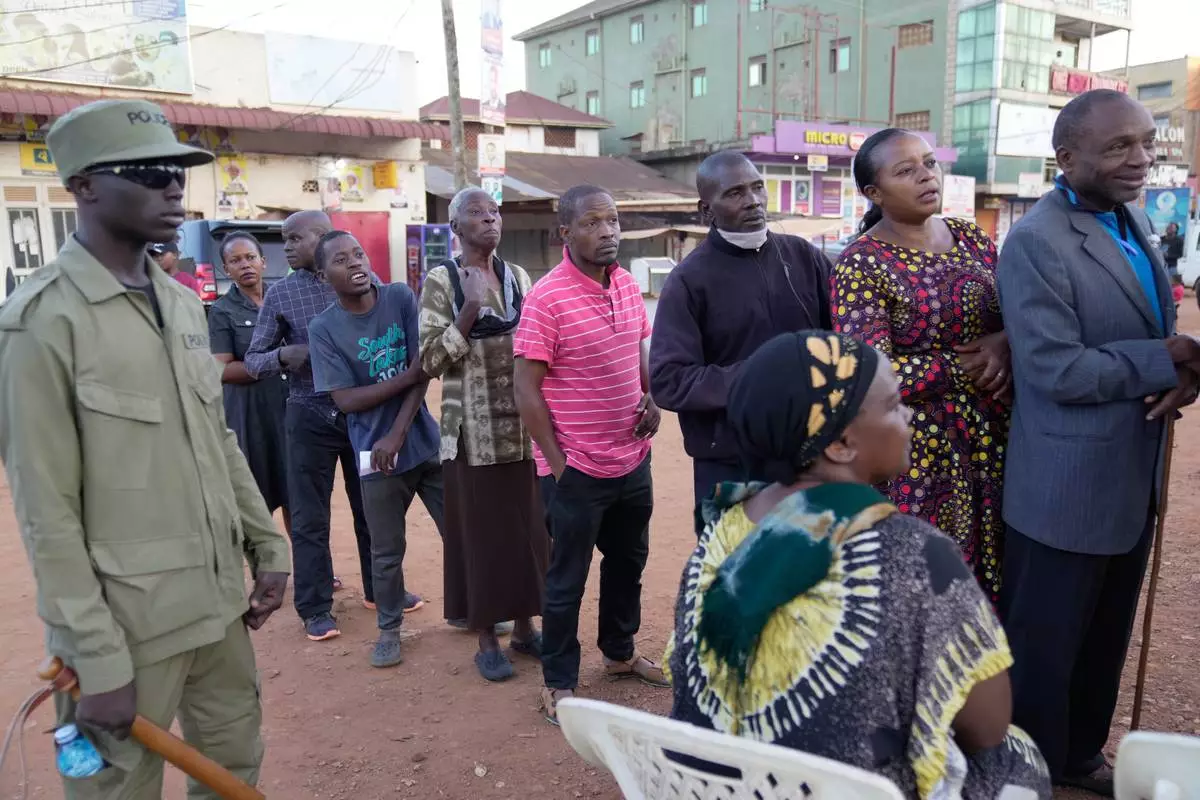
Voters wait to cast their ballots during the presidential election in Kampala, Uganda, Thursday, Jan. 15, 2026. (AP Photo/Brian Inganga)

Voters wait to cast their ballots during the presidential election in Kampala, Uganda, Thursday, Jan. 15, 2026. (AP Photo/Brian Inganga)

Recommended Articles