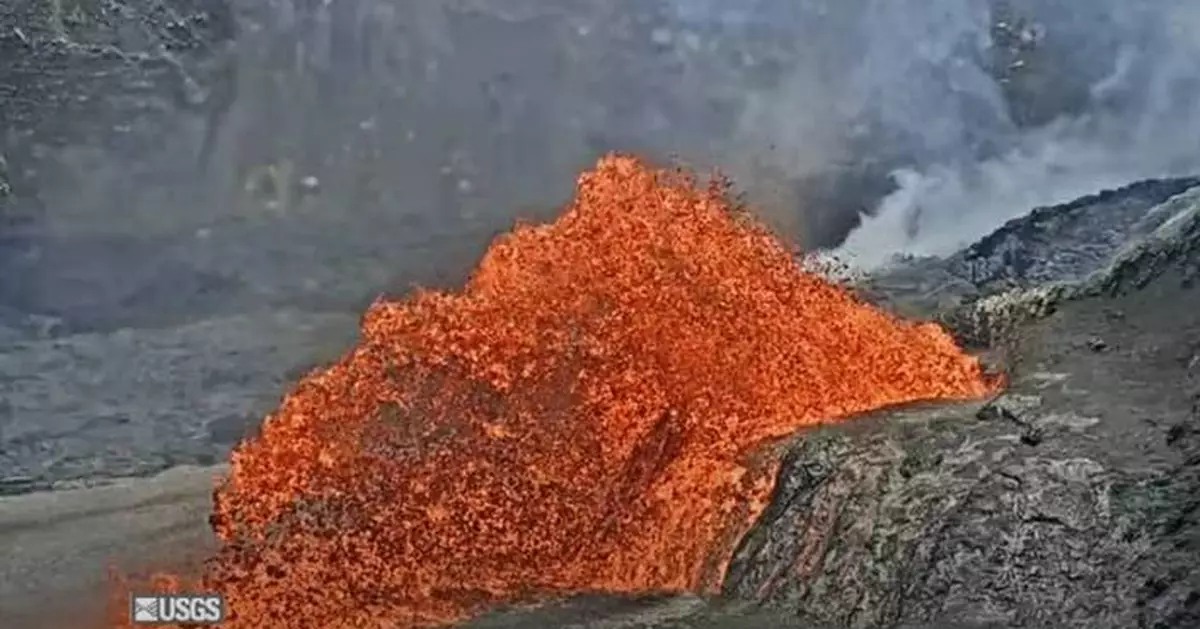
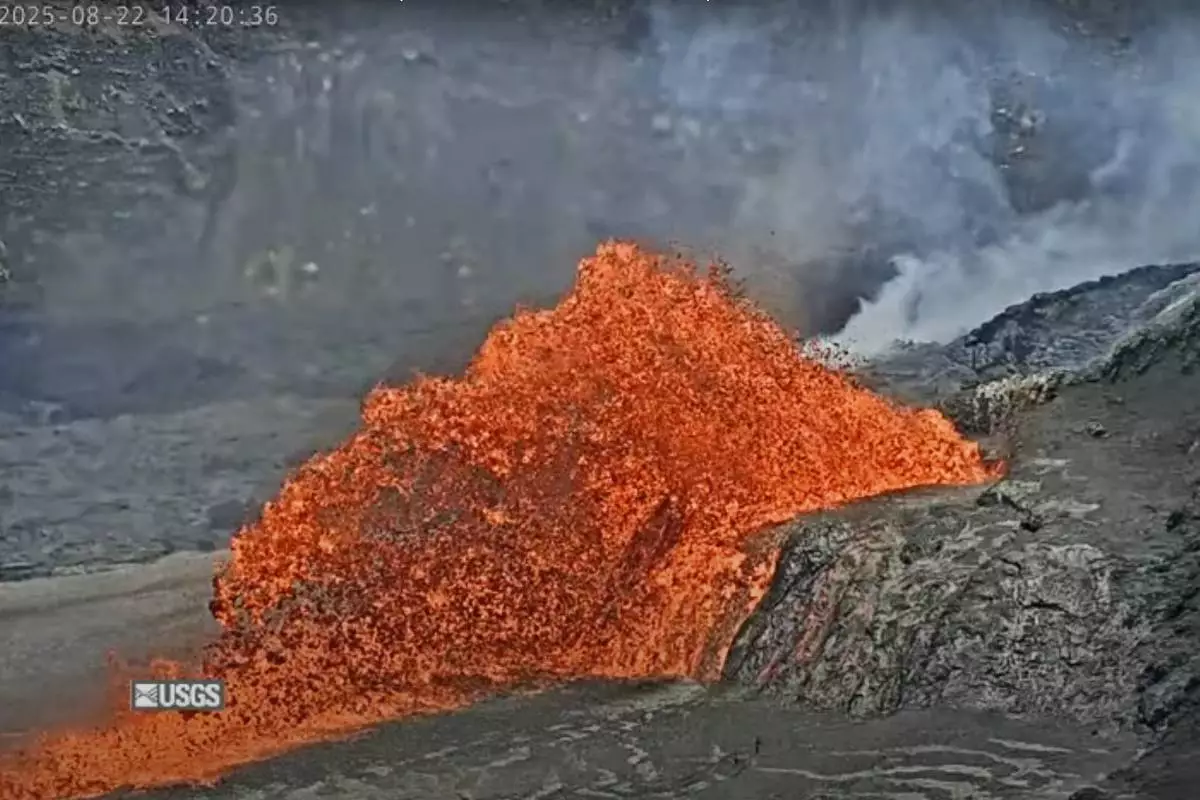
HONOLULU (AP) — Hawaii's Kilauea volcano resumed erupting Friday by shooting an arc of lava 100 feet (30 meters) into the air and across a section of its summit crater floor.
It was Kilauea's 31st display of molten rock since December, an appropriately high frequency for one of the world's most active volcanoes.
The north vent at the summit crater began continuously spattering in the morning, and then lava overflowed a few hours later. The vent started shooting lava fountains in the afternoon.
The eruption was contained within the summit crater, and no homes were threatened.
A few lucky residents and visitors will have a front-row view at Hawaii Volcanoes National Park. If the past is a guide, hundreds of thousands more will be watching popular livestreams made possible by three camera angles set up by the U.S. Geological Survey.
Whenever she gets word the lava is back, Park Service volunteer Janice Wei hustles to shoot photos and videos of Halemaumau Crater — which Native Hawaiian tradition says is the home to the volcano goddess Pele. She said that when the molten rock shoots high like a fountain, it sounds like a roaring jet engine or crashing ocean waves. She can feel its heat from over a mile away.
“Every eruption feels like I am sitting in the front row at nature’s most extraordinary show,” Wei said in an email.
Kilauea is on Hawaii Island, the largest of the Hawaiian archipelago. It’s about 200 miles (320 kilometers) south of the state’s largest city, Honolulu, which is on Oahu.
Here’s what to know about Kilauea’s latest eruption:
A lower magma chamber under Halemaumau Crater is receiving magma directly from the earth’s interior at about 5 cubic yards (3.8 cubic meters) per second, said Ken Hon, scientist-in-charge at the Hawaiian Volcano Observatory. This blows the chamber up like a balloon and forces magma into an upper chamber. From there it gets pushed above ground through cracks.
Magma has been using the same pathway to rise to the surface since December, making the initial release and subsequent episodes all part of the same eruption, Hon said.
Many have featured lava soaring into the air, in some cases more than 1,000 feet (300 meters). The fountains are generated in part because magma — which holds gases that are released as it rises — has been traveling to the surface through narrow, pipelike vents.
The expanding magma supply is capped by heavier magma that had expelled its gas at the end of the prior episode. Eventually enough new magma accumulates to force the degassed magma off, and the magma shoots out like a Champagne bottle that was shaken before the cork was popped.
This is the fourth time in 200 years that Kilauea has shot lava fountains into the air in repeated episodes. There were more episodes the last time Kilauea followed this pattern: The eruption that began in 1983 started with 44 sessions of shooting fountains. Those were spread out over three years, however. And the fountains emerged in a remote area, so few got to watch.
The other two occurred in 1959 and 1969.
Scientists don’t know how the current eruption will end or how it may change. In 1983 magma built enough pressure that Kilauea opened a vent at a lower elevation and started continuously leaking lava from there rather than periodically shooting out of a higher elevation. The eruption continued in various forms for three decades and ended in 2018.
Something similar could happen again. Or the current eruption could instead stop at the summit if its magma supply peters out.
Scientists can estimate a few days or even a week ahead of time when lava is likely to emerge with the help of sensors around the volcano that detect earthquakes and minuscule changes in the angle of the ground, which indicate when magma is inflating or deflating.
“Our job is like being a bunch of ants crawling on an elephant trying to figure out how the elephant works,” Hon said.
The lava fountains have been shorter lately. Steve Lundblad, a University of Hawaii at Hilo geology professor, said the vent may have gotten wider, leaving molten rock less pressurized.
“We’re still gonna have spectacular eruptions,” he said. “They’re just going to be wider and not as high.”
Some people may see lava flows as destructive. But Huihui Kanahele-Mossman, the executive director of the Edith Kanakaʻole Foundation, said lava is a natural resource that hardens into land and forms the foundation for everything on Hawaii Island.
Kanahele-Mossman’s nonprofit is named after her grandmother — the esteemed practitioner of Hawaiian language and culture and founder of a noted hula halau, or school. Hālau o Kekuhi is celebrated for its mastery of a style of hula rooted in the stories of Pele and her sister, Hiʻiaka.
Kanahele-Mossman has visited the crater a few times since the eruption began. She initially watches in awe and reverence. But then she observes more details so she can go home and compare it to the lava in the centuries-old tales that her school performs. While at the crater, she also delivers a chant prepared in advance and places offerings. Recently she presented awa, a drink made with kava, and a fern lei.
“You as the dancer, you are the storyteller and you carry that history that was written in those mele forward,” she said, using the Hawaiian word for song. “To be able to actually see that eruption that’s described in the mele, that’s always exciting to us and drives us and motivates us to stay in this tradition.”
Park visitation has risen all eight months of the year so far, in part because of the eruption. In April there were 49% more visitors than the same month of 2024.
Park spokesperson Jessica Ferracane noted that the last several episodes have only lasted about 10 to 12 hours. Those wanting to go should sign up for U.S. Geological Survey alert notifications because the eruption could be over before you know it, she said.
She cautioned that visitors should stay on marked trails and overlooks because unstable cliff edges and cracks in the earth may not be immediately apparent, and falling could lead to serious injury or death. Young children should be kept close.
Volcanic gas, glass and ash can also be dangerous. Nighttime visitors should bring a flashlight.
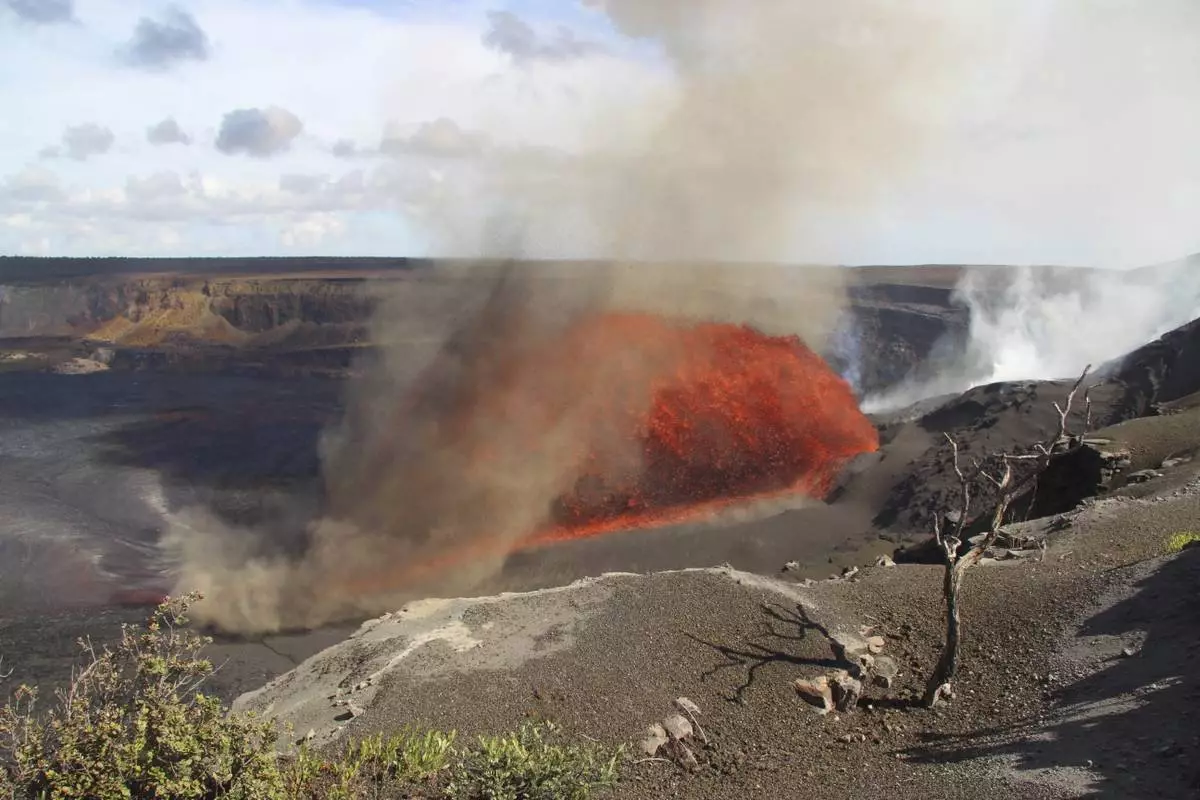
In this image released by the U.S. Geological Survey, the Kilauea volcano spews lava on Friday, Aug. 22, 2025, in Hawaii Volcanoes National Park, Hawaii. (M. Zoeller/U.S. Geological Survey via AP)
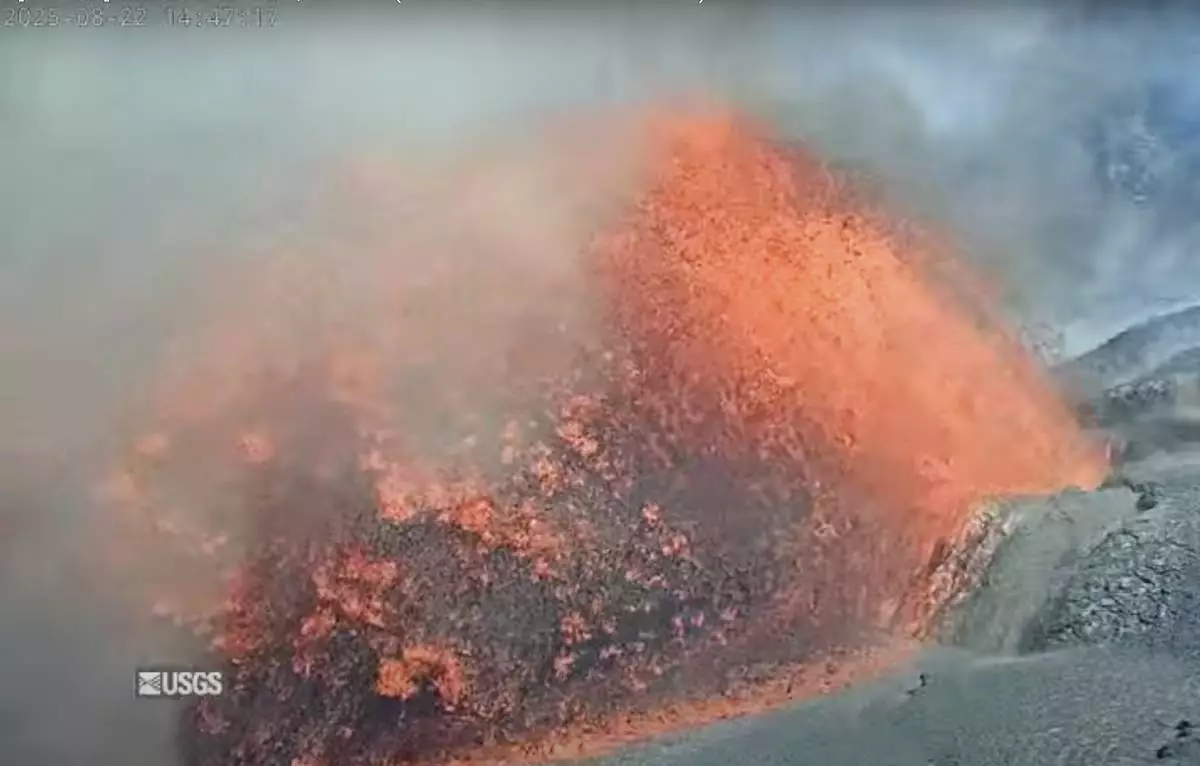
In this screenshot taken from video provided by the U.S. Geological Survey, the Kilauea volcano spews lava on Friday, Aug. 22, 2025, in Hawaii Volcanoes National Park, Hawaii. (U.S. Geological Survey via AP)
NUUK, Greenland (AP) — Troops from several European countries continued to arrive in Greenland on Thursday in a show of support for Denmark as talks between representatives of Denmark, Greenland and the U.S. highlighted “fundamental disagreement” over the future of the Arctic island.
Denmark announced it would increase its military presence in Greenland on Wednesday as foreign ministers from Denmark and Greenland were preparing to meet with White House representatives in Washington. Several European partners — including France, Germany, the U.K., Norway and Sweden — started sending symbolic numbers of troops already on Wednesday or promised to do so in the following days.
The troop movements were intended to portray unity among Europeans and send a signal to President Donald Trump that an American takeover of Greenland is not necessary as NATO together can safeguard the security of the Arctic region amid rising Russian and Chinese interest.
“The first French military elements are already en route” and “others will follow,” French President Emmanuel Macron announced Wednesday, as French authorities said about 15 soldiers from the mountain infantry unit were already in Nuuk for a military exercise.
Germany will deploy a reconnaissance team of 13 personnel to Greenland on Thursday, the Defense Ministry said.
On Thursday, Danish Defense Minister Troels Lund Poulsen said the intention was “to establish a more permanent military presence with a larger Danish contribution,” according to Danish broadcaster DR. He said soldiers from several NATO countries will be in Greenland on a rotation system.
Danish Foreign Minister Lars Løkke Rasmussen, flanked by his Greenlandic counterpart Vivian Motzfeldt, said Wednesday that a “fundamental disagreement” over Greenland remains with Trump after they held highly anticipated talks at the White House with Vice President JD Vance and Secretary of State Marco Rubio.
Rasmussen added that it remains “clear that the president has this wish of conquering over Greenland” but that dialogue with the U.S. would continue at a high level over the following weeks.
Inhabitants of Greenland and Denmark reacted with anxiety but also some relief that negotiations with the U.S. would go on and European support was becoming visible.
Greenland's Prime Minister Jens-Frederik Nielsen welcomed the continuation of “dialogue and diplomacy.”
“Greenland is not for sale,” he said Thursday. “Greenland does not want to be owned by the United States. Greenland does not want to be governed from the United States. Greenland does not want to be part of the United States.”
In Greenland’s capital, Nuuk, local residents told The Associated Press they were glad the first meeting between Greenlandic, Danish and American officials had taken place but suggested it left more questions than answers.
Several people said they viewed Denmark’s decision to send more troops, and promises of support from other NATO allies, as protection against possible U.S. military action. But European military officials have not suggested the goal is to deter a U.S. move against the island.
Maya Martinsen, 21, said it was “comforting to know that the Nordic countries are sending reinforcements” because Greenland is a part of Denmark and NATO.
The dispute, she said, is not about “national security” but rather about “the oils and minerals that we have that are untouched.”
On Wednesday, Poulsen announced a stepped-up military presence in the Arctic “in close cooperation with our allies,” calling it a necessity in a security environment in which “no one can predict what will happen tomorrow.”
“This means that from today and in the coming time there will be an increased military presence in and around Greenland of aircraft, ships and soldiers, including from other NATO allies,” Poulsen said.
Asked whether the European troop movements were coordinated with NATO or what role the U.S.-led military alliance might play in the exercises, NATO referred all questions to the Danish authorities. However, NATO is currently studying ways to bolster security in the Arctic.
The Russian embassy in Brussels on Thursday lambasted what it called the West's “bellicose plans” in response to “phantom threats that they generate themselves”. It said the planned military actions were part of an “anti-Russian and anti-Chinese agenda” by NATO.
“Russia has consistently maintained that the Arctic should remain a territory of peace, dialogue and equal cooperation," the embassy said.
Rasmussen announced the creation of a working group with the Americans to discuss ways to work through differences.
“The group, in our view, should focus on how to address the American security concerns, while at the same time respecting the red lines of the Kingdom of Denmark,” he said.
Commenting on the outcome of the Washington meeting on Thursday, Poulsen said the working group was “better than no working group” and “a step in the right direction.” He added nevertheless that the dialogue with the U.S. did not mean “the danger has passed.”
“We are really happy that action is being taken to make sure that this discussion is not just ended with that meeting alone,” Greenlandic MP Aki-Matilda Høegh-Dam said on Thursday during a news conference in Copenhagen.
She said Greenlandic people understood they were a “pivotal point” in a broader transformation of the international rules-based order and that they felt responsible not just for themselves but also for the whole world to get it right.
Høegh-Dam said the military operations should not happen “right next to our schools and right next to our kindergartens.”
Line McGee, 38, from Copenhagen, told AP that she was glad to see some diplomatic progress. “I don’t think the threat has gone away,” she said. “But I feel slightly better than I did yesterday.”
Trump, in his Oval Office meeting with reporters, said: “We’ll see how it all works out. I think something will work out.”
Niemann reported from Copenhagen, Denmark, and Ciobanu from Warsaw, Poland.
Denmark's Foreign Minister Lars Løkke Rasmussen and Greenland's Foreign Minister Vivian Motzfeldt speak at a news conference at the Embassy of Denmark, Wednesday, Jan. 14, 2026, in Washington. (AP Photo/John McDonnell)
People walk on a street in Nuuk, Greenland, Wednesday, Jan. 14, 2026. (AP Photo/Evgeniy Maloletka)
From center to right, Greenland Foreign Minister Vivian Motzfeldt, Denmark's Ambassador Jesper Møller Sørensen, rear, and Danish Foreign Minister Lars Løkke Rasmussen, right, arrive on Capitol Hill to meet with senators from the Arctic Caucus, in Washington, Wednesday, Jan. 14, 2026. (AP Photo/J. Scott Applewhite)
An Airbus A400M transport aircraft of the German Air Force taxis over the grounds at Wunstorf Air Base in the Hanover region, Germany, Thursday, Jan. 15, 2026 as troops from NATO countries, including France and Germany, are arriving in Greenland to boost security. (Moritz Frankenberg/dpa via AP)
Fishermen load fishing lines into a boat in the harbor of Nuuk, Greenland, Wednesday, Jan. 14, 2026. (AP Photo/Evgeniy Maloletka)
Greenland Foreign Minister Vivian Motzfeldt, left, and Danish Foreign Minister Lars Løkke Rasmussen, arrive on Capitol Hill to meet with members of the Senate Arctic Caucus, in Washington, Wednesday, Jan. 14, 2026. (AP Photo/J. Scott Applewhite)