
SAN JOSE, Calif. (AP) — Braxton Kimura dreads eating at restaurants. The California teenager is severely allergic to peanuts, shellfish and most tree nuts. Consuming even a tiny amount could send him to the emergency room.
“Eating out is definitely really dangerous. It’s something that I try to avoid,” Kimura, 17, said at his home in San Jose. “When dining out, obviously I always bring my EpiPens, and I’m really nervous all the time.”
Click to Gallery
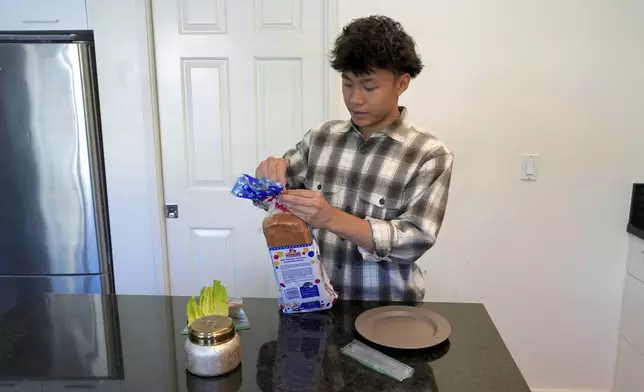
Braxton Kimura prepares food at home on Wednesday, Aug. 13, 2025, in San Jose, Calif. (AP Photo/Terry Chea)

Braxton Kimura, right, orders food with his mother Carol Kimura at Vitality Bowl on Wednesday, Aug. 13, 2025, in San Jose, Calif. (AP Photo/Terry Chea)

Braxton Kimura shows his EpiPens at home on Wednesday, Aug. 13, 2025, in San Jose, Calif. (AP Photo/Terry Chea)

Braxton Kimura watches a food allergy documentary on Wednesday, Aug. 13, 2025, in San Jose, Calif. (AP Photo/Terry Chea)

Braxton Kimura eats at Vitality Bowl on Wednesday, Aug. 13, 2025, in San Jose, Calif. (AP Photo/Terry Chea)
Restaurant dining in California could soon become a little less stressful for Braxton and the growing number of Americans with severe food allergies.
State lawmakers are set to vote on legislation that would make California the first U.S. state to require restaurants to disclose whether a menu item contains any of the nine most common food allergens: milk, eggs, fish, shellfish, tree nuts, peanuts, wheat, sesame and soybeans.
Restaurants could post the allergen information on physical menus, an allergen chart, allergen-specific menu or other printed materials. They can also post a QR code to access a digital menu that lists allergens. Food trucks and carts wouldn't be required to make changes.
In September, the Legislature is expected to vote on Senate Bill 68, known as the Allergen Disclosure for Dining Experiences Act (ADDE). If approved and signed by Gov. Gavin Newsom, the new law would take effect on July 1, 2026.
“It’s really to protect the millions of people in California who have allergies like me,” said Democratic state Sen. Caroline Menjivar of the San Fernando Valley, who introduced the bill earlier this year.
Menjivar, who is severely allergic to most nuts and fruits, said she’s had to go to the hospital multiple times for anaphylaxis — a life-threatening allergic reaction — to something she accidentally consumed.
The Southern California lawmaker got the idea for the legislation last year while traveling in Europe, which has required restaurants to disclose food allergens since 2014.
Soon after Menjivar returned to the U.S., she was approached about sponsoring legislation by parents whose daughter has severe allergies.
Since then 9-year-old Addie Lao has become the bill’s most visible advocate, appearing in social media videos, news interviews and legislative hearings.
“I want to be able to eat out with my friends and family like everyone else,” the third grader told state senators in Sacramento in April. “I have to avoid the foods I’m allergic to since it’s like poison to my body and can harm me.”
The bill has the backing of numerous groups representing medical practitioners and people who suffer from asthma and allergies.
But the California Restaurant Association opposes the legislation. The group says the law would increase costs and burdens on restaurants that are already struggling with rising food prices, tariffs, labor shortages and cost-conscious consumers.
The restaurant industry wants more flexibility in how allergen information is posted as well as more liability protections.
“You get into a situation where the menu becomes unwieldy and it becomes incredibly impractical and expensive to be constantly converting menus out with each ingredient shift that may occur and the need to do a new allergy notification,” said Matthew Sutton, senior vice president at the California Restaurant Association.
Some restaurant chains — such as Chipotle Mexican Grill, Red Robin Gourmet Burgers and Olive Garden — already post allergen information on their menus.
Brian Hom, who owns two Vitality Bowl restaurants in San Jose, is one of the bill's biggest backers. His oldest son died on his 18th birthday in 2008 after he accidentally ate peanuts at a resort in Mexico.
This legislation “is going to save lives," Hom said. "I don’t want to see anybody suffer what my wife and I are suffering.”
An estimated 33 million Americans, including nearly 4 million in California, have at least one food allergy, according to the nonprofit Food Allergy Research and Education (FARE). And the numbers are rising.
Among them is Kimura, who was diagnosed with food allergies at 14 months old when he was rushed to the hospital in anaphylactic shock after eating a peanut off the floor.
“I always have to be cautious,” Kimura said.
Kimura, a high school senior and basketball player, launched an initiative called Beyond the Shell, which produced a documentary called “The Last Bite” that shows what it’s like to live with life-threatening allergies.
Even if SB 68 becomes law, Kimura says he'd still need to talk to restaurant staff to make sure dishes are allergen-free and there's no cross-contamination, but allergen labels would reduce the stress of eating in restaurants.
“It would kind of give me more of a peace of mind and would overall just create a better environment and more awareness around food allergies as a whole,” Kimura said. “It’s definitely a step in the right direction.”
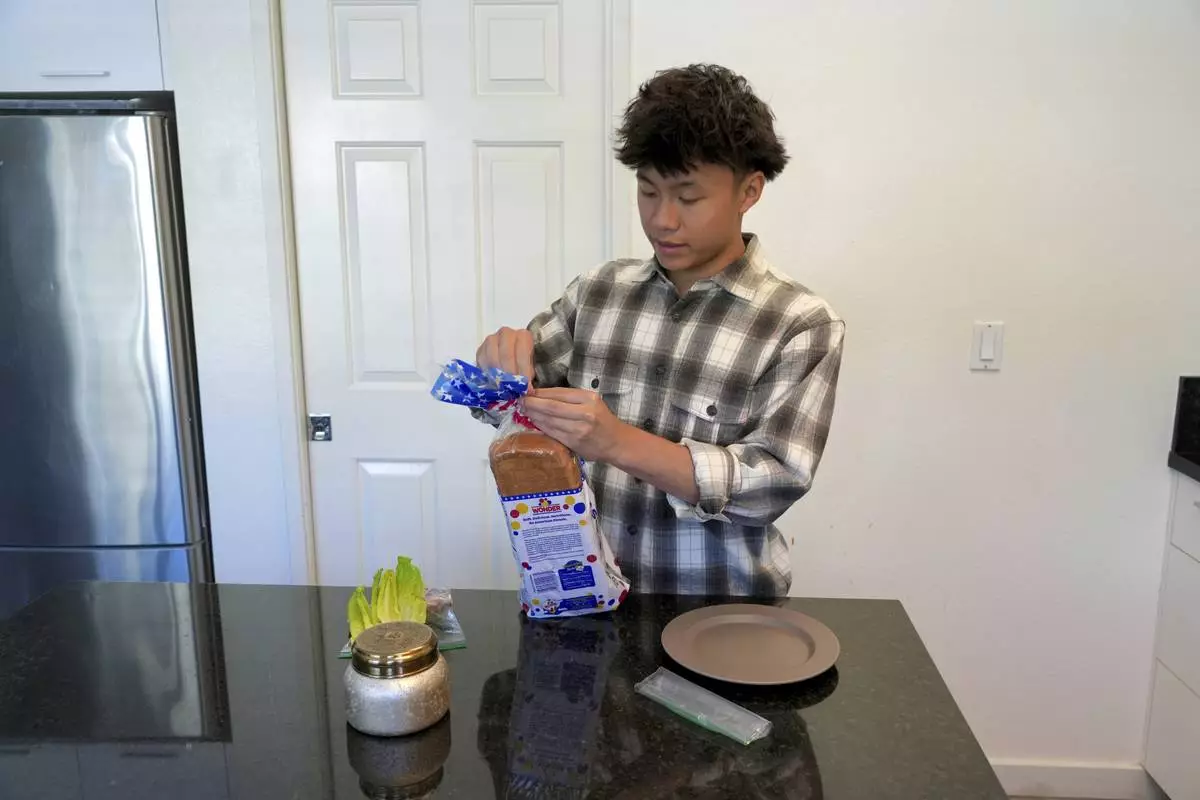
Braxton Kimura prepares food at home on Wednesday, Aug. 13, 2025, in San Jose, Calif. (AP Photo/Terry Chea)

Braxton Kimura, right, orders food with his mother Carol Kimura at Vitality Bowl on Wednesday, Aug. 13, 2025, in San Jose, Calif. (AP Photo/Terry Chea)

Braxton Kimura shows his EpiPens at home on Wednesday, Aug. 13, 2025, in San Jose, Calif. (AP Photo/Terry Chea)

Braxton Kimura watches a food allergy documentary on Wednesday, Aug. 13, 2025, in San Jose, Calif. (AP Photo/Terry Chea)

Braxton Kimura eats at Vitality Bowl on Wednesday, Aug. 13, 2025, in San Jose, Calif. (AP Photo/Terry Chea)