NEW ORLEANS (AP) — Twenty years ago, Hurricane Katrina changed the face of education in New Orleans forever. The school system was utterly destroyed and then utterly transformed, becoming the first and only all-charter school district in the country.
Ahead of the storm's anniversary, The Associated Press asked three survivors to reflect on what it was like to be a student or a teacher during that tumultuous period.
Click to Gallery
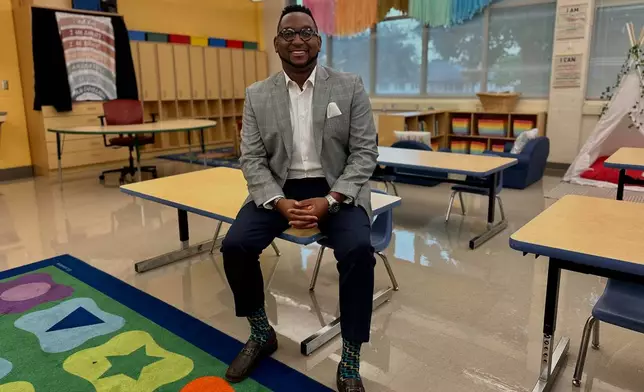
Chief of Talent at New Schools for New Orleans, Jahquille Ross, poses for a photo in a classroom at Alice Hart Charter School in New Orleans on July 30, 2025. (AP Photo/Stephen Smith)
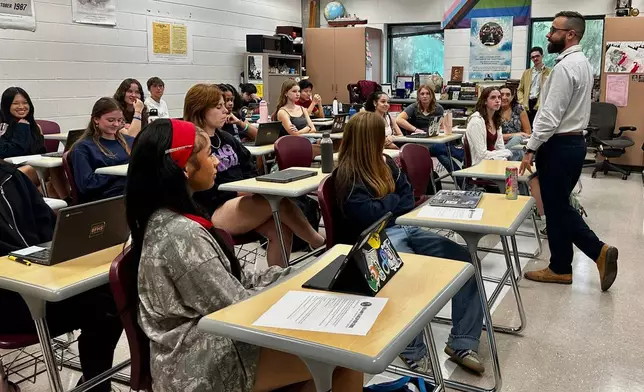
Benjamin Franklin High School teacher Chris Dier introduces the syllabus to students on the second day of classes, on Aug. 12, 2025, in New Orleans. (AP Photo/Stephen Smith)
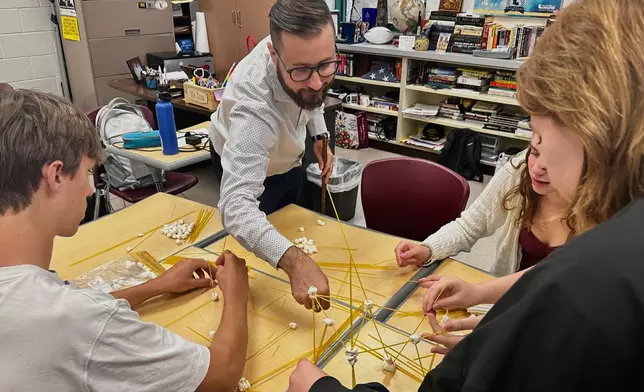
Benjamin Franklin High School teacher Chris Dier helps students create a structure made of pasta and marshmallows, as an ice breaker on the second day of classes on Aug. 12, 2025, in New Orleans. (AP Photo/Stephen Smith)
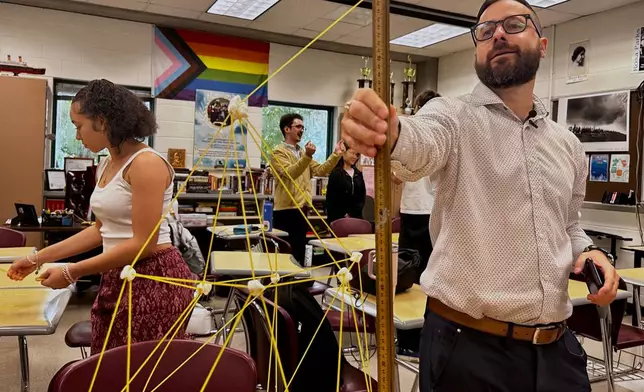
Benjamin Franklin High School teacher Chris Dier measures a structure made of pasta and marshmallows created by his students, used as an ice breaker on the second day of classes on Aug. 12, 2025, in New Orleans. (AP Photo/Stephen Smith)
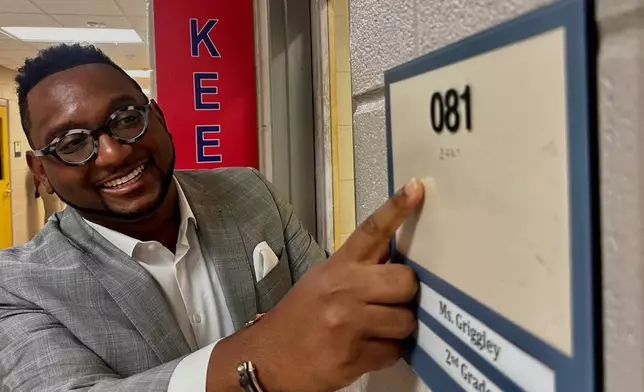
Chief of Talent at New Schools for New Orleans, Jahquille Ross, shows what was his first classroom at Alice Hart Charter School in New Orleans on July 30, 2025. (AP Photo/Stephen Smith)
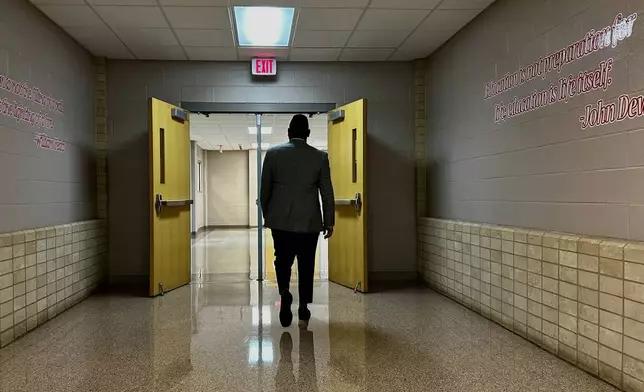
Chief of Talent at New Schools for New Orleans, Jahquille Ross, walks down a hallway at Alice Hart Charter School in New Orleans, on July 30, 2025. (AP Photo/Stephen Smith)
For some, connections they developed with educators who helped them through the crisis inspired careers as teachers. Their experiences also offer lessons for teachers and schools going through natural disasters today.
What follows are the educators’ accounts in their own words, condensed for publication.
I remember waking up to my Aunt Tina banging on the hotel door. I remember she said, ‘There are hundreds of bodies everywhere,’ that the levees broke. I’ll never forget getting that knock on the door that let me know that everything has changed, that everything is different.
There was an elderly couple that came to the shelter and talked with us, and they offered us their trailer so we could actually have a space to live. We stayed in that trailer for the remainder of the year, and I finished my high school in Texas, Henderson High School.
One of the reasons I wanted to become a teacher was because of how these teachers treated us at our lowest points. I remember Coach Propes, the soccer coach who got us soccer cleats and took care of us in that way. I remember Mrs. Rains, the English teacher who had us in our class and had all the supplies ready. I remember Ms. Pellon, the Spanish teacher who also had supplies for us. Mr. McGinnis, he would come in in the early hours to tutor me in chemistry because I missed weeks of school.
They made me feel welcome. They made me feel like I belong. They made me feel that I was part of a larger community, as opposed to just a statistic.
The last thing I wanted to do growing up was be a teacher, because I saw how my mom was a teacher and all the time and effort she put into her craft. She would be cooking with her left hand and grading papers with her right hand. I wanted more in life. But Katrina changed me in that way, because I saw how these teachers responded.
Everything we talk about is ‘before Katrina’ and ‘after Katrina.’ Now I have ‘before COVID’ and ‘after COVID.’ I started seeing the parallels right away, right when the schools closed down, March 16 (in 2020). The questions that (students) had, those same questions I had after we evacuated during Hurricane Katrina. I remember thinking, ‘Are we really never coming back to school?’
I went home that weekend and wrote an open letter to seniors, offering some support and advice. I wrote about what it’s like to lose your senior year. I said that folks will downplay the situation, because they don’t know what it feels like to have their senior year stripped. But I do know. I try to tell them that they’re not forgotten: Teachers are thinking of them. We care for them.
We decided after watching the news on Friday, to leave Saturday. I just remember being on the highway forever. Literally forever. I lived with my brother and my sister-in-law during that time, because my mother had passed away when I was 12, in 2003. We were heading to Alexandria, where my sister-in-law is from. I just remember being hungry for a long time.
It was devastating to see what all was taking place in New Orleans on national TV during this time. When you saw the large amount of people, the impact of the water and the flooding and the damage that was done because of the wind, it was like: Oh, we’re going to be in Alexandria a while.
At that time, ‘a while’ to me was like, maybe another week or two. And that wasn’t the case.
It was one, two, three, four schools in one year. Exhausting. It was hard to make friends wherever I went, because I was unsure at that time, how long are we gonna be in a particular setting? Places just don’t feel like New Orleans.
We moved to Plano, Texas, for about six months. Really nice area, really nice people. There were more white people than I’ve ever seen before at school. I felt the racism a little bit more. It was more prevalent from students.
I was not performing academically at the level that I had normally been in New Orleans. Just trying to stay afloat in my classes was a struggle. The teachers didn’t really go out of their way. They were strictly, like, ‘This is the lesson, this is the material, this is when the test is.’ I just didn’t get the love and attention that I was accustomed to in New Orleans.
I came back to New Orleans in March or April. It felt good to be back home. I had my friend base from middle school. I had friends from elementary school. I was back amongst family and elders, like my grandma, my auntie, my cousins, everybody. We lived 10, 15 minutes within each other, which is really good. We had neighborhood-based schooling, you know, prior to Katrina.
It changed the trajectory of my life. I did not want to always become an educator. With my mother passing away, it was school that grounded me. It was the teachers and leaders inside of those school buildings that supported me, pushed me and encouraged me.
I had some pivotal educators in my life who played a big role in my education and my journey. In return, I felt like I could do that for other children of New Orleans. I chose to go into elementary education, so that students in their early years of education would have the opportunity to be educated by a Black male.
When we were able to come back to the city, going back to my original school, Parkview, it was devastating to see the school just completely destroyed. That memory, I wouldn’t want to go through that again if I could be spared of that.
My mother was a classroom teacher, and she had given me a lot of things. Just memories that you just can’t get back. My mother was a little bit of an artist, so she drew a lot of the storybook characters for me. My dad also gave me a cassette tape with the song “Knowledge is Power” that I used to play for my kids. I lost the tape that he had given me. So, you know, sentimental things. Everybody in the city lost a lot.
My classroom was just molded and water warped, and it smelled, and it was just horrific. I can say, nobody could salvage anything from that particular school. It was just all — all was lost.
We were all in Baton Rouge together as a family, 23 of us strong in my daughter’s house. Siblings, cousins, aunts and uncles. On top of the 23 people in my daughter’s house, she was eight months pregnant at the time. But we were happy. Everybody was safe, and we had to accept things that we couldn’t change.
I loved what I did. Got into it strictly by necessity. My second daughter, who is now deceased, had a very rare form of muscular dystrophy. Orleans Parish hired me as my own child’s specific aide. She was only in school a short time from December to May, and the next month, two days after her sixth birthday, she passed. I was asked to continue work as a child-specific aide. During that process is when I got the passion and desire to go back to school, to be certified in education.
We think we choose a path for ourselves, and God puts us in the place where he wants us to be. Teaching is where I needed to be. And I absolutely enjoyed it.
The Associated Press’ education coverage receives financial support from multiple private foundations. AP is solely responsible for all content. Find AP’s standards for working with philanthropies, a list of supporters and funded coverage areas at AP.org.

Chief of Talent at New Schools for New Orleans, Jahquille Ross, poses for a photo in a classroom at Alice Hart Charter School in New Orleans on July 30, 2025. (AP Photo/Stephen Smith)
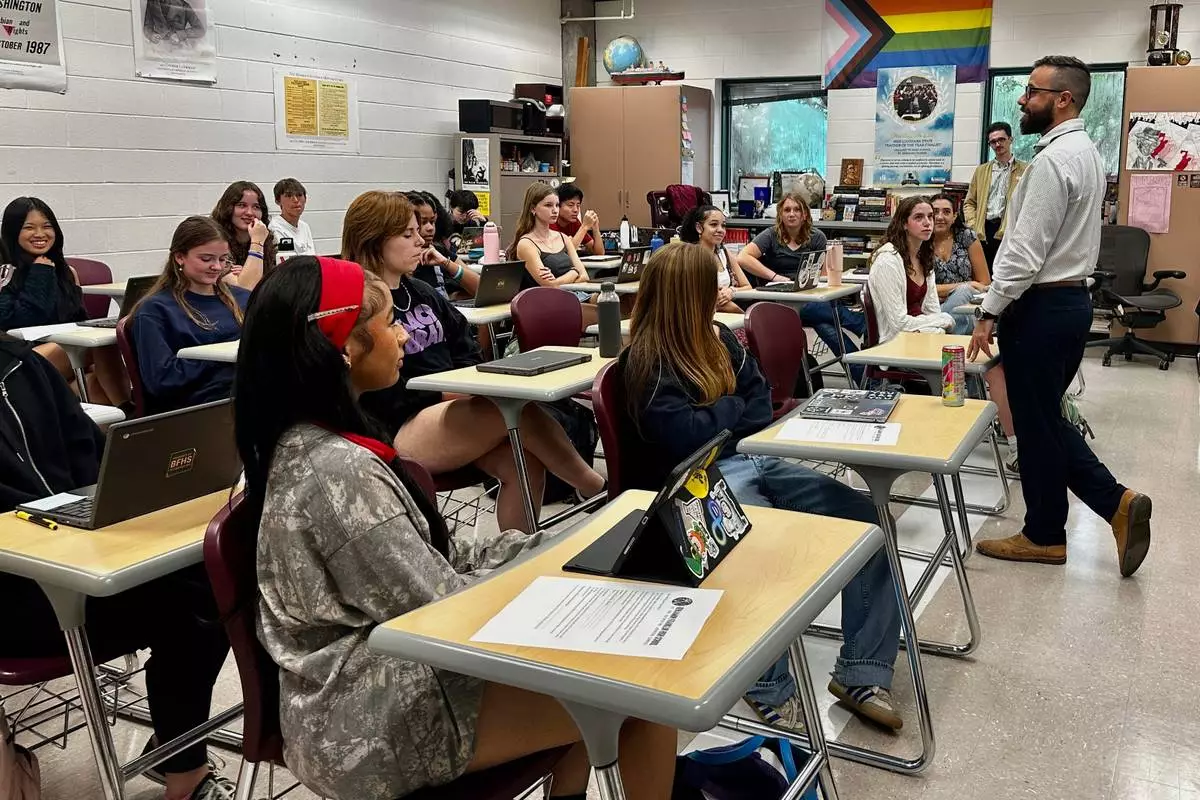
Benjamin Franklin High School teacher Chris Dier introduces the syllabus to students on the second day of classes, on Aug. 12, 2025, in New Orleans. (AP Photo/Stephen Smith)

Benjamin Franklin High School teacher Chris Dier helps students create a structure made of pasta and marshmallows, as an ice breaker on the second day of classes on Aug. 12, 2025, in New Orleans. (AP Photo/Stephen Smith)

Benjamin Franklin High School teacher Chris Dier measures a structure made of pasta and marshmallows created by his students, used as an ice breaker on the second day of classes on Aug. 12, 2025, in New Orleans. (AP Photo/Stephen Smith)
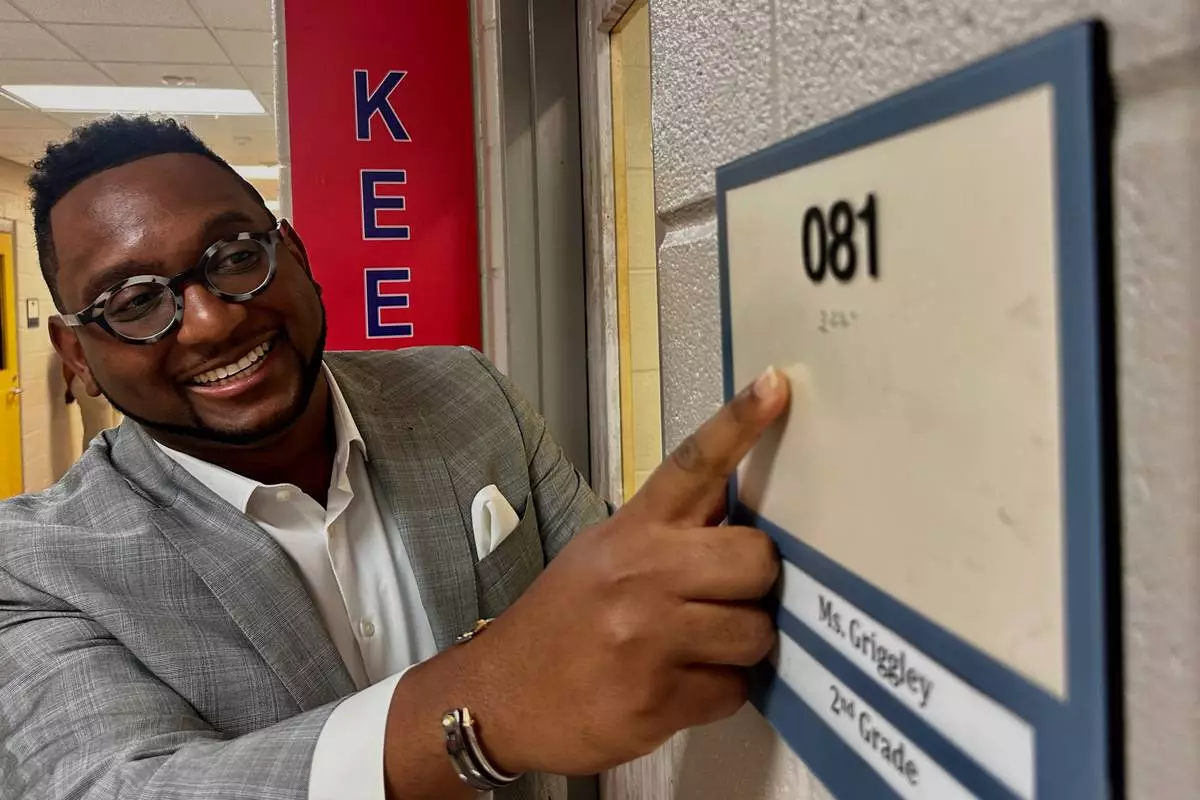
Chief of Talent at New Schools for New Orleans, Jahquille Ross, shows what was his first classroom at Alice Hart Charter School in New Orleans on July 30, 2025. (AP Photo/Stephen Smith)
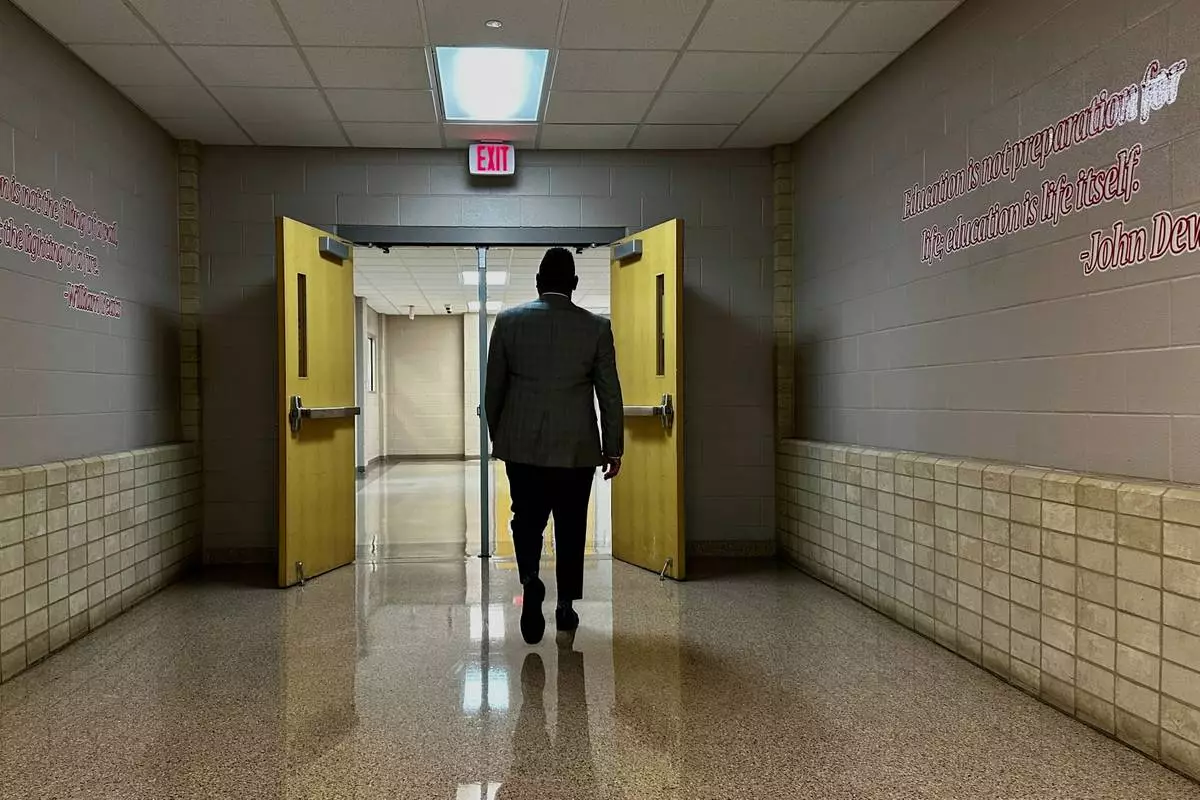
Chief of Talent at New Schools for New Orleans, Jahquille Ross, walks down a hallway at Alice Hart Charter School in New Orleans, on July 30, 2025. (AP Photo/Stephen Smith)