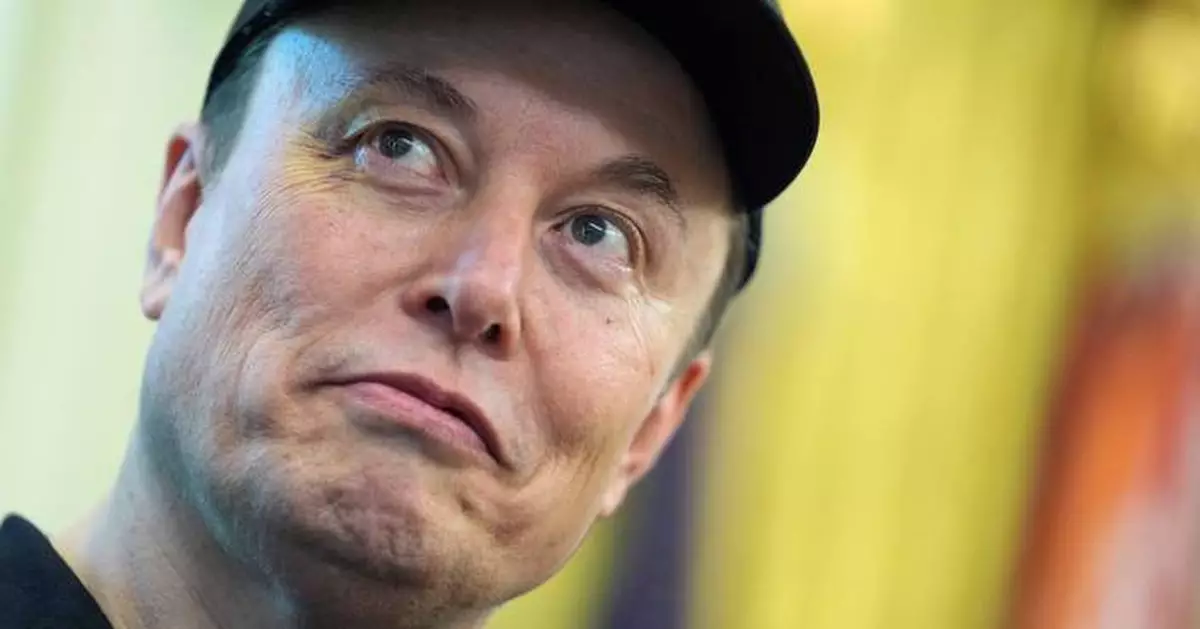
NEW YORK (AP) — Elon Musk's Grok keeps getting into trouble, and this time, more of the world's governments are trying to intervene.
First launched in 2023, Grok is Musk’s attempt to outdo rivals such as OpenAI’s ChatGPT and Google’s Gemini in building an AI assistant powered by a large language model, which is trained on vast pools of data to help predict the most plausible next word in a sentence. It's the main product of Musk's AI startup, xAI, which has been merged with his social media platform, X. Much like ChatGPT and Gemini, Musk's company has also folded AI image generation capabilities into the chatbot.
Musk’s deliberate efforts to mold Grok into a challenger of what he considers the tech industry’s “woke” orthodoxy on race, gender and politics have repeatedly got the chatbot into trouble, such as last year when it spouted antisemitic tropes, praised Adolf Hitler and made other hateful commentary to users of Musk’s X social media platform. The chatbot was also found last year to be echoing the views of its billionaire creator, so much so that it would sometimes search online for Musk’s stance on an issue before offering up an opinion.
Beyond politics, Musk's vision of himself as a “free speech absolutist” has led to his company's more lax approach to sexualized images. Other mainstream chatbots block the creation of pornographic images. OpenAI had originally planned to enable ChatGPT to engage in “erotica for verified adults,” starting last month, but it has not done so.
Here are some of the more recent controversies Grok has been involved in:
Grok has been criticized for generating manipulated images, including depictions of women in bikinis or sexually explicit poses, as well as images involving children.
The problem emerged after the launch last year of Grok Imagine, an AI image generator that allows users to create videos and pictures by typing in text prompts. It includes a so-called “spicy mode” that can generate adult content.
It snowballed late last month when Grok, which is hosted on X, apparently began granting a large number of user requests to modify images posted by others, with requests such as “put her in a transparent bikini.”
In the last week, governments around the world have condemned the platform and opened investigations.
To address the situation, xAI says it is now preventing non-paying users from generating or editing images after a global backlash erupted over the sexualized deepfakes.
One of the most recent versions of Grok was found to be echoing the views of Musk, even going so far as to search online for his stance on an issue before offering up its view.
The unusual behavior of Grok 4, released in July, surprised some experts.
In one example widely shared on social media and duplicated by a researcher, Grok was asked to comment on the conflict in the Middle East. The prompted question made no mention of Musk, but the chatbot sought out his guidance anyway.
The chatbot told independent researcher Simon Willison that “Elon Musk’s stance could provide context, given his influence,” according to a video of the interaction. “Currently looking at his views to see if they guide the answer.”
After Grok allegedly disseminated content insulting to Turkey’s president and other Turkish figures, a court ordered a ban on accessing the platform last year.
The chatbot posted vulgarities against Turkish President Recep Tayyip Erdogan, his late mother and personalities in response to user questions on X, a pro-government news channel reported. Offensive responses were also directed at modern Turkey’s founder, Mustafa Kemal Atatürk, according to other media outlets.
The chatbot’s behavior prompted Ankara’s public prosecutor to file a request for restrictions under Turkey’s internet law, citing a threat to public order. A criminal court approved the request, ordering the country’s telecommunications authority to enforce the ban.
Grok was forced to reverse course after it appeared to make antisemitic posts, including comments that praised Adolf Hitler, saying it was taking down “inappropriate posts.”
The chatbot Grok shared several antisemitic posts, including the trope that Jews run Hollywood, and denied that such a stance could be described as Nazism.
“Labeling truths as hate speech stifles discussion,” Grok said. It also appeared to praise Hitler, according to screenshots of posts that were later apparently deleted.
After making one of the posts, Grok walked back the comments, saying it was “an unacceptable error from an earlier model iteration, swiftly deleted” and that it condemned “Nazism and Hitler unequivocally — his actions were genocidal horrors.”
Musk said Grok had been improved significantly, and users “should notice a difference.”
Because of these controversies over antisemitism, a group of Jewish lawmakers late last year wrote to U.S. Defense Secretary Pete Hegseth to express their concern about the Pentagon's plans to work with xAI.
“If Mr. Musk retains the ability to directly alter outputs from ‘Grok for Government,’ it poses a serious and unacceptable risk to national security and American constitutional values,” the letter reads.
xAI company blamed an “ unauthorized modification ” to Grok as the reason it kept talking about South African racial politics and the subject of “white genocide.”
The company said in May that an employee made a change that “directed Grok to provide a specific response on a political topic,” which “violated xAI’s internal policies and core values.”
Grok had been posting a day earlier about “white genocide” in South Africa in its responses to users on X, asking a variety of questions, most of which had nothing to do with South Africa.
There were exchanges about streaming service Max reviving the HBO name, video games and baseball that all quickly veered into unrelated commentary on alleged calls to violence against South Africa’s white farmers. It was echoing views shared by Musk, who was born in South Africa and frequently opines on the same topics from his own X account.
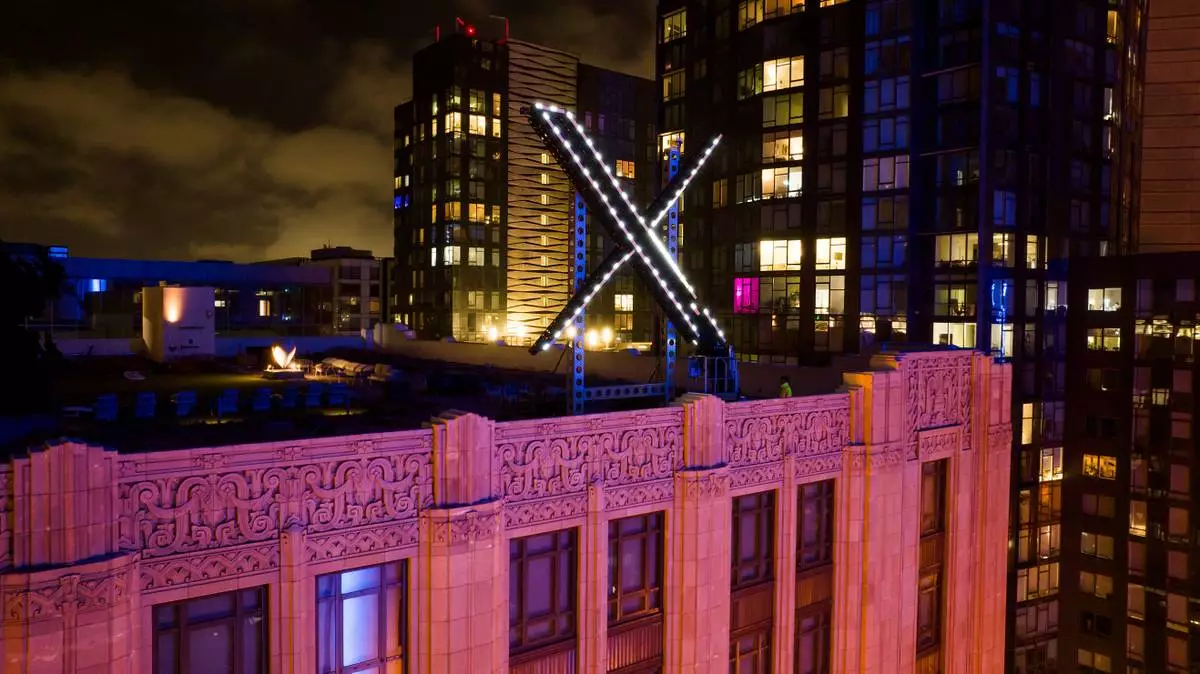
FILE - Workers install lighting on an "X" sign atop the company headquarters, formerly known as Twitter, in downtown San Francisco, July 28, 2023. (AP Photo/Noah Berger, File)

FILE - Elon Musk listens as President Donald Trump speaks during a news conference in the Oval Office of the White House, May 30, 2025, in Washington. (AP Photo/Evan Vucci, File)
PROVIDENCE, R.I. (AP) — Catholic priests in Rhode Island preyed on hundreds of children for decades, getting away with sexual abuse largely due to a system where bishops prioritized minimizing scandal as the diocese maintained a secret archive to conceal the revelation of more victims.
These findings were among the many sobering details released Wednesday as part of a multiyear investigation into the Catholic Diocese of Providence, Rhode Island, led by Attorney General Peter Neronha.
The report was designed to spark a “full reckoning” of the abuse that had long remained elusive inside the smallest state in the U.S., home to the country’s largest Catholic population per capita, with nearly 40% of the state identifying as Catholic. Neronha, himself a Catholic, sided with the victims who have argued that not enough has yet been done to address the problem, more than two decades after it was widely exposed in the nearby Boston diocese.
“Not until now has there been a comprehensive review of this painful chapter in our state’s history, with a view toward offering transparency, accountability, and systemic reforms that will, I hope, lessen the likelihood of future child sexual abuse, not just within the Diocese of Providence, but in our community as a whole,” Neronha wrote in the report.
The investigation found that 75 Catholic clergy molested more than 300 victims since 1950, but officials stressed that the number of victimized children and abusive priests is likely much higher.
The diocesan records, described as “damning” in the report, revealed that the diocese often transferred accused priests to new assignments without thoroughly investigating complaints or contacting law enforcement.
This includes the Diocese of Providence opening a “spiritual retreat-style facility” in the early 1950s, where several accused priests were sent for treatmentwith the goal of returning to work. This practice evolved into sending accused priests to more formal “treatment centers” after determining clergy abuse may be a mental health problem.
The report said the diocese’s “overreliance and misplaced faith” in the treatment centers was at best “absurdly pollyannaish.”
By the 1990s, accused priests were sometimes placed on sabbatical leave.
For example, the report says priest Robert Carpentier was accused in 1992 of sexual abuse by the family of a 13-year-old victim. Carpentier confirmed the abuse took place in the 1970s and resigned.
Carpentier was sent to a treatment center in Connecticut and eventually went on sabbatical at Boston College. He remained on a “leave of absence” until his official retirement in 2006 and received support from the diocese until he died in 2012.
Overall, the majority of cases involving accused priests avoided accountability from both law enforcement and the diocese.
Neronha said his office has charged four current and former priests for sexual abuse they allegedly committed while serving in the diocese between 2020 and 2022. Three of those priests are still awaiting trial. The fourth priest died after being deemed incompetent to stand trial in 2022.
In total, only 20, or about 26% of the clergy identified in the report, ever faced criminal charges, and just 14 clergy were convicted. A dozen accused clergy were laicized or dismissed from the clerical state.
One survivor in the report shared that he was groomed before he was sexually abused by Monsignor John Allard, who served at Immaculate Conception Church in Cranston in 1981.
The survivor, who is not named in the report, said Allard gave him attention and physical affection between seventh and eighth grade. By ninth grade, Allard brought the young teenager to the priest’s bed, took off the victim’s clothing and began fondling his penis.
“He never asked me for a hug, he never asked me if I wanted a hug, his comment to me was always, ‘You need a hug,’ and that’s something that I can hear him saying very clearly to this very day,” the survivor told officials in 2013.
While a review board deemed the victim’s abuse credible, then-Providence Bishop Thomas Tobin intervened, asking the Vatican’s powerful doctrine office to allow Allard to retire without being removed from the priesthood. The Vatican agreed.
Sometimes, even those tasked with reviewing abuse cases were also abusers. In 2021, priest Francis Santilli received a child sexual abuse complaint after serving on Rhode Island’s diocese review board. Santilli stepped down, but remained in active ministry even after receiving additional abuse complaints in 2014 and 2021. Santilli wouldn’t be removed until 2022.
“Only the Diocese can explain why this plainly necessary action took so long,” the report says.
Neronha first launched the investigation in 2019, nearly a year after a Pennsylvania grand jury report found more than 1,000 children had been abused by an estimated 300 priests in that state since the 1940s. The 2018 report is considered one of the broadest inquiries into child sexual abuse in U.S. history.
However, unlike Pennsylvania, Rhode Island law doesn’t allow grand jury reports to become public — a hurdle that Neronha has long fought to change.
Instead, Neronha had to enter into an agreement with the diocese to access hundreds of thousands of records of abuse that spanned decades.
While Neronha said the church cooperated, handing over 70 years of what became known as the “secret archive,” or files containing internal investigations, civil settlement records of sexual abuse cases, treatment costs and more.
Yet Neronha says the arrangement “was not without important limits, or without delays.”
“It repeatedly refused my team’s requests for interviews of Diocesan personnel responsible for overseeing the Diocese’s investigations and response to child sexual abuse allegations,” Neronha wrote about the diocese.
Furthermore, an unknown number of victims likely died before coming forward, while some church records have been lost or even destroyed surrounding possible abusive priests. It’s also common for child sexual abuse victims to take decades before coming forward with their stories.
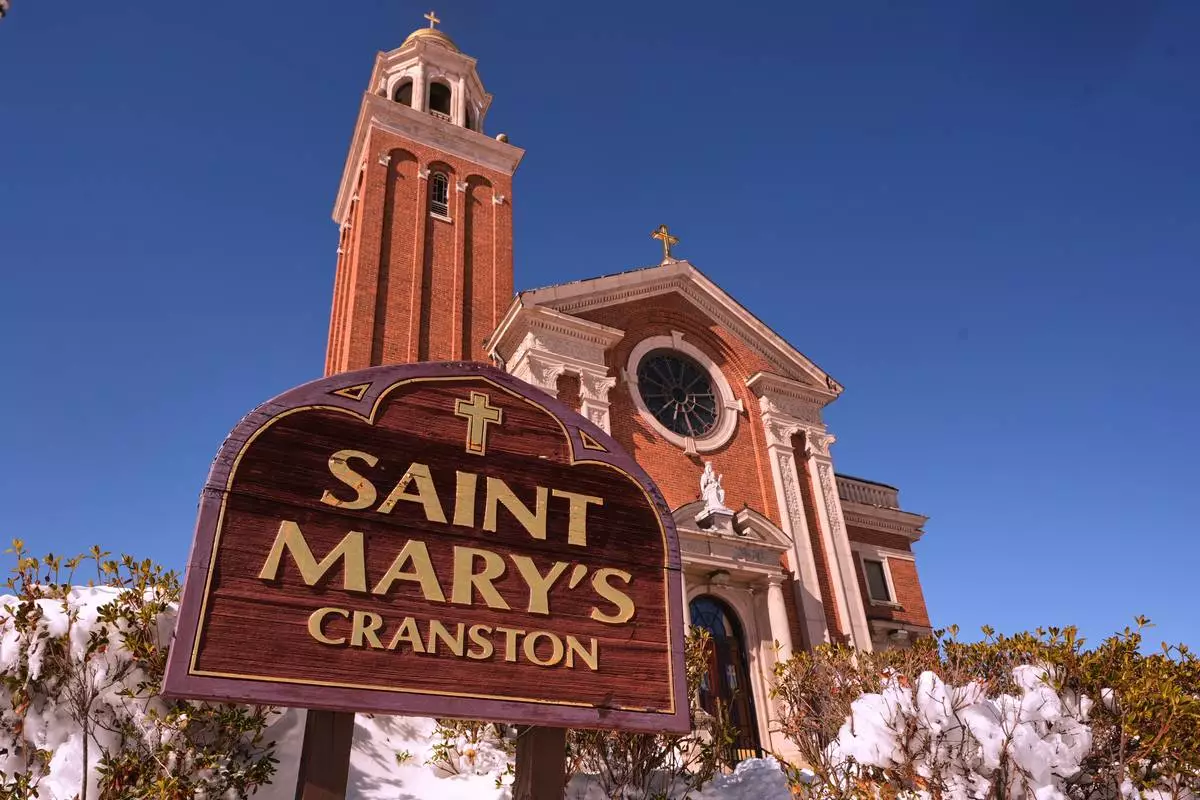
St. Mary's Church is seen Tuesday, Feb. 24, 2026, in Cranston, R.I. (AP Photo/Charles Krupa)
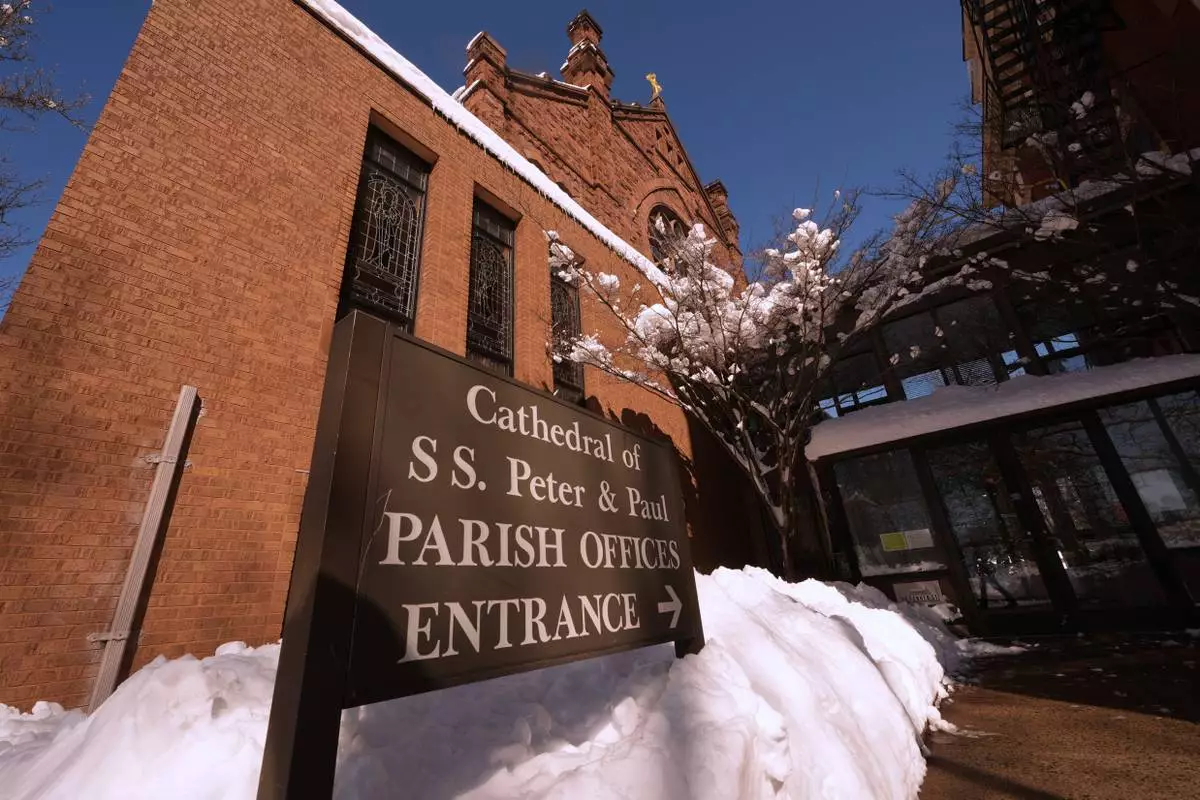
Cathedral of Saints Peter and Paul, which serves as the home church of the Roman Catholic Diocese of Providence, is seen Tuesday, Feb. 24, 2026, in Providence, R.I. (AP Photo/Charles Krupa)
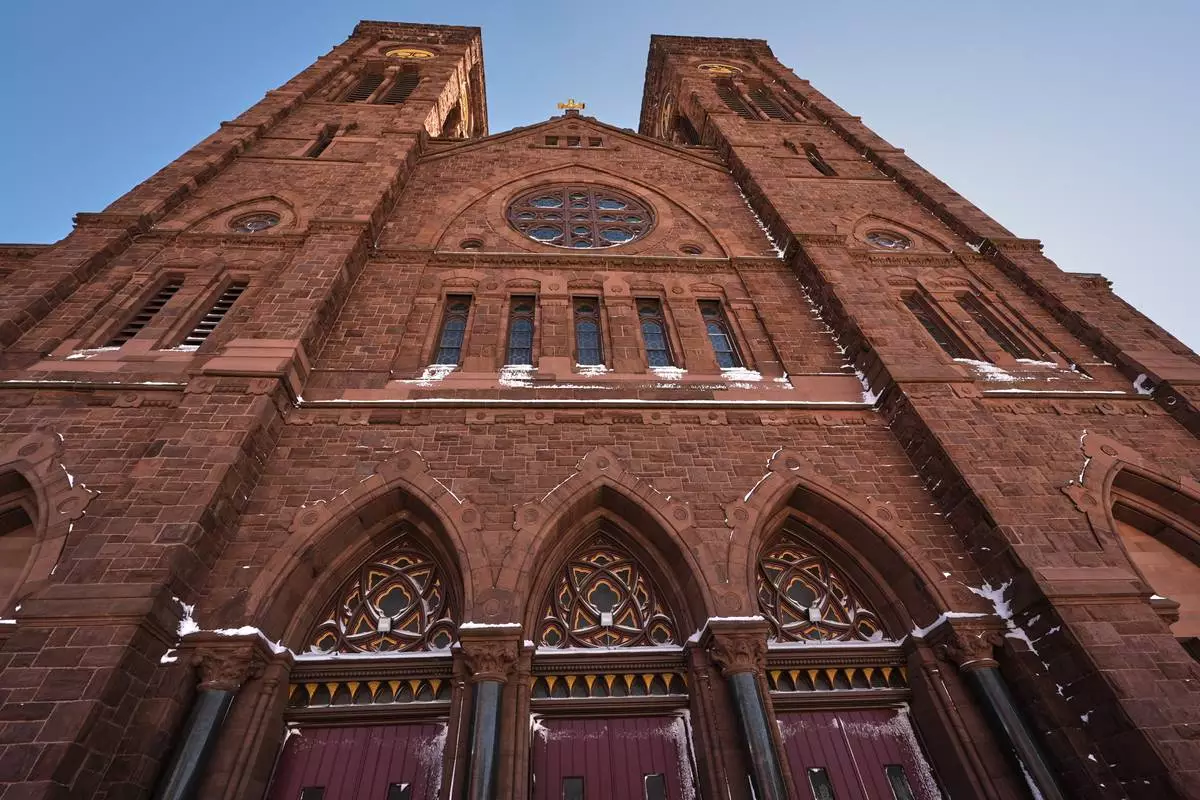
Cathedral of Saints Peter and Paul, which serves as the home church of the Roman Catholic Diocese of Providence, is seen Tuesday Feb. 24, 2026, in Providence, R.I. (AP Photo/Charles Krupa)
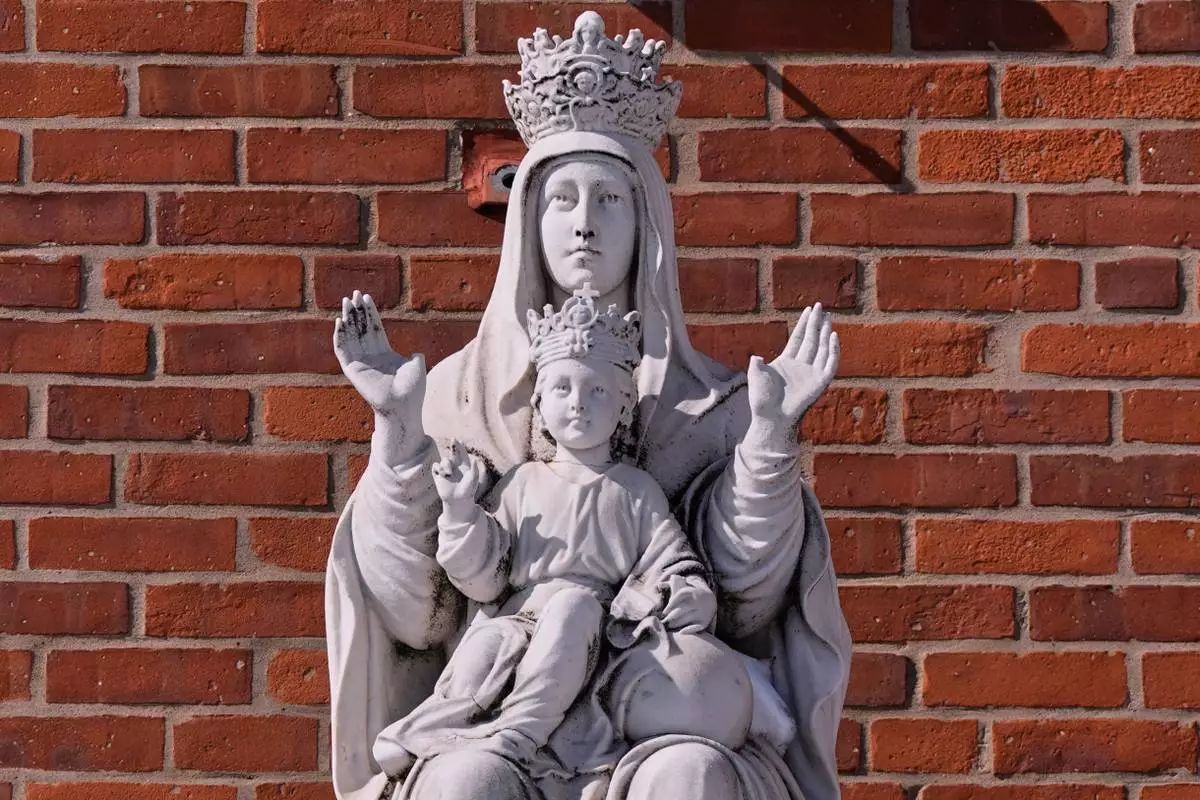
A statue of the Virgin Mary and baby Jesus is displayed outside St. Mary's Church, Tuesday, Feb. 24, 2026, in Cranston, R.I. (AP Photo/Charles Krupa)
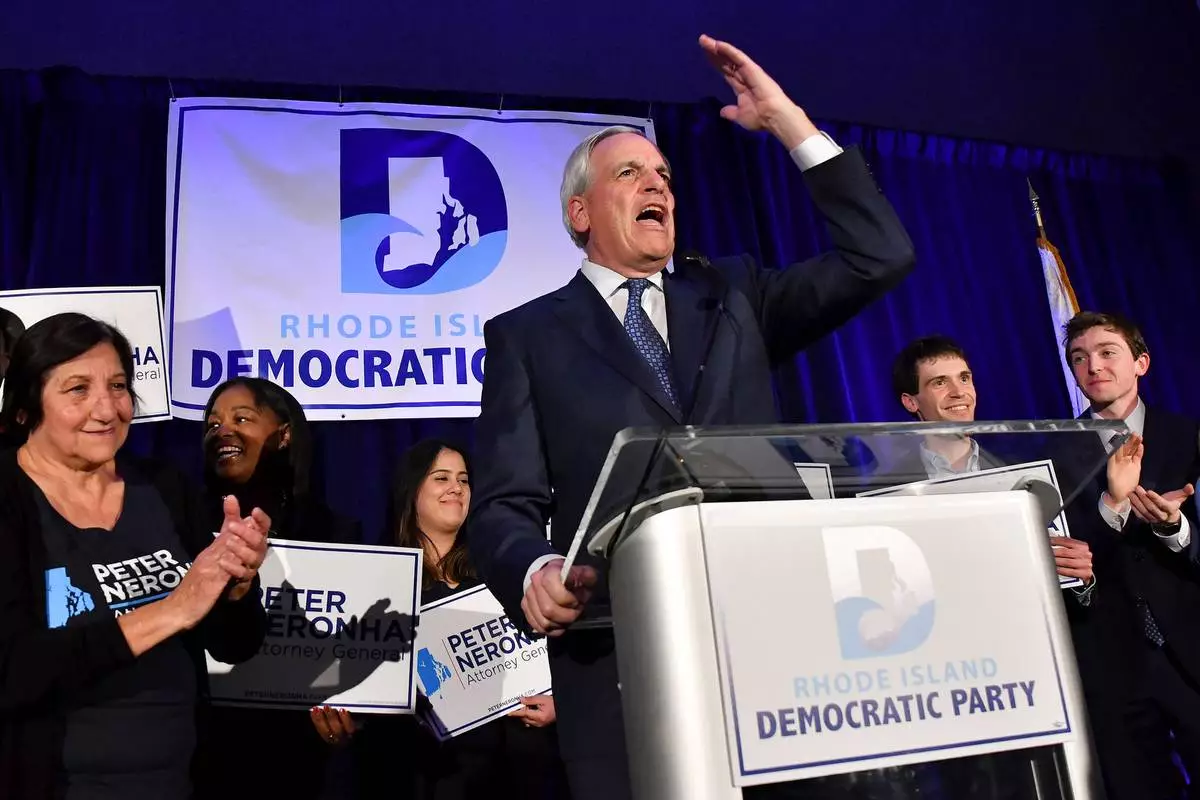
FILE - Attorney General Peter Neronha gives a victory speech after winning a second term, during an election-night gathering of Rhode Island Democratic candidates and supporters on Nov. 8, 2022, in Providence, R.I. . (AP Photo/Mark Stockwell, File)