Skip to Content Facebook Feature Image

Thrilling rafting turns into new engine for summer consumption in central China's Hubei

China

China

China

Thrilling rafting turns into new engine for summer consumption in central China's Hubei

2025-08-24 17:09 Last Updated At:18:37

⁠⁠⁠⁠⁠⁠⁠A 6.5-kilometer-long canyon rafting journey in Yichang City, central China's Hubei Province, presents an experience that blends thrilling excitement with a refreshing cool escape during summertime, attracting hundreds of thousands of visitors and boosting local tourism

Since its launch in April this year, the rafting program in Yichang's Chaotianhou scenic spot has attracted over 350,000 tourist visits, marking a 30 percent increase compared to the same period of last year.

"The scenery is absolutely beautiful. There are thrilling experiences, and I can also enjoy the gorgeous views. I think it's totally worth the trip," said Song Huiwen, a tourist.

The cave rafting experience, known for its all-weather cool temperatures and immersive environment, has enriched tourists' options and enhanced the overall fun of their tours.   In addition, to extend the time tourists stay, the scenic area has introduced a new night rafting program. As night falls, the river channel is illuminated by brilliant lights, allowing tourists to unlock a new way of playing on the water after sunset.

"Following the daytime open-air rafting and cave rafting, the night rafting session runs from 19:00 to 22:00, making full use of the watercourse resources," said Shen Xueyong, general manager of the Chaotianhou scenic spot.

The introduction of the new rafting program has not only extended the length of tourists' stays, but also boosted spending.

"It's like getting a two-day, one-night experience. You can try all three types of rafting -- you can literally raft from morning till night," said Chen Hongqing, a tourist.

Thrilling rafting turns into new engine for summer consumption in central China's Hubei
Thrilling rafting turns into new engine for summer consumption in central China's Hubei
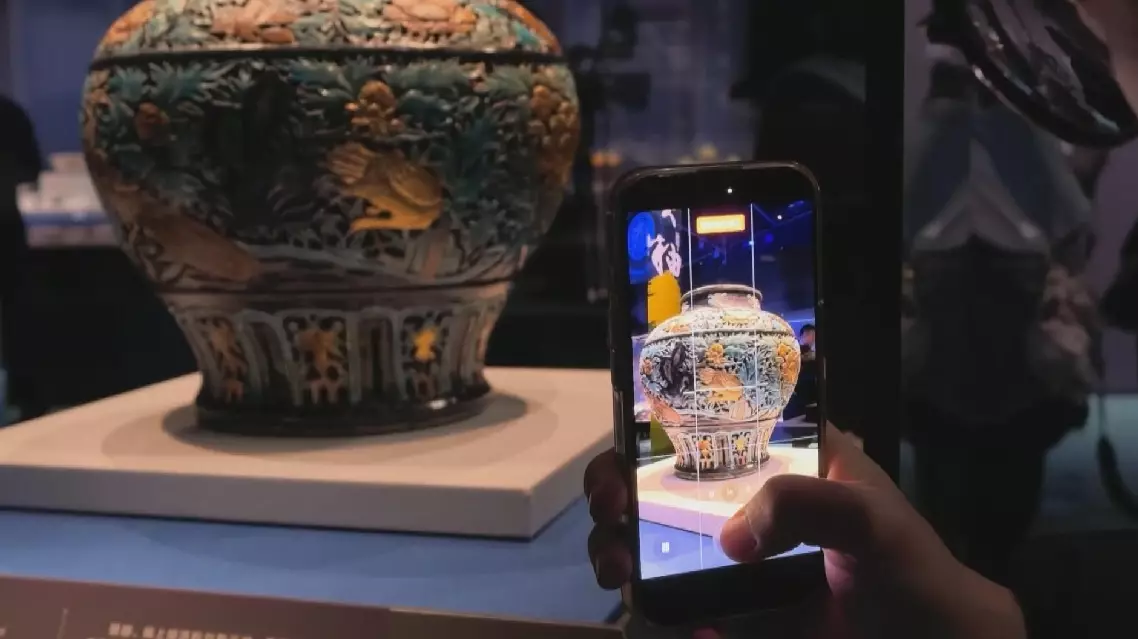
About 400 cultural relics from two Ming Dynasty (1368-1644) shipwrecks are on display at the Grand Canal Museum in Beijing for the first time.

Loaned from South China Sea Museum in south China's Hainan Province, the 370 pieces are from shipwrecks on the northwest slope of the South China Sea. The first ship's artifacts are mainly ceramics, while the second's include logs, snail shells and antlers.

Xin Lixue, director of the China (Hainan) Museum of the South China Sea, said this is the first time these cultural relics have been displayed outside the South China Sea Museum.

"I'm also very excited that these cultural relics can be displayed in the capital, Beijing. I think this is to present to everyone the best things we have salvaged so far, so they can fully understand the splendid culture of our ancient Maritime Silk Road. Today's people can also expand international exchanges and jointly promote the development of all our ethnic groups," said Xin.

Dating back approximately 500 years, these merchant ships sank to a depth of about 1,500 meters during a voyage along the Maritime Silk Road. This marks the first discovery of merchant vessels from the early sixteenth century that had set sail and were returning.

In addition to the abundant relics, the exhibition uses dynamic lighting and sound to recreate a virtual underwater world, showcasing the deep-sea environment and the advanced technology behind deep-sea archaeology.

The exhibition will run through March 15 next year.

Deep-sea archaeological exhibition in Beijing displays relics recovered from shipwreck

Deep-sea archaeological exhibition in Beijing displays relics recovered from shipwreck

Recommended Articles