The Morteratsch Glacier in Switzerland, one of the largest glaciers in the Eastern Alps, has retreated by about three kilometers over the past 150 years and continues to melt at an alarming pace, glaciologists say.
Morteratsch is among Switzerland's most well-known glaciers now facing possible disappearance. Scientists have been monitoring the glacier for more than a century and a half. Along the trail leading to the glacier, signposts mark different years, recording how the glacier has receded.
Visitors walking toward the glacier will pass several large ice caves, which have become popular photo spots. Glaciologists say the growing number of ice caves reflects a process in which heat stored within the glacier is increasingly released. The more such caves appear, the faster the glacier is melting and degrading.
"The glaciers are super important, and they are also kind of an icon of climate change. We see them melting very rapidly, something which we observe in other elements less visually," said Stefan Uhlenbrook, director of Hydrology, Water and Cryosphere at the World Meteorological Organization.
The glaciologist warned that the Morteratsch Glacier may disappear entirely well before another 150 years have passed.
According to the latest data from the Glacier Monitoring in Switzerland, more than 1,000 glaciers across the country have vanished since 1970 due to global warming. After entering 2025, the total volume of Swiss glaciers has already fallen by a further 3 percent.
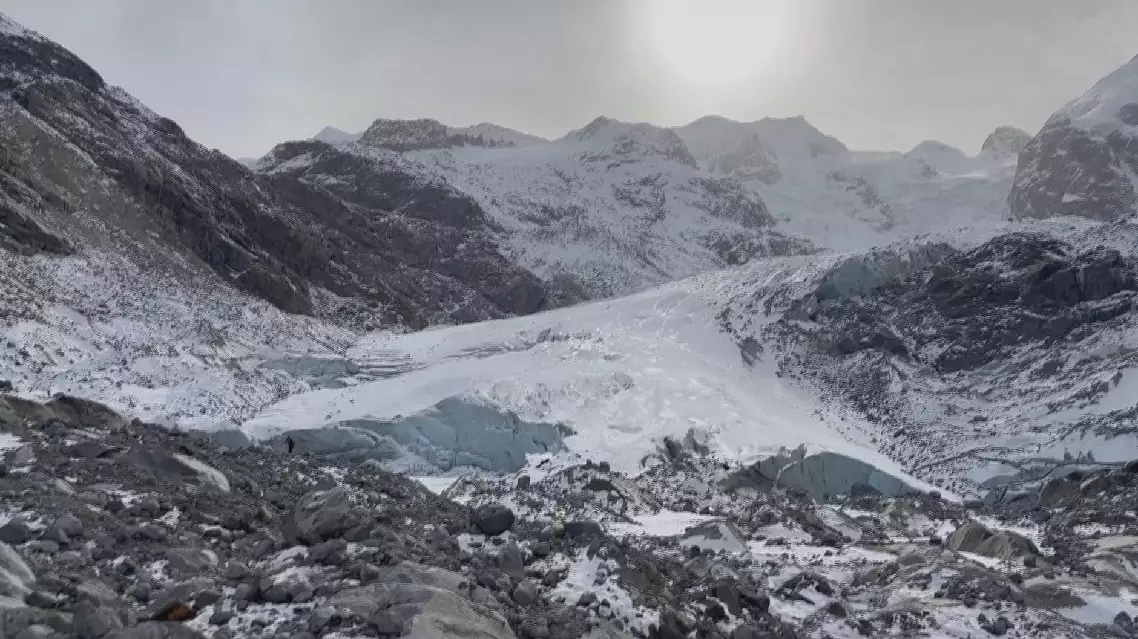
Glaciologist warns melting of Morteratsch Glacier in Switzerland
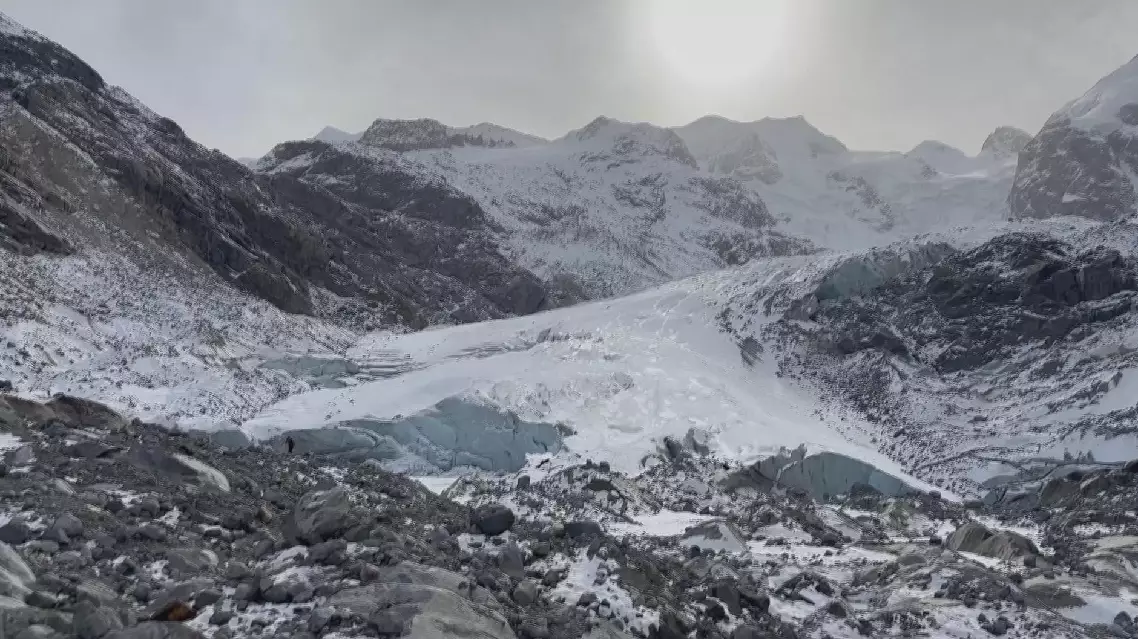
Glaciologist warns melting of Morteratsch Glacier in Switzerland
Chinese President Xi Jinping and Seychelles' President Patrick Herminie on Tuesday exchanged congratulations on the 50th anniversary of the establishment of diplomatic relations between their two countries.
In his congratulatory message, Xi said that since the establishment of diplomatic ties 50 years ago, no matter how the international landscape evolves, China and Seychelles have always trusted each other and firmly adhered to mutual support, with friendship between the two countries rock-solid.
Xi said he believes that as long as both sides stay true to the original aspiration of establishing diplomatic relations and proceed side by side, the path for the development of China-Seychelles relations will become broader and broader, and the prospects for bilateral cooperation will be brighter.
Noting that he attaches great importance to the development of relations between the two countries, Xi said he is willing to work with Herminie to take the 50th anniversary of the establishment of diplomatic relations as a new starting point, carry forward the traditional friendship, deepen mutually beneficial cooperation within the framework of high-quality Belt and Road cooperation and the Forum on China-Africa Cooperation (FOCAC), promote common development, continuously lead the China-Seychelles strategic partnership toward new heights, and bring more benefits to the people of both countries.
Herminie said in his message that since the establishment of diplomatic ties 50 years ago, the relations between Seychelles and China have steadily developed on the basis of mutual respect, mutual trust and common development.
China has always been a valuable partner of Seychelles and has provided much support for Seychelles in improving people's well-being and achieving national development goals, he said.
Noting that Seychelles firmly adheres to the one-China principle, Herminie said Seychelles is willing to continue strengthening cooperation within the framework of Belt and Road cooperation and the FOCAC, and continuously deepen bilateral relations.

Xi exchanges congratulations with Seychelles' president on 50th anniversary of ties