Fresh agricultural products from northwest China's Xinjiang Uygur Autonomous Region are now being delivered to markets in Kyrgyzstan and other Central Asian countries within 30 hours, setting a new benchmark for delivery speed.
Driven by the Belt and Road Initiative (BRI), this leap in efficiency signals the emergence of a transformative cross-border logistics network reshaping trade in fresh produce between Xinjiang and Central Asia.
Tangible business efforts are propelling this change forward. A notable example is the Jiangnan Agricultural Wholesale Market in southwestern Xinjiang's Kashgar City, which has established overseas offices in Tashkent, the capital of Uzbekistan, and Dushanbe, the capital of Tajikistan, and is planning to construct storage facilities in Uzbekistan.
Efforts like these are forging a seamless supply chain that integrates production, export, storage, and distribution.
By November 2025, the market had exported over 1,700 shipments of fresh produce, totaling approximately 31,000 tonnes and valued at more than 200 million yuan (about 28.41 million U.S. dollars). These goods are now stocked on supermarket shelves in cities including Bishkek, the capital of Kyrgyzstan, catering to growing consumer demand across Central Asia.
"Next, we will further enhance quality control over our vegetables and fruits. This will help more international consumers become familiar with and trust our produce. We are committed to building a stronger brand, expanding the scale of our foreign trade, and ensuring that residents of all five Central Asian countries enjoy our fresh and high-quality Chinese vegetables and fruits," said Zhang Dewei, procurement manager of the Jiangnan Agricultural Wholesale Market.
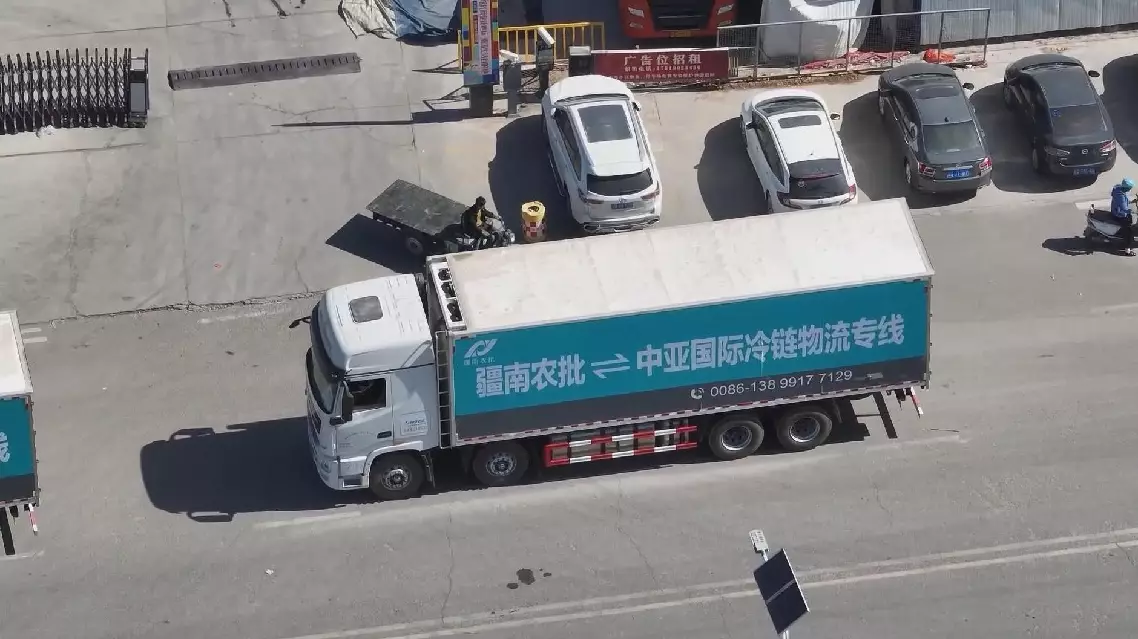
Xinjiang's fresh produce hits Central Asian markets within 30 hours
Newly drafted national standards for China's automotive sector would demand stricter safety specifications, including requirements that car door handles remain operable after collisions or battery thermal incidents.
The proposals, put forth by the Ministry of Industry and Information Technology (MIIT), remain open for comment until Tuesday. The standards are set to reinforce safety benchmarks across the industry, laying a solid foundation for high-quality development.
Meanwhile, the China Automotive Technology and Research Center (CATARC) has launched a series of joint technical verification tests with leading industry players. A key focus of these efforts is testing in the fields of intelligent connected vehicles and new energy vehicles (NEVs).
A series of technical tests are also underway to determine effective safety requirements for combined driving assistance systems, which will be implemented starting from January 1, 2027.
The tests involved an NEV traveling at 90 kilometers per hour and executing a lane change when encountering sudden roadwork ahead, as well as slowing down steadily when faced with an approaching oncoming vehicle.
Experts involved in these testing processes emphasize that well-tested standards are fundamental to safe and effective innovation.
"Standards are the cornerstone of technological development. Over the past five years, we have drafted and revised nearly 1,200 standards for enterprise and led the formulation and refinement of 17 industry standards," said Liang Weipeng, deputy head of the Research and Development Institute under China's leading automaker FAW.
"Technical verification is a crucial link between product design and user experience. Through these efforts, we aim not only to validate product performance but also to showcase the industry's deep research and development capabilities and commitment to quality," said Wang Junlei, chief expert at the CATARC.

China to advance automotive safety standards with new draft regulations