Humanoid robots are moving rapidly from laboratories to real-world applications, as China's robotics industry steps into what experts call its first year of large-scale adoption.
At the ongoing 27th China Robotics and Artificial Intelligence Competition held in Hefei City of east China's Anhui Province, organizers highlighted how humanoid robots are being designed for different roles in daily life. Models dressed as food delivery riders, farmers, sanitation workers, and chefs illustrated the wide range of potential uses, from logistics to agriculture and public services.
China's humanoid robotics industry is currently advancing along two main technological routes: learning-based and model-based systems. Learning-based robots tend to have more humanlike, flexible movements, while model-based robots excel at precision, standardization, and task execution.
As the market continues to expand, developers are integrating the two approaches to achieve both realism and reliability.
Organizers also noted a clear industry shift: beyond balance and mobility, developers are now focusing on giving humanoid robots "brains" powered by large AI models, enabling higher-level decision-making and adaptability.
"Starting the beginning of this year, humanoid robots have been gradually empowered with more 'brains' to enable them to have their own wisdom, and to allow them to become increasingly humanlike. Based on market trends, we expect China's humanoid robot sales to exceed 10,000 units in 2025, a year-on-year increase of 125 percent," said Liu Yufei, technical director of the National and Local Co-Built Humanoid Robotics Innovation Center.
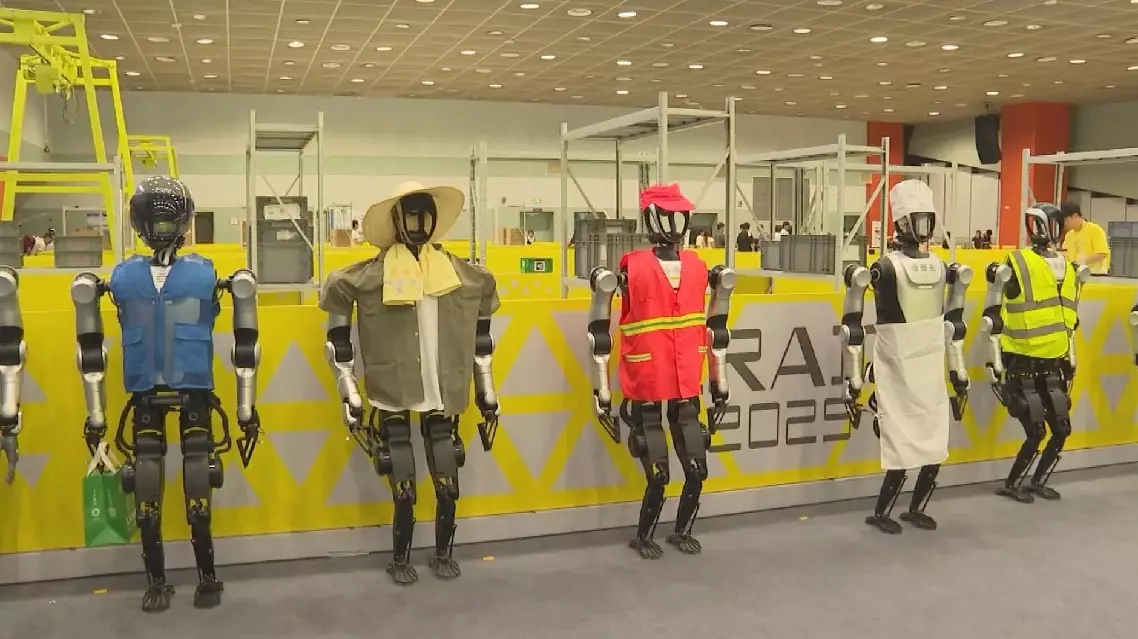
China showcases humanoid robotics as industry enters large-scale rollout phase
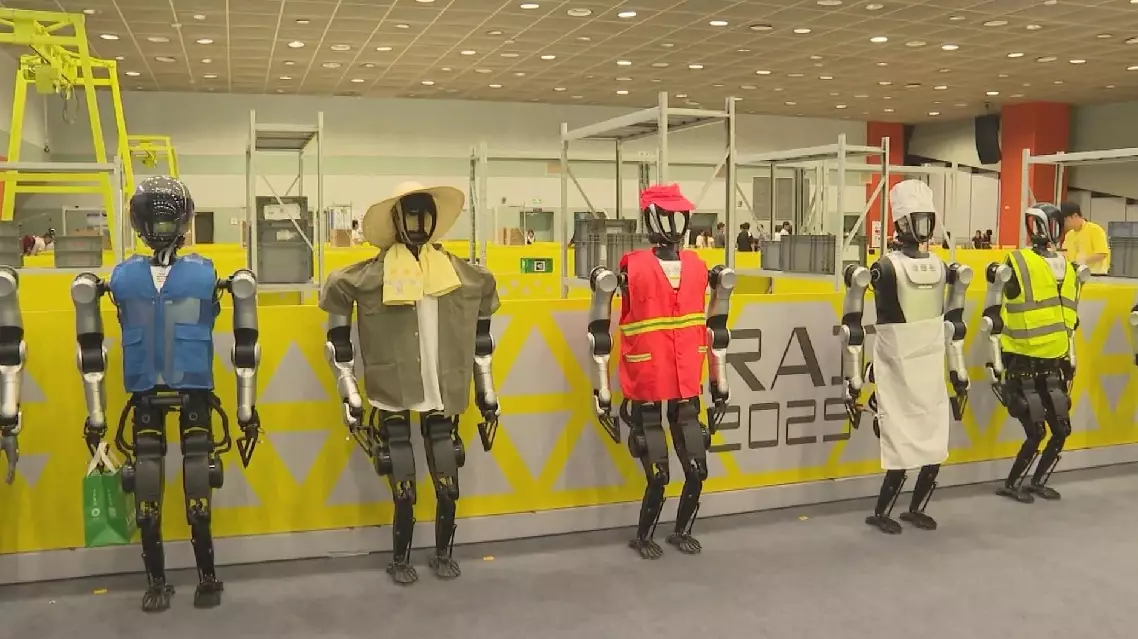
China showcases humanoid robotics as industry enters large-scale rollout phase
The 30th Hong Kong International Film and TV Market (FILMART) opened on Tuesday, kicking off a four-day bonanza attended by over 790 exhibitors from 38 countries and regions.
This year's event provides a platform for the trading of film and television entertainment content to promote global cultural exchange and cooperation in the industry.
The expo, underway in the Hong Kong Convention and Exhibition Center, has attracted participants from both established and emerging markets, including major film and television markets such as France, Italy, and the Republic of Korea, as well as ASEAN countries like Cambodia and Malaysia.
It also features numerous exhibitors from emerging markets participating for the first time, demonstrating the potential for cross-regional cooperation in the film and television industry.
The event has partnered with 10 global film promotion organizations to promote more cross-regional cooperation and co-production projects.
As the mainland film and television industry actively expands into overseas markets, film and television exhibitions have gradually become one of the key platforms to help mainland companies to go global.
"First, we are bringing high-quality audiovisual content, including our TV series Swords Into Plowshares and over a dozen other new shows. Second, in terms of ecosystem development and technology-driven innovation, we are forging strategic partnerships with tech giants. We hope to leverage platforms like Hong Kong to accelerate and enhance the transformation and upgrading of our business," said Zhao Yifang, founder and CEO of Huace Group.
EntertainmentPulse, a forum organized by the Hong Kong Trade Development Council, was held alongside FILMART, bringing together industry leaders from around the world to discuss hot topics such as artificial intelligence, video streaming, and project financing.

30th Hong Kong FILMART opens