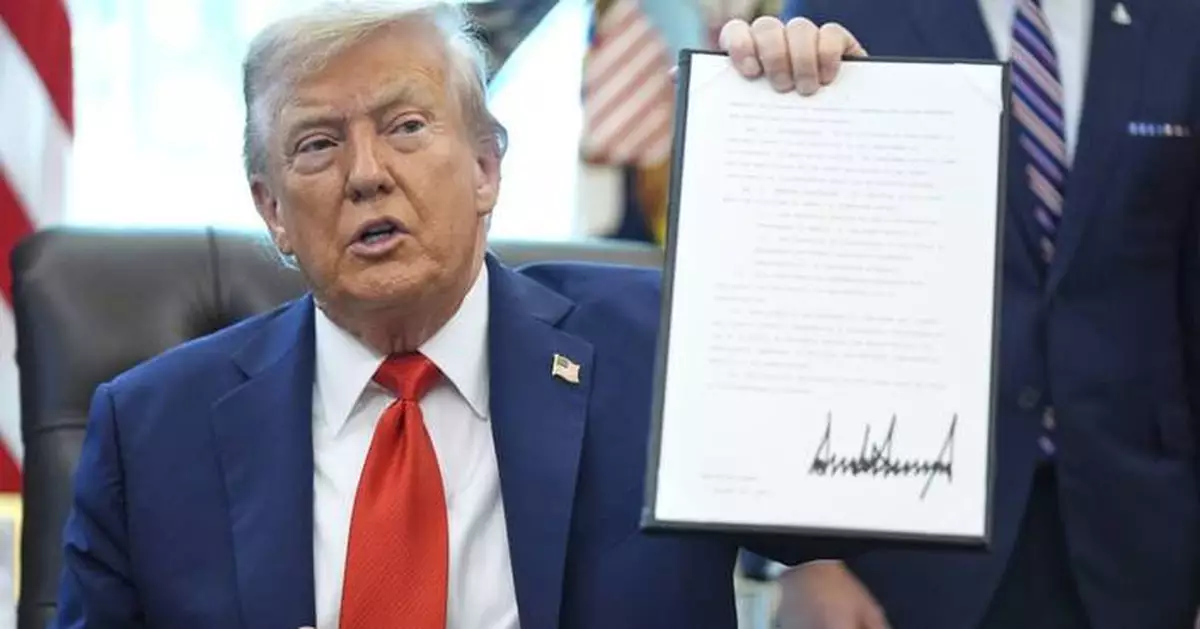
WASHINGTON (AP) — President Donald Trump on Monday signed an executive order requiring the Justice Department to investigate and prosecute people for burning the American flag, an activity that the U.S. Supreme Court has ruled is legitimate political expression protected by the U.S. Constitution.
The order the Republican president signed in the Oval Office acknowledged the court’s 5-4 ruling in a case from Texas in 1989, but said there is still room to prosecute flag burning if it “is likely to incite imminent lawless action” or amounts to “fighting words.”
“You burn a flag, you get one year in jail. You don’t get 10 years, you don’t get one month,” Trump said. “You get one year in jail, and it goes on your record, and you will see flag burning stopping immediately.”
The order also called for Attorney General Pam Bondi to pursue litigation to challenge the 1989 ruling, an attempt by Trump to get the issue back in front of the Supreme Court. Today's Supreme Court is much more conservative than the makeup of the court in 1989 and includes three judges Trump appointed in his first term.
Civil liberties advocates and constitutional scholars questioned both the legality and the merit of Trump’s action. A lawyer working for a free speech group said Trump does not have the power to rewrite the First Amendment.
“While people can be prosecuted for burning anything in a place they aren’t allowed to set fires, the government can’t prosecute protected expressive activity — even if many Americans, including the president, find it ‘uniquely offensive and provocative,’” added Bob Corn-Revere, chief counsel of the Foundation for Individual Rights and Expression.
In the 1989 case, the justices ruled 5-4 that the First Amendment protects flag burning as legitimate political expression. The late Justice Antonin Scalia, the conservative icon whom Trump has repeatedly praised, was in the majority.
On Monday, Trump described the 1989 court behind the ruling as a “very sad court.”
Trump said burning the U.S. flag “incites riots at levels we’ve never seen before,” with some people “going crazy” over the act of setting it afire and others expressing anger at people for burning it. He did not offer examples.
A White House fact sheet referenced recent protests, including in Los Angeles in June, where the flag was burned “alongside violent acts and other conduct threatening public safety.”
“All over the country they're burning flags. All over the world, they burn the American flag,” Trump said, as Vice President JD Vance, Bondi, Defense Secretary Pete Hegseth and other administration officials stood behind him as he sat at his desk.
G.S. Hans, a law professor at Cornell University who focuses on the First Amendment, said the country has not suffered from an “endemic of flag burning.”
“I don’t think this is something that has been a big problem,” Hans said in an interview. “It’s a solution in search of a problem.”
The executive order states that desecrating the American flag is “uniquely offensive and provocative. It is a statement of contempt, hostility, and violence against our Nation — the clearest possible expression of opposition to the political union that preserves our rights, liberty, and security. Burning this representation of America may incite violence and riot.”
The order calls on the attorney general to prioritize enforcement “to the fullest extent possible” of criminal and civil laws against flag burning that cause harm unrelated to the First Amendment's free speech guarantee.
“Thank you for protecting the American flag, and we'll do that without running afoul of the First Amendment as well,” Bondi told the president.
Foreign nationals could face having their visas, residency permits, naturalization proceedings and other immigration benefits revoked, according to the order. They could also be deported.
Flag-burning has been on Trump's mind for years.
After he was elected president in November 2016, Trump said “there must be consequences” for anyone who burns an American flag, such as jail or loss of citizenship.
“Nobody should be allowed to burn the American flag — if they do, there must be consequences — perhaps loss of citizenship or year in jail!” Trump wrote on what then was Twitter.
The Constitution forbids the government from stripping citizenship from natural-born Americans.
Associated Press writer Mark Sherman contributed to this report.
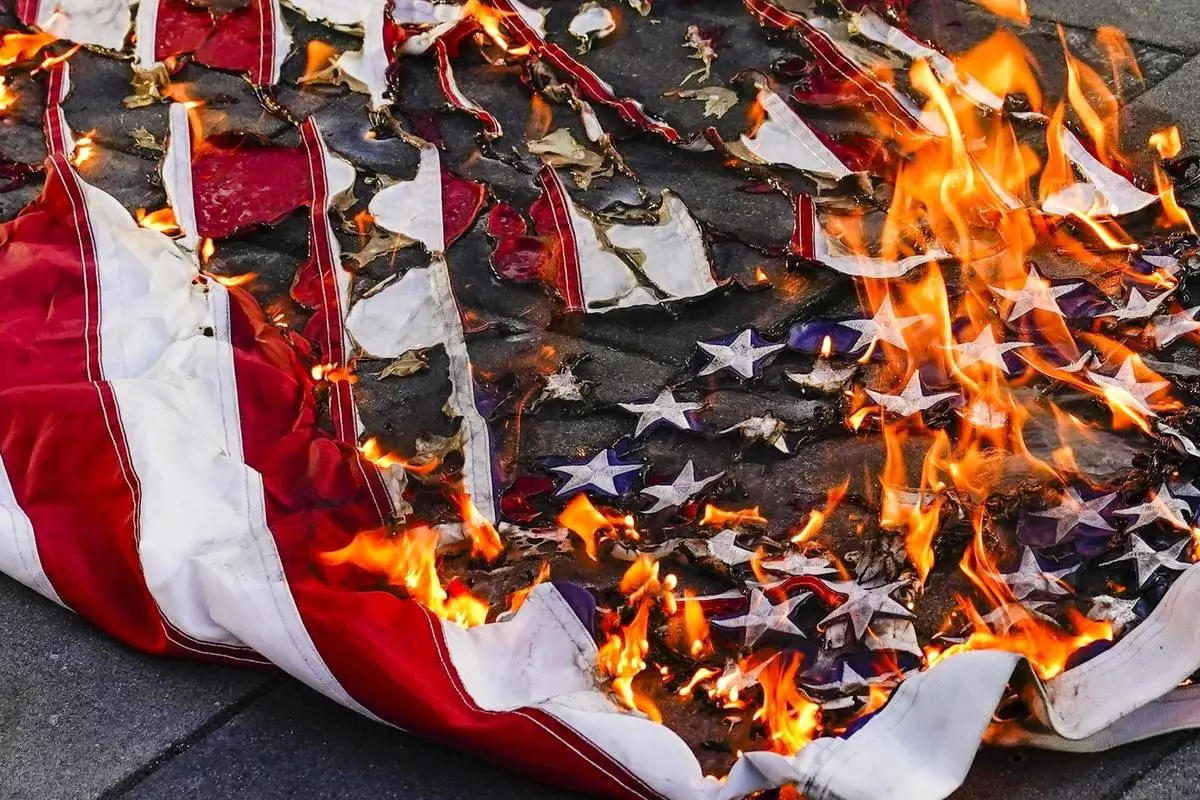
FILE - An American flag is burned during a march for Jayland Walker, July 6, 2022, in New York. (AP Photo/Frank Franklin II, File)

President Donald Trump holds up a signed executive order requiring the Justice Department to investigate instances of flag burning, in the Oval Office of the White House, Monday, Aug. 25, 2025, in Washington. (AP Photo/Evan Vucci)
WASHINGTON (AP) — U.S. forces in the Caribbean Sea have seized another sanctioned oil tanker that the Trump administration says has ties to Venezuela, part of a broader U.S. effort to take control of the South American country’s oil.
The U.S. Coast Guard boarded the tanker, named Veronica, early Thursday, Homeland Security Secretary Kristi Noem wrote on social media. The ship had previously passed through Venezuelan waters and was operating in defiance of President Donald Trump’s "established quarantine of sanctioned vessels in the Caribbean,” she said.
U.S. Southern Command said Marines and sailors launched from the aircraft carrier USS Gerald R. Ford to take part in the operation alongside a Coast Guard tactical team, which Noem said conducted the boarding as in previous raids. The military said the ship was seized “without incident.”
Several U.S. government social media accounts posted brief videos that appeared to show various parts of the ship’s capture. Black-and-white footage showed at least four helicopters approaching the ship before hovering over the deck while armed troops dropped down by rope. At least nine people could be seen on the deck of the ship.
The Veronica is the sixth sanctioned tanker seized by U.S. forces as part of the effort by Trump’s administration to control the production, refining and global distribution of Venezuela’s oil products and the fourth since the U.S. ouster of Venezuela President Nicolás Maduro in a surprise nighttime raid almost two weeks ago.
The Veronica last transmitted its location on Jan. 3 as being at anchor off the coast of Aruba, just north of Venezuela’s main oil terminal. According to the data it transmitted at the time, the ship was partially filled with crude.
Days later, the Veronica became one of at least 16 tankers that left the Venezuelan coast in contravention of the quarantine that U.S. forces have set up to block sanctioned ships, according to Samir Madani, the co-founder of TankerTrackers.com. He said his organization used satellite imagery and surface-level photos to document the ship movements.
The ship is currently listed as flying the flag of Guyana and is considered part of the shadow fleet that moves cargoes of oil in violation of U.S. sanctions.
According to its registration data, the ship also has been known as the Gallileo, owned and managed by a company in Russia. In addition, a tanker with the same registration number previously sailed under the name Pegas and was sanctioned by the Treasury Department for being associated with a Russian company moving cargoes of illicit oil.
As with prior posts about such raids, Noem and the military framed the seizure as part of an effort to enforce the law. Noem argued that the multiple captures show that “there is no outrunning or escaping American justice.”
Speaking to reporters at the White House later Thursday, Noem declined to say how many sanctioned oil tankers the U.S. is tracking or whether the government is keeping tabs on freighters beyond the Caribbean Sea.
“I can’t speak to the specifics of the operation, although we are watching the entire shadow fleet and how they’re moving,” she told reporters.
But other officials in Trump's Republican administration have made clear they see the actions as a way to generate cash as they seek to rebuild Venezuela’s battered oil industry and restore its economy.
Trump met with executives from oil companies last week to discuss his goal of investing $100 billion in Venezuela to repair and upgrade its oil production and distribution. His administration has said it expects to sell at least 30 million to 50 million barrels of sanctioned Venezuelan oil.
Associated Press writer Ben Finley contributed to this report.
This story has been corrected to show the Veronica is the fourth, not the third, tanker seized by U.S. forces since Maduro’s capture and the ship also has been known as the Gallileo, not the Galileo.
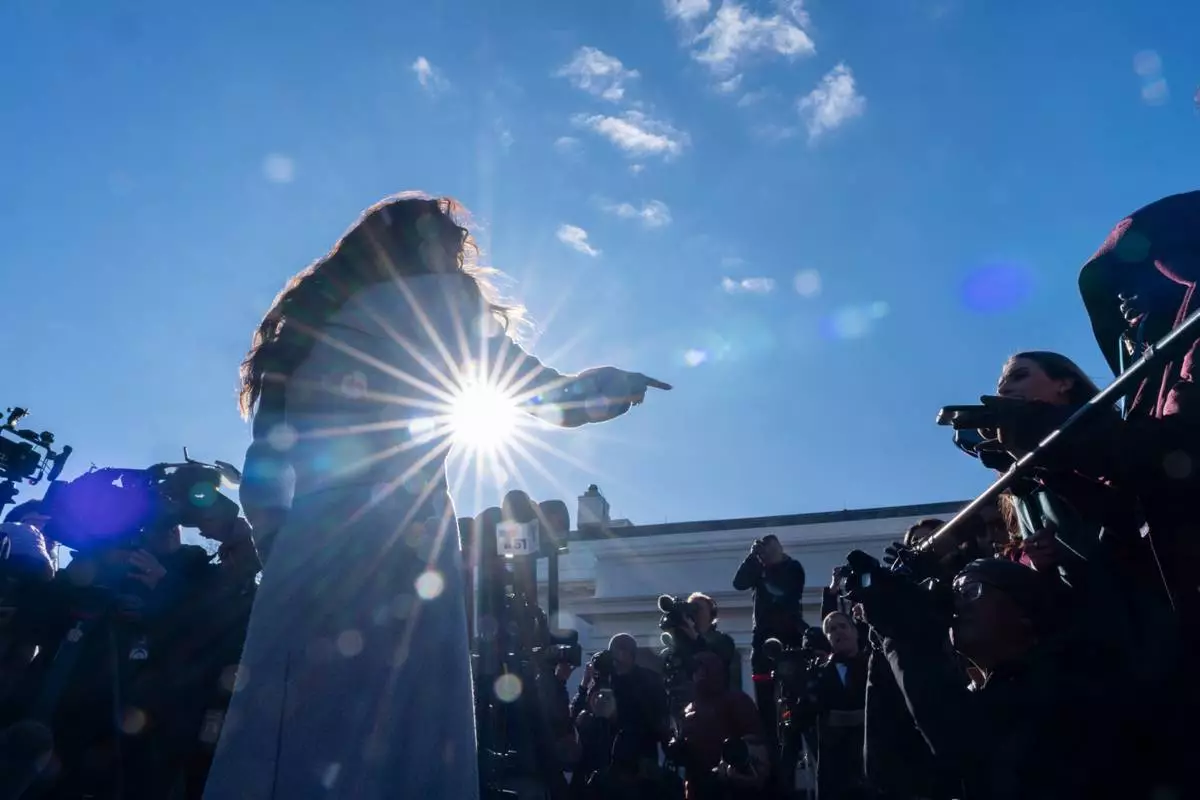
Homeland Security Secretary Kristi Noem speaks with reporters at the White House, Thursday, Jan. 15, 2026, in Washington. (AP Photo/Alex Brandon)
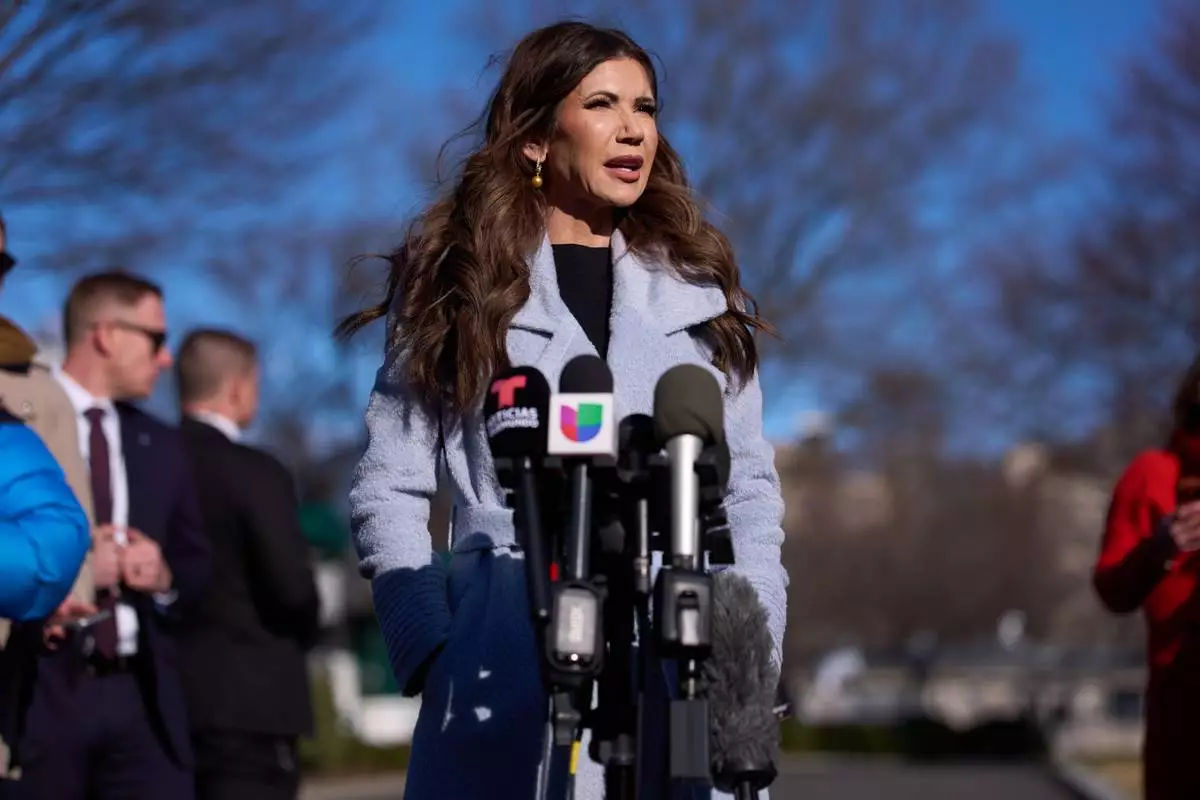
Homeland Security Secretary Kristi Noem speaks with reporters at the White House, Thursday, Jan. 15, 2026, in Washington. (AP Photo/Evan Vucci)
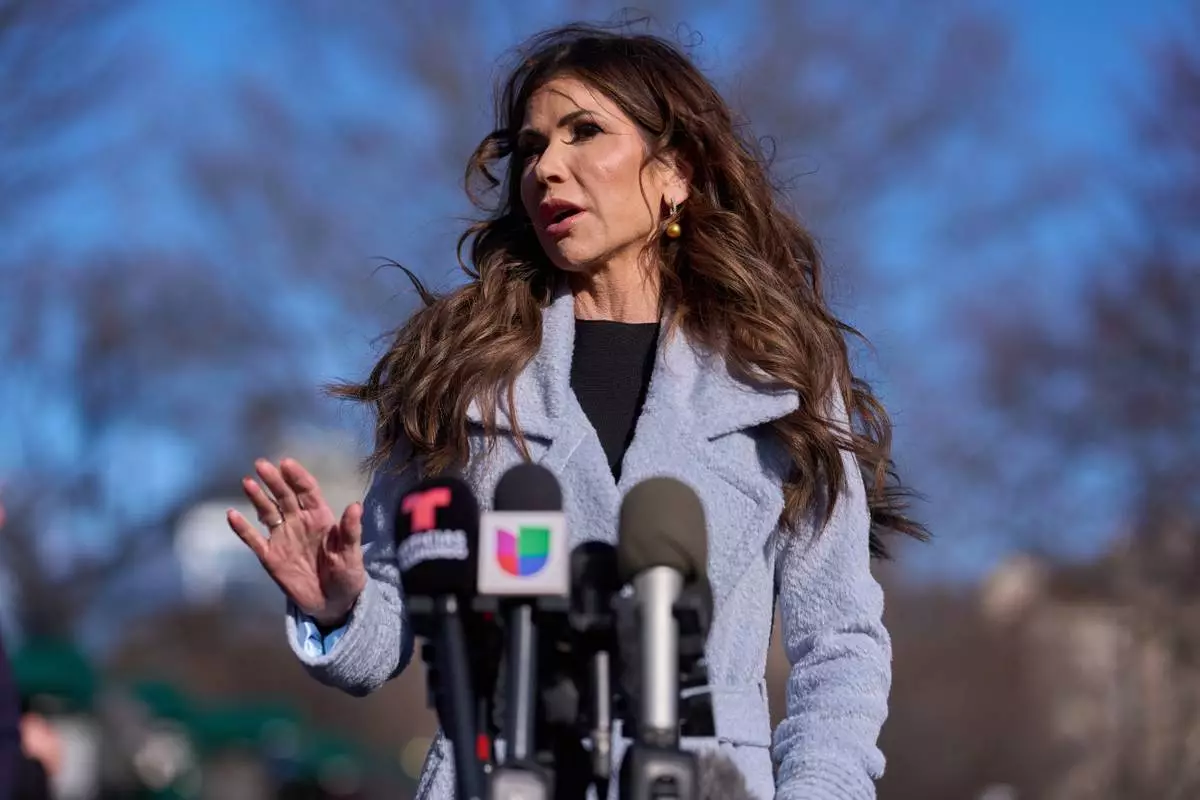
Homeland Security Secretary Kristi Noem speaks with reporters at the White House, Thursday, Jan. 15, 2026, in Washington. (AP Photo/Evan Vucci)
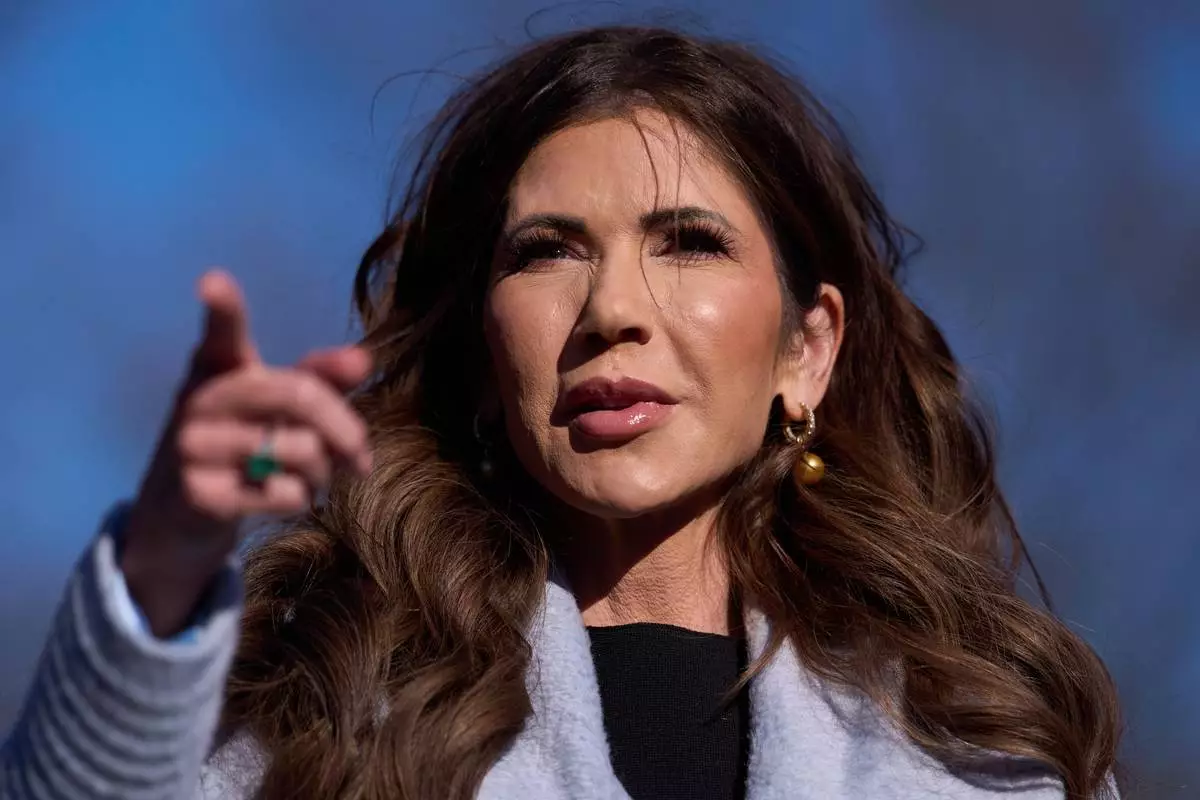
Homeland Security Secretary Kristi Noem speaks with reporters at the White House, Thursday, Jan. 15, 2026, in Washington. (AP Photo/Evan Vucci)
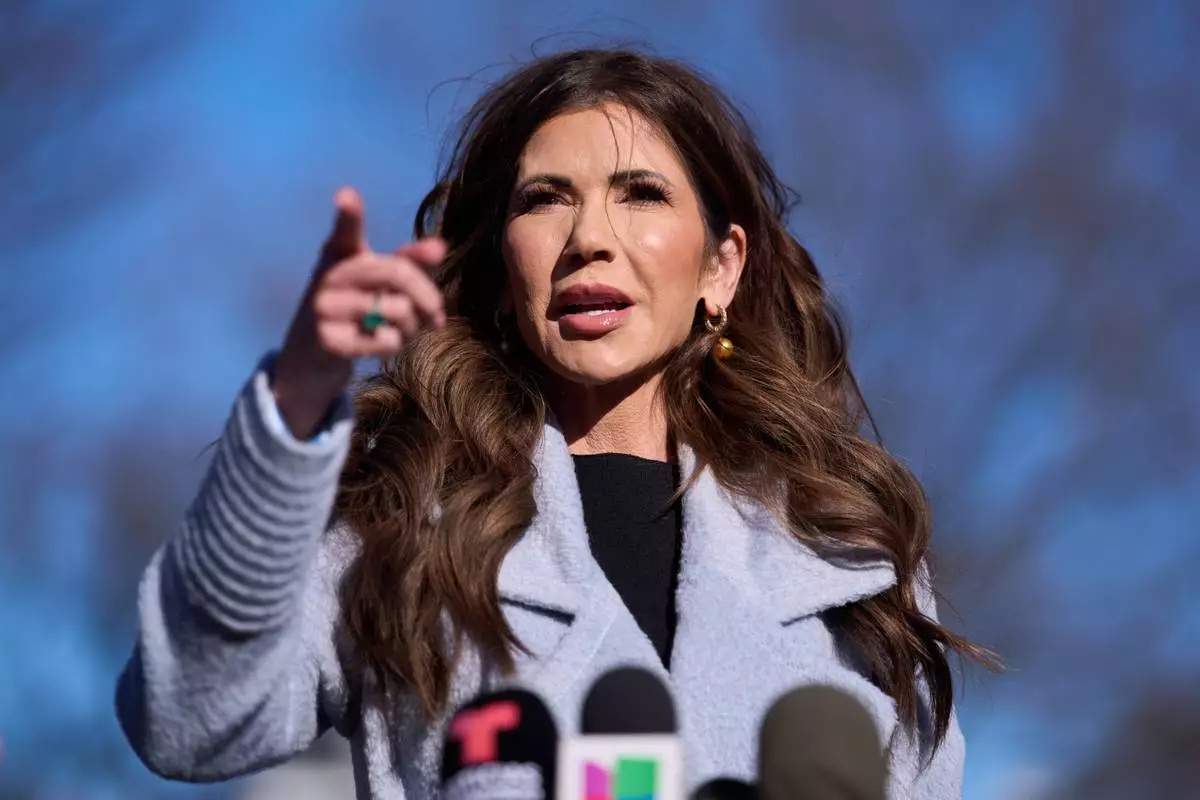
Homeland Security Secretary Kristi Noem speaks with reporters at the White House, Thursday, Jan. 15, 2026, in Washington. (AP Photo/Evan Vucci)
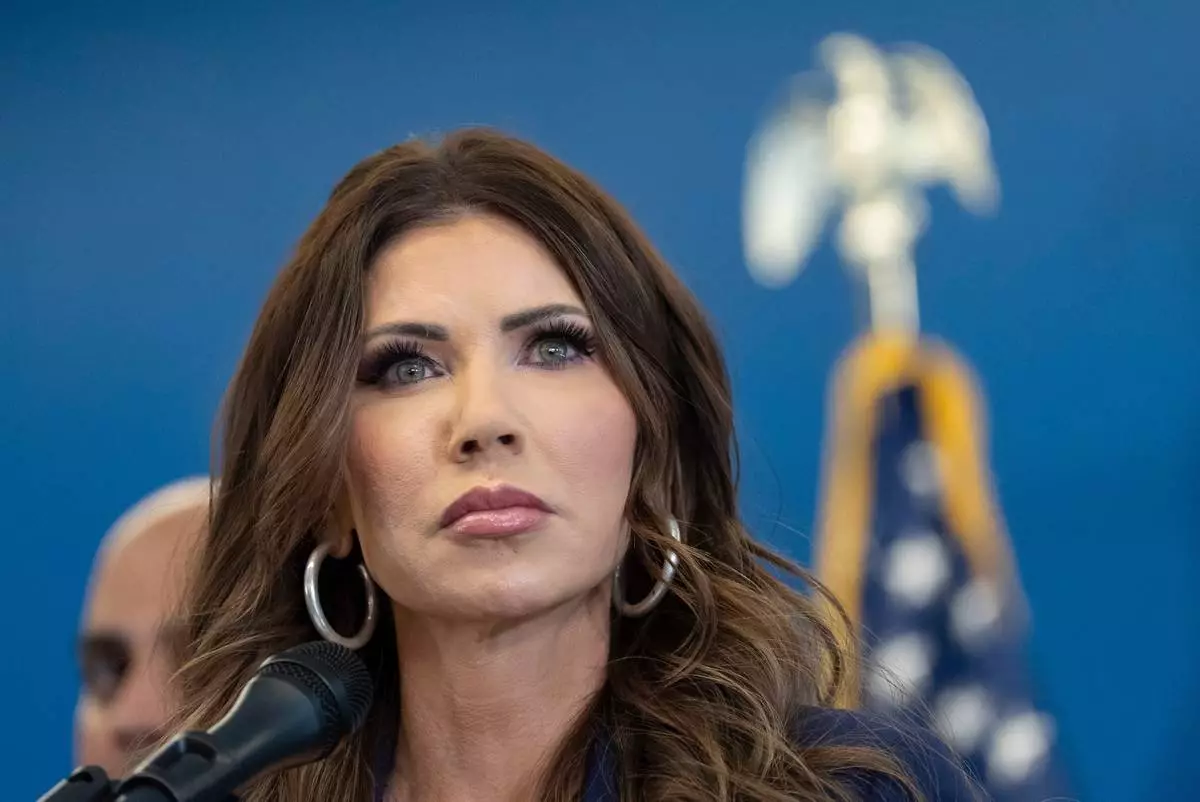
U.S. Homeland Security Secretary Kristi Noem speaks during a press conference, Thursday, Jan. 8, 2026, in New York. (AP Photo/Yuki Iwamura)
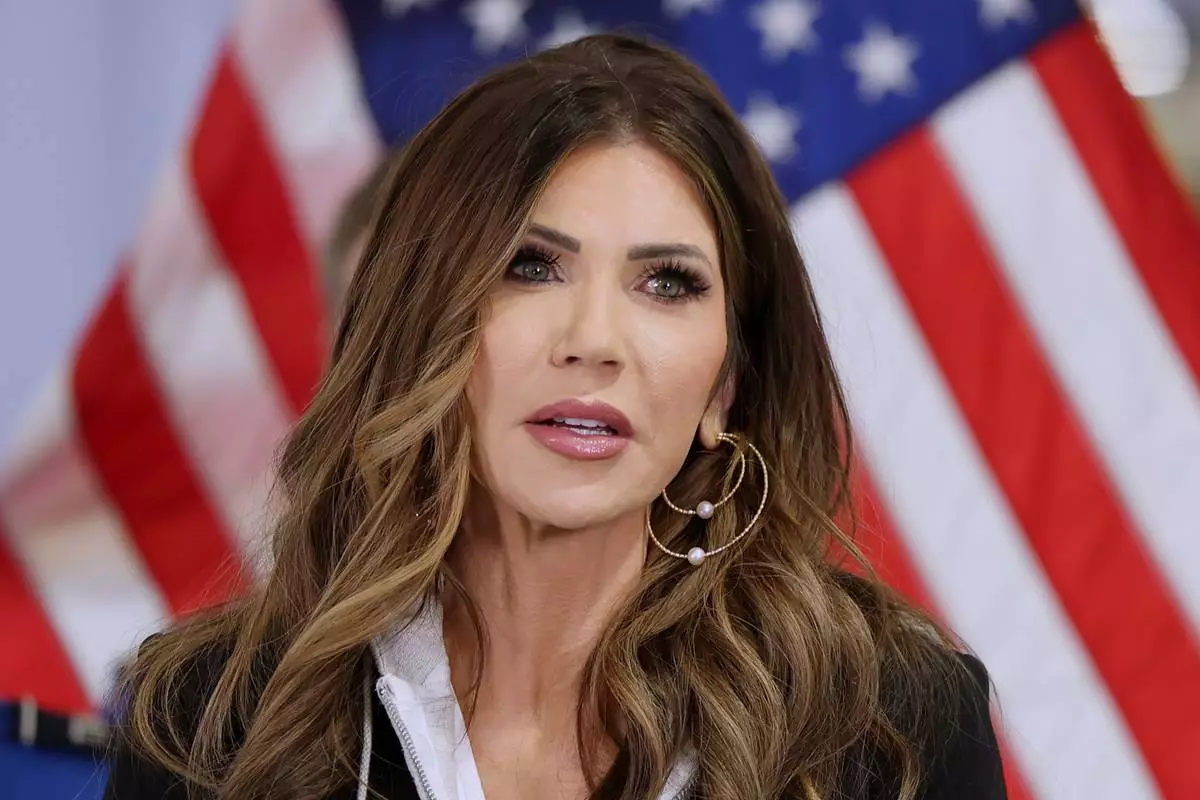
U.S. Homeland Security Secretary Kristi Noem speaks at a news conference at Harry Reid International Airport, Nov. 22, 2025, in Las Vegas. (AP Photo/Ronda Churchill, File)