- Korea Zinc plans to produce high-purity germanium using raw materials procured outside of China and provide the supply to Lockheed Martin
- Newly established 'Germanium Plant' at Onsan smelter to play a pivotal role in the partnership formed with the leading defense contractor
- Agreement expected to contribute to the stable supply of germanium, an essential material for the defense and space industries, and actively support private-sector cooperation within the Korea-U.S. economic alliance
- Marks a landmark success in Korea-U.S. collaborations in the procurement critical rare metals
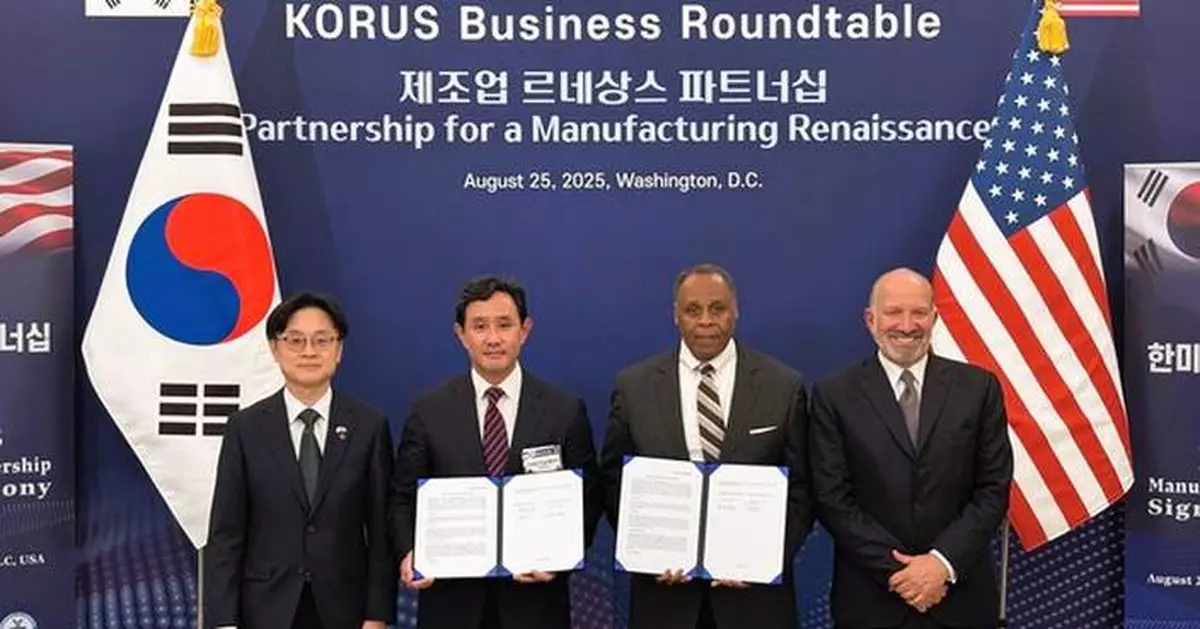
SEOUL, South Korea, Aug. 26, 2025 /PRNewswire/ -- Yun B. Choi, Chairman of Korea Zinc (KRX:010130), the world's largest zinc smelter, has signed a Memorandum of Understanding (MOU) with Lockheed Martin, the world's leading defense company, on August 25 for the supply and procurement of germanium and cooperation in the critical minerals supply chain. This MOU, pursued in line with ongoing Korea-U.S. discussions on economic security cooperation, carries great significance as it leads the establishment of a "China-free" critical minerals supply chain, and marks the first successful case of Korea-U.S. collaboration in the field of critical rare metals.
The signing ceremony was attended by the representatives of Korea Zinc, namely Yun B. Choi, Chairman of Korea Zinc, Mookyung Jung, President of the Sustainability Management Unit, and Kijune Kim, Executive Vice-President of the Sustainability Management Division. The attending Lockheed Martin representatives included Michael Williamson, President of Lockheed Martin International, accompanied by Nancy Ziuzin Schlegel, Corporate Vice President and David Sutton, Director.
Both companies agreed to take the recent Korea-U.S. summit as an opportunity to accelerate the establishment of a China-free critical minerals supply chain at the private-sector level, and to work together to create a successful example of supply chain cooperation.
The MOU stipulates that Korea Zinc will supply Lockheed Martin with germanium smelted (covering the entire process from mining to production) outside of China, North Korea, Iran, and Russia, and that Lockheed Martin will pursue an off-take agreement, securing priority rights to procuring this output. Based on the MOU, Korea Zinc and Lockheed Martin will be beginning detailed discussions toward signing a long-term contract.
Lockheed Martin, formed in 1995 through the merger of Lockheed and Martin Marietta, is the world's largest defense contractor, notably producing the F-22 Raptor and F-35 stealth fighters, the Aegis Combat System, and the Patriot missile system. As of the end of 2024, its order backlog reached a record high of USD 176 billion (approximately KRW 246 trillion). The company has maintained a cooperative relationship with the South Korean government and local industries for more than 40 years, ranging from assembly production of UH-60 helicopters and F-16 fighters to the joint development of the T-50 supersonic advanced trainer jet.
Germanium is a key material used in the defense industry for night-vision goggles, thermal imaging cameras, and infrared detectors. It is also employed in the space industry for solar panels that power satellites. Additionally, it is an essential metal widely used in advanced technology fields such as high-performance semiconductor devices, specialty gases for semiconductor processing, LEDs, fiber optic cables, and superconductors.
Currently, the world's largest producer of germanium is China. According to KOTRA, as of 2021, 68% of the global refined germanium output of 140 tons originated from China. The U.S. Geological Survey (USGS) has likewise identified China as the leading country among those that commercially produce germanium. With resource weaponization trends intensifying, and growing concerns over the concentration of resource production in certain countries, the establishment of stable supply chains has emerged as an urgent international priority.
In line with the signing of the MOU with Lockheed Martin, Korea Zinc plans to invest approximately KRW 140 billion in its Onsan Smelter in Ulsan to establish a new germanium plant. Following trial operations in 2027, the company aims to begin production in the first half of 2028, with plans to produce high-purity germanium dioxide (amount equivalent to approximately 10 tons of germanium metal). This development will position Korea Zinc as the only domestic producer of germanium in South Korea.
Having established itself as a hub for strategic mineral supply chains, Korea Zinc has been the sole producer of antimony, indium, and bismuth in South Korea. Antimony, like germanium, is also a critical material for the defense industry, used in ammunition and missiles. In June of this year, Korea Zinc shipped 20 tons of antimony on a cargo vessel bound for Baltimore, marking its entry into U.S. exports. The company plans to expand export volumes to over 100 tons within this year and more than 240 tons annually starting next year.
A Korea Zinc representative stated, "As a company representing Korea's national key industries, stabilizing the supply chain for critical minerals is a highly important strategic task for both the government and the private sector in terms of national interest. Through the signing of this MOU with Lockheed Martin, we aim to strengthen the strategic partnership between Korea and the United States while actively contributing to private-sector cooperation in the realm of economic security."
SEOUL, South Korea, Aug. 26, 2025 /PRNewswire/ -- Yun B. Choi, Chairman of Korea Zinc (KRX:010130), the world's largest zinc smelter, has signed a Memorandum of Understanding (MOU) with Lockheed Martin, the world's leading defense company, on August 25 for the supply and procurement of germanium and cooperation in the critical minerals supply chain. This MOU, pursued in line with ongoing Korea-U.S. discussions on economic security cooperation, carries great significance as it leads the establishment of a "China-free" critical minerals supply chain, and marks the first successful case of Korea-U.S. collaboration in the field of critical rare metals.
The signing ceremony was attended by the representatives of Korea Zinc, namely Yun B. Choi, Chairman of Korea Zinc, Mookyung Jung, President of the Sustainability Management Unit, and Kijune Kim, Executive Vice-President of the Sustainability Management Division. The attending Lockheed Martin representatives included Michael Williamson, President of Lockheed Martin International, accompanied by Nancy Ziuzin Schlegel, Corporate Vice President and David Sutton, Director.
Both companies agreed to take the recent Korea-U.S. summit as an opportunity to accelerate the establishment of a China-free critical minerals supply chain at the private-sector level, and to work together to create a successful example of supply chain cooperation.
The MOU stipulates that Korea Zinc will supply Lockheed Martin with germanium smelted (covering the entire process from mining to production) outside of China, North Korea, Iran, and Russia, and that Lockheed Martin will pursue an off-take agreement, securing priority rights to procuring this output. Based on the MOU, Korea Zinc and Lockheed Martin will be beginning detailed discussions toward signing a long-term contract.
Lockheed Martin, formed in 1995 through the merger of Lockheed and Martin Marietta, is the world's largest defense contractor, notably producing the F-22 Raptor and F-35 stealth fighters, the Aegis Combat System, and the Patriot missile system. As of the end of 2024, its order backlog reached a record high of USD 176 billion (approximately KRW 246 trillion). The company has maintained a cooperative relationship with the South Korean government and local industries for more than 40 years, ranging from assembly production of UH-60 helicopters and F-16 fighters to the joint development of the T-50 supersonic advanced trainer jet.
Germanium is a key material used in the defense industry for night-vision goggles, thermal imaging cameras, and infrared detectors. It is also employed in the space industry for solar panels that power satellites. Additionally, it is an essential metal widely used in advanced technology fields such as high-performance semiconductor devices, specialty gases for semiconductor processing, LEDs, fiber optic cables, and superconductors.
Currently, the world's largest producer of germanium is China. According to KOTRA, as of 2021, 68% of the global refined germanium output of 140 tons originated from China. The U.S. Geological Survey (USGS) has likewise identified China as the leading country among those that commercially produce germanium. With resource weaponization trends intensifying, and growing concerns over the concentration of resource production in certain countries, the establishment of stable supply chains has emerged as an urgent international priority.
In line with the signing of the MOU with Lockheed Martin, Korea Zinc plans to invest approximately KRW 140 billion in its Onsan Smelter in Ulsan to establish a new germanium plant. Following trial operations in 2027, the company aims to begin production in the first half of 2028, with plans to produce high-purity germanium dioxide (amount equivalent to approximately 10 tons of germanium metal). This development will position Korea Zinc as the only domestic producer of germanium in South Korea.
Having established itself as a hub for strategic mineral supply chains, Korea Zinc has been the sole producer of antimony, indium, and bismuth in South Korea. Antimony, like germanium, is also a critical material for the defense industry, used in ammunition and missiles. In June of this year, Korea Zinc shipped 20 tons of antimony on a cargo vessel bound for Baltimore, marking its entry into U.S. exports. The company plans to expand export volumes to over 100 tons within this year and more than 240 tons annually starting next year.
A Korea Zinc representative stated, "As a company representing Korea's national key industries, stabilizing the supply chain for critical minerals is a highly important strategic task for both the government and the private sector in terms of national interest. Through the signing of this MOU with Lockheed Martin, we aim to strengthen the strategic partnership between Korea and the United States while actively contributing to private-sector cooperation in the realm of economic security."
** The press release content is from PR Newswire. Bastille Post is not involved in its creation. **

Korea Zinc and Lockheed Martin Forge Strategic Partnership, Signing an MOU on Germanium Supply and Procurement Under the Shared Commitment of Establishing a Resilient Supply Chain