VIENNA (AP) — France, Britain and Germany have initiated the process of triggering the “ snapback mechanism ” that automatically reimposes all United Nations sanctions on Iran over its nuclear program, saying Iran has willfully departed from their 2015 nuclear deal that lifted the measures.
The U.N. sanctions that were in effect before the 2015 deal included a conventional arms embargo, restrictions on ballistic missile development, asset freezes, travel bans and a ban on producing nuclear-related technology.
The European countries, known as the E3, offered Iran a delay of the snapback during talks in July if Iran met three conditions: resuming negotiations with the United States over its nuclear program, allowing U.N. nuclear inspectors access to its nuclear sites, and accounting for the over 400 kilograms of highly enriched uranium the U.N. watchdog says it has.
Tehran, which now enriches uranium at near weapons-grade levels, has rejected that proposal.
The U.S. and Iran tried to reach a new nuclear deal earlier this year, but those talks have not resumed since the 12-day Israeli bombardment of Iran's nuclear and military sites and the U.S. bombardment on June 22.
Under the Joint Comprehensive Plan of Action reached between world powers and Iran in 2015, Iran agreed to limit uranium enrichment to levels necessary for civilian nuclear power in exchange for lifted economic sanctions. The International Atomic Energy Agency was tasked with monitoring Iran’s nuclear program.
The snapback mechanism’s purpose is to swiftly reimpose all pre-deal sanctions without being vetoed by U.N. Security Council members, including permanent members Russia and China.
The process began Thursday, when the E3 formally notified the U.N. secretary-general and Security Council president about Iran’s “significant nonperformance of commitments.”
That triggers a 30-day window during which a new resolution to continue sanctions relief must be adopted. Since that's unlikely, as the U.S., Britain and France would veto such a resolution, all U.N. sanctions automatically “snap back.” At this stage, no further vote is needed and no Security Council member can block reimposition.
The Europeans agreed with the U.S. earlier this year to set an end-of-August deadline for triggering the snapback mechanism if no agreement is reached with Iran.
The U.S. itself cannot activate the snapback since U.S. President Donald Trump withdrew the U.S. from the nuclear deal in 2018.
Two factors drive the approaching deadline.
First, the power to automatically snap back sanctions expires on Oct. 18. After that, sanctions efforts could face vetoes from China and Russia, which have provided some support to Iran in the past.
Second, Europeans want to trigger the mechanism under South Korea’s Security Council presidency in September, before Russia takes over in October. While Russia cannot veto the reimposition of sanctions under the mechanism, diplomats say Moscow could use procedural delaying tactics until the nuclear deal expires.
European nations assert that Iran has “willfully and publicly departed” from the nuclear deal’s commitments.
In May, the IAEA said Iran had amassed 408.6 kilograms (900.8 pounds) of uranium enriched up to 60% purity. If it is enriched to 90%, it would be enough to make nine nuclear weapons, according to an IAEA yardstick, though a weapon would require other expertise, such as a detonation device.
The IAEA also estimated that as of May 17, Iran’s overall stockpile of enriched uranium stood at 9,247.6 kilograms (20,387.4 pounds).
The amounts far exceed the limits set out in the nuclear deal, under which Iran was allowed to enrich uranium up to 3.67% and maintain a uranium stockpile of 300 kilograms.
In addition, in 2022, Iran removed most monitoring equipment, including IAEA cameras. A year later, Iran barred some of the agency’s most experienced inspectors.
Iran has long maintained that its nuclear program serves peaceful purposes only. Tehran also argues that it has the right to abandon the nuclear deal’s limits because Washington withdrew from the deal in 2018 and reimposed its own sanctions.
Before 2019, when Iran gradually began to breach the deal’s limits, the IAEA confirmed Tehran adhered to all commitments.
Iran contends there is no legal basis for the Europeans to reimpose U.N. sanctions, claiming the countries failed to uphold the accord after the U.S. exit.
Tehran has also threatened to withdraw from the global Treaty on the Non-Proliferation of Nuclear Weapons if snapback is triggered. By ratifying the NPT in 1970, Iran committed to not developing nuclear weapons.
Once the snapback mechanism is triggered, there remains a slim chance for a diplomatic solution, said Ali Vaez, Iran project director at the International Crisis Group.
If the West and Iran reach a diplomatic agreement within the 30-day window, a resolution could be introduced to push back the mechanism's Oct. 18 expiration date, he said.
“The timing is, in one sense, auspicious because it overlaps with the U.N. General Assembly’s annual high-level week, which will bring to New York high-level leaders who could huddle over ways to head off execution,” he said.
But he added that the issue is likely to resurface unless Washington and Tehran can hammer out a new nuclear deal.
The Associated Press receives support for nuclear security coverage from the Carnegie Corporation of New York and Outrider Foundation. The AP is solely responsible for all content.
Follow AP coverage: https://apnews.com/projects/the-new-nuclear-landscape/
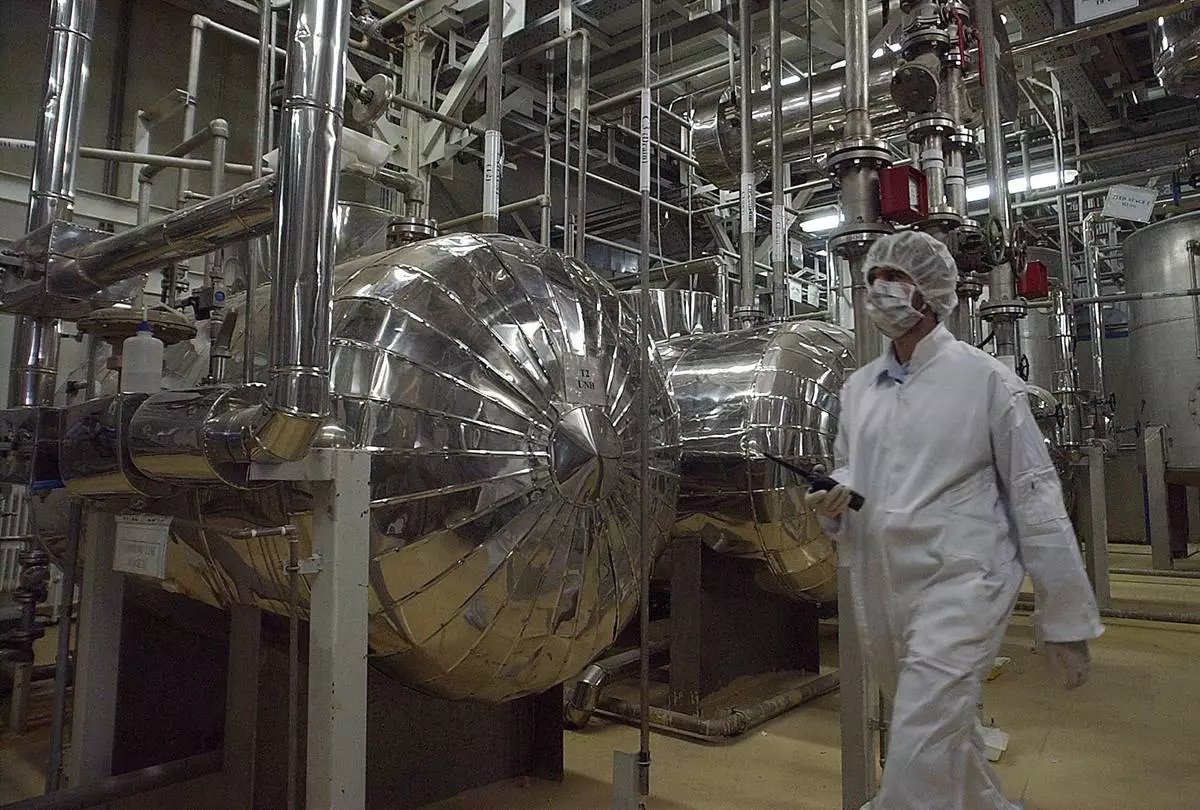
FILE - An Iranian security official in protective clothing walks through part of the Uranium Conversion Facility just outside the Iranian city of Isfahan, March 30, 2005. (AP Photo/Vahid Salemi, File)
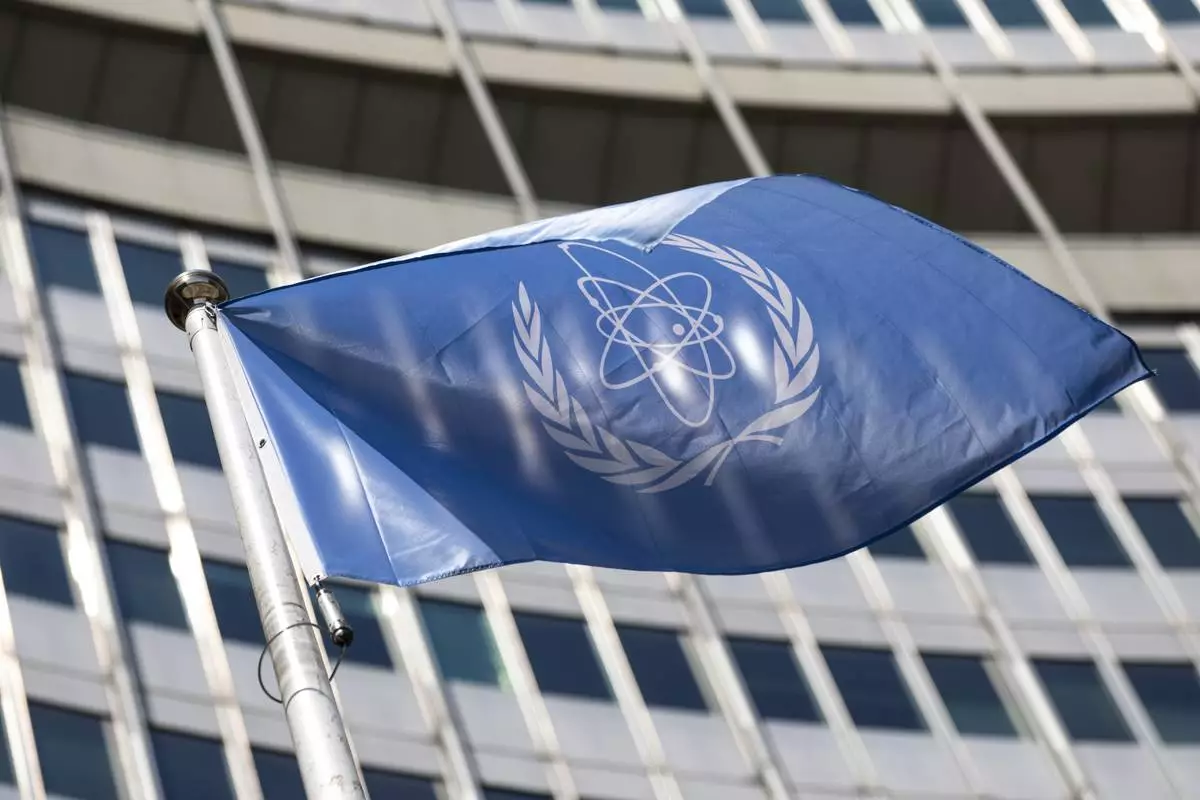
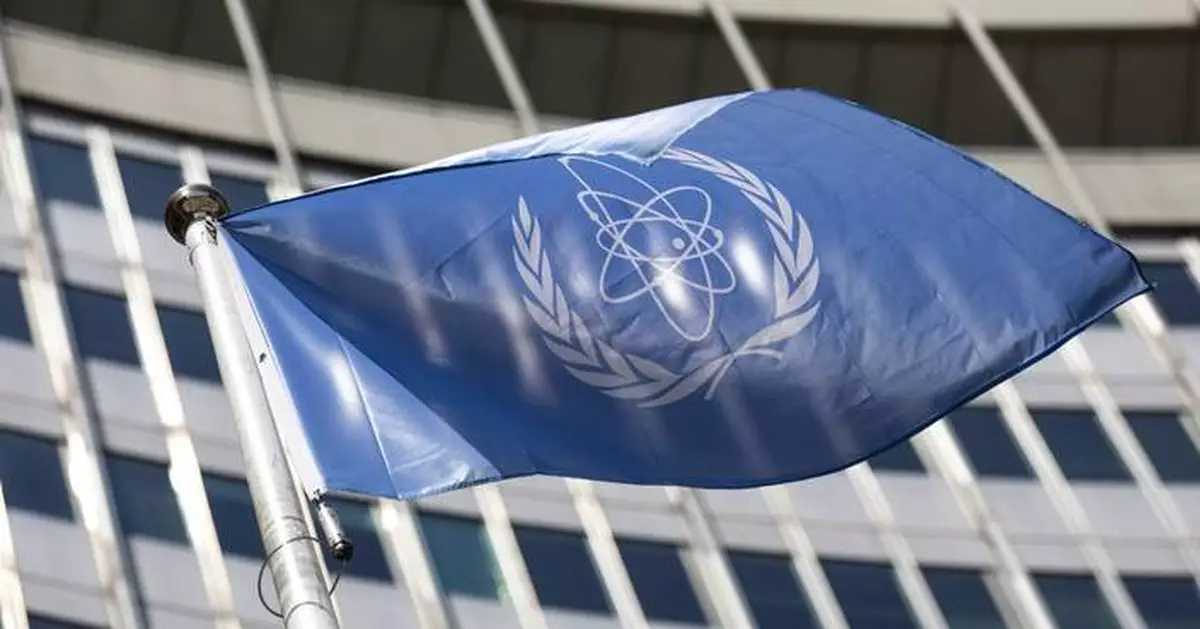
FILE - In this June 7, 2021, file photo, the flag of the International Atomic Energy Agency (IAEA) waves at the entrance of the Vienna International Center in Vienna. (AP Photo/Lisa Leutner, File)
WASHINGTON (AP) — The United States said Sunday it rescued a service member missing behind enemy lines since Iran downed a fighter jet, as President Donald Trump escalated pressure on Tehran with renewed threats to reopen the Strait of Hormuz.
Trump wrote in a social media post that the aviator is injured but “will be just fine,” adding that the rescue involved “dozens of aircraft” and that the U.S. had been monitoring his location in the lead-up to his rescue.
“This brave Warrior was behind enemy lines in the treacherous mountains of Iran, being hunted down by our enemies, who were getting closer and closer by the hour,” Trump wrote.
The airman's extraction followed a frantic U.S. search-and-rescue operation after the Friday crash of the F-15E Strike Eagle, as Iran also promised a reward for anyone who turned in an “enemy pilot.”
A second crew member was rescued earlier.
The fighter jet was the first U.S. aircraft to have crashed in Iranian territory since the war, now in its sixth week, erupted.
Trump said last week that the U.S. had “decimated” Iran and would finish the war “very fast.” Two days later, Iran shot down two U.S. military planes, showing the ongoing perils of the bombing campaign and the ability of a degraded Iranian military to continue to hit back.
The other jet to go down was a U.S. A-10 attack aircraft. Neither the status of the crew nor exactly where it crashed was immediately known.
On Sunday, Iran’s state TV aired a video showing thick black smoke rising into the air, claiming that they had shot down an American transport plane and two helicopters that were part of the rescue operation. However, a regional intelligence official briefed on the mission told The Associated Press that the U.S. military blew up two transport planes due to a technical malfunction, forcing it to bring in additional aircraft to complete the rescue.
The official spoke on condition of anonymity to discuss the covert mission.
In Kuwait, an Iranian drone attack caused significant damage to two power plants and put a water desalination station out of service, according to the Ministry of Electricity. No injuries were reported from the attack, the ministry said.
In Bahrain, the national oil company said that a drone attack caused a fire at one of its storage facilities, which was extinguished. It said the damage was still being assessed and no injuries had been reported.
In the United Arab Emirates, authorities responded to multiple fires at the Borouge petrochemicals plant, a joint venture of the Abu Dhabi National Oil Co. and Borealis of Austria. They say the fires were caused by falling debris following successful interceptions by air defense systems, but production at the plant in Ruwais, near the UAE’s western border with Saudi Arabia, has halted.
The strike came a day after Israel struck a petrochemical plant in Iran that Prime Minister Benjamin Netanyahu said generated revenue that it had used to fund the war.
The war began with joint U.S.-Israel strikes on Feb. 28 and has killed thousands, shaken global markets, cut off key shipping routes and spiked fuel prices. Both sides have threatened and hit civilian targets, bringing warnings of possible war crimes.
Trump renewed his threats for Iran to open up the Strait of Hormuz by Monday or face devastating consequences, writing Saturday in a social media post: “Remember when I gave Iran ten days to MAKE A DEAL or OPEN UP THE HORMUZ STRAIT. Time is running out — 48 hours before all Hell will reign down on them.”
The waterway is a critical chokepoint for global energy shipments, especially oil and gas moving from the Persian Gulf to Europe and Asia. Disruptions there have injected volatility into the market and pushed oil and gas-importing countries to seek alternative sources.
“The doors of hell will be opened to you” if Iran’s infrastructure is attacked, Gen. Ali Abdollahi Aliabadi with the country’s joint military command said late Saturday in response to Trump’s renewed threat, state media reported. In turn, the general threatened all infrastructure used by the U.S. military in the region.
But Pakistan’s Foreign Ministry spokesperson, Tahir Andrabi, told the AP that his government’s efforts to broker a ceasefire are “right on track” after Islamabad last week said that it would soon host talks between the U.S. and Iran.
Mediators from Pakistan, Turkey and Egypt were working to bring the U.S. and Iran to the negotiating table, according to two regional officials.
The proposed compromise includes a cessation of hostilities to allow a diplomatic settlement, according to a regional official involved in the efforts and a Gulf diplomat briefed on the matter. They spoke on condition of anonymity to discuss closed-door diplomacy.
Iran’s parliamentary speaker, Mohammad Bagher Qalibaf, issued a veiled threat late Friday to disrupt traffic through a second strategic waterway in the region, the Bab el-Mandeb.
The strait, 32 kilometers (20 miles) wide, links the Red Sea with the Gulf of Aden and the Indian Ocean. More than a tenth of seaborne global oil and a quarter of container ships pass through it.
“Which countries and companies account for the highest transit volumes through the strait?” Qalibaf wrote.
More than 1,900 people have been killed in Iran since the war began.
In Gulf Arab states and the occupied West Bank, more than two dozen people have died, while 19 have been reported dead in Israel and 13 U.S. service members have been killed. In Lebanon, more than 1,400 people have been killed and more than 1 million people have been displaced. Ten Israeli soldiers have died there.
This report has been corrected to show that Borealis is an Austrian company and not Australian.
Metz reported from Jerusalem and Magdy from Cairo. Jon Gambrell in Dubai, United Arab Emirates and Munir Ahmed in Islamabad contributed to this report.
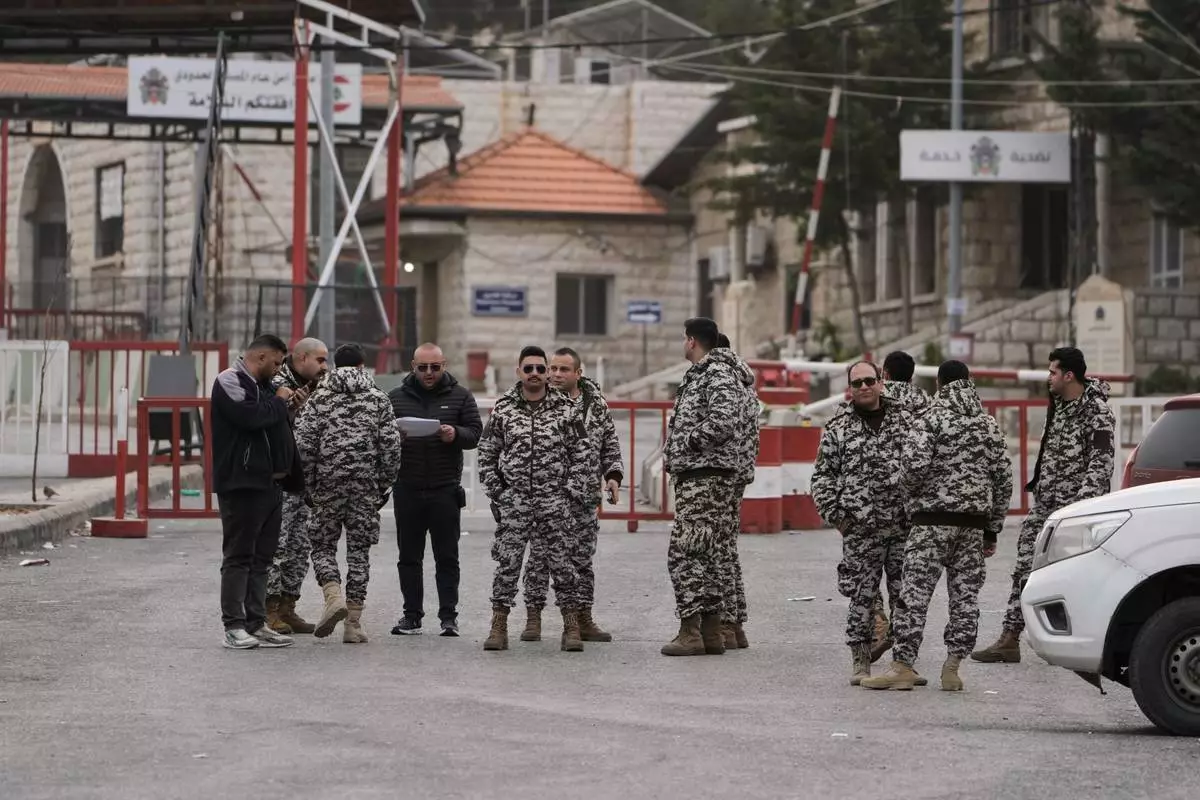
Members of Lebanon's General Security stand at the Masnaa border crossing in the Bekaa valley, eastern Lebanon, Sunday, April 5, 2026. (AP Photo/Bilal Hussein)
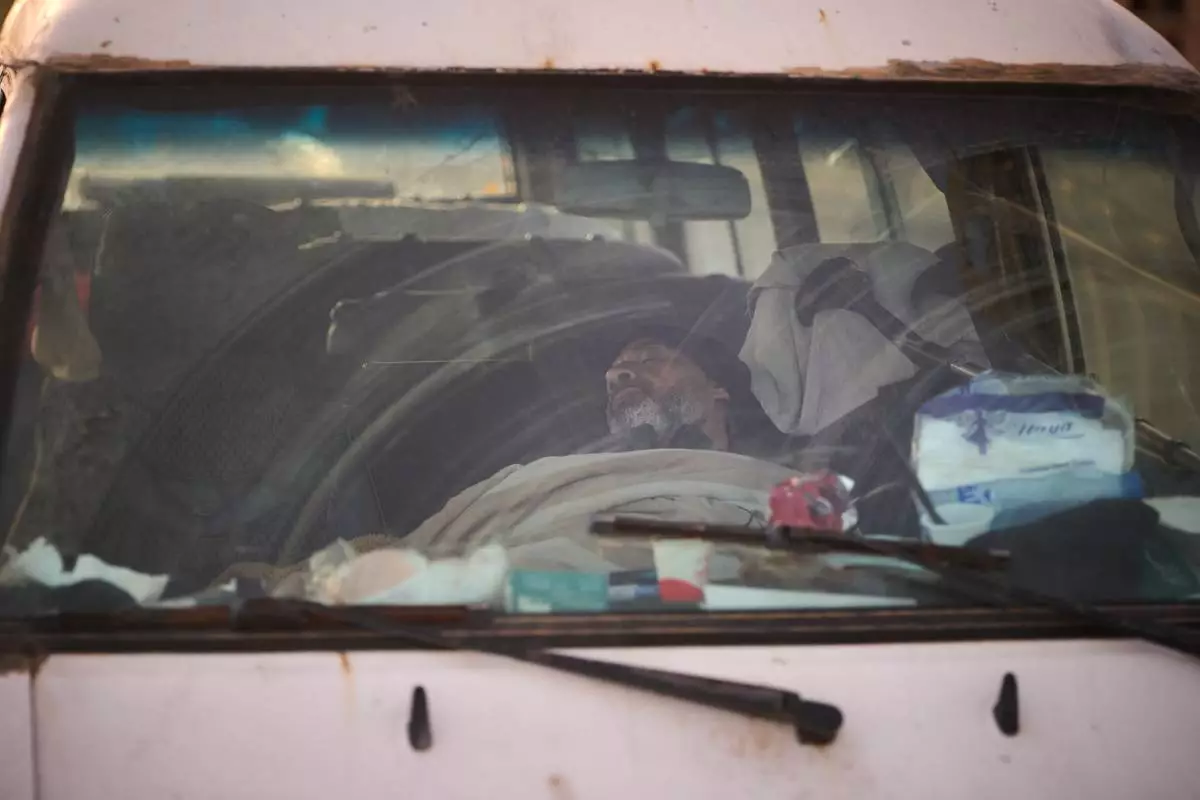
A man, who fled Israeli bombings in southern Lebanon with his family, sleeps in his car used as shelter, along a seaside promenade in downtown Beirut, Lebanon, Sunday, April 5, 2026. (AP Photo/Emilio Morenatti)
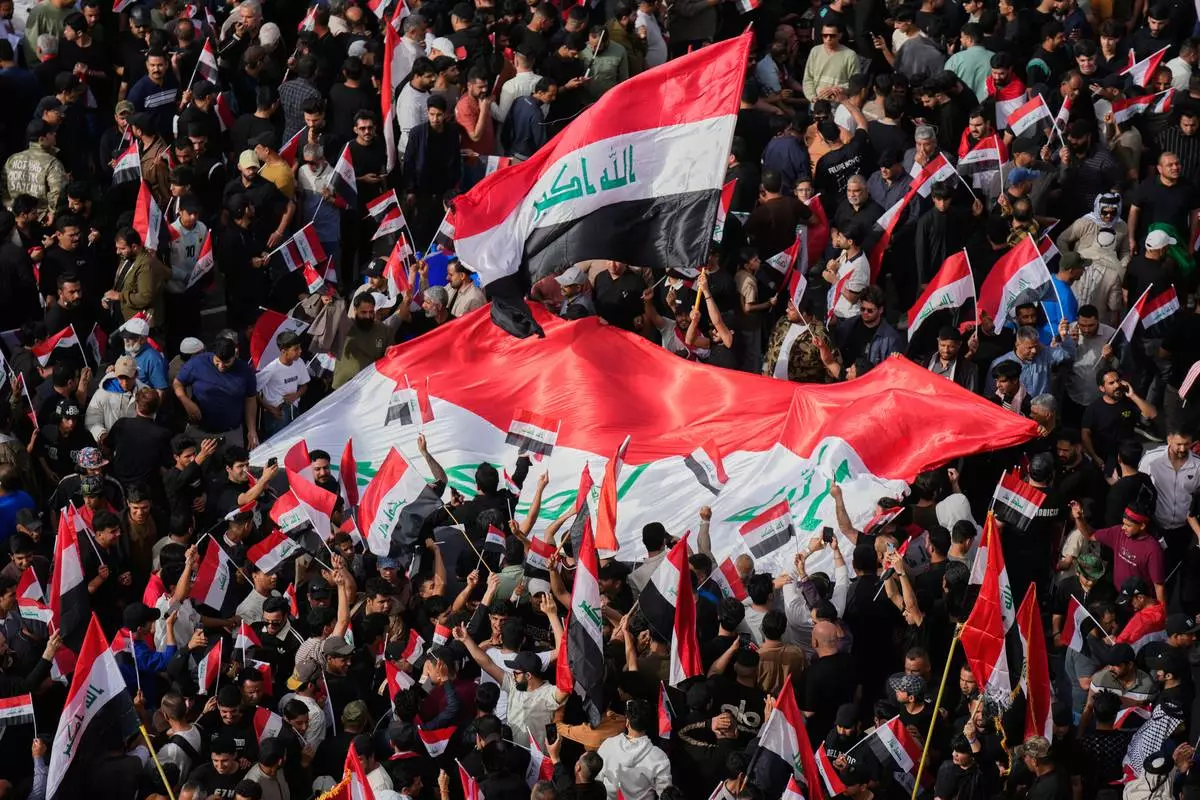
Followers of Iraq's Shiite cleric Muqtada al-Sadr chant slogans as they wave national Iraqi flag during a protest against U.S. and Israeli attacks on multiple cities across Iran, in Tahrir Square, Baghdad, Baghdad, Iraq, Saturday, April 4, 2026. (AP Photo/Hadi Mizban)
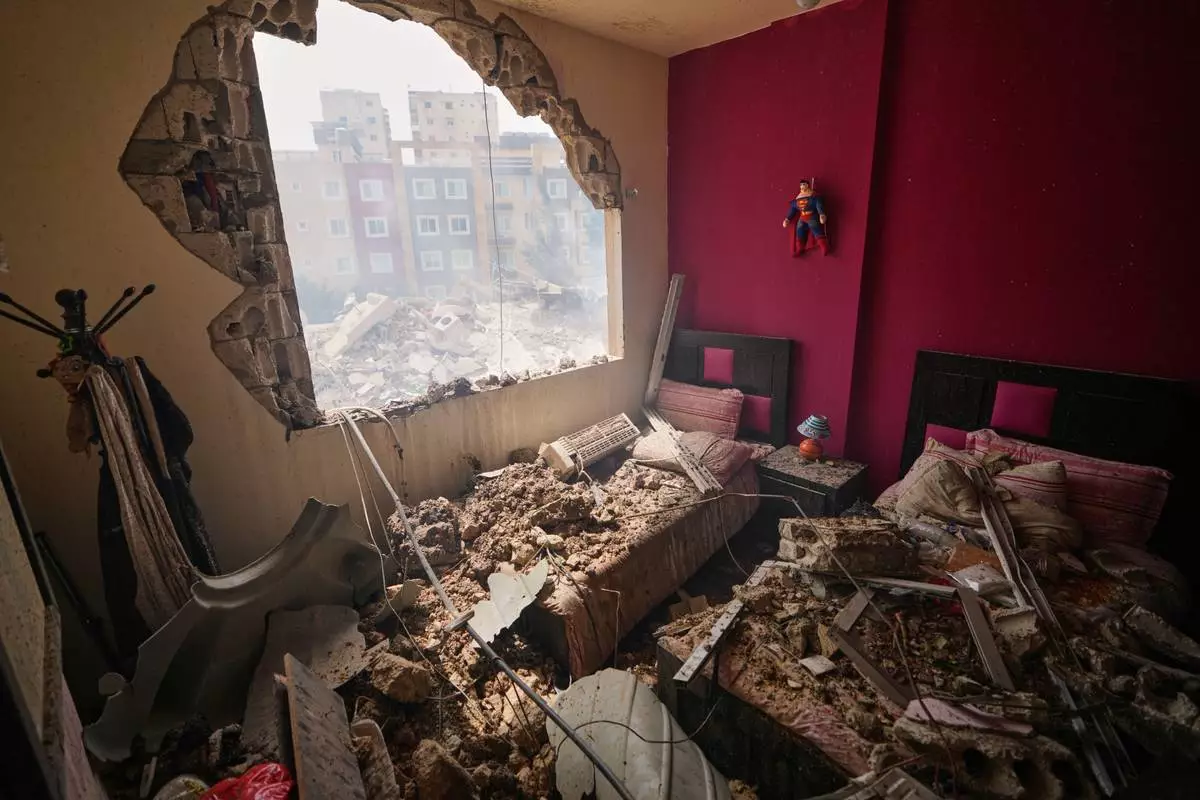
A bedroom is damaged in a building struck in an Israeli airstrike in the southern port city of Tyre, Lebanon, Saturday, April 4, 2026. (AP Photo/Mohammed Zaatari)
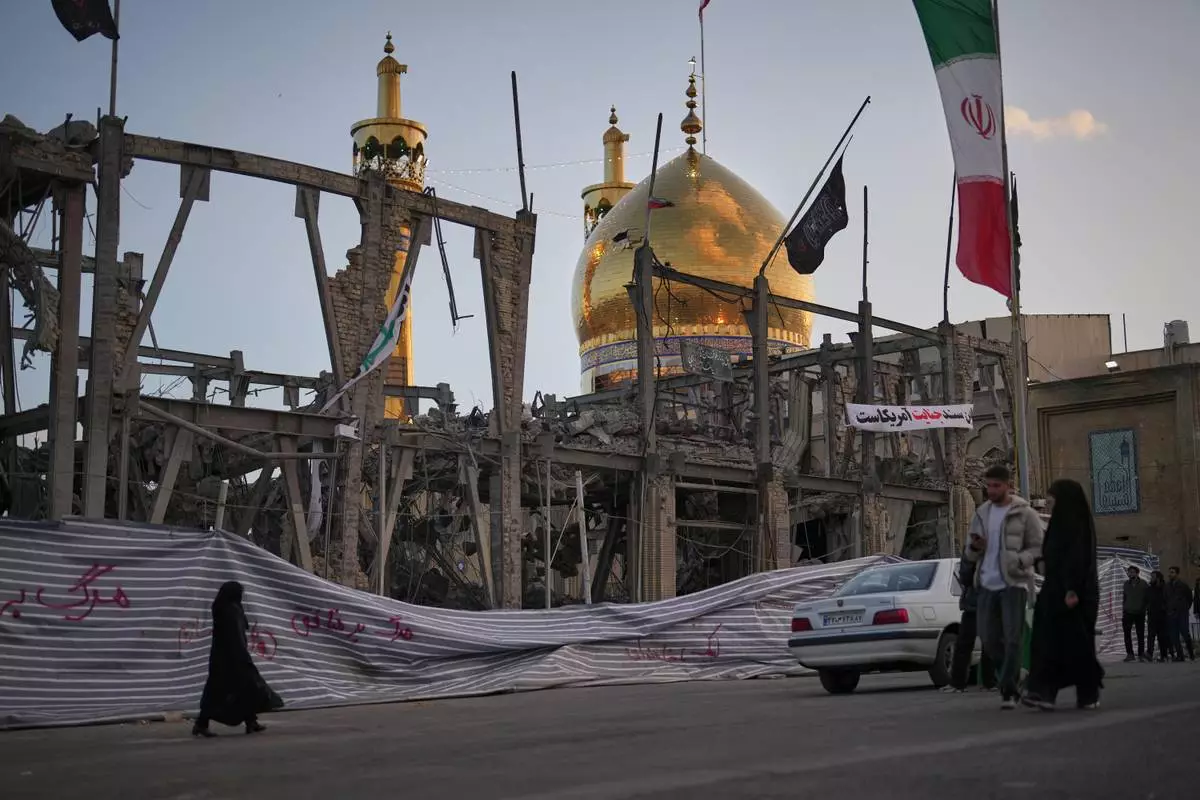
Pedetrians walk by a destroyed building within the Grand Hosseiniyeh, with the mosque visible in the background, which officials at the site say was hit by U.S.-Israeli airstrikes Tuesday, in Zanjan, Iran, Saturday, April 4, 2026. (AP Photo/Francisco Seco)

Police officers and their horses take cover in an underground parking garage as sirens warn of an incoming missile fired from Yemen in Tel Aviv, Israel, Saturday, April 4, 2026. (AP Photo/Maya Levin)
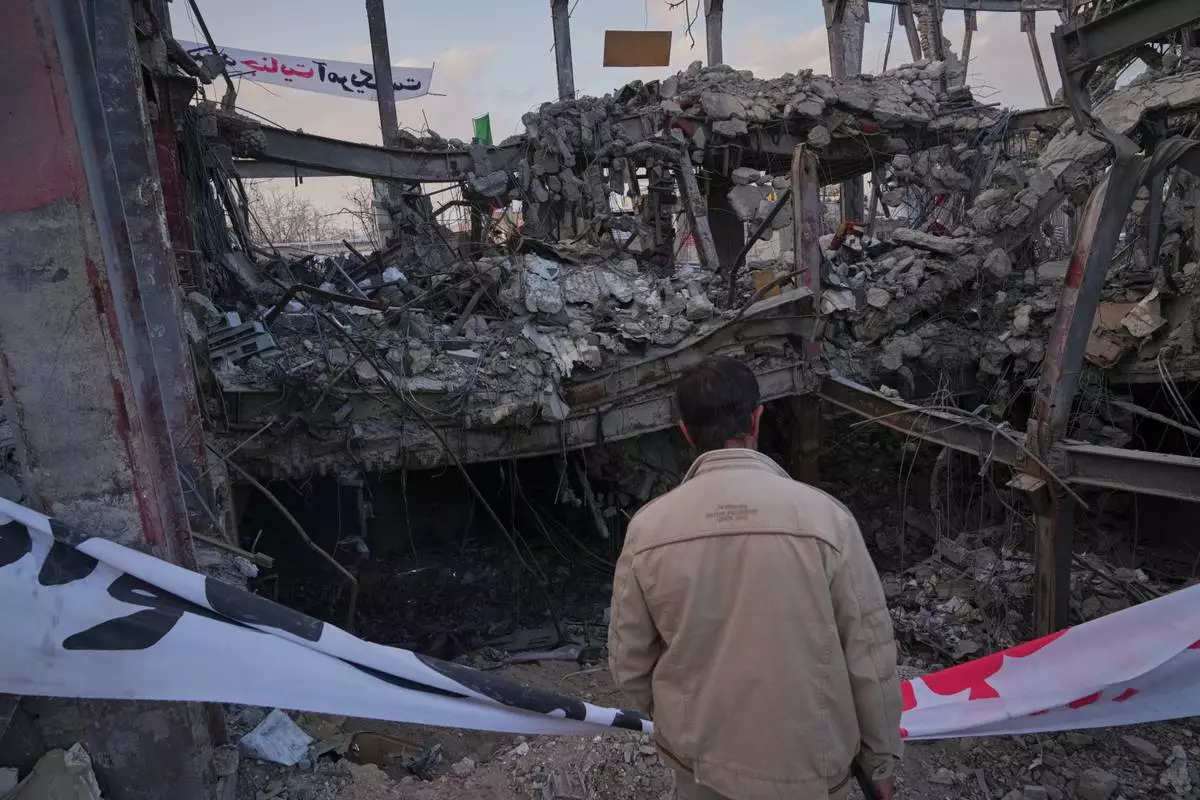
A man looks at a destroyed building within the Grand Hosseiniyeh complex that officials say was hit by U.S.-Israeli airstrikes Tuesday in Zanjan, Iran, Saturday, April 4, 2026. (AP Photo/Francisco Seco)