Skip to Content Facebook Feature Image

China advances high-level opening-up, creating new opportunities for global partners with economic growth

China

China

China

China advances high-level opening-up, creating new opportunities for global partners with economic growth

2025-08-26 15:57 Last Updated At:08-27 00:27

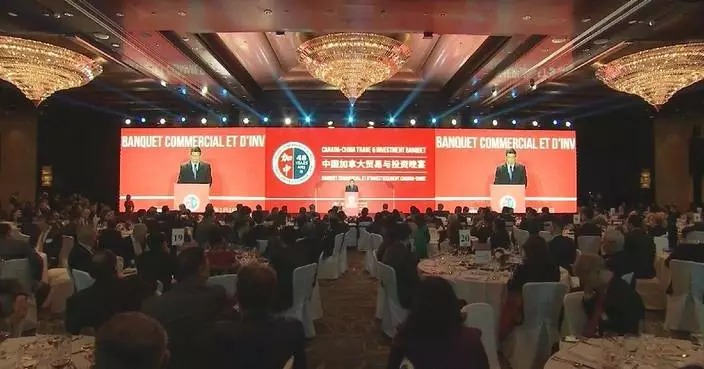
Despite complex global conditions, China has continued to expand high-level opening up, driving economic transformation while contributing to worldwide recovery through concrete actions and market opportunities.

The country's foreign trade demonstrated remarkable resilience, with goods imports and exports reaching 25.7 trillion yuan (approximately 3.5 trillion U.S. dollars) from January to July, maintaining robust performance for nine consecutive quarters above the 10 trillion yuan threshold.

Foreign investment continues to flow into China, with approximately 5,500 new foreign-funded enterprises being established each month on average during the first half of 2025. Notably, China has already exceeded its 2021-2025 foreign investment target six months ahead of schedule, with actual utilized foreign investment surpassing 700 billion U.S. dollars during this period.

Recent developments in Shanghai exemplify this trend. The metropolis saw 33 newly signed foreign-funded projects, and 30 multinational corporations established regional headquarters alongside 15 new foreign-funded research and development centers in recent days.

"China has implemented a series of substantial opening-up measures this year. Our foreign trade scale has reached new historical highs, the quality of foreign investment continues to improve, and our new open economy system has become more comprehensive. These developments have significantly contributed to China's high-quality economic growth while providing sustained momentum for the steady recovery of the world economy," said Zhao Zhongxiu, president of the University of International Business and Economics.

The structure of China's exports continues to improve, with electromechanical products accounting for 60 percent of total exports in the first seven months. Exports of green products, including solar batteries, lithium-ion batteries, and electric vehicles, increased by 14.9 percent year-over-year.

Institutional opening-up has deepened through alignment with international high-standard trade rules.

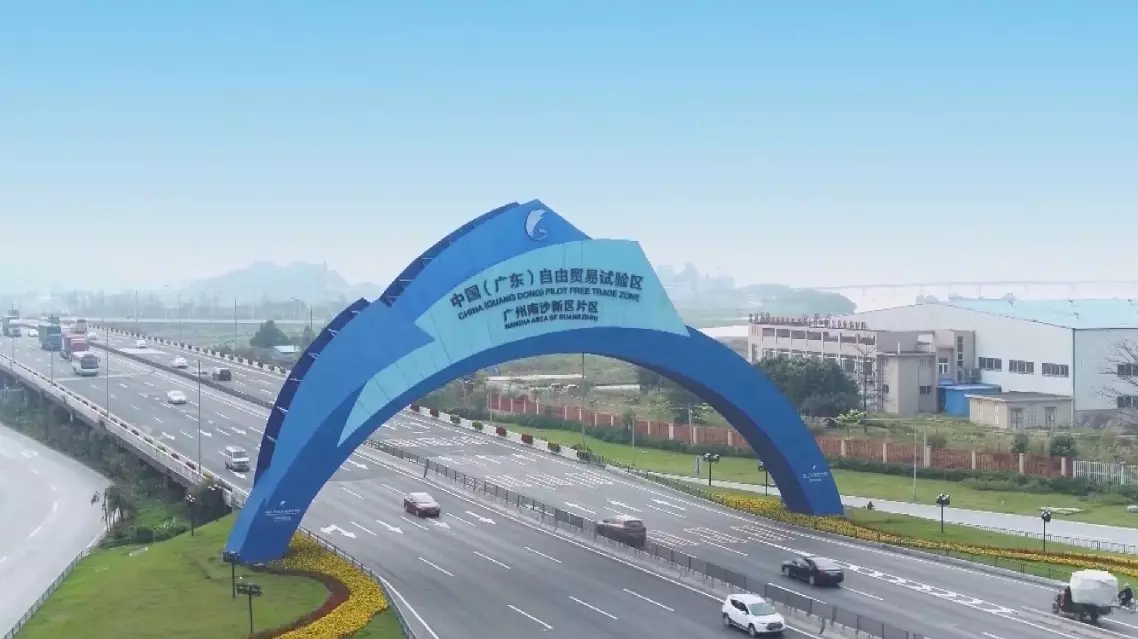
All 80 measures piloted in the Shanghai Free Trade Zone have been implemented, with 43 replicated nationwide. At Xiamen's aviation maintenance base, engineers service aircraft from Japan, the United States, and other countries. The import-export values in the aviation bonded maintenance base increased nearly 30 percent year-over-year in the first half of 2025.

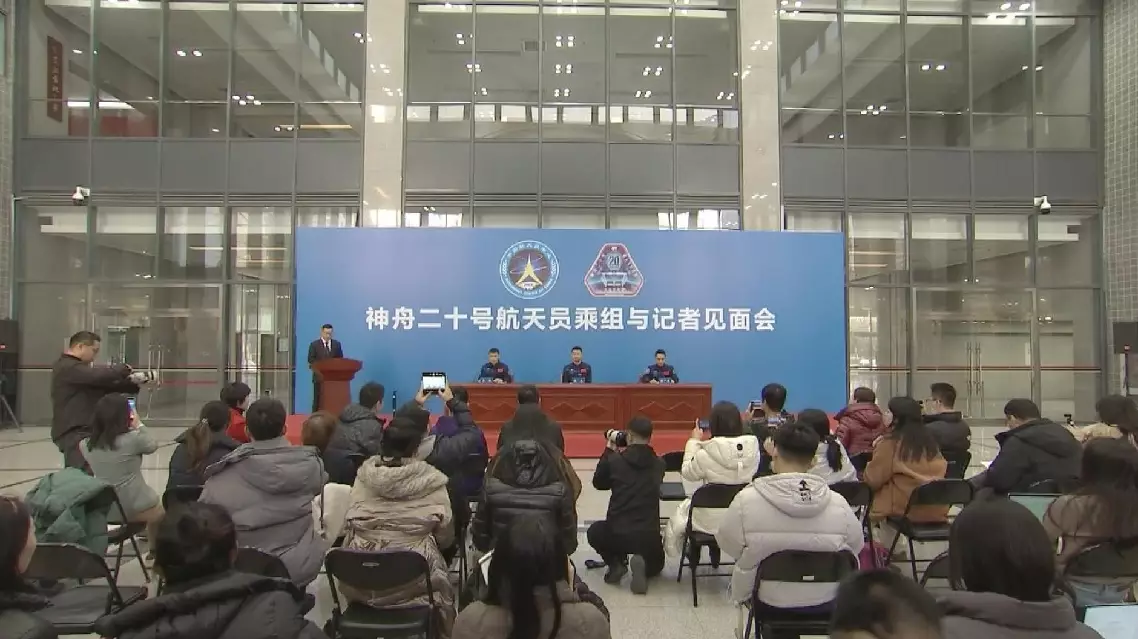
Significant progress continues to be made in the development of the Hainan Free Trade Port, where preparations for the port's full operations have been complete. Once launched on December 18, the proportion of zero-tariff goods is expected to increase from 21 percent to 74 percent.

China has implemented a series of measures for further opening-up this year, including 20 policies to stabilize foreign investment and the complete removal of restrictions on the manufacturing sector for foreign investors. Nine additional cities, including Dalian and Ningbo, were designated as pilot zones for the opening-up of the services sector, with 155 measures covering telecommunications, healthcare and finance.

The China-Europe Railway Express has now surpassed 110,000 trips, becoming a vital golden corridor linking Asia and Europe. The "Air Silk Road", a key component of international transport cooperation, continues to expand, with the Zhengzhou-Luxembourg route now serving over 100 cities around the globe.

In Latin America, Peru's Chancay Port, a key Belt and Road project, has established stable operations with three main routes and three feeder routes, handling 117,000 containers in the first half of 2025.
China advances high-level opening-up, creating new opportunities for global partners with economic growth

China advances high-level opening-up, creating new opportunities for global partners with economic growth
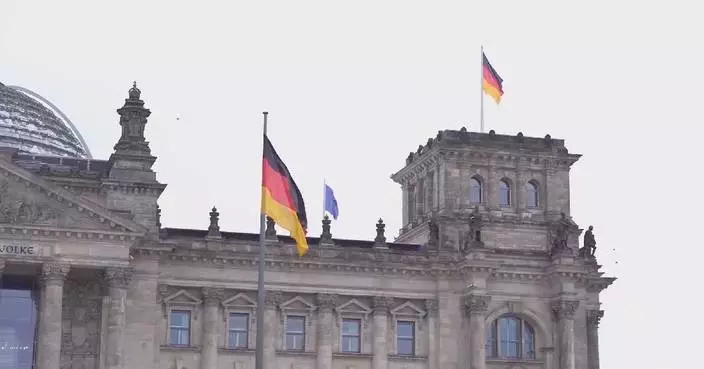
The three astronauts of China's recently-returned Shenzhou-20 mission on Friday shared the experiences of their dramatic 204-day space mission, including detailing the emergency procedures which were implemented to bring them safely home after their return capsule was struck by space debris.

The trio -- Chen Dong, Chen Zhongrui, and Wang Jie -- met with the press in Beijing on Friday afternoon, marking their first public appearance since returning to Earth in November.

When detailing the emergency response mechanisms which were enacted prior to their scheduled return, the astronauts explained that upon discovering a triangular crack on the spacecraft's viewport window, they immediately took photos for documentation and transmitted them to the ground team, who swiftly activated an emergency plan to get the trio home safely.

Experienced mission commander Chen Dong explained how the crew had complete faith in their colleagues on the ground to find a solution to these unforeseen circumstances which led to their return being delayed.

"First, we must trust the ground team, who would anticipate everything and develop the safest return plan for us. Second, we must believe in ourselves; as well-trained astronauts, we have the ability to manage various unexpected failures. I believe that with the collaboration of astronauts and researchers on the ground, our space home will surely go farther, more steadily, and for a longer time," he said.

Following their extended stay in space as a result of the debris incident, the Shenzhou-20 crew spent a total 204 days in orbit, setting a new record for the longest duration by a single group of Chinese astronauts.

During their mission, they completed multiple payload operations, conducted extensive scientific experiments, and carried out four extravehicular activities.

"Our crew worked together with the ground team in unity and coordination, completing four extravehicular activities, several payload entry and exit tasks, and a large number of scientific experiments. It was a fulfilling yet challenging mission. The path to exploring the heavens is long and arduous, but I firmly believe that China's space missions will succeed," said Chen Zhongrui, a former air force pilot who was making his first spaceflight during the mission.

"From the ground to space, from learning to application, I have deeply felt the solid progress of Chinese space endeavors and the quiet dedication of countless personnel behind the scenes. In the future, I will accomplish each mission with full commitment, living up to the trust of the motherland and the people," said fellow astronaut Wang Jie, who was also making his debut spaceflight.

After returning to Earth on Nov 14, the trio successfully completed their isolation recovery and rehabilitation and will now resume normal training following health assessments.

The crew's return, originally scheduled for Nov 5, was postponed due to safety concerns, with the astronauts later using the return capsule belonging to their successor crew of the Shenzhou-21 mission to get back to Earth. China later launched the unmanned Shenzhou-22 spacecraft which will serve the future return of the crew now aboard the Tiangong Space Station.

Shenzhou-20 astronauts share experiences after safely returning from debris incident

Shenzhou-20 astronauts share experiences after safely returning from debris incident

Recommended Articles