The State Council, China's cabinet, on Tuesday released a guideline on deepening the implementation of the Artificial Intelligence (AI) Plus Initiative to promote the in-depth integration of AI and various industries, vowing to achieve extensive and deep integration of AI with six key areas including sci-tech and consumption by 2027.
The guideline stipulated that by 2027, the popularization rate of applications such as next-generation intelligent terminals should exceed 70 percent while the scale of core industries of the intelligent economy should achieve a high growth rate. The role of AI in public governance should be significantly enhanced, while the open and cooperative system of AI would be continuously improved.
By 2030, the document called for AI to become a full enabler of China's high-quality development, with the penetration rate of next-generation smart terminals, smart bodies and other applications exceeding 90 percent. The smart economy would by then become an important growth driver for China's economic development, promoting technology accessibility and sharing of benefits.
Eventually, by 2035, AI will provide strong support for the basic realization of socialist modernization as China has comprehensively entered a new stage of development of the smart economy and smart society, according to the document posted on the government's website on Tuesday.
The six areas are sci-tech, industry, consumption upgrading, people's wellbeing, governance and global cooperation, in which the policy emphasized efforts in promoting AI as an international public good that benefits humanity, fostering an open ecosystem for AI capacity building based on equality, mutual trust, diversity, and win-win outcomes.
Huo Fupeng, director of the Innovation-driven Development Center under the National Development and Reform Commission, said the initiative aims to promote the extensive and deep integration of AI across all sectors and fields of the economy and society.
It will help enhance total factor productivity, and is of great significance for accelerating the development of new quality productive forces and better advancing Chinese modernization, Huo said. "The deep integration of technological and industrial innovation in the field of AI will promote the transformation and upgrading of traditional industries, open up new avenues for strategic emerging industries and future industries, and foster and strengthen new quality productive forces," said Huo.
He said AI will also lend a helping hand in scientific social governance.
"AI technology will drive targeted policy implementation and collaborative governance, enhance scientific government decision-making and targeted public services, thereby further improving social governance capabilities. Through the empowerment of the 'city brain' (a smart city platform aiming to improve urban management with the use of big data, cloud computing and artificial intelligence), the full project approval time has been sharply slashed from 9 working days to just 9.5 hours, significantly cutting the time costs of cross-departmental coordination," he said.
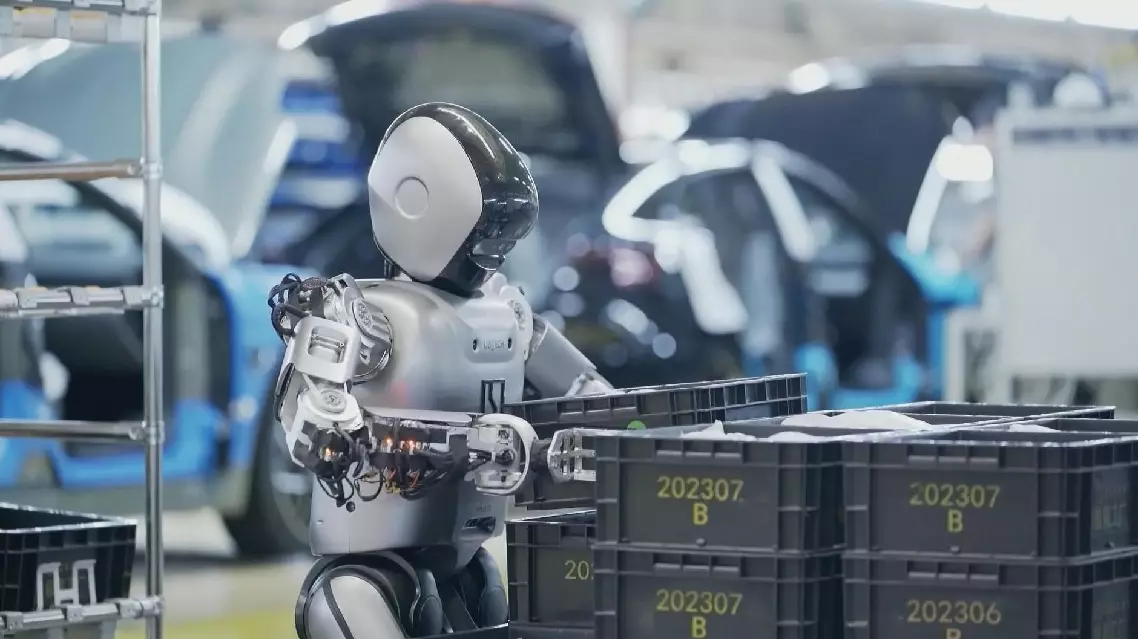
State Council issues guideline on implementing AI Plus Initiative