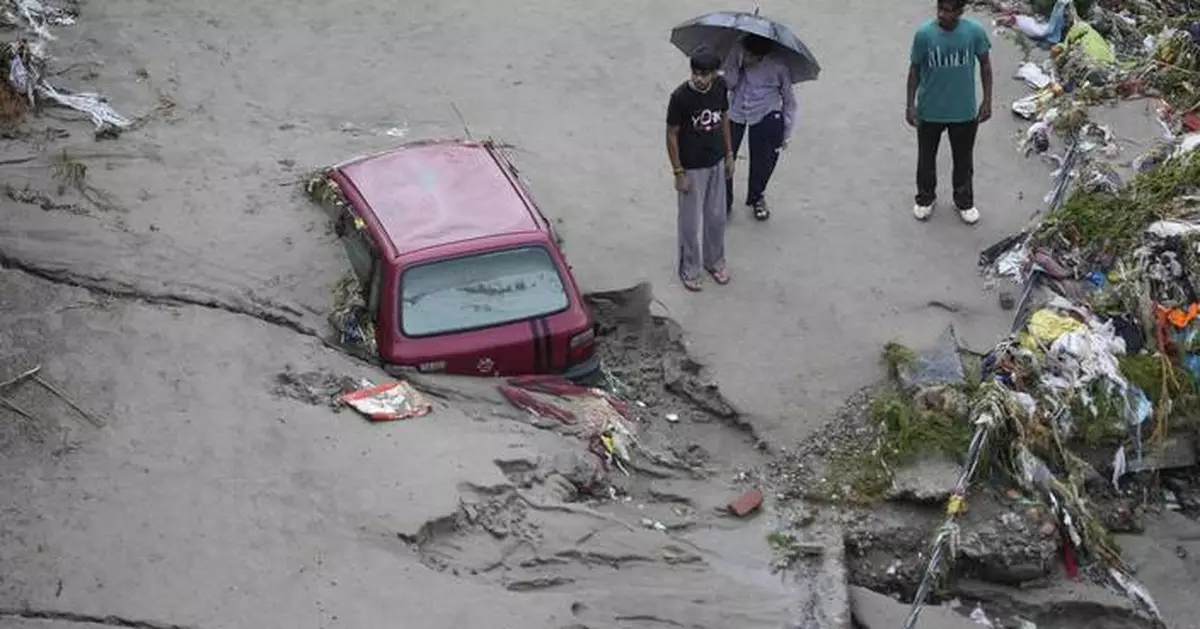
NEW DELHI (AP) — Intense rains have left at least 34 people dead after lashing parts of Pakistan and India and triggering flash floods and landslides in Indian-controlled Kashmir, officials said Wednesday.
Over 210,000 people in Pakistan have been displaced, and the shrine of the founder of the Sikh religion has been submerged.
Click to Gallery
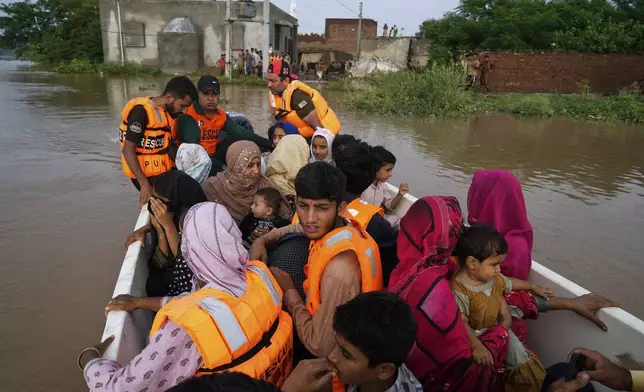
Rescue workers evacuate villagers from a flooded area in Chango Walia village in Narowal district, Pakistan, Wednesday, Aug. 27, 2025. (AP Photo/K.M. Chaudary)
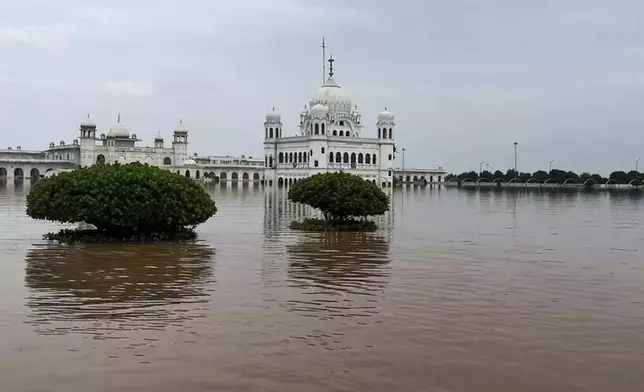
The Gurdwara Darbar Sahib, a shrine of Guru Nanak Dev, is submerged after torrential rains, in Kartarpur, in Narowal district, Pakistan, Wednesday, Aug. 27, 2025. (AP Photo/Jahan Zab)
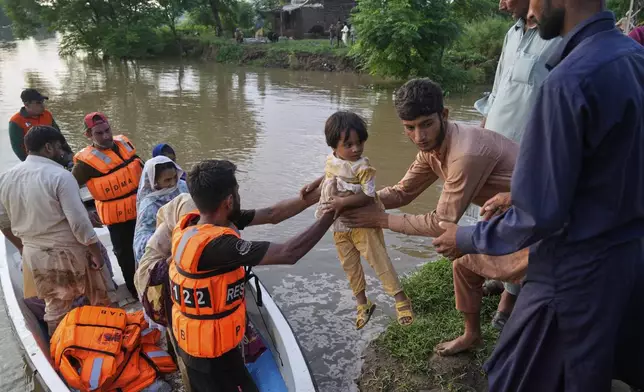
A rescue worker helps villagers evacuated from a flooded area of Chango Walia village, in Narowal district, Pakistan, Wednesday, Aug. 27, 2025. (AP Photo/K.M. Chaudary)
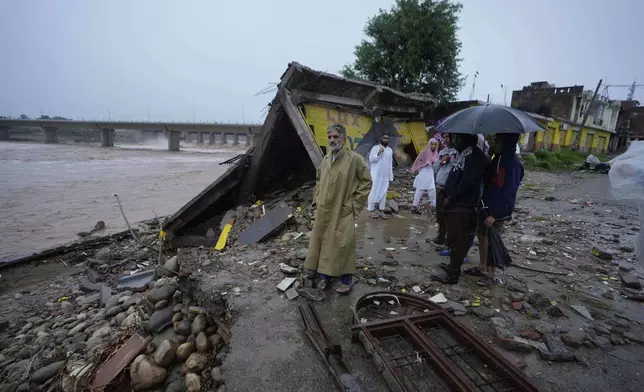
Residents look at the remains of their houses, damaged by flash floods at the banks of Tawi river in Jammu, India, Wednesday, Aug. 27, 2025. (AP Photo/Channi Anand)
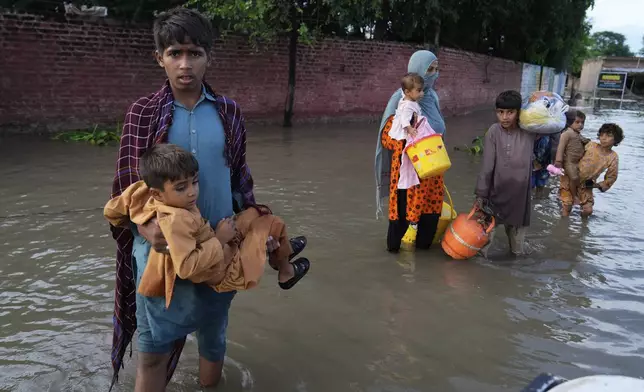
A family walk toward a rescue boat arriving to evacuate them from a flooded area in Dhoop Sarhi village in Kasur district, Pakistan, Tuesday, Aug. 26, 2025, due to the rising water level in Sutlej River, following neighboring India releasing water from overflowing dams. (AP Photo/K.M. Chaudary)
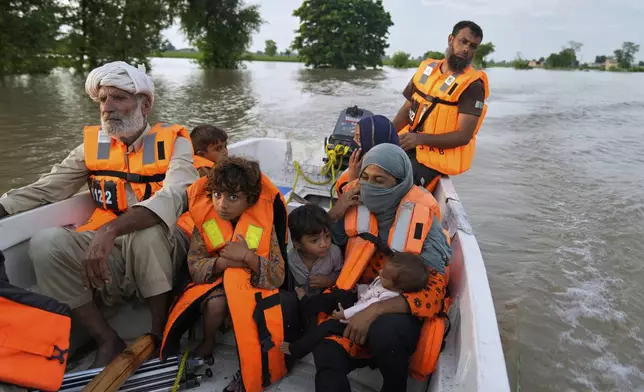
A rescue worker evacuates villagers from a flooded area in Dhoop Sarhi village in Kasur district, Pakistan, Tuesday, Aug. 26, 2025, due to the rising water level in Sutlej River, following neighboring India releasing water from overflowing dams. (AP Photo/K.M. Chaudary)
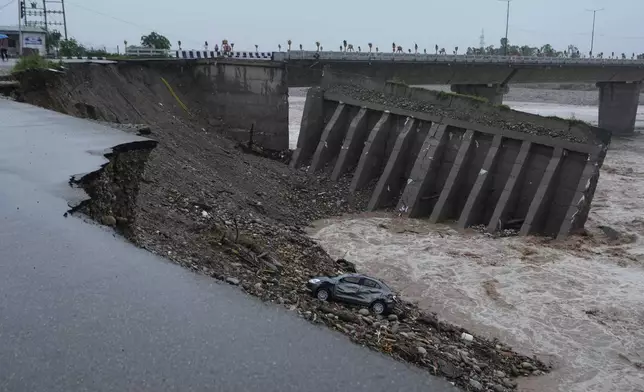
People looks at the damaged bridge over the swelling Tawi River in Jammu, India, Wednesday, Aug. 27, 2025. (AP Photo/Channi Anand)
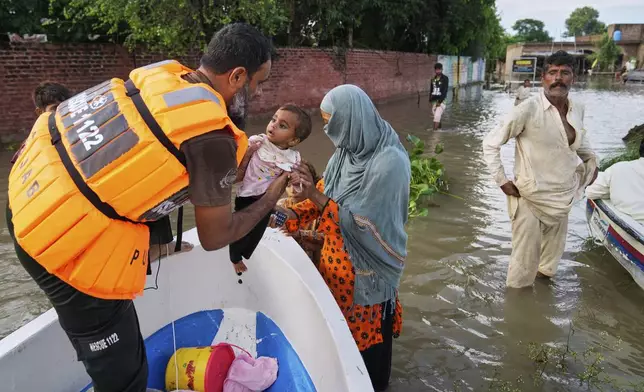
A rescue worker helps a family board in a boat to evacuate them from a flooded area in Dhoop Sarhi village in Kasur district, Pakistan, Tuesday, Aug. 26, 2025, due to the rising water level in Sutlej River, following neighboring India releasing water from overflowing dams. (AP Photo/K.M. Chaudary)
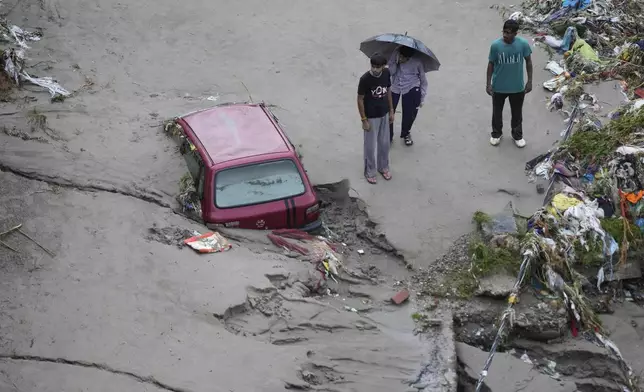
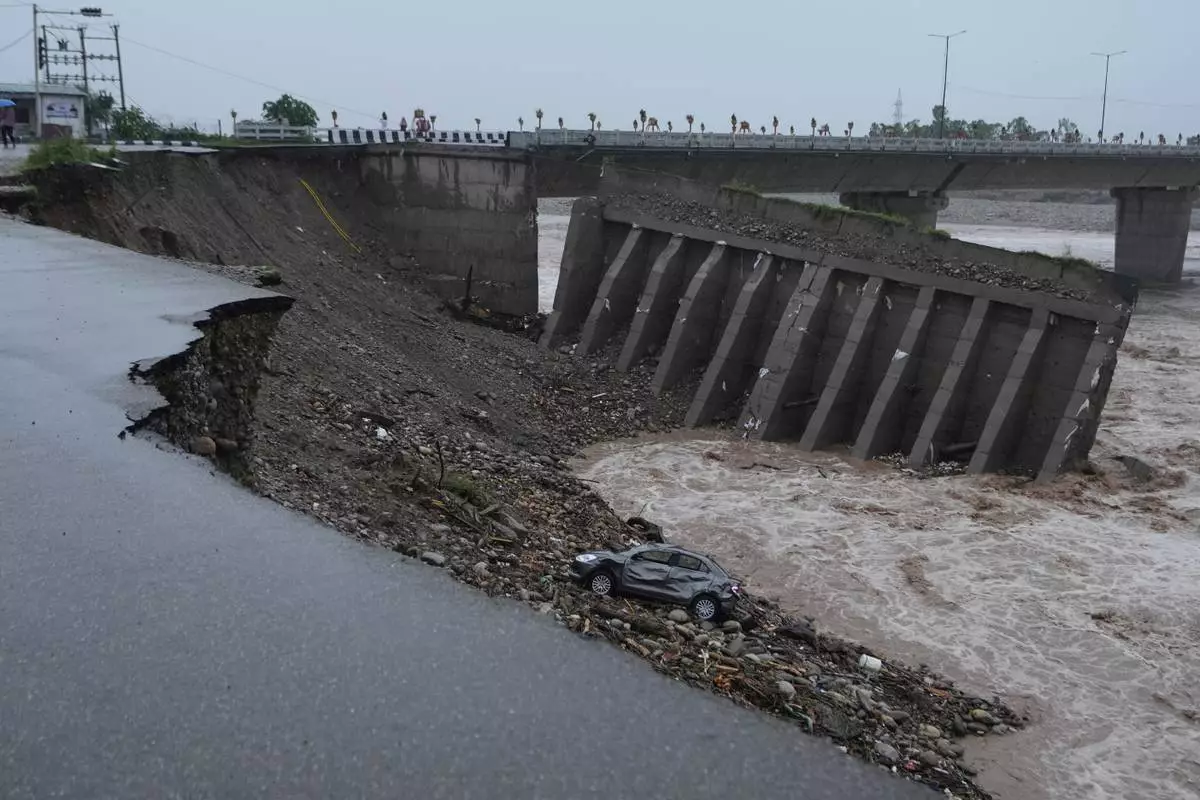
People stand next to a stuck car in the aftermath of flash floods at the banks of Tawi river in Jammu, India, Wednesday, Aug. 27, 2025. (AP Photo/Channi Anand)
Heavy downpours and flash floods in the Himalayan region have killed nearly 100 people in August, with forecasters warning rain will continue across the region this week.
Part of a mountainside in Indian-controlled Kashmir's Jammu region collapsed onto a popular Hindu pilgrimage route following heavy rains in the Katra area late Tuesday. Devotees had been trekking to reach the hilltop temple, which is one of the most visited shrines in northern India, officials said.
The bodies of pilgrims were recovered from under the debris, according to disaster management official Mohammed Irshad, who said at least 18 other people were injured and transported to hospitals.
Rescue teams scoured the area Wednesday for the missing, while pilgrimages to the shrine have been suspended, Irshad said.
Authorities in Pakistan’s eastern Punjab province on Wednesday called for army assistance in rescue and relief efforts after torrential rains caused major rivers to swell, inundating villages and displacing over 210,000 people, according to Lt. Gen. Inam Haider, chairman of the National Disaster Management Authority.
Haider said rescue operations were continuing, with relief supplies being rushed to flood-hit areas.
Army spokesman Lt. Gen. Ahmed Sharif said two soldiers were killed while helping flood victims. He gave no further details.
Floods also submerged the shrine of Guru Nanak, the founder of the Sikh religion, which is located near the Indian border in Narowal district.
Late Wednesday, authorities carried out a controlled breach of a protective embankment on the Chenab river in Punjab to protect a barrage from collapse under extreme flood pressure. Local officials said explosives were used to open the right marginal dyke, diverting water into nearby villages, where hundreds of people sitting on higher grounds under the open sky and watching floodwaters submerge their homes.
Rescuers evacuated more than 20,000 people overnight from the outskirts of Lahore, Pakistan’s second-largest city, which faced the risk of flooding, as the Ravi river continued to rise. Those evacuated were living along the bed of the river, said Irfan Ali Kathia, director-general of the Punjab Disaster Management Authority.
Mass evacuations began earlier this week in six districts of Punjab after heavier-than-normal monsoon rains and the release of water from overflowing dams in neighboring India triggered flash floods in low-lying border regions, Kathia said.
Kathia warned floodwaters in the Ravi, Chenab and Sutlej rivers were rising dangerously and many villages were inundated in Kasur, Okara, Bahawalnagar, Bahawalpur, Vehari and Sialkot districts.
Rescuers with sniffer dogs continue to search for more than 150 people who have been reported missing this month after flooding killed over 300 residents in three villages in Pakistan's northwestern Buner district.
Floods have killed more than 800 people in Pakistan since late June.
Scientists say climate change is fueling heavier monsoon rains in South Asia, raising fears of a repeat of a 2022 weather disaster that struck a third of Pakistan and killed 1,739 people. Haider said next year’s monsoon could be 22% more intense due to climate change.
India alerted Pakistan on Monday about possible cross-border flooding due to the heavy monsoon rains, in what marked the first public official contact between the two nuclear-armed rivals in months.
Ahmed reported from Islamabad and Saaliq reported from New Delhi. Associated Press writer Babar Dogar contributed from Lahore, Pakistan.

Rescue workers evacuate villagers from a flooded area in Chango Walia village in Narowal district, Pakistan, Wednesday, Aug. 27, 2025. (AP Photo/K.M. Chaudary)
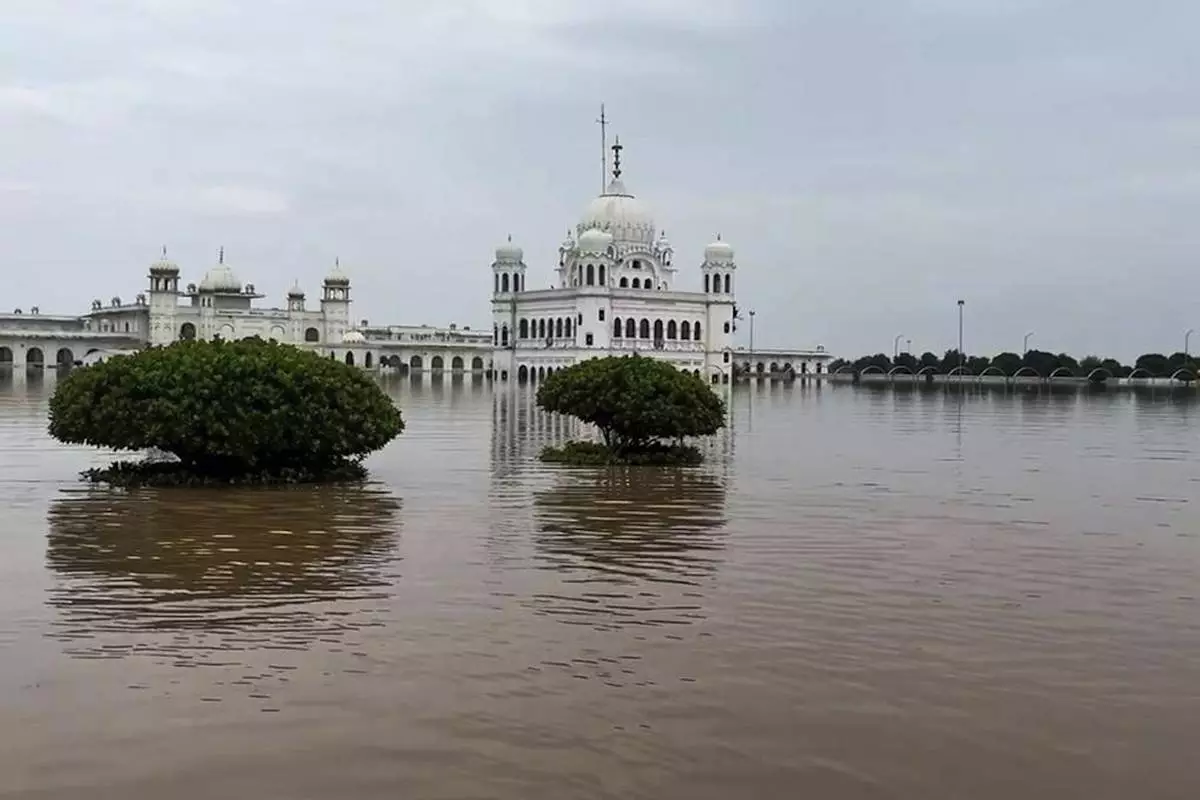
The Gurdwara Darbar Sahib, a shrine of Guru Nanak Dev, is submerged after torrential rains, in Kartarpur, in Narowal district, Pakistan, Wednesday, Aug. 27, 2025. (AP Photo/Jahan Zab)
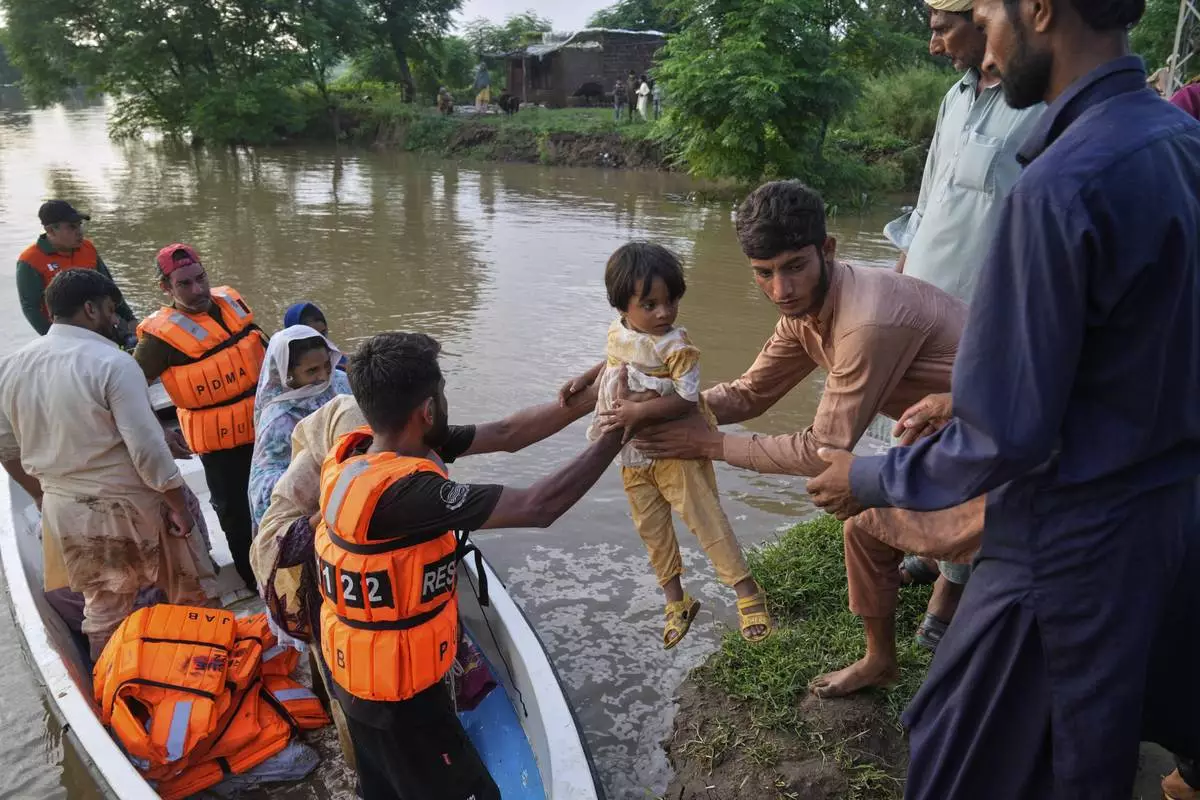
A rescue worker helps villagers evacuated from a flooded area of Chango Walia village, in Narowal district, Pakistan, Wednesday, Aug. 27, 2025. (AP Photo/K.M. Chaudary)
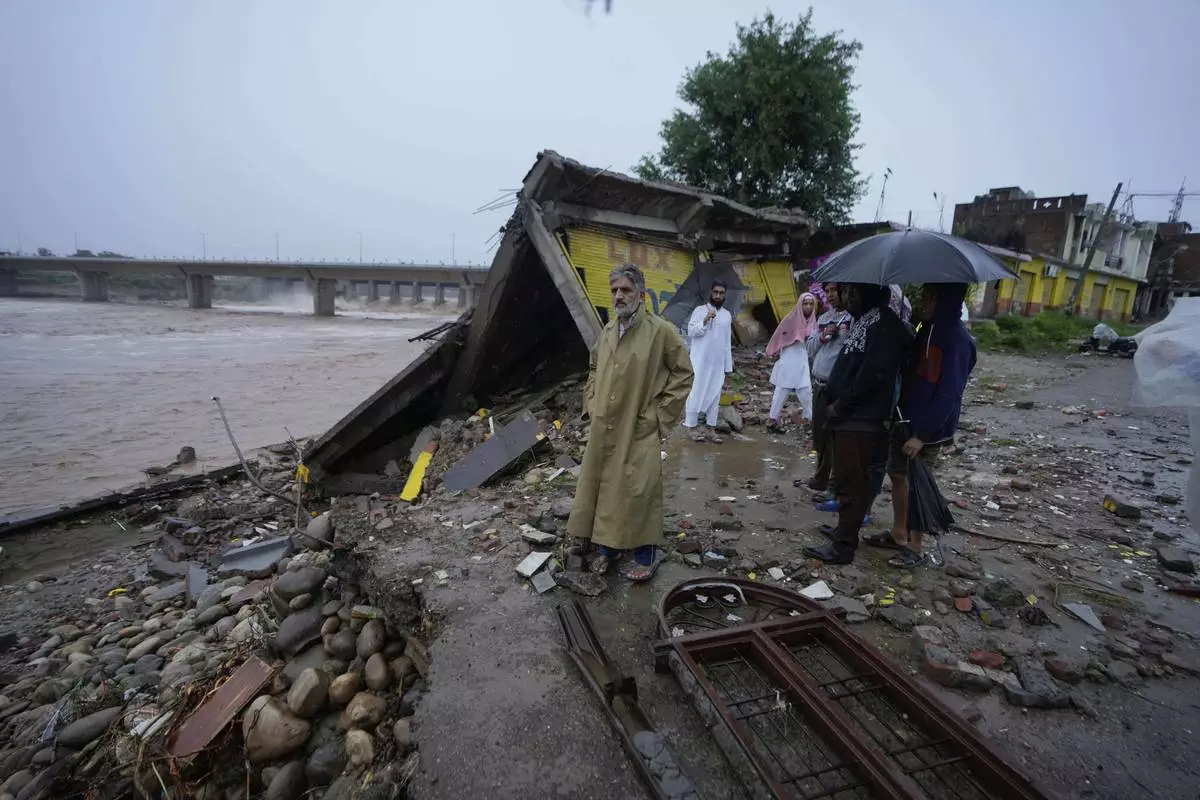
Residents look at the remains of their houses, damaged by flash floods at the banks of Tawi river in Jammu, India, Wednesday, Aug. 27, 2025. (AP Photo/Channi Anand)
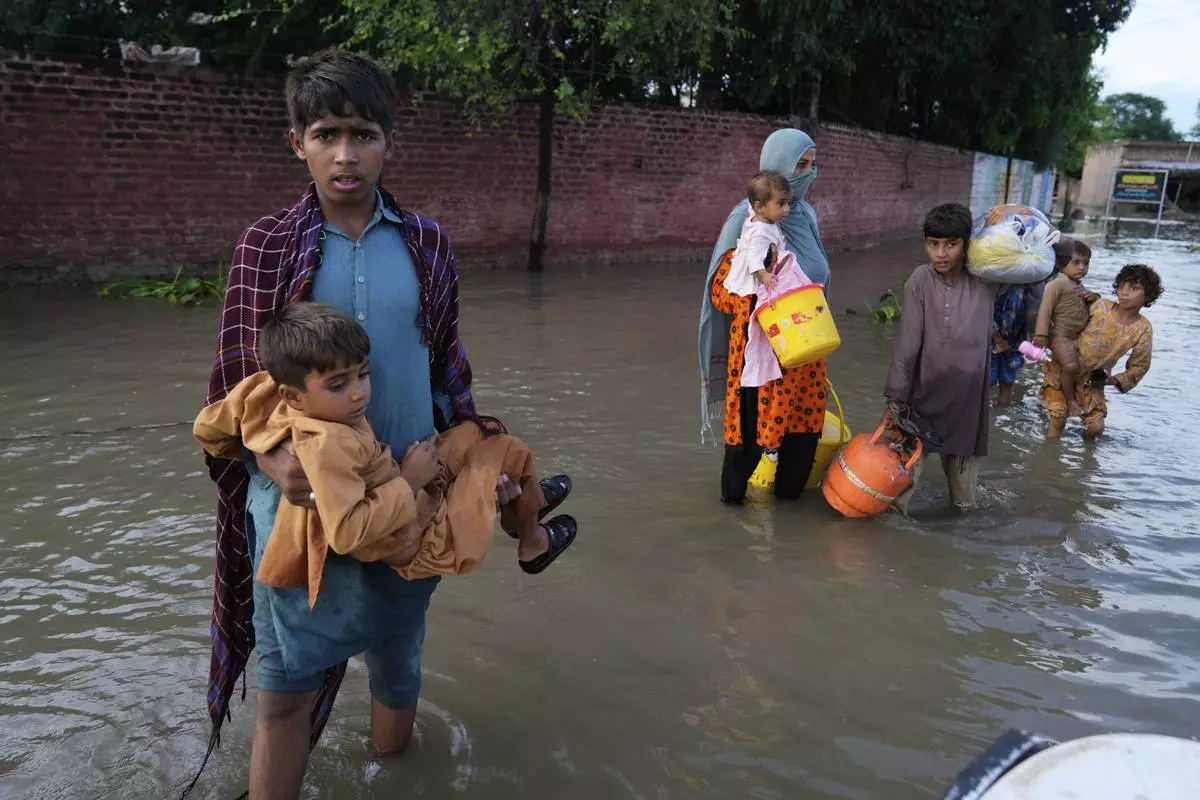
A family walk toward a rescue boat arriving to evacuate them from a flooded area in Dhoop Sarhi village in Kasur district, Pakistan, Tuesday, Aug. 26, 2025, due to the rising water level in Sutlej River, following neighboring India releasing water from overflowing dams. (AP Photo/K.M. Chaudary)
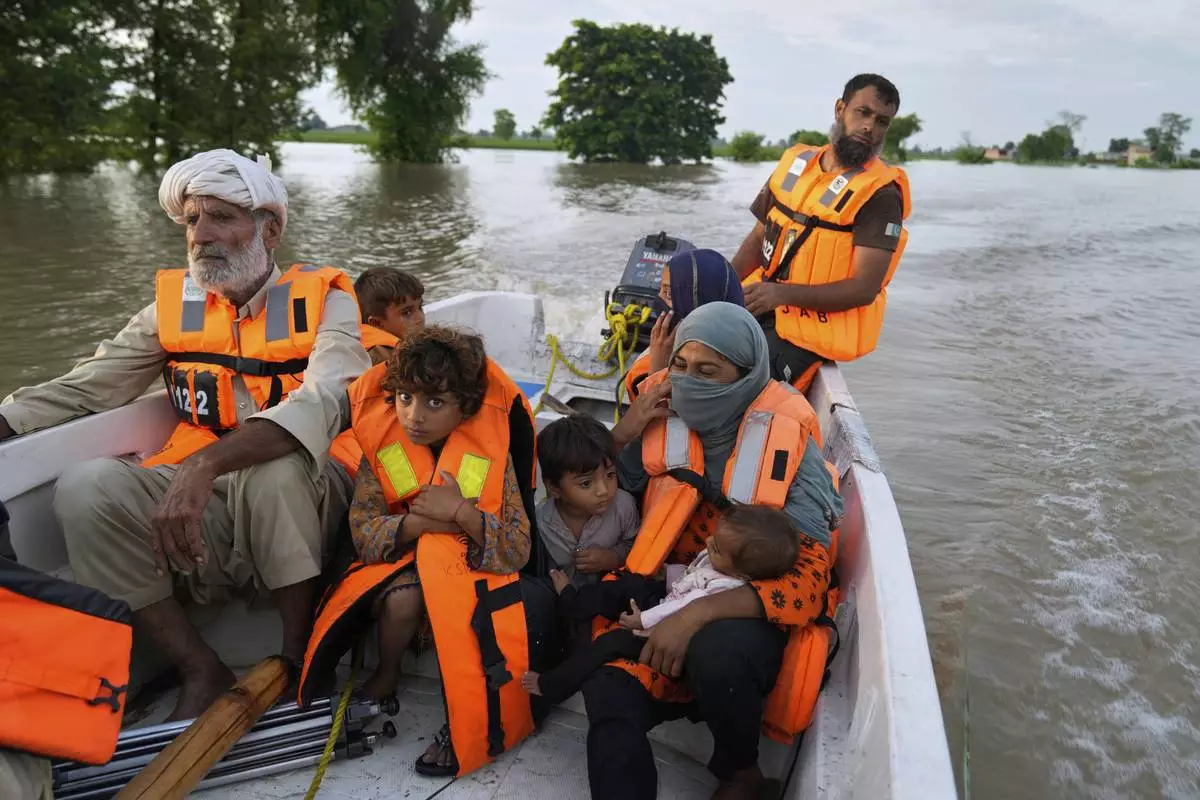
A rescue worker evacuates villagers from a flooded area in Dhoop Sarhi village in Kasur district, Pakistan, Tuesday, Aug. 26, 2025, due to the rising water level in Sutlej River, following neighboring India releasing water from overflowing dams. (AP Photo/K.M. Chaudary)
People looks at the damaged bridge over the swelling Tawi River in Jammu, India, Wednesday, Aug. 27, 2025. (AP Photo/Channi Anand)
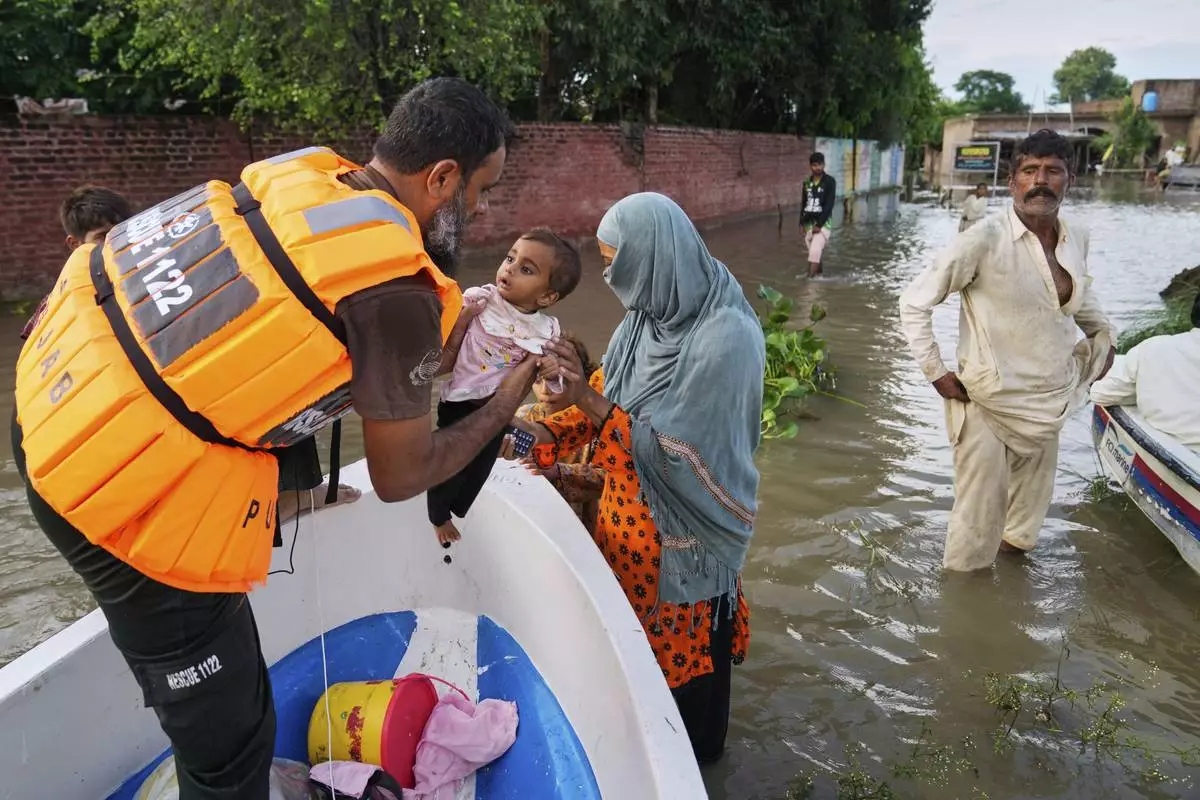
A rescue worker helps a family board in a boat to evacuate them from a flooded area in Dhoop Sarhi village in Kasur district, Pakistan, Tuesday, Aug. 26, 2025, due to the rising water level in Sutlej River, following neighboring India releasing water from overflowing dams. (AP Photo/K.M. Chaudary)
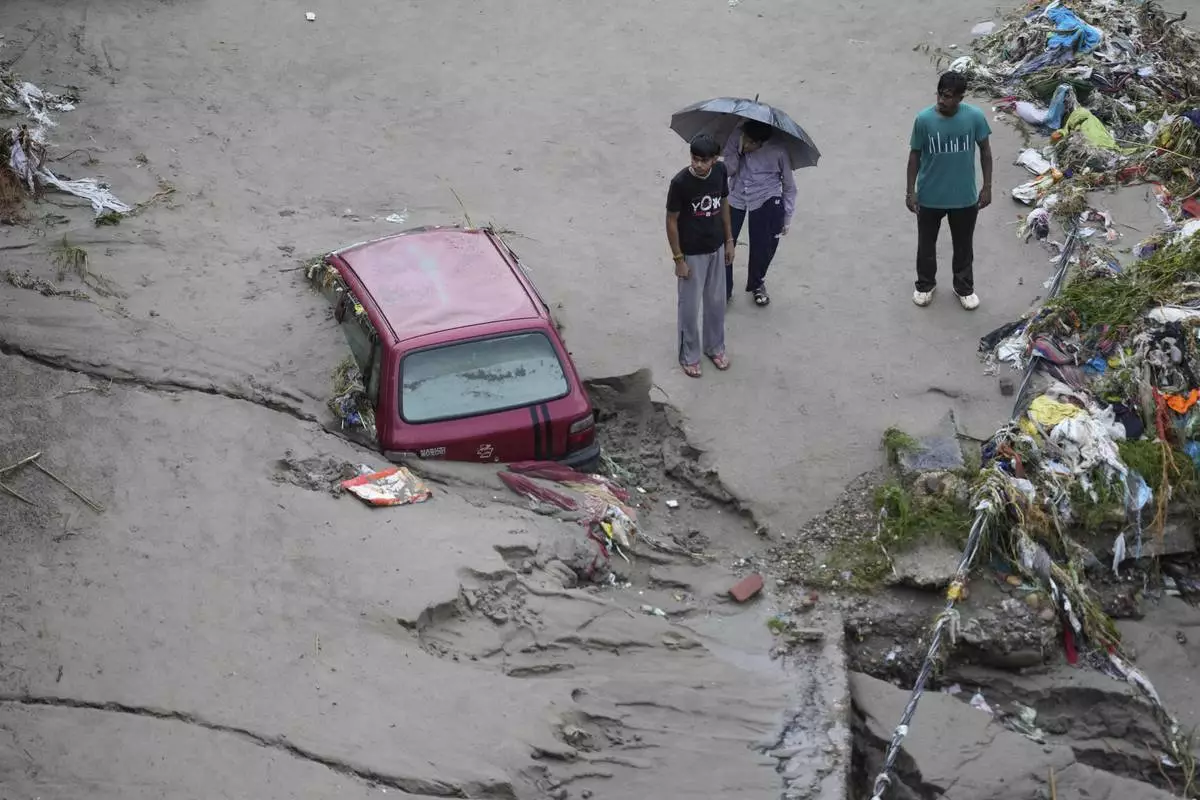
People stand next to a stuck car in the aftermath of flash floods at the banks of Tawi river in Jammu, India, Wednesday, Aug. 27, 2025. (AP Photo/Channi Anand)