LONDON (AP) — Heartbreaking sports injuries before major events are as fated as sunset. The Women's Rugby World Cup is no different.
Charlotte Caslick gave up the captaincy of Australia's world champion sevens team to be a World Cup Wallaroo but withdrew from the squad this month after running out of time rehabbing the right ankle she broke last month. However, she's on standby for the knockout rounds.
Click to Gallery
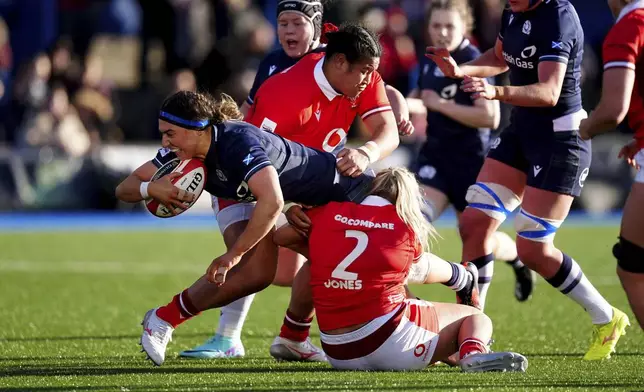
FILE - Scotlands Emma Wassell, left, in action during the Women's Six Nations match at Cardiff Arms Park, Cardiff, Wales, Saturday March 23, 2024. (David Davies/PA via AP,File)
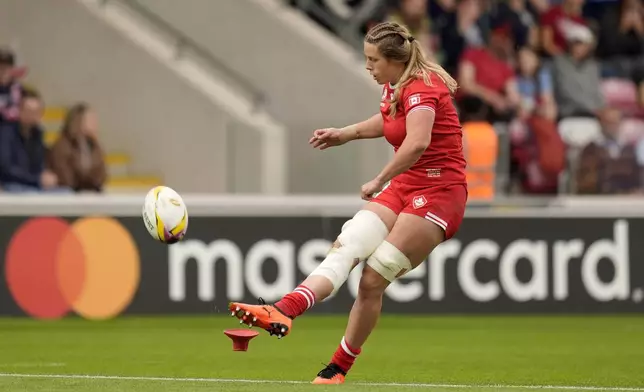
Canada's Sophie de Goede concerts her own try during the Women's Rugby World Cup 2025 Pool B match between Canada and Fiji at the York Community Stadium in York, England, Saturday, Aug. 23, 2025. (Danny Lawson/PA via AP)
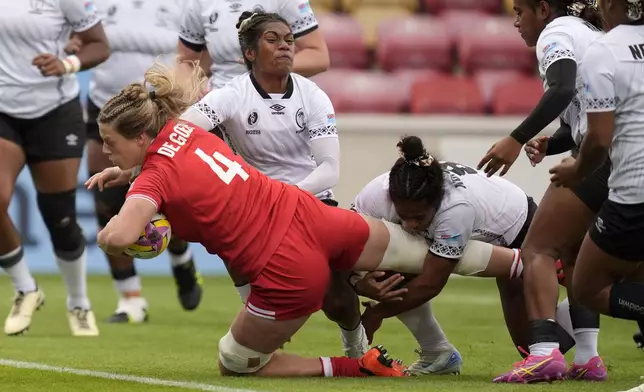
Canada's Sophie de Goede, left, scores a try during the Women's Rugby World Cup 2025 Pool B match between Canada and Fiji at the York Community Stadium in York, England, Saturday, Aug. 23, 2025. (Danny Lawson/PA via AP)
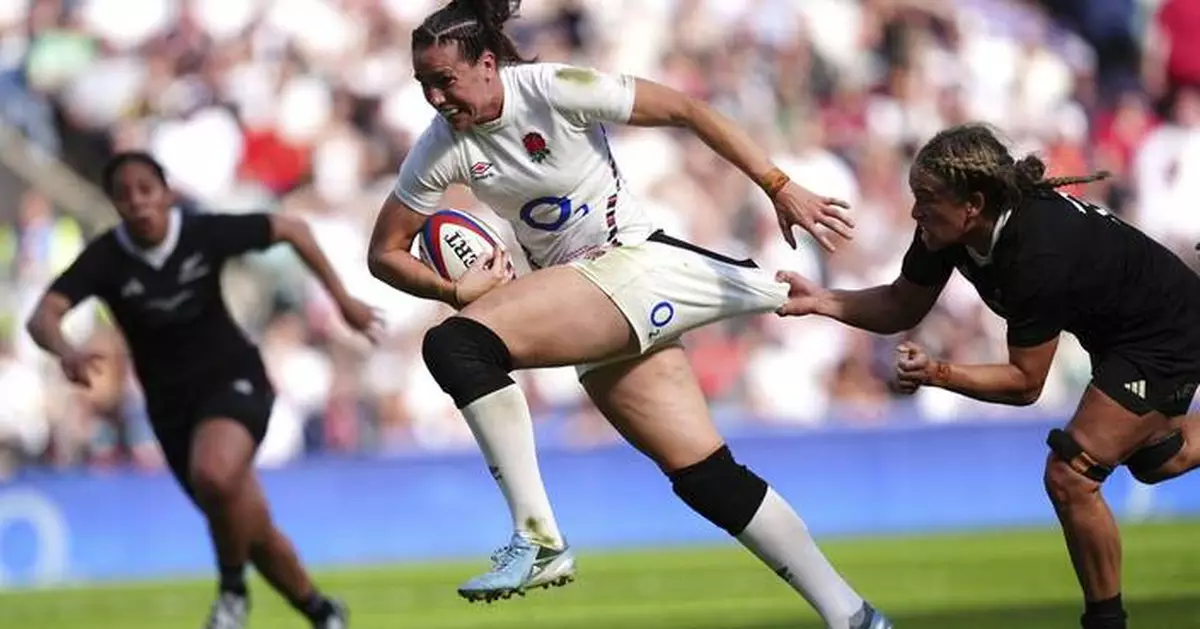
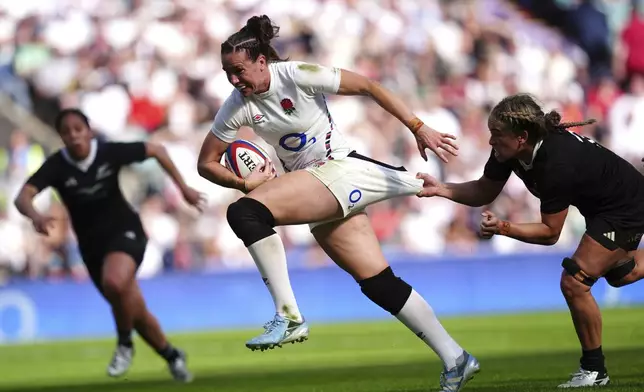
FILE - England's Emily Scarratt is tackled by New Zealand's Kennedy Tukuafu, right, during the Women's International match between England and New Zealand at Allianz Stadium, Twickenham, London, Saturday Sept. 14, 2024. (David Davies/PA via AP,File)
In tune-ups against Ireland this month, Canada flanker Pamphinette Buisa injured her arm and was ruled out a week before the World Cup, and Scotland fullback Lucia Scott broke her hand and had to drop out.
Ireland suffered its own major blows in April when two key flankers went down; Erin King, the world breakthrough player of 2024, to a knee injury, and Dorothy Wall to an Achilles tendon injury.
But some players do manage to come back, and here's their stories.
Scarratt became the first Englishwoman to appear in five World Cups last Friday in the opening win over the United States, but that was far from a certainty.
She went under the knife in September 2023, her neck opened up and windpipe moved aside to replace a disc pressing on her spinal cord. Scarratt suffered the injury in January that year, but mixed medical advice and the thought of surgery delayed her green light for it until it became an issue of prolonging her life, let alone her rugby career.
The operation was a success.
But after 13 months off the rugby field, and despite starting in the World Cup finals of 2010, 2014, 2017 and 2022, the center discovered she was no longer a starter for England, and sometimes not even a bench player. She was, however, good enough to get into the World Cup squad. The 35-year-old described her historic fifth selection as “super cool.”
Coming back from neck surgery has made Scarratt feel more free. “In a strange way,” she told the England Rugby website, “it felt like a second chance.”
Her greatness is already certified: A 10-time Six Nations winner and the all-time leading point-scorer for England, the Six Nations and the World Cup.
“Emily brings more than just experience,” England coach John Mitchell said. “She understands the legacy of the Red Roses and brings leadership to the younger players. She's very calm in demeanour and just leads by example. She wants to leave the Red Roses in a better place.”
Barely a month had passed since Canada's historic first test win over world champion New Zealand when captain Sophie de Goede tore her ACL while in camp with the national sevens squad in California.
That was in June 2024.
De Goede made her test comeback last month, 13 months later, off the bench to help Canada put daylight on South Africa to complete a two-test series win in Gqeberha.
The injury was cruelly timed. She missed Canada winning the Olympic sevens silver medal in Paris, the WXV 1 and Pacific Four.
The goalkicking forward made enough of an impression in the first half of 2024, however, to make World Rugby's annual women's dream team, two years after her first dream team pick and first nomination for world player of the year.
When Canada finally recalled her, she told the Canadian Press “It has been a really long, long, tough year. I'll be a lot stronger for it, mentally and physically, coming out the other side.”
De Goede led Canada to the semifinals at the 2022 World Cup but hasn't been restored to the captaincy since her injury. As de Goede is still getting up to speed, center Alex Tessier leads Canada in this World Cup.
Her talismanic status in the squad was undimmed, though. She came flying around off a lineout ball to score Canada's opening try against Fiji on Saturday in York and kicked four conversions in the 65-7 win.
“It felt good to just get a strong start under my belt, trying to feel more comfortable coming back from injury,” de Goede said. “That was a nice way to kick it off.”
Like Sophie de Goede, Brianna Hoy tore her ACL in training, too, while with Australia in Belfast for the WXV 2 last September.
The loosehead prop didn't play another test until last Saturday in Manchester, where she made her World Cup debut off the bench in Australia's 73-0 win over Samoa.
At the time of the injury, Wallaroos coach Jo Yapp said, “It's heartbreaking. She's an extremely popular member of the squad. She's kind, caring and professional in everything she does.”
Hoy excelled in training to earn Yapp's faith again, and at last week's announcement of the team to play Samoa her name received the biggest cheer among the squad.
After playing 33 minutes on Saturday, Hoy admitted to doubting she would reach the World Cup, especially as the ACL tear was the second of her career.
“I'm just ecstatic to be able to lace the boots up again and take the field with my team,” she said.
“It's been worth it. I mean, anyone that's been through a longer-term injury, you have those ups and downs, physically, emotionally and mentally, where you do doubt yourself, whether you are going to get to your goal. The feeling of running on with my mates, I was ecstatic to be there, and I was just super confident and proud of the hard work the team and myself have put in to get to that point.”
Emma Wassell went to the hospital with what she thought was bread stuck in the back of her throat.
Instead, doctors found a benign tumor in her chest.
Three months later in November 2024, Wassell had the tumor removed. It was a traumatic time. Her mother died just months earlier.
Scotland rugby's ironwoman — she played a record 54 consecutive tests — received an outpouring of support from the community and, after two weeks in hospital, made the World Cup a goal which drove her recovery.
Her biggest test came in training. The first hit to her chest shook her.
“I got a scare and I almost had to feel it and realise I'm fine, I'm absolutely fine,” she told the BBC. “I had a wee cry and then it was about just taking a couple of days and then back into it. And then I realised, OK, it's on, we're ready.”
Wassell played her first test in 454 days last month, an emotional start in a warmup against Italy. She went for 62 minutes.
She played her 70th test on Saturday in her second World Cup as Scotland beat Wales 38-8 in Manchester.
Wassell said she's grateful to get where she has but doesn't want the tumor to define her.
“We joke a lot about it,” she told the BBC. “I say, ‘I do actually play rugby, I didn’t just have a tumor. There's more to me, I swear.' I don't want anyone to think any differently (of me) other than she's a pretty good rugby player.”
AP rugby: https://apnews.com/hub/rugby
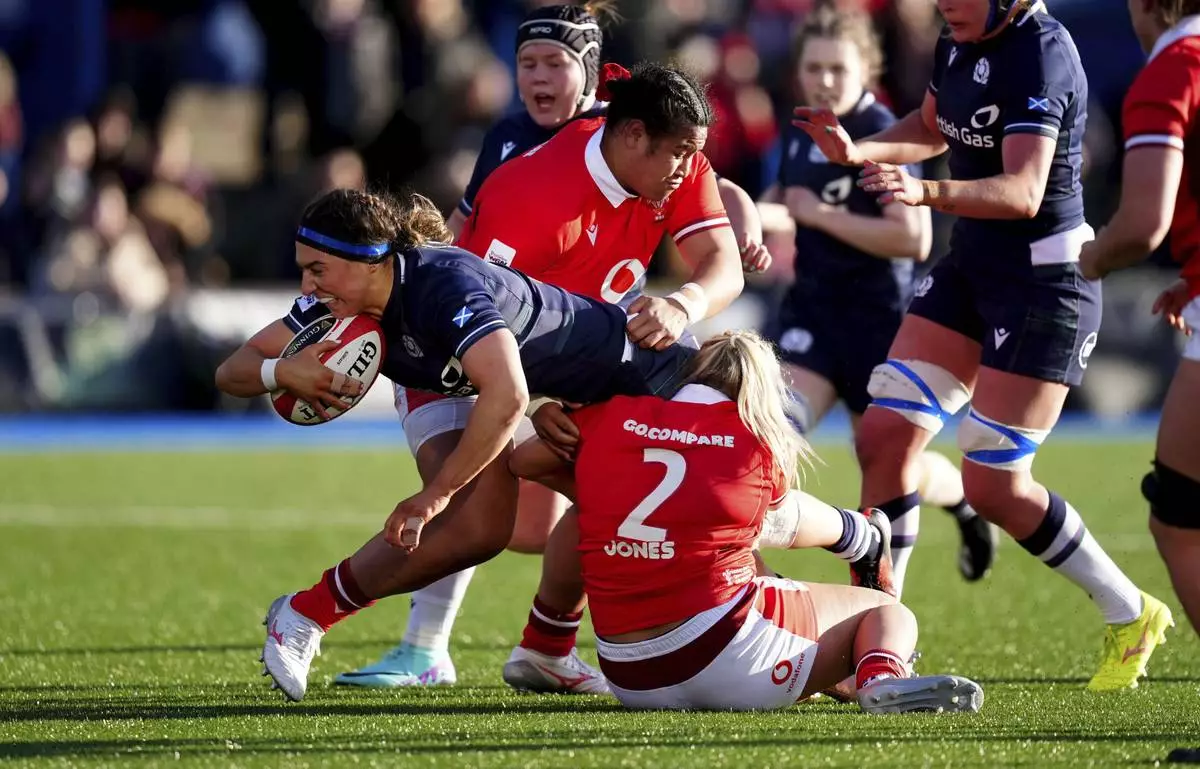
FILE - Scotlands Emma Wassell, left, in action during the Women's Six Nations match at Cardiff Arms Park, Cardiff, Wales, Saturday March 23, 2024. (David Davies/PA via AP,File)
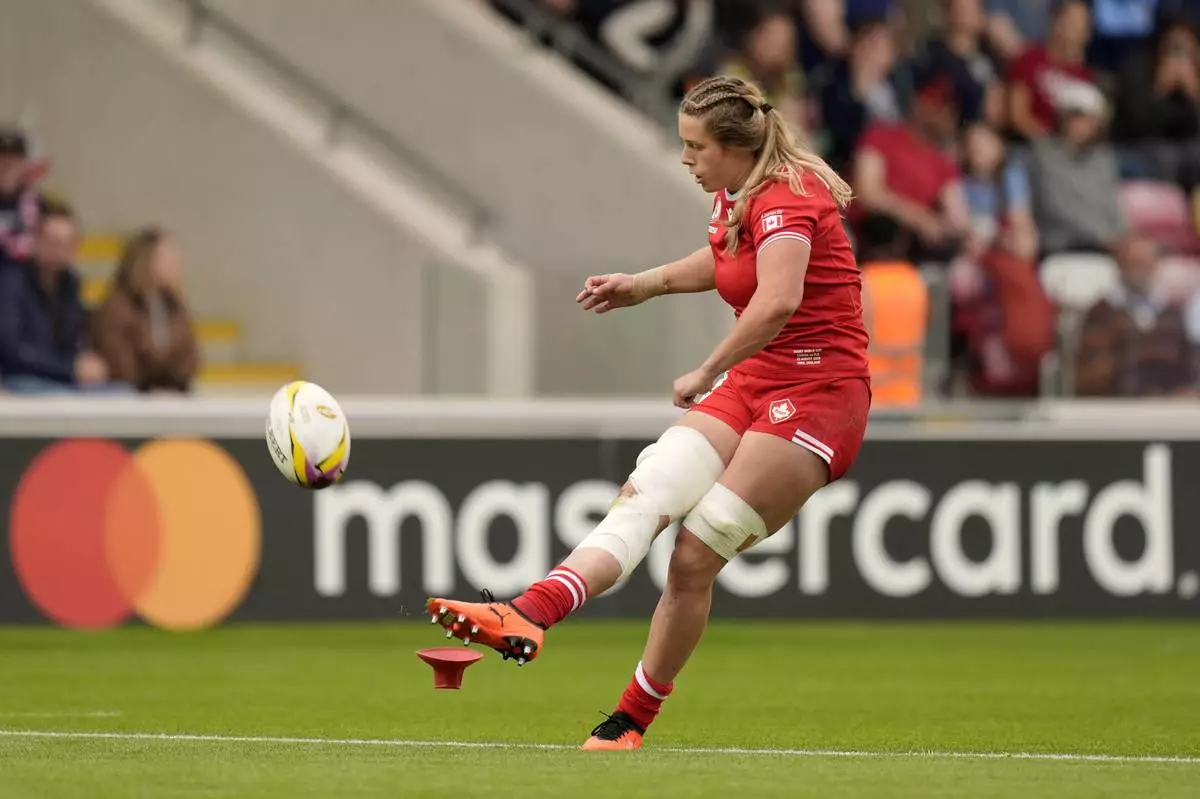
Canada's Sophie de Goede concerts her own try during the Women's Rugby World Cup 2025 Pool B match between Canada and Fiji at the York Community Stadium in York, England, Saturday, Aug. 23, 2025. (Danny Lawson/PA via AP)
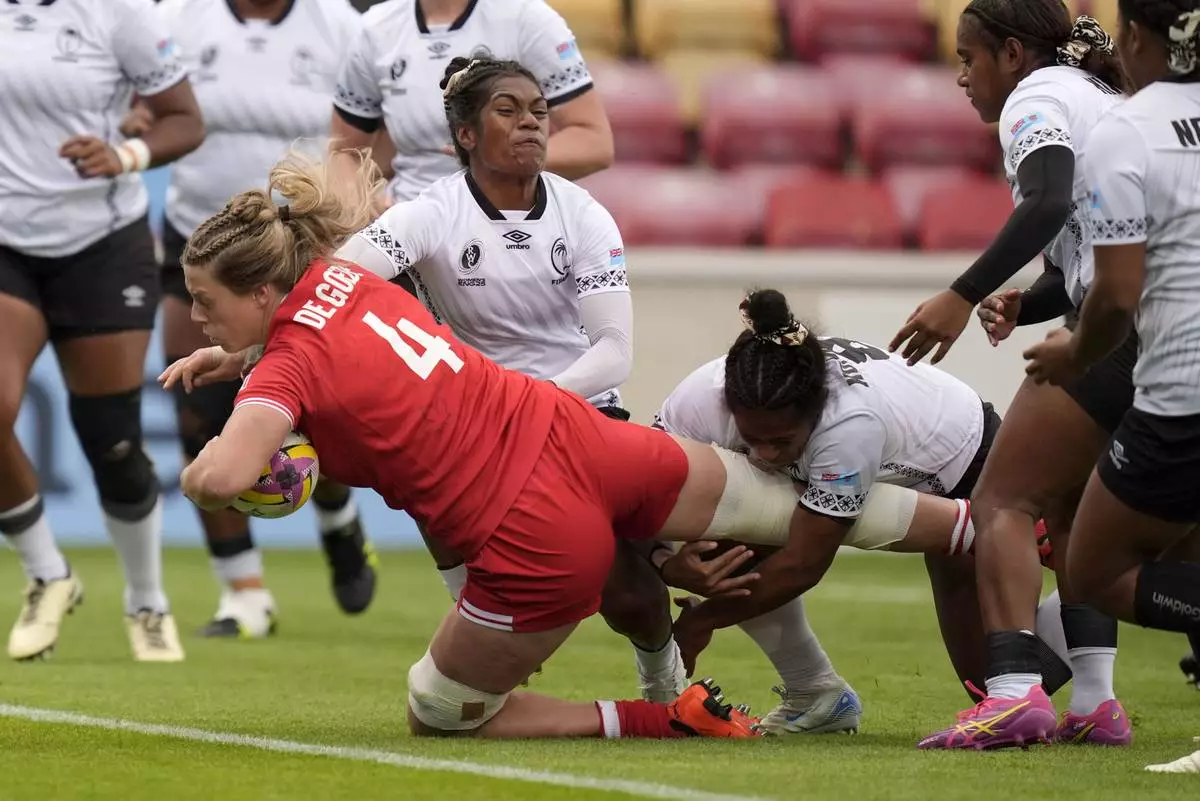
Canada's Sophie de Goede, left, scores a try during the Women's Rugby World Cup 2025 Pool B match between Canada and Fiji at the York Community Stadium in York, England, Saturday, Aug. 23, 2025. (Danny Lawson/PA via AP)
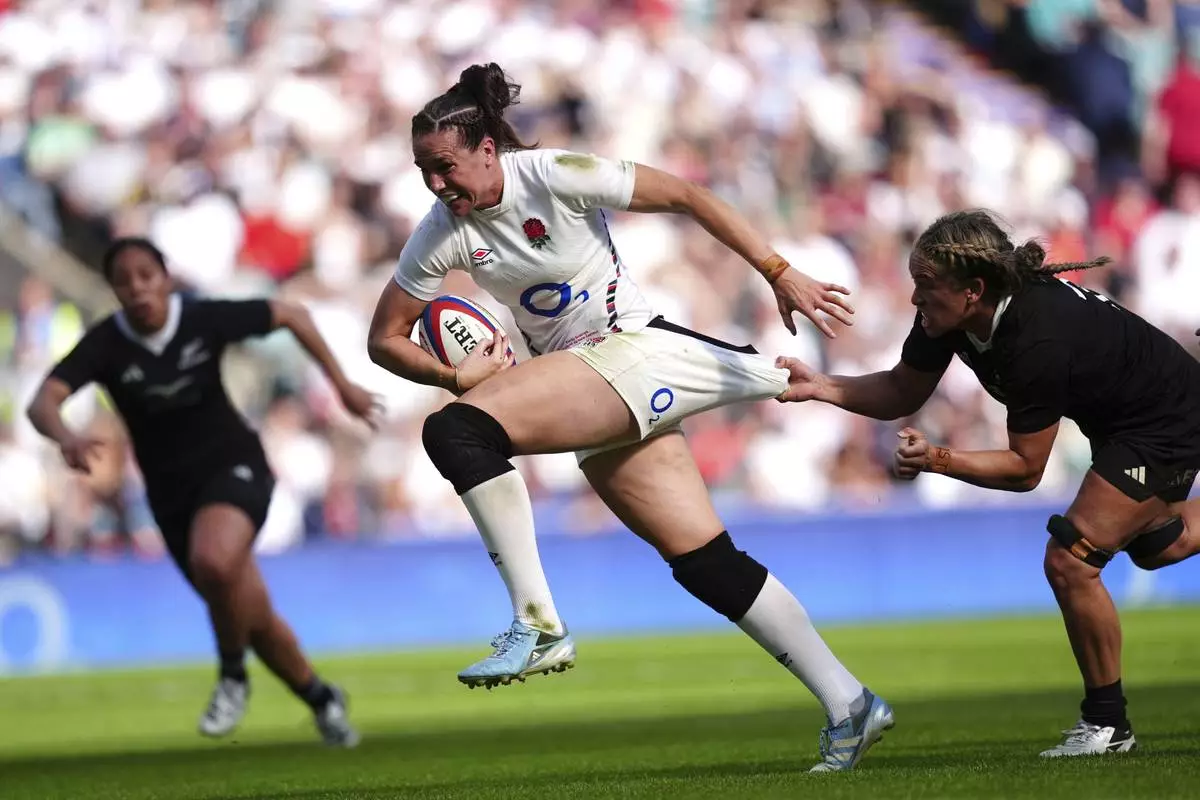
FILE - England's Emily Scarratt is tackled by New Zealand's Kennedy Tukuafu, right, during the Women's International match between England and New Zealand at Allianz Stadium, Twickenham, London, Saturday Sept. 14, 2024. (David Davies/PA via AP,File)
NEW YORK (AP) — The World Cup, a 48-team, 104-match behemoth kicking off next week across 16 cities in the United States, Mexico and Canada, presents an unprecedented security challenge, with more countries, games and a larger footprint than ever before.
It also comes against the backdrop of the U.S. and Israel’s war with Iran, mounting political violence in President Donald Trump's orbit and growing fears of artificial intelligence-fueled disruptions, creating a complex threat environment for authorities.
Overseeing the sprawling security apparatus is a legion of federal agencies, state and local police departments and private entities. Their responsibilities range from securing stadiums and fan zones to escorting teams and protecting dignitaries.
Their tools include hunter drones that can shoot nets over objects in restricted airspace, bag-inspecting robot dogs, giant X-ray trucks and thousands of AI-powered cameras trained on public spaces soon to be thronged by fans.
In the U.S., it’s “78 Super Bowls over 39 days,” said Andrew Giuliani, executive director of Trump’s World Cup task force, which is overseeing the multiagency effort.
“There’s never been a summer like this in American history from a security angle,” said Giuliani, son of former New York City Mayor Rudy Giuliani.
“We’re as prepared as we can be.”
The tournament has the same high-level federal security designation as the Super Bowl, just below a presidential inauguration or a national political convention, ensuring federal, state and local coordination. It coincides with other major events linked to the 250th anniversary of America's founding.
So far, Giuliani said, there are no credible threats.
The Department of Homeland Security, focused on Trump’s immigration enforcement crackdown and hit by a funding lapse only recently resolved, estimates up 7 million people will visit the U.S. for the World Cup.
The U.S. Secret Service, under scrutiny after security breaches and attempts on Trump’s life, is in charge of protecting world leaders who show up to cheer on their countries. Trump has expressed interest in attending a match.
“I feel very comfortable where we’re at, and we feel like we have a zero-fail mission,” Homeland Security Secretary Markwayne Mullin told Congress this week, noting that the Secret Service was understaffed by about 860 agents. “But it’s going to be complicated.”
Officials have indicated they are confident they can keep Trump safe because they will be integrating his usual security into the robust World Cup plan on days he may watch a match.
The FBI has spent two years developing its security plan, incorporating lessons from other major events such as the Macy’s Thanksgiving Day Parade and New Year’s Eve ball drop in New York and testing them at smaller ones, including last week’s Israel Day parade in the city.
"We prepare for the worst day,” FBI Special Agent in Charge Amit Kachhia-Patel in New York told The Associated Press. “And that’s how we go into any single event."
To help cover security costs, the Federal Emergency Management Agency has distributed $625 million to the 11 U.S. host cities. An additional $250 million is being directed toward tracking and neutralizing suspect drones.
The disbursement of those funds was held up by the department's funding delay, which the Republican administration has argued hindered security planning.
Others involved in the planning effort said the federal government could have played a more hands-on role even before the shutdown.
John Cohen, a former senior DHS official who has been briefing state leaders before the matches, said the government was largely absent from planning meetings last year and did not begin sharing threat intelligence with host regions until recently.
“With an event of this magnitude, one would expect the federal government would’ve played a more active role,” Cohen said. “It felt like a missed opportunity to showcase that collaboration.”
In January, thousands of officials involved in World Cup security gathered for exercises simulating crowd surges, vehicle attacks and mass shootings.
A month later, the U.S. and Israel launched a war with Iran.
“The security picture fundamentally changed,” said Stefano Ritondale, chief intelligence officer at Artorias, a defense intelligence company not involved in the security preparations. “There’s a major difference in preparing for a lone wolf radical who rams his car into a public place and a terrorist who is bankrolled by a foreign country we’re at war with.”
Among the greatest concerns are drones.
Since the last World Cup in Qatar in 2022, drones have become a prominent weapon in conflicts including Russia’s war in Ukraine and Hamas’ attack on Israel on Oct. 7, 2023.
“If there is one threat that keeps me up at night, it is from drones,” said New York City Police Commissioner Jessica Tisch, whose department is partnering with the FBI on drone mitigation.
Drones are prohibited over stadiums and fan zones, and Kachhia-Patel said the FBI has a “full suite of options” to thwart incursions. They include agents monitoring the sky and a “variety of means” to safely down the devices, he said without elaborating.
Before this year’s World Cup, the growing sophistication of AI videos was a particular concern, with officials warning that state actors can harness the technology to sow misinformation and panic.
On match days, the FBI will activate joint operations centers in each host city, bringing together local, state and federal law enforcement agencies to monitor and investigate threats.
“If there’s a video that shows an explosion going off at a site, and it’s AI generated, we have people on the ground who can validate whether or not that’s true,” said Kachhia-Patel.
Some AI companies have pitched themselves to police departments in host cities, promising to comb through data and surveillance on game days to prevent threats, including unruly fan behavior.
“We know sports fanaticism around here in terms of the NFL and baseball to some extent, but nothing like international soccer,” said Jake Becchina, a police spokesperson in Kansas City, Missouri, which is hosting six matches.
The department has contracted with Peregrine Technologies, which promises to sift through police data and publicly available information such as team practice locations and the country affiliation of popular bars, to get ahead of possible conflict.
In Dallas, a recent $120 million tech upgrade will give local police body cameras capable of real-time translations, helping law enforcement communicate with international visitors soon to descend on the region.
Several drone detection and mitigation companies are joining efforts to help federal agencies secure the skies.
One of those companies, Fortem, has claimed to have signed a multimillion-dollar contract with DHS before the World Cup for an unusual drone mitigation strategy: quadcopters that can shoot nets at encroaching drones to trap them in midair. A spokesperson for DHS declined to discuss the contract.
Just as the teams will aim to perform their best on the pitch, Giuliani said the security planning was a unique chance to “show off American exceptionalism."
“If we do our job right,” Giuliani added, “nobody will be talking about security at the World Cup.”
Santana reported from Washington. Associated Press writer Alanna Durkin Richer in Washington contributed to this report.
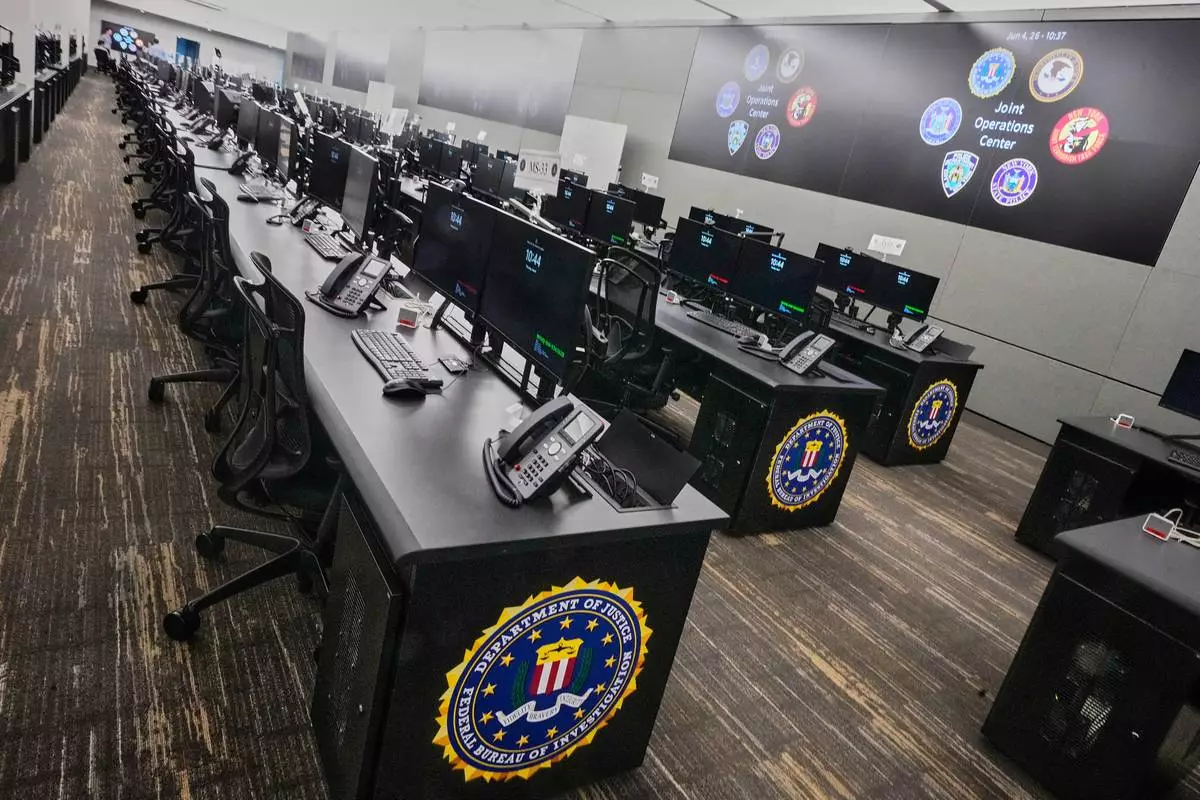
Rows of desks fill the FBI's Joint Operations Center in New York, Thursday, June 4, 2026, ahead of the World Cup soccer tournament. (AP Photo/Richard Drew)
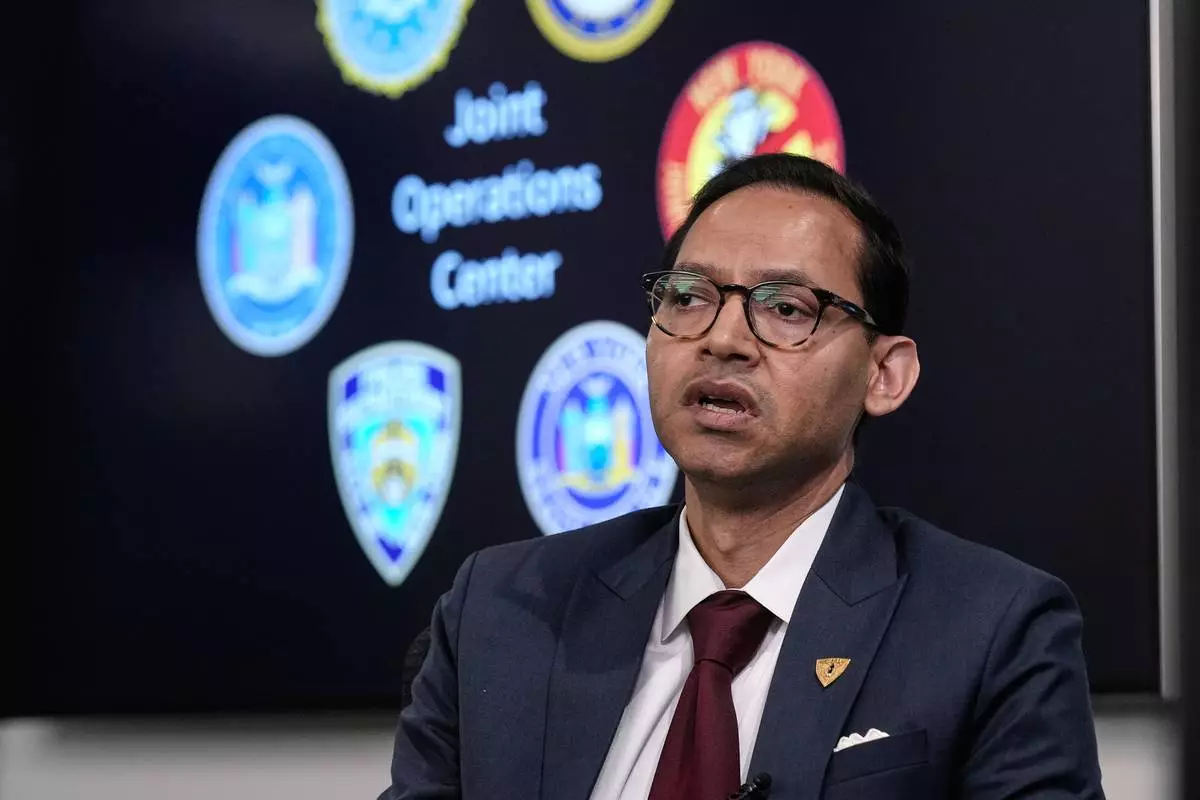
FBI Special Agent in Charge Amit Kachhia-Patel, Mission Services Division, is interviewed in the agency's Joint Operations Center, in New York, Thursday, June 4, 2026, ahead of the World Cup soccer tournament. (AP Photo/Richard Drew)
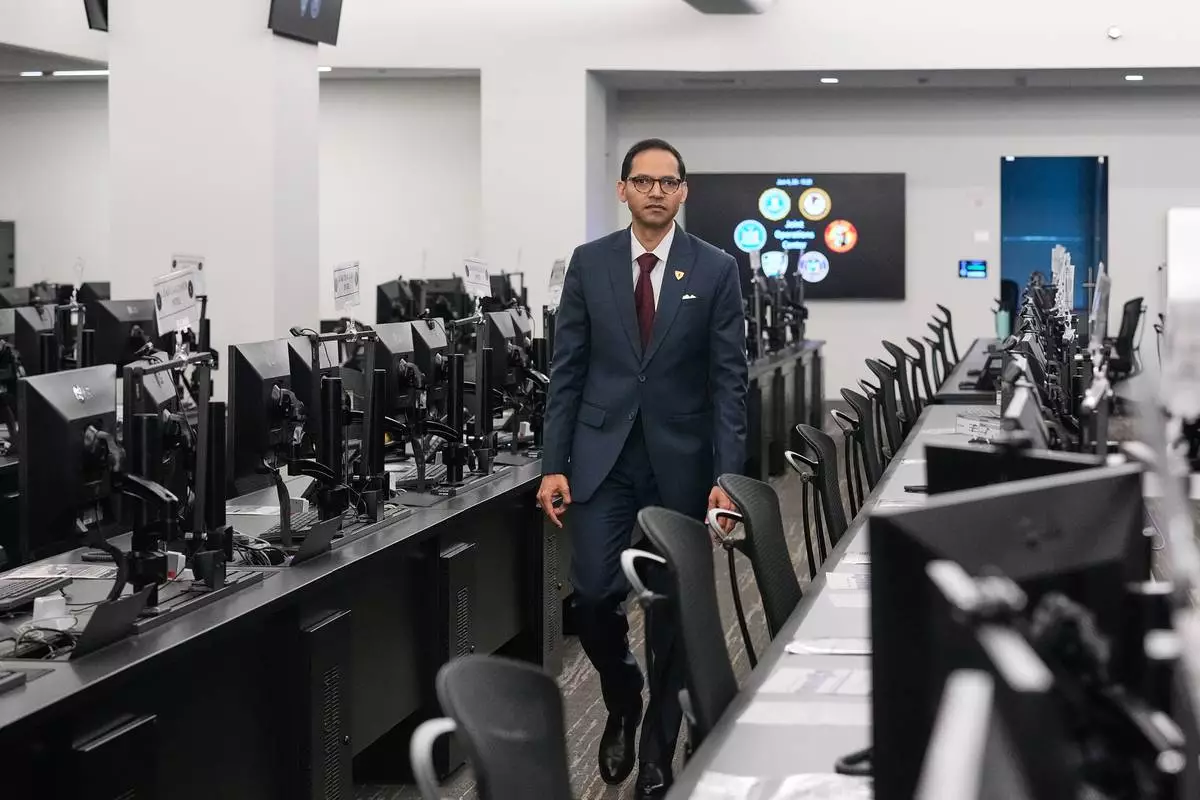
FBI Special Agent in Charge Amit Kachhia-Patel, Mission Services Division, walks through a portion of the agency's Joint Operations Center in New York, Thursday, June 4, 2026, ahead of the World Cup soccer tournament. (AP Photo/Richard Drew)
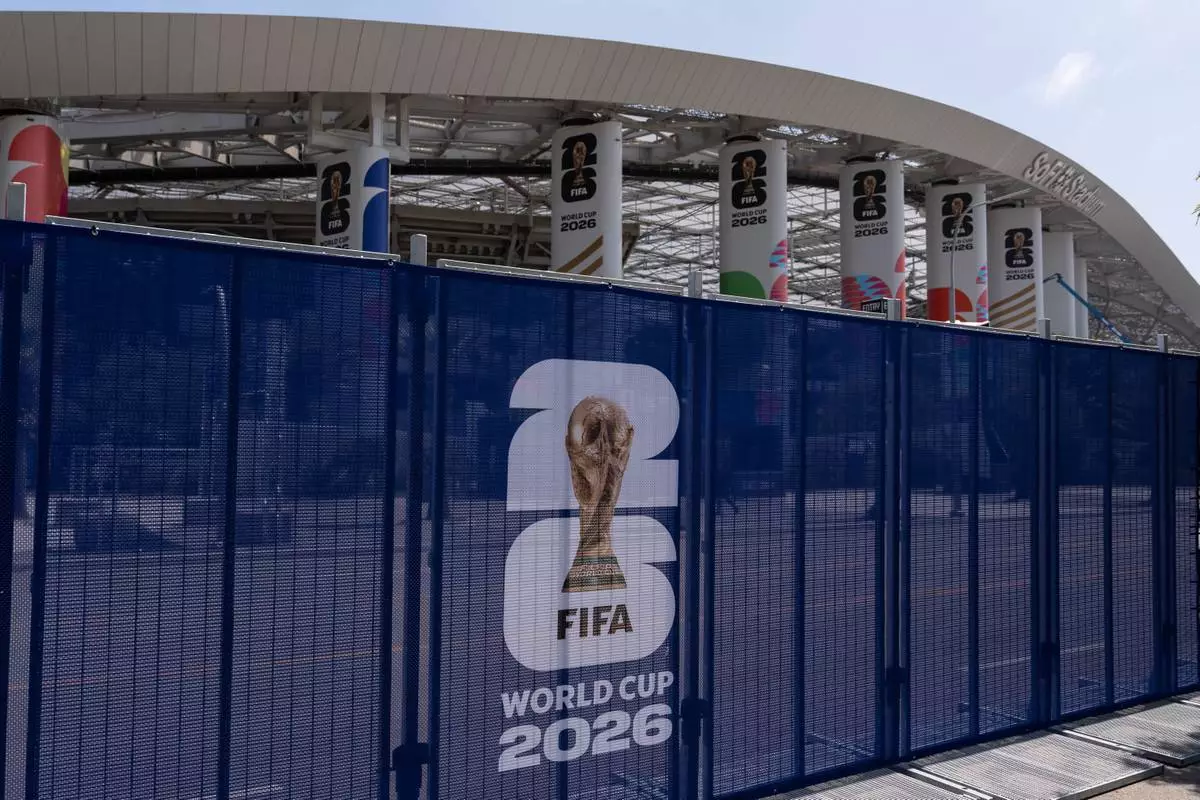
Temporary fencing with FIFA World Cup 2026 signage is set up outside SoFi Stadium, Friday, June 5, 2026, in Inglewood, Calif. (AP Photo/Jae C. Hong)
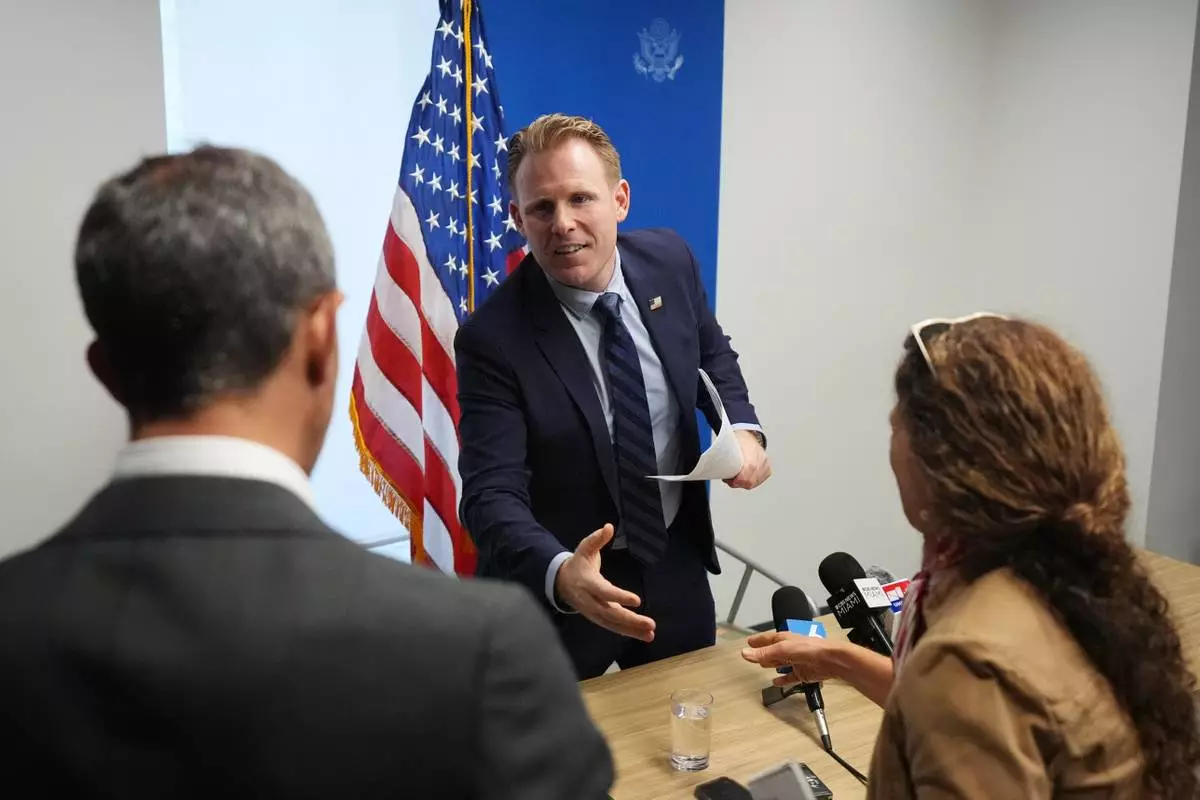
Andrew Giuliani, head of the White House FIFA World Cup 2026 task force, shakes hands with journalists following a press briefing on World Cup security, Thursday, June 4, 2026, in Miami. (AP Photo/Rebecca Blackwell)
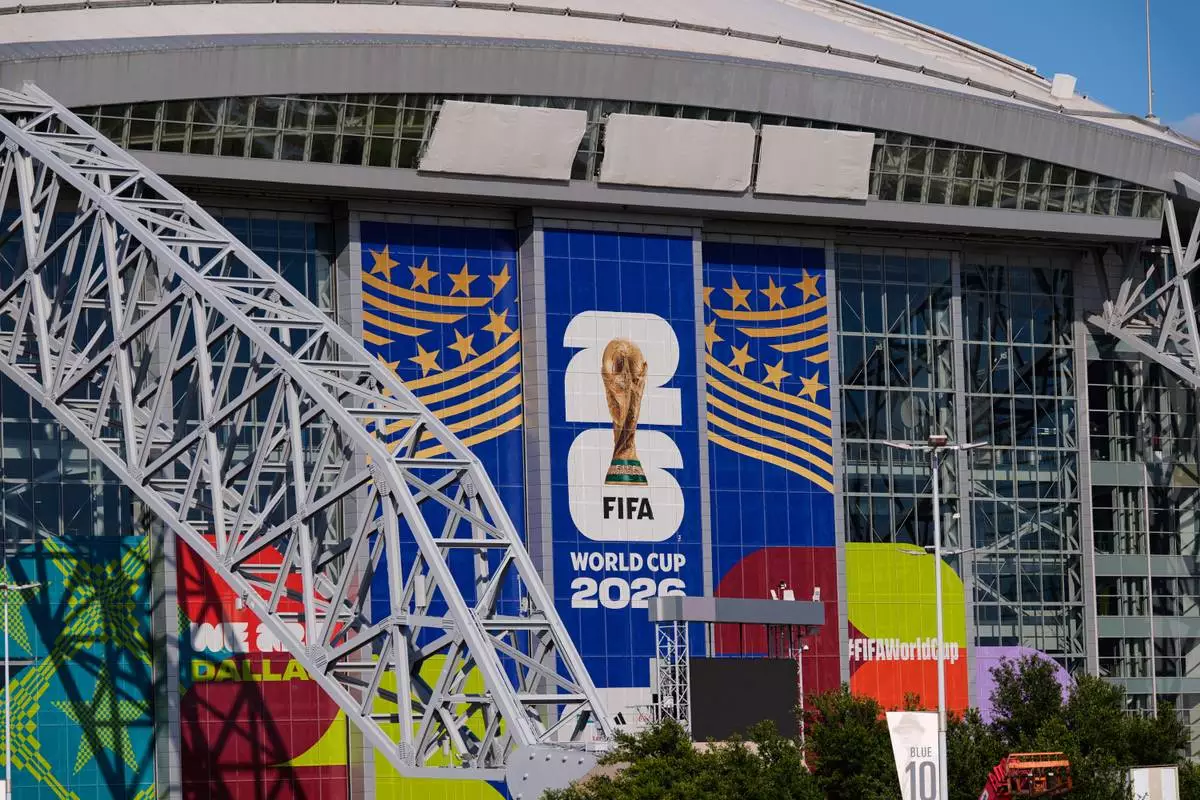
AT&T Stadium, where upcoming World Cup soccer matches are scheduled to be played, has its name covered by three gray tarps Monday, June 1, 2026, in Arlington, Texas. (AP Photo/Tony Gutierrez)
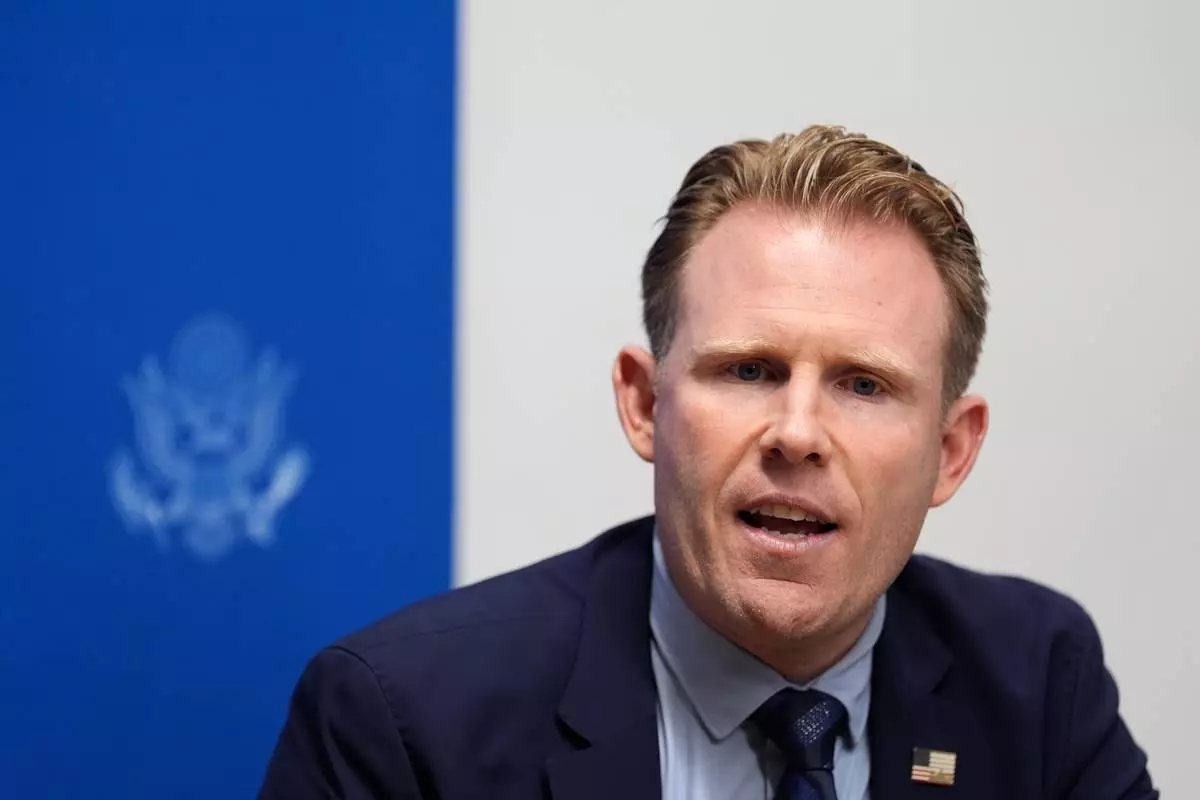
Andrew Giuliani, head of the White House FIFA World Cup task force, speaks at a news briefing about World Cup security, Thursday, June 4, 2026, in Miami. (AP Photo/Rebecca Blackwell)