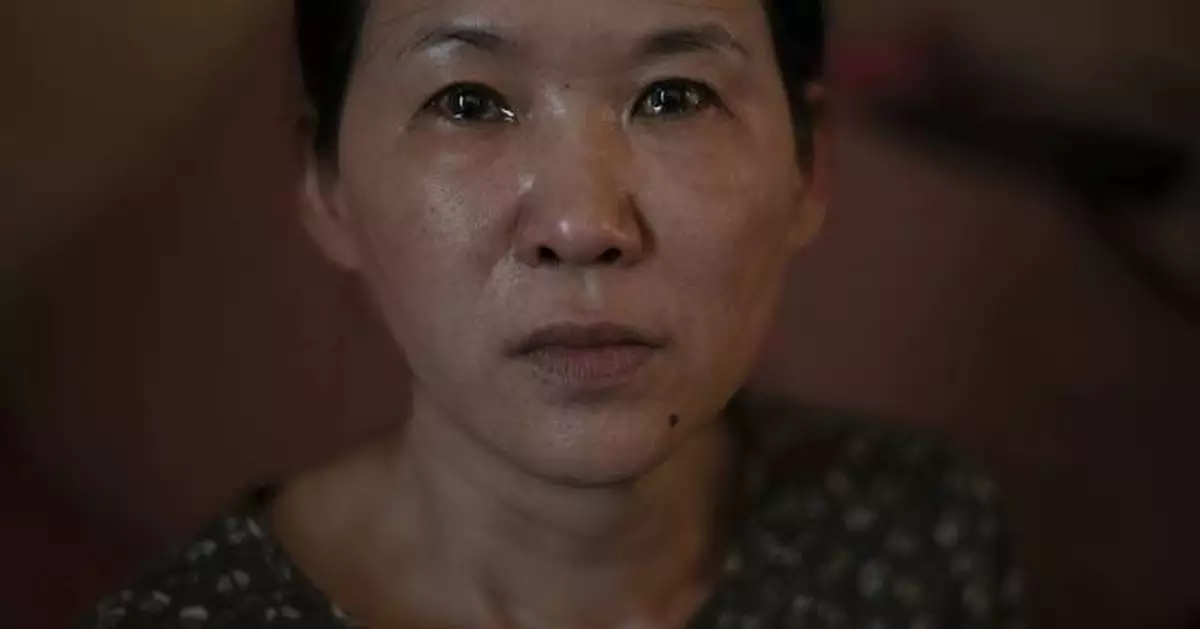
SEOUL, South Korea (AP) — A 52-year-old woman who was adopted to a French family in 1984 without her biological parents’ consent has filed for compensation from South Korea’s government, citing how authorities at the time fraudulently documented her as an orphan although she had a family.
The rare petition filed by Yooree Kim came months after South Korea’s truth commission recognized her and 55 other adoptees as victims of human rights violations, including falsified child origins, lost records and child protection failures.
Her case was highlighted last year in an Associated Press investigation in collaboration with FRONTLINE (PBS). The investigation found that South Korea’s government, Western countries and adoption agencies worked in tandem for decades to supply some 200,000 Korean children to parents overseas through questionable or downright unscrupulous means.
Their stories have triggered a reckoning that has shaken the international adoption industry, which took root in South Korea before spreading worldwide. Under pressure from adoptees, the Seoul government launched a fact-finding investigation, and hundreds submitted their cases for review.
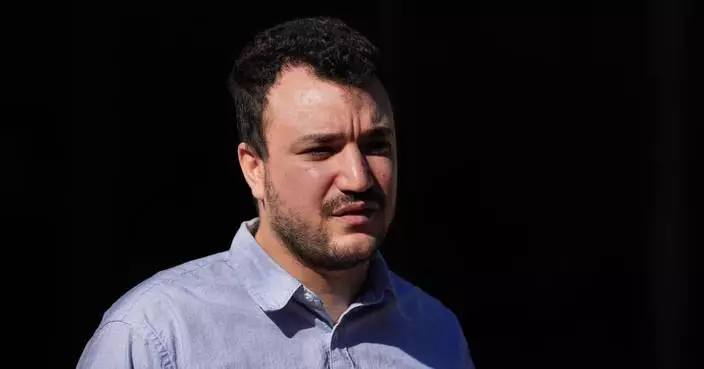
Choi Jung Kyu, Kim’s lawyer, said her administrative claim, filed under a little-used provision of the state compensation act, would be groundbreaking if successful. He said it could set a precedent for others to seek compensation without enduring long, difficult lawsuits against the state that seldom succeed.
Whatever the outcome, it is being watched as a gauge of how the government assesses its responsibility for the dubious practices which marred South Korea’s adoption program, one which peaked in the 1970s and 1980s.
The government has never acknowledged direct responsibility for past adoption practices and has yet to act on recommendations from the Truth and Reconciliation Commission.
After a nearly three-year investigation, the commission concluded in March that the state bears responsibility for facilitating an adoption program rife with fraud and abuse, driven by efforts to reduce welfare costs. It urged the government to issue an apology and develop plans to address adoptees’ grievances.
The Justice Ministry technically has four weeks to decide on Kim's request, but nothing requires it to meet that deadline. Her petition, filed on Aug. 21, does not specify an amount, leaving it to the government to propose an appropriate sum. She also reserves the right to potentially pursue a civil lawsuit against the state, Choi said.
“How can we ever even start to quantify the damages she endured?” Choi said.
Kim told the AP on Wednesday that her adoption, recognized by the commission as illegal, amounted to “kidnapping and forced disappearance." South Korea committed the “biggest part of the crime," she said, because it endorsed “proxy” adoptions to Western parents who never visited South Korea.
It was, she said, “a child sale sponsored by the state.”
Kim was 11 when she and her younger brother were sent by Holt Children’s Services, a Korean adoption agency, to a couple in France.
Following a divorce, Kim’s impoverished mother placed the children in an orphanage so at least they could eat, a common practice at the time. She says she never consented to their adoption and only discovered it after returning to the orphanage to find them gone. Kim’s father also said he never knew his children were being put up for adoption and never gave his consent.
Kim recalls being physically, verbally, and sexually abused in her adoptive home, allegations her parents denied. A judge dismissed a complaint she filed against her adoptive father for insufficient evidence.
Kim first returned to South Korea in 1994 but for years resented her birth parents, believing they were in denial about giving up their children. That changed in 2022 when she confirmed through residential records that she and her brother were still registered under their father and had never been relinquished, a discovery that drove her to seek accountability from governments and adoption agencies in South Korea and France.
Kim’s adoption paperwork contains conflicting stories of how she and her brother were made eligible for adoption.
One said they were relinquished by their paternal great-aunt, whom Kim never recalls meeting. Another document says Kim’s mother agreed to the adoption. A third says the siblings were found “roaming” the streets and were “emotionally hardened” by the experience.
The discrepancies constructed a false chain of guardianship that enabled the adoptions, with the orphanage transferring parental rights it never rightfully possessed to Holt, which then placed the siblings with the French adopters.
Kim’s adoption was clearly unlawful, given the lack of consent from her parents who were easily identifiable, Choi said. None of Kim’s records indicate any effort to contact her parents. Kim’s petition also cites screening failures related to her adoptive parents. Her adoptive father was 50 when he received the siblings, above the age limit of 45 set at the time by South Korean authorities.
Holt has not responded to repeated requests to comment on Kim’s case.
The truth commission confirmed human rights violations in 56 of 367 complaints filed by adoptees before halting its investigation in April, weeks before its investigation deadline. The fate of the remaining 311 cases, either deferred or incompletely reviewed, now hinges on whether lawmakers establish a new truth commission through legislation.
There were clear limitations to the commission's report, which didn’t thoroughly examine the profit structures of adoption agencies, their links to child sources like hospitals, or receiving countries' practices. Only 45 of the complaints were from adoptees from the United States, leaving the biggest recipient of Korean children underrepresented.
Some adoptees hope to use the commission’s findings to file lawsuits against their agencies or the Korean government. But others, including Kim, have called for the government to offer specific plans for reparations without forcing adoptees to go to court.
Choi, who represents multiple plaintiffs suing the government over human rights abuses linked to Seoul's past dictatorships, said they often struggle with prolonged legal battles as the government frequently dismisses truth commission findings as inconclusive or cites expired statutes of limitations.
Even a modest payout proposal from Kim's petition would carry symbolic weight, acknowledging government responsibility and potentially strengthening future legal claims, he said.
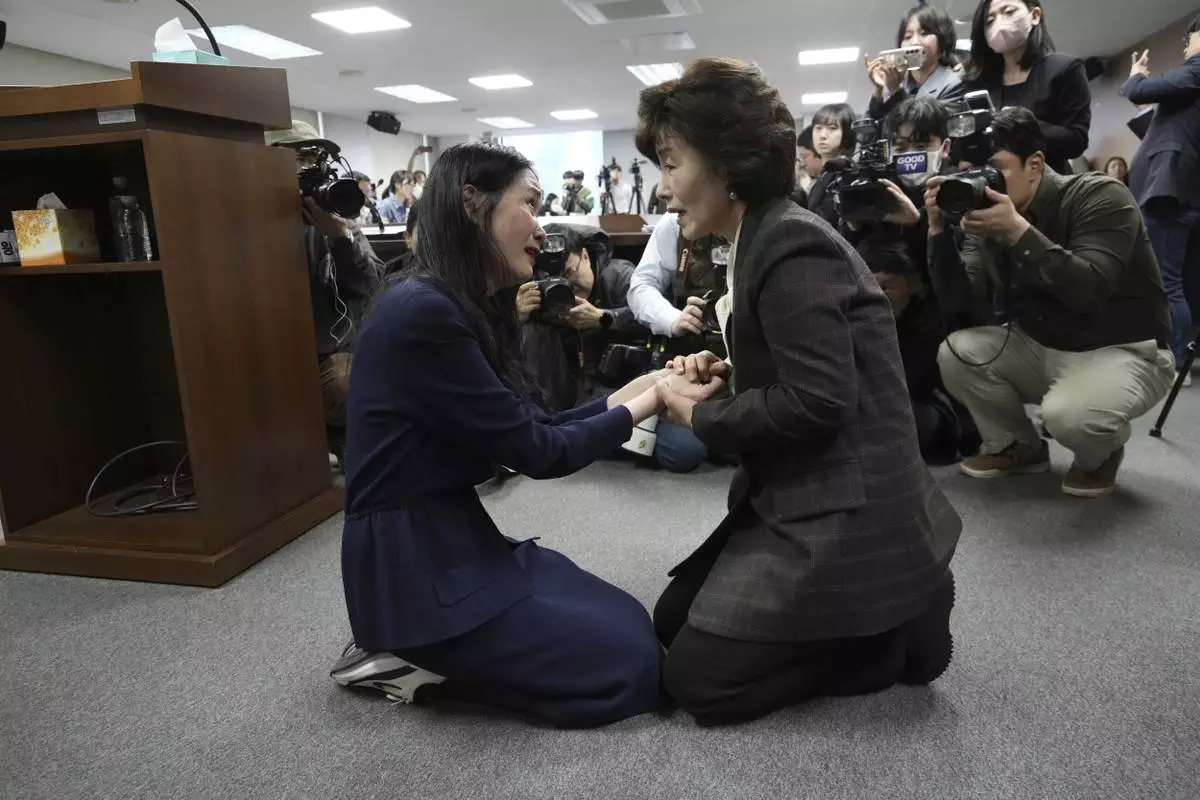
FILE - Truth and Reconciliation Commission Chairperson Park Sun Young, right, comforts adoptee Yooree Kim during a press conference in Seoul, South Korea, March 26, 2025. (AP Photo/Ahn Young-joon, File)
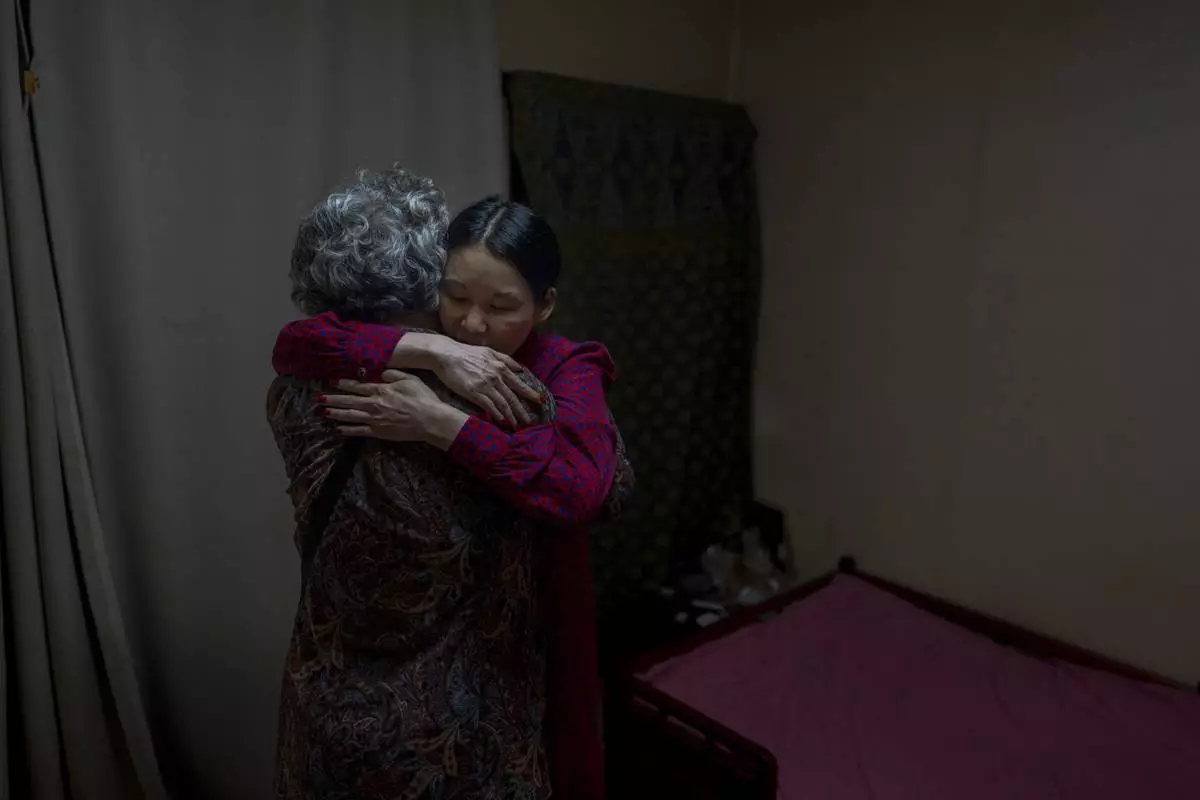
FILE - Yooree Kim, right, who was 11 when she was adopted from South Korea to a couple in France, hugs her biological mother, who had come to visit her in Seoul, South Korea, Friday, May 24, 2024. (AP Photo/Jae C. Hong, File)
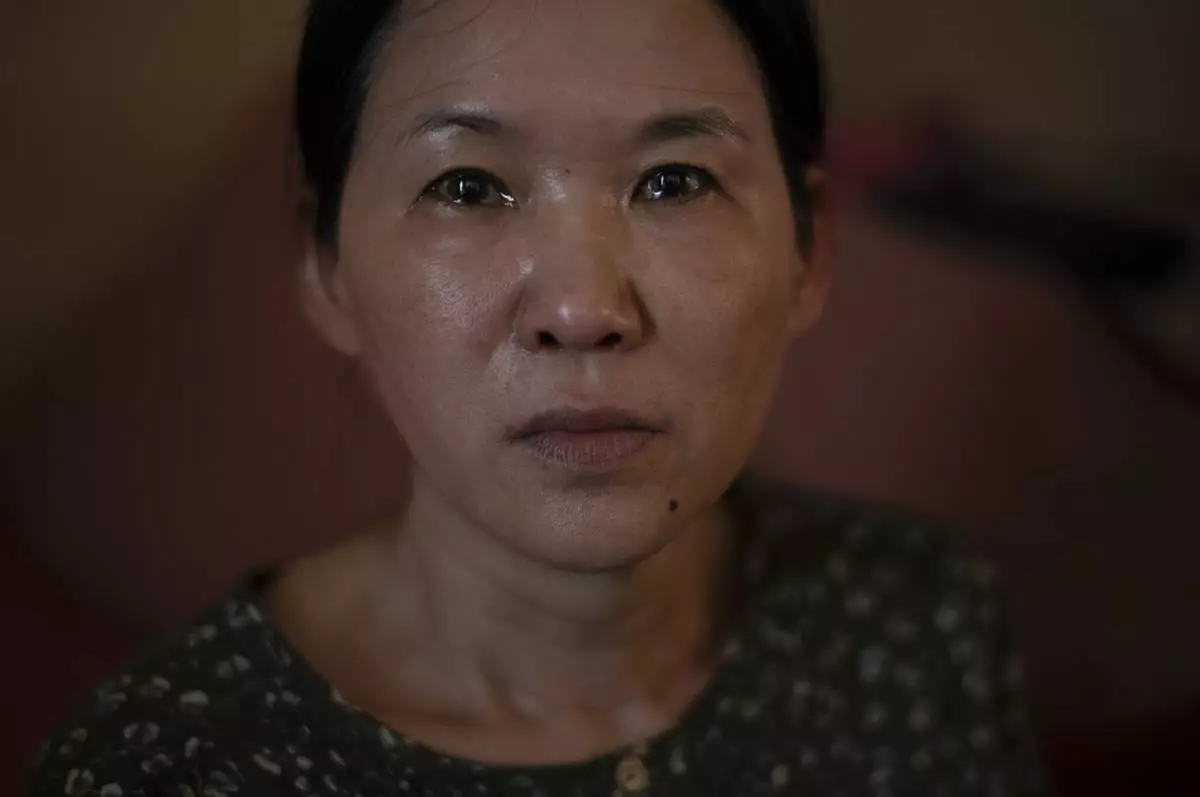
FILE - Yooree Kim, who was 11 when she was sent by an adoption agency to a couple in France, sits for a portrait as tears well up in her eyes in her apartment in Seoul, South Korea, Sunday, May 19, 2024. (AP Photo/Jae C. Hong, File)