The United States' sweeping tariffs are continuing to affect industries across the globe, causing serious economic woes among some of the country's key trading partners.
Battered by U.S tariffs, Germany's industrial output has fallen to its lowest level since May 2020.
Figures released in early August by the country's Federal Statistical Office show industrial output dropped 1.9 percent month-on-month in June and was down 3.6 percent year-on-year.
Data also showed exports to the United States, Germany's biggest single market, have declined for three consecutive months, reaching their weakest point since February 2022.
The auto sector, a pillar industry of the country, was hit hard in the process. Although the U.S. presidential administration recently trimmed the tariff on EU-built cars to 15 percent, German automakers still face "several billion euros" of extra annual costs, according to industry insiders.
According to reports, BMW, Mercedes-Benz and Volkswagen all reported steep profit declines in the first half of the year, while suppliers Bosch, Continental and ZF have announced sweeping cost-reduction plans. Porsche, meanwhile, is scaling back its battery-electric vehicle program.
Consultancy firm EY Germany estimates that the country's industrial workforce has shrunk by 2.1 percent -- about 114,000 jobs -- over the past twelve months. EY calculates that the auto industry alone has shed 51,500 jobs - almost seven percent of its workforce, in the past year, making it the most affected industrial sector.
On Wednesday, The United States began levying a 50 percent tariff on Indian products, sending shock waves through key export industries.
Leather and diamond-processing firms were hit first, as U.S. buyers began canceling orders and factories struggled to stay open.
The Federation of Indian Export Organizations warned on Tuesday that about 55 percent of India's exports to the United States will now suffer a "price disadvantage", eroding competitiveness across labor-intensive sectors such as leather, chemicals and handicrafts. The group urged the Indian government to roll out emergency financial support for exporters already drowning in canceled orders.
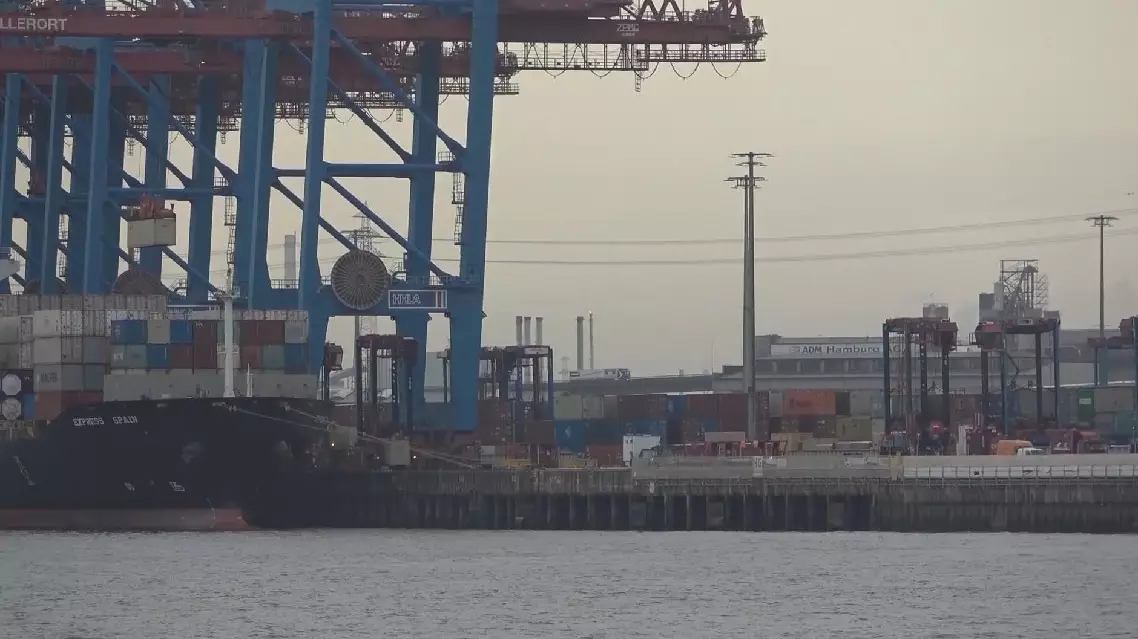
US tariff hikes continue to impact trade partners as industries see sharp revenue losses
China is forging ahead on a modernization path that integrates harmony between humanity and nature, with its ecological conservation and green development efforts intensified and generating fruitful results this year.
Pursuing high-quality development underpinned by a good environment, the Chinese society is making concerted efforts to cut carbon emissions, reduce pollution, pursue green development, and boost economic growth.
As a result, air pollution levels have plummeted. In Beijing, the annual average levels of particulate matter under 2.5 milligrams have dropped from 89.5 micrograms per cubic meter to just 27 micrograms over the past 13 years.
Meanwhile, the Taihu Lake in east China's Jiangsu Province, once plagued by blue-green algae blooms, now boasts crystal-clear water.
In the past decade, the lake's phosphorus concentration has fallen by nearly 30 percent, and its water quality has been improved from Grade IV to Grade III, which means it is now classed as "fairly good."
"I grew up by Taihu Lake. In recent years, the lake has become so beautiful thanks to the restoration efforts. I often take walks along its shores, and I'm truly delighted," said Fan Suming, a local resident.
To upgrade its legal system for ecological protection, China this year adopted its first Ecological and Environmental Code.
Earlier this month, seven central ecological and environmental protection inspection teams have all completed their deployment for the sixth batch of the third round of inspections.
The inspection teams will conduct one-month inspections in Liaoning, Jilin, Heilongjiang, Guangdong, Guangxi, Xizang and Xinjiang, as well as the Xinjiang Production and Construction Corps, aiming to promote coordinated regional development and high-quality growth, accelerate the country's green transformation, substantially improve environmental quality, and achieve major progress in building a Beautiful China.
Also in May, China unveiled assessment measures for the building of a Beautiful China to ensure the fulfillment of responsibilities at all levels.
The country has also started implementing its stricter ambient air quality standards since March and is taking measures in key counties to tackle pollution and stagnant water in small water bodies.
Gao Qiusheng, a photographer in Taiyuan City, north China's Shanxi Province, recently presented a reporter with photographs he has taken of the thriving wildlife that local water bodies have nurtured.
"This is a picture of a scaly-sided merganser that I took near the Fenhe Park and the northern middle ring road bridge. This is a white-tailed eagle. I can feel that my camera is capturing rare species more frequently," said Gao.
China is also optimizing the development and protection of territorial space, focusing on key ecosystem service zones. The Three-North Shelter Forest Program, the ecological conservation on the Qinghai-Xizang Plateau, mangrove conservation and restoration, and other national-level projects are all in steady progress.
By the end of March, China's total installed renewable energy capacity reached approximately 2.4 billion kilowatts, accounting for nearly 40 percent of the country's total power capacity.
In addition, green development funds are being channeled into energy saving, carbon emissions reduction, recycling, and environmental infrastructure.
Today, green commuting, green consumption, and low-carbon lifestyles have gained great popularity across China, and living a greener life has emerged as a shared pursuit in society.
"The 15th Five-Year Plan period is a critical stage in building on past successes to break new ground for building a Beautiful China and achieving fundamental improvement in the environment. We will continue to regard green and low-carbon development as the fundamental solution, consolidate and expand the outcomes of our ecological and environmental efforts to lay a decisive foundation for basically accomplishing the goal of building a Beautiful China by 2035," said Zhang Huaping, deputy director general of the Department of General Affairs of the Ministry of Ecology and Environment.

China forges ahead with ecological conservation, green development