Skip to Content Facebook Feature Image

China's brain-computer interface technology makes breakthrough in brain tumor localization

China

China

China

China's brain-computer interface technology makes breakthrough in brain tumor localization

2025-08-28 17:00 Last Updated At:23:57

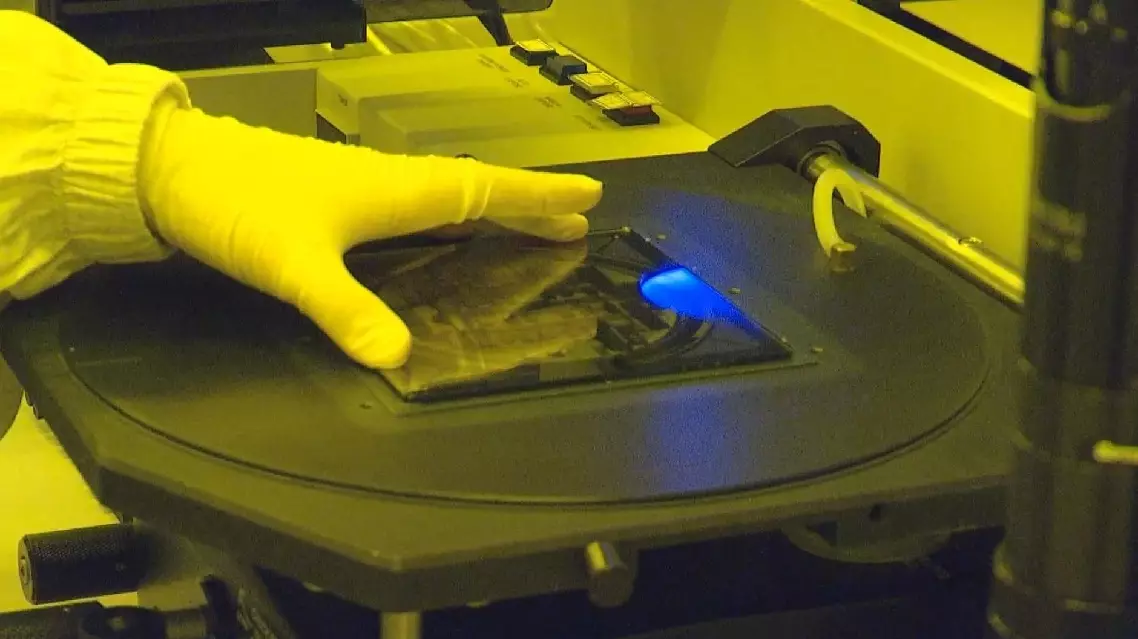
A Chinese-led research team has achieved a significant breakthrough in brain-computer interface (BCI) technology: a successful clinical trial on the precise localization of deep-seated brain tumor boundaries using implanted microelectrode arrays. The trial was jointly conducted by researchers from the Aerospace Information Research Institute (AIR) of the Chinese Academy of Sciences (CAS) and the First Affiliated Hospital at Harbin Medical University on a patient with glioma.

Before surgery, the patient experienced frequent language confusion due to compression from the brain tumor. After the procedure, the patient's speech became clear and fluent, significantly improving the quality of life.

The technology implemented during the surgery provides a real-time, high-precision navigation guide for lesion localization, promising to enable accurate tumor resection while maximizing protection of healthy brain tissue. It is expected to improve postoperative neurological function retention.

This clinical trial is the first of its kind globally. It utilized the clinically applicable BCI micro-electrode "NeuroDepth," which was independently developed by the Aerospace Information Research Institute.

"It has broken through the limitation of traditional neural electrodes, which could only detect signals from cortical based tumors. Our electrodes can capture neural signals across the entire brain -- from the cortex to subcortical regions and even deep brain structures. They are capable of not only detecting neuro-electrophysiological signals but also monitoring neurotransmitter signals, providing more precise information," said Wang Mixia, an associate researcher of the Aerospace Information Research Institute.

Brain tumors such as gliomas and brain metastasis are characterized by high incidence, high mortality, and high recurrence rates. Their infiltrative growth patterns often result in blurred boundaries between tumor tissue and healthy brain tissue, making accurately defining the tumor margin crucial for surgical resection and radiotherapy planning.

Therefore, the successful application of NeuroDepth offers hope for curing these diseases.

The research team stated that they will further expand the application areas of this technology in collaboration with medical institutions. Plans are underway to advance high-precision BCI technology for helping patients who are blind or deaf regain sensory perception.

"On another front, we also have a plan to integrate vascular interventional technologies to develop endovascular brain-computer interfaces. This initiative will focus on researching the recovery of motor functions in paralyzed patients," said Wang.
China's brain-computer interface technology makes breakthrough in brain tumor localization


China's brain-computer interface technology makes breakthrough in brain tumor localization

Attempts to curb China's scientific and technological advancement are futile, a fact that has already been proven, said Kishore Mahbubani, former permanent representative of Singapore to the United Nations, in an interview aired Friday.

In an exclusive interview with China Central Television (CCTV) in Beijing, Mahbubani said he had stated this position in one of his articles published in the United States.

"Actually, I published an article, you know the two, I guess two leading journals in the United States on international relations. One is Foreign Affairs and the other is Foreign Policy. And last year I co-authored an article with two other co-authors, saying that all the efforts to stop China's scientific and technological development will fail. And it has failed always. You know, for example, the Soviet Union tried to prevent the spread of nuclear technology to China, China develops its own. The United States didn't want to share its technology on international space station with China. China develops its own space station. So clearly, efforts to stop China in the area of scientific innovation and technological development have failed. And so it'd be wiser for the West, including United States, to work with China other than to try and stop China seek development," he said.

Regarding China's progress on robots, Mahbubani said China is leading the world in the sector and hopes the country will share its expertise with the rest of the world.

"If there's one country that is preparing for the future well, it is China, because one in six human beings in the world is Chinese. But one in three robots in the world is Chinese, and one in two baby robots being born every day is Chinese. So China is producing far more robots than any other country is. So clearly it's preparing for the world of the future when we will have, for example, labor shortages, as you know, as you develop an aging society. So China is wisely investing in robots. But I hope that China will also share its learning and expertise with other countries. Also because the robots like that can also be helpful even to developing countries cause you can enhance the productivity of their populations, of their factories and so on so forth. So the world should be happy that China is leading the world in manufacturing, producing robots," he said.

Attempts to stop China's sci-tech development doomed to fail: former Singaporean diplomat

Attempts to stop China's sci-tech development doomed to fail: former Singaporean diplomat

Recommended Articles