BANGKOK (AP) — Myanmar’s military government designated the Karen National Union a terrorist organization Thursday, making illegal virtually any activities connected with the major ethnic rebel group, including contact by third parties.
The KNU has been fighting on and off for greater autonomy since Myanmar became independent from Britain in 1948. The group located in Myanmar's southeast has been engaged in especially fierce combat against the army in the civil war that followed the military takeover from Myanmar's elected government in 2021.
A KNU spokesperson said Friday the group would not care about the designation. Noting that Myanmar's military had been indicted by international tribunals, KNU spokesperson Padoh Saw Taw Nee said: “You don’t even need to prove anything on who the real terrorists and international criminals are, and who the unlawful association are.”
The KNU has has vowed to disrupt the national elections the military plans to hold beginning Dec. 28, but the terrorist designation will make it more difficult to do even nonviolent information campaigns, which already have been declared illegal.
State-run MRTV television reported a military government committee named the KNU a terrorist group because it has "caused serious losses of public security, lives and property, important infrastructures of the public and private sector, state-owned buildings, vehicles, equipment and materials.”
A separate notice on MRTV said Senior Gen. Min Aung Hlaing, the military leader who is serving as Myanmar’s acting president, declared the KNU and its affiliated organizations to be unlawful organizations, which criminalizes contact with them.
After reporting the announcements, the MRTV repeatedly broadcast a 1947 quote from Aung San, Myanmar’s independence hero, to serve as a warning to the KNU about its plans to disrupt the election.
“Our government will not look on with indifference at those who try to disrupt the election,” were the words attributed to Aung San, who was the father of Aung San Suu Kyi, the civilian national leader who has been detained since the 2021 military takeover.
“They will be severely punished. Our government will not interfere with anyone who is competing freely in the election. However, let me clearly warn you that we will use all the power to suppress anyone who tries to disrupt it," the Aung San broadcast continued.
The polls have been denounced by critics as a sham to normalize the army takeover. They also say that the dissolution of Suu Kyi’s National League for Democracy party, which won a landslide victory in the 2020 elections, means the polls cannot be considered fair.
Several opposition organizations, including the KNU, have said they will try to derail the election. The military government enacted an election law last month that carries the death penalty under certain conditions for anyone who opposes or disrupts the polls.
The Karen, like other minority groups living in border regions, have struggled for decades for greater autonomy from Myanmar’s central government.
The KNU, along with seven other ethnic rebel armies, signed a ceasefire agreement in 2015 with the former quasi-civilian government led by former general Thein Sein to end more than six decades of fighting.
However, the group became allies with pro-democracy militias formed after the military seized power in 2021 and offered refuge to the opponents of the military government. After nonviolent protests against the military takeover were put down with lethal force, armed resistance arose that has now embroiled much of the country in civil war.
In addition to directly engaging the military government’s troops on the battlefield in Kayin state, the armed wing of the KNU, the Karen National Liberation Army, has been training hundreds of young activists from the cities in the rudiments of warfare. Kayin state is also known as Karen state.
The KNU, together with the other ethnic minority groups fighting with the army, also boycotted the military government’s proposed peace talks after the army takeover, saying they did not meet their demands.
The group’s demands include the military’s withdrawal from politics, implementation of federal democracy and acceptance of international involvement in solving the country’s crisis.
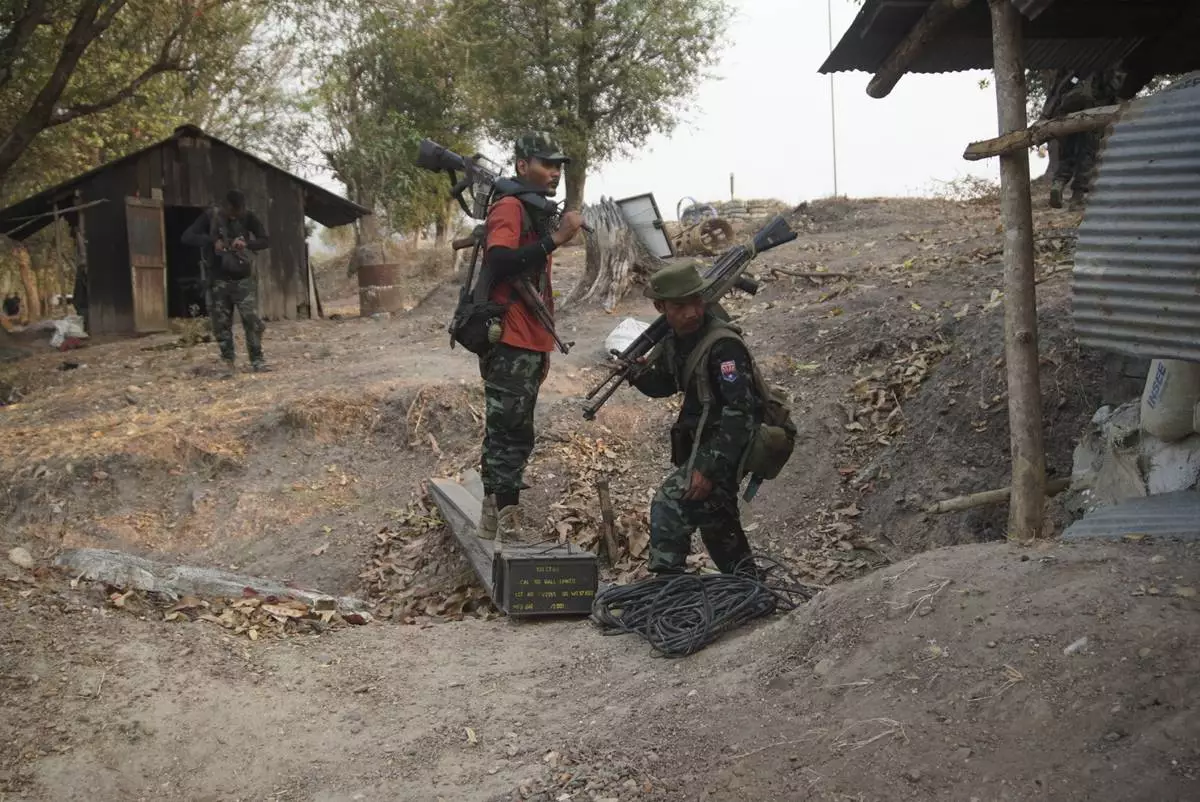
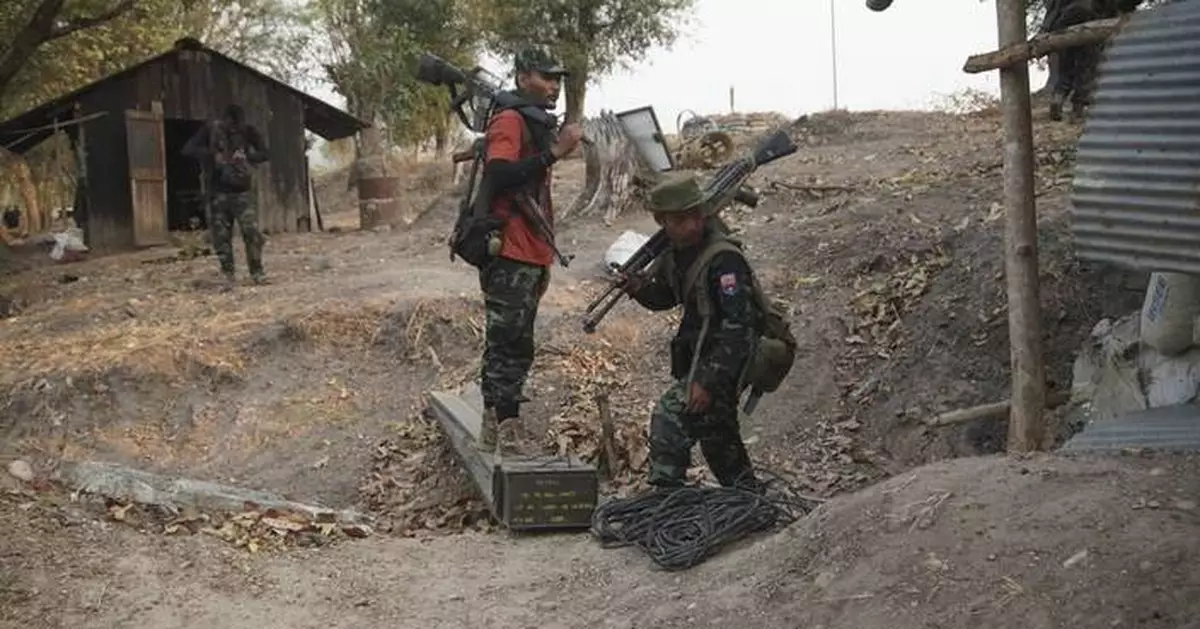
FILE - Members of the Karen National Liberation Army and People's Defense Force collect weapons after they captured an army outpost, in the southern part of Myawaddy township in Kayin state, Myanmar, March 11, 2024. (AP Photo/METRO)
MINNEAPOLIS (AP) — President Donald Trump on Thursday threatened to invoke an 1807 law and deploy troops to quell persistent protests against the federal officers sent to Minneapolis to enforce his administration's massive immigration crackdown.
The threat comes a day after a man was shot and wounded by an immigration officer who had been attacked with a shovel and broom handle. That shooting further heightened the fear and anger that has radiated across the city since an Immigration and Customs Enforcement agent fatally shot Renee Good in the head.
Trump has repeatedly threatened to invoke the Insurrection Act, a rarely used federal law, to deploy the U.S. military or federalize the National Guard for domestic law enforcement, over the objections of state governors.
“If the corrupt politicians of Minnesota don’t obey the law and stop the professional agitators and insurrectionists from attacking the Patriots of I.C.E., who are only trying to do their job, I will institute the INSURRECTION ACT, which many Presidents have done before me, and quickly put an end to the travesty that is taking place in that once great State,” Trump said in social media post.
Presidents have invoked the law more than two dozen times, most recently in 1992 by President George H.W. Bush to end unrest in Los Angeles. In that instance, local authorities had asked for the assistance.
“I’m making a direct appeal to the President: Let’s turn the temperature down. Stop this campaign of retribution. This is not who we are,” Gov. Tim Walz, a Democrat, said on X.
Minnesota Attorney General Keith Ellison said he would challenge any such action in court. He's already suing to try to stop the surge by the Department of Homeland Security, which says officers have arrested more than 2,500 people since Nov. 29 as part of an immigration operation in the Twin Cities called Metro Surge.
The operation grew when ICE sent 2,000 officers and agents to the area early in January. ICE is a DHS agency.
In Minneapolis, smoke filled the streets Wednesday night near the site of the latest shooting as federal officers wearing gas masks and helmets fired tear gas into a small crowd. Protesters responded by throwing rocks and shooting fireworks.
Demonstrations have become common in Minneapolis since Good was fatally shot on Jan. 7. Agents who have yanked people from their cars and homes have been confronted by angry bystanders demanding they leave.
“This is an impossible situation that our city is presently being put in and at the same time we are trying to find a way forward to keep people safe, to protect our neighbors, to maintain order,” Minneapolis Mayor Jacob Frey said.
The American Civil Liberties Union of Minnesota filed a class-action lawsuit on behalf of three people who said they were questioned or detained in recent days. The lawsuit says two are Somali and one is Hispanic; all three are U.S. citizens. The lawsuit seeks an end to what the ACLU describes as a practice of racial profiling and warrantless arrests. The government did not immediately comment.
Homeland Security said in a statement that federal law enforcement officers on Wednesday stopped a driver from Venezuela who is in the U.S. illegally. The person drove off then crashed into a parked car before fleeing on foot, DHS said.
Officers caught up, then two other people arrived and the three started attacking the officer, according to DHS.
“Fearing for his life and safety as he was being ambushed by three individuals, the officer fired a defensive shot to defend his life,” DHS said. The confrontation took place about 4.5 miles (7.2 kilometers) from where Good was killed.
Police chief Brian O’Hara said the man who was shot did not have a life-threatening injury. O’Hara's account of what happened largely echoed that of Homeland Security, which later said the other two men were also in the U.S. illegally from Venezuela.
The FBI said several government vehicles were damaged and property inside was stolen when agents responded to the shooting. Photos show broken windows and insults made with paint. A reward of up to $100,000 is being offered for information. The FBI’s Minneapolis office did not immediately reply to messages seeking more details.
St. Paul Public Schools, with more than 30,000 students, said it would begin offering an online learning option for students who do not feel comfortable coming to school. Schools will be closed next week until Thursday to prepare for those accommodations.
Minneapolis Public Schools, which has a similar enrollment, is also offering temporary remote learning. The University of Minnesota will start a new term next week with different options depending on the class.
Madhani reported from Washington, D.C. Associated Press reporters Sophia Tareen in Chicago; Bill Barrow in Atlanta; Rebecca Santana in Washington; and Ed White in Detroit contributed.
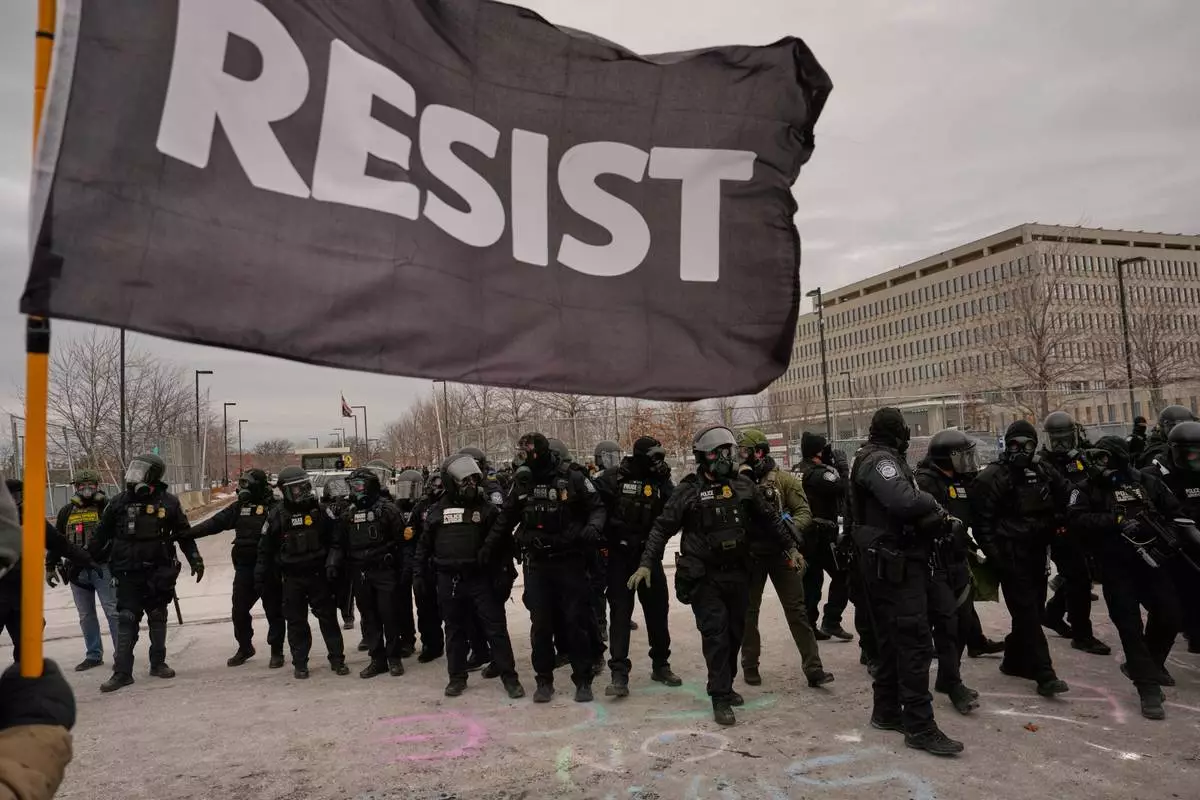
Federal immigration officers confront protesters outside Bishop Henry Whipple Federal Building, Thursday, Jan. 15, 2026, in Minneapolis. (AP Photo/John Locher)
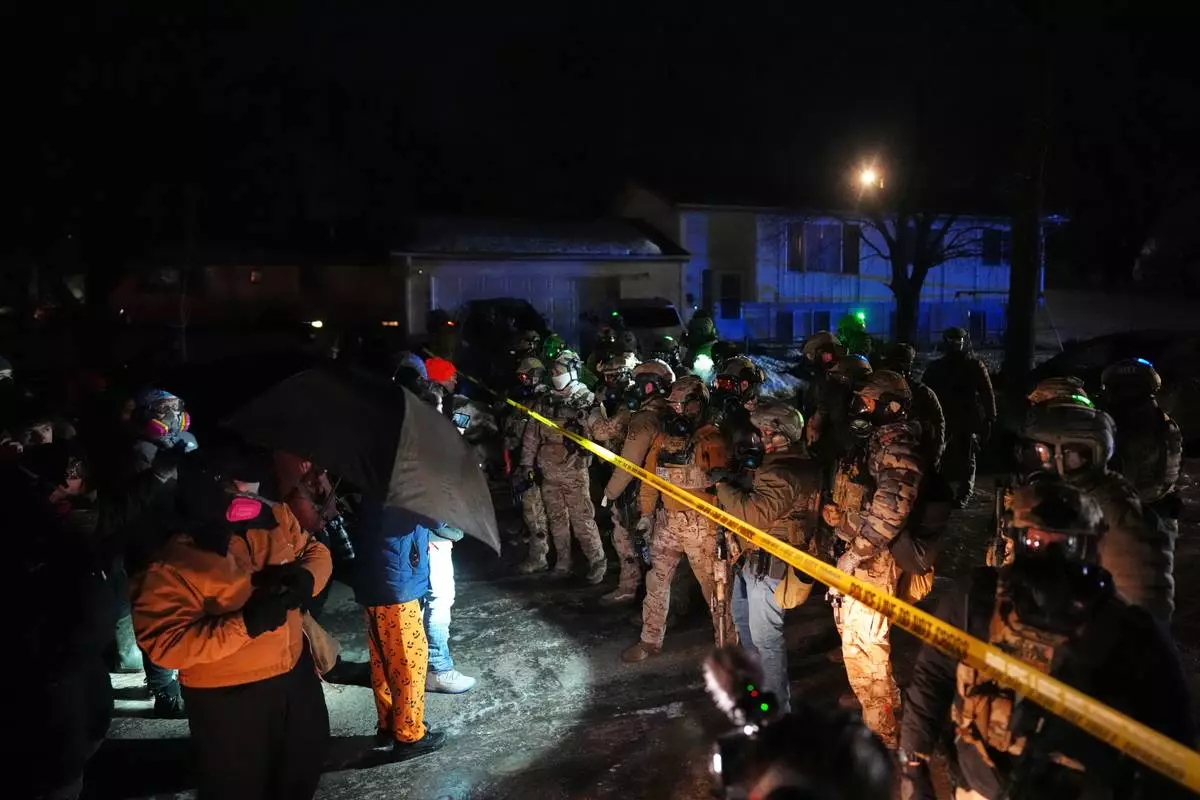
Law enforcement officers at the scene of a reported shooting Wednesday, Jan. 14, 2026, in Minneapolis. (AP Photo/Adam Gray)
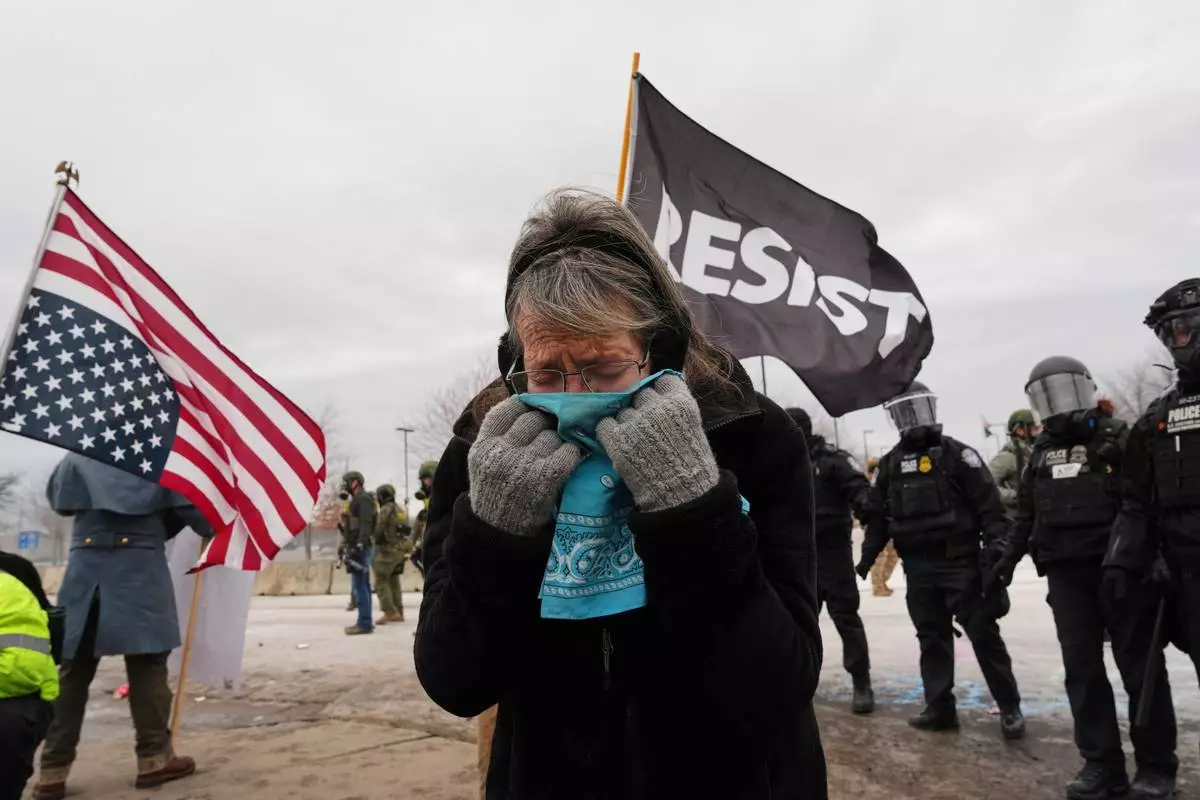
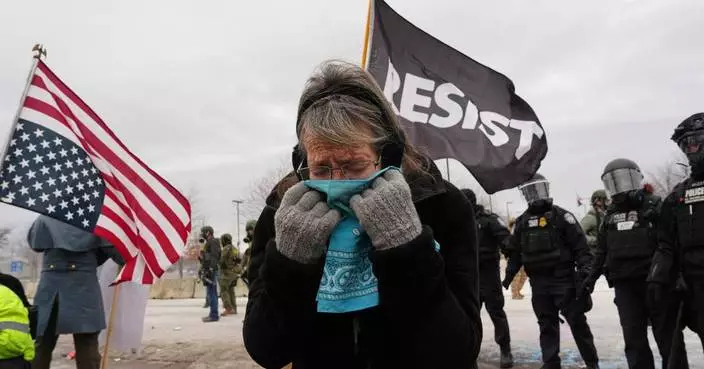
A woman covers her face from tear gas as federal immigration officers confront protesters outside Bishop Henry Whipple Federal Building, Thursday, Jan. 15, 2026, in Minneapolis. (AP Photo/Adam Gray)
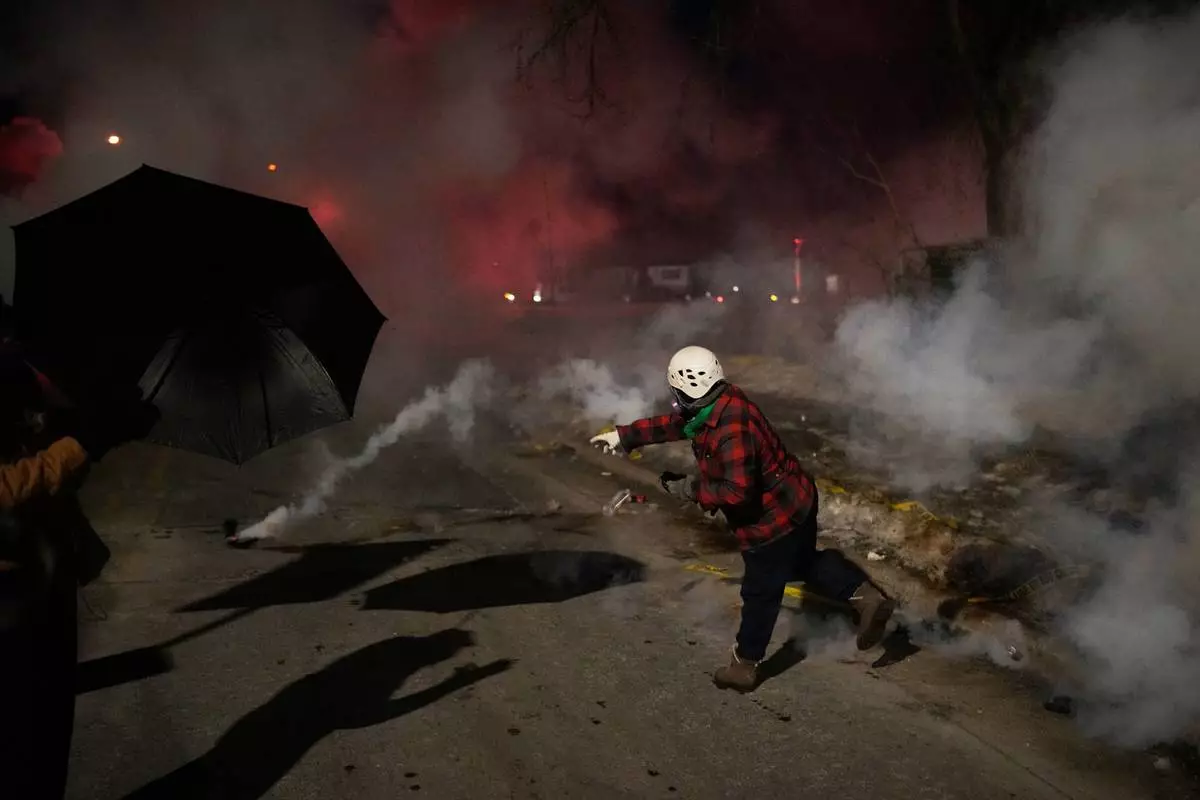
A protester throws back a tear gas canister during a protest after a shooting on Wednesday, Jan. 14, 2026, in Minneapolis. (AP Photo/John Locher)
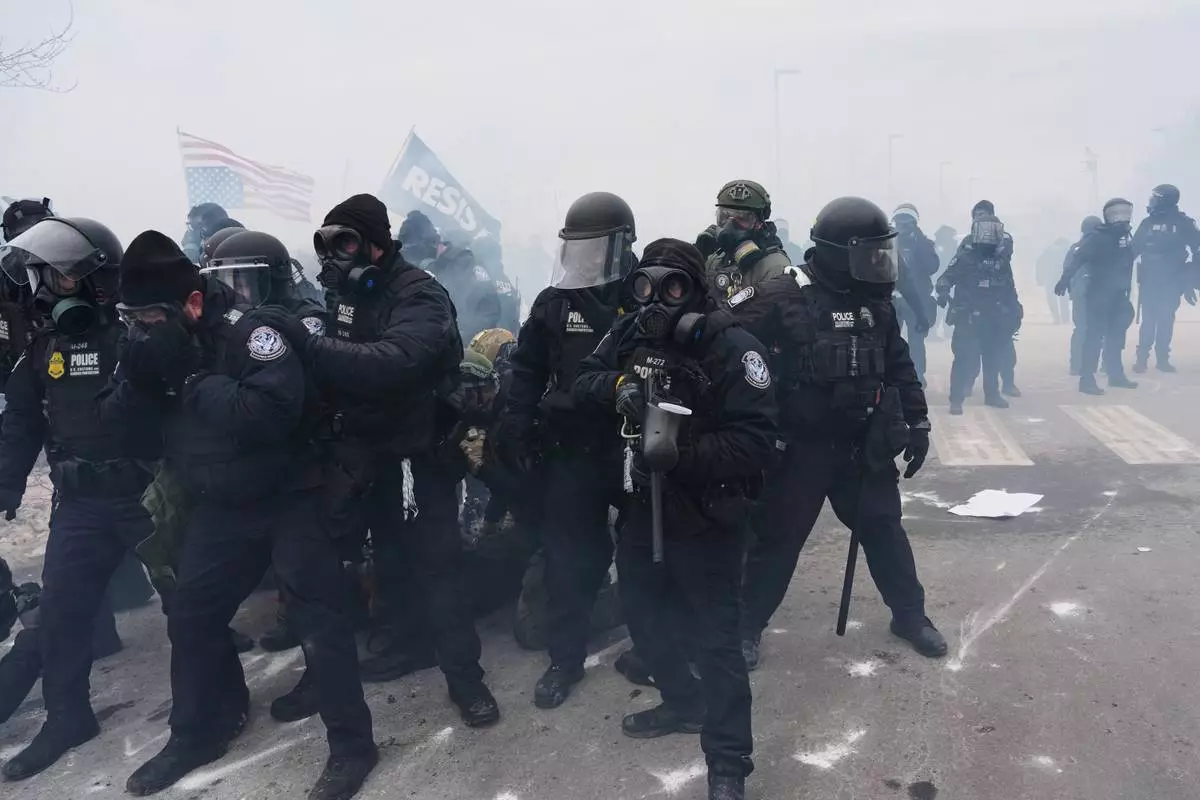
Federal immigration officers confront protesters outside Bishop Henry Whipple Federal Building, Thursday, Jan. 15, 2026, in Minneapolis. (AP Photo/Adam Gray)
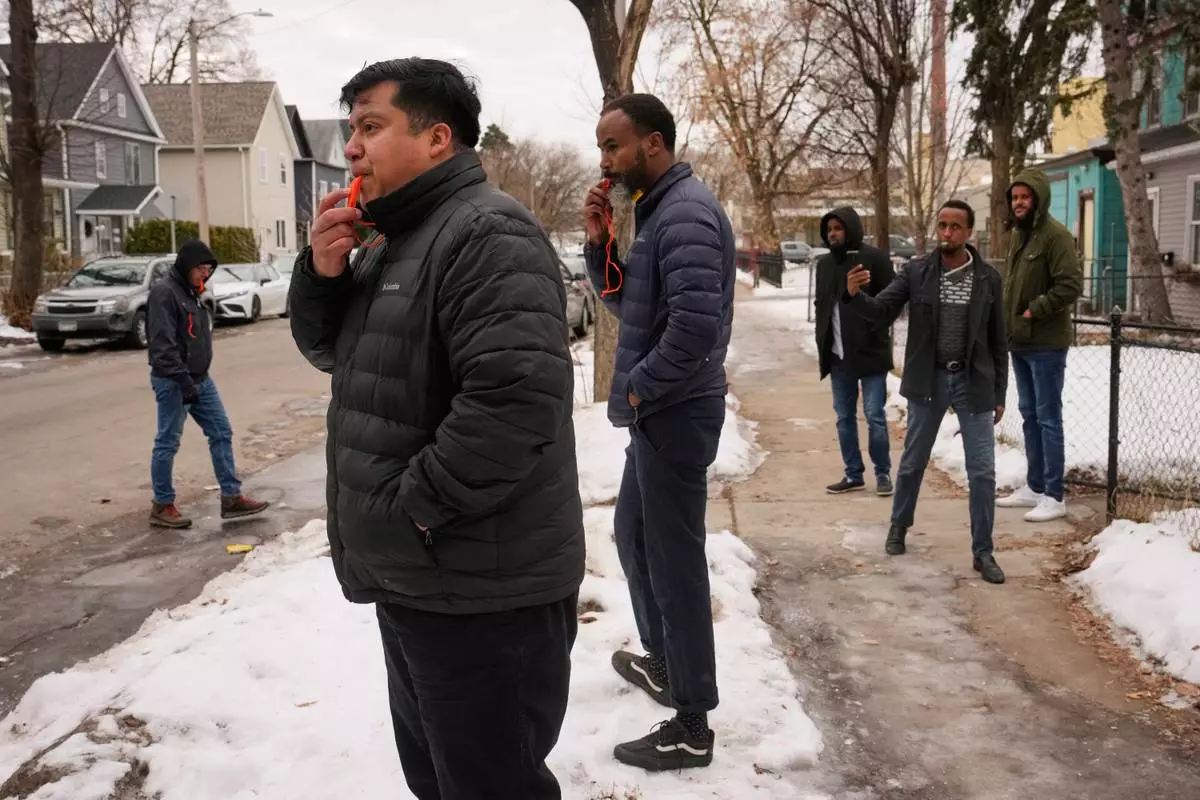
Minneapolis City Council Member Jason Chavez, second from left, blows a whistle with other activists to warn people of federal immigration officers Thursday, Jan. 15, 2026, in Minneapolis. (AP Photo/John Locher)
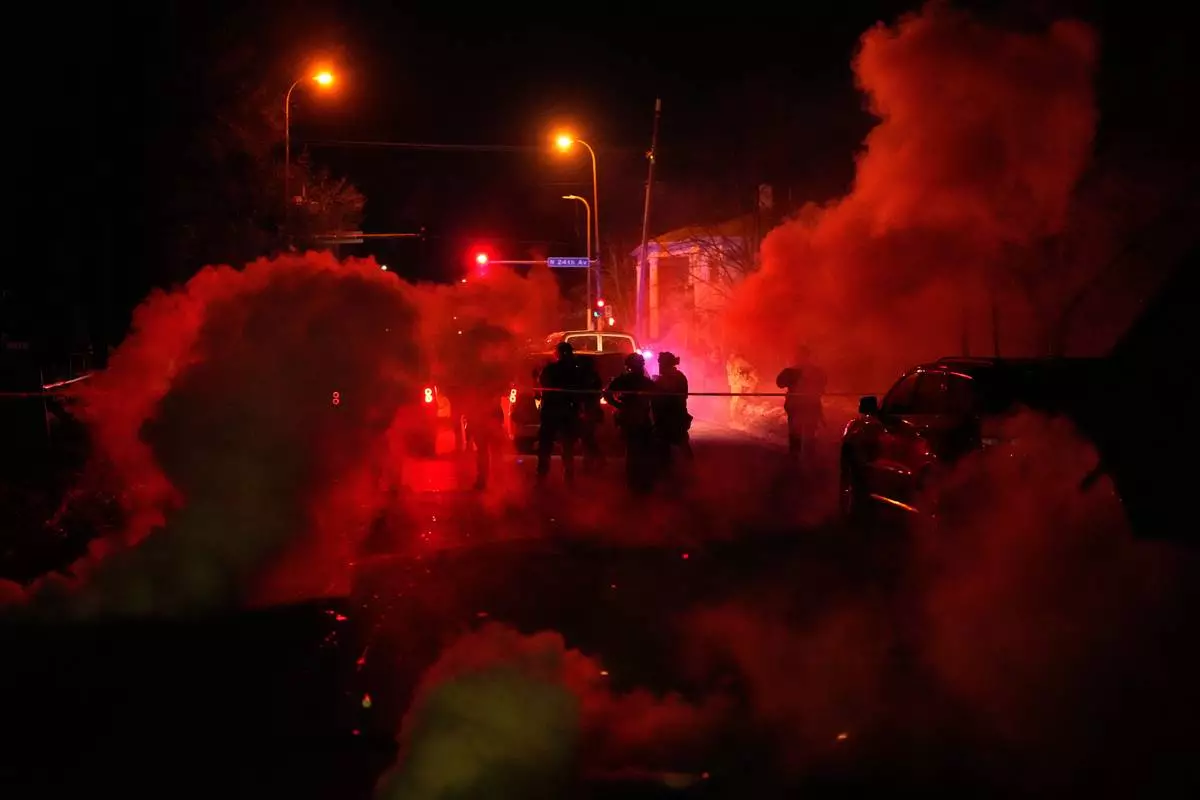
Tear gas surrounds federal law enforcement officers as they leave a scene after a shooting on Wednesday, Jan. 14, 2026, in Minneapolis. (AP Photo/John Locher)
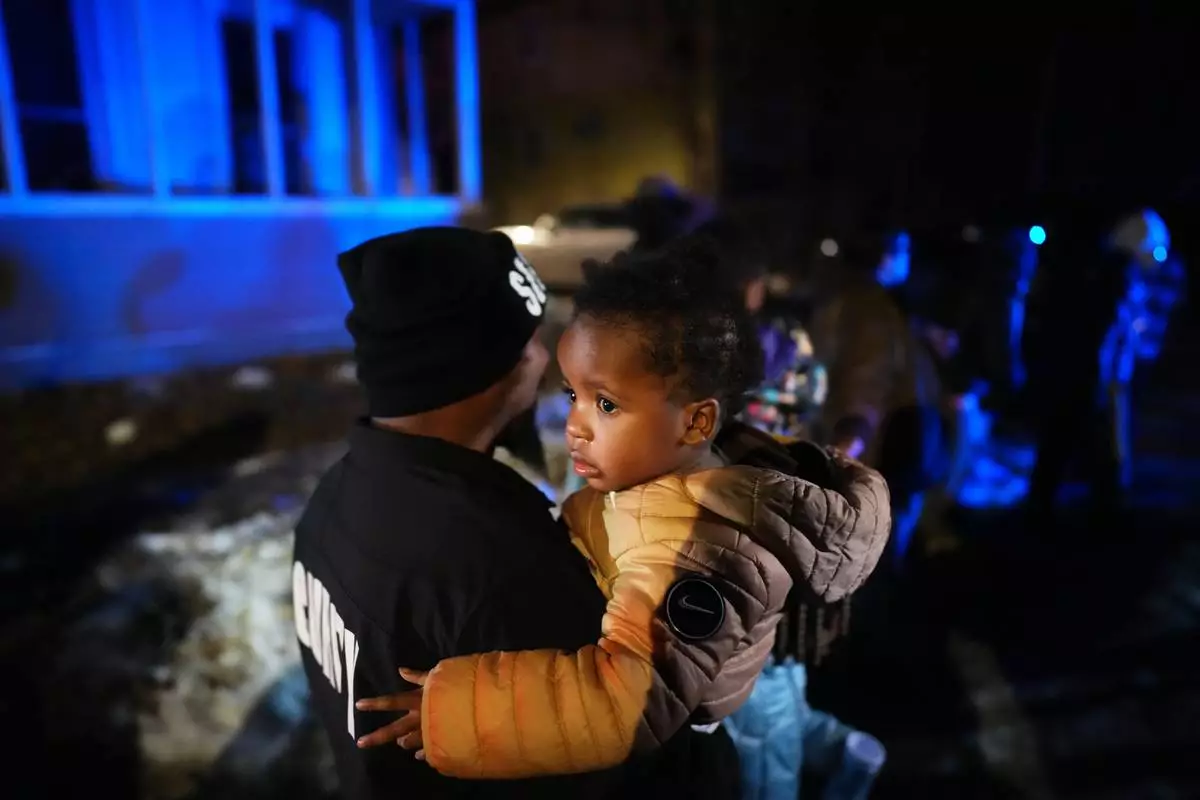
A child and family are escorted away after federal law enforcement deployed tear gas in a neighborhood during protests on Wednesday, Jan. 14, 2026, in Minneapolis. (AP Photo/Adam Gray)
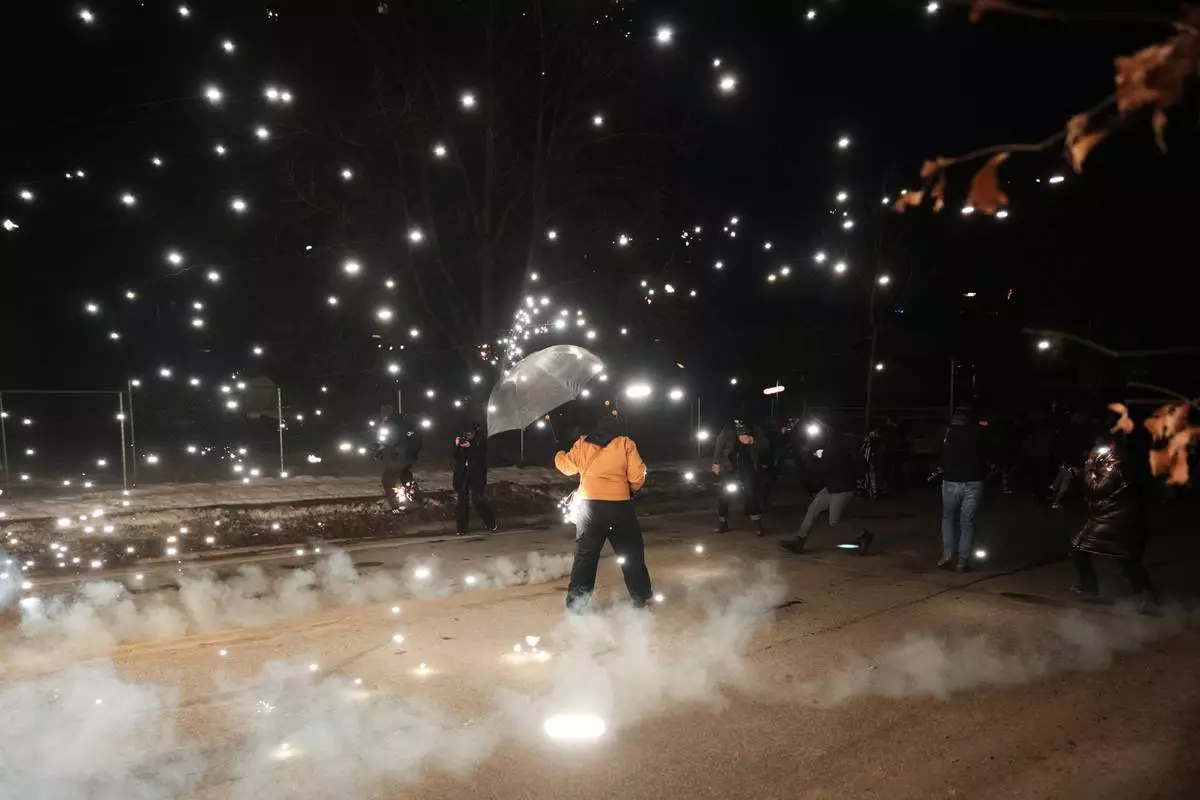
A protester holds an umbrella as sparks fly from a flash bang deployed by law enforcement on Wednesday, Jan. 14, 2026, in Minneapolis. (AP Photo/Adam Gray)
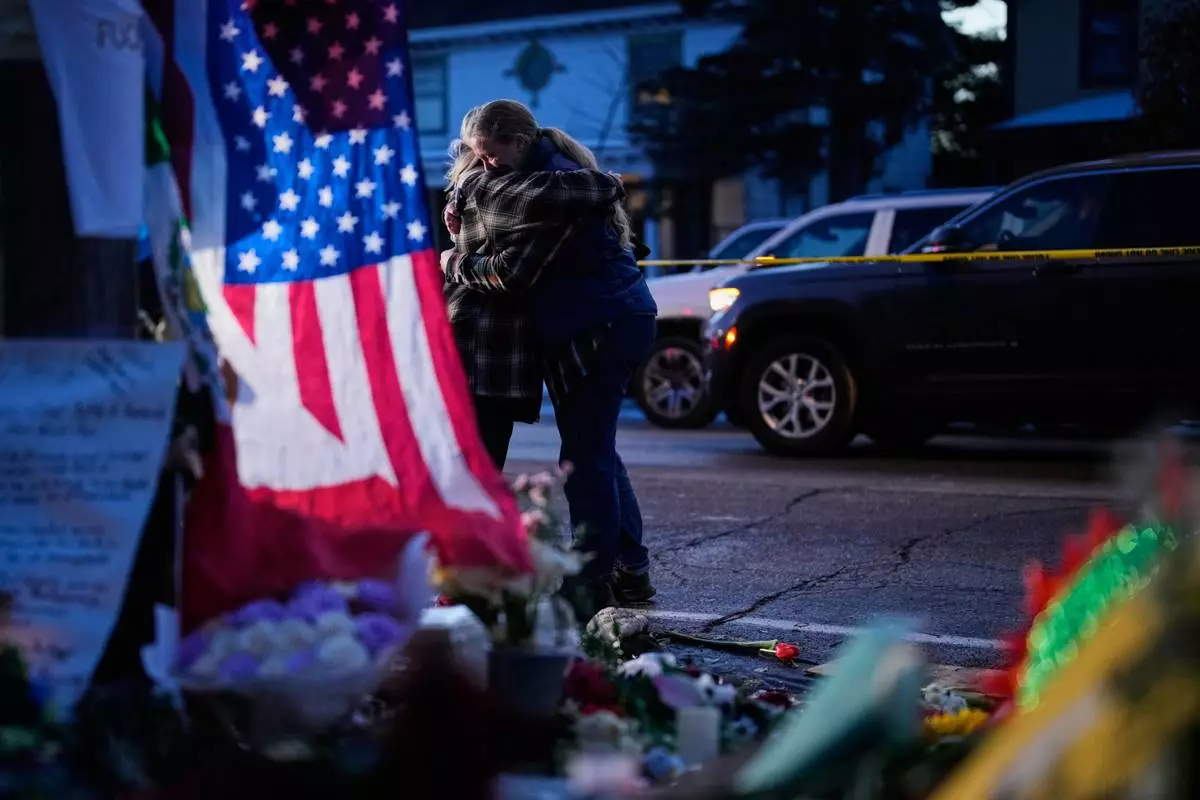
Monica Travis shares an embrace while visiting a makeshift memorial for Renee Good, who was fatally shot by an ICE officer last week, Monday, Jan. 12, 2026, in Minneapolis. (AP Photo/John Locher)
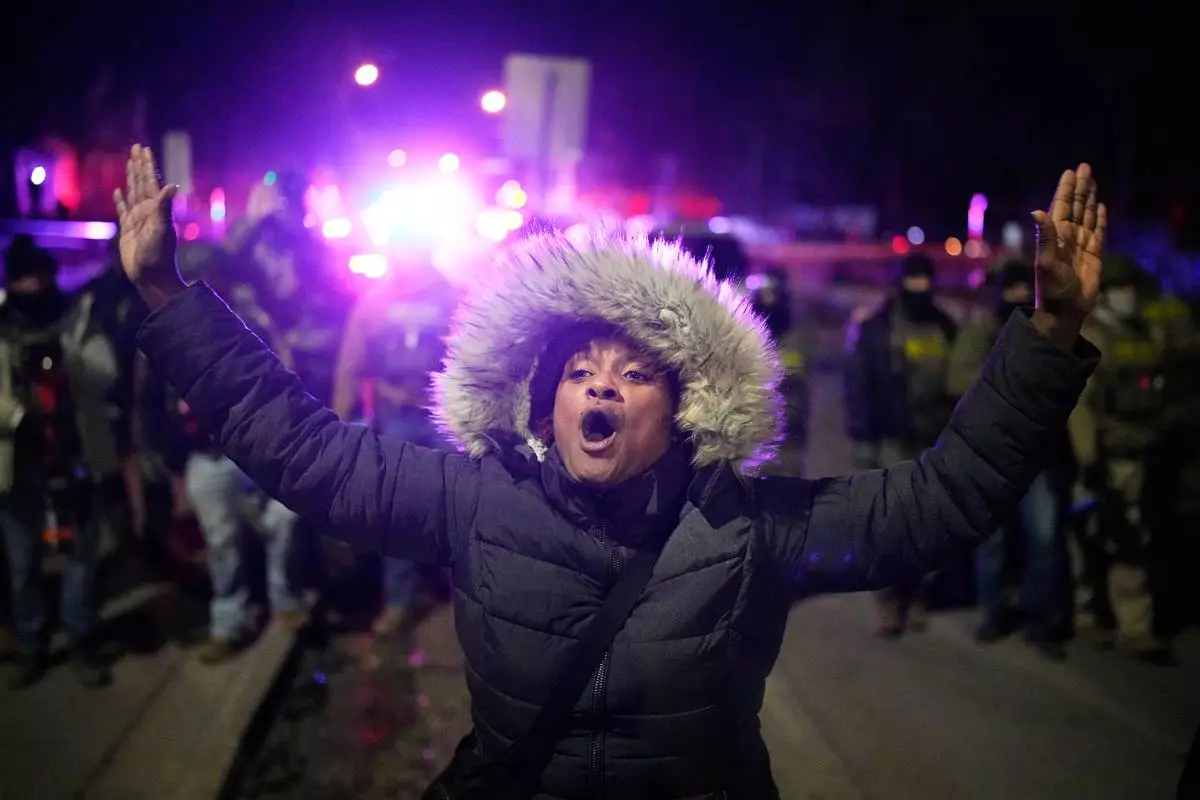
A protester yells in front of law enforcement after a shooting on Wednesday, Jan. 14, 2026, in Minneapolis. (AP Photo/John Locher)
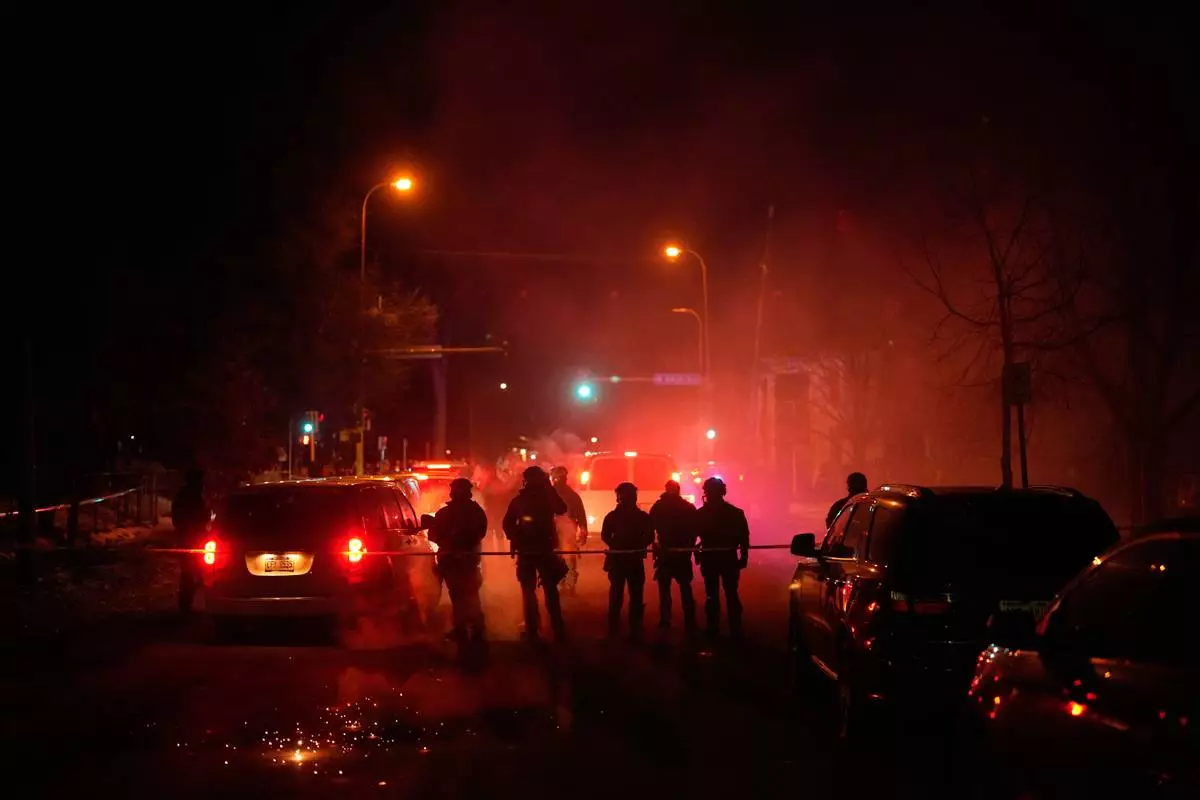
Tear gas surrounds federal law enforcement officers as they leave a scene after a shooting on Wednesday, Jan. 14, 2026, in Minneapolis. (AP Photo/John Locher)
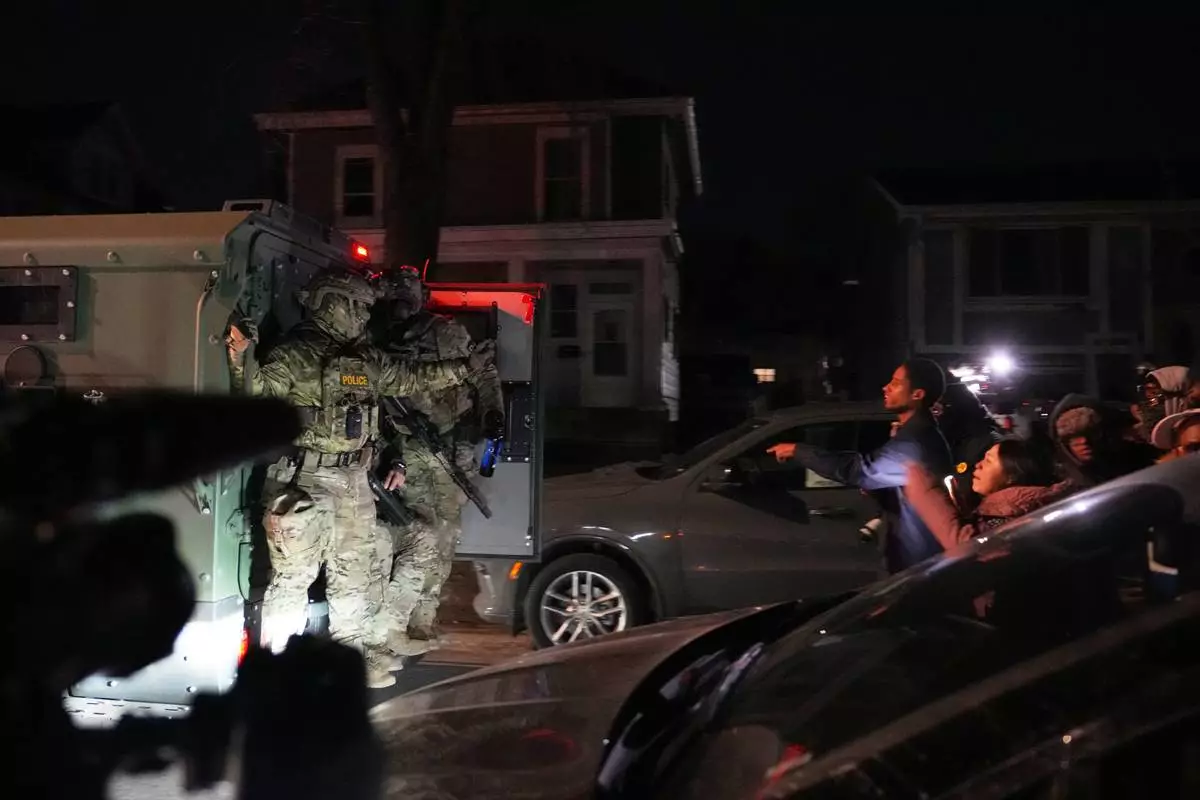
Protesters shout at law enforcement officers after a shooting on Wednesday, Jan. 14, 2026, in Minneapolis. (AP Photo/Abbie Parr)
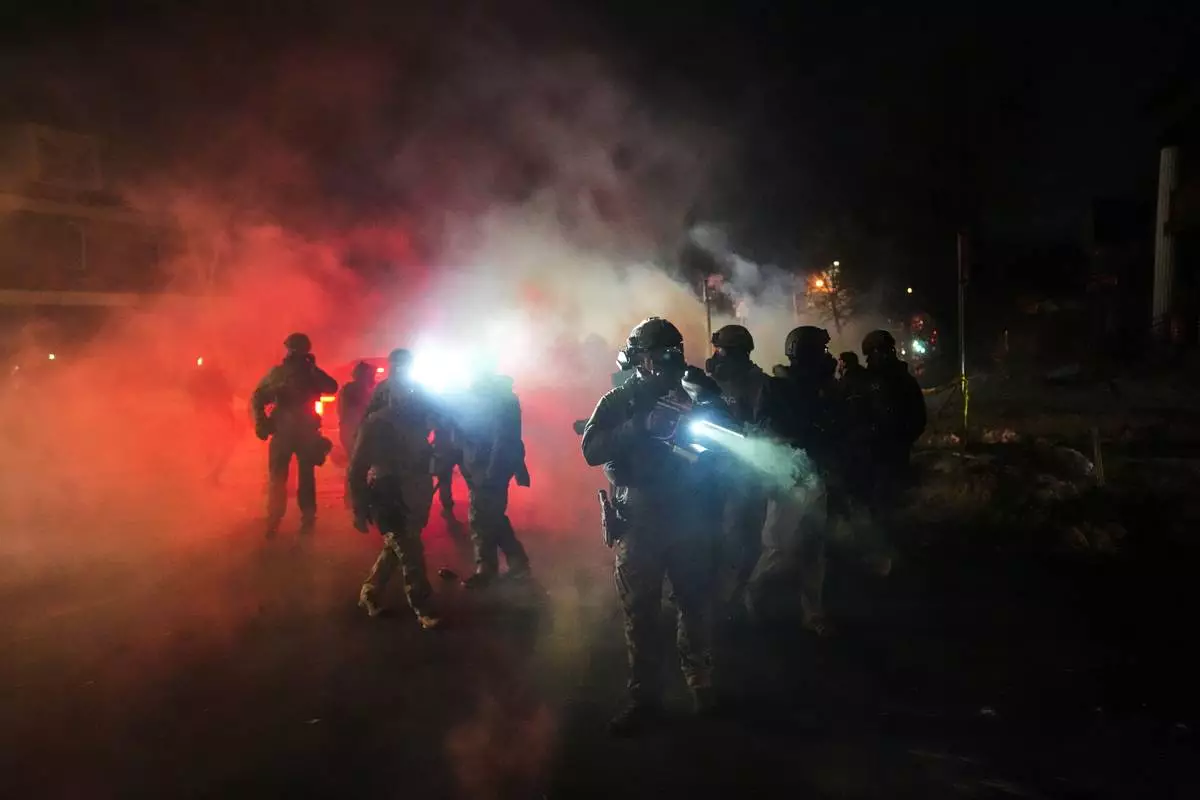
Law enforcement officers stand amid tear gas at the scene of a reported shooting Wednesday, Jan. 14, 2026, in Minneapolis. (AP Photo/Adam Gray)