BOISE, Idaho (AP) — Relatives of two of the four University of Idaho students murdered in 2022 have asked a judge to prevent the release of graphic crime scene photos and videos, saying that the images are traumatizing and making them public would violate their privacy.
Bryan Kohberger was sentenced to life without parole last month for the stabbing murders of Kaylee Goncalves, Madison Mogen, Xana Kernodle and Ethan Chapin at their off-campus rental home in Moscow, Idaho.
Even if crime scene images are somehow redacted, it's still traumatizing for the families, Ethan's mother, Stacy Chapin, wrote in a court document.
“They are heartbreaking and continue to reopen a wound that has yet to heal,” she wrote.
The criminal case drew worldwide attention, and the Moscow Police Department received hundreds of requests to release investigatory records. Idaho law generally allows for the sealing of investigation records to be lifted once a criminal investigation is complete.
After Kohberger's sentencing, the city of Moscow responded to one such request for public records by releasing photos and videos taken by law enforcement at the crime scene, blurring out the bodies of the slain students as well as the faces of other victims and witnesses who talked to police outside the home.
The images still showed blood on the floors and walls of the home, however, and the videos included the sounds of sobbing friends and roommates.
Leander James, an attorney representing family members of Mogen and Chapin, told 2nd District Judge Megan Marshall that the blurring was ineffective, that the blood should also have been hidden from public view, and that the sounds of distress should have been muted.
“Blurring is not redacting,” James said during a Thursday morning hearing. He asked the judge to carefully consider Stacy Chapin's statement, describing “how incredibly harmful and emotionally damaging it is for her to see images of her son and the other victims. They're in there, they're just blurred — they're harder to see.”
The commodification of the killings by a whole industry of people obsessed with crimes makes it even more important to consider how the families have been victimized again by the release of such gory images, James told the judge.
“Images like this are disseminated within an instant, worldwide,” James said, criticizing “this ‘true crime’ sort of industry that uses this stuff for economic gain, and misuses it."
Andrew Pluskal, an attorney representing the city of Moscow, said the city is required by law to release the images under the Idaho Public Records Act, and carefully weighed what to redact using the “balancing test” spelled out in the law, weighing the victims' right to privacy against the public's right to know.
“If there were options allowed in statute that allowed these records to be fired into the sun,” the city would do it, Pluskal told the judge. He called the images “harrowing.”
But he said the city could have been sued if it refused their release, and redacting or blurring the images was its best attempt to follow the law.
“The city is in the middle here — the city is going to get it from either side,” Pluskal told the judge.
Marshall said she would consider both sides and issue a ruling at a later date.
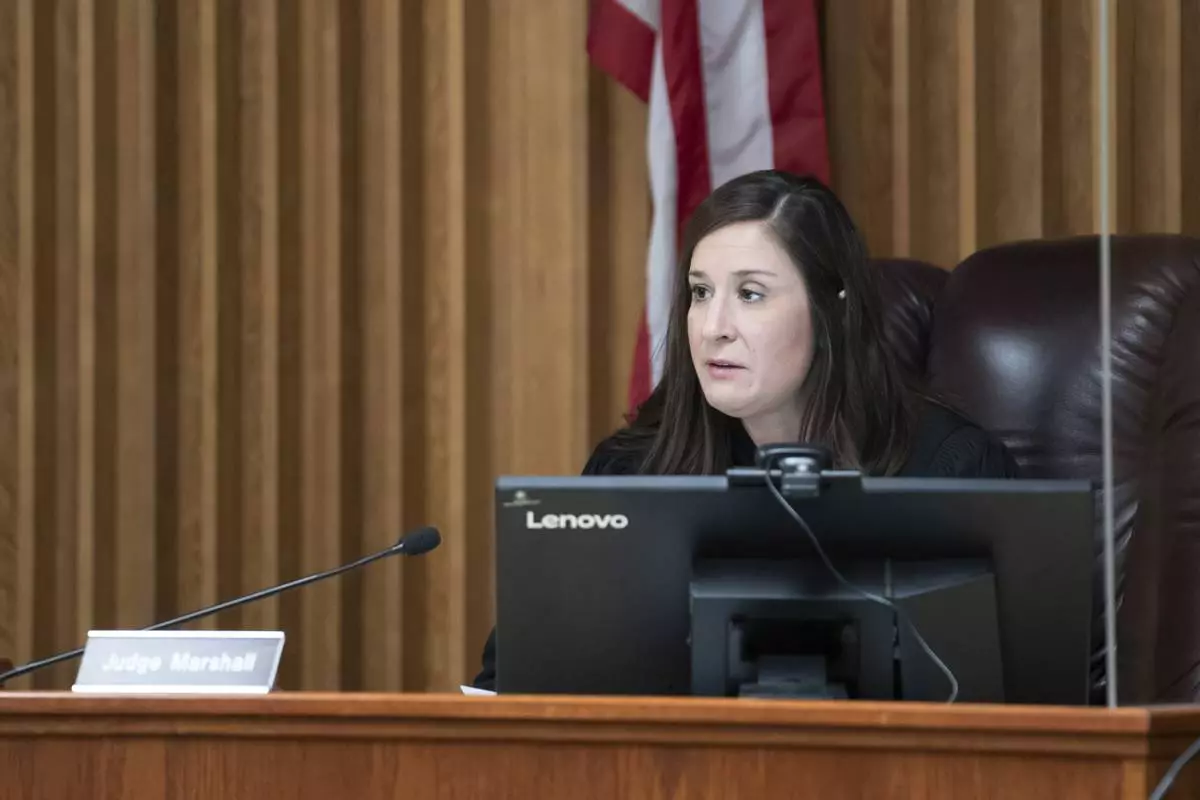
FILE - Latah County Magistrate Judge Megan Marshall presides over a hearing for Bryan Kohberger, Jan. 5, 2023, in Latah County District Court in Moscow, Idaho. (AP Photo/Ted S. Warren, Pool, File)
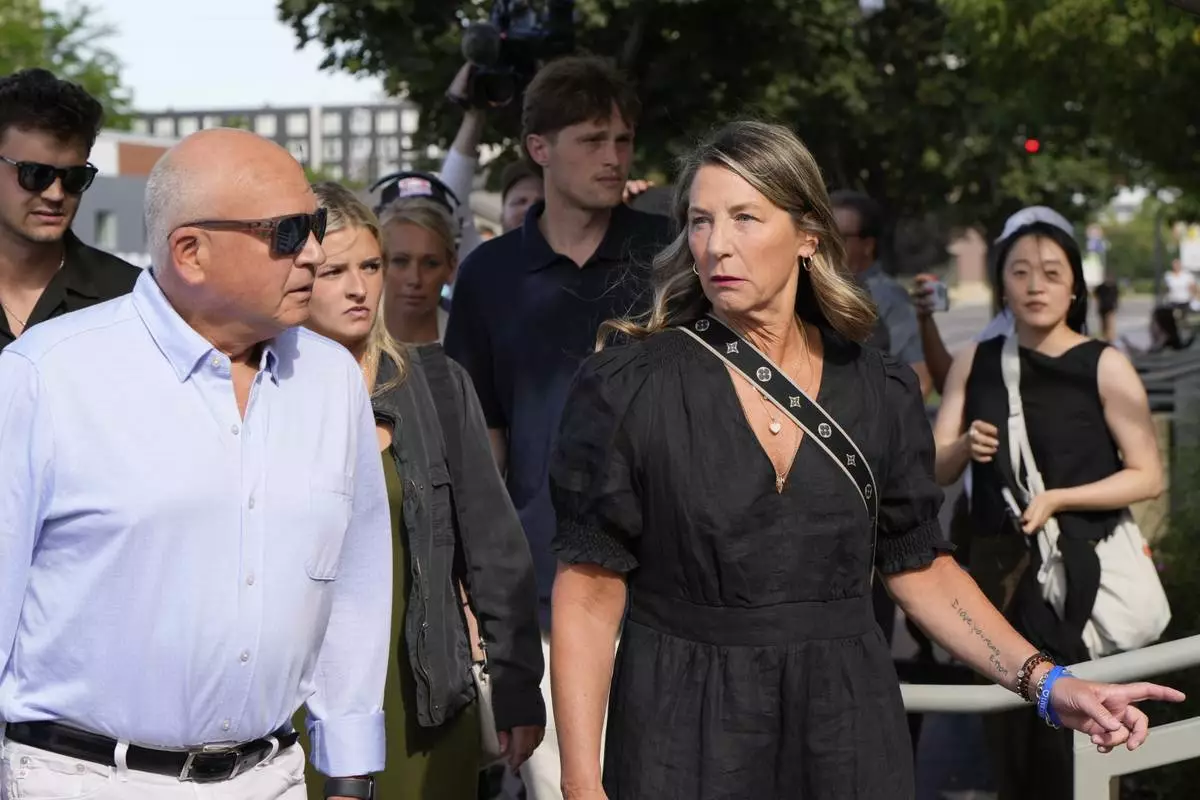
FILE - The family of Ethan Chapin, including mother Stacy Chapin, right, and father Jim Chapin, walk to the Ada County Courthouse for Bryan Kohberger's plea deal hearing, on July 2, 2025, in Boise, Idaho. (AP Photo/Jenny Kane, File)
CHERNIHIV, Ukraine (AP) — Young athletes in northern Ukraine spend their days cross-country skiing through a scorched forest, focused on their form — until a siren inevitably shatters the silence.
They respond swiftly but without panic, ditching their skis and following coaches to an underground bomb shelter.
It’s an ordinary training session at the complex that produced Ukraine’s first Olympic medalist.
Sleeping children no longer dream of Olympic glory in the facility's bombed-out dormitories, and unexploded ordnance has rendered nearby land off limits. But about 350 kids and teens — some of the nation's best young cross-country skiers and biathletes — still practice in fenced-off areas amid the sporadic buzz of drones passing overhead then explosions as they're shot down.
“We have adapted so well — even the children — that sometimes we don’t even react,” Mykola Vorchak, a 67-year-old coach, told The Associated Press in an interview on Oct. 31. “Although it goes against safety rules, the children have been hardened by the war. Adapting to this has changed them psychologically.”
War has taken a heavy toll on Ukrainian sport. Athletes were displaced or called up to fight. Soccer matches are often interrupted by air raid sirens so attendance is capped by bomb shelter capacity. Elite skaters, skiers and biathletes usually train abroad, with attacks and frequent blackouts shuttering local facilities.
But the government-run Sports Ski Base of the Olympic Reserve is open for cross-country skiing and biathlon, the event which combines skiing with shooting. The sprawling complex is on the outskirts of Chernihiv, a city two hours north of Kyiv along the path of destruction Russia's army left in its 2022 attempt to capture the capital. Chernihiv remains a regular target for air attacks aimed at the power grid and civilian infrastructure.
Several temporary structures at the sports center serve as changing rooms, toilets and coaches’ offices. Athletes train on snowy trails during the winter and, throughout the rest of the year, use roller skis on an asphalt track pocked by blast marks.
Biathletes aim laser rifles at electronic targets and, between shooting drills, sling skis over their shoulders and jog back to the start of the course, cheeks flushed from the cold.
Valentyna Tserbe-Nesina spent her adolescence at the Chernihiv center performing these same drills, and won bronze at the 1994 Winter Games in Lillehammer. It was Ukraine’s first Olympic medal as an independent country.
“The conditions weren’t great, but we had nothing better. And for us, it was like a family — our own little home,” she said inside her apartment, its shelves and walls lined with medals, trophies and souvenirs from competitions around the world.
Tserbe-Nesina, 56, was shocked when she visited the complex in 2022. Shelling had torn through buildings, fire had consumed others. Shattered glass littered the floors of rooms where she and friends once excitedly checked taped-up results sheets.
“I went inside, up to my old room on the second floor. It was gone — no windows, nothing,” she said. “I recorded a video and found the trophies we had left at the base. They were completely burned.”
Tserbe-Nesina has been volunteering to organize funerals for fallen Ukrainian soldiers in her hometown while her husband, a retired military officer, returned to the front. They see each other about once a year, whenever his unit allows him brief leave.
One adult who in 2022 completed a tour in a territorial defense unit of Ukraine’s army sometimes trains today alongside the center's youngsters. Khrystyna Dmytrenko, 26, will represent her country at the Milan Cortina Winter Olympics that start Feb. 6.
“Sports can show that Ukraine is strong,” Dmytrenko said in an interview next to the shooting range. “We represent Ukraine on the international stage, letting other countries, athletes and nations see our unity, strength and determination.”
The International Olympic Committee imposed bans and restrictions on Russian athletes after the invasion of Ukraine, effectively extending earlier sanctions tied to state‑sponsored doping. But a small group of them will participate in the upcoming Winter Games.
After vetting to ensure no military affiliation, they must compete without displaying any national symbols — and only in non-team events. That means Russian and Ukrainian athletes could face one another in some skating and skiing events. Moscow’s appeal at the federation level to allow its biathletes to compete is pending.
That's why many Ukrainians view training for these events as an act of defiance. Former Olympic biathlete Nina Lemesh, 52, noted that some young Ukrainians who first picked up rifles and skis at the Chernihiv ski base during wartime have become international champions in their age groups.
“Fortunately, Ukrainians remain here. They always will,” she said, standing beside the destroyed dormitories. “This is the next generation of Olympians.”
AP writer Derek Gatopoulos in Kyiv contributed to this report.
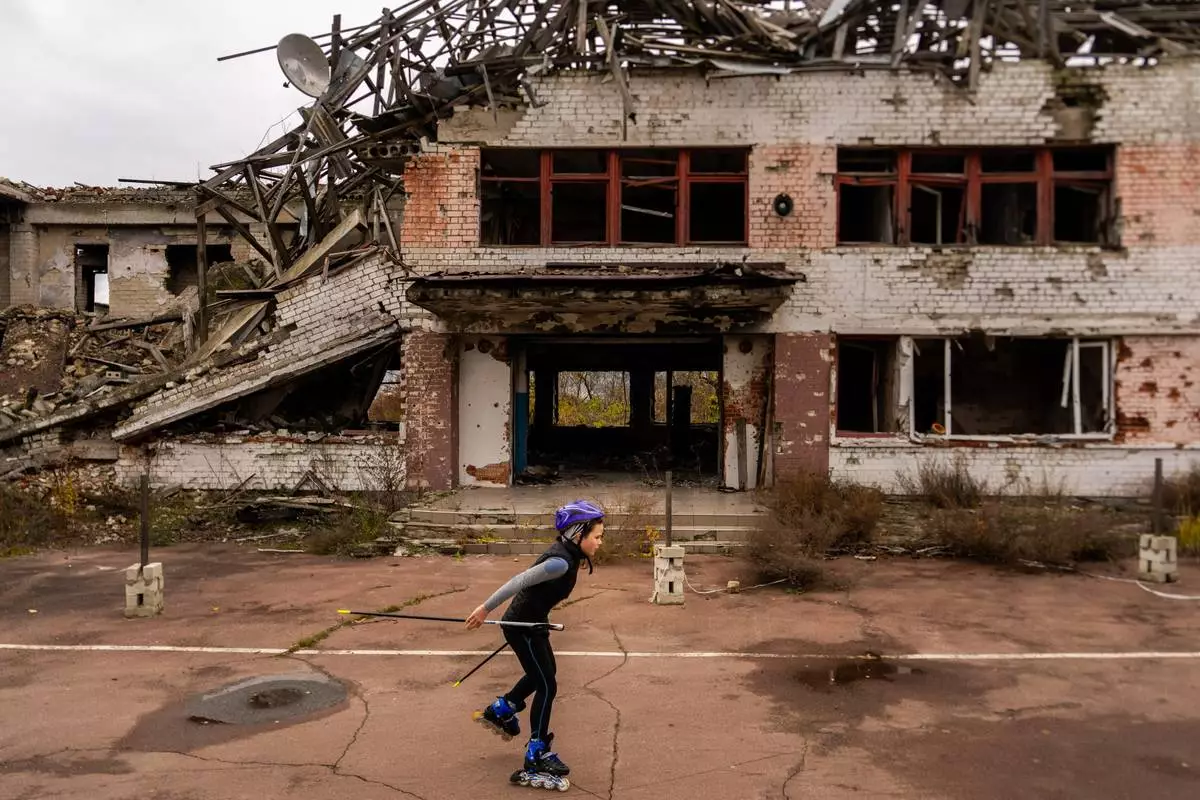
A young biathlete trains outside the destroyed ski base in Chernihiv, Ukraine, Thursday, Oct. 30, 2025. (AP Photo/Julia Demaree Nikhinson)
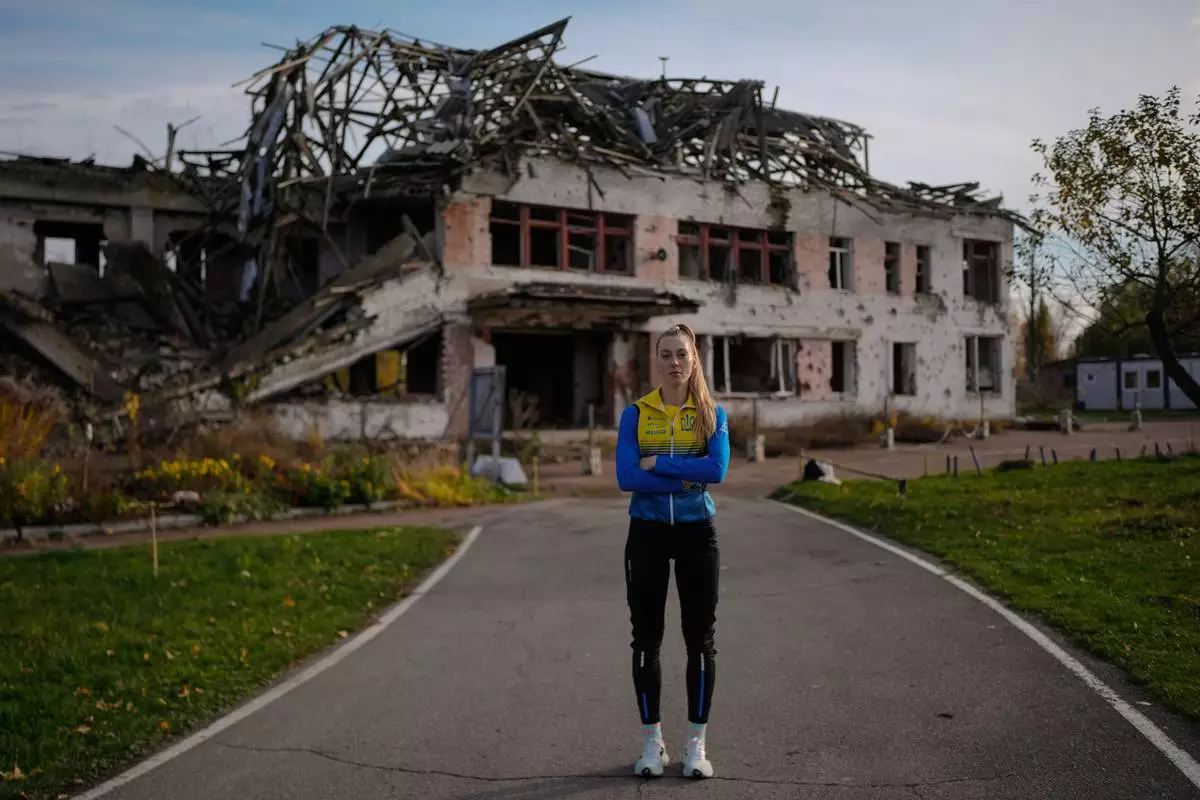
Biathlete Khrystyna Dmytrenko poses for photos outside the destroyed ski base in Chernihiv, Ukraine, Thursday, Oct. 30, 2025. (AP Photo/Julia Demaree Nikhinson)
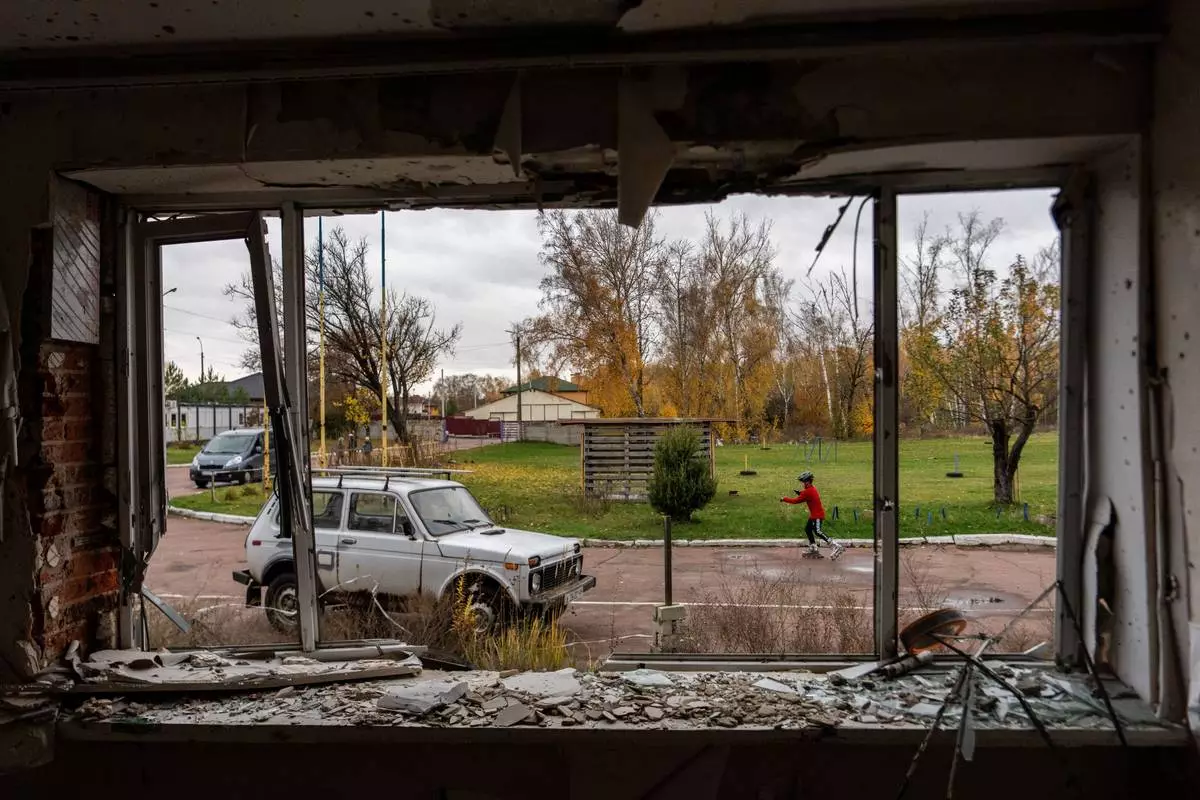
A young biathlete trains outside the destroyed ski base in Chernihiv, Ukraine, Thursday, Oct. 30, 2025. (AP Photo/Julia Demaree Nikhinson)
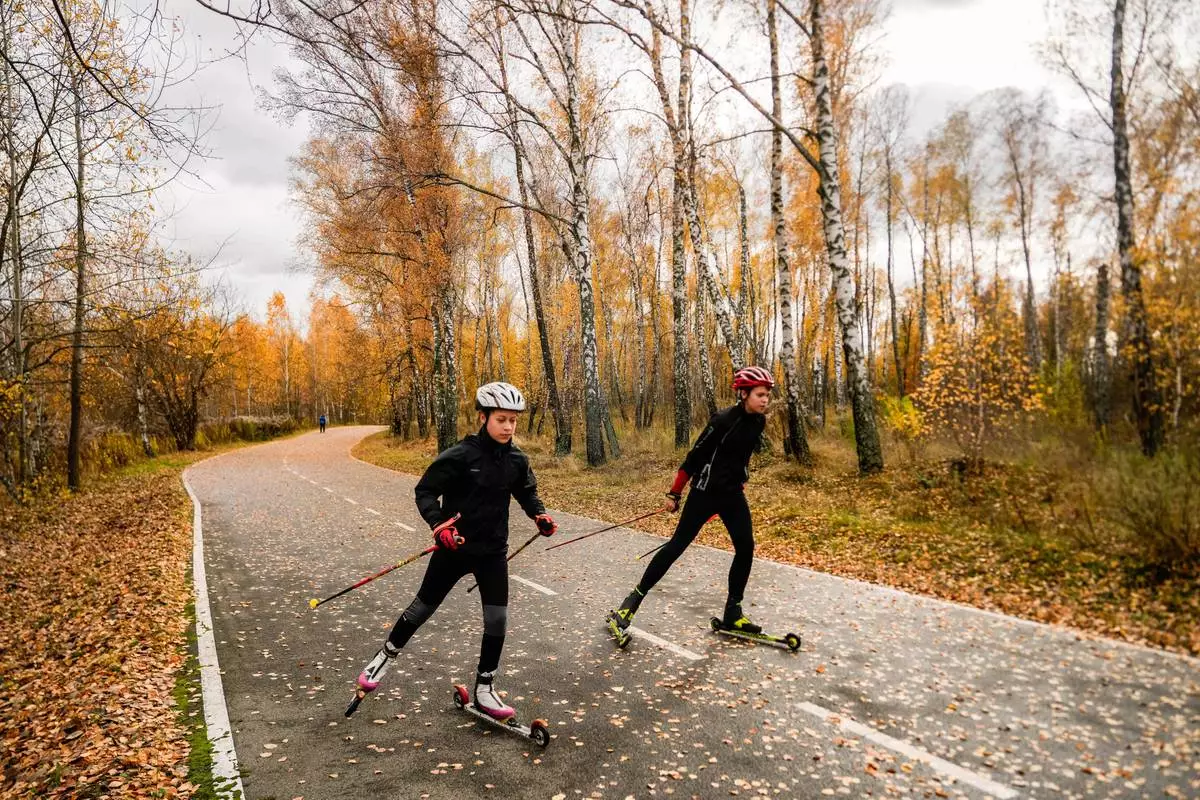
Biathletes Mykola Dorofeiev, 16, and Nazar Kravchenko, 12, left, train at the ski base in Chernihiv, Ukraine, Thursday, Oct. 30, 2025. (AP Photo/Julia Demaree Nikhinson)
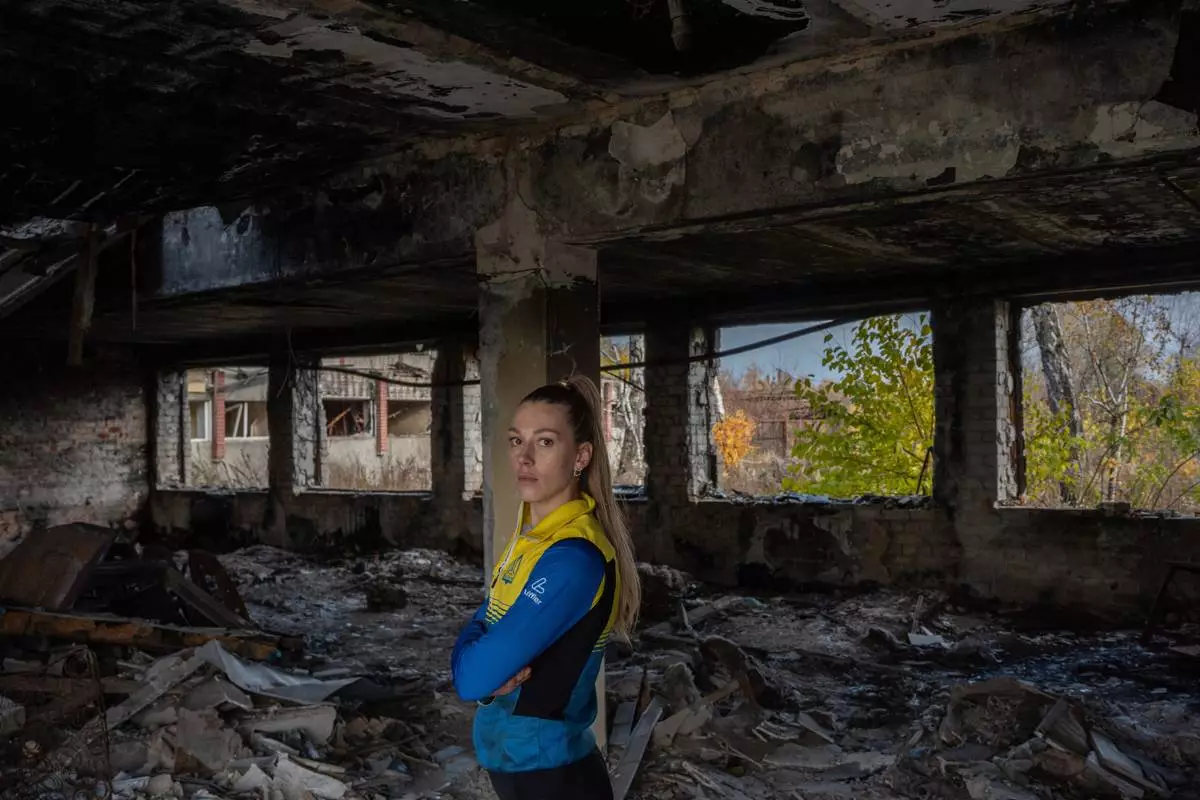
Biathlete Khrystyna Dmytrenko poses for photos inside the destroyed ski base in Chernihiv, Ukraine, Thursday, Oct. 30, 2025. (AP Photo/Julia Demaree Nikhinson)
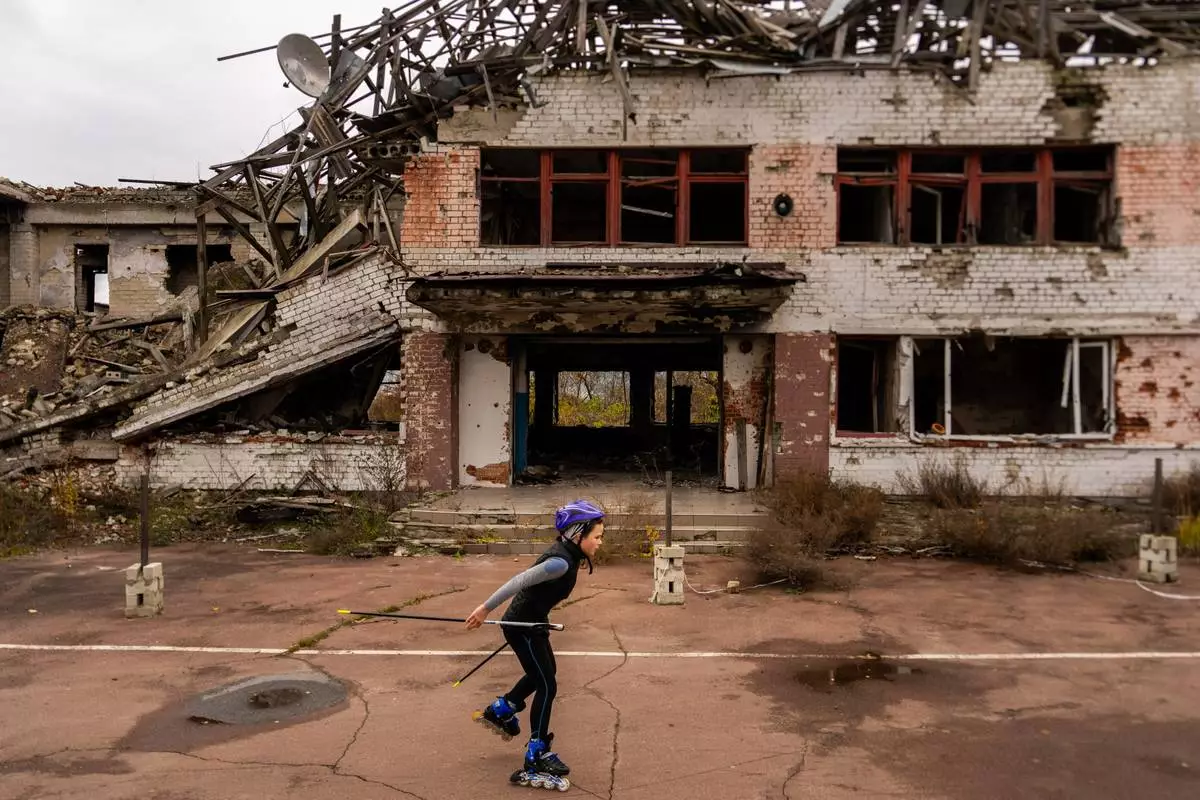
A young biathlete trains outside the destroyed ski base in Chernihiv, Ukraine, Thursday, Oct. 30, 2025. (AP Photo/Julia Demaree Nikhinson)