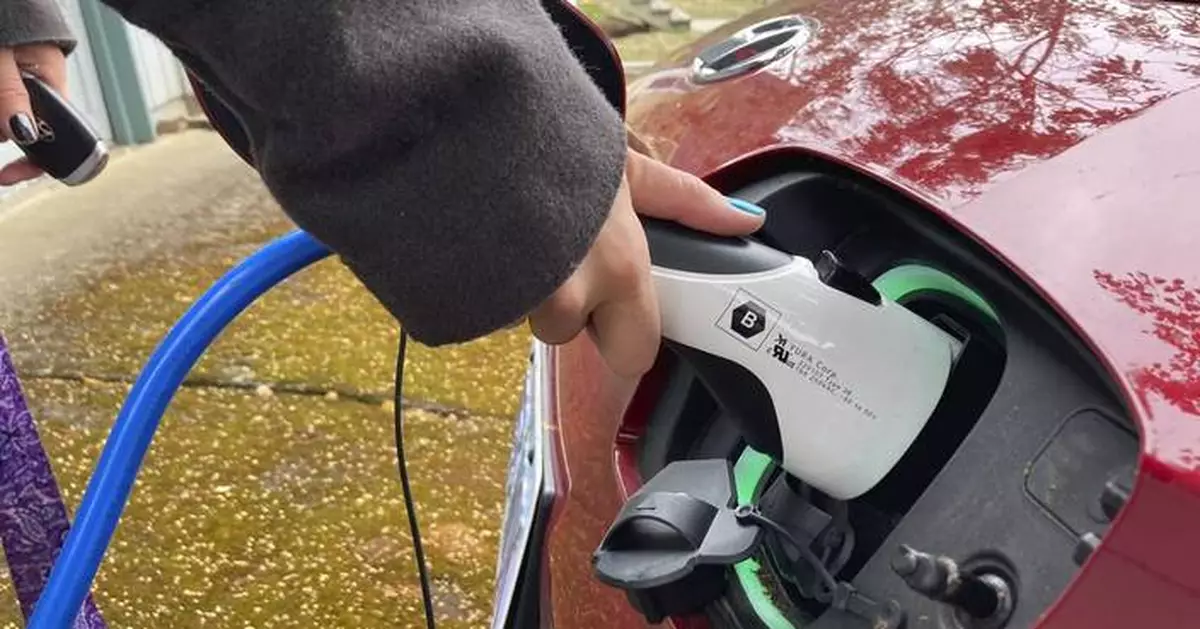
Oregon could become the second U.S. state to require electric vehicle owners to enroll in a pay-per-mile program as lawmakers began a special session Friday to fill a $300 million transportation budget hole that threatens basic services like snowplowing and road repairs.
However, the special session got off to a rocky start: The state Senate met as scheduled at 9 a.m., but the state House failed to reach the two-thirds quorum required to conduct business, leaving the session in limbo as of late Friday afternoon.
Legislators failed earlier this year to approve a transportation funding package. Hundreds of state workers' jobs are at risk, and the proposal for a road usage charge for EV drivers was left on the table.
Hawaii in 2023 was the first state to create a mandatory road usage charge program to make up for projected decreases in fuel tax revenue due to the growing number of electric, hybrid and fuel-efficient cars. Many other states have studied the concept, and Oregon, Utah and Virginia have voluntary programs.
The concept has promise as a long-term funding solution, experts say. Others worry about privacy concerns and discouraging people from buying EVs, which can help reduce transportation emissions.
“This is a pretty major change,” said Liz Farmer, an analyst for The Pew Charitable Trusts’ state fiscal policy team, noting “the challenge in enacting something that’s dramatically different for most drivers.”
Oregon's transportation department says the budget shortfall stems from inflation, projected declines in gas tax revenue and other spending limits. Over the summer, it sent layoff notices to nearly 500 workers and announced plans to close a dozen road maintenance stations.
Democratic Gov. Tina Kotek paused those moves and called the special session to find a solution. Republican lawmakers say the department mismanaging its money is a main issue.
Kotek's proposal includes an EV road usage charge that is equivalent to 5% of the state's gas tax. It also includes raising the gas tax by 6 cents to 46 cents per gallon, among other fee increases.
The usage charge would phase in starting in 2027 for certain EVs and expand to include hybrids in 2028. Should the gas tax increase be approved, EV drivers either would pay about 2.3 cents per mile, or choose an annual flat fee of $340. Drivers in the program wouldn't have to pay supplemental registration fees.
Drivers would have several options for reporting mileage to private contractors, including a smartphone app or the vehicle's telematics technology, said Scott Boardman, policy adviser for the transportation department who works on the state's decade-old voluntary road usage charge program.
Republican lawmakers, who have opposed the tax and fee increases, unveiled a different proposal Friday that largely focuses on lifting funding restrictions to allow the transportation department to spend more money on maintenance operations, including by redirecting dollars earmarked for public transit and efforts to combat climate change toward such operations. It does not include a road usage charge.
As of May, there were over 84,000 EVs registered in Oregon, about 2% of the state's total vehicles, he said.
Under Hawaii's program, which began phasing in last month, EV drivers can pay $8 per 1,000 miles driven, capped at $50, or an annual fee of $50.
In 2028, all EV drivers will be required to enroll in the pay-per-mile program, with odometers read at annual inspections. By 2033, the program is expected to expand to all light-duty vehicles.
In past surveys commissioned by Oregon's transportation department, respondents cited privacy, GPS devices and data security as concerns about road usage charges.
Oregon's voluntary program has sought to respond to such concerns by deleting mileage data 30 days after a payment is received, Boardman said. While plug-in GPS devices are an option in the program, transportation officials anticipate moving away from them because they're more expensive and can be removed, he added.
Still, not everyone has embraced a road usage charge. Arizona voters will decide next year whether to ban state and local governments from implementing a tax or fee based on miles traveled after the measure was referred to the ballot by the Republican-majority Legislature.
Many people don't realize that "both your vehicle and your cellphone capture immense amounts of data about your personal driving habits already,” said Brett Morgan, Oregon transportation policy director for the nonprofit Climate Solutions.
Morgan added that road usage charges exceeding what drivers of internal combustion engines would pay in gas taxes could dissuade people from buying electric and hybrid cars. Already, federal tax incentives for EVs are set to expire under the tax and spending cut bill recently passed by the GOP-controlled Congress.
“We are definitely supportive of a road usage charge that has EVs paying their fair share, but they should not be paying extra or a penalty,” Morgan said.
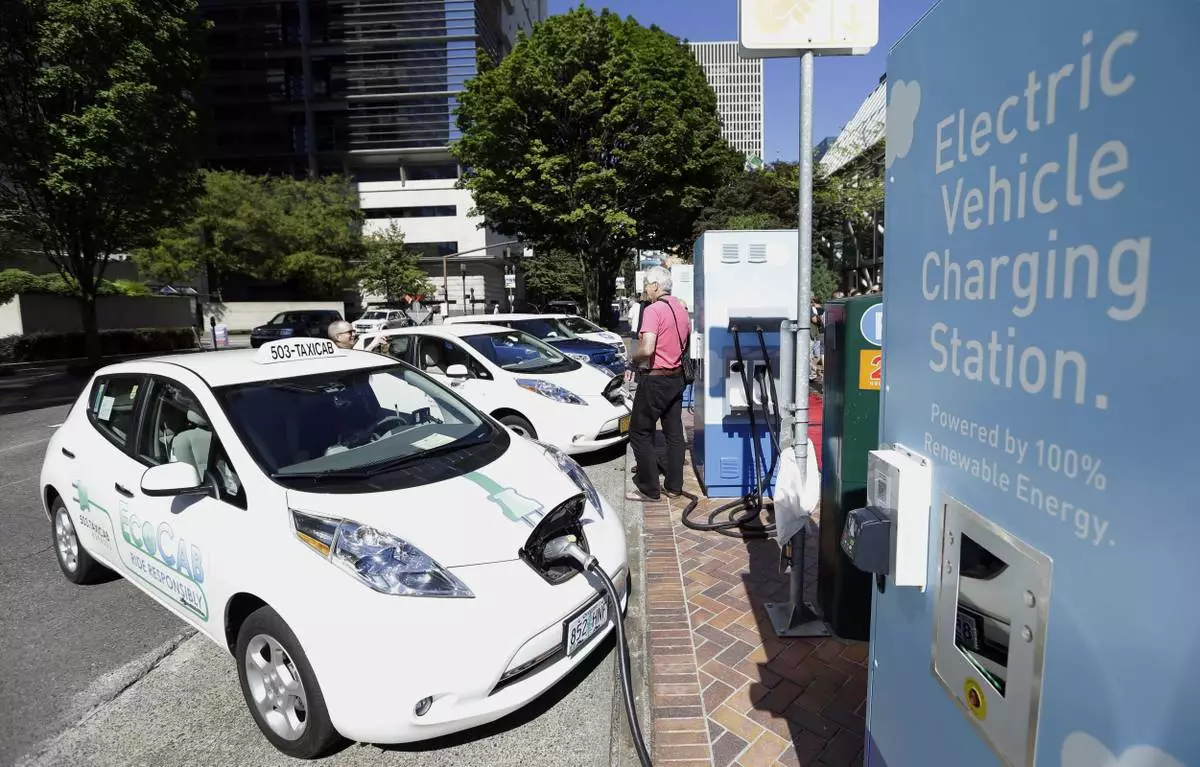
FILE - A line of electric cars and newly installed charging stations sit in front of the Portland General Electric headquarters building on July 28, 2015, in Portland, Ore. (AP Photo/Don Ryan, File)
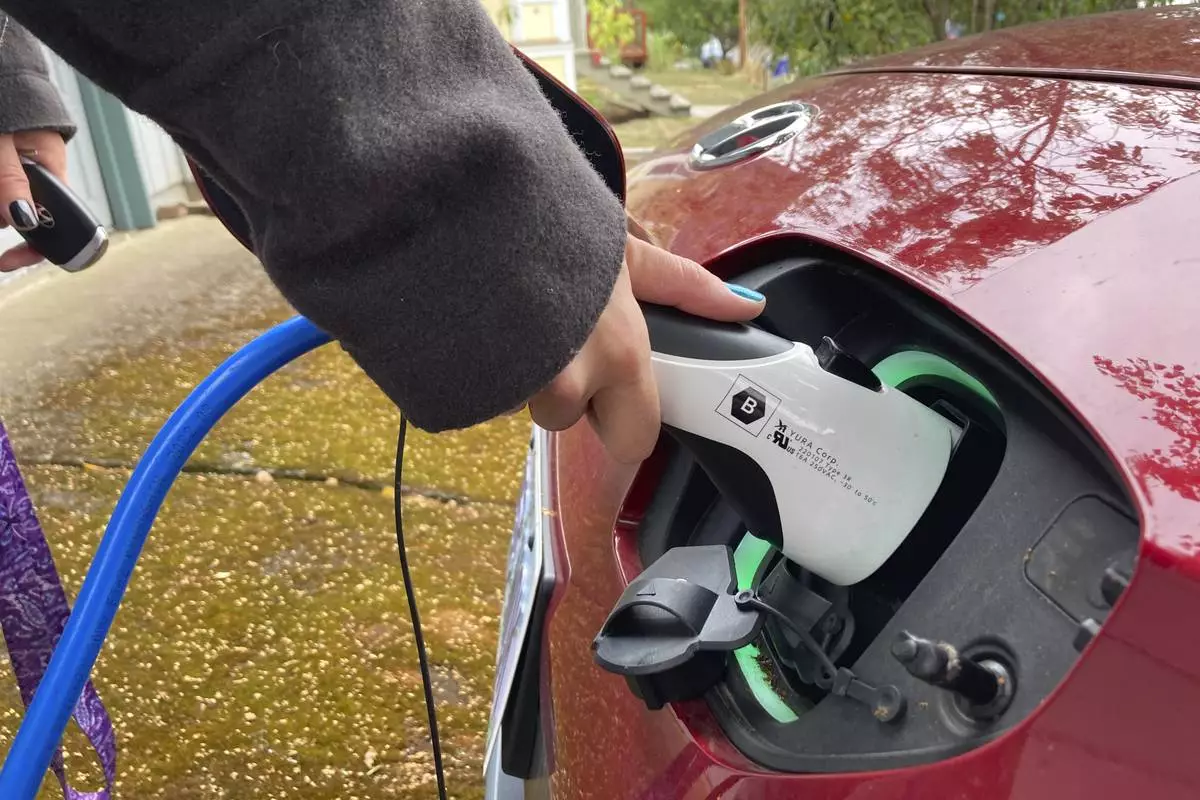
FILE - Rebecca DeWhitt charges her electric vehicle on Sept. 30, 2022, in the driveway of the Portland, Ore., home she rents. (AP Photo/Gillian Flaccus, File)
MINNEAPOLIS (AP) — President Donald Trump on Thursday threatened to invoke an 1807 law and deploy troops to quell persistent protests against the federal officers sent to Minneapolis to enforce his administration's massive immigration crackdown.
The threat comes a day after a man was shot and wounded by an immigration officer who had been attacked with a shovel and broom handle. That shooting further heightened the fear and anger that has radiated across the city since an Immigration and Customs Enforcement agent fatally shot Renee Good in the head.
Trump has repeatedly threatened to invoke the Insurrection Act, a rarely used federal law, to deploy the U.S. military or federalize the National Guard for domestic law enforcement, over the objections of state governors.
“If the corrupt politicians of Minnesota don’t obey the law and stop the professional agitators and insurrectionists from attacking the Patriots of I.C.E., who are only trying to do their job, I will institute the INSURRECTION ACT, which many Presidents have done before me, and quickly put an end to the travesty that is taking place in that once great State,” Trump said in social media post.
Presidents have invoked the law more than two dozen times, most recently in 1992 by President George H.W. Bush to end unrest in Los Angeles. In that instance, local authorities had asked for the assistance.
“I’m making a direct appeal to the President: Let’s turn the temperature down. Stop this campaign of retribution. This is not who we are,” Gov. Tim Walz, a Democrat, said on X.
Minnesota Attorney General Keith Ellison said he would challenge any such action in court. He's already suing to try to stop the surge by the Department of Homeland Security, which says officers have arrested more than 2,500 people since Nov. 29 as part of an immigration operation in the Twin Cities called Metro Surge.
The operation grew when ICE sent 2,000 officers and agents to the area early in January. ICE is a DHS agency.
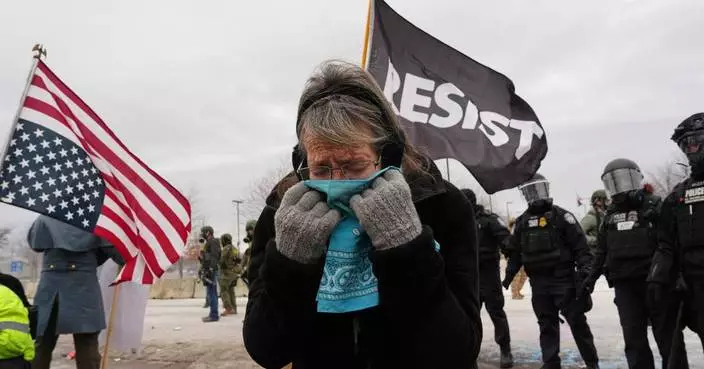
In Minneapolis, smoke filled the streets Wednesday night near the site of the latest shooting as federal officers wearing gas masks and helmets fired tear gas into a small crowd. Protesters responded by throwing rocks and shooting fireworks.
Demonstrations have become common in Minneapolis since Good was fatally shot on Jan. 7. Agents who have yanked people from their cars and homes have been confronted by angry bystanders demanding they leave.
“This is an impossible situation that our city is presently being put in and at the same time we are trying to find a way forward to keep people safe, to protect our neighbors, to maintain order,” Minneapolis Mayor Jacob Frey said.
The American Civil Liberties Union of Minnesota filed a class-action lawsuit on behalf of three people who said they were questioned or detained in recent days. The lawsuit says two are Somali and one is Hispanic; all three are U.S. citizens. The lawsuit seeks an end to what the ACLU describes as a practice of racial profiling and warrantless arrests. The government did not immediately comment.
Homeland Security said in a statement that federal law enforcement officers on Wednesday stopped a driver from Venezuela who is in the U.S. illegally. The person drove off then crashed into a parked car before fleeing on foot, DHS said.
Officers caught up, then two other people arrived and the three started attacking the officer, according to DHS.
“Fearing for his life and safety as he was being ambushed by three individuals, the officer fired a defensive shot to defend his life,” DHS said. The confrontation took place about 4.5 miles (7.2 kilometers) from where Good was killed.
Police chief Brian O’Hara said the man who was shot did not have a life-threatening injury. O’Hara's account of what happened largely echoed that of Homeland Security, which later said the other two men were also in the U.S. illegally from Venezuela.
The FBI said several government vehicles were damaged and property inside was stolen when agents responded to the shooting. Photos show broken windows and insults made with paint. A reward of up to $100,000 is being offered for information. The FBI’s Minneapolis office did not immediately reply to messages seeking more details.
St. Paul Public Schools, with more than 30,000 students, said it would begin offering an online learning option for students who do not feel comfortable coming to school. Schools will be closed next week until Thursday to prepare for those accommodations.
Minneapolis Public Schools, which has a similar enrollment, is also offering temporary remote learning. The University of Minnesota will start a new term next week with different options depending on the class.
Madhani reported from Washington, D.C. Associated Press reporters Sophia Tareen in Chicago; Bill Barrow in Atlanta; Rebecca Santana in Washington; and Ed White in Detroit contributed.
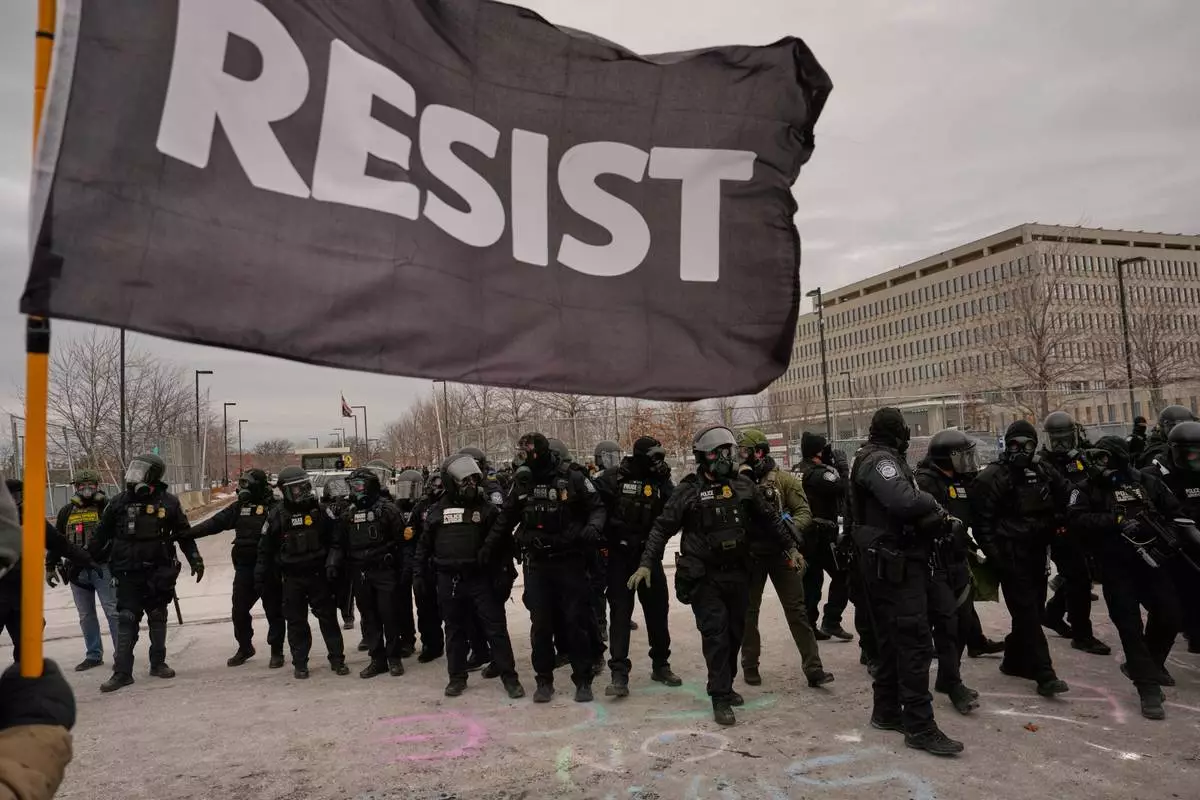
Federal immigration officers confront protesters outside Bishop Henry Whipple Federal Building, Thursday, Jan. 15, 2026, in Minneapolis. (AP Photo/John Locher)
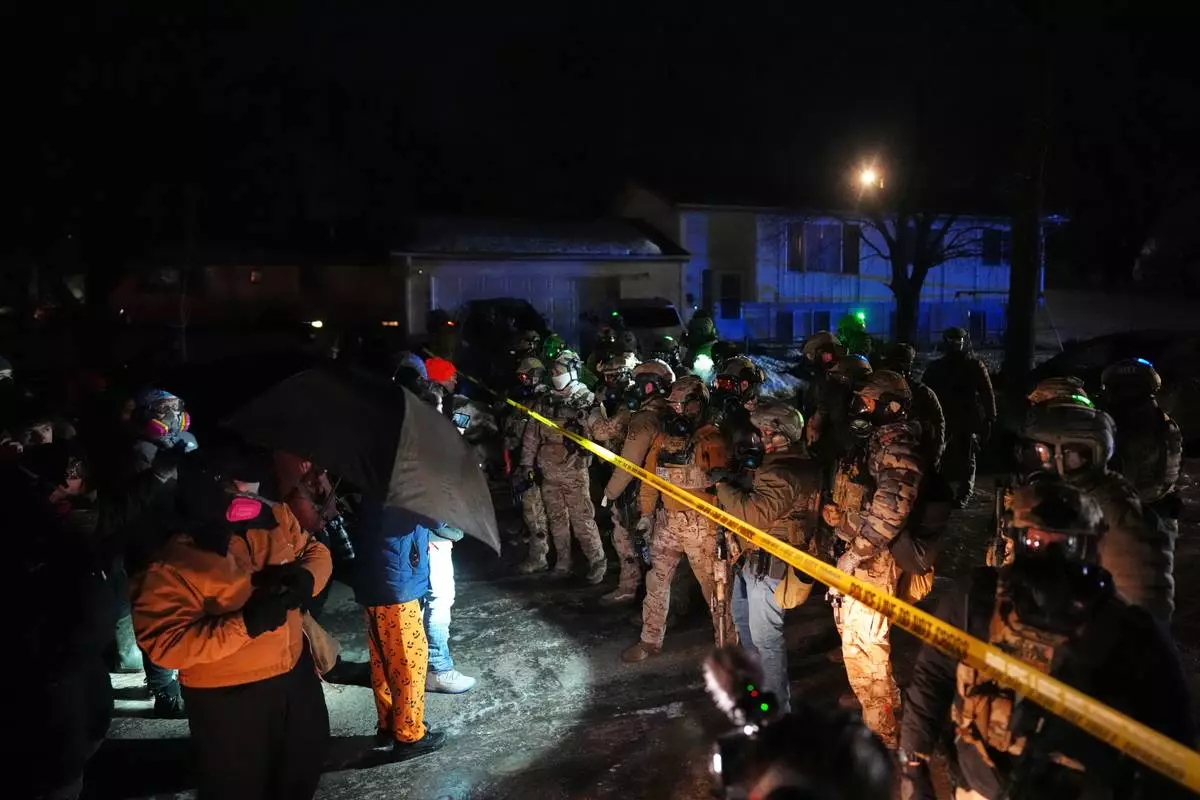
Law enforcement officers at the scene of a reported shooting Wednesday, Jan. 14, 2026, in Minneapolis. (AP Photo/Adam Gray)
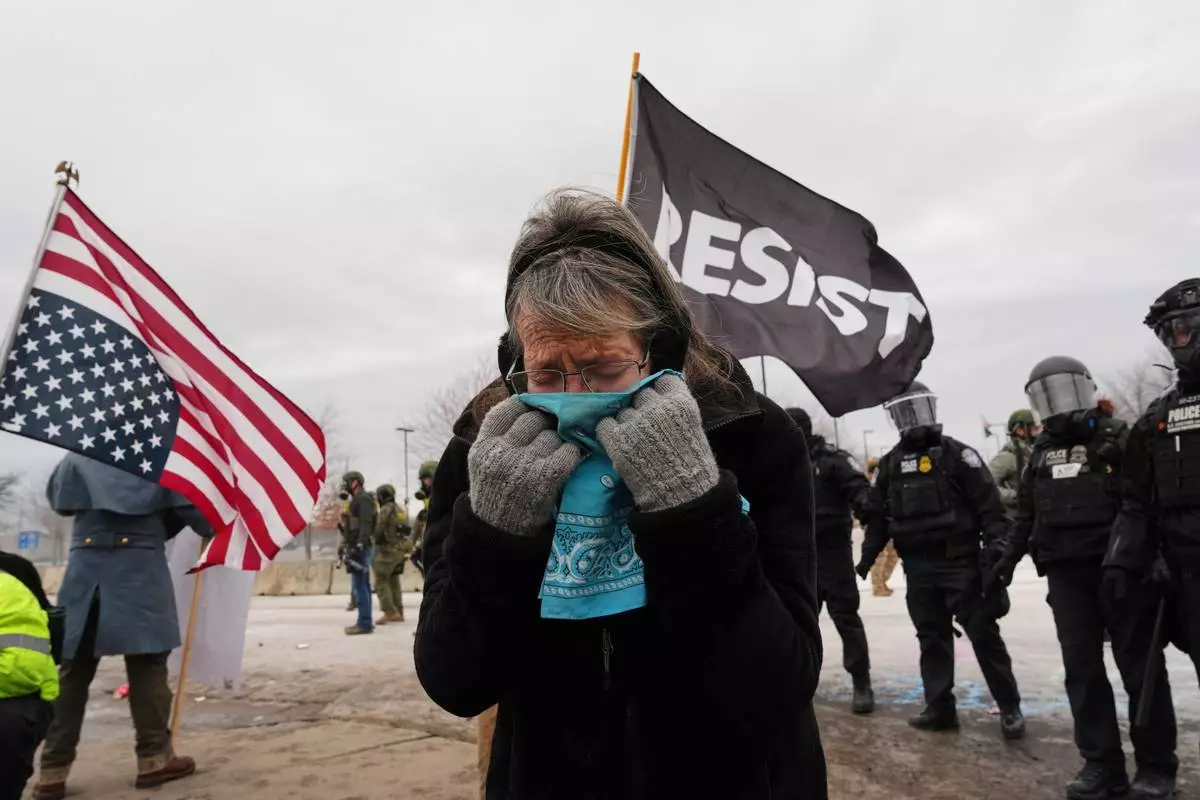
A woman covers her face from tear gas as federal immigration officers confront protesters outside Bishop Henry Whipple Federal Building, Thursday, Jan. 15, 2026, in Minneapolis. (AP Photo/Adam Gray)
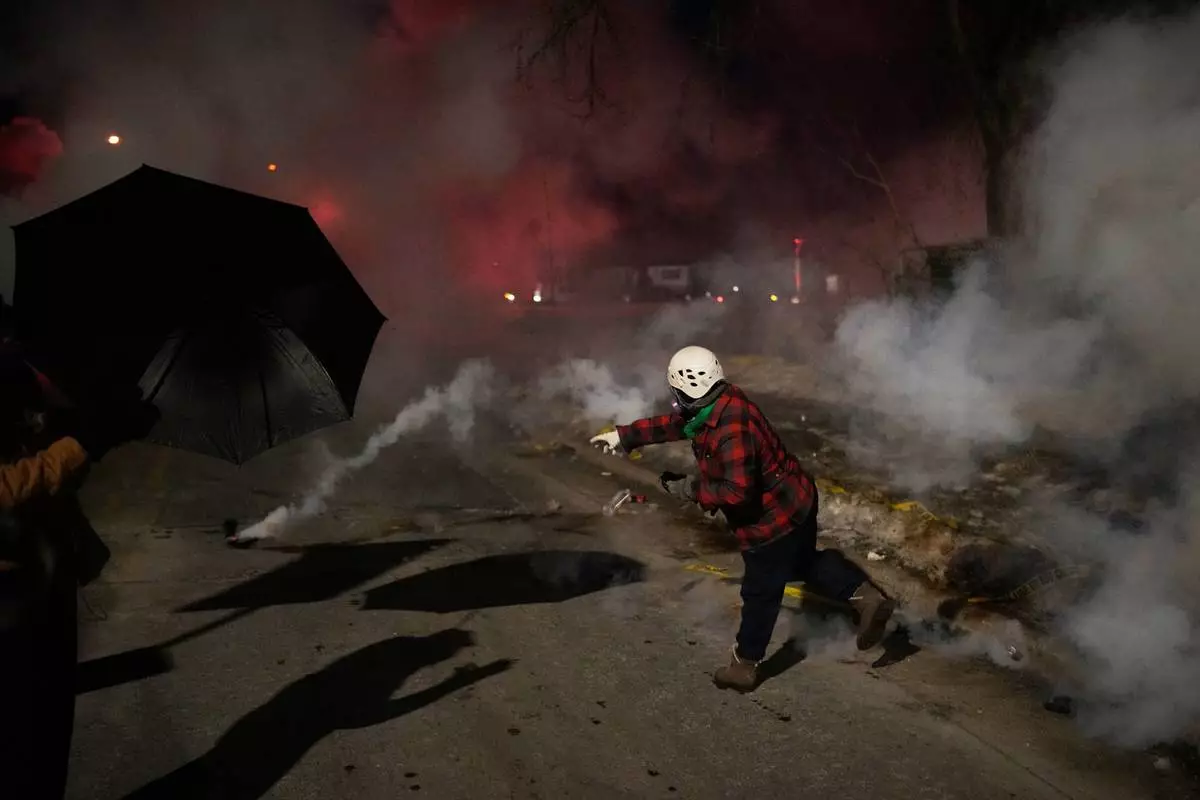
A protester throws back a tear gas canister during a protest after a shooting on Wednesday, Jan. 14, 2026, in Minneapolis. (AP Photo/John Locher)
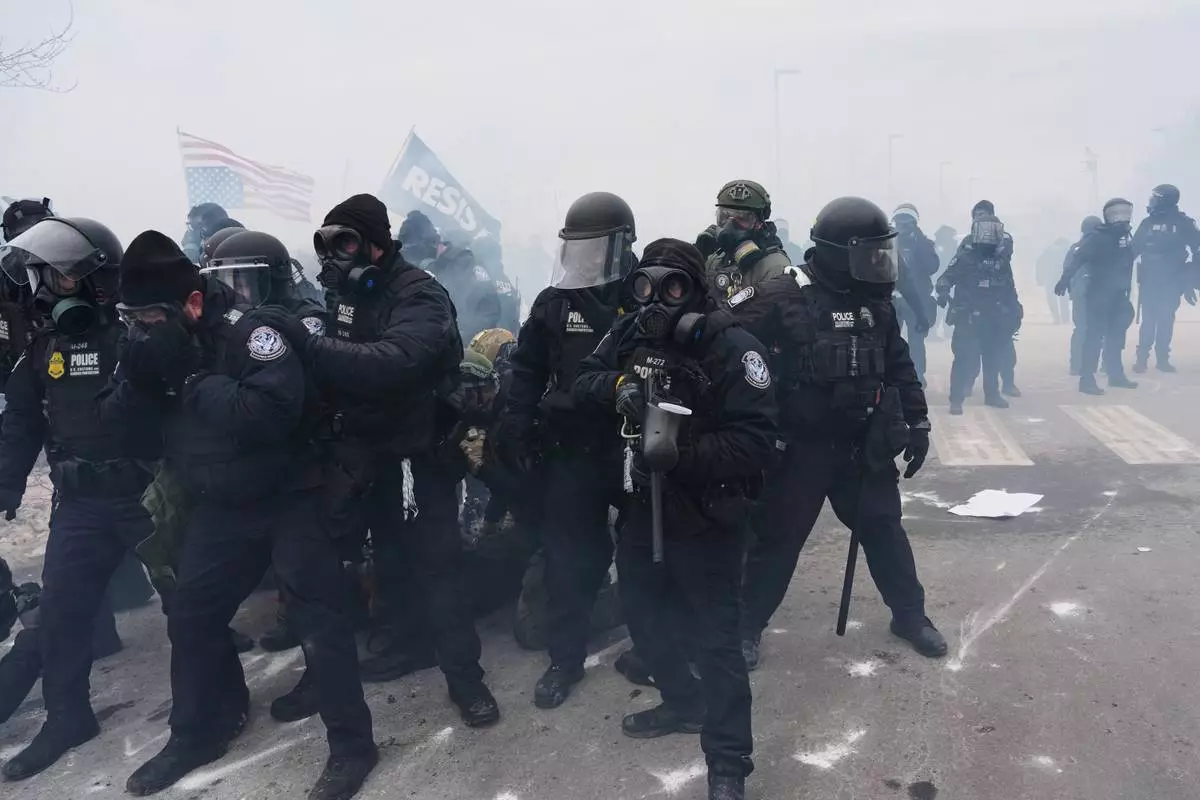
Federal immigration officers confront protesters outside Bishop Henry Whipple Federal Building, Thursday, Jan. 15, 2026, in Minneapolis. (AP Photo/Adam Gray)
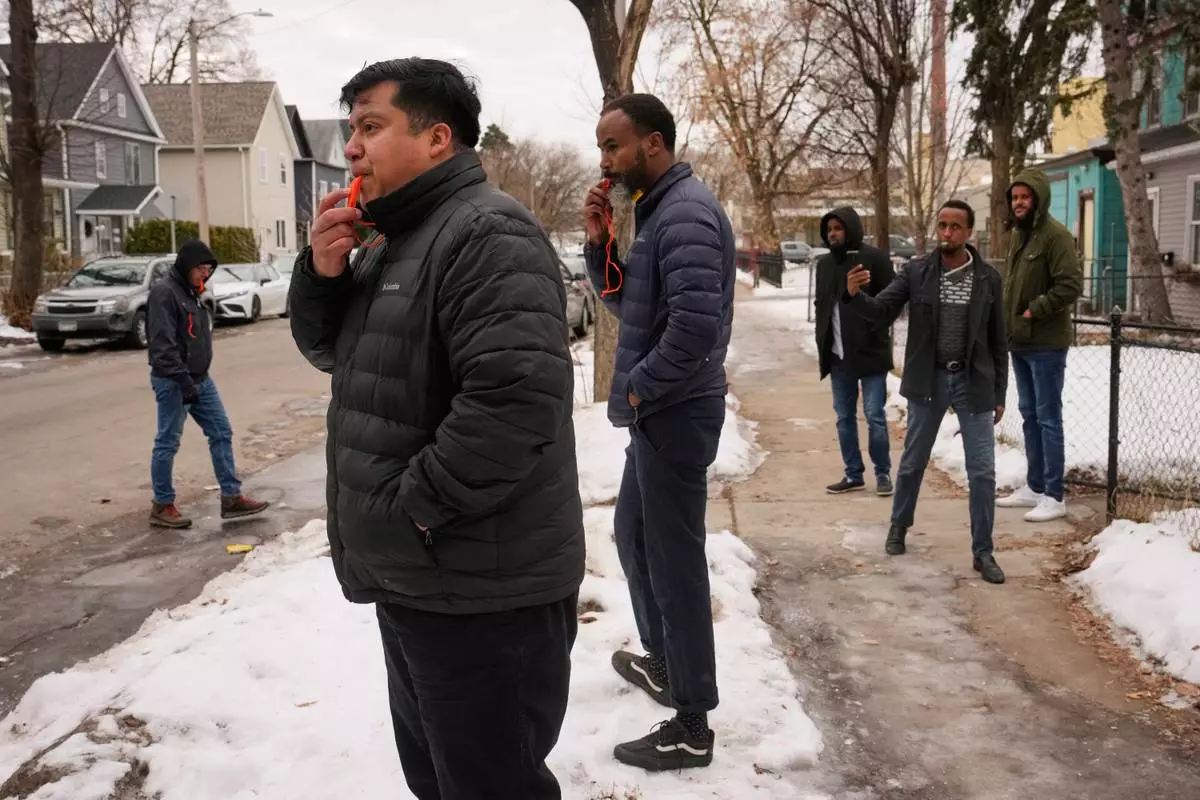
Minneapolis City Council Member Jason Chavez, second from left, blows a whistle with other activists to warn people of federal immigration officers Thursday, Jan. 15, 2026, in Minneapolis. (AP Photo/John Locher)
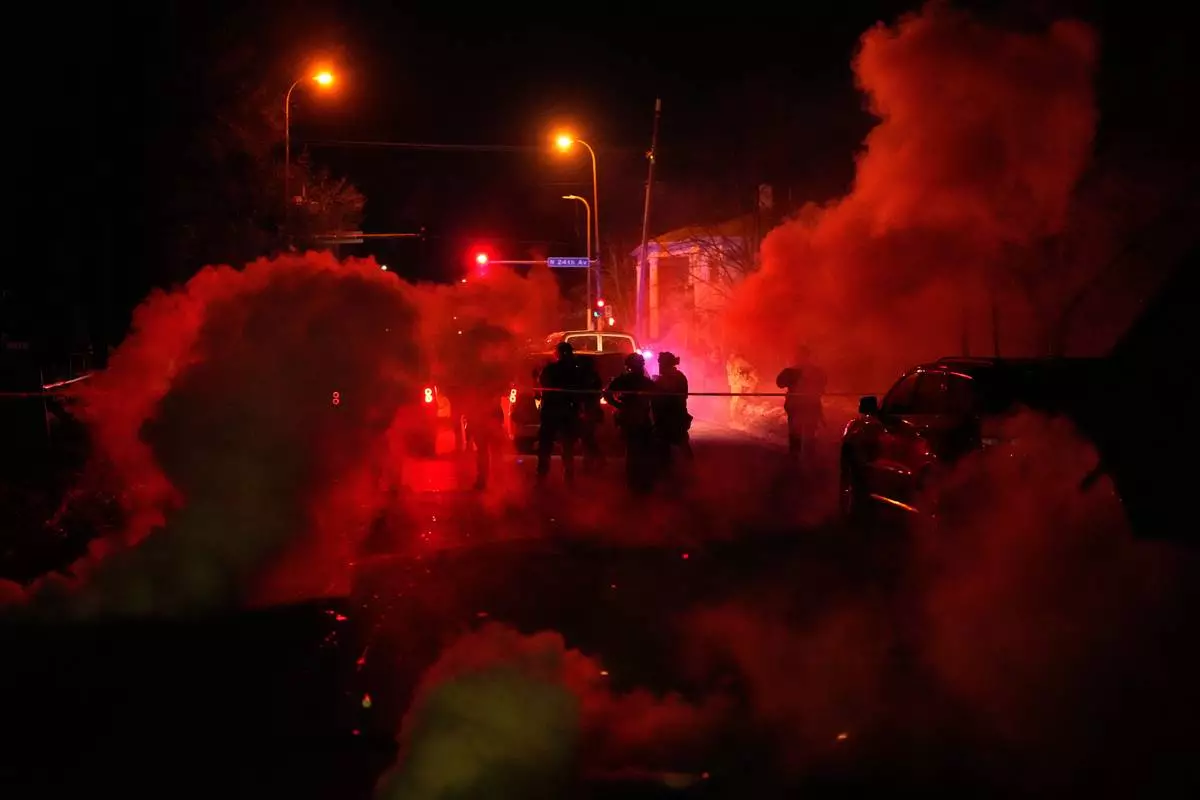
Tear gas surrounds federal law enforcement officers as they leave a scene after a shooting on Wednesday, Jan. 14, 2026, in Minneapolis. (AP Photo/John Locher)
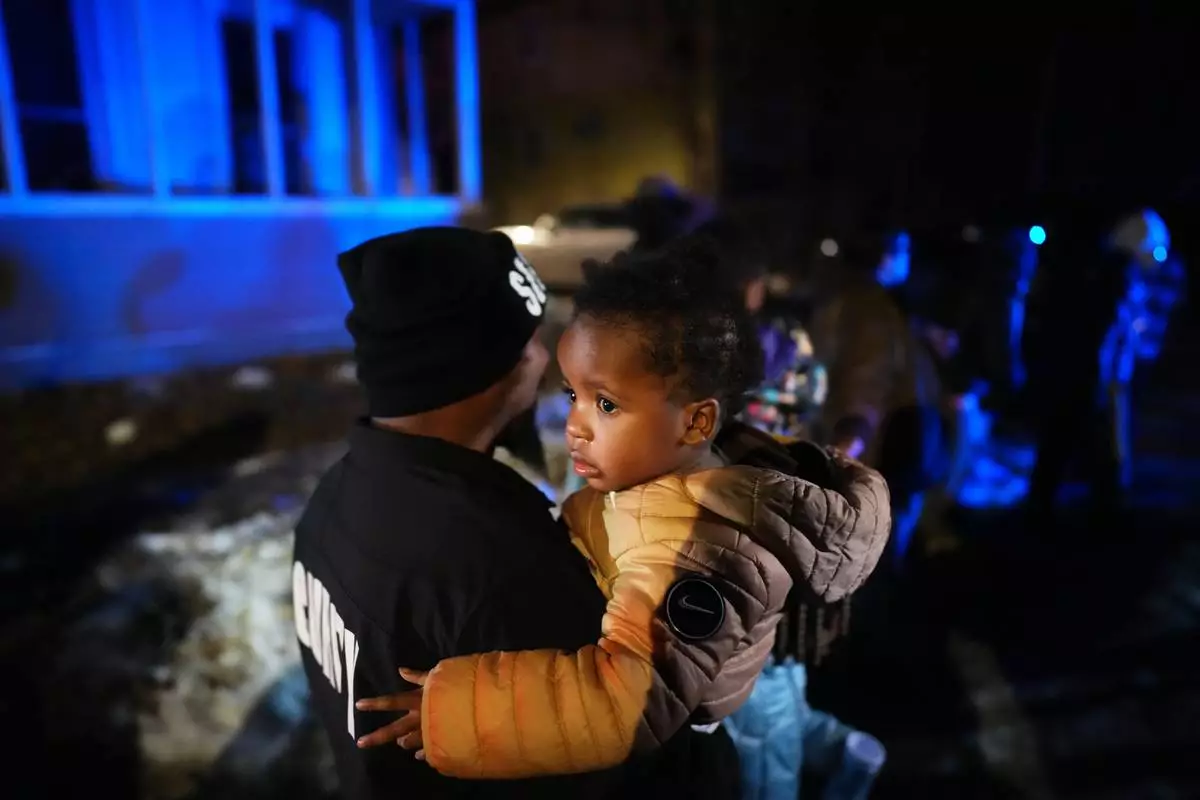
A child and family are escorted away after federal law enforcement deployed tear gas in a neighborhood during protests on Wednesday, Jan. 14, 2026, in Minneapolis. (AP Photo/Adam Gray)
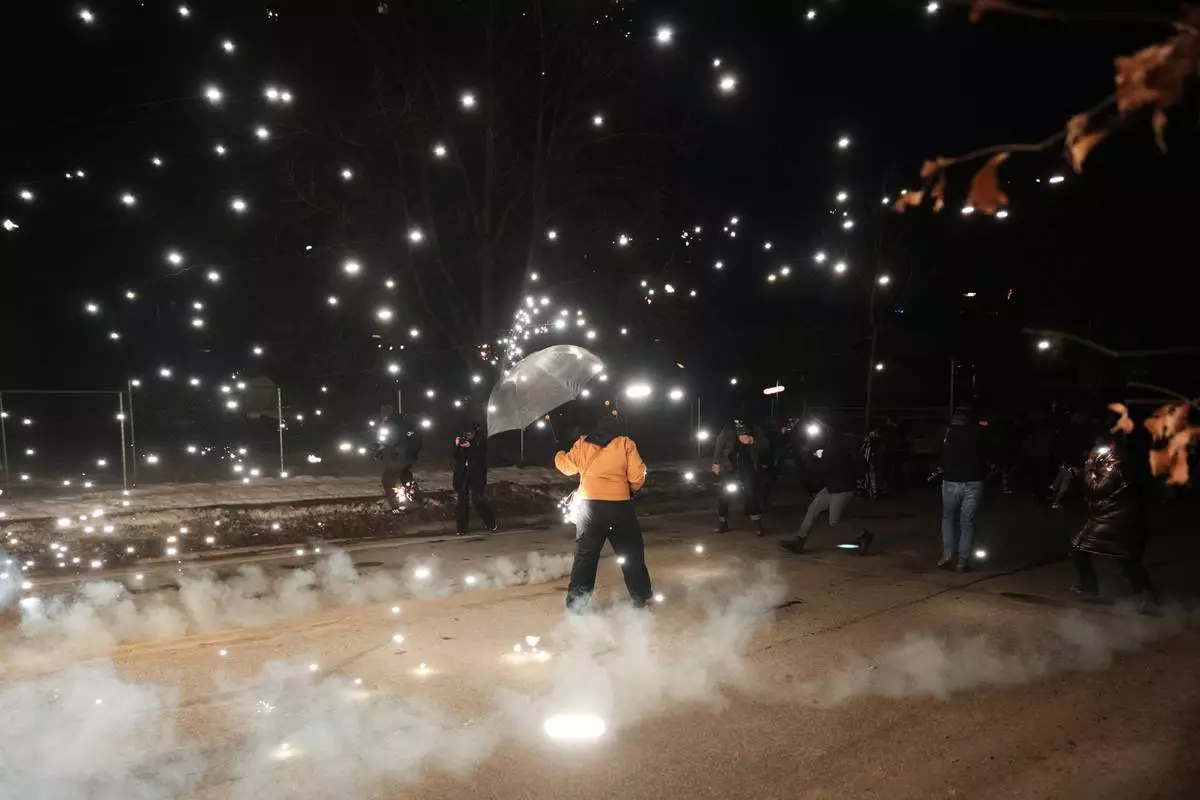
A protester holds an umbrella as sparks fly from a flash bang deployed by law enforcement on Wednesday, Jan. 14, 2026, in Minneapolis. (AP Photo/Adam Gray)
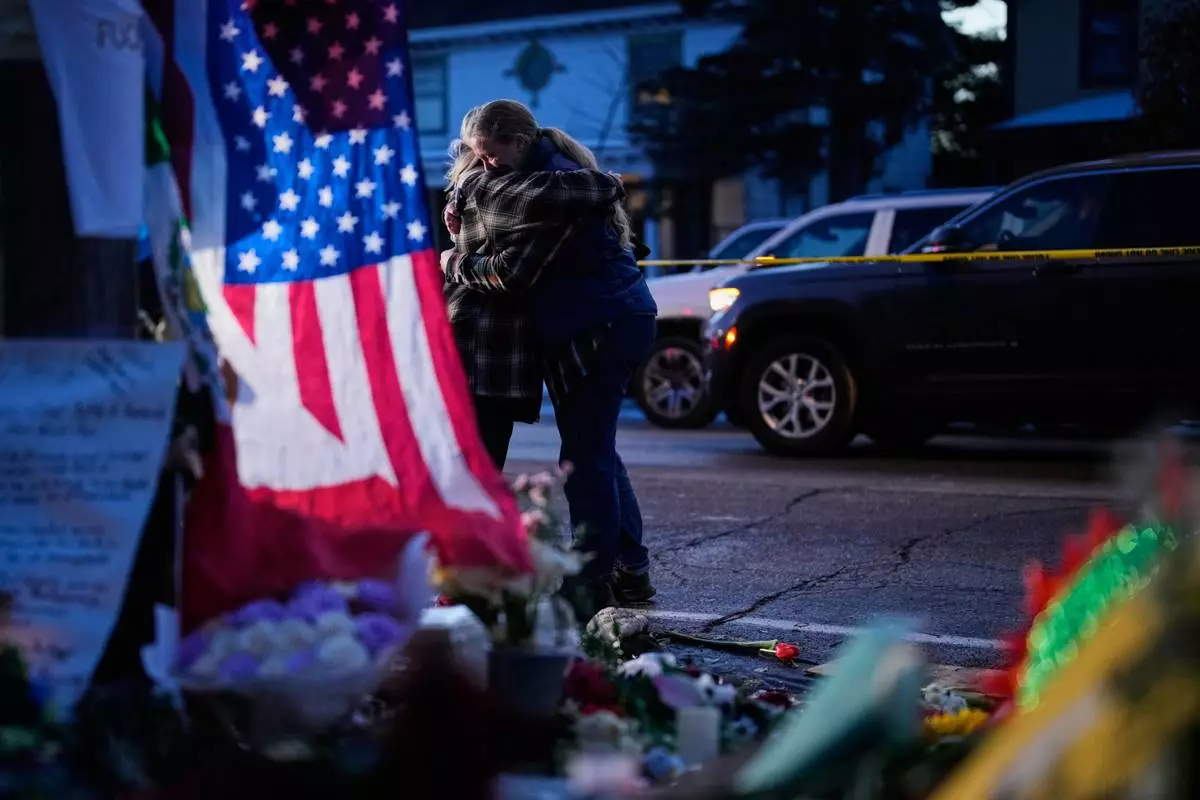
Monica Travis shares an embrace while visiting a makeshift memorial for Renee Good, who was fatally shot by an ICE officer last week, Monday, Jan. 12, 2026, in Minneapolis. (AP Photo/John Locher)
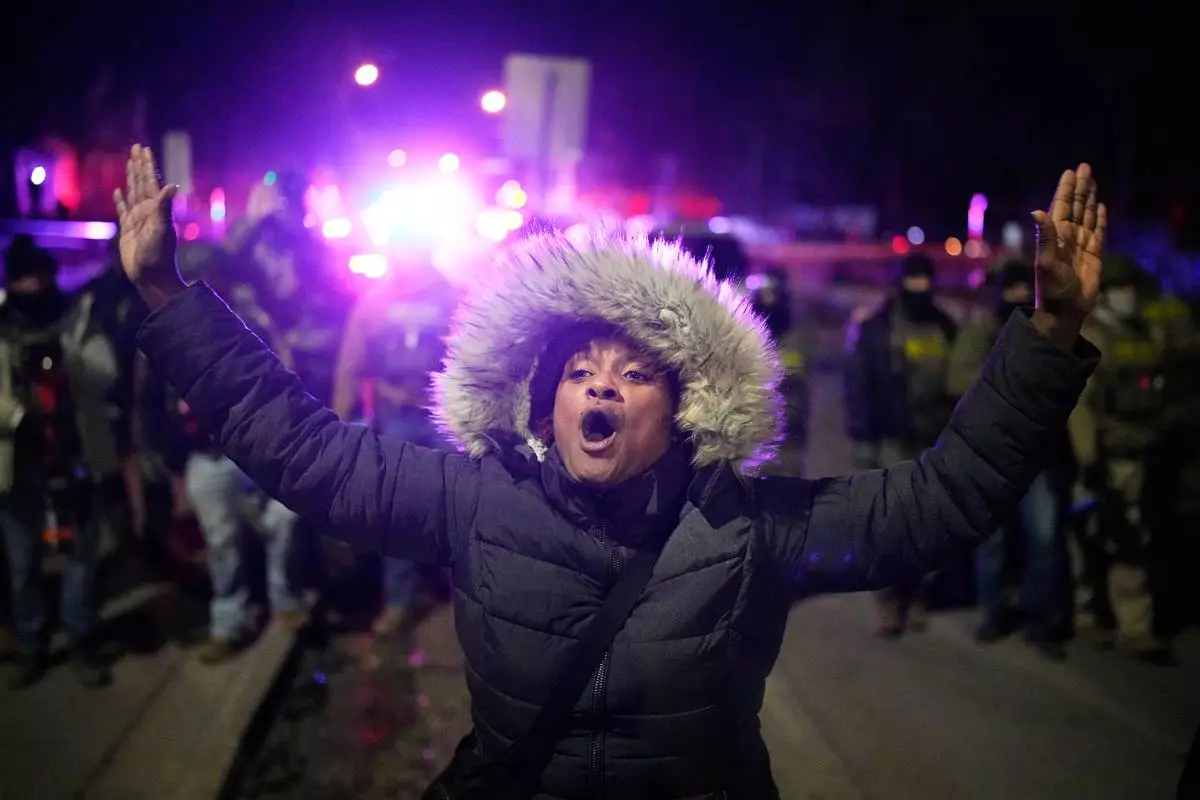
A protester yells in front of law enforcement after a shooting on Wednesday, Jan. 14, 2026, in Minneapolis. (AP Photo/John Locher)
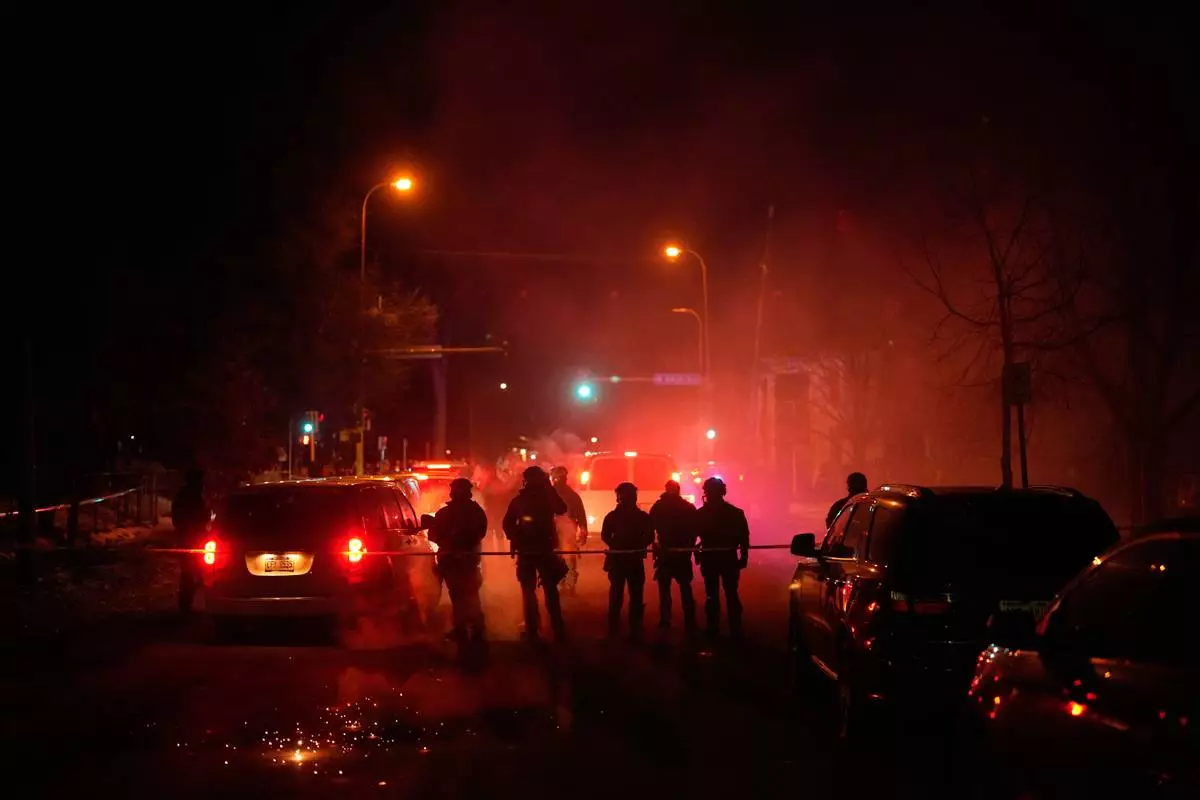
Tear gas surrounds federal law enforcement officers as they leave a scene after a shooting on Wednesday, Jan. 14, 2026, in Minneapolis. (AP Photo/John Locher)
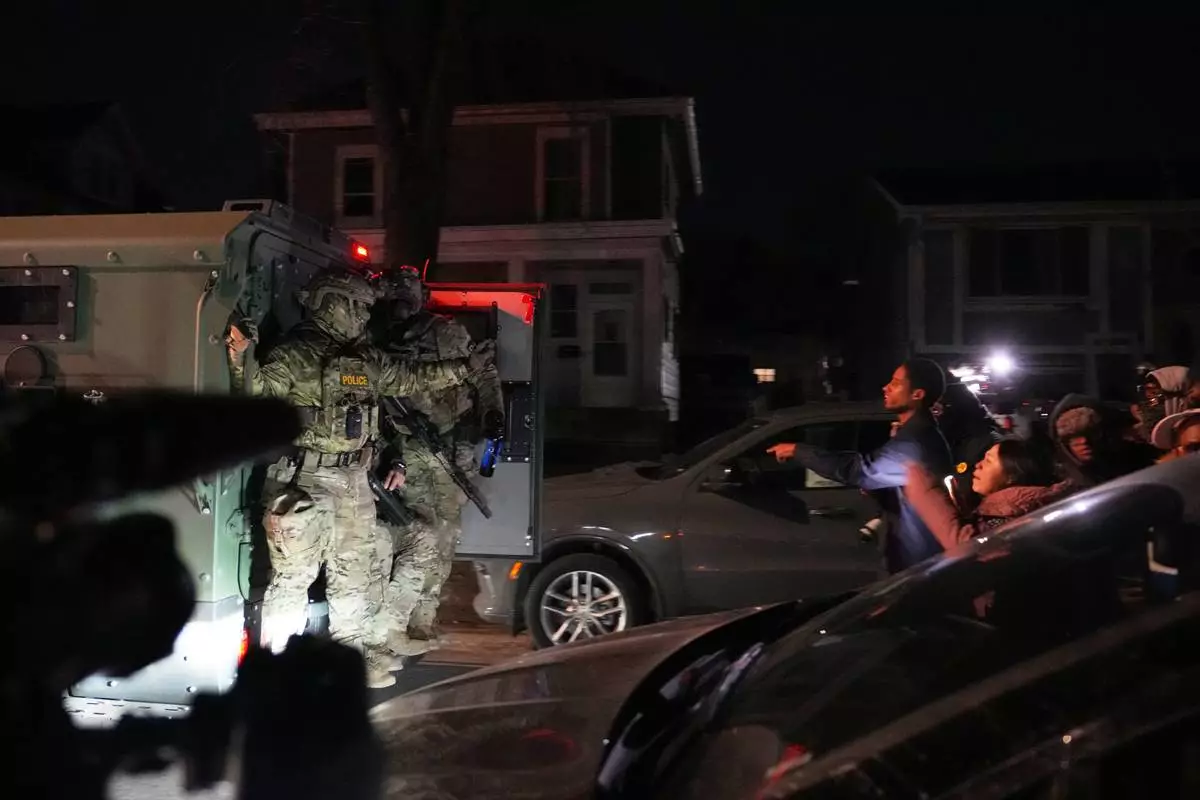
Protesters shout at law enforcement officers after a shooting on Wednesday, Jan. 14, 2026, in Minneapolis. (AP Photo/Abbie Parr)
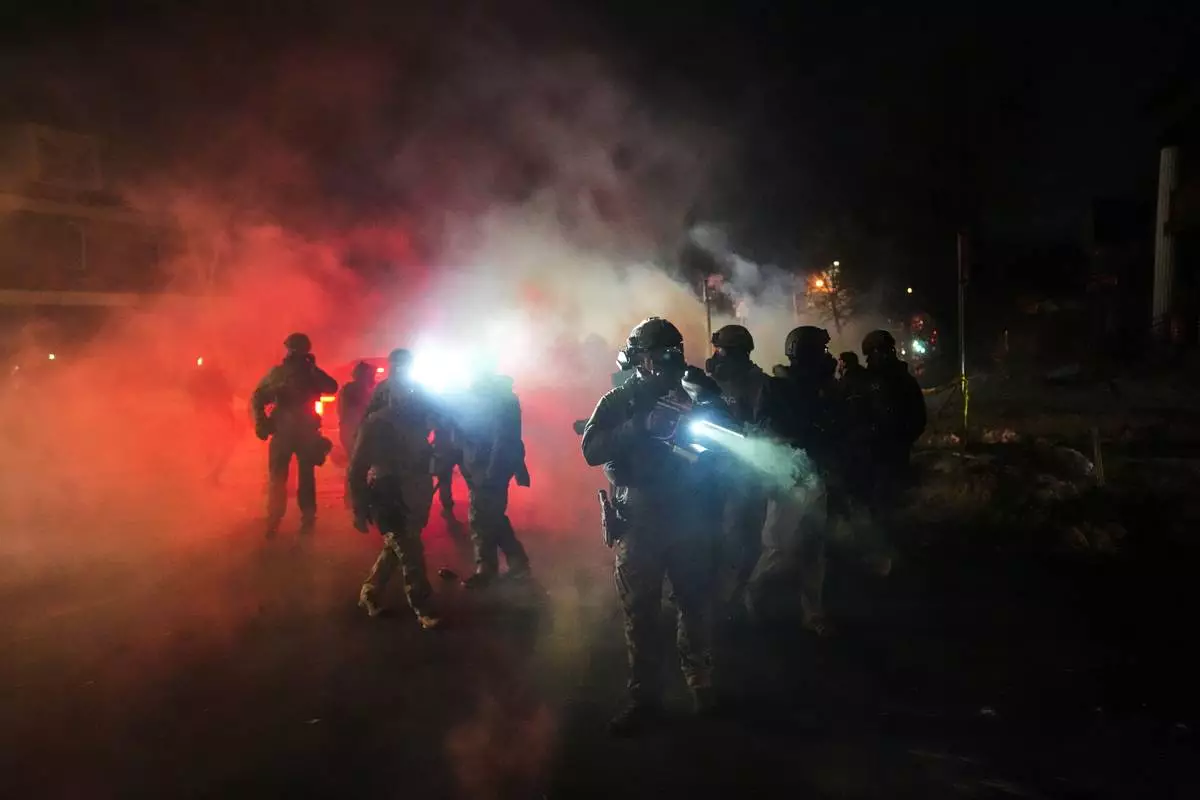
Law enforcement officers stand amid tear gas at the scene of a reported shooting Wednesday, Jan. 14, 2026, in Minneapolis. (AP Photo/Adam Gray)