TORONTO (AP) — At 77 years old, Geoffrey Hinton has a new calling in life. Like a modern-day prophet, the Nobel Prize winner is raising alarms about the dangers of uncontrolled and unregulated artificial intelligence.
Frequently dubbed the “Godfather of AI,” Hinton is known for his pioneering work on deep learning and neural networks which helped lay the foundation for the AI technology often used today. Feeling “somewhat responsible,” he began speaking publicly about his concerns in 2023 after he left his job at Google, where he worked for more than a decade.
As the technology — and investment dollars — powering AI have advanced in recent years, so too have the stakes behind it.
“It really is godlike,” Hinton said.
Hinton is among a growing number of prominent tech figures who speak of AI using language once reserved for the divine. OpenAI CEO Sam Altman has referred to his company's technology as a “magic intelligence in the sky,” while Peter Thiel, the co-founder of PayPal and Palantir, has even argued that AI could help bring about the Antichrist.
There are plenty of skeptics who doubt the technology merits this kind of fear, including Dylan Baker, a former Google employee and lead research engineer at the Distributed AI Research Institute, which studies the harmful impacts of AI.
“I think oftentimes they’re operating from magical fantastical thinking informed by a lot of sci-fi that presumably they got in their formative years,” Baker said. “They’re really detached from reality.”
Although chatbots like ChatGPT only recently penetrated the zeitgeist, certain Silicon Valley circles have prophesied of AI’s power for decades.
“We’re trying to wake people up,” Hinton said. “To get the public to understand the risks so that the public pressures politicians to do something about it.”
While researchers like Hinton are warning about the existential threat they believe AI poses to humanity, there are CEOs and theorists on the other side of the spectrum who argue we are approaching a kind of technological apocalypse that will usher in a new age of human evolution.
In an essay published last year titled “Machines of Loving Grace: How AI Could Transform the World for the Better,” Anthropic CEO Dario Amodei lays out his vision for a future “if everything goes right with AI.”
The AI entrepreneur predicts “the defeat of most diseases, the growth in biological and cognitive freedom, the lifting of billions of people out of poverty to share in the new technologies, a renaissance of liberal democracy and human rights.”
While Amodei opts for the phrase “powerful AI,” others use terms like “the singularity” or “artificial general intelligence (AGI).” Though proponents of these concepts don’t often agree on how to define them, they refer broadly to a hypothetical future point at which AI will surpass human-level intelligence, potentially triggering rapid, irreversible changes to society.
Computer scientist and author Ray Kurzweil has been predicting since the 1990s that humans will one day merge with technology, a concept often called transhumanism.
“We’re not going to actually tell what comes from our own brain versus what comes from AI. It’s all going to be embedded within ourselves. And it’s going to make ourselves more intelligent,” Kurzweil said.
In his latest book, “The Singularity Is Nearer: When We Merge with AI,” Kurzweil doubles down on his earlier predictions. He believes that by 2045 we will have “multiplied our own intelligence a millionfold.”
“Yes,” he eventually conceded when asked if he considers AI to be his religion. It informs his sense of purpose.
“My thoughts about the future and the future of technology and how quickly it’s coming definitely affects my attitudes towards being here and what I’m doing and how I can influence other people,” he said.
Despite Thiel’s explicit invocation of language from the Book of Revelation, the positive visions of an AI future are more “apocalyptic” in the historical sense of the word.
“In the ancient world, apocalyptic is not negative,” explains Domenico Agostini, a professor at the University of Naples L’Orientale who studies ancient apocalyptic literature. “We’ve completely changed the semantics of this word.”
The term “apocalypse” comes from the Greek word “apokalypsis,” meaning “revelation.” Although often associated today with the end of the world, apocalypses in ancient Jewish and Christian thought were a source of encouragement in times of hardship or persecution.
“God is promising a new world,” said Professor Robert Geraci, who studies religion and technology at Knox College. “In order to occupy that new world, you have to have a glorious new body that triumphs over the evil we all experience.”
Geraci first noticed apocalyptic language being used to describe AI’s potential in the early 2000s. Kurzweil and other theorists eventually inspired him to write his 2010 book, “Apocalyptic AI: Visions of Heaven in Robotics, Artificial Intelligence, and Virtual Reality.”
The language reminded him of early Christianity. “Only we’re gonna slide out God and slide in … your pick of cosmic science laws that supposedly do this and then we were going to have the same kind of glorious future to come,” he said.
Geraci argues this kind of language hasn’t changed much since he began studying it. What surprises him is how pervasive it has become.
“What was once very weird is kind of everywhere,” he said.
One factor in the growing cult of AI is profitability.
“Twenty years ago, that fantasy, true or not, wasn’t really generating a lot of money,” Geraci said. Now, though, “there’s a financial incentive to Sam Altman saying AGI is right around the corner.”
But Geraci, who argues ChatGPT "isn’t even remotely, vaguely, plausibly conscious,” believes there may be more driving this phenomenon.
Historically, the tech world has been notoriously devoid of religion. Its secular reputation had so preceded it that one episode of the satirical HBO comedy series, “Silicon Valley,” revolves around “outing” a co-worker as Christian.
Rather than viewing the skeptical tech world's veneration of AI as ironic, Geraci believes they're causally linked.
“We human beings are deeply, profoundly, inherently religious,” he said, adding that the impressive technologies behind AI might appeal to people in Silicon Valley who have already pushed aside “ordinary approaches to transcendence and meaning.”
Not every Silicon Valley CEO has been converted — even if they want in on the tech.
“When people in the tech industry talk about building this one true AI, it’s almost as if they think they’re creating God or something,” Meta CEO Mark Zuckerberg said on a podcast last year as he promoted his company's own venture into AI.
Although transhumanist theories like Kurzweil’s have become more widespread, they are still not ubiquitous within Silicon Valley.
“The scientific case for that is in no way stronger than the case for a religious afterlife,” argues Max Tegmark, a physicist and machine learning researcher at the Massachusetts Institute of Technology.
Like Hinton, Tegmark has been outspoken about the potential risks of unregulated AI. In 2023, as president of the Future of Life Institute, Tegmark helped spearhead an open letter calling for powerful AI labs to “immediately pause” the training of their systems.
The letter collected more than 33,000 signatures, including from Elon Musk and Apple co-founder Steve Wozniak. Tegmark considers the letter to have been successful because it helped “mainstream the conversation” about AI safety, but believes his work is far from over.
With regulations and safeguards, Tegmark thinks AI can be used as a tool to do things like cure diseases and increase human productivity. But it is imperative, he argues, to stay away from the “quite fringe” race that some companies are running — “the pseudoreligious pursuit to try to build an alternative God.”
“There are a lot of stories, both in religious texts and in, for example, ancient Greek mythology, about how when we humans start playing gods, it ends badly,” he said. “And I feel there’s a lot of hubris in San Francisco right now.”
Associated Press religion coverage receives support through the AP’s collaboration with The Conversation US, with funding from Lilly Endowment Inc. The AP is solely responsible for this content.
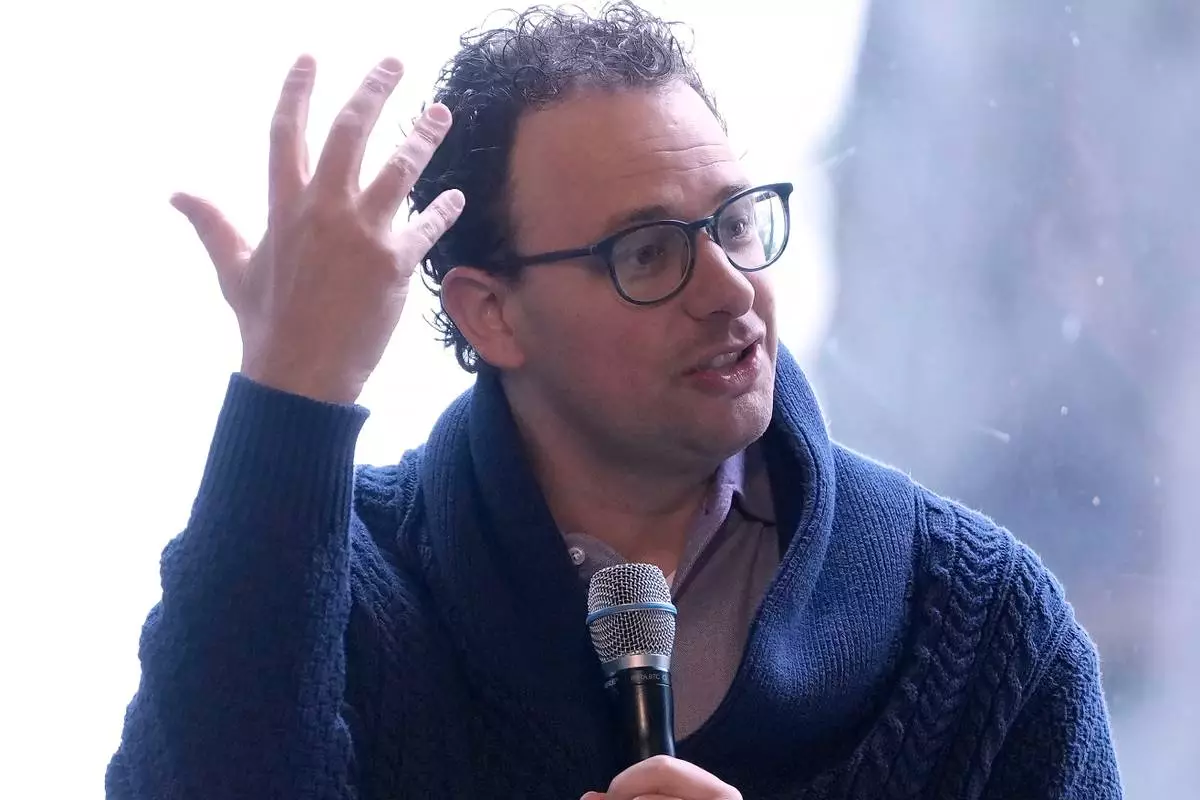
FILE - Dario Amodei, CEO & Co-Founder of Anthropic, speaks at the convening of the International Network of AI Safety Institutes at the Golden Gate Club at the Presidio in San Francisco, Nov. 20, 2024. (AP Photo/Jeff Chiu, File)
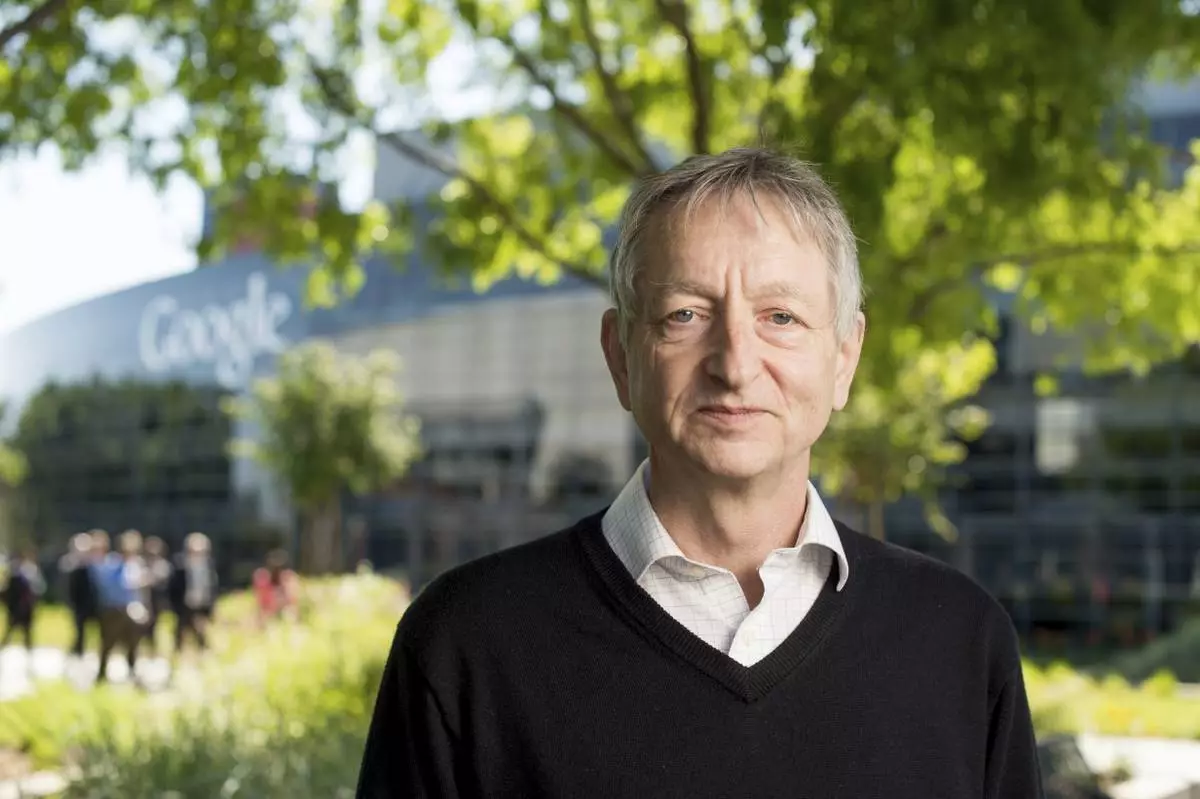
FILE - Computer scientist Geoffrey Hinton, who studies neural networks used in artificial intelligence applications, stands for a portrait at Google's Mountain View, Calif, headquarters on March 25, 2015. (AP Photo/Noah Berger, File)
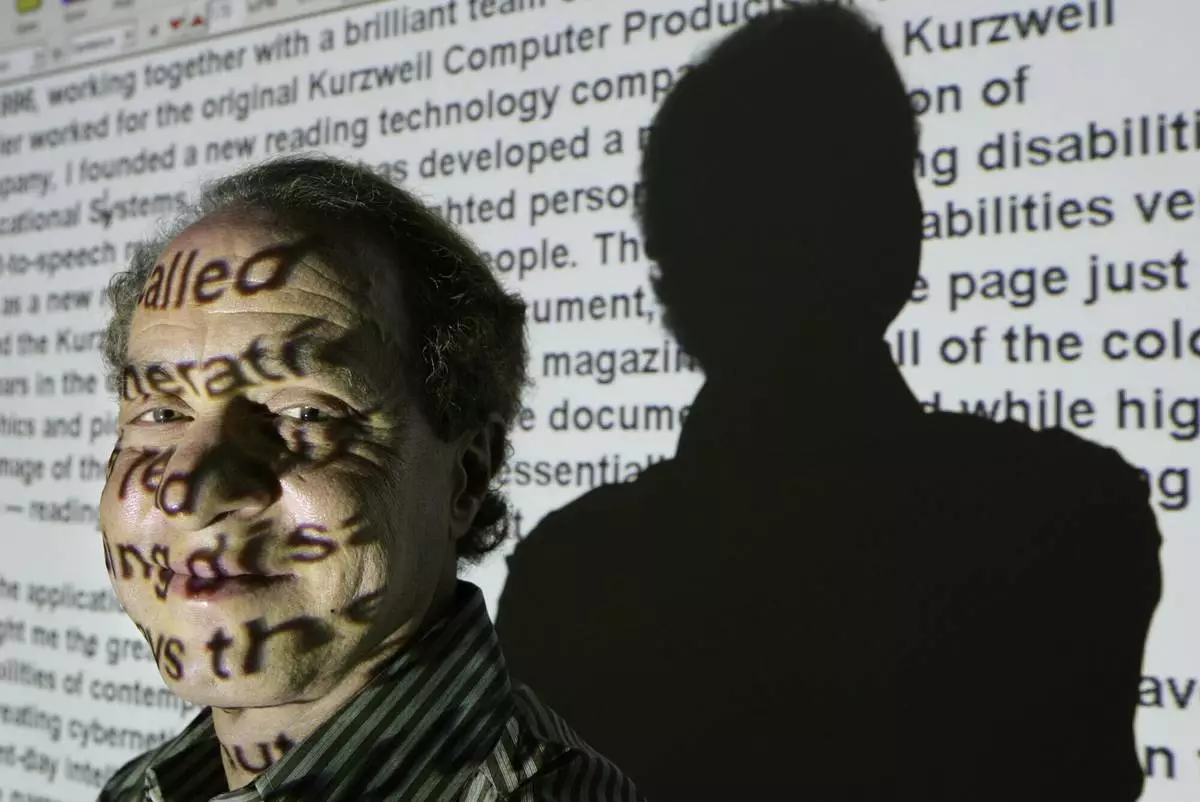
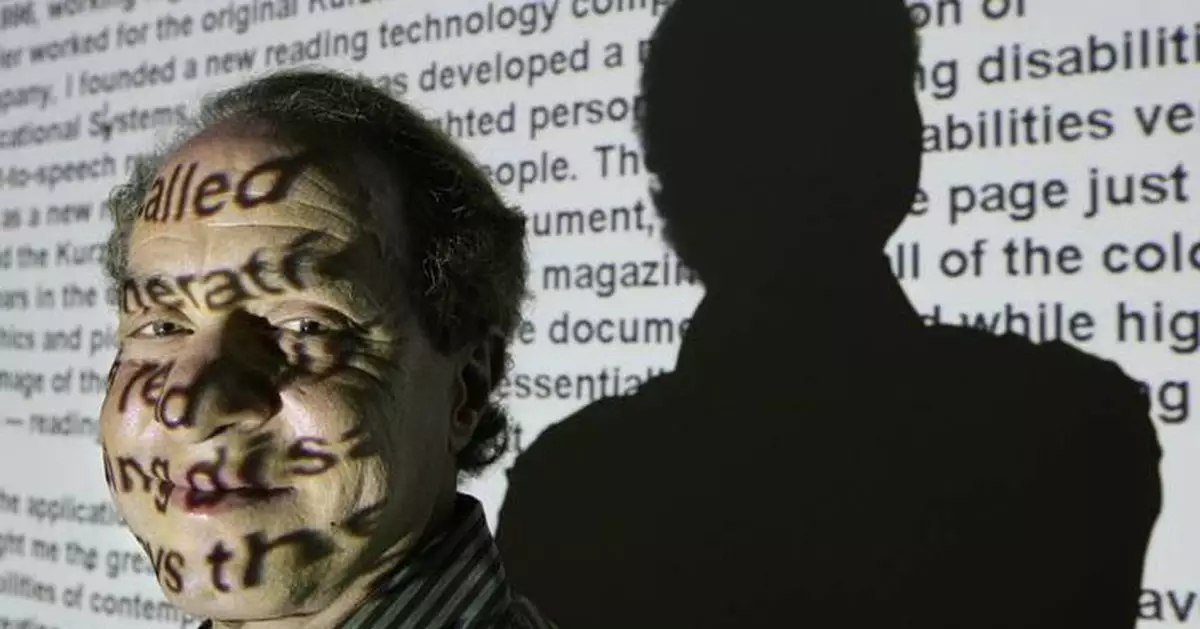
FILE - Author and inventor Ray Kurzweil, 56, stands for a portrait in front of words from his internet site projected on a screen in his office in Wellesley, Mass., Jan. 12, 2005. (AP Photo/Steven Senne, File)