Skip to Content Facebook Feature Image

Florida's once-pristine springs threatened by pollution, development and climate change

ENT

Florida's once-pristine springs threatened by pollution, development and climate change
ENT

ENT

Florida's once-pristine springs threatened by pollution, development and climate change

2025-08-29 21:05 Last Updated At:21:21

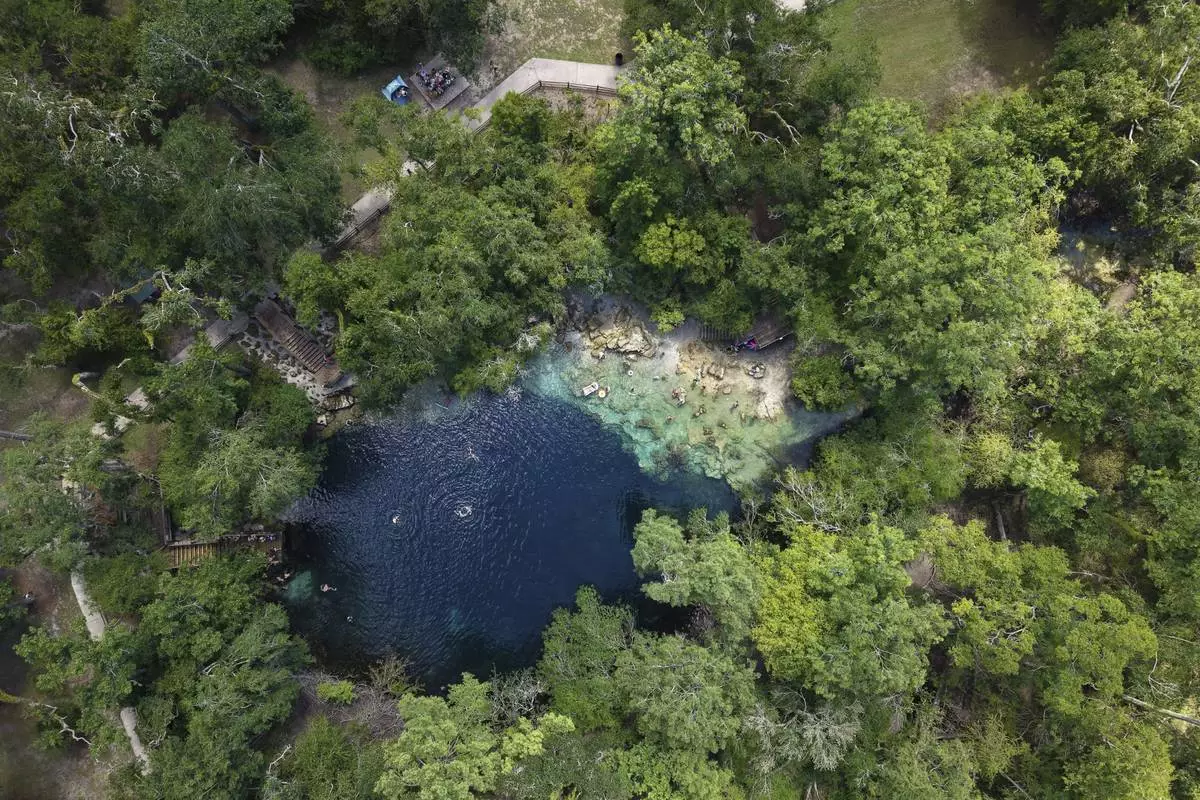
ZEPHYRHILLS, Fla. (AP) — Seen from the air, a Florida freshwater spring is a bit of liquid heaven, luring humans and wildlife to enjoy its aquamarine cool. With at least 1,000 of them — more than any other state — the springs serve as beaches for large swaths of central and northwestern Florida far from the ocean, with teenagers backflipping from docks and snorkelers peering into the crystalline depths.

But these treasures are under threat from agricultural pollution, rapid development and climate change.

More Images
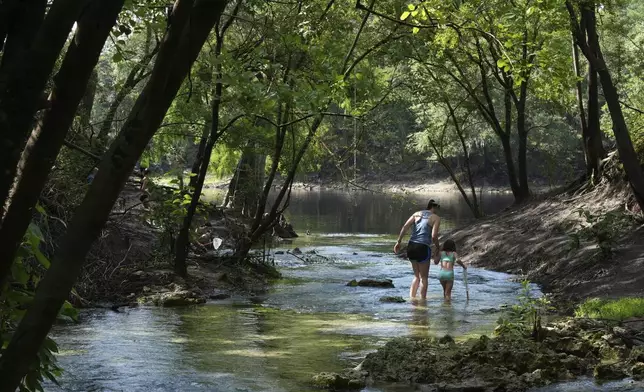
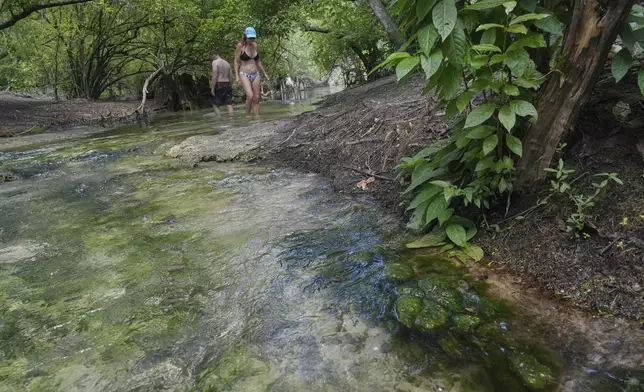
A mother and daughter walk along Royal Spring on Tuesday, July 15, 2025, in Suwannee County, Fla. (AP Photo/Marta Lavandier)
A mother and daughter walk along Royal Spring on Tuesday, July 15, 2025, in Suwannee County, Fla. (AP Photo/Marta Lavandier)

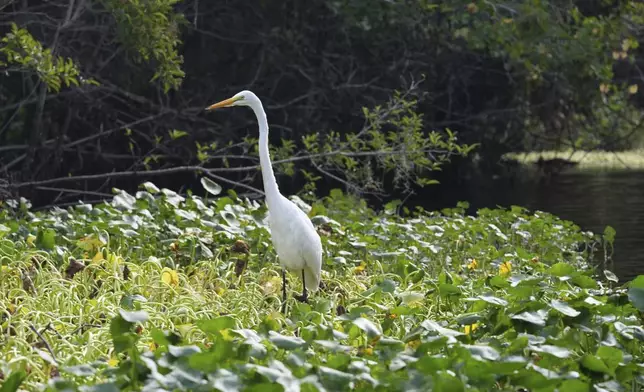
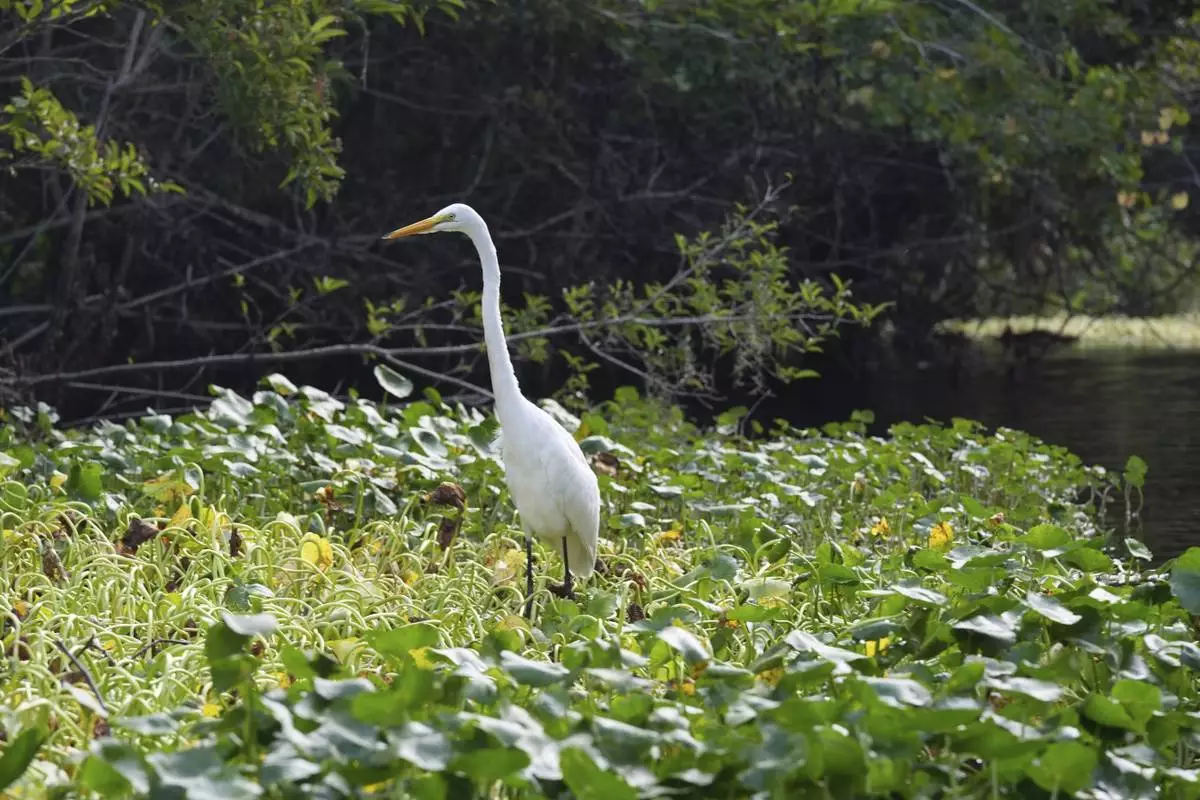
A Great Egret walks on a floating dollar weed mat along the Wekiwa River on Friday, July 18, 2025, in Apopka, Fla. (AP Photo/Marta Lavandier)
A Great Egret walks on a floating dollar weed mat along the Wekiwa River on Friday, July 18, 2025, in Apopka, Fla. (AP Photo/Marta Lavandier)

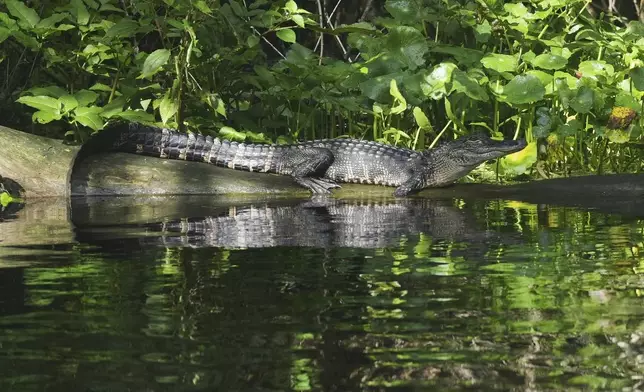
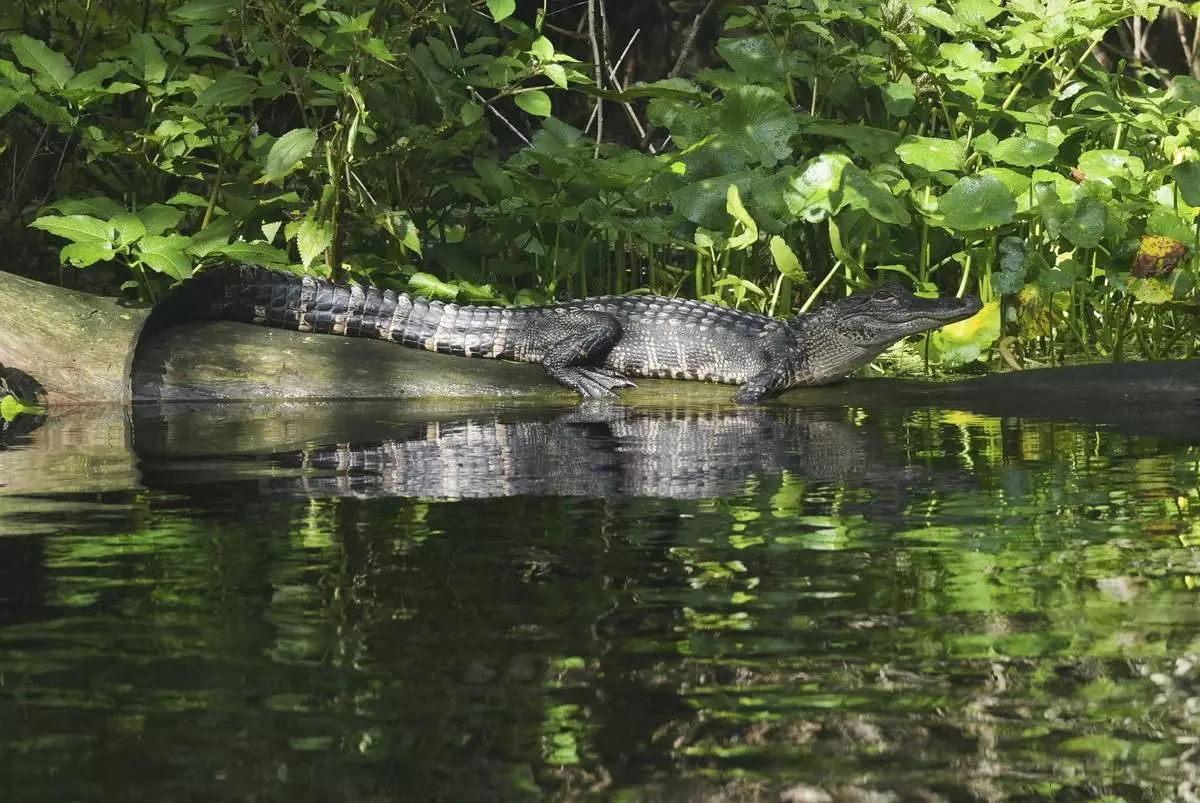
A young alligator rests on a log along the Wekiwa River, Friday, July 18, 2025, in Apopka, Fla. (AP Photo/Marta Lavandier)
A young alligator rests on a log along the Wekiwa River, Friday, July 18, 2025, in Apopka, Fla. (AP Photo/Marta Lavandier)

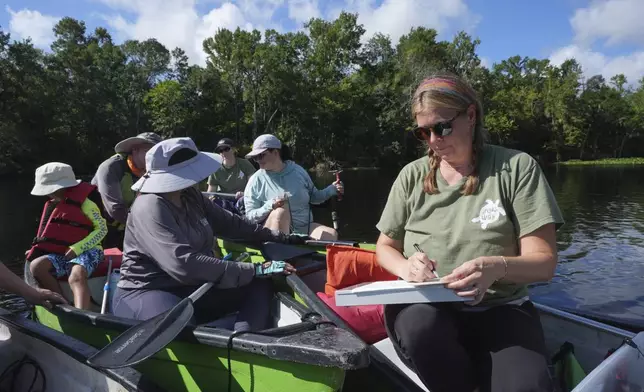
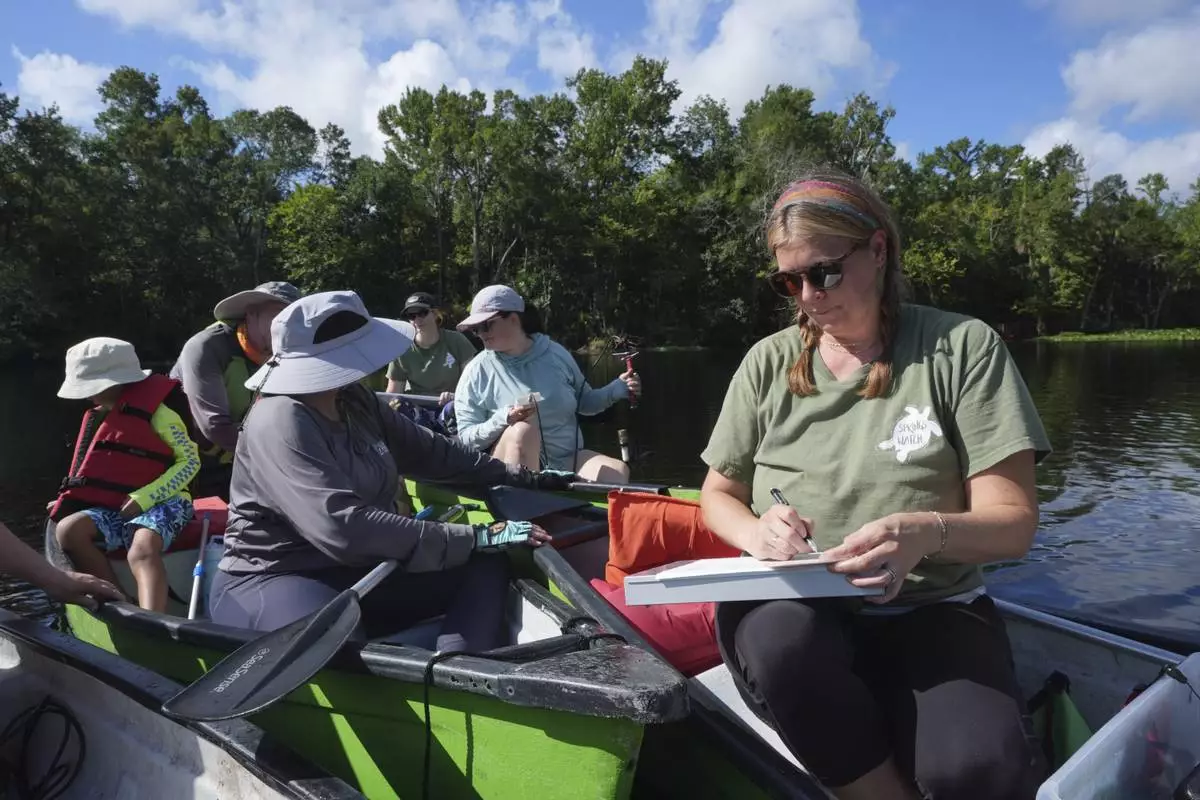
Michelle Jamesson, a volunteer at the SpringsWatch Citizen Science Program, takes in numerous readings by volunteers along the Wekiwa River on Friday, July 18, 2025, in Apopka, Fla. (AP Photo/Marta Lavandier)
Michelle Jamesson, a volunteer at the SpringsWatch Citizen Science Program, takes in numerous readings by volunteers along the Wekiwa River on Friday, July 18, 2025, in Apopka, Fla. (AP Photo/Marta Lavandier)

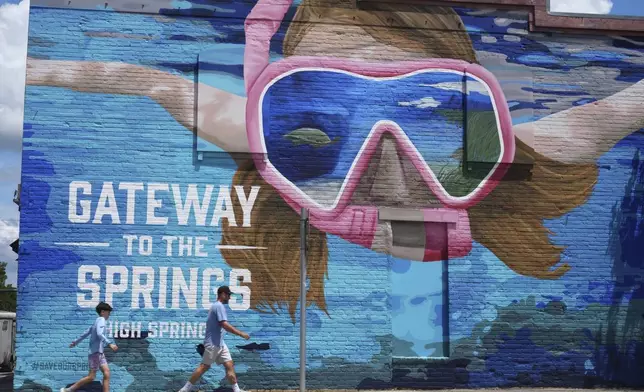
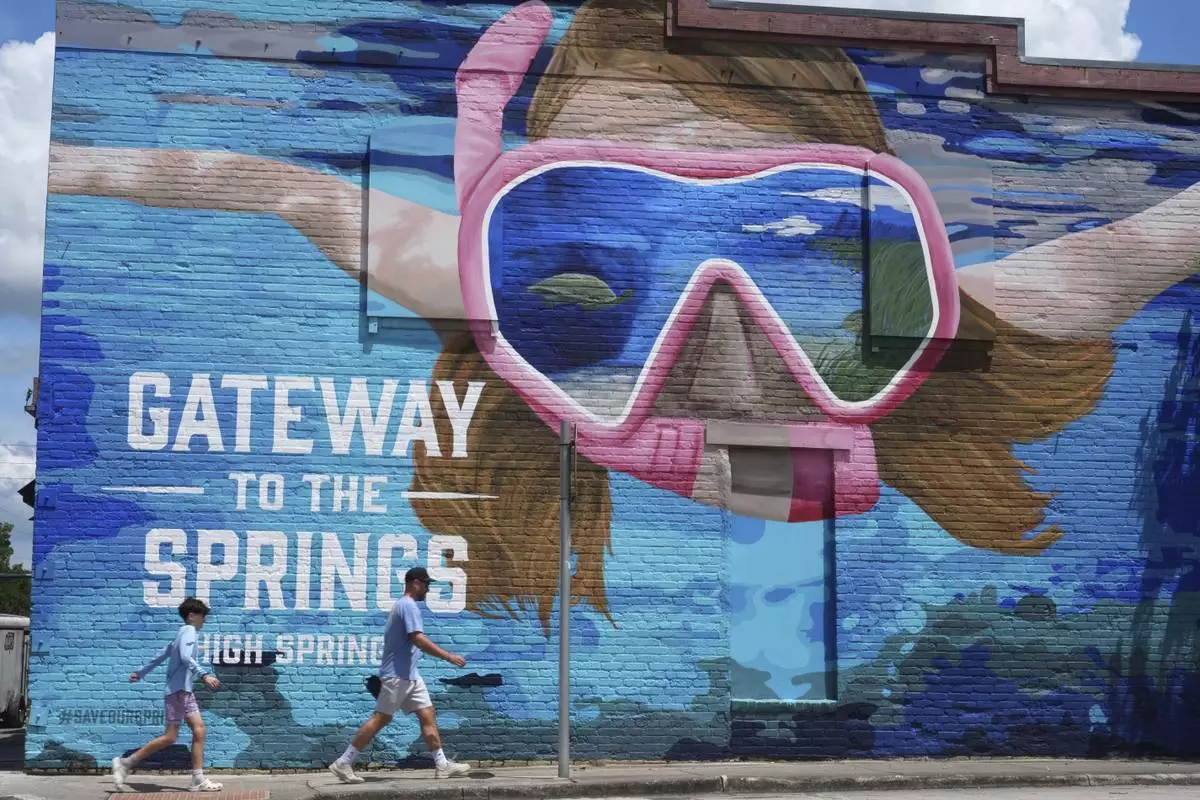
A father and son walk along a mural Wednesday, July 16, 2025, in High Springs, Fla. (AP Photo/Marta Lavandier)
A father and son walk along a mural Wednesday, July 16, 2025, in High Springs, Fla. (AP Photo/Marta Lavandier)

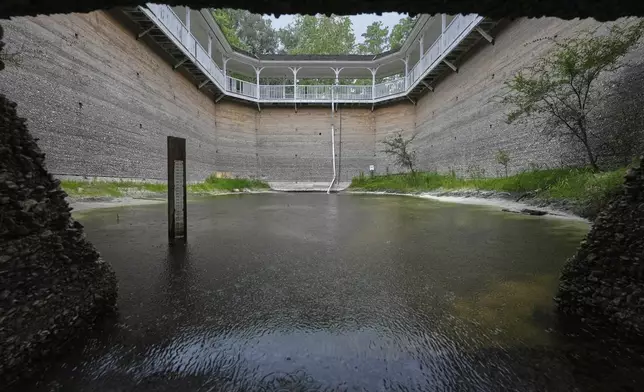
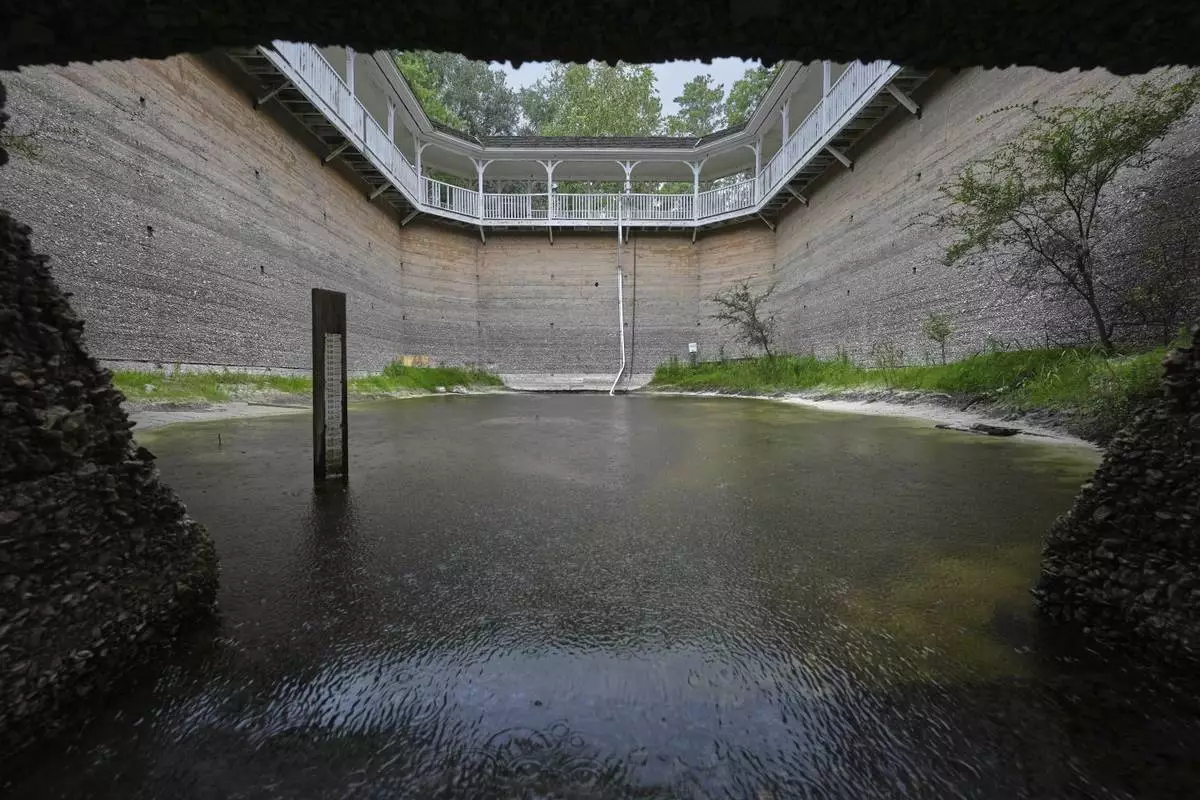
A water gauge measure discharge from White Sulphur Spring, that was a sacred place for Apalachee and Timucuan tribes, Tuesday, July 15, 2025, in White Springs, Fla. (AP Photo/Marta Lavandier)
A water gauge measure discharge from White Sulphur Spring, that was a sacred place for Apalachee and Timucuan tribes, Tuesday, July 15, 2025, in White Springs, Fla. (AP Photo/Marta Lavandier)

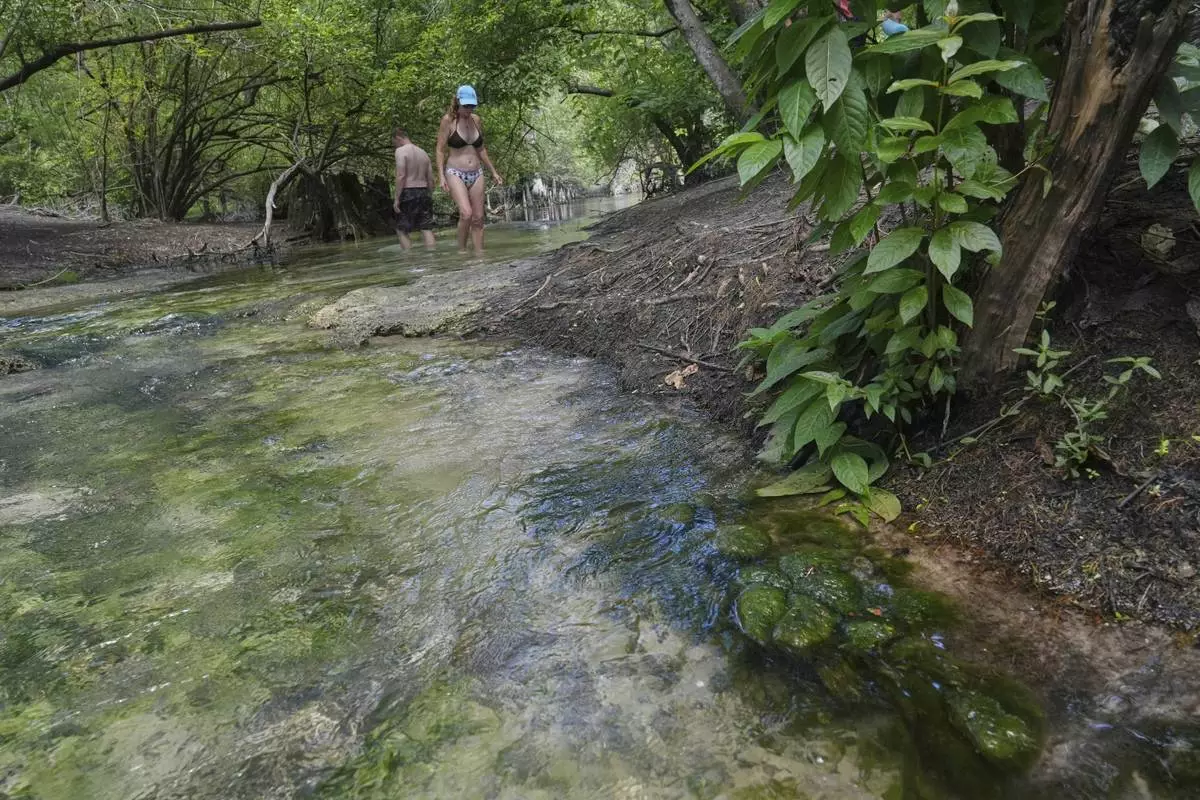
Algae hugs the edge and rocks below the water of Royal Spring on Tuesday, July 15, 2025, in Suwannee County, Fla. (AP Photo/Marta Lavandier)
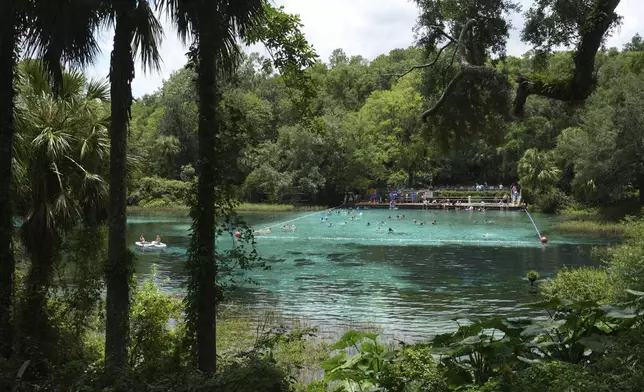
Algae hugs the edge and rocks below the water of Royal Spring on Tuesday, July 15, 2025, in Suwannee County, Fla. (AP Photo/Marta Lavandier)

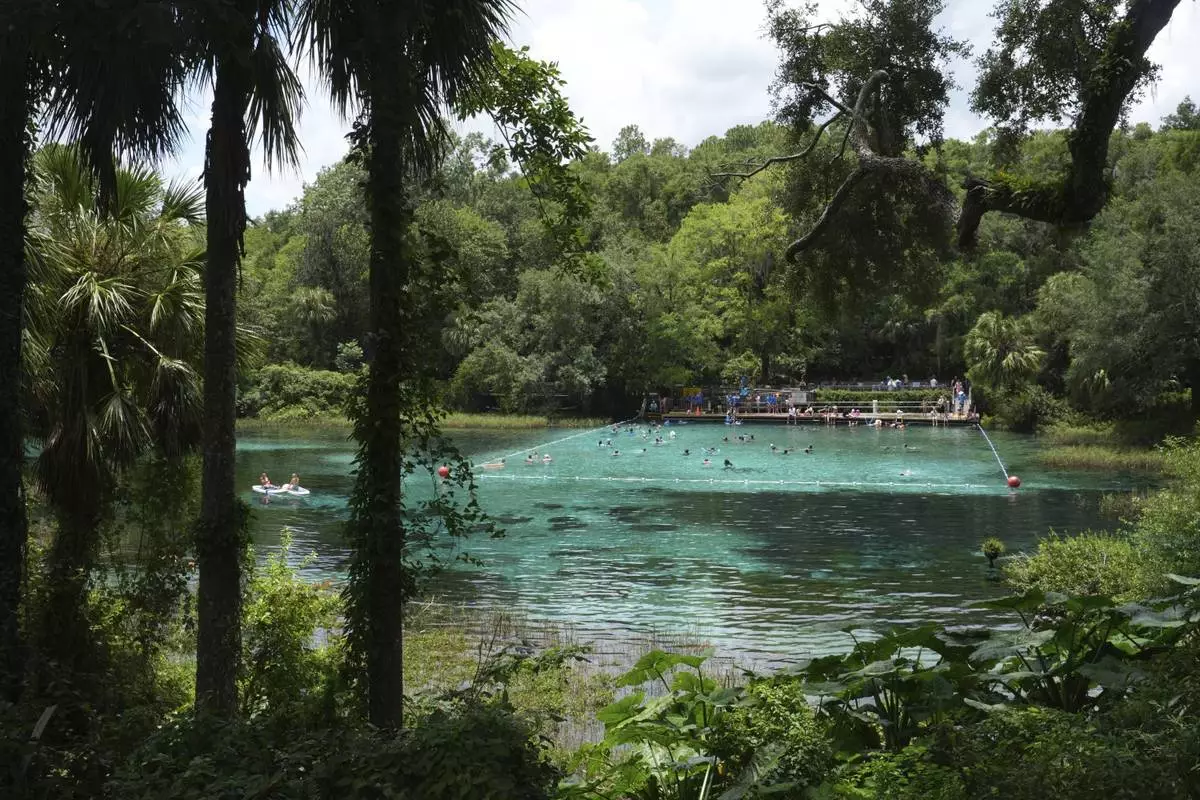
The bathing area at Rainbow Springs State Park on Friday, July 18, 2025, in Dunnellon, Fla. (AP Photo/Marta Lavandier)
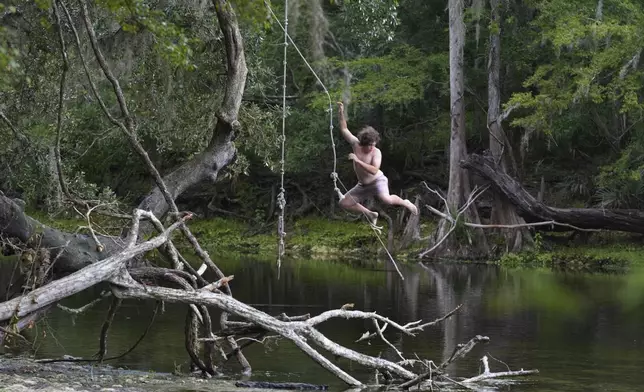
The bathing area at Rainbow Springs State Park on Friday, July 18, 2025, in Dunnellon, Fla. (AP Photo/Marta Lavandier)

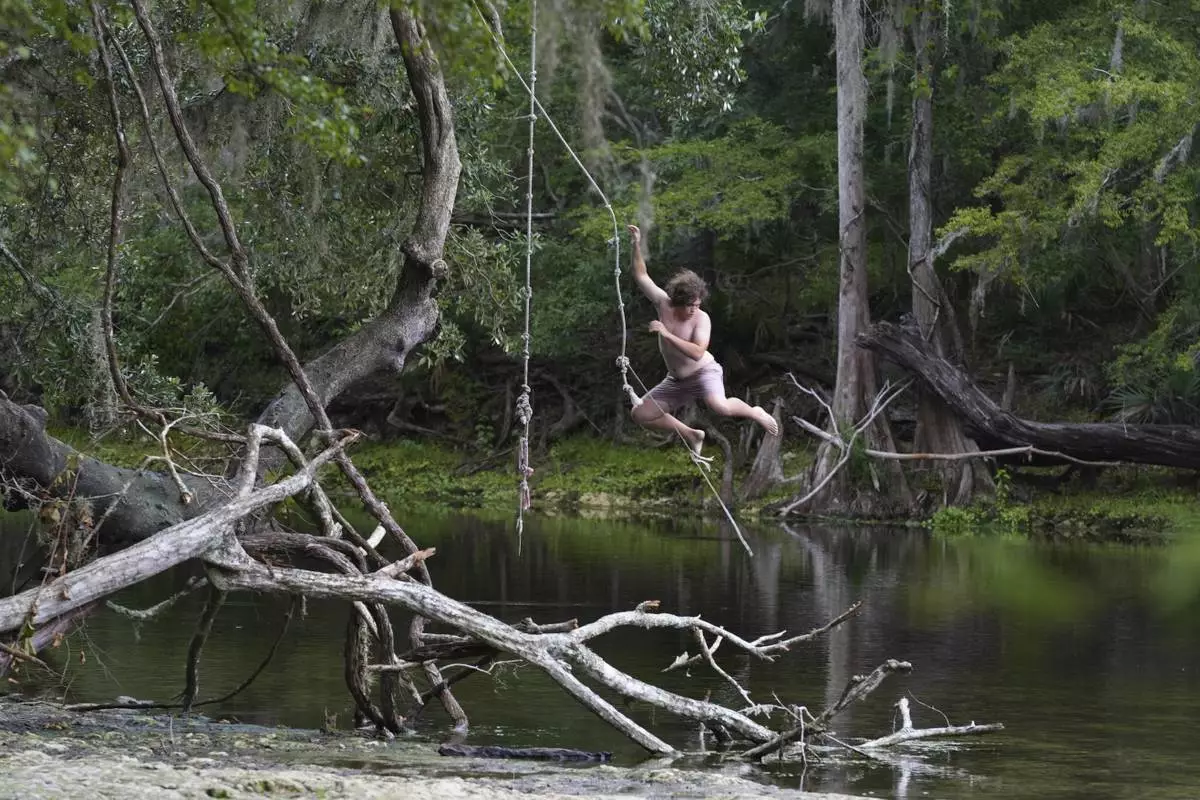
Gage Williams swings from a branch near the confluence of Poe Spring and the Santa Fe River on Tuesday, July 15, 2025, in Alachua County, Fla. (AP Photo/Marta Lavandier)
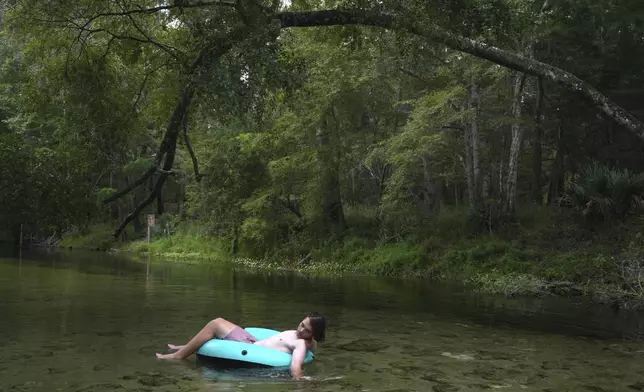
Gage Williams swings from a branch near the confluence of Poe Spring and the Santa Fe River on Tuesday, July 15, 2025, in Alachua County, Fla. (AP Photo/Marta Lavandier)

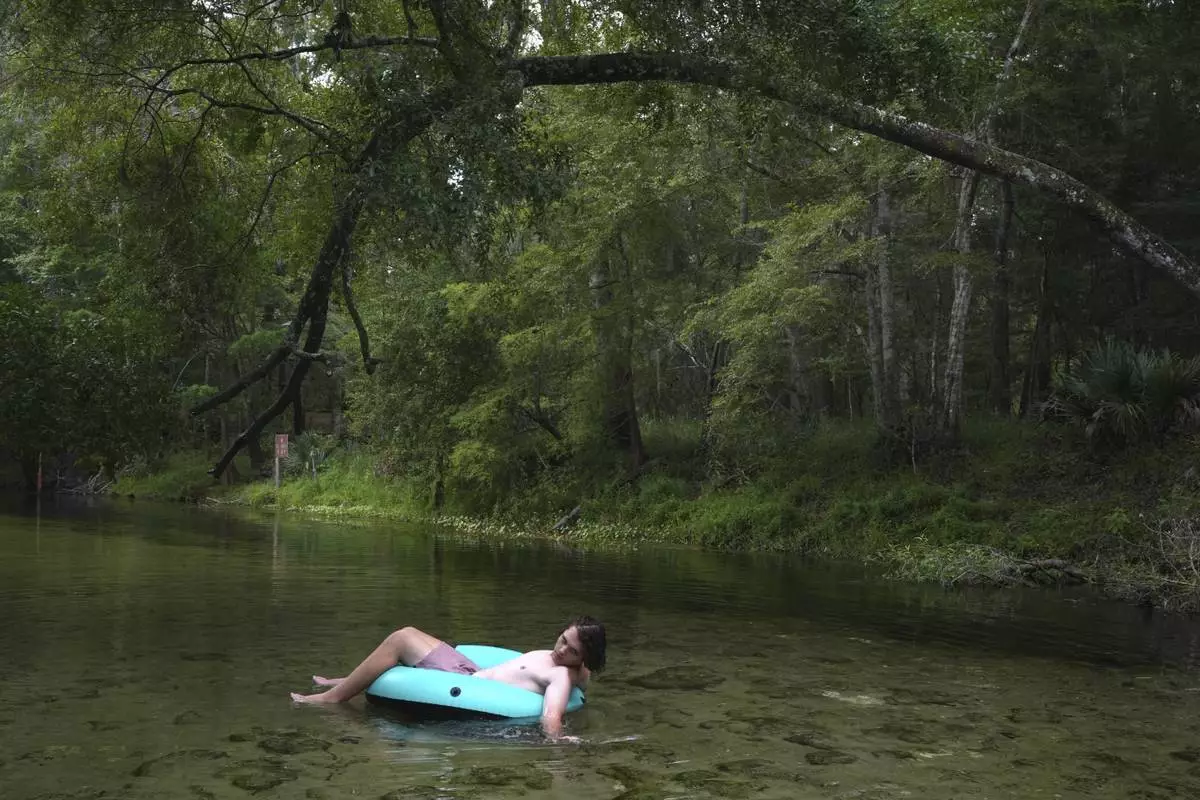
Gage Williams floats along Poe Spring on Tuesday, July 15, 2025, in Alachua County, Fla. (AP Photo/Marta Lavandier)
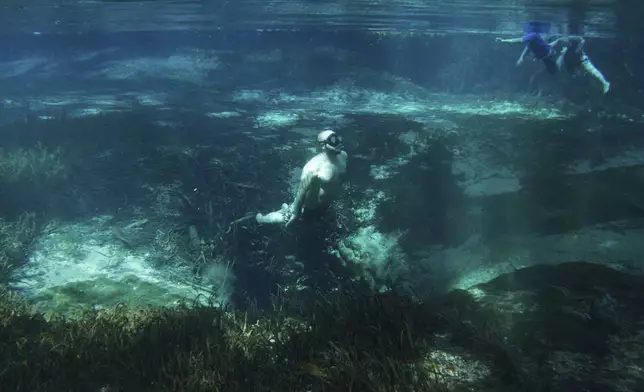
Gage Williams floats along Poe Spring on Tuesday, July 15, 2025, in Alachua County, Fla. (AP Photo/Marta Lavandier)

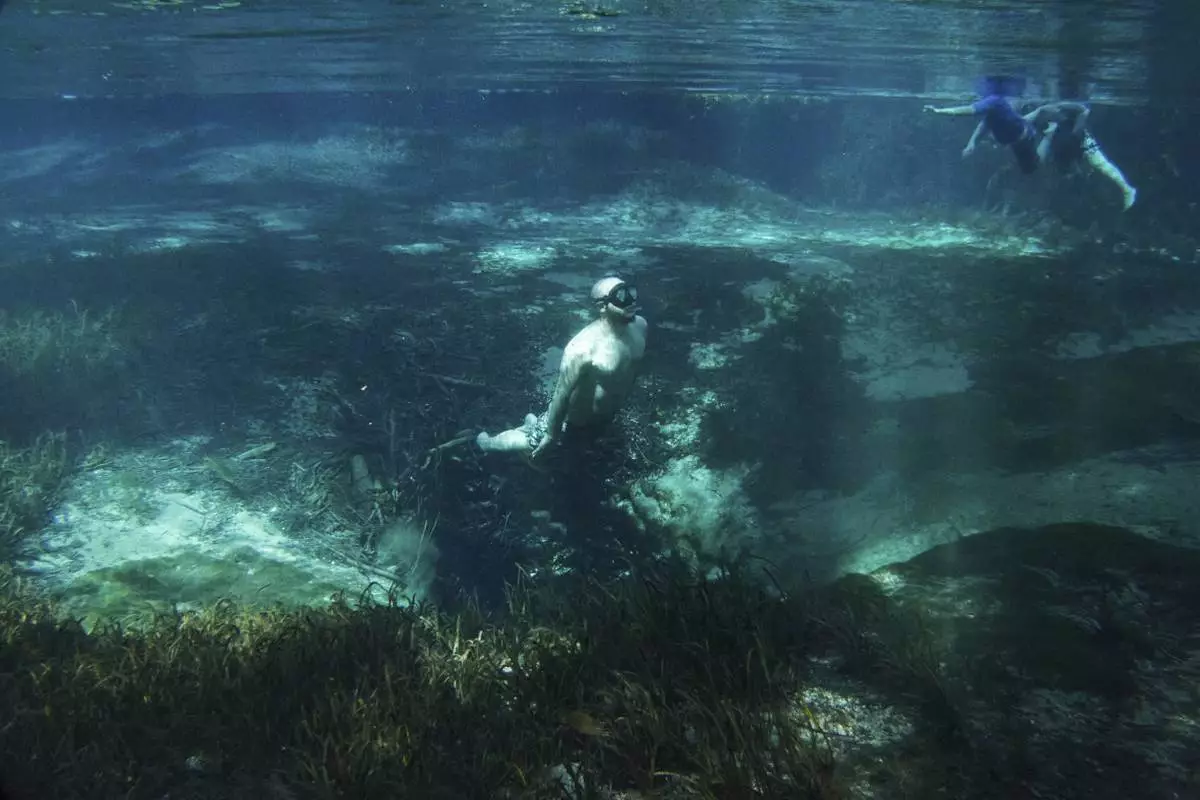
Kaelin Gibbs dives near the Blue Hole vent Wednesday, July 16, 2025, in Fort White, Fla. (AP Photo/Marta Lavandier)
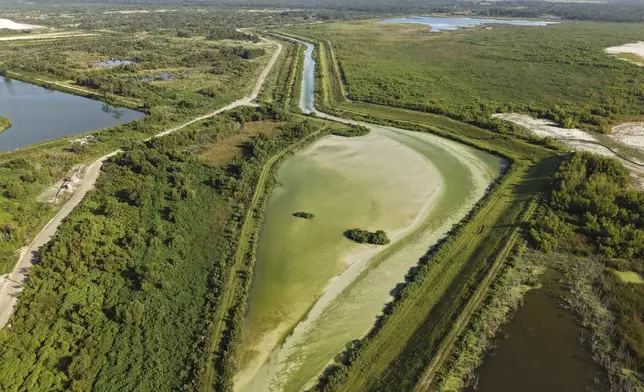
Kaelin Gibbs dives near the Blue Hole vent Wednesday, July 16, 2025, in Fort White, Fla. (AP Photo/Marta Lavandier)

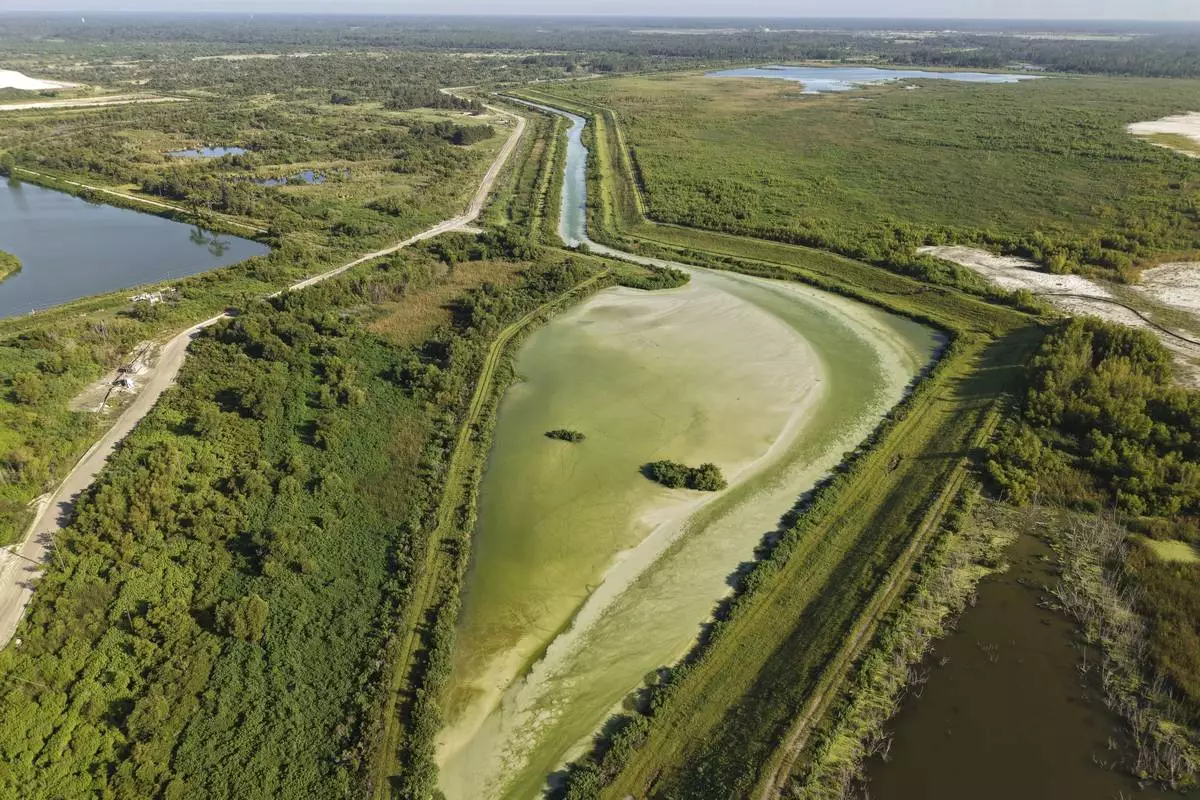
A liquid discharge spills into a waterway from Nutrien, a large phosphate mine in White Springs, Fla., Tuesday, July 15, 2025. (AP Photo/Daniel Kozin)
A liquid discharge spills into a waterway from Nutrien, a large phosphate mine in White Springs, Fla., Tuesday, July 15, 2025. (AP Photo/Daniel Kozin)

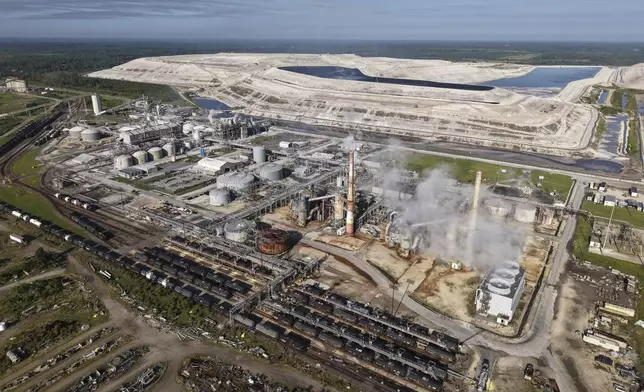
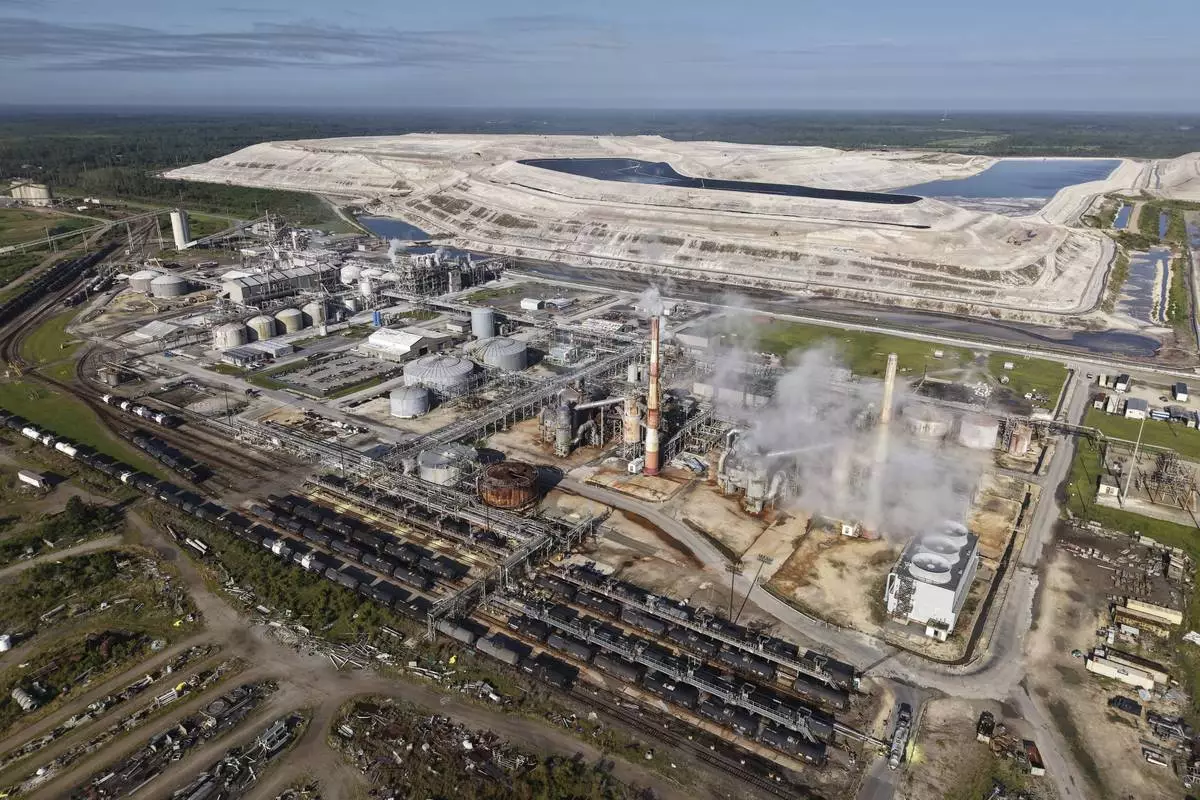
Nutrien, a large phosphate mine in White Springs, Fla., operates Tuesday, July 15, 2025. (AP Photo/Daniel Kozin)
Nutrien, a large phosphate mine in White Springs, Fla., operates Tuesday, July 15, 2025. (AP Photo/Daniel Kozin)

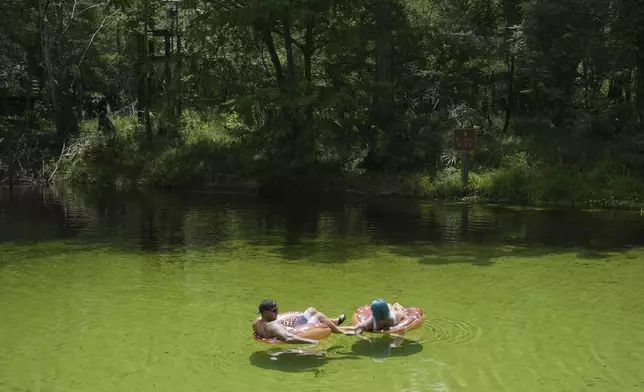
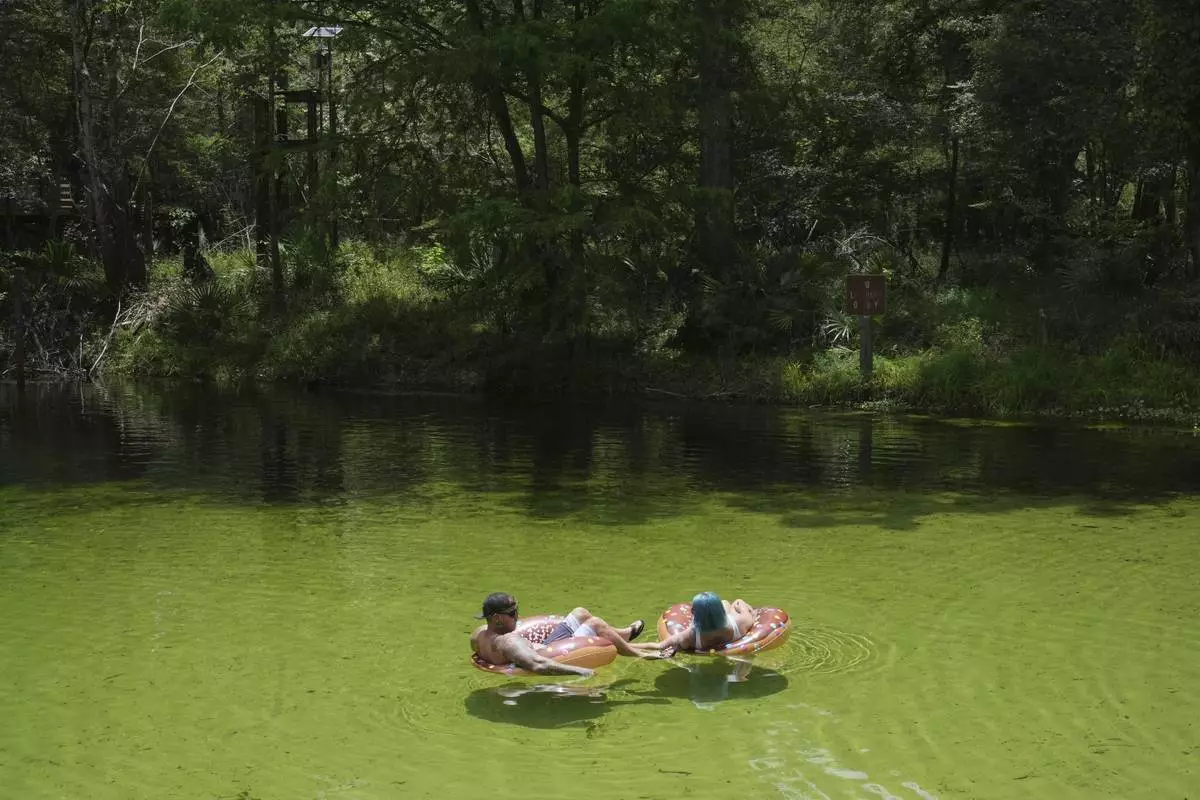
A couple float along Poe Spring amid an algae bloom Tuesday, July 15, 2025, in Alachua County, Fla. (AP Photo/Marta Lavandier)
A couple float along Poe Spring amid an algae bloom Tuesday, July 15, 2025, in Alachua County, Fla. (AP Photo/Marta Lavandier)

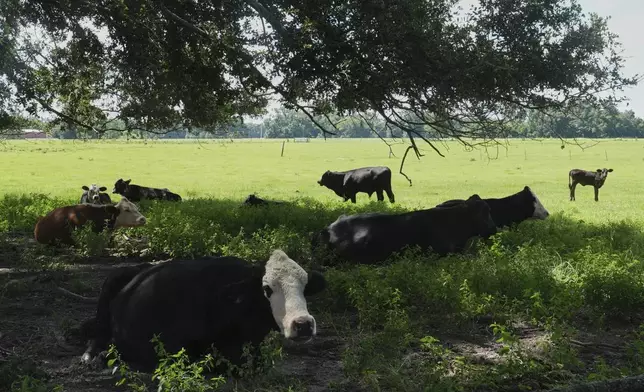
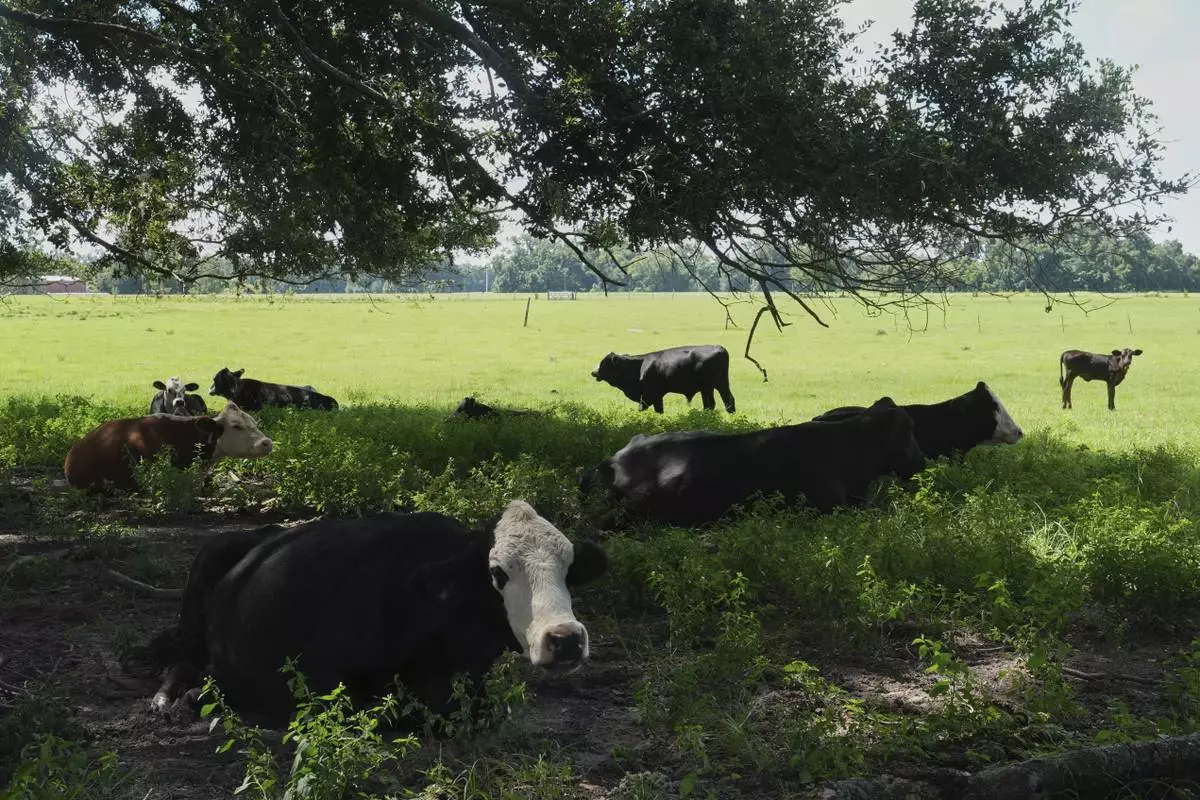
Cows take shelter from the sun Wednesday, July 16, 2025, in Trenton, Fla. (AP Photo/Marta Lavandier)
Cows take shelter from the sun Wednesday, July 16, 2025, in Trenton, Fla. (AP Photo/Marta Lavandier)

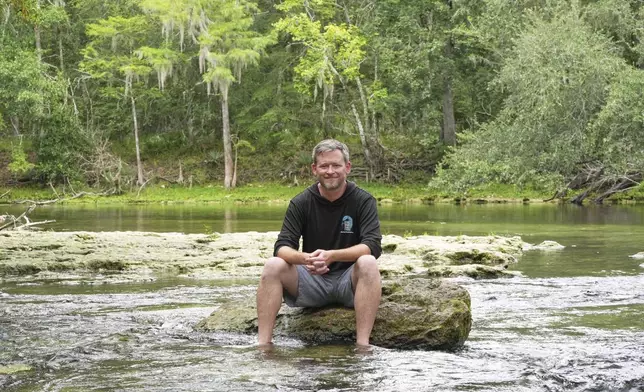
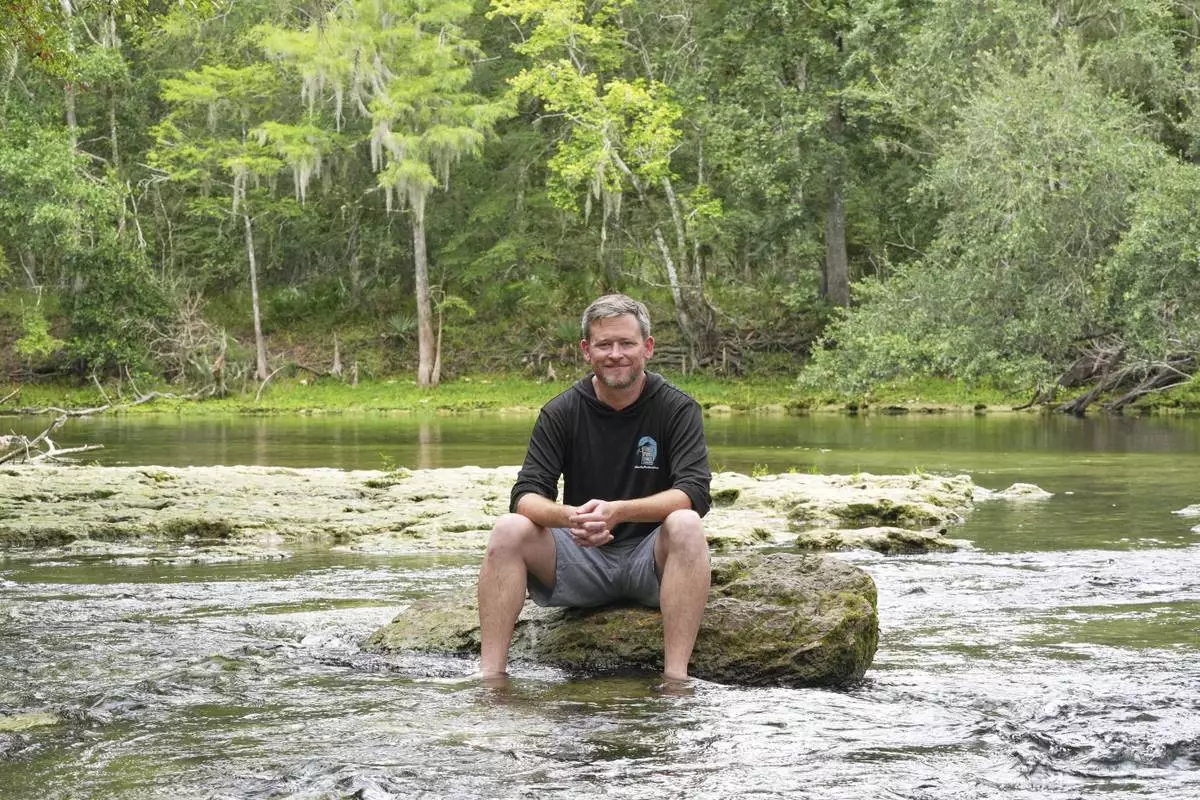
Ryan Smart, executive director of the Florida Spring Council, sits in the Poe Spring on Tuesday, July 15, 2025, in Alachua County, Fla. (AP Photo/Marta Lavandier)
Ryan Smart, executive director of the Florida Spring Council, sits in the Poe Spring on Tuesday, July 15, 2025, in Alachua County, Fla. (AP Photo/Marta Lavandier)

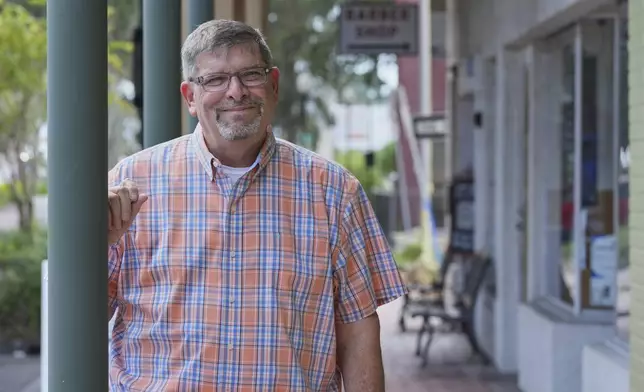
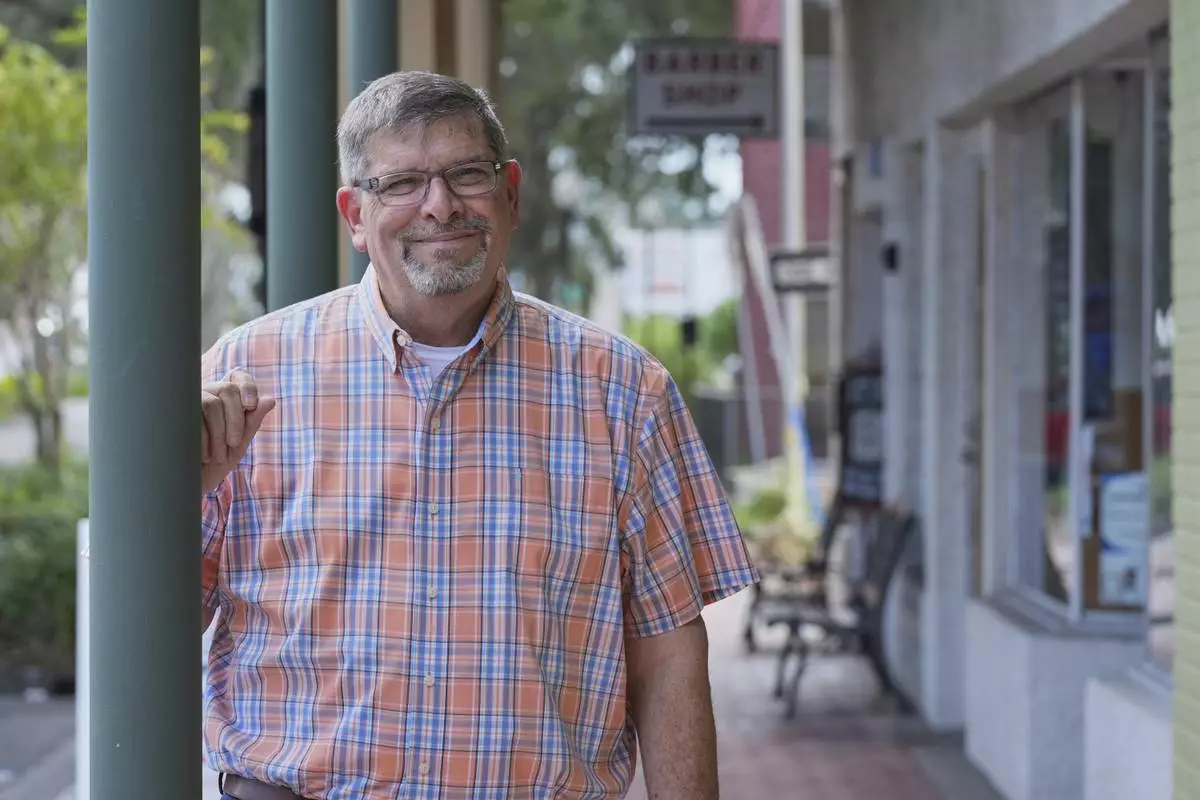
Steven Spina, a member of the Zephyrhills, Fla., town council, poses Wednesday, July 30, 2025, in the historic district of Zephyrhills. (AP Photo/Marta Lavandier)
Steven Spina, a member of the Zephyrhills, Fla., town council, poses Wednesday, July 30, 2025, in the historic district of Zephyrhills. (AP Photo/Marta Lavandier)

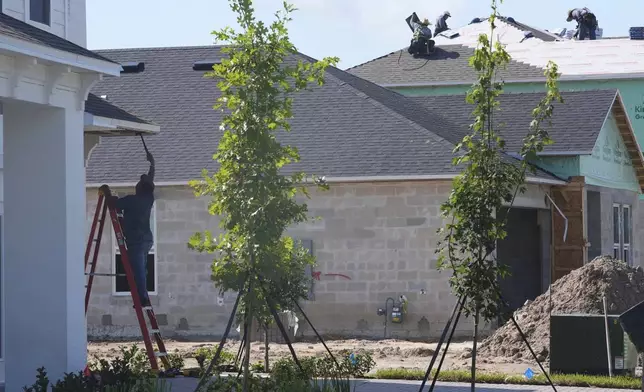
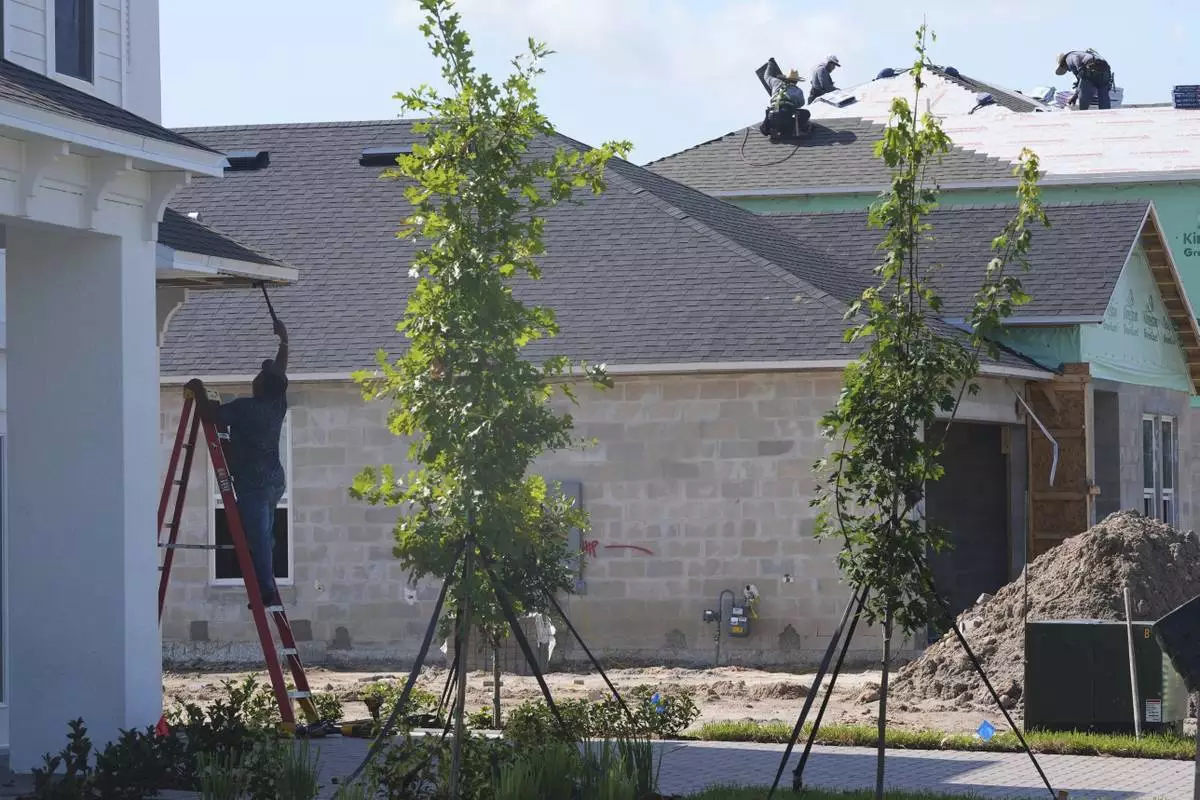
Workers put the final touches on single-family homes Wednesday, July 30, 2025, in Zephyrhills, Fla. The town draws its water from the Floridan Aquifer. (AP Photo/Marta Lavandier)
Workers put the final touches on single-family homes Wednesday, July 30, 2025, in Zephyrhills, Fla. The town draws its water from the Floridan Aquifer. (AP Photo/Marta Lavandier)

A family swims in Royal Spring, Tuesday, July 15, 2025, in Suwanne County, Fla. (AP Photo/Marta Lavandier)
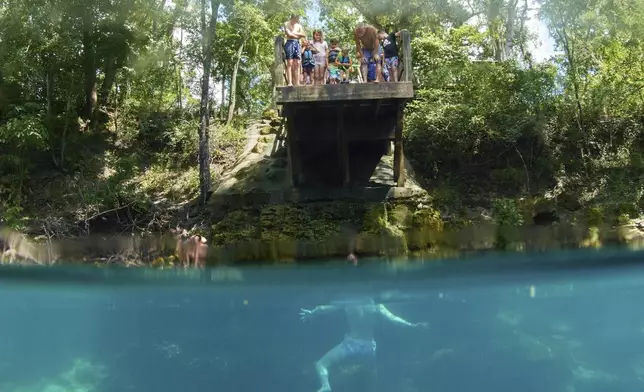
A family swims in Royal Spring, Tuesday, July 15, 2025, in Suwanne County, Fla. (AP Photo/Marta Lavandier)

A father encourages his young son to jump into the deep pool in Royal Spring on Tuesday, July 15, 2025, in Suwannee County, Fla. (AP Photo/Marta Lavandier)
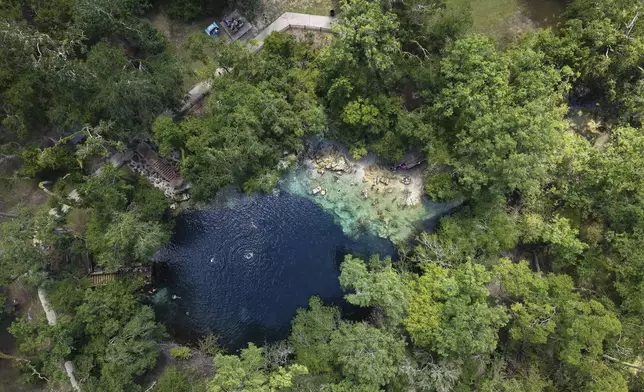
A father encourages his young son to jump into the deep pool in Royal Spring on Tuesday, July 15, 2025, in Suwannee County, Fla. (AP Photo/Marta Lavandier)

Visitors swim at Royal Spring, Tuesday, July 15, 2025, in Suwannee County, Fla. (AP Photo/Daniel Kozin)

Visitors swim at Royal Spring, Tuesday, July 15, 2025, in Suwannee County, Fla. (AP Photo/Daniel Kozin)

Some places, such as fast-growing Zephyrhills in west-central Florida, have paused some construction as it struggles to stay within limits on the drinking water it can withdraw from a vast underground aquifer. Zephyrhills is home to Crystal Springs, source of the bottled water named after the town and several other brands.

“We really had to do something,” said Steven Spina, a member of the town council. “A lot of residents thought it was a good thing. People were happy to see us take a breath.”

Covering an estimated 100,000 square miles (250,000 square kilometers), the underground Floridan Aquifer is the source of 90% of Florida's drinking water. Because of the porous nature of the state's bedrock, millions of gallons of water find their way to the surface in the form of clear, clean springs that, in turn, feed into rivers.

The highest concentration of springs are in central and northern Florida, including most of the 30 “first magnitude” springs — those that discharge at least 65 million gallons (246 million liters) of water every day. All but four of them are considered polluted.

“We just have too much pollution going into the ground and too much water coming out of the ground,” said Ryan Smart, executive director of the nonprofit Florida Springs Council. “And when you get that combination, you end up with springs that are no longer blue and vibrant and full of life.”

In rural Florida, runoff from fertilizers and pesticides used in farm fields is a major part of the problem. Fertilizers containing phosphates and nitrogen promote algae blooms that can suffocate a spring. Livestock waste contributes, too.

“When that algae covers everything, then you lose all of the seagrasses. The seagrasses are the forests of the water,” Smart said. “Then you begin to lose the biodiversity. And it even puts our drinking water at risk.”

Elsewhere in Florida, rampant development is the threat. With over 1,000 people moving to Florida every day, more housing subdivisions are sprouting, along with the roads, strip malls, restaurants, golf courses and everything else that comes with them.

That means more paved surfaces that keep rainwater from percolating down into the aquifer and more pollutant-laden runoff from lawn fertilizers, parking lots, ever-widening roads and sometimes septic tanks. It also means more and more people, many of whom enjoy tubing, paddleboarding, kayaking and swimming in the springs.

It gets so busy in summer at some springs located in state and local parks that entry is halted by late morning. At Ichetucknee Springs State Park north of Gainesville, the daily limit of 750 tubers on the upper river is often reached within an hour after the park opens.

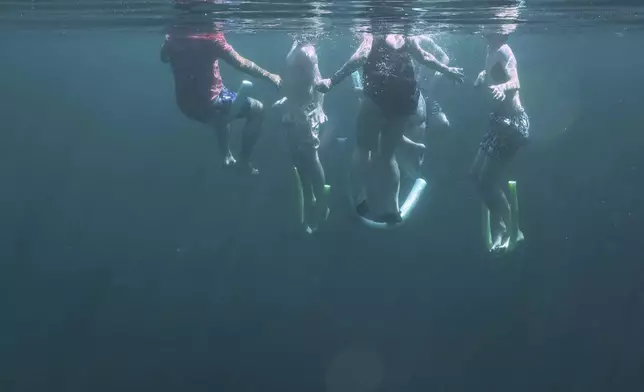
Kaelin Gibbs, on vacation in June with his family from Georgia, was swimming in the Blue Hole Spring along the Ichetucknee River.

“This is simply incredible; the water is cool and clear,” said Gibbs. “We’ve been to Florida’s beaches and to Orlando. There is no comparison to how beautiful this spring is.”

But that's in peril, said Dennis Jones, a Republican former legislator deeply involved in springs issues. He said the volume of permits being issued for water use isn't sustainable.

“You cannot keep taking water out of the aquifer because it’s not an endless supply,” Jones said.

Phosphate mining has also taken a toll on springs. Their operations require a great deal of water, which reduces water pressure available for springs. Some have died almost completely from mining and other factors, including White Sulphur Springs in north Florida, which was a sacred place for Native Americans and later a tourist resort that attracted famous visitors such as Henry Ford and Theodore Roosevelt.

A more subtle threat to the health of springs involves Earth's changing climate. It is altering rainfall patterns around the globe, threatening the balance that feeds Florida's springs.

In addition, some springs along the coasts are facing an intrusion of salt water, according to the Southwest Florida Water Management District. Four major springs are becoming increasingly brackish because of sea level rise and declining rainfall.

"As a result, freshwater vegetation has a hard time surviving in this saltier environment and unwanted vegetation moves in," the district said in a website post.

Florida spends billions every year on water quality projects, including about $800 million this year for Everglades restoration work. State funding for springs runs about $50 million a year, according to state documents.

Two state efforts at improving springs' quality, both around a decade old, remain bottled up in court and administrative challenges. One would strengthen rules for permits to draw water from the major springs. The other would enhance rules to reduce the amount of nutrients such as nitrogen and phosphates that goes into springs that are considered impaired.

Jones, the former legislator, said lobbying by powerful agricultural interests and related political pressures have blocked progress on the nitrogen reduction plan that was expected to take about 20 years.

“We’ve burned up almost 10 years and they haven’t got on stage one. We got more nitrates now than when we started," Jones said.

In Congress, U.S. Rep. Randy Fine recently filed a bill that would create a Florida Springs National Park across several counties, centered around the Ocala National Forest. Fine said in a statement the designation would protect the springs and increase funding. “Our Florida springs are something unique, not just to Florida but to the country,” Fine said.

It costs bottling companies just $115 for a permit allowing them to withdraw millions of gallons of water in perpetuity. But they do pay local taxes.

Blue Triton, the company that bottles Zephyrhills water, pays about $600,000 a year in taxes for things like schools, public safety and so forth, said Spina of the city council.

“They are one of our largest taxpayers,” he said.

Though they have challenges, Florida's freshwater springs have energetic friends, too.

Michelle Jamesson loves the springs; she grew up swimming in one and is determined to help protect them for future generations. She volunteers for SpringsWatch Citizen Science Program, coordinating and working with other volunteers for monthly tests on the Wekiva River, north of Orlando.

They test water quality, take photos of underwater vegetation, count birds and more, seeking to spot any big changes that may require action. The Wekiva is fairly stable, she said, though it carries a lot of excess nutrients.

“The wildlife and the ecology, and all of it — it's so full of life,” Jamesson said.

The Associated Press receives support from the Walton Family Foundation for coverage of water and environmental policy. The AP is solely responsible for all content. For all of AP’s environmental coverage, visit https://apnews.com/hub/climate-and-environment.
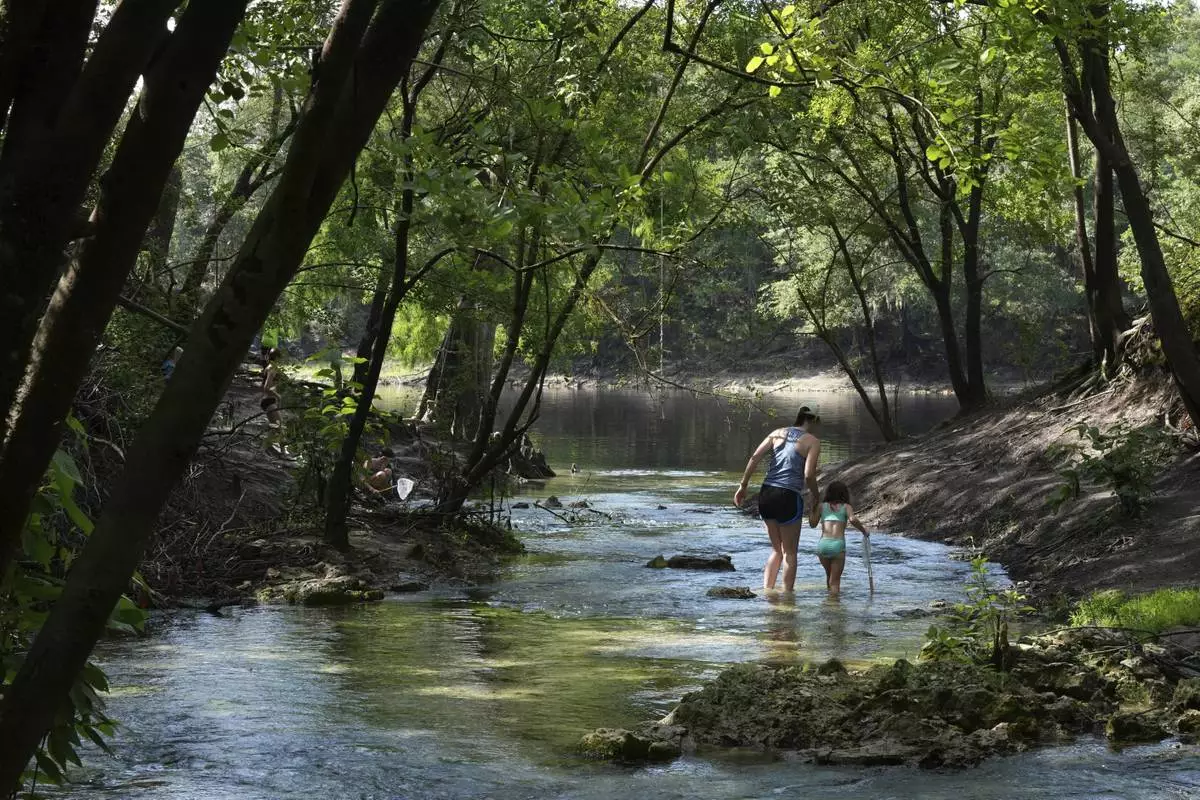
A mother and daughter walk along Royal Spring on Tuesday, July 15, 2025, in Suwannee County, Fla. (AP Photo/Marta Lavandier)
A mother and daughter walk along Royal Spring on Tuesday, July 15, 2025, in Suwannee County, Fla. (AP Photo/Marta Lavandier)

A Great Egret walks on a floating dollar weed mat along the Wekiwa River on Friday, July 18, 2025, in Apopka, Fla. (AP Photo/Marta Lavandier)
A Great Egret walks on a floating dollar weed mat along the Wekiwa River on Friday, July 18, 2025, in Apopka, Fla. (AP Photo/Marta Lavandier)

A young alligator rests on a log along the Wekiwa River, Friday, July 18, 2025, in Apopka, Fla. (AP Photo/Marta Lavandier)
A young alligator rests on a log along the Wekiwa River, Friday, July 18, 2025, in Apopka, Fla. (AP Photo/Marta Lavandier)

Michelle Jamesson, a volunteer at the SpringsWatch Citizen Science Program, takes in numerous readings by volunteers along the Wekiwa River on Friday, July 18, 2025, in Apopka, Fla. (AP Photo/Marta Lavandier)
Michelle Jamesson, a volunteer at the SpringsWatch Citizen Science Program, takes in numerous readings by volunteers along the Wekiwa River on Friday, July 18, 2025, in Apopka, Fla. (AP Photo/Marta Lavandier)

A father and son walk along a mural Wednesday, July 16, 2025, in High Springs, Fla. (AP Photo/Marta Lavandier)
A father and son walk along a mural Wednesday, July 16, 2025, in High Springs, Fla. (AP Photo/Marta Lavandier)

A water gauge measure discharge from White Sulphur Spring, that was a sacred place for Apalachee and Timucuan tribes, Tuesday, July 15, 2025, in White Springs, Fla. (AP Photo/Marta Lavandier)
A water gauge measure discharge from White Sulphur Spring, that was a sacred place for Apalachee and Timucuan tribes, Tuesday, July 15, 2025, in White Springs, Fla. (AP Photo/Marta Lavandier)

Algae hugs the edge and rocks below the water of Royal Spring on Tuesday, July 15, 2025, in Suwannee County, Fla. (AP Photo/Marta Lavandier)
Algae hugs the edge and rocks below the water of Royal Spring on Tuesday, July 15, 2025, in Suwannee County, Fla. (AP Photo/Marta Lavandier)

The bathing area at Rainbow Springs State Park on Friday, July 18, 2025, in Dunnellon, Fla. (AP Photo/Marta Lavandier)
The bathing area at Rainbow Springs State Park on Friday, July 18, 2025, in Dunnellon, Fla. (AP Photo/Marta Lavandier)

Gage Williams swings from a branch near the confluence of Poe Spring and the Santa Fe River on Tuesday, July 15, 2025, in Alachua County, Fla. (AP Photo/Marta Lavandier)
Gage Williams swings from a branch near the confluence of Poe Spring and the Santa Fe River on Tuesday, July 15, 2025, in Alachua County, Fla. (AP Photo/Marta Lavandier)

Gage Williams floats along Poe Spring on Tuesday, July 15, 2025, in Alachua County, Fla. (AP Photo/Marta Lavandier)
Gage Williams floats along Poe Spring on Tuesday, July 15, 2025, in Alachua County, Fla. (AP Photo/Marta Lavandier)

Kaelin Gibbs dives near the Blue Hole vent Wednesday, July 16, 2025, in Fort White, Fla. (AP Photo/Marta Lavandier)
Kaelin Gibbs dives near the Blue Hole vent Wednesday, July 16, 2025, in Fort White, Fla. (AP Photo/Marta Lavandier)

A liquid discharge spills into a waterway from Nutrien, a large phosphate mine in White Springs, Fla., Tuesday, July 15, 2025. (AP Photo/Daniel Kozin)
A liquid discharge spills into a waterway from Nutrien, a large phosphate mine in White Springs, Fla., Tuesday, July 15, 2025. (AP Photo/Daniel Kozin)

Nutrien, a large phosphate mine in White Springs, Fla., operates Tuesday, July 15, 2025. (AP Photo/Daniel Kozin)
Nutrien, a large phosphate mine in White Springs, Fla., operates Tuesday, July 15, 2025. (AP Photo/Daniel Kozin)

A couple float along Poe Spring amid an algae bloom Tuesday, July 15, 2025, in Alachua County, Fla. (AP Photo/Marta Lavandier)
A couple float along Poe Spring amid an algae bloom Tuesday, July 15, 2025, in Alachua County, Fla. (AP Photo/Marta Lavandier)

Cows take shelter from the sun Wednesday, July 16, 2025, in Trenton, Fla. (AP Photo/Marta Lavandier)
Cows take shelter from the sun Wednesday, July 16, 2025, in Trenton, Fla. (AP Photo/Marta Lavandier)

Ryan Smart, executive director of the Florida Spring Council, sits in the Poe Spring on Tuesday, July 15, 2025, in Alachua County, Fla. (AP Photo/Marta Lavandier)
Ryan Smart, executive director of the Florida Spring Council, sits in the Poe Spring on Tuesday, July 15, 2025, in Alachua County, Fla. (AP Photo/Marta Lavandier)

Steven Spina, a member of the Zephyrhills, Fla., town council, poses Wednesday, July 30, 2025, in the historic district of Zephyrhills. (AP Photo/Marta Lavandier)
Steven Spina, a member of the Zephyrhills, Fla., town council, poses Wednesday, July 30, 2025, in the historic district of Zephyrhills. (AP Photo/Marta Lavandier)

Workers put the final touches on single-family homes Wednesday, July 30, 2025, in Zephyrhills, Fla. The town draws its water from the Floridan Aquifer. (AP Photo/Marta Lavandier)
Workers put the final touches on single-family homes Wednesday, July 30, 2025, in Zephyrhills, Fla. The town draws its water from the Floridan Aquifer. (AP Photo/Marta Lavandier)

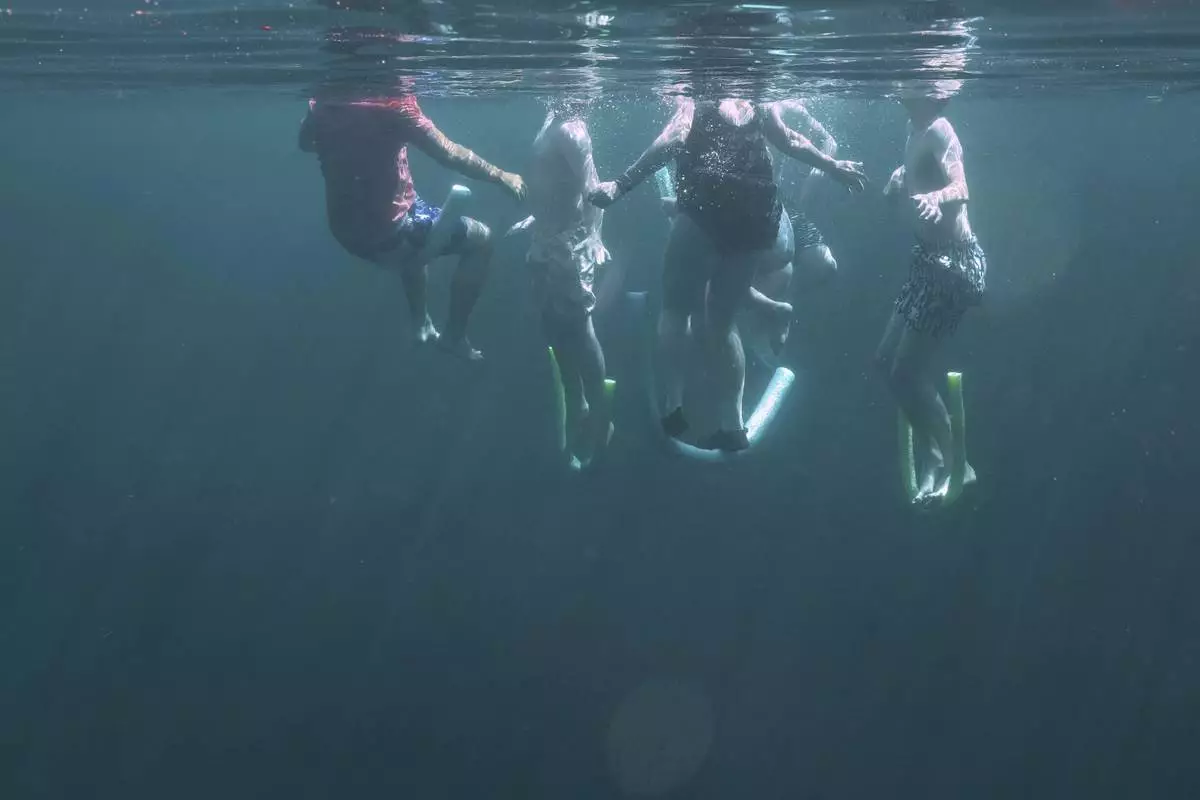
A family swims in Royal Spring, Tuesday, July 15, 2025, in Suwanne County, Fla. (AP Photo/Marta Lavandier)
A family swims in Royal Spring, Tuesday, July 15, 2025, in Suwanne County, Fla. (AP Photo/Marta Lavandier)

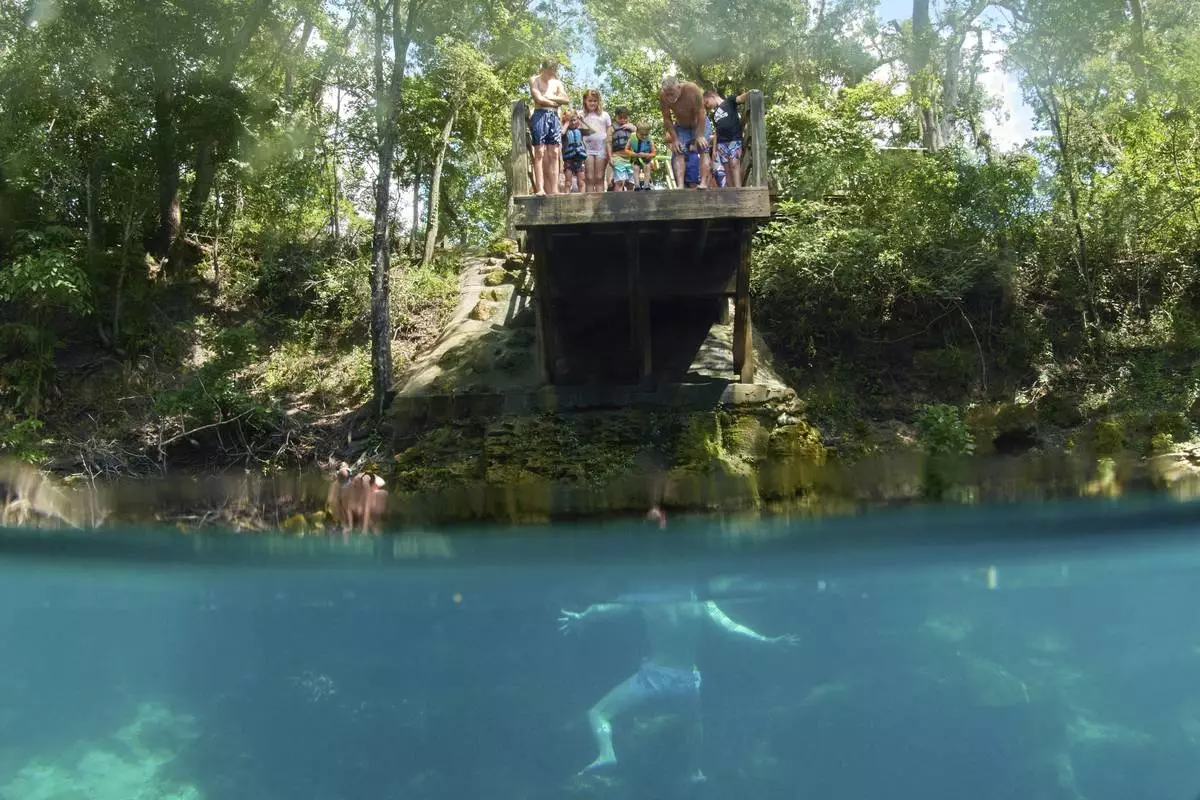
A father encourages his young son to jump into the deep pool in Royal Spring on Tuesday, July 15, 2025, in Suwannee County, Fla. (AP Photo/Marta Lavandier)
A father encourages his young son to jump into the deep pool in Royal Spring on Tuesday, July 15, 2025, in Suwannee County, Fla. (AP Photo/Marta Lavandier)

Visitors swim at Royal Spring, Tuesday, July 15, 2025, in Suwannee County, Fla. (AP Photo/Daniel Kozin)
Visitors swim at Royal Spring, Tuesday, July 15, 2025, in Suwannee County, Fla. (AP Photo/Daniel Kozin)

HAVANA (AP) — Cuban soldiers wearing white gloves marched out of a plane on Thursday carrying urns with the remains of the 32 Cuban officers killed during a stunning U.S. attack on Venezuela as trumpets and drums played solemnly at Havana's airport.

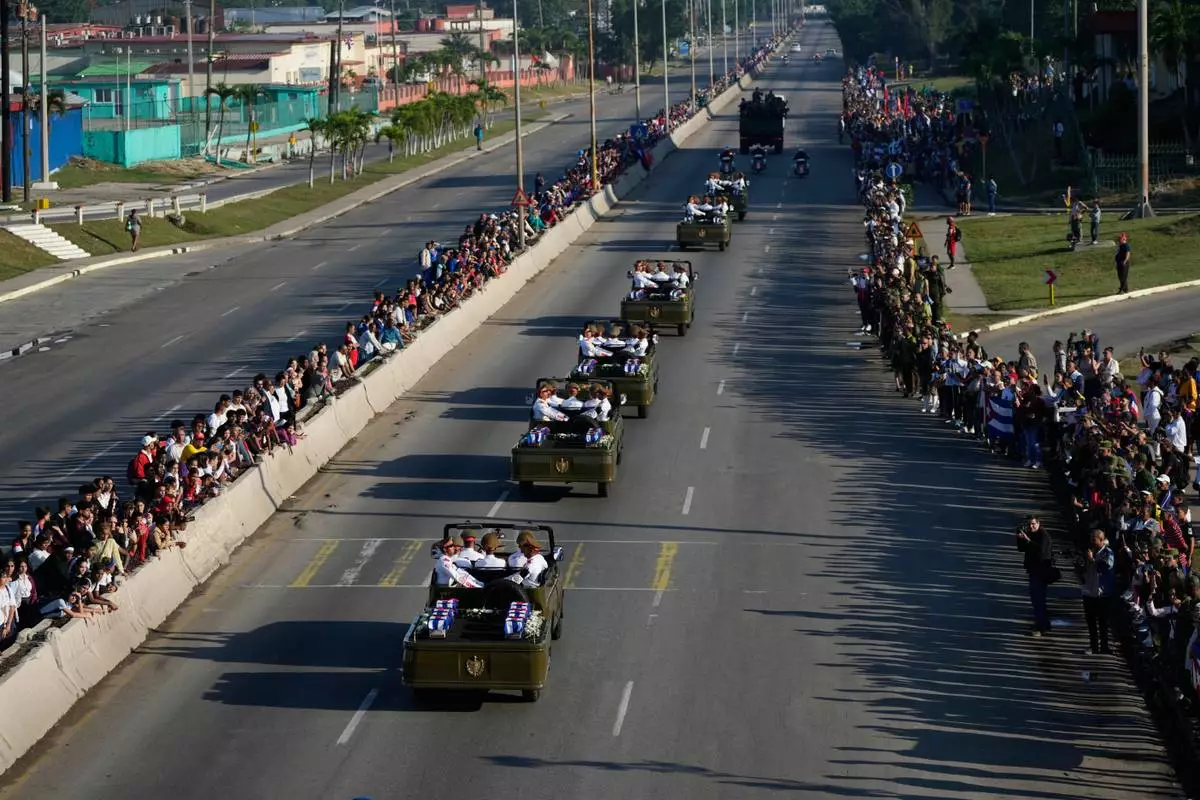
Nearby, thousands of Cubans lined one of Havana’s most iconic streets to await the bodies of colonels, lieutenants, majors and captains as the island remained under threat by the administration of U.S. President Donald Trump.

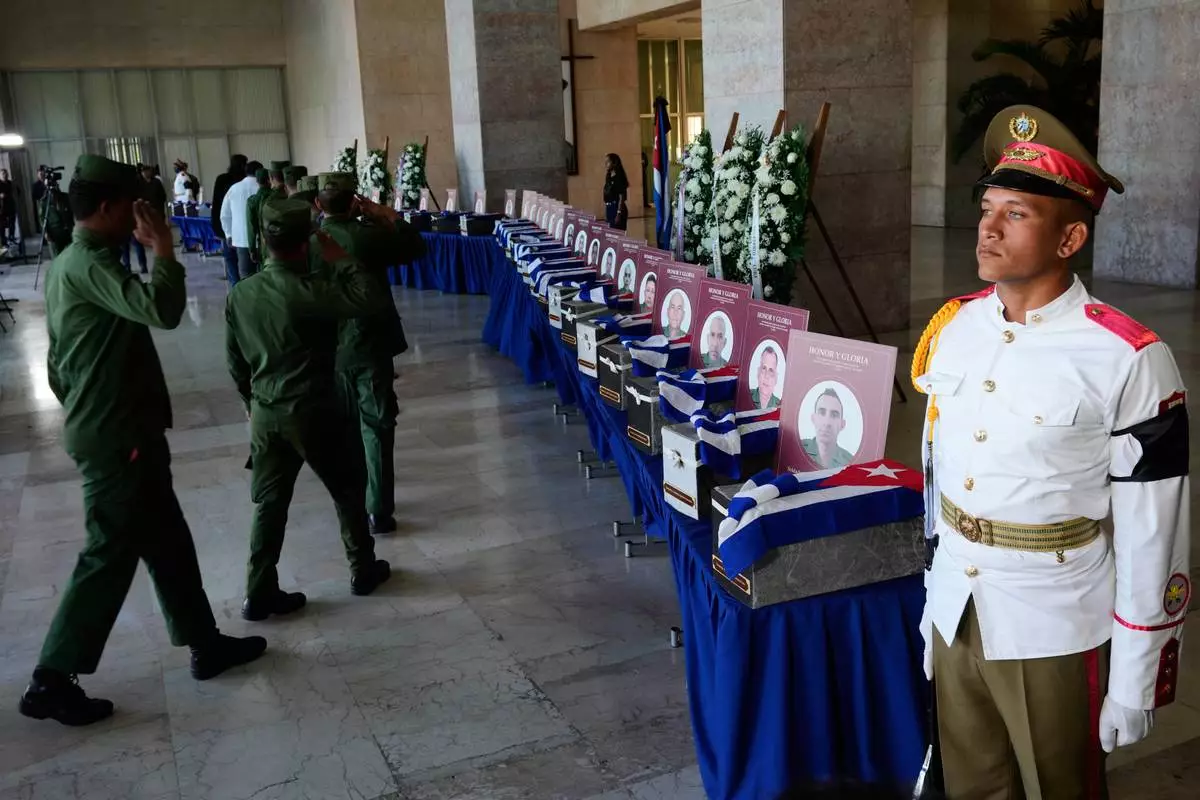
The soldiers' shoes clacked as they marched stiff-legged into the headquarters of the Ministry of the Armed Forces, next to Revolution Square, with the urns and placed them on a long table next to the pictures of those killed so people could pay their respects.

Thursday’s mass funeral was only one of a handful that the Cuban government has organized in almost half a century.

Hours earlier, state television showed images of more than a dozen wounded people described as “combatants” accompanied by Cuban Foreign Minister Bruno Rodríguez arriving Wednesday night from Venezuela. Some were in wheelchairs.

Those injured and the remains of those killed arrived as tensions grow between Cuba and the U.S., with Trump recently demanding that the Caribbean country make a deal with him before it is “too late.” He did not explain what kind of deal.

Trump also has said that Cuba will no longer live off Venezuela's money and oil. Experts warn that the abrupt end of oil shipments could be catastrophic for Cuba, which is already struggling with serious blackouts and a crumbling power grid.

Officials unfurled a massive flag at Havana's airport as President Miguel Díaz-Canel, clad in military garb as commander of Cuba's Armed Forces, stood silent next to former President Raúl Castro, with what appeared to be the relatives of those killed looking on nearby.

Cuban Interior Minister Lázaro Alberto Álvarez Casa said Venezuela was not a distant land for those killed, but a “natural extension of their homeland.”

“The enemy speaks to an audience of high-precision operations, of troops, of elites, of supremacy,” Álvarez said in apparent reference to the U.S. “We, on the other hand, speak of faces, of families who have lost a father, a son, a husband, a brother.”

Álvarez called those slain “heroes,” saying that they were an example of honor and “a lesson for those who waver.”

“We reaffirm that if this painful chapter of history has demonstrated anything, it is that imperialism may possess more sophisticated weapons; it may have immense material wealth; it may buy the minds of the wavering; but there is one thing it will never be able to buy: the dignity of the Cuban people,” he said.

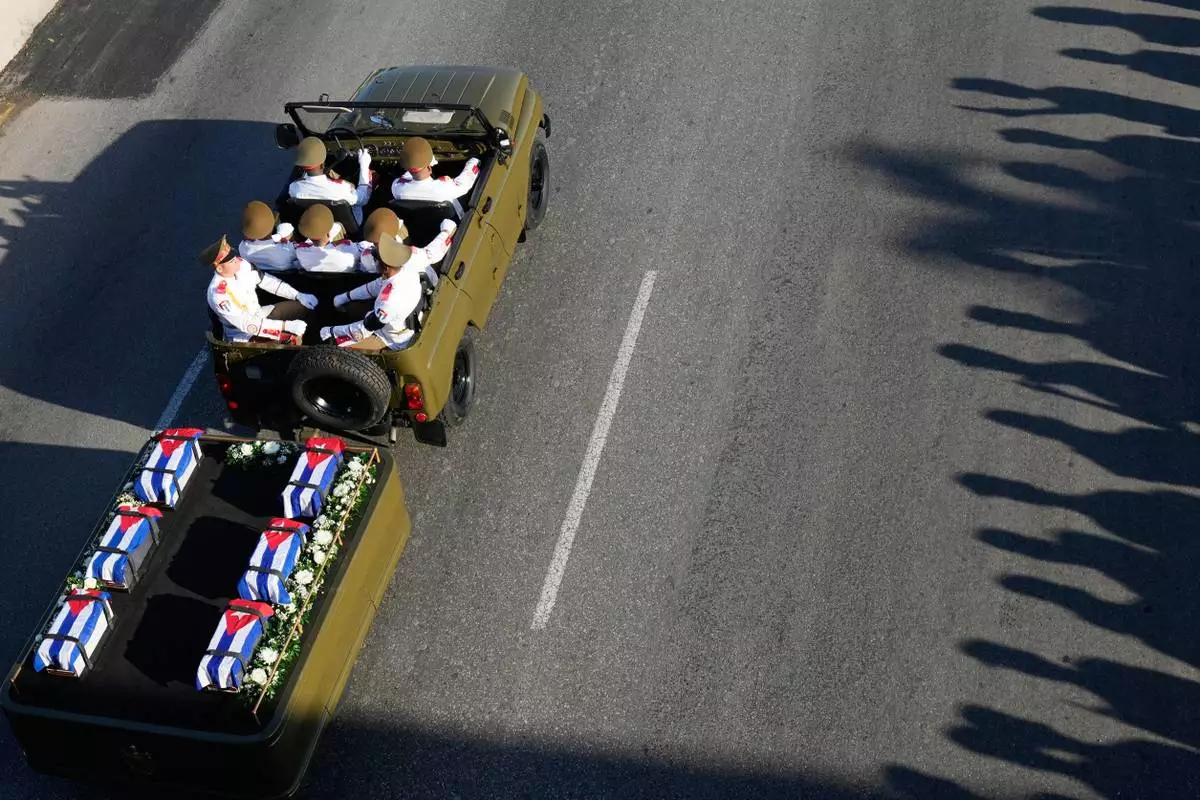
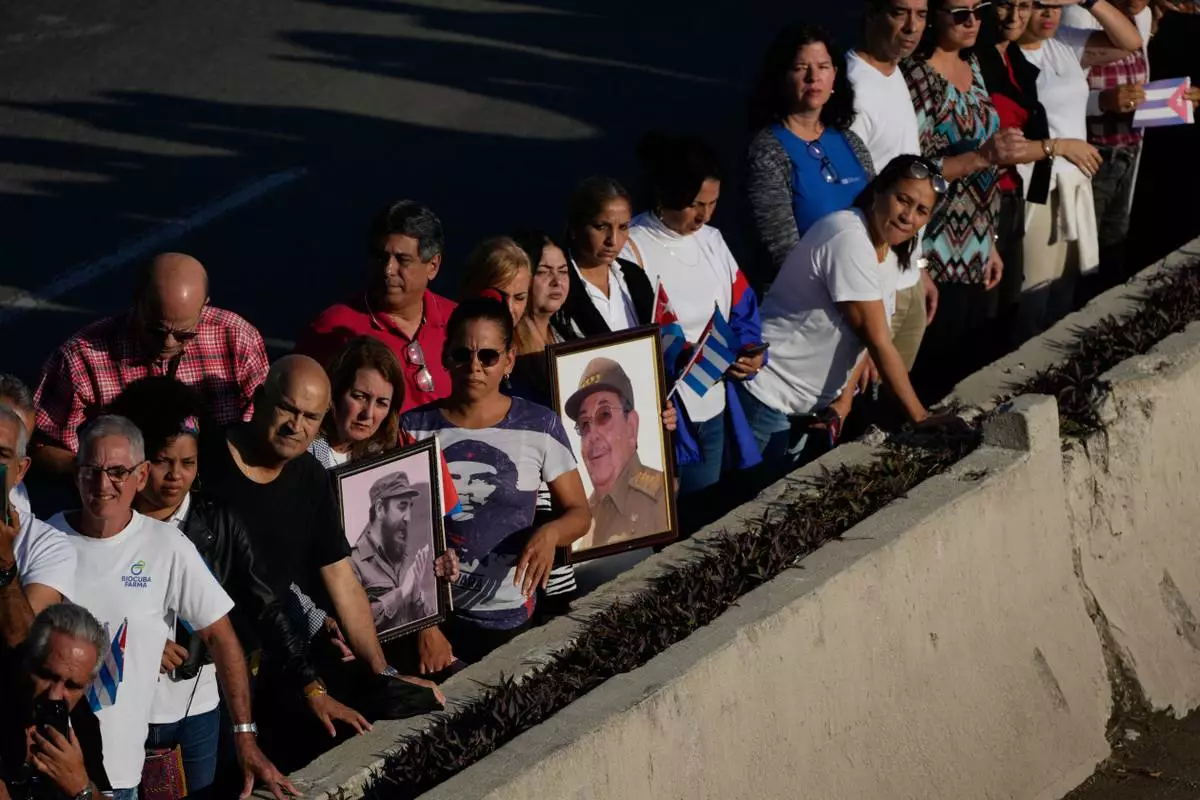
Thousands of Cubans lined a street where motorcycles and military vehicles thundered by with the remains of those killed.

“They are people willing to defend their principles and values, and we must pay tribute to them,” said Carmen Gómez, a 58-year-old industrial designer, adding that she hopes no one invades given the ongoing threats.

When asked why she showed up despite the difficulties Cubans face, Gómez replied, “It’s because of the sense of patriotism that Cubans have, and that will always unite us.”

Cuba recently released the names and ranks of 32 military personnel — ranging in age from 26 to 60 — who were part of the security detail of Venezuelan President Nicolás Maduro during the raid on his residence on January 3. They included members of the Revolutionary Armed Forces and the Ministry of the Interior, the island’s two security agencies.

Cuban and Venezuelan authorities have said that the uniformed personnel were part of protection agreements between the two countries.

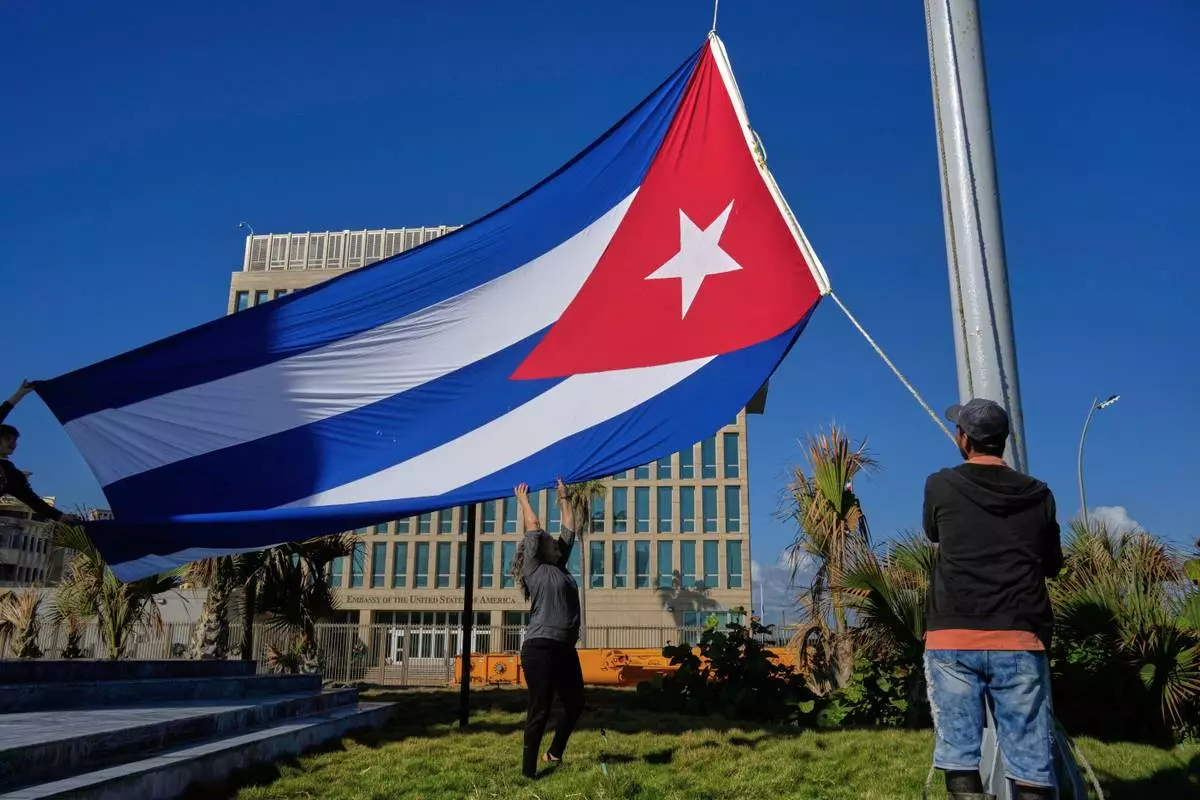
A demonstration was planned for Friday across from the U.S. Embassy in an open-air forum known as the Anti-Imperialist Tribune. Officials have said they expect the demonstration to be massive.

“People are upset and hurt. There’s a lot of talk on social media; but many do believe that the dead are martyrs” of a historic struggle against the United States, analyst and former diplomat Carlos Alzugaray told The Associated Press.

In October 1976, then-President Fidel Castro led a massive demonstration to bid farewell to the 73 people killed in the bombing of a Cubana de Aviación civilian flight financed by anti-revolutionary leaders in the U.S. Most of the victims were Cuban athletes.

In December 1989, officials organized “Operation Tribute” to honor the more than 2,000 Cuban combatants who died in Angola during Cuba’s participation in the war that defeated the South African army and ended the apartheid system. In October 1997, memorial services were held following the arrival of the remains of guerrilla commander Ernesto “Che” Guevara and six of his comrades, who died in 1967.

The latest mass burial is critical to honor those slain, said José Luis Piñeiro, a 60-year-old doctor who lived four years in Venezuela.

“I don’t think Trump is crazy enough to come and enter a country like this, ours, and if he does, he’s going to have to take an aspirin or some painkiller to avoid the headache he’s going to get,” Piñeiro said. “These were 32 heroes who fought him. Can you imagine an entire nation? He’s going to lose.”

A day before the remains of those killed arrived in Cuba, U.S. Secretary of State Marco Rubio announced $3 million in aid to help the island recover from the catastrophic Hurricane Melissa, which struck in late October.

The first flight took off from Florida on Wednesday, and a second flight was scheduled for Friday. A commercial vessel also will deliver food and other supplies.

“We have taken extraordinary measures to ensure that this assistance reaches the Cuban people directly, without interference or diversion by the illegitimate regime,” Rubio said, adding that the U.S. government was working with Cuba's Catholic Church.

The announcement riled Cuban Foreign Minister Bruno Rodríguez.

“The U.S. government is exploiting what appears to be a humanitarian gesture for opportunistic and politically manipulative purposes,” he said in a statement. “As a matter of principle, Cuba does not oppose assistance from governments or organizations, provided it benefits the people and the needs of those affected are not used for political gain under the guise of humanitarian aid.”

Coto contributed from San Juan, Puerto Rico.

Follow AP’s coverage of Latin America and the Caribbean at https://apnews.com/hub/latin-america

Military members pay their last respects to Cuban officers who were killed during the U.S. operation in Venezuela that captured Venezuelan President Nicolas Maduro, at the Ministry of the Revolutionary Armed Forces where the urns containing the remains are displayed during a ceremony in Havana, Cuba, Thursday, Jan. 15, 2026. (AP Photo/Ramon Espinosa)

Military members pay their last respects to Cuban officers who were killed during the U.S. operation in Venezuela that captured Venezuelan President Nicolas Maduro, at the Ministry of the Revolutionary Armed Forces where the urns containing the remains are displayed during a ceremony in Havana, Cuba, Thursday, Jan. 15, 2026. (AP Photo/Ramon Espinosa)

A motorcade transports urns containing the remains of Cuban officers, who were killed during the U.S. operation in Venezuela that captured Venezuelan President Nicolas Maduro, through Havana, Cuba, Thursday, Jan. 15, 2026. (AP Photo/Ramon Espinosa)

A motorcade transports urns containing the remains of Cuban officers, who were killed during the U.S. operation in Venezuela that captured Venezuelan President Nicolas Maduro, through Havana, Cuba, Thursday, Jan. 15, 2026. (AP Photo/Ramon Espinosa)

Soldiers carry urns containing the remains of Cuban officers, who were killed during the U.S. operation in Venezuela that captured Venezuelan President Nicolas Maduro, at the Ministry of the Revolutionary Armed Forces in Havana, Cuba, Thursday, Jan. 15, 2026. (Adalberto Roque /Pool Photo via AP)

Soldiers carry urns containing the remains of Cuban officers, who were killed during the U.S. operation in Venezuela that captured Venezuelan President Nicolas Maduro, at the Ministry of the Revolutionary Armed Forces in Havana, Cuba, Thursday, Jan. 15, 2026. (Adalberto Roque /Pool Photo via AP)

A motorcade transports urns containing the remains of Cuban officers, who were killed during the U.S. operation in Venezuela that captured Venezuelan President Nicolas Maduro, through Havana, Cuba, Thursday, Jan. 15, 2026. (AP Photo/Ramon Espinosa)

A motorcade transports urns containing the remains of Cuban officers, who were killed during the U.S. operation in Venezuela that captured Venezuelan President Nicolas Maduro, through Havana, Cuba, Thursday, Jan. 15, 2026. (AP Photo/Ramon Espinosa)

A motorcade transports urns containing the remains of Cuban officers, who were killed during the U.S. operation in Venezuela that captured Venezuelan President Nicolas Maduro, through Havana, Cuba, Thursday, Jan. 15, 2026. (AP Photo/Ramon Espinosa)

A motorcade transports urns containing the remains of Cuban officers, who were killed during the U.S. operation in Venezuela that captured Venezuelan President Nicolas Maduro, through Havana, Cuba, Thursday, Jan. 15, 2026. (AP Photo/Ramon Espinosa)

People line the streets of Havana, Cuba, Thursday, Jan. 15, 2026, to watch the motorcade carrying urns containing the remains of Cuban officers killed during the U.S. operation in Venezuela that captured Venezuelan President Nicolas Maduro. (AP Photo/Ramon Espinosa)

People line the streets of Havana, Cuba, Thursday, Jan. 15, 2026, to watch the motorcade carrying urns containing the remains of Cuban officers killed during the U.S. operation in Venezuela that captured Venezuelan President Nicolas Maduro. (AP Photo/Ramon Espinosa)

Workers fly the Cuban flag at half-staff at the Anti-Imperialist Tribune near the U.S. Embassy in Havana, Cuba, Monday, Jan. 5, 2026, in memory of Cubans who died two days before in Caracas, Venezuela during the capture of Venezuelan President Nicolas Maduro by U.S. forces. (AP Photo/Ramon Espinosa)

Workers fly the Cuban flag at half-staff at the Anti-Imperialist Tribune near the U.S. Embassy in Havana, Cuba, Monday, Jan. 5, 2026, in memory of Cubans who died two days before in Caracas, Venezuela during the capture of Venezuelan President Nicolas Maduro by U.S. forces. (AP Photo/Ramon Espinosa)

Recommended Articles