NEW YORK (AP) — The CDC is in chaos and some groups are starting to step in and take over work the agency was doing.
The moves come in response to Health Secretary Robert F. Kennedy Jr.'s extensive — and some say illegal — restructuring and downsizing of the Atlanta-based Centers for Disease Control and Prevention.
Many public health veterans see an agency wracked by a leadership crisis, staff cuts, budget cuts and unprecedented levels of political meddling. The concern hit a crescendo when the White House moved to oust the agency's director and some top CDC leaders resigned in protest.
But even before CDC Director Susan Monarez was fired, some organizations started pursuing new ways to do jobs formerly handled by the CDC.
Some are working to preserve longstanding vaccination recommendations. Some are trying to release information that CDC has stopped providing. Others aim to maintain health data collections at risk of being lost.
But these outside efforts don't have the federal funding, resources, legal mechanisms or platform that have been the underpinning of the nation's public health system. As noble as they are, these patchwork efforts probably won't cut it, some experts say.
“There may be some workarounds,” said Dr. Megan Ranney, dean of the Yale School of Public Health. “But I'm not sure it's fair or appropriate that people feel like they have to turn to private groups instead of the government.”
For decades, the CDC has set the nation’s standards on vaccines — which ones are recommended and who should get them.
The recommendations were guidance, not law. But they were automatically adopted by doctors, school systems, health insurers and others.
They were the result of a lengthy data review process involving a panel of outside experts, the Advisory Committee on Immunization Practices.
But in May, Kennedy — a longtime leader in the anti-vaccine movement — announced COVID-19 vaccines would no longer be recommended for healthy children and pregnant women. He made the decision without input from the ACIP.
In June, he abruptly dismissed the entire panel, accusing them of being too closely aligned with manufacturers. He replaced them with a handpicked group that included several vaccine skeptics, and then shut the door to several doctors groups that had long helped form ACIP recommendations.
It’s not clear what other changes are in store for ACIP, but a number of medical groups say Kennedy can’t be counted on to make decisions based on robust medical evidence.
The moves sparked a group of public health researchers and others to form the Vaccine Integrity Project, based at the University of Minnesota, which aims to become the kind of compiler and reporter of medical evidence that the CDC and ACIP have been in the past.
In mid-August, the group held an ACIP-like Zoom meeting, in which subject-matter experts presented lengthy reviews of recent research about the safety and effectiveness of COVID-19, flu and RSV vaccines for children, pregnant women and people with weakened immune systems.
It also featured a four-person panel of experts, including the editor-in-chief of the New England Journal of Medicine. Like ACIP members, they asked presenters questions about their analyses.
Presenters made clear that they had to base their presentations on what had appeared in medical journals and was publicly available; they weren’t privy to unpublished surveillance and safety data that CDC collects.
The group is not making vaccination recommendations itself. But it is working with doctors organizations that are. One is the American College of Obstetricians and Gynecologists, which has said pregnant women should continue to get COVID-19 shots — counter to what Kennedy announced. Another is the American Academy of Pediatrics continuing to recommend them for children ages 6 months to 2 years.
But as medical societies split from CDC, it’s not yet clear which recommendations insurers will heed when making coverage decisions. And there remain a number of other questions, such as: What will happen in states that have vaccination policies tied to ACIP recommendations?
In Massachusetts, Democratic Gov. Maura Healey included language in a $2.45 billion supplemental budget bill that gives the health department authority to set its own recommendations and requirements if the federal government “fails to maintain a robust schedule of vaccine recommendations.”
Some other efforts now underway:
During the COVID-19 pandemic, the CDC teamed up with researchers at Boston Children’s Hospital and Harvard Medical School on www.vaccines.gov. The website told about newly developed vaccines recommended to protect against the coronavirus and served as a search engine to help people find nearby pharmacies that had the shots in stock.
But the site gradually dropped information about vaccines and why they were recommended, and this year became a stripped-down version that simply said: “Find a pharmacy near you” and a box to type in your zip code. When the government's contract with Boston Children's Hospital ended in late July, the site stopped working altogether.
Researchers at Boston Children's Hospital this month restarted a version of the site that existed before the pandemic, www.vaccinefinder.org.
“We're turning back to what it was,” said John Brownstein of Boston Children's, who founded the site. “Obviously, as a (government) site it carries more weight. But if that isn’t in the cards, we’re very happy to carry the torch.”
Last month, the Association for Dental Safety launched a new institute for dental safety that was designed to pick up some of the work done by the CDC’s Division of Oral Health, which was eliminated in the spring. The new institute is first focused on updating infection controls guidelines for dental offices, which the CDC last updated in 2003.
“Without a doubt, ADS is the best choice to continue oversight of dental infection prevention and control guidelines, ensuring recommendations are current, scientifically sound, translated into lay terms and disseminated to those who need them on a daily basis,” said Nicole Johnson, former associate director in the CDC’s Division of Oral Health, in a press statement.
The CDC's Pregnancy Risk Assessment Monitoring System, which annually surveys women across the country, lost its entire staff — about 20 people — in layoffs this year. It was the most comprehensive collection of data on the health behaviors and outcomes before, during and after childbirth. Researchers have been using its data to investigate the nation’s maternal mortality problem.
Some states that have the money and motivation might decide to run similar surveys, just within their borders. California runs its own, PRAMS-like survey.
But “if states are doing their own thing, then we don't have national, comparable data across jurisdictions and across time,” meaning its not possible to see where problems are most severe and which policies to reduce maternal deaths are working, said Jamie Daw, a Columbia University health policy researcher focused on pregnancy.
Kennedy recently fired about 100 CDC staffers who provided training, education, and advice to state and local violence prevention programs, and evaluate how well they were working.
“What's the point in knowing the about the rates of violence if you're not going to do anything about it?” said Sarah DeGue, one of the laid-off CDC researchers.
But existing programs still need technical guidance and expertise. In May, DeGue founded Violence Prevention Solutions, a consulting firm, to help community organizations develop and evaluate programs.
“It's us trying to rebuild what we had somewhere else, in a different way, so that all the knowledge and experience and resources that we had can still be available,” she said.
AP reporter Michael Casey in Boston contributed.
The Associated Press Health and Science Department receives support from the Howard Hughes Medical Institute’s Science and Educational Media Group and the Robert Wood Johnson Foundation. The AP is solely responsible for all content.
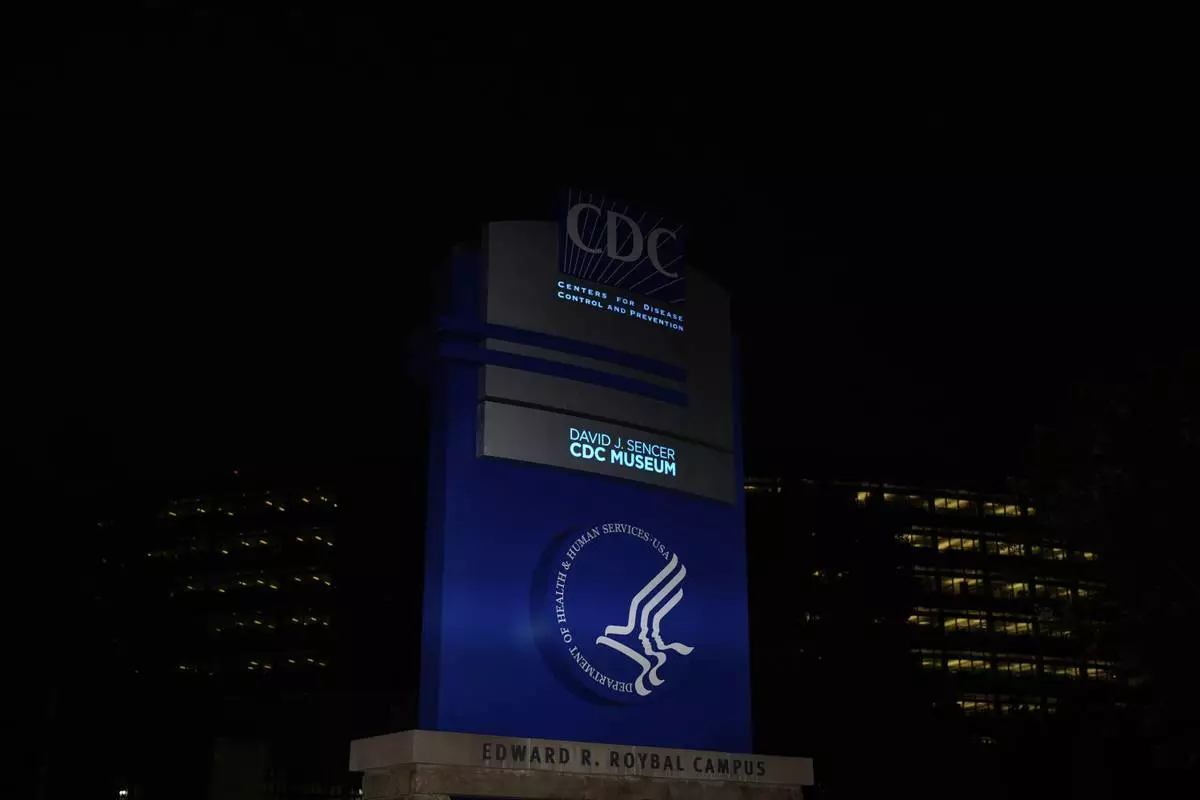
A sign marks the entrance to the U.S. Centers for Disease Control and Prevention headquarters in Atlanta, on Wednesday, Aug. 27, 2025. (AP Photo/Brynn Anderson)

Buildings at the U.S. Centers for Disease Control and Prevention headquarters are seen in Atlanta, on Wednesday, Aug. 27, 2025. (AP Photo/Brynn Anderson)
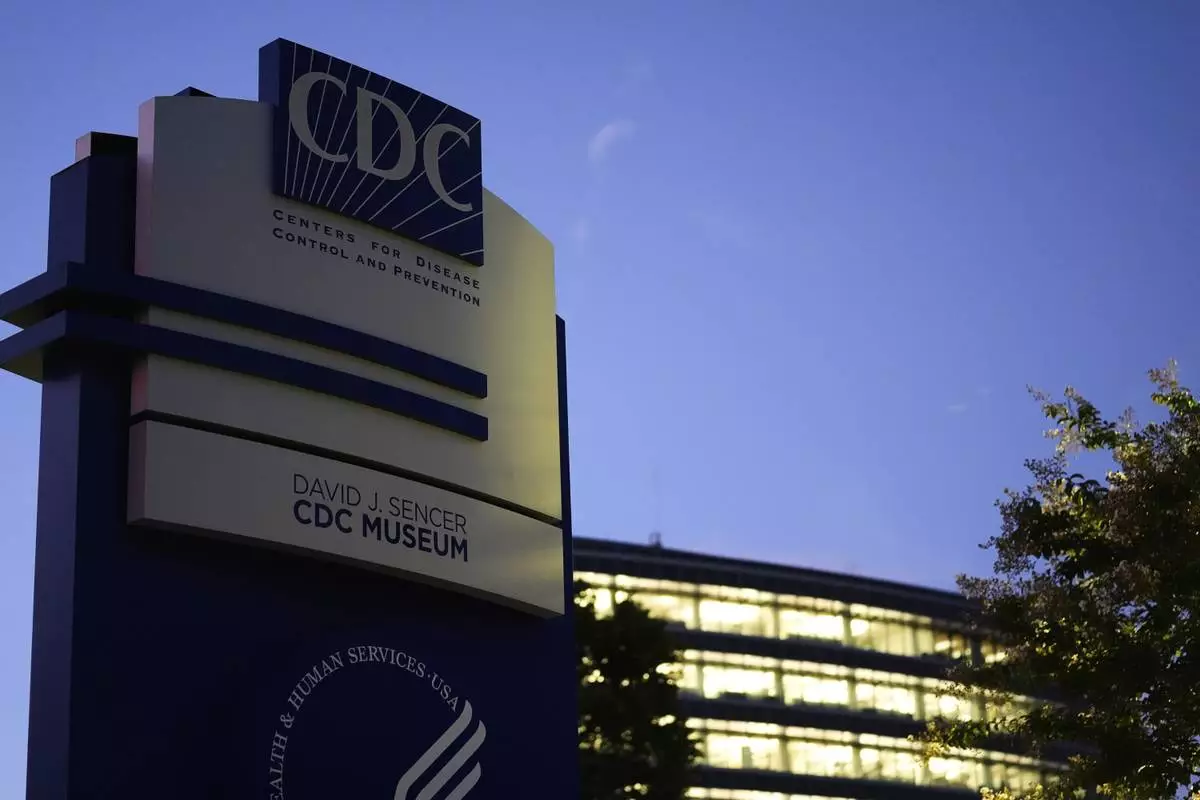
A sign marks the entrance to the U.S. Centers for Disease Control and Prevention headquarters in Atlanta, on Wednesday, Aug. 27, 2025. (AP Photo/Brynn Anderson)