MINNEAPOLIS (AP) — A shooting at a Catholic church full of schoolchildren in Minnesota has prompted calls for gun safety legislation. But translating action into policy may be difficult in a state that mirrors the nation's partisan divisions and split opinions on how best to prevent mass shootings.
A day after the deadly shootings, Minneapolis Mayor Jacob Frey on Thursday called for a statewide and federal ban on certain semiautomatic weapons and high-capacity magazines. If others don't act, Frey suggested, the city may act on its own.
Click to Gallery
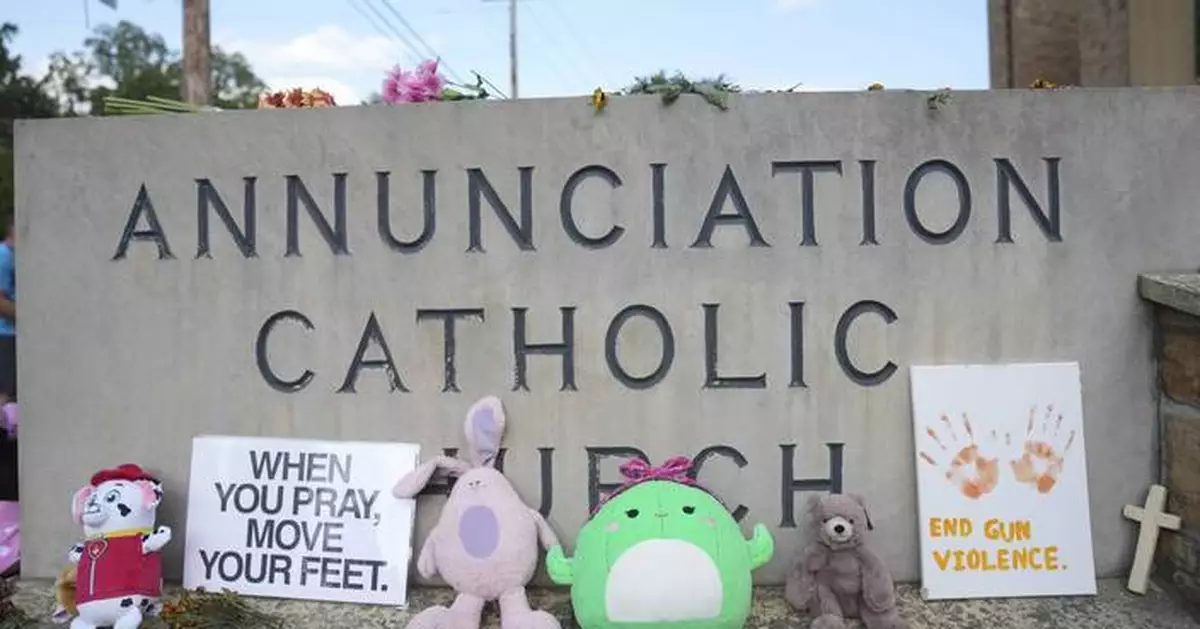
Dan beazley carries a cross at a memorial at Annunciation Catholic Church after Wednesday's school shooting, Thursday, Aug. 28, 2025, in Minneapolis. (AP Photo/Abbie Parr)
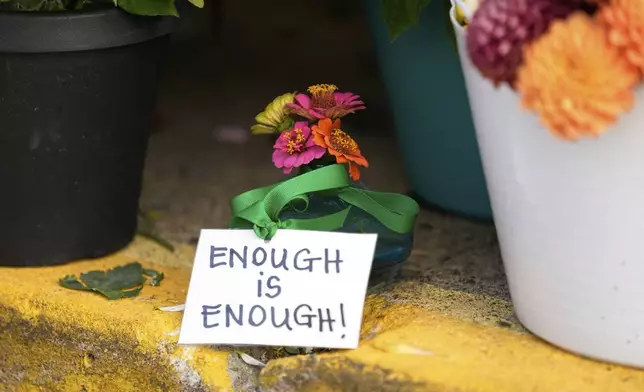
A sign stands amid flowers at a memorial at Annunciation Catholic Church after Wednesday's school shooting, Thursday, Aug. 28, 2025, in Minneapolis. (AP Photo/Abbie Parr)
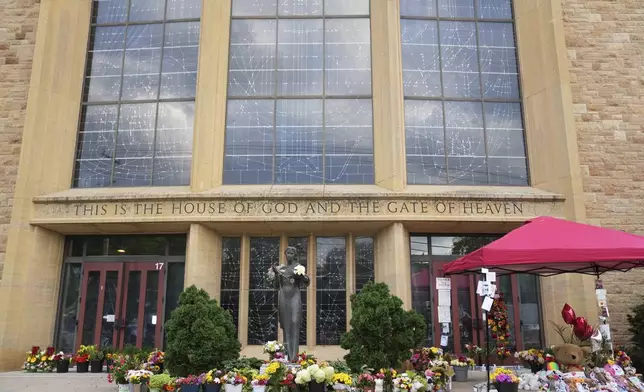
Items line a memorial at Annunciation Catholic Church after Wednesday's school shooting, Thursday, Aug. 28, 2025, in Minneapolis. (AP Photo/Abbie Parr)
Items are left at a memorial at Annunciation Catholic Church after Wednesday's school shooting, Thursday, Aug. 28, 2025, in Minneapolis. (AP Photo/Abbie Parr)
“I think we’d be happy to ban assault rifles here in Minneapolis,” Frey said. “I know we’d be happy to prevent a next mass shooting from taking place."
Search warrant documents show that the high-powered rifle used in the shootings was a semiautomatic. Police Chief Brian O’Hara told reporters Thursday that the 5.56 mm rifle fired 116 rounds in less than four minutes.
While Minnesota is often perceived as a Democratic state, since it usually supports Democratic presidents, the reality is the state usually has some form of divided government. That remains the case now. Democratic Gov. Tim Walz had to work this year with a state House split evenly between Democrats and Republicans and a Senate where Democrats held just a one-seat advantage.
Passing anything — whether that's a budget, gun regulations or school safety plans — required at least some bit of bipartisan consensus.
“We have one half of the Legislature that doesn’t believe that gun control is the answer to this – that there are other policy imperatives,” said Bryan Strawser, chairman of Minnesota Gun Owners Caucus. "We have another side of the Legislature that goes right to gun control.”
“I don’t think one incident changes that calculus,” he said.
Wednesday's shooting at Annunciation Catholic Church in Minneapolis, where children were beginning their day in worship, left two children dead and 18 people injured. Police said the shooter — 23-year-old Robin Westman — used a rifle, shotgun and pistol that had been legally purchased.
Minnesota law requires a permit to purchase certain semiautomatic rifles and pistols. Police chiefs and sheriffs can deny permits to people determined to be a danger to themselves or the public when possessing firearms.
Another Minnesota law, which took effect in 2024, lets courts grant “ extreme risk protection orders ” to temporarily take guns from people deemed an imminent threat to others or themselves. It's known as a “red flag” law. Lawmakers recently also tightened the state’s background check requirements.
But none of those laws prevented Westman from legally obtaining guns.
“The failure to act here is the reason we are once again mourning dozens killed and injured in a school and a house of worship," said Nick Suplina, senior vice president for law and policy at Everytown for Gun Safety. “It is time for Minnesota to regulate assault weapons.”
Senate Judiciary Committee Chair Ron Latz, the Democrat who has long championed gun safety legislation, said in a statement that he will push for an extensive list of proposals in 2026, including bans on assault rifles and high-capacity magazines.
Democratic Senate Majority Leader Erin Murphy was noncommittal at a news conference about the prospects for passing new gun restrictions.
“We’ll see where it goes,” Murphy said. "But I think Minnesotans are clear with us. They are in favor of a ban on assault weapons, and they’re in favor of a ban on high capacity magazines. And it’s time for us to love our children most and do our work.”
House Democratic Floor Leader Jamie Long said he regrets that they didn’t push harder for more gun safety legislation in 2024 when Democrats still had full control.
“It shouldn’t have taken tragedy coming to Minnesota to be ready," he said. "We should have been ready to act then. But we are ready to act now.”
The family of the former top Democrat in the House, Melissa Hortman, and her husband, who were killed in June by a gunman posing as a police officer, said Thursday it's time for action.
“Mark and Melissa believed that children should be able to gather in schools safely, that communities should be able to worship in peace, and that families should be safe in their homes," they said in a statement. "We hope this tragedy spurs elected officials to take action toward common-sense measures on access to high-powered weapons so that no one else must suffer.”
A federal ban on certain semiautomatic firearms and large-capacity magazines expired in 2004. But 11 states and Washington, D.C., now have some sort of prohibition on high-powered firearms.
The most recent is Rhode Island, where Democratic Gov. Dan McKee signed legislation to prohibit the sale, manufacturing and distribution of certain high-powered firearms. The law, which takes effect in 2026, does not prohibit possessing them, a key distinction compared with other so-called assault weapon bans.
Despite Democratic control of state government, a prohibition on certain semiautomatic weapons has failed to pass in Colorado, which has seen some of the country’s worst mass shootings — including the 1999 Columbine High School massacre.
Instead, Colorado enacted a measure this year that requires background checks and a state-sanctioned safety course to buy most semiautomatic guns with detachable magazines.
The U.S. Supreme Court in June declined to take up a case challenging Maryland's ban on certain semiautomatic weapons, though several conservative justices expressed an interest in doing so.
The legal fights continue. The Firearms Policy Coalition, which challenged Maryland's law, said Thursday that it has asked the Supreme Court to take up a challenge to a ban on semiautomatic weapons in Cook County, Illinois, which includes Chicago.
“The Supreme Court must end this lawless two-step where politicians ban arms they dislike and judges pretend that’s constitutional to rubber-stamp their policy preferences," said Brandon Combs, the gun-rights group's president.
Lieb reported from Jefferson City, Missouri. Associated Press writer Jack Dura contributed from Bismarck, North Dakota.

Dan beazley carries a cross at a memorial at Annunciation Catholic Church after Wednesday's school shooting, Thursday, Aug. 28, 2025, in Minneapolis. (AP Photo/Abbie Parr)
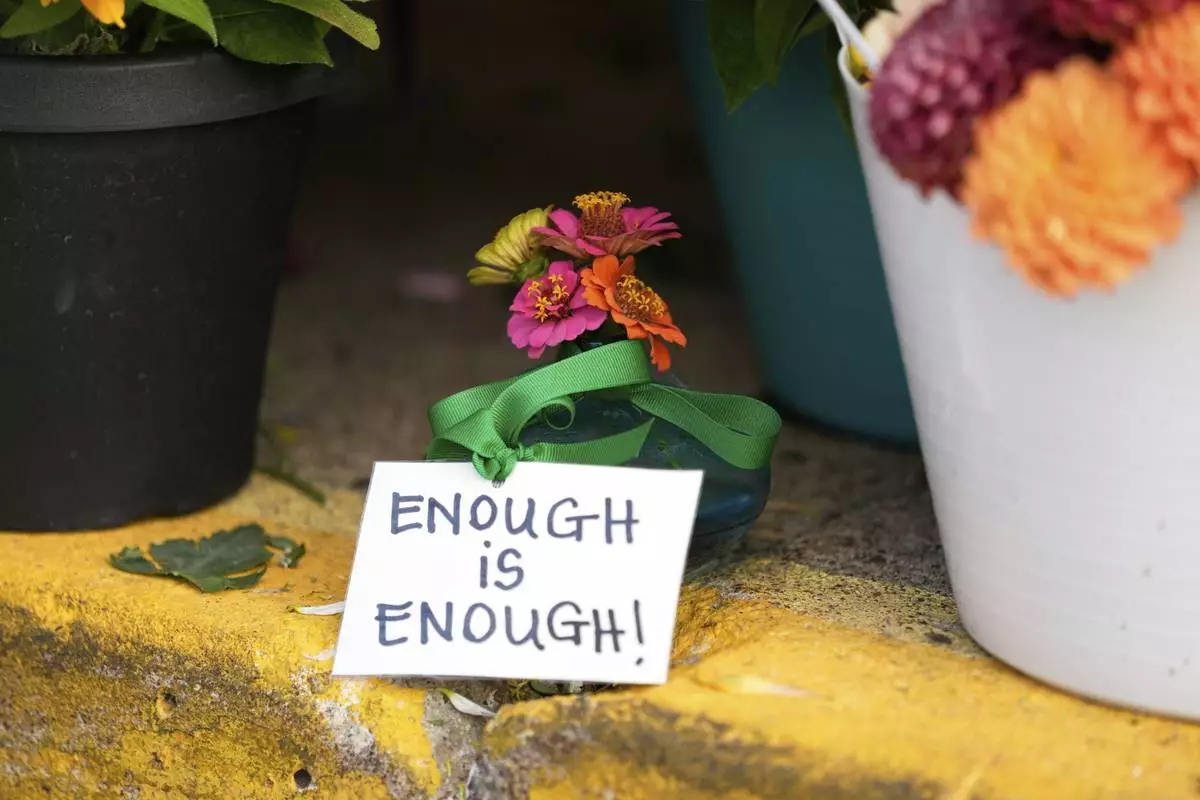
A sign stands amid flowers at a memorial at Annunciation Catholic Church after Wednesday's school shooting, Thursday, Aug. 28, 2025, in Minneapolis. (AP Photo/Abbie Parr)
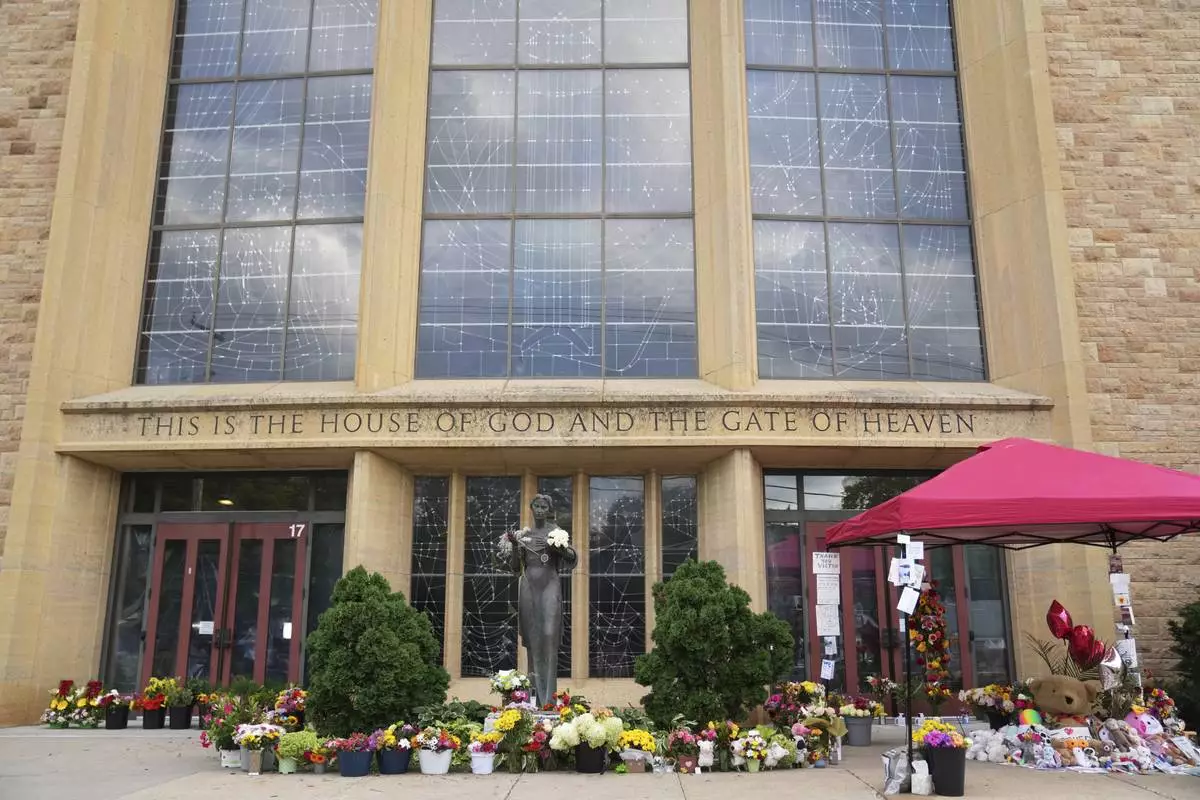
Items line a memorial at Annunciation Catholic Church after Wednesday's school shooting, Thursday, Aug. 28, 2025, in Minneapolis. (AP Photo/Abbie Parr)

Items are left at a memorial at Annunciation Catholic Church after Wednesday's school shooting, Thursday, Aug. 28, 2025, in Minneapolis. (AP Photo/Abbie Parr)
WASHINGTON (AP) — Senate Democratic leaders believe they have a path to winning the majority in November, though it's one with very little wiggle room.
The party got a new burst of confidence when former Rep. Mary Peltola announced Monday she'll run for the Senate in Alaska. Her bid gives Democrats a critical fourth candidate with statewide recognition in states where Republican senators are seeking reelection this year. Nationally, Democrats must net four seats to edge Republicans out of the majority.
That possibility looked all but impossible at the start of last year. And while the outlook has somewhat improved as 2026 begins, Democrats still almost certainly must sweep those four seats. First they must settle some contentious primaries, the mark of a party still struggling with its way forward after Republicans took full control of Washington in 2024. Importantly, they must also beat back challenges to incumbents in some of the most competitive states on the map.
And though some of Senate Minority Leader Chuck Schumer's top Democratic Senate recruits were lauded for their statewide success in pivotal states, some are nearly 70 or older, hardly the key to a lasting Democratic transformation.
Republicans doubt the chances Democrats can pull off such a task, considering most of the 2026 contests are in states that Donald Trump easily won in 2024.
Still, independent voters have drifted in Democrats' direction over the past year, according to a new Gallup poll, a slight breeze at Democrats' back they didn't expect a year ago when there was little path at all.
“I say it’s a much wider path than the skeptics think, and a much wider path than it was three months ago and certainly a year ago,” Schumer told The Associated Press Tuesday.
Republicans currently hold 53 seats, while the Democratic caucus has 47 members, including two independents.
Schumer argues that Peltola, elected twice statewide to Alaska's at-large House seat, puts the typically Republican-leaning state in play as a potential pickup for Democrats.
It's a development similar to other states where Schumer believes Democrats have recruited strong candidates: former three-term Sen. Sherrod Brown in Ohio, former two-term Gov. Roy Cooper in North Carolina and two-term Gov. Janet Mills in Maine.
But they hardly represent a quartet of guarantees. Brown, a longtime pro-labor progressive in increasingly GOP-leaning Ohio, and Peltola, who was elected during a special election in 2022, both lost reelection in 2024. Mills, finishing her second term as governor, faces a competitive primary challenge from progressive veteran and oyster farmer Graham Platner.
None of the four had runaway popularity with voters in their states in 2024. Right around half of voters had somewhat or very favorable views of all of them, with Cooper slightly higher and Brown slightly lower, according to AP VoteCast, a survey of the electorate.
Age remains another issue. After President Joe Biden, in his early 80s, withdrew from the 2024 race amid concerns he was too old to serve, Democratic Senate leadership hasn't changed course. Schumer, 75, has recruited candidates who are older, with several top recruits – including Mills and Brown – well into their 70s.
“Voters sent a very clear message in 2024 that they’re sick of the gerontocracy. They’re sick of Democrats putting up old candidates and that they want some new blood,” said Lis Smith, a national Democratic strategist. “And some of the recruits, like in Maine, seem to completely ignore the message that voters sent in 2024.”
Schumer said winning back the Senate is paramount over all else.
“It's not young versus old. It's not left versus center. It's who can best win in the states,” he said. “So, these are all really good candidates, and I don't think you look at them through one narrow prism. You look at who can win.”
Before Democrats can test their general-election appeal, they must navigate some primaries that highlight lingering divisions within the party.
Platner, who has been endorsed by independent Sen. Bernie Sanders of Vermont, has demonstrated formidable fundraising for his Maine contest, despite controversies surrounding past social media posts and a tattoo linked to Nazi imagery. Some Democrats worry his insurgent appeal could be a liability in November if he is the nominee.
In Michigan, Democratic Sen. Gary Peters' retirement has opened a seat in a state Trump carried narrowly. Republicans have unified behind former Rep. Mike Rogers, while Democrats face a crowded August primary after failing to recruit Gov. Gretchen Whitmer.
Crowded or contentious primaries are also playing out in Minnesota, Texas and Iowa, forcing Democrats to devote resources even in states not central to their path to a majority.
Sen. Chris Van Hollen is part of an informal group of Democratic senators known as Fight Club that has been openly critical of party leadership’s approach to the midterms. Van Hollen said the group has objected to what it sees as the Senate Democrats’ campaign arm — controlled by Schumer — “wading into certain Democratic primaries.”
“So, yes, we’re taking a look at all of them,” Van Hollen said of endorsing more progressive candidates.
Betsy Ankney, political director for the National Republican Senatorial Committee in 2020, acknowledged Democrats’ desire to make the case for competitiveness but characterized Trump’s presidential victories in Alaska and Ohio in 2024 — by 13 and 11 percentage point margins, respectively — as enormous hurdles.
She said Republicans are “rightly focused, on real tangible targets in Georgia, in Michigan," calling them “very real pickup opportunities.”
Democrats’ shot at the majority almost certainly depends on Sen. Jon Ossoff winning reelection in Georgia, where Trump won in 2024 by 2.2 percentage points, and holding Michigan, where Peters' retirement creates an open seat in a state Trump carried by 1.4 percentage points.
"It’s not just about where the Democrats can play. It’s about where we can play, too,” Ankney said.
Despite the challenges, Democrats see reasons for optimism in the broader political climate.
A new Gallup survey found 47% of U.S. adults now identify with or lean toward the Democrats, while 42% are Republicans or lean Republican. That gives Democrats the advantage in party affiliation for the first time since Trump’s first term.
But the data strongly suggests that independents are moving toward Democrats because of their souring attitude toward Trump, rather than greater goodwill toward Democrats. The Democratic Party’s favorability is still low, and Gallup’s analysis found that, as more Americans identify as independents, they tend to gravitate toward the party that is out of political power — whether it’s the Democrats or the Republicans.
Still, that appears to be a dynamic in Democrats' favor, as economic unease creeps into the election year with little time before the feelings lock into voters' political thinking, veteran Republican pollster Ed Goeas said.
“That creates an environment that will affect these Senate races,” Goeas said, predicting House Republicans could lose their majority. He said Republicans are assuming the economy and the political environment are going to be better.
“I think they are going to end up getting frustrated going into the summer because, first of all, the economy is not on all levels improving. It’s going to be a target-rich environment for Democrats," he said.
“It’s going to be close.”
Beaumont reported from Des Moines, Iowa. Associated Press writer Amelia Thomson DeVeaux in Washington contributed to this report.
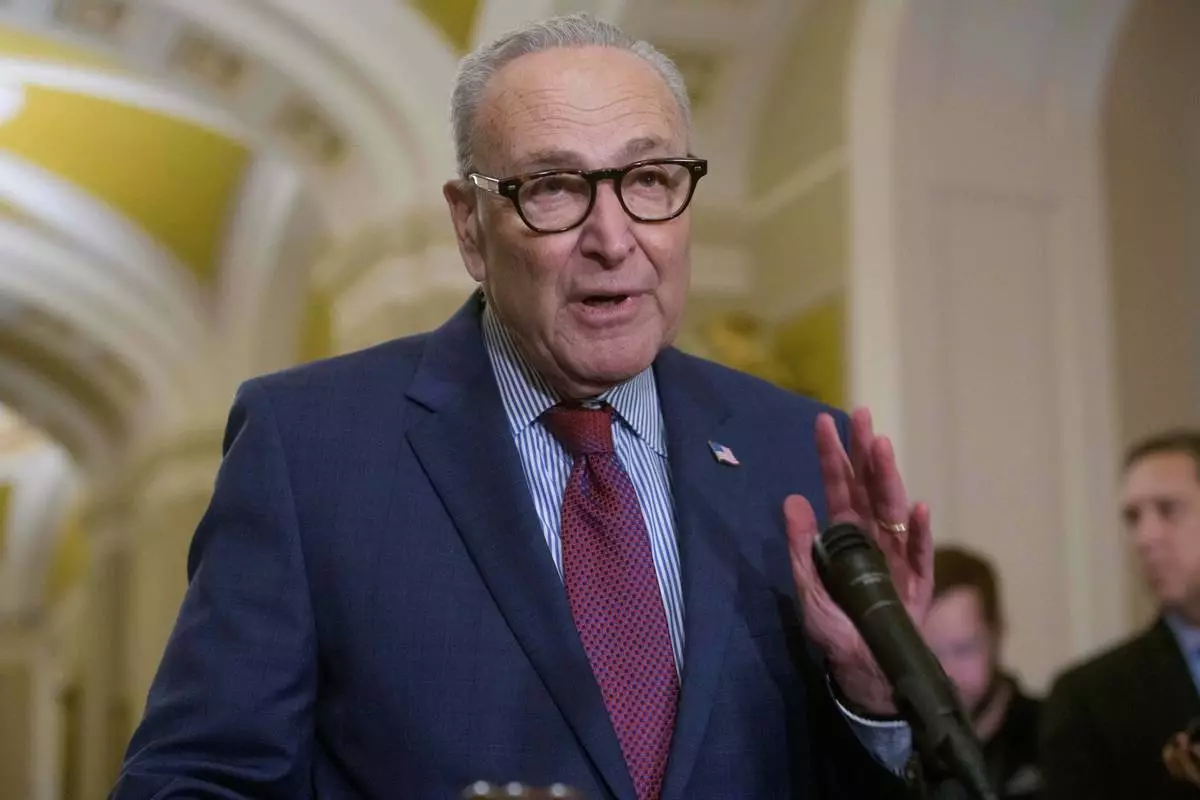
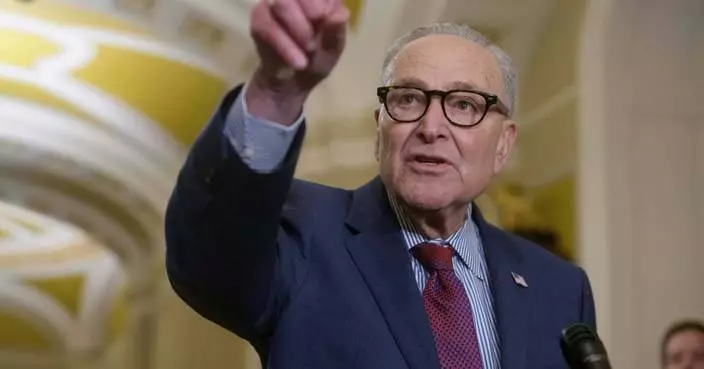
Senate Minority Leader Chuck Schumer, D-N.Y., speaks during the Senate Democrat policy luncheon news conference at the Capitol, Tuesday, Jan. 13, 2026, in Washington. (AP Photo/Rod Lamkey, Jr.)
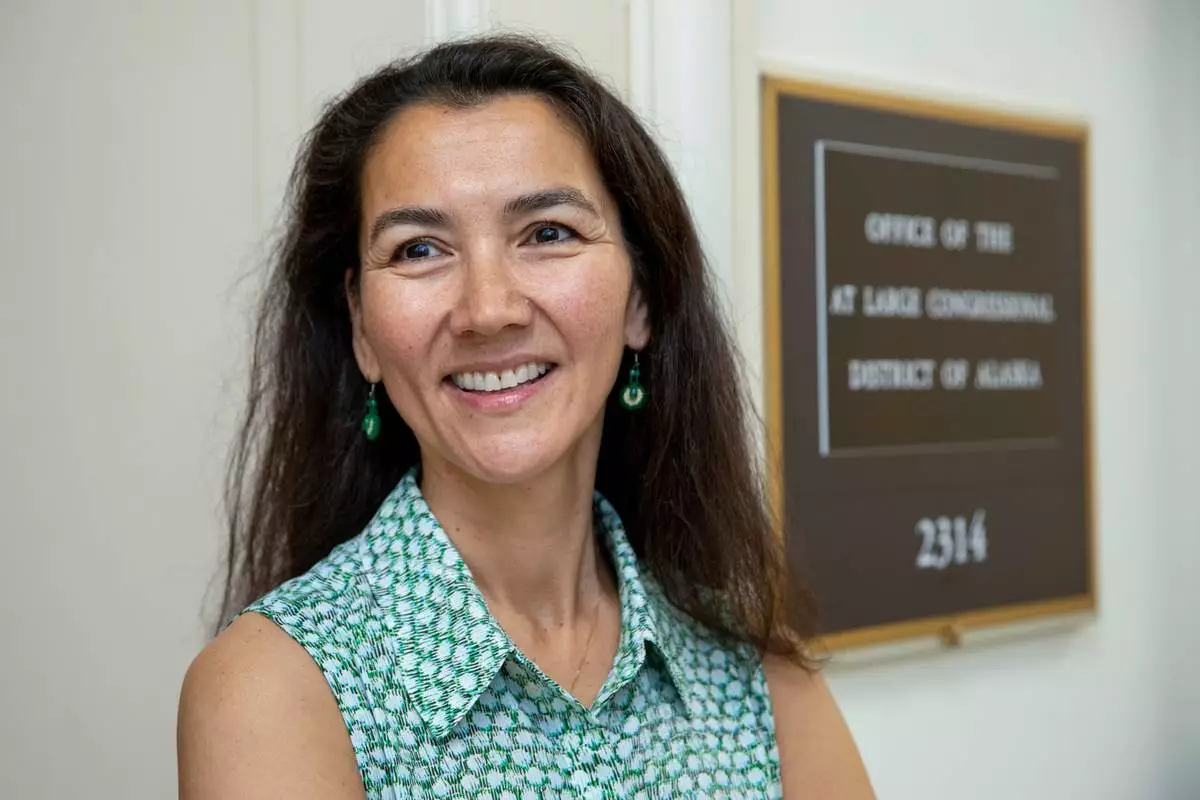
FILE - Rep.-elect Mary Peltola, D-Alaska, is interviewed on Capitol Hill in Washington, Sept. 12, 2022. (AP Photo/Amanda Andrade-Rhoades, File)