Skip to Content Facebook Feature Image

Trump's new CDC chief: A Washington health insider with a libertarian streak

News

Trump's new CDC chief: A Washington health insider with a libertarian streak
News

News

Trump's new CDC chief: A Washington health insider with a libertarian streak

2025-08-30 05:21 Last Updated At:05:30

WASHINGTON (AP) — Jim O’Neill, a former investor, critic of health regulations and Health Secretary Robert F. Kennedy Jr.’s deputy, is taking control of the Centers for Disease Control and Prevention following a tumultuous week in which the agency’s director was forced out.

O’Neill was picked by President Donald Trump to be the CDC’s interim director, supplanting Susan Monarez, a longtime government scientist.

Monarez had been the CDC director for less than a month. Her lawyers said she refused “to rubber-stamp unscientific, reckless directives and fire dedicated health experts.”

O'Neill takes over an agency that has been rocked by firings, resignations and efforts by Kennedy to reshape the nation's vaccine policies to match his long-standing suspicions about the safety and effectiveness of long-established shots.

O’Neill said Friday afternoon in a social media post that he looked forward to working with CDC staff and “announcing additions to the senior leadership in the weeks ahead.” He added that he would continue to serve as HHS deputy.

A former associate of billionaire tech entrepreneur Peter Thiel, O'Neill previously helped run one of Thiel's investment funds and later managed several of his other projects. Those included a nonprofit working to develop manmade islands that would float outside U.S. territory, allowing them to experiment with new forms of government.

He has no training in medicine or health care and holds bachelor's and master's degrees in humanities.

O’Neill has kept a markedly lower profile than Trump’s other top health officials, all of whom joined the administration as Washington outsiders. He’s also the only one with experience working at HHS, where he served for six years under President George W. Bush.

Those who know him say he'll likely be tasked with trying to calm the situation at CDC — though it’s unclear what, if any, independence he’ll have from Kennedy.

“Jim O’Neill is a health care policy professional and I don’t think anybody can accuse him of being an RFK Jr. sock puppet,” said Peter Pitts, a former FDA official under Bush. “The question becomes whether the role of CDC director becomes a strictly paper tiger position, where the person only does what they’re told to by the secretary.”

O’Neill is not closely associated with Kennedy’s “ Make America Healthy Again ” movement and its efforts against food dyes, fluoride and ultraprocessed foods.

He was also not a major critic of public health measures during the pandemic, unlike Food and Drug Administration chief Marty Makary and other several Trump officials. Although O'Neill did use social media to criticize FDA efforts to stop the prescribing of unproven treatments for COVID-19, including the anti-parasite drug ivermectin.

O’Neill has long-standing ties to the libertarian wing of the Republican Party, including Thiel, one of Trump’s leading supporters from Silicon Valley. Like Thiel, O’Neill has expressed disdain for many parts of the federal bureaucracy, saying it hinders advances in medicine, technology and other areas.

During Trump's first term, O'Neill was vetted as a possible choice to lead the FDA, although his past statements about the agency raised alarms among pharmaceutical and medical technology executives.

In particular, O'Neill proposed doing away with FDA's 60-year-old mandate of assuring new drugs are both safe and effective in treating disease. In a 2014 speech, O'Neill suggested drug effectiveness could be established after medicines hit the market.

Trump ultimately nominated Dr. Scott Gottlieb, a former FDA official and supporter of the agency's regulatory approach, as commissioner.

After being nominated to the HHS post, O’Neill voiced his support for the federal government’s traditional system for overseeing vaccines — including the role of the CDC — while refusing to criticize Kennedy’s views on the topic.

“I support CDC’s recommendations for vaccines,” O’Neill told Louisiana Republican Sen. Bill Cassidy at a confirmation hearing in June. “I think that’s a central role that CDC has. It’s mandated in law.”

In follow-up questions, Democrat Ron Wyden pressed O’Neill on statements by Kennedy downplaying the safety and effectiveness of vaccines to prevent measles and other diseases.

“Secretary Kennedy has not made it difficult nor discouraged people from taking vaccines," O’Neill responded.

Within weeks, O’Neill could be asked to sign off on new recommendations from a CDC panel that Kennedy has reshaped with vaccine skeptics. The group is scheduled to meet next month to review vaccinations for measles, hepatitis and other conditions that have long been established on the government immunization schedule for children.

Traditionally, the CDC director signs off on recommendations from the panel. But Monarez was ousted after, among other things, she refused to automatically sign off the committee’s recommendations, according to Dr. Richard Besser, a former CDC acting director who spoke to her.

As an acting official, federal law limits O'Neill to no more than 210 days heading the agency before he must step aside or be formally nominated to the post.

Dr. Anne Schuchat, who served twice as acting CDC director, says there are essentially no limits on the powers of acting agency chiefs, beyond the time contraints.

“I was told, ‘You’re the director. Do what you need to do,'” Schuchat said.

Both of O’Neill’s roles at HHS and CDC are demanding, full-time jobs that would be extremely challenging for one person to do simultaneously, Schuchat said.

“But if the goal is to have an acting CDC director fulfill a predetermined decision about vaccines, it’s a different story,” Schuchat said.

It won’t help O’Neill that there was an exodus this week of four veteran CDC center directors, leaving the agency with few leaders who have a background in medicine, science or public health crisis management, she added.

AP Medical Writer Mike Stobbe contributed to this story from New York

The Associated Press Health and Science Department receives support from the Howard Hughes Medical Institute’s Department of Science Education and the Robert Wood Johnson Foundation. The AP is solely responsible for all content.
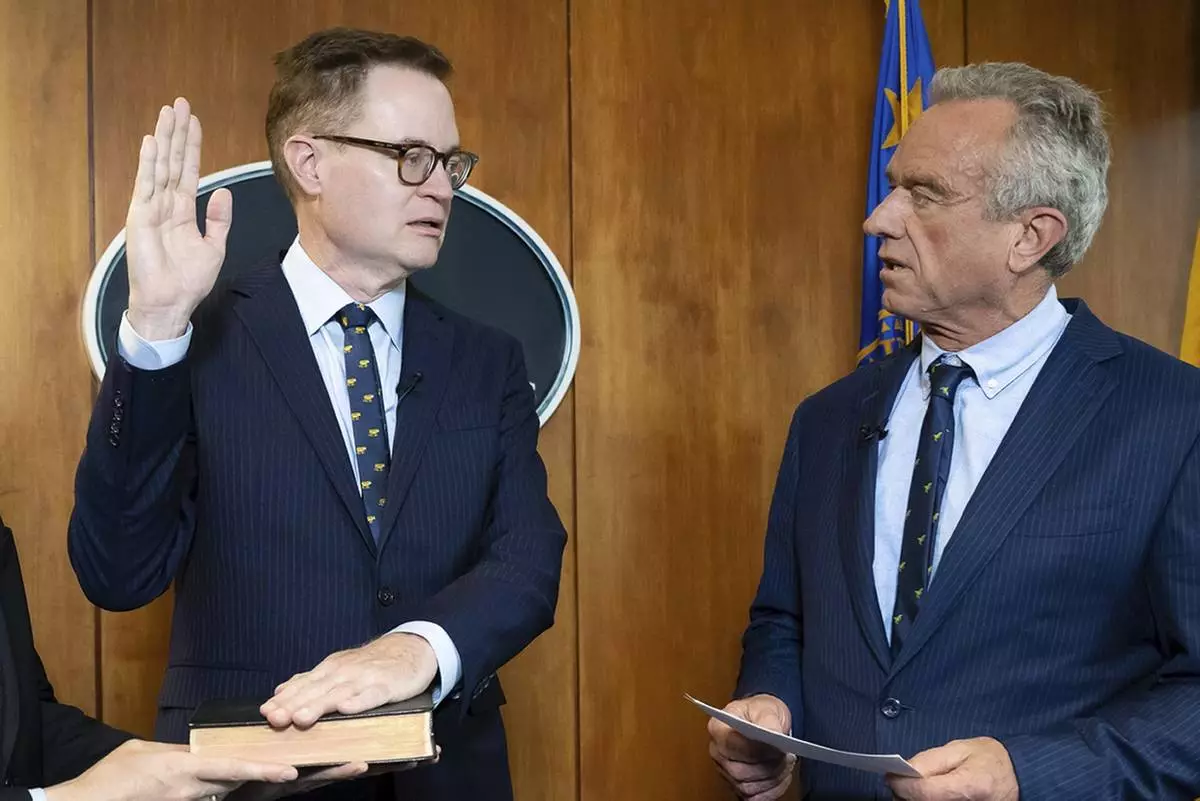
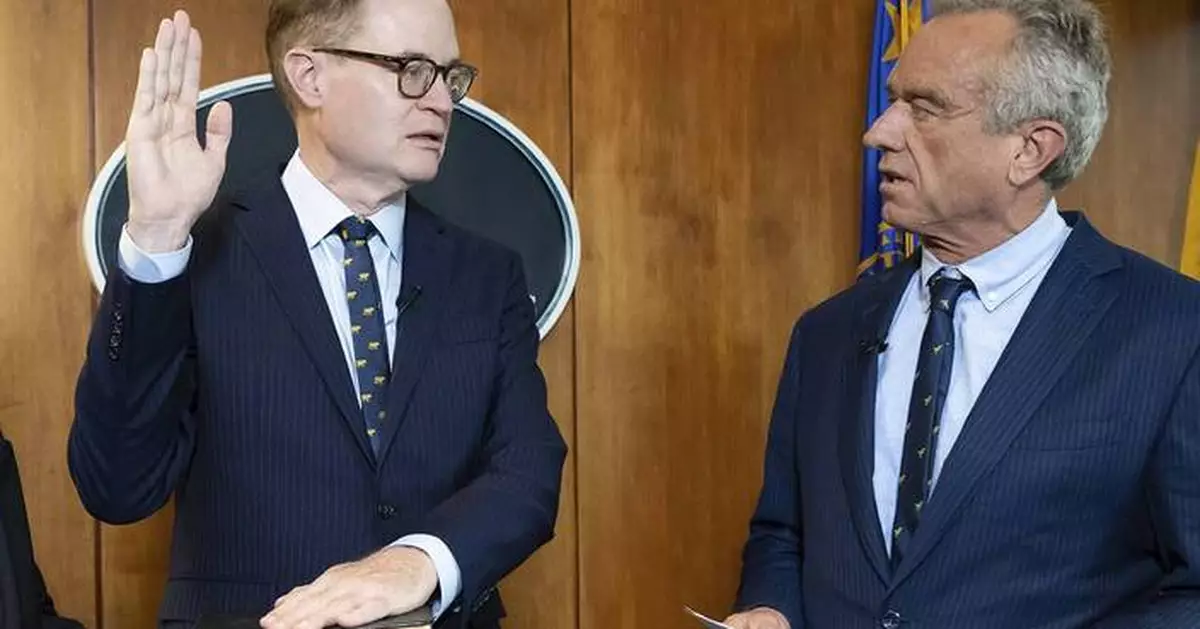
In this photo provided by the Department of Health and Human Secretary, Robert F. Kennedy, Jr., right, conducts the swearing-in ceremony of Jim O'Neill as the Department's Deputy Secretary, June 9, 2025, in Washington. (Amy Rossetti/Department of Health and Human Services via AP)
In this photo provided by the Department of Health and Human Secretary, Robert F. Kennedy, Jr., right, conducts the swearing-in ceremony of Jim O'Neill as the Department's Deputy Secretary, June 9, 2025, in Washington. (Amy Rossetti/Department of Health and Human Services via AP)
WASHINGTON (AP) — U.S. forces in the Caribbean Sea have seized another sanctioned oil tanker that the Trump administration says has ties to Venezuela, part of a broader U.S. effort to take control of the South American country’s oil.

The U.S. Coast Guard boarded the tanker, named Veronica, early Thursday, Homeland Security Secretary Kristi Noem wrote on social media. The ship had previously passed through Venezuelan waters and was operating in defiance of President Donald Trump’s "established quarantine of sanctioned vessels in the Caribbean,” she said.

U.S. Southern Command said Marines and sailors launched from the aircraft carrier USS Gerald R. Ford to take part in the operation alongside a Coast Guard tactical team, which Noem said conducted the boarding as in previous raids. The military said the ship was seized “without incident.”

Several U.S. government social media accounts posted brief videos that appeared to show various parts of the ship’s capture. Black-and-white footage showed at least four helicopters approaching the ship before hovering over the deck while armed troops dropped down by rope. At least nine people could be seen on the deck of the ship.

The Veronica is the sixth sanctioned tanker seized by U.S. forces as part of the effort by Trump’s administration to control the production, refining and global distribution of Venezuela’s oil products and the fourth since the U.S. ouster of Venezuela President Nicolás Maduro in a surprise nighttime raid almost two weeks ago.

The Veronica last transmitted its location on Jan. 3 as being at anchor off the coast of Aruba, just north of Venezuela’s main oil terminal. According to the data it transmitted at the time, the ship was partially filled with crude.

Days later, the Veronica became one of at least 16 tankers that left the Venezuelan coast in contravention of the quarantine that U.S. forces have set up to block sanctioned ships, according to Samir Madani, the co-founder of TankerTrackers.com. He said his organization used satellite imagery and surface-level photos to document the ship movements.

The ship is currently listed as flying the flag of Guyana and is considered part of the shadow fleet that moves cargoes of oil in violation of U.S. sanctions.

According to its registration data, the ship also has been known as the Gallileo, owned and managed by a company in Russia. In addition, a tanker with the same registration number previously sailed under the name Pegas and was sanctioned by the Treasury Department for being associated with a Russian company moving cargoes of illicit oil.

As with prior posts about such raids, Noem and the military framed the seizure as part of an effort to enforce the law. Noem argued that the multiple captures show that “there is no outrunning or escaping American justice.”

Speaking to reporters at the White House later Thursday, Noem declined to say how many sanctioned oil tankers the U.S. is tracking or whether the government is keeping tabs on freighters beyond the Caribbean Sea.

“I can’t speak to the specifics of the operation, although we are watching the entire shadow fleet and how they’re moving,” she told reporters.

But other officials in Trump's Republican administration have made clear they see the actions as a way to generate cash as they seek to rebuild Venezuela’s battered oil industry and restore its economy.

Trump met with executives from oil companies last week to discuss his goal of investing $100 billion in Venezuela to repair and upgrade its oil production and distribution. His administration has said it expects to sell at least 30 million to 50 million barrels of sanctioned Venezuelan oil.

Associated Press writer Ben Finley contributed to this report.

This story has been corrected to show the Veronica is the fourth, not the third, tanker seized by U.S. forces since Maduro’s capture and the ship also has been known as the Gallileo, not the Galileo.

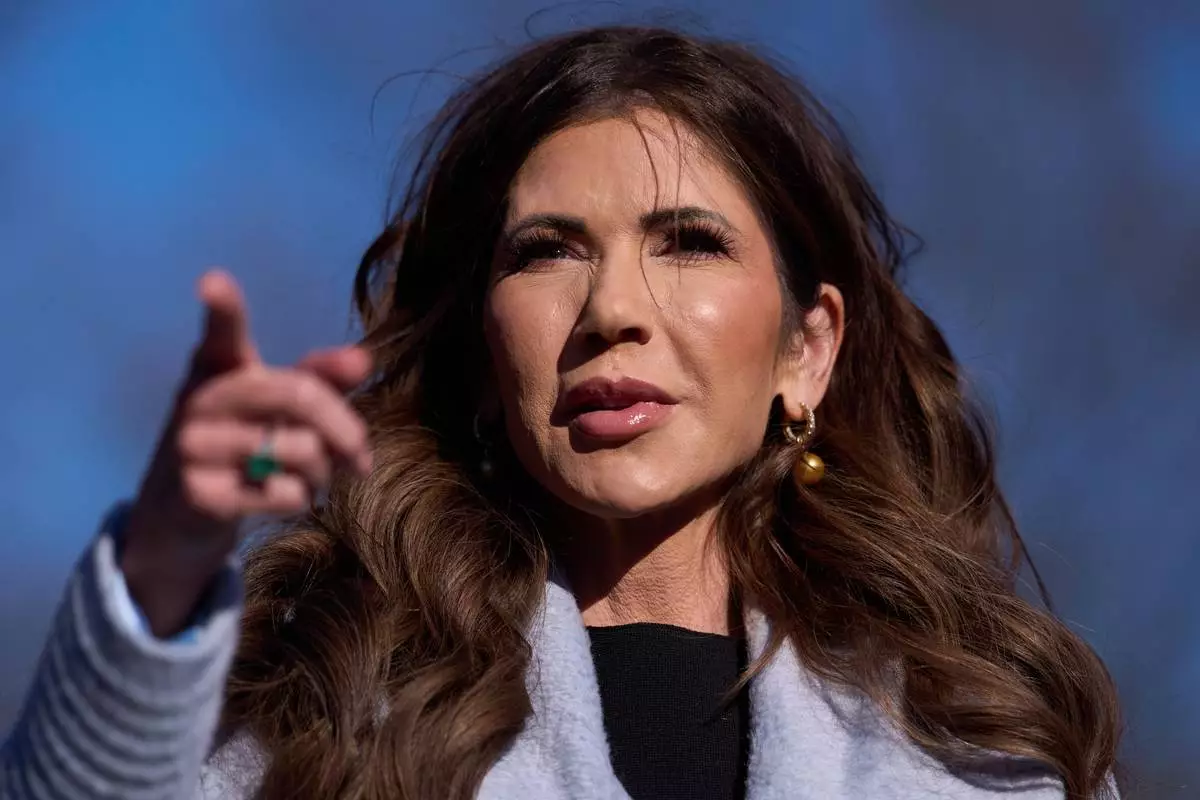
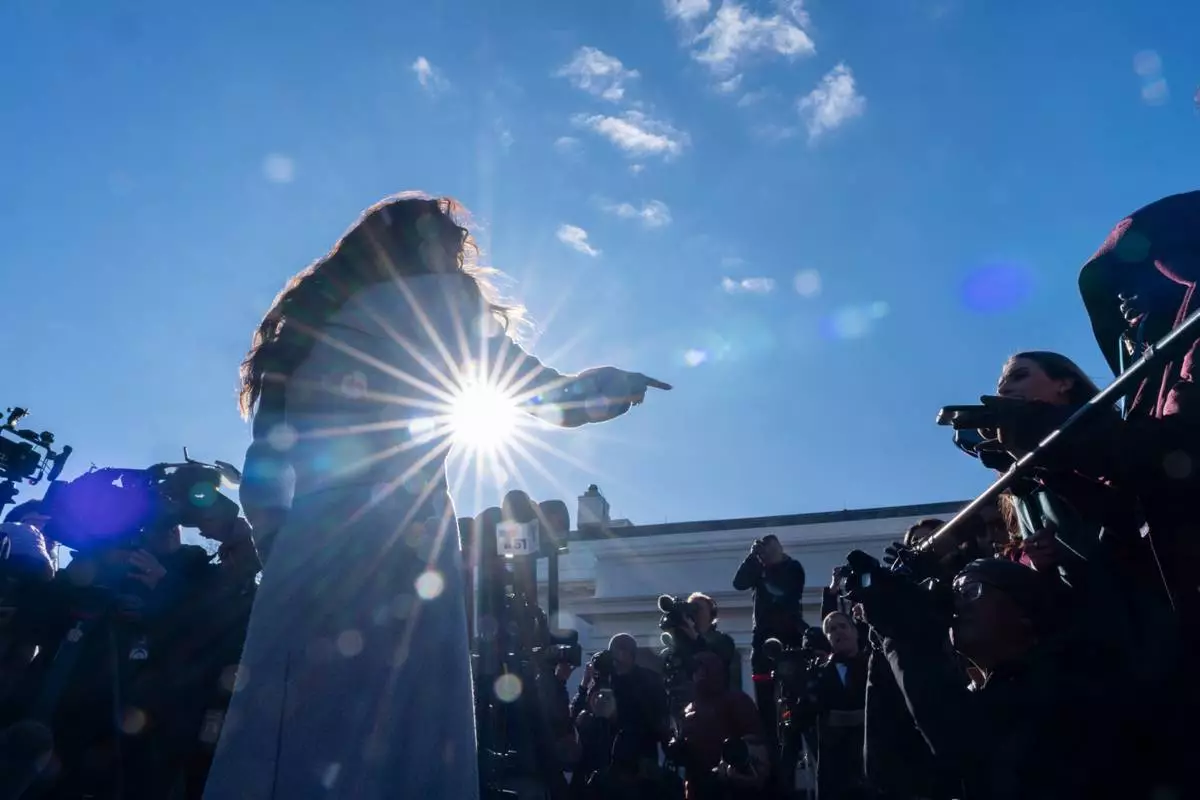
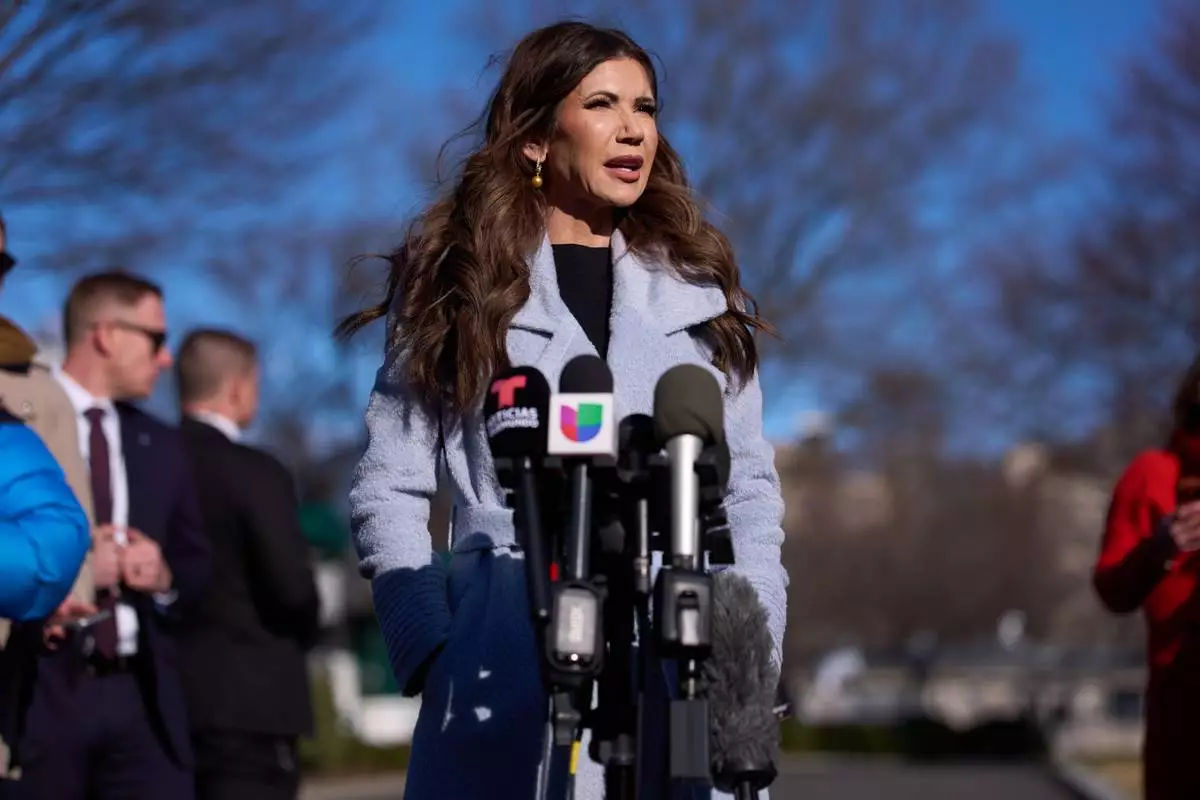
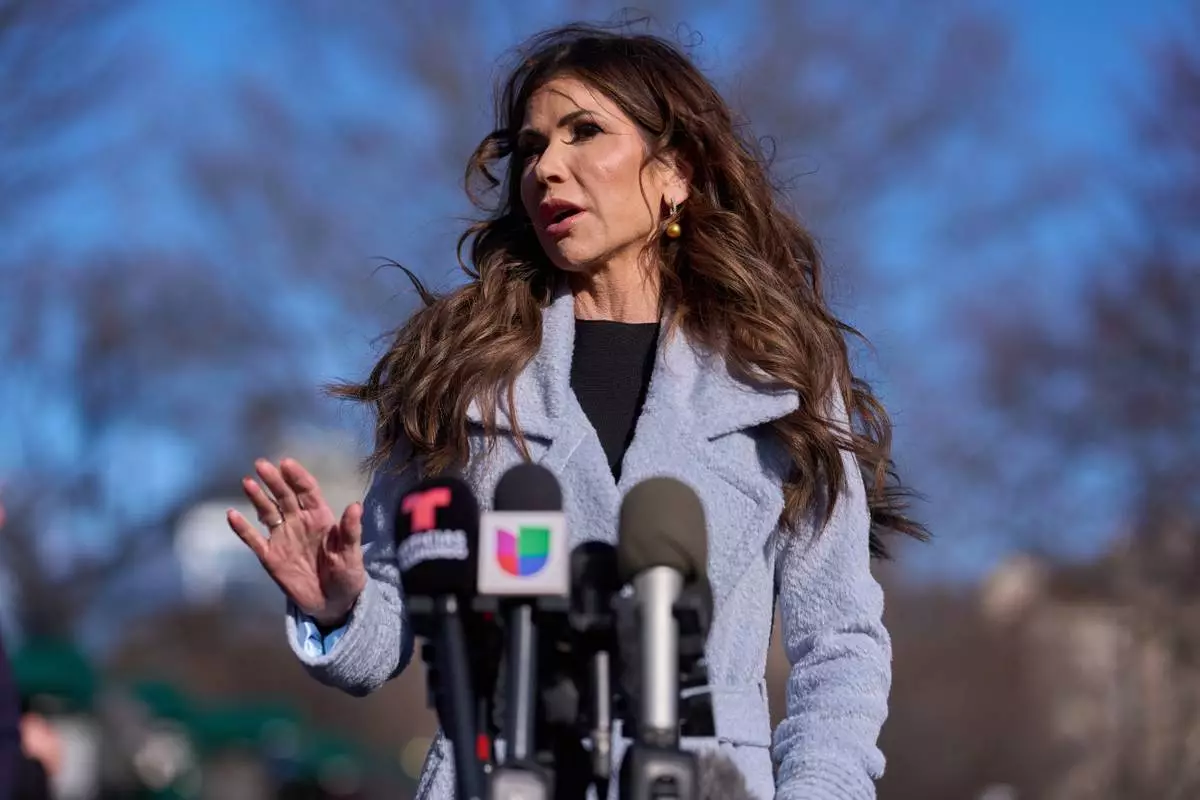
Homeland Security Secretary Kristi Noem speaks with reporters at the White House, Thursday, Jan. 15, 2026, in Washington. (AP Photo/Alex Brandon)

Homeland Security Secretary Kristi Noem speaks with reporters at the White House, Thursday, Jan. 15, 2026, in Washington. (AP Photo/Alex Brandon)

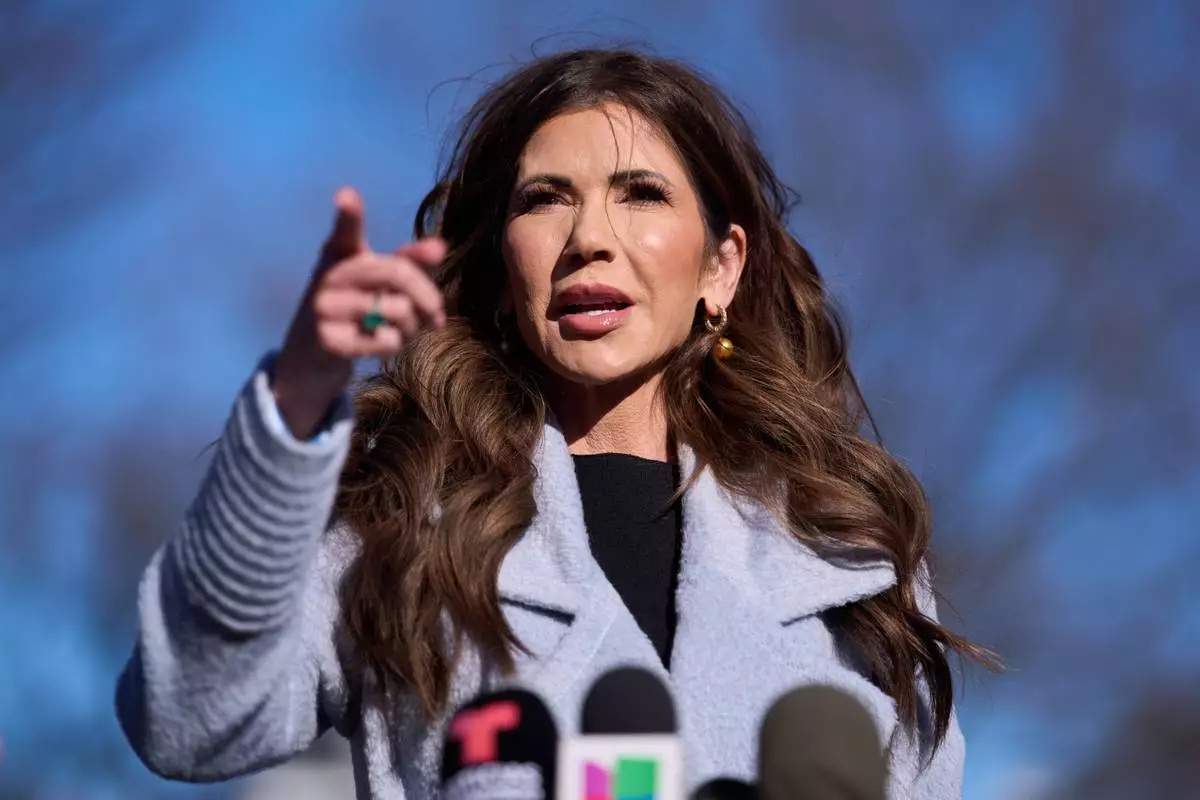
Homeland Security Secretary Kristi Noem speaks with reporters at the White House, Thursday, Jan. 15, 2026, in Washington. (AP Photo/Evan Vucci)

Homeland Security Secretary Kristi Noem speaks with reporters at the White House, Thursday, Jan. 15, 2026, in Washington. (AP Photo/Evan Vucci)

Homeland Security Secretary Kristi Noem speaks with reporters at the White House, Thursday, Jan. 15, 2026, in Washington. (AP Photo/Evan Vucci)

Homeland Security Secretary Kristi Noem speaks with reporters at the White House, Thursday, Jan. 15, 2026, in Washington. (AP Photo/Evan Vucci)

Homeland Security Secretary Kristi Noem speaks with reporters at the White House, Thursday, Jan. 15, 2026, in Washington. (AP Photo/Evan Vucci)

Homeland Security Secretary Kristi Noem speaks with reporters at the White House, Thursday, Jan. 15, 2026, in Washington. (AP Photo/Evan Vucci)

Homeland Security Secretary Kristi Noem speaks with reporters at the White House, Thursday, Jan. 15, 2026, in Washington. (AP Photo/Evan Vucci)

Homeland Security Secretary Kristi Noem speaks with reporters at the White House, Thursday, Jan. 15, 2026, in Washington. (AP Photo/Evan Vucci)

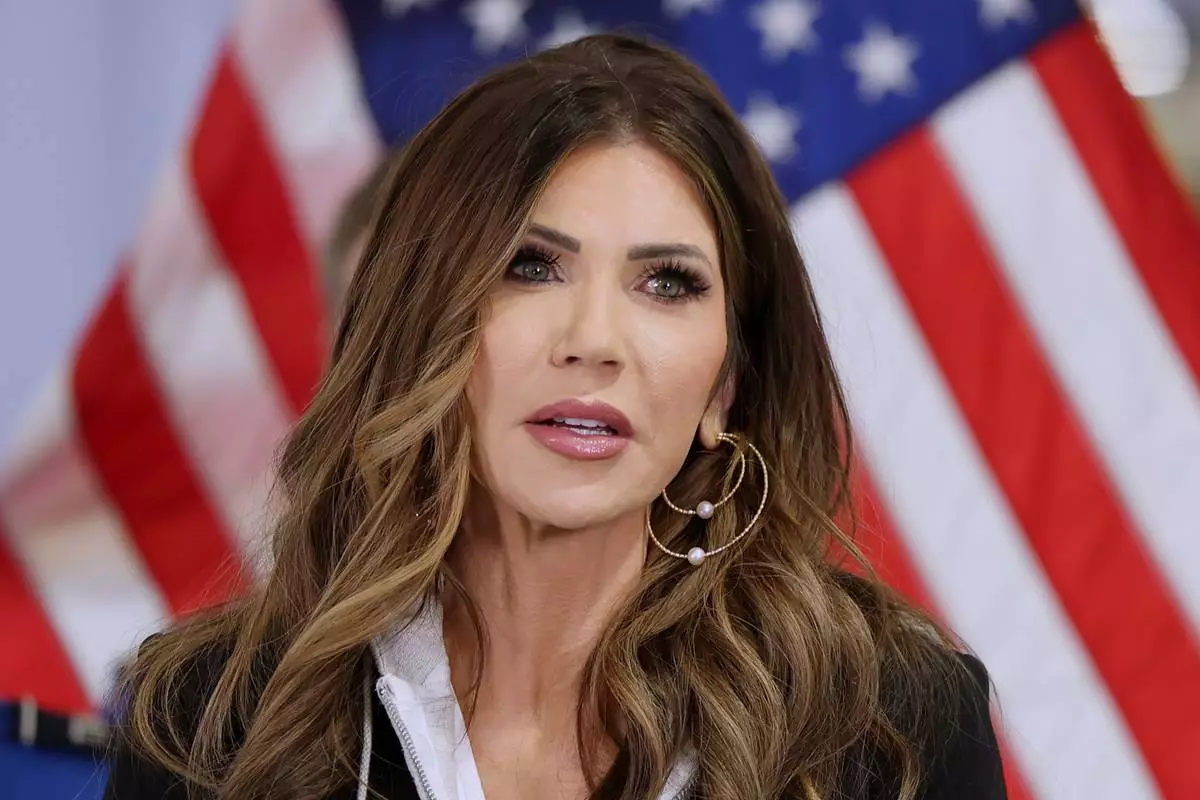
U.S. Homeland Security Secretary Kristi Noem speaks during a press conference, Thursday, Jan. 8, 2026, in New York. (AP Photo/Yuki Iwamura)

U.S. Homeland Security Secretary Kristi Noem speaks during a press conference, Thursday, Jan. 8, 2026, in New York. (AP Photo/Yuki Iwamura)

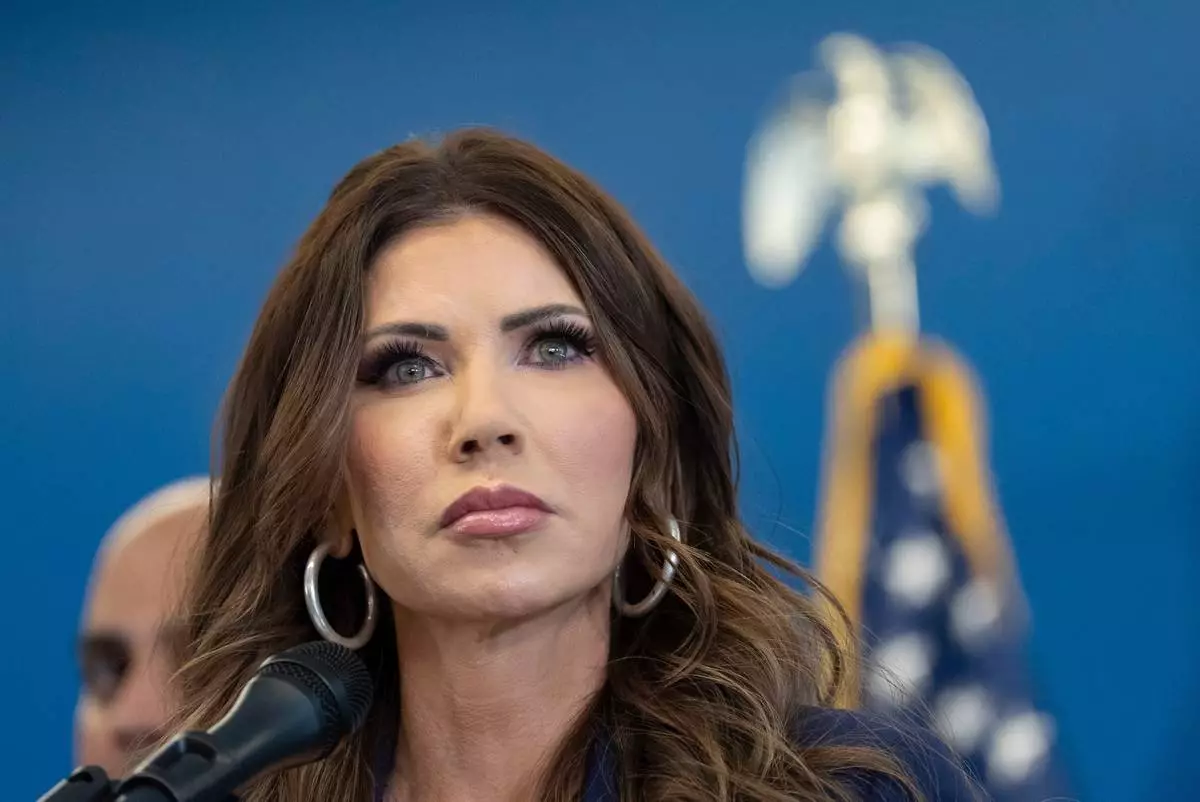
U.S. Homeland Security Secretary Kristi Noem speaks at a news conference at Harry Reid International Airport, Nov. 22, 2025, in Las Vegas. (AP Photo/Ronda Churchill, File)

U.S. Homeland Security Secretary Kristi Noem speaks at a news conference at Harry Reid International Airport, Nov. 22, 2025, in Las Vegas. (AP Photo/Ronda Churchill, File)

Recommended Articles