Skip to Content Facebook Feature Image

Drones blasting AC/DC and Scarlett Johansson are helping biologists protect cattle from wolves

ENT

Drones blasting AC/DC and Scarlett Johansson are helping biologists protect cattle from wolves
ENT

ENT

Drones blasting AC/DC and Scarlett Johansson are helping biologists protect cattle from wolves

2025-08-31 12:50 Last Updated At:13:00

For millennia humans have tried to scare wolves away from their livestock. Most of them didn’t have drones.

But a team of biologists working near the California-Oregon border do, and they're using them to blast AC/DC’s “Thunderstruck,” movie clips and live human voices at the apex predators to shoo them away from cattle in an ongoing experiment.

More Images
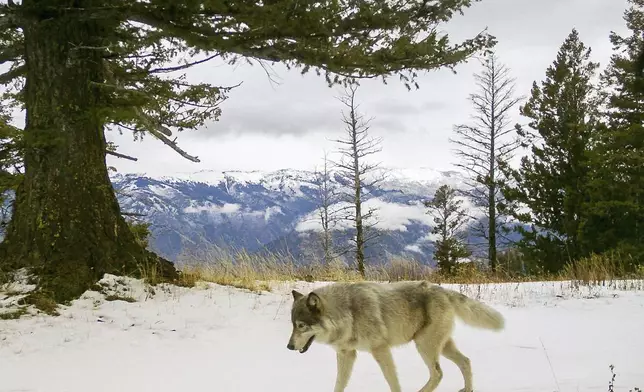
FILE - In this Dec. 4, 2014 photo released by the Oregon Department of Fish and Wildlife, a wolf from the Snake River Pack passes by a remote camera in eastern Wallowa County, Ore. (Oregon Department of Fish and Wildlife via AP, File)
FILE - In this Dec. 4, 2014 photo released by the Oregon Department of Fish and Wildlife, a wolf from the Snake River Pack passes by a remote camera in eastern Wallowa County, Ore. (Oregon Department of Fish and Wildlife via AP, File)

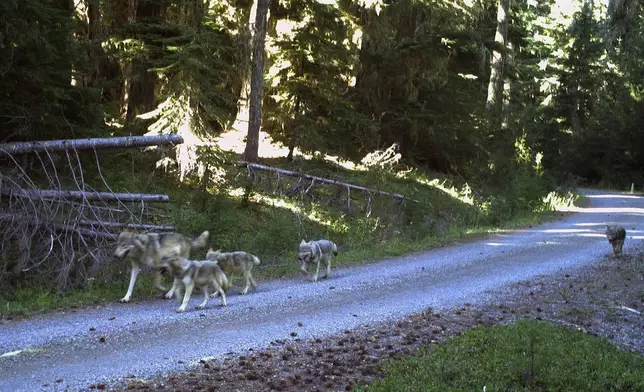
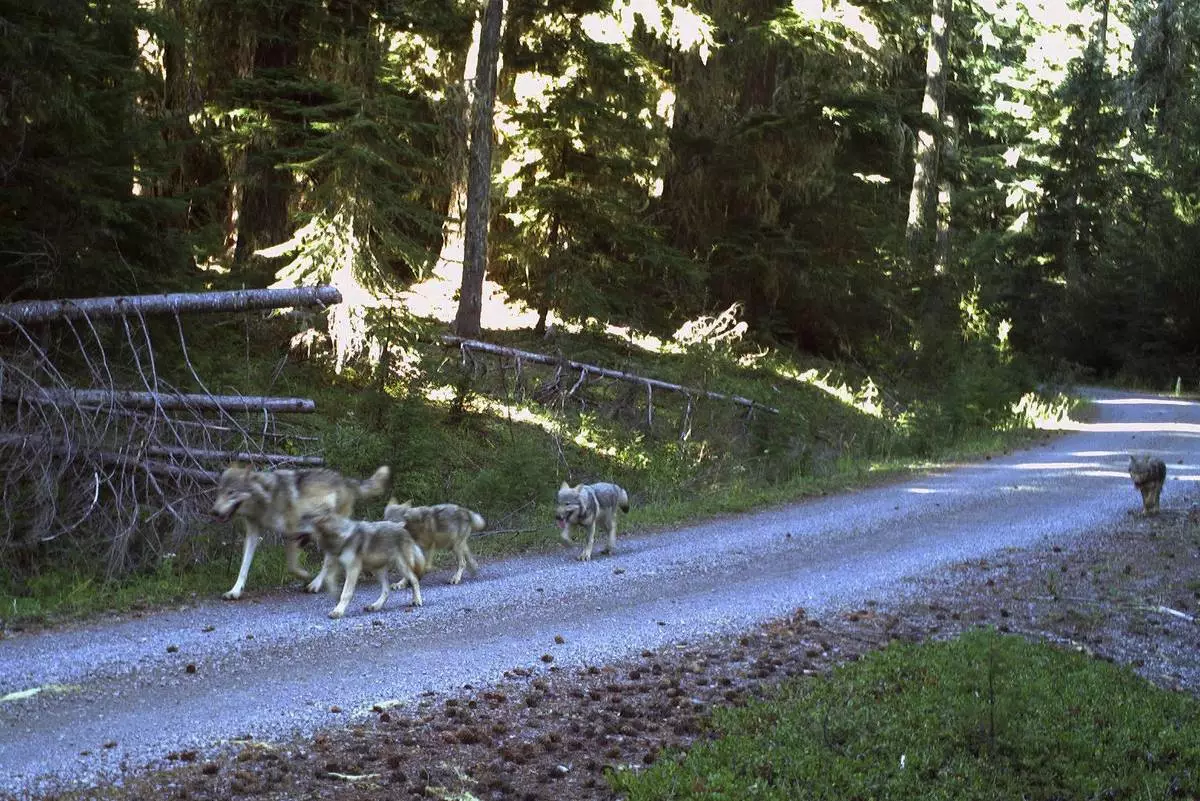
FILE - This Aug. 27, 2019 trail camera photo provided by the Oregon Department of Fish and Wildlife shows a wolf pack that had at least four pups taken during the 2019 annual wolf count/survey at Umpqua National Forest, Oregon. (Oregon Department of Fish and Wildlife via AP, File)
FILE - This Aug. 27, 2019 trail camera photo provided by the Oregon Department of Fish and Wildlife shows a wolf pack that had at least four pups taken during the 2019 annual wolf count/survey at Umpqua National Forest, Oregon. (Oregon Department of Fish and Wildlife via AP, File)

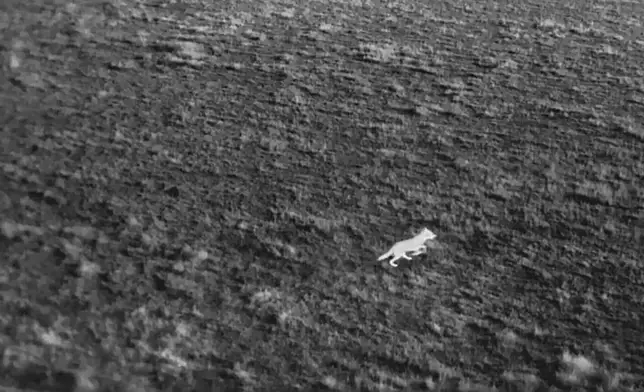
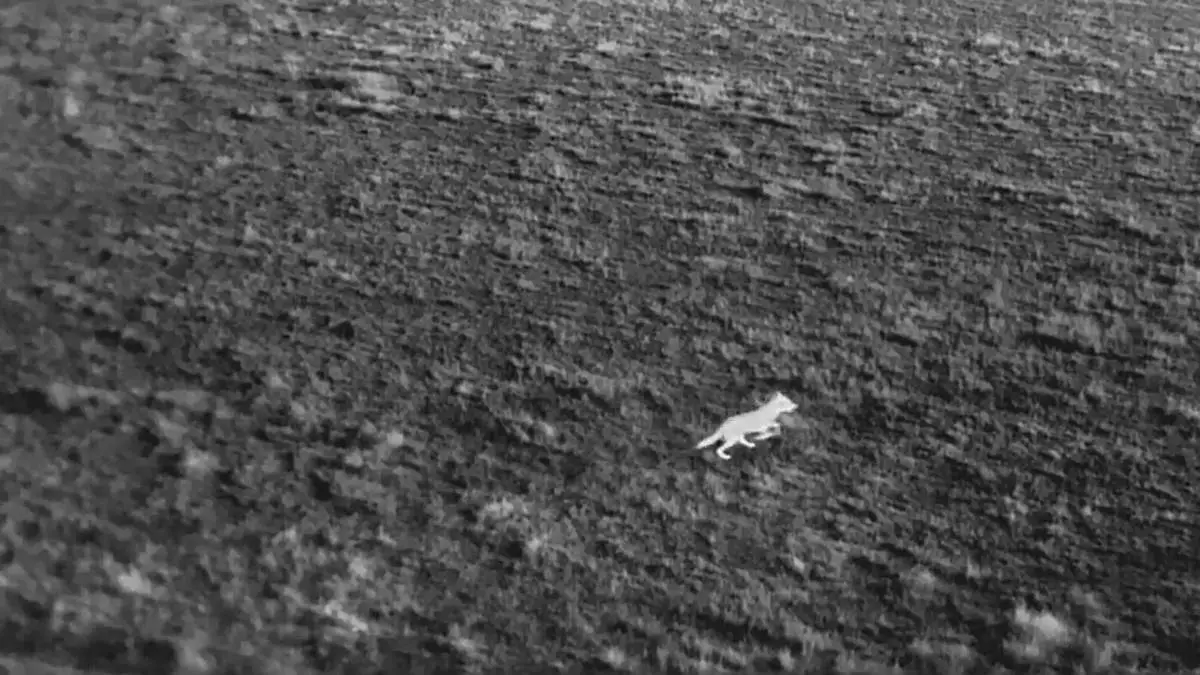
In this image taken from video released by the USDA, a wolf runs from a drone with a speaker attached in Oregon, 2022. (USDA via AP)
In this image taken from video released by the USDA, a wolf runs from a drone with a speaker attached in Oregon, 2022. (USDA via AP)

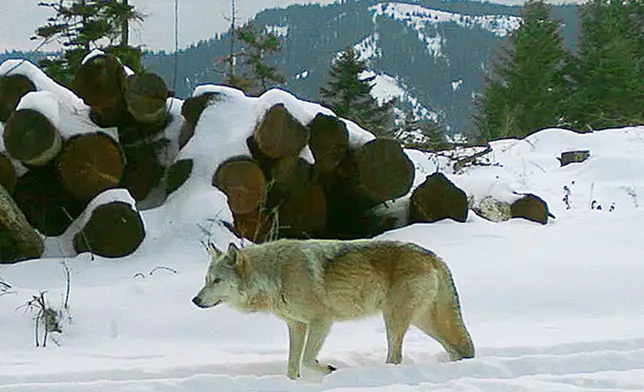
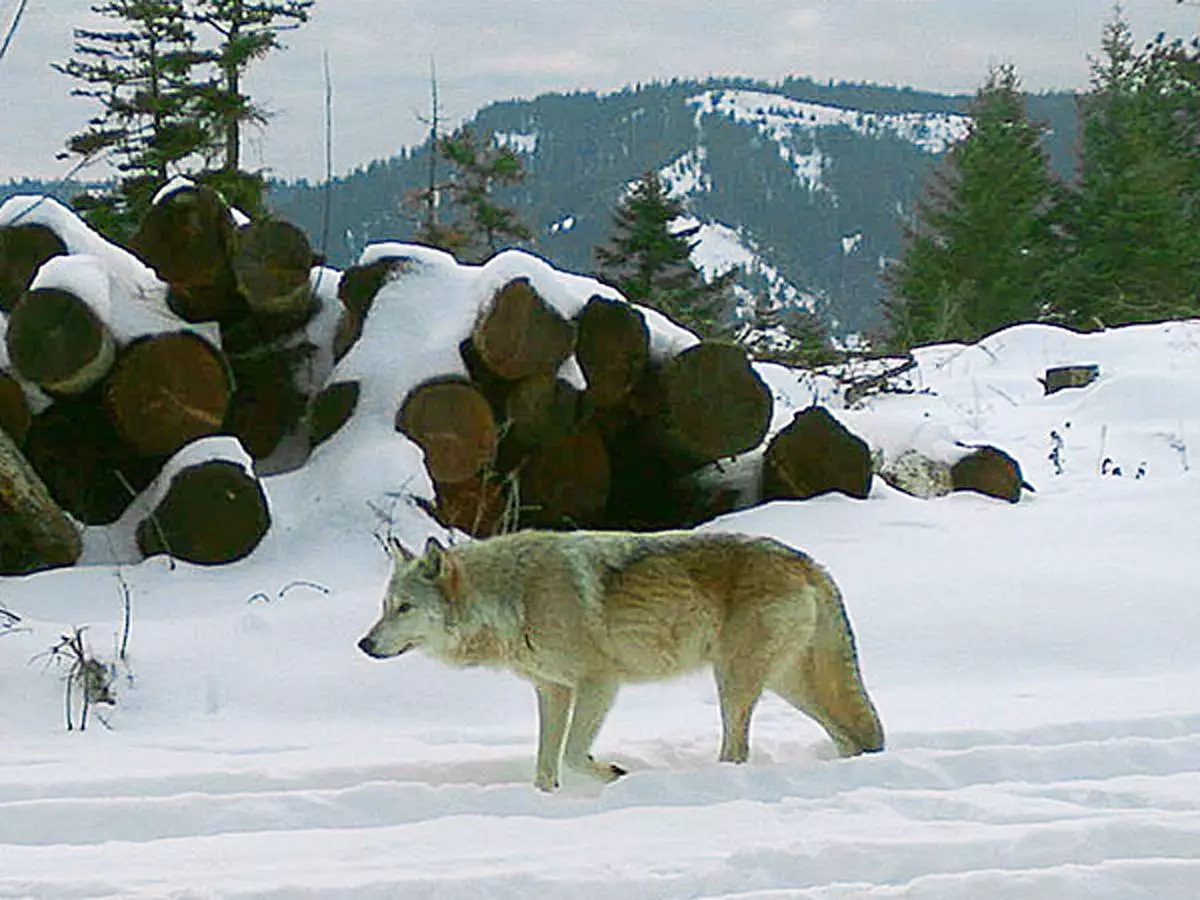
FILE - This Dec., 2017, remote camera photo provided by the Oregon Department of Fish and Wildlife shows the breeding female of the Walla Walla Pack in northern Oregon's Umatilla County. (Oregon Department of Fish and Wildlife via AP, File)
FILE - This Dec., 2017, remote camera photo provided by the Oregon Department of Fish and Wildlife shows the breeding female of the Walla Walla Pack in northern Oregon's Umatilla County. (Oregon Department of Fish and Wildlife via AP, File)

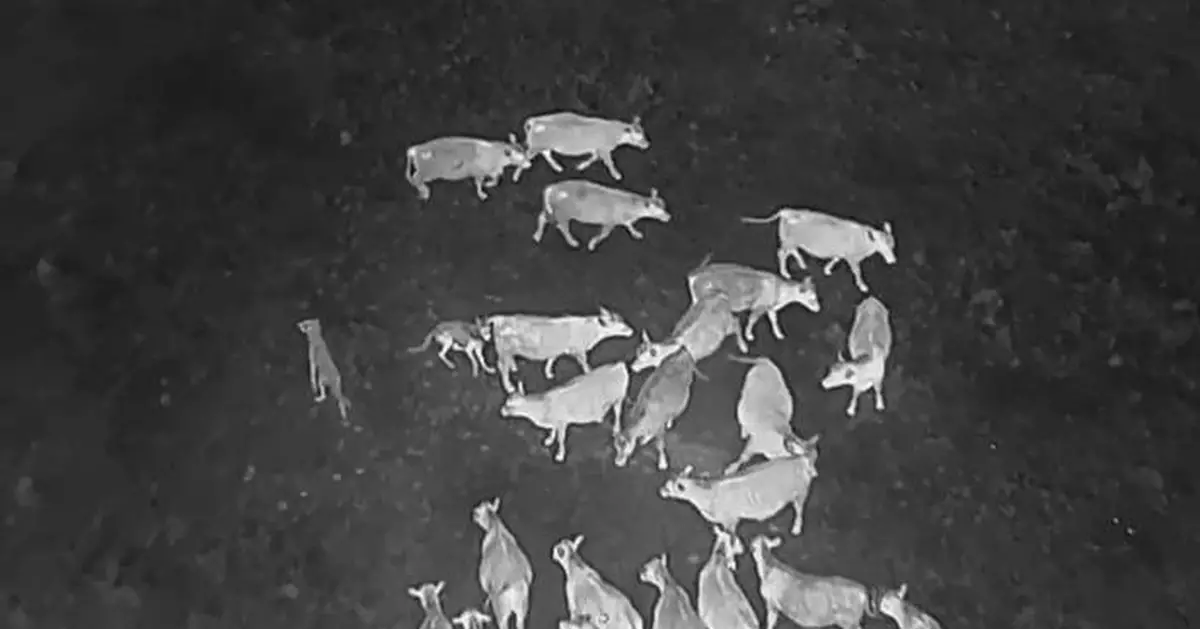
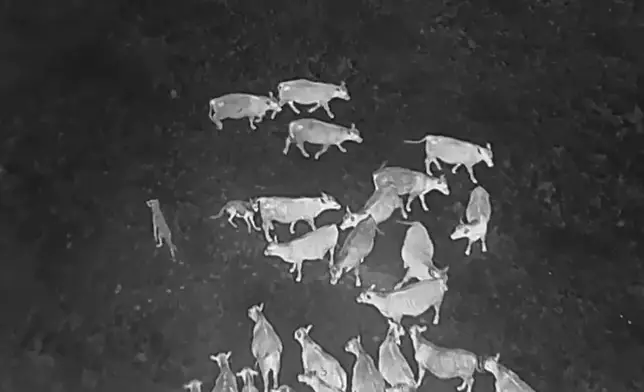
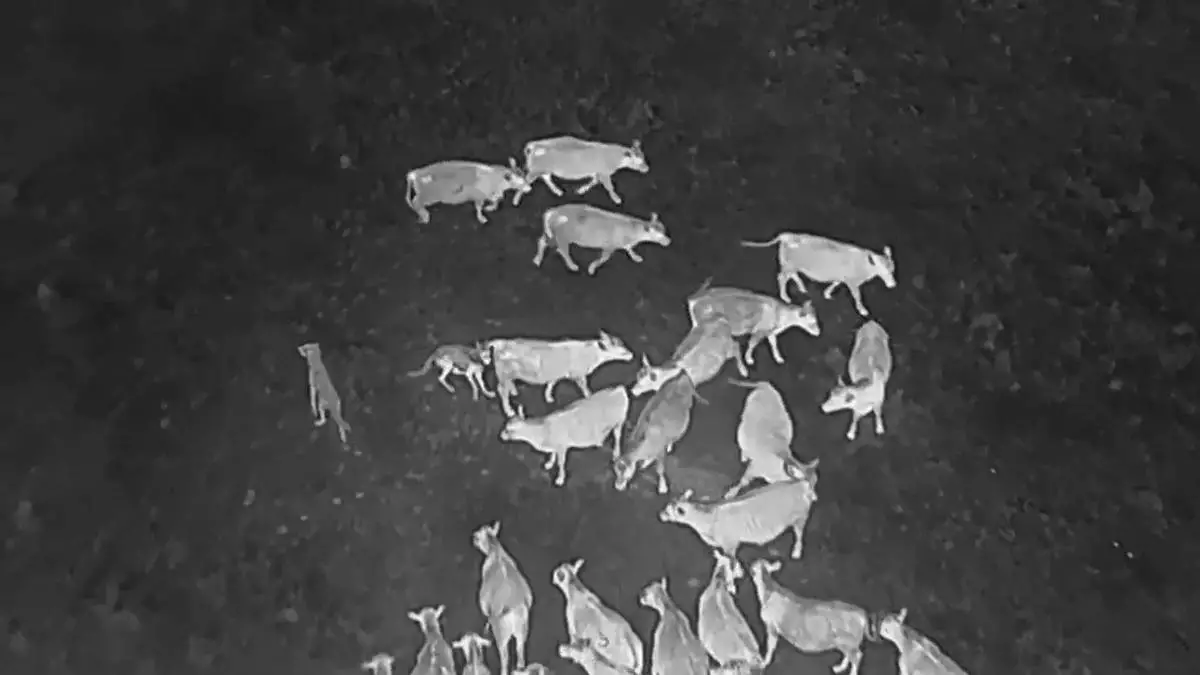
In this image taken from video released by the USDA, Gray wolves halt an attack on a cow at an undisclosed location along the Oregon/California border after a drone emits noises at them as part of efforts by the USDA to monitor predators at night and repel them from livestock by non-lethal means. (USDA via AP)

In this image taken from video released by the USDA, Gray wolves halt an attack on a cow at an undisclosed location along the Oregon/California border after a drone emits noises at them as part of efforts by the USDA to monitor predators at night and repel them from livestock by non-lethal means. (USDA via AP)

“I am not putting up with this anymore!” actor Scarlett Johansson yells in one clip, from the 2019 film “ Marriage Story.”

“With what? I can't talk to people?” co-star Adam Driver shouts back.

Gray wolves were hunted nearly to extinction throughout the U.S. West by the first half of the 20th century. Since their reintroduction in Idaho and at Yellowstone National Park in the mid-1990s, they've proliferated to the point that a population in the Northern Rockies has been removed from the endangered species list.

There are now hundreds of wolves in Washington and Oregon, dozens more in northern California, and thousands roaming near the Great Lakes.

The recovering population has meant increasing conflict with ranchers — and increasingly creative efforts by the latter to protect livestock. They've turned to electrified fencing, wolf alarms, guard dogs, horseback patrols, trapping and relocating, and now drones. In some areas where nonlethal efforts have failed, officials routinely approve killing wolves, including last week in Washington state.

Gray wolves killed some 800 domesticated animals across 10 states in 2022, a previous Associated Press review of data from state and federal agencies found.

Scientists with the USDA Animal and Plant Health Inspection Service developed the techniques for hazing wolves by drone while monitoring them using thermal imaging cameras at night, when the predators are most active. A preliminary study released in 2022 demonstrated that adding human voices through a loudspeaker rigged onto a drone can freak them out.

The team documented successful interruptions of wolf hunts. When Dustin Ranglack, the USDA’s lead researcher on the project, saw one for the first time, he smiled from ear to ear.

“If we could reduce those negative impacts of wolves, that is going to be more likely to lead to a situation where we have coexistence,” Ranglack said.

The preloaded clips include recordings of music, gunshots, fireworks and voices. A drone pilot starts by playing three clips chosen at random, such as the “Marriage Story” scene or “Thunderstruck,” with its screams and hair-raising electric guitar licks.

If those don't work, the operator can improvise by yelling through a microphone or playing a different clip that's not among the randomized presets. One favorite is the heavy metal band Five Finger Death Punch 's cover of “Blue on Black,” which might blast the lyric “You turned and you ran” as the wolves flee.

USDA drone pilots have continued cattle protection patrols this summer while researching wolf responses at ranches with high conflict levels along the Oregon-California border. Patrols extended south to the Sierra Valley in August for the first time, according to the California Department of Fish and Wildlife.

It’s unclear whether the wolves might become accustomed to the drones. Herders and wolf hunters in Europe have long deterred them with long lines hung with flapping cloth, but the wolves can eventually learn that the flags are not a threat.

Environmental advocates are optimistic about drones, though, because they allow for scaring wolves in different ways, in different places.

“Wolves are frightened of novel things,” said Amaroq Weiss, a wolf advocate with the Center for Biological Diversity. “I know that in the human imagination, people think of wolves as big, scary critters that are scared of nothing.”

There are also drawbacks to the technology. A drone with night vision and a loudspeaker costs around $20,000, requires professional training and doesn't work well in wooded areas, making it impractical for many ranchers.

Ranchers in Northern California who have hosted USDA drone patrols agree that they have reduced livestock deaths so far.

“I’m very appreciative of what they did. But I don’t think it’s a long-term solution,” said Mary Rickert, the owner of a cattle ranch north of Mount Shasta. “What I’m afraid of is that after some period of time, that all of a sudden they go, ‘Wow, this isn’t going to hurt me. It just makes a lot of noise.’”

Ranchers are compensated if they can prove that a wolf killed their livestock. But there are uncompensated costs of having stressed-out cows, such as lower birth rates and tougher meat.

Rickert said if the drones don't work over the long term, she might have to close the business, which she's been involved in since at least the 1980s. She wants permission to shoot wolves if they're attacking her animals or if they come onto her property after a certain number of attacks.

If the technology proves effective and costs come down, someday ranchers might merely have to ask the wolves to go away.

Oregon-based Paul Wolf — yes, Wolf — is the USDA's southwest district supervisor and the main Five Finger Death Punch fan among the drone pilots. He recalled an early encounter during which a wolf at first merely seemed curious at the sight of a drone, until the pilot talked to it through the speaker.

“He said, ‘Hey wolf — get out of here,’” Wolf said. “The wolf immediately lets go of the cattle and runs away.”
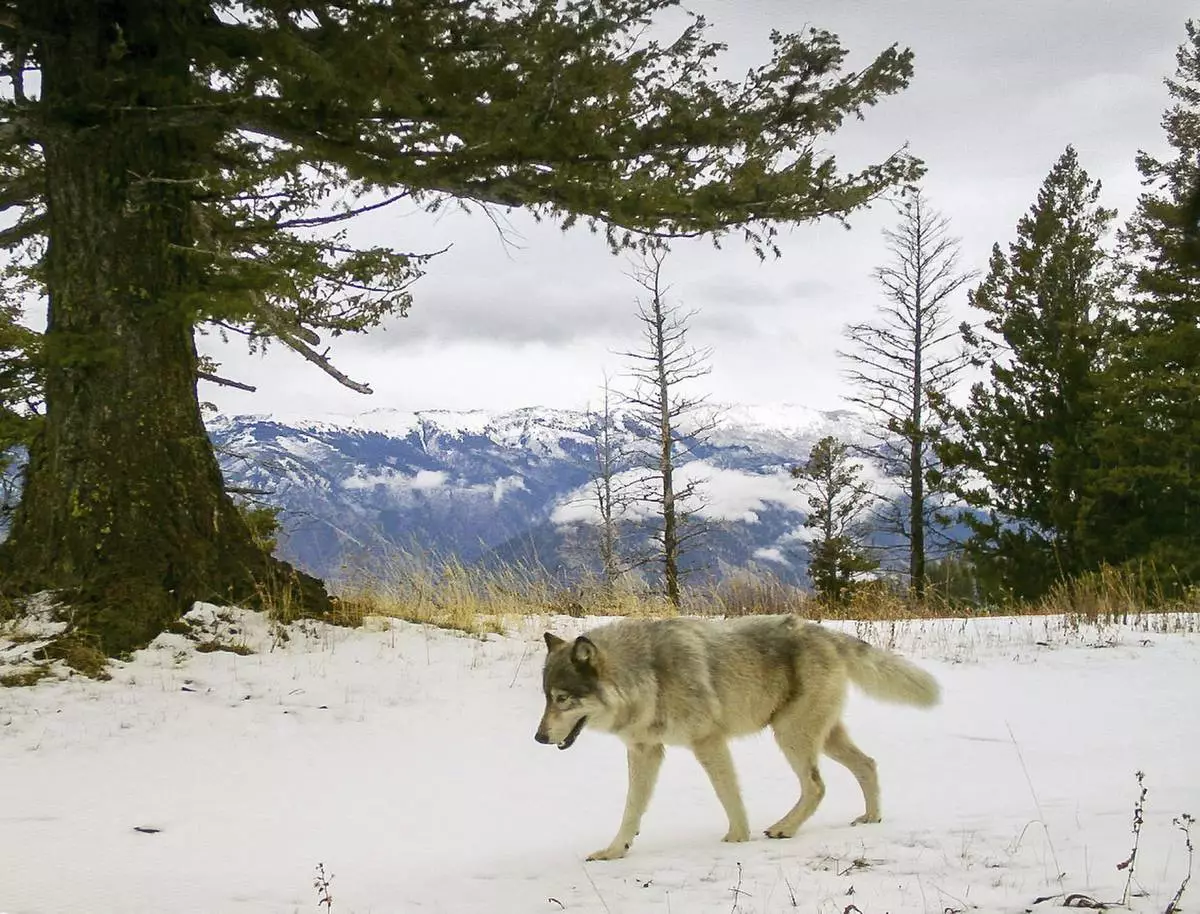
FILE - In this Dec. 4, 2014 photo released by the Oregon Department of Fish and Wildlife, a wolf from the Snake River Pack passes by a remote camera in eastern Wallowa County, Ore. (Oregon Department of Fish and Wildlife via AP, File)
FILE - In this Dec. 4, 2014 photo released by the Oregon Department of Fish and Wildlife, a wolf from the Snake River Pack passes by a remote camera in eastern Wallowa County, Ore. (Oregon Department of Fish and Wildlife via AP, File)

FILE - This Aug. 27, 2019 trail camera photo provided by the Oregon Department of Fish and Wildlife shows a wolf pack that had at least four pups taken during the 2019 annual wolf count/survey at Umpqua National Forest, Oregon. (Oregon Department of Fish and Wildlife via AP, File)
FILE - This Aug. 27, 2019 trail camera photo provided by the Oregon Department of Fish and Wildlife shows a wolf pack that had at least four pups taken during the 2019 annual wolf count/survey at Umpqua National Forest, Oregon. (Oregon Department of Fish and Wildlife via AP, File)

In this image taken from video released by the USDA, a wolf runs from a drone with a speaker attached in Oregon, 2022. (USDA via AP)
In this image taken from video released by the USDA, a wolf runs from a drone with a speaker attached in Oregon, 2022. (USDA via AP)

FILE - This Dec., 2017, remote camera photo provided by the Oregon Department of Fish and Wildlife shows the breeding female of the Walla Walla Pack in northern Oregon's Umatilla County. (Oregon Department of Fish and Wildlife via AP, File)
FILE - This Dec., 2017, remote camera photo provided by the Oregon Department of Fish and Wildlife shows the breeding female of the Walla Walla Pack in northern Oregon's Umatilla County. (Oregon Department of Fish and Wildlife via AP, File)

In this image taken from video released by the USDA, Gray wolves halt an attack on a cow at an undisclosed location along the Oregon/California border after a drone emits noises at them as part of efforts by the USDA to monitor predators at night and repel them from livestock by non-lethal means. (USDA via AP)
In this image taken from video released by the USDA, Gray wolves halt an attack on a cow at an undisclosed location along the Oregon/California border after a drone emits noises at them as part of efforts by the USDA to monitor predators at night and repel them from livestock by non-lethal means. (USDA via AP)

NUUK, Greenland (AP) — Troops from several European countries continued to arrive in Greenland on Thursday in a show of support for Denmark as talks between representatives of Denmark, Greenland and the U.S. highlighted “fundamental disagreement” over the future of the Arctic island.

Denmark announced it would increase its military presence in Greenland on Wednesday as foreign ministers from Denmark and Greenland were preparing to meet with White House representatives in Washington. Several European partners — including France, Germany, the U.K., Norway, Sweden and the Netherlands — started sending symbolic numbers of troops already on Wednesday or promised to do so in the following days.

The troop movements were intended to portray unity among Europeans and send a signal to President Donald Trump that an American takeover of Greenland is not necessary as NATO together can safeguard the security of the Arctic region amid rising Russian and Chinese interest.

“The first French military elements are already en route” and “others will follow,” French President Emmanuel Macron announced Wednesday, as French authorities said about 15 soldiers from the mountain infantry unit were already in Nuuk for a military exercise.

Germany will deploy a reconnaissance team of 13 personnel to Greenland on Thursday, the Defense Ministry said.

On Thursday, Danish Defense Minister Troels Lund Poulsen said the intention was “to establish a more permanent military presence with a larger Danish contribution,” according to Danish broadcaster DR. He said soldiers from several NATO countries will be in Greenland on a rotation system.

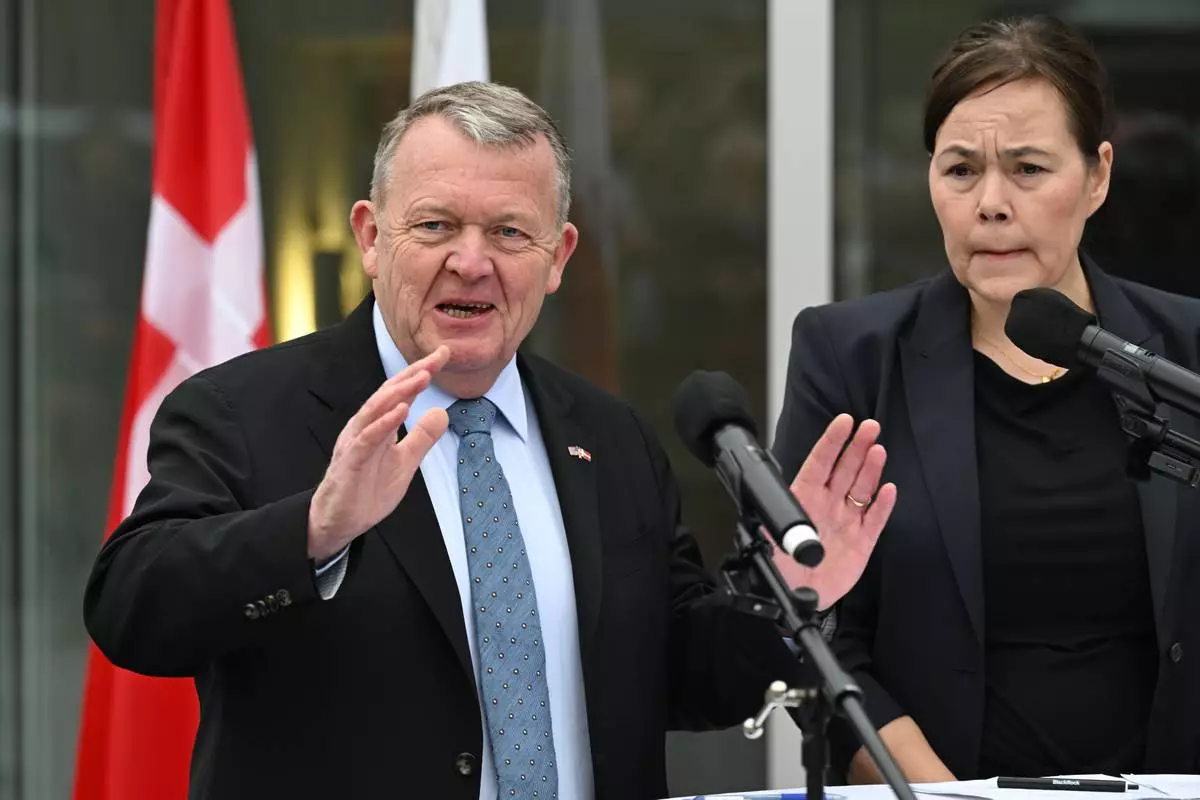
Danish Foreign Minister Lars Løkke Rasmussen, flanked by his Greenlandic counterpart Vivian Motzfeldt, said Wednesday that a “fundamental disagreement” over Greenland remains with Trump after they held highly anticipated talks at the White House with Vice President JD Vance and Secretary of State Marco Rubio.

Rasmussen added that it remains “clear that the president has this wish of conquering over Greenland” but that dialogue with the U.S. would continue at a high level over the following weeks.

Inhabitants of Greenland and Denmark reacted with anxiety but also some relief that negotiations with the U.S. would go on and European support was becoming visible.

Greenland's Prime Minister Jens-Frederik Nielsen welcomed the continuation of “dialogue and diplomacy.”

“Greenland is not for sale,” he said Thursday. “Greenland does not want to be owned by the United States. Greenland does not want to be governed from the United States. Greenland does not want to be part of the United States.”

In Greenland’s capital, Nuuk, local residents told The Associated Press they were glad the first meeting between Greenlandic, Danish and American officials had taken place but suggested it left more questions than answers.

Several people said they viewed Denmark’s decision to send more troops, and promises of support from other NATO allies, as protection against possible U.S. military action. But European military officials have not suggested the goal is to deter a U.S. move against the island.

Maya Martinsen, 21, said it was “comforting to know that the Nordic countries are sending reinforcements” because Greenland is a part of Denmark and NATO.

The dispute, she said, is not about “national security” but rather about “the oils and minerals that we have that are untouched.”

On Wednesday, Poulsen announced a stepped-up military presence in the Arctic “in close cooperation with our allies,” calling it a necessity in a security environment in which “no one can predict what will happen tomorrow.”

“This means that from today and in the coming time there will be an increased military presence in and around Greenland of aircraft, ships and soldiers, including from other NATO allies,” Poulsen said.

Asked whether the European troop movements were coordinated with NATO or what role the U.S.-led military alliance might play in the exercises, NATO referred all questions to the Danish authorities. However, NATO is currently studying ways to bolster security in the Arctic.

The Russian embassy in Brussels on Thursday lambasted what it called the West's “bellicose plans” in response to “phantom threats that they generate themselves”. It said the planned military actions were part of an “anti-Russian and anti-Chinese agenda” by NATO.

“Russia has consistently maintained that the Arctic should remain a territory of peace, dialogue and equal cooperation," the embassy said.

Rasmussen announced the creation of a working group with the Americans to discuss ways to work through differences.

“The group, in our view, should focus on how to address the American security concerns, while at the same time respecting the red lines of the Kingdom of Denmark,” he said.

Commenting on the outcome of the Washington meeting on Thursday, Poulsen said the working group was “better than no working group” and “a step in the right direction.” He added nevertheless that the dialogue with the U.S. did not mean “the danger has passed.”

Speaking on Thursday, Danish Prime Minister Mette Frederiksen said the American ambition to take over Greenland remains intact despite the Washington meeting, but she welcomed the creation of the working group.

The most important thing for Greenlanders is that they were directly represented at the meeting in the White House and that “the diplomatic dialogue has begun now,” Juno Berthelsen, a lawmaker for the pro-independence Naleraq opposition party, told AP.

A relationship with the U.S. is beneficial for Greenlanders and Americans and is “vital to the security and stability of the Arctic and the Western Alliance,” Berthelsen said. He suggested the U.S. could be involved in the creation of a coastguard for Greenland, providing funding and creating jobs for local people who can help to patrol the Arctic.

Line McGee, 38, from Copenhagen, told AP that she was glad to see some diplomatic progress. “I don’t think the threat has gone away,” she said. “But I feel slightly better than I did yesterday.”

Trump, in his Oval Office meeting with reporters, said: “We’ll see how it all works out. I think something will work out.”

Niemann reported from Copenhagen, Denmark, and Ciobanu from Warsaw, Poland.

Denmark's Foreign Minister Lars Løkke Rasmussen and Greenland's Foreign Minister Vivian Motzfeldt speak at a news conference at the Embassy of Denmark, Wednesday, Jan. 14, 2026, in Washington. (AP Photo/John McDonnell)

Denmark's Foreign Minister Lars Løkke Rasmussen and Greenland's Foreign Minister Vivian Motzfeldt speak at a news conference at the Embassy of Denmark, Wednesday, Jan. 14, 2026, in Washington. (AP Photo/John McDonnell)

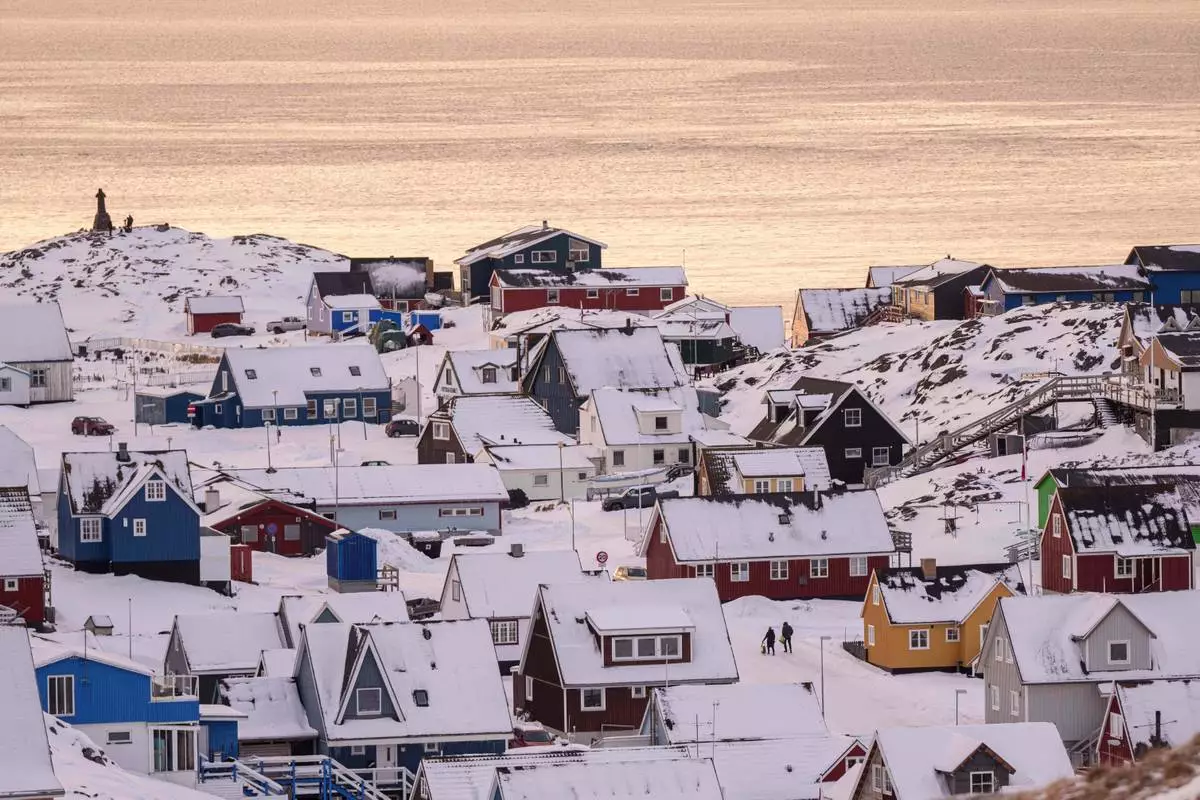
People walk on a street in Nuuk, Greenland, Wednesday, Jan. 14, 2026. (AP Photo/Evgeniy Maloletka)

People walk on a street in Nuuk, Greenland, Wednesday, Jan. 14, 2026. (AP Photo/Evgeniy Maloletka)

From center to right, Greenland Foreign Minister Vivian Motzfeldt, Denmark's Ambassador Jesper Møller Sørensen, rear, and Danish Foreign Minister Lars Løkke Rasmussen, right, arrive on Capitol Hill to meet with senators from the Arctic Caucus, in Washington, Wednesday, Jan. 14, 2026. (AP Photo/J. Scott Applewhite)

From center to right, Greenland Foreign Minister Vivian Motzfeldt, Denmark's Ambassador Jesper Møller Sørensen, rear, and Danish Foreign Minister Lars Løkke Rasmussen, right, arrive on Capitol Hill to meet with senators from the Arctic Caucus, in Washington, Wednesday, Jan. 14, 2026. (AP Photo/J. Scott Applewhite)

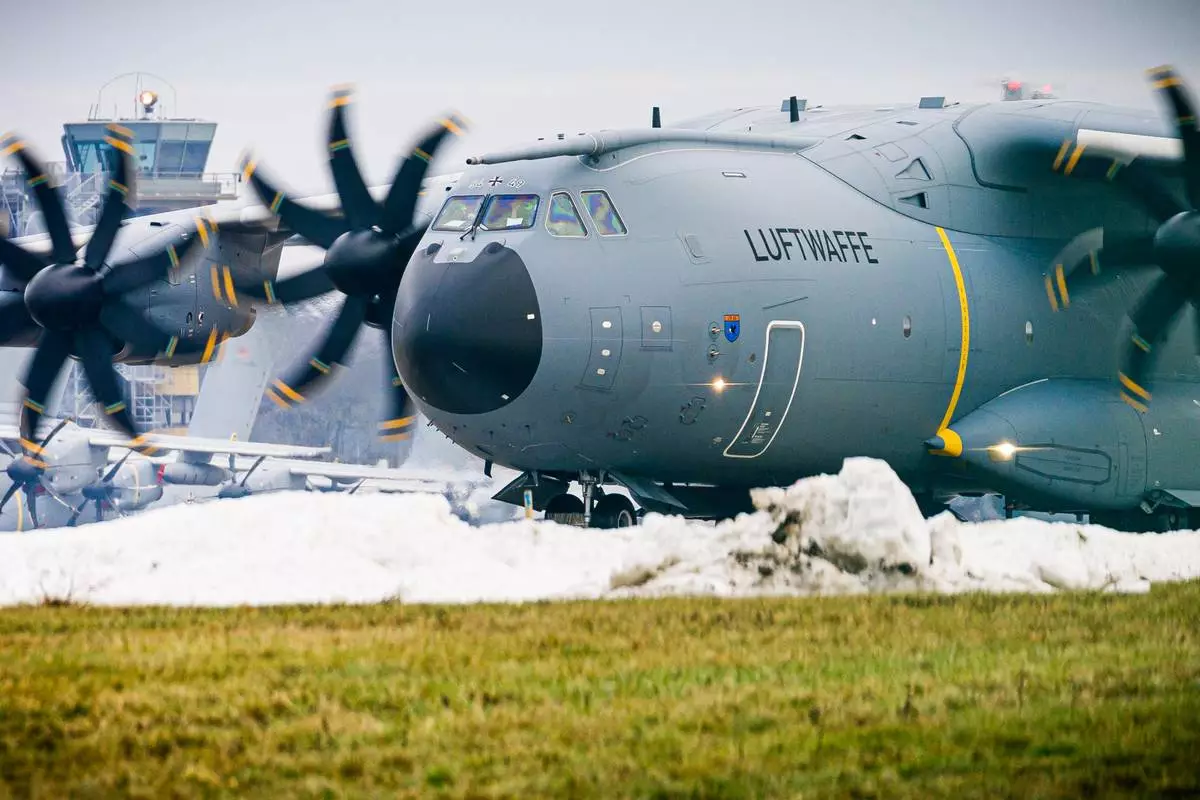
An Airbus A400M transport aircraft of the German Air Force taxis over the grounds at Wunstorf Air Base in the Hanover region, Germany, Thursday, Jan. 15, 2026 as troops from NATO countries, including France and Germany, are arriving in Greenland to boost security. (Moritz Frankenberg/dpa via AP)

An Airbus A400M transport aircraft of the German Air Force taxis over the grounds at Wunstorf Air Base in the Hanover region, Germany, Thursday, Jan. 15, 2026 as troops from NATO countries, including France and Germany, are arriving in Greenland to boost security. (Moritz Frankenberg/dpa via AP)

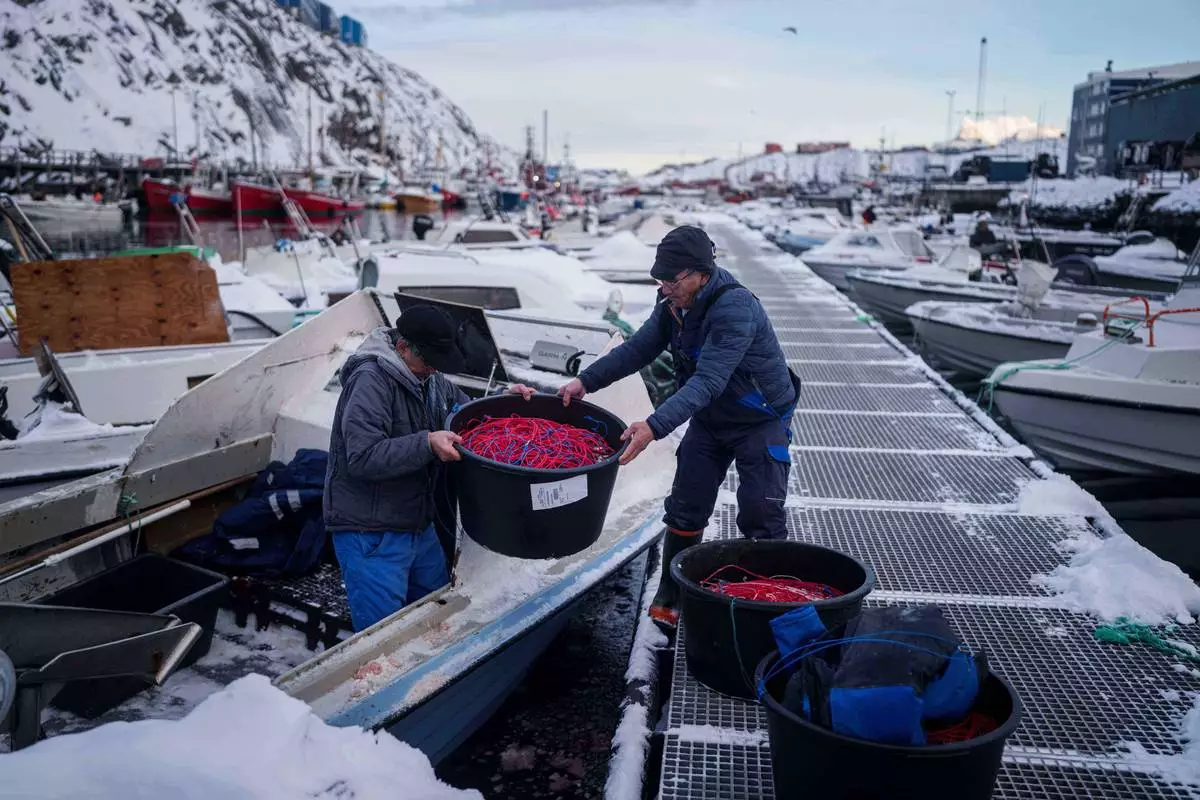
Fishermen load fishing lines into a boat in the harbor of Nuuk, Greenland, Wednesday, Jan. 14, 2026. (AP Photo/Evgeniy Maloletka)

Fishermen load fishing lines into a boat in the harbor of Nuuk, Greenland, Wednesday, Jan. 14, 2026. (AP Photo/Evgeniy Maloletka)

Greenland Foreign Minister Vivian Motzfeldt, left, and Danish Foreign Minister Lars Løkke Rasmussen, arrive on Capitol Hill to meet with members of the Senate Arctic Caucus, in Washington, Wednesday, Jan. 14, 2026. (AP Photo/J. Scott Applewhite)

Greenland Foreign Minister Vivian Motzfeldt, left, and Danish Foreign Minister Lars Løkke Rasmussen, arrive on Capitol Hill to meet with members of the Senate Arctic Caucus, in Washington, Wednesday, Jan. 14, 2026. (AP Photo/J. Scott Applewhite)

Recommended Articles