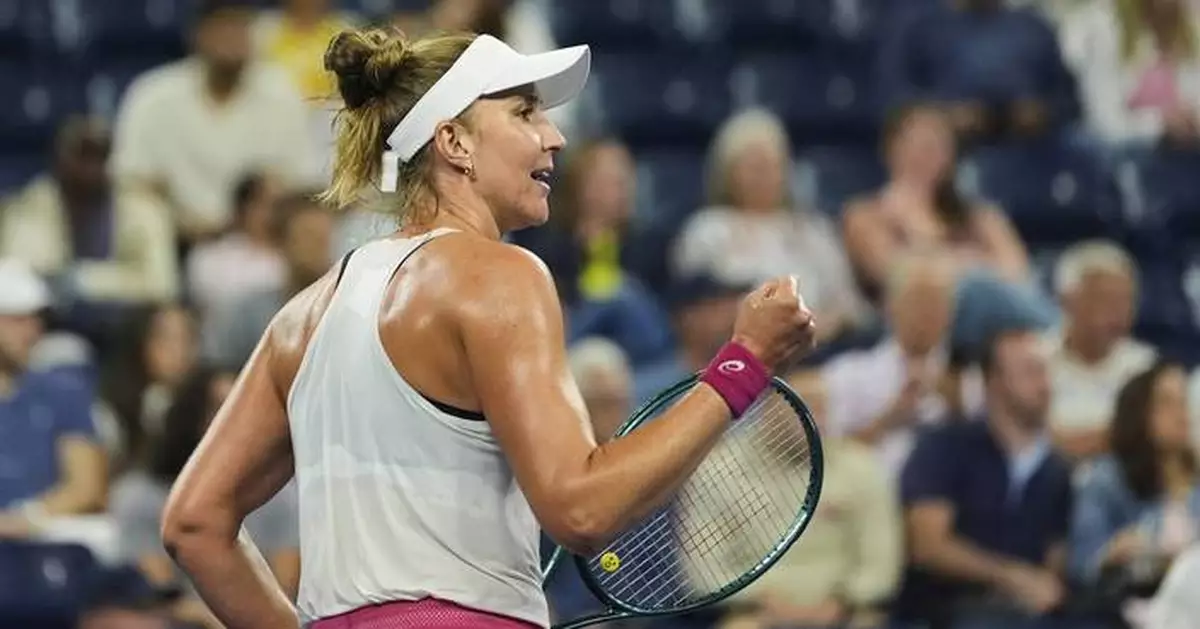
NEW YORK (AP) — The final match Saturday at the U.S. Open got underway closer to midnight than expected, when Maria Sakkari and Beatriz Haddad Maia took the court at Louis Armstrong Stadium at 11:28 p.m.
They were delayed by a nearly four-hour men’s match that ended when Felix Auger-Aliassime eliminated third-seeded Alexander Zverev in four sets. It lasted just 70 minutes, ending at 12:38 a.m. Sunday with Haddad Maia advancing to the fourth round.
Click to Gallery
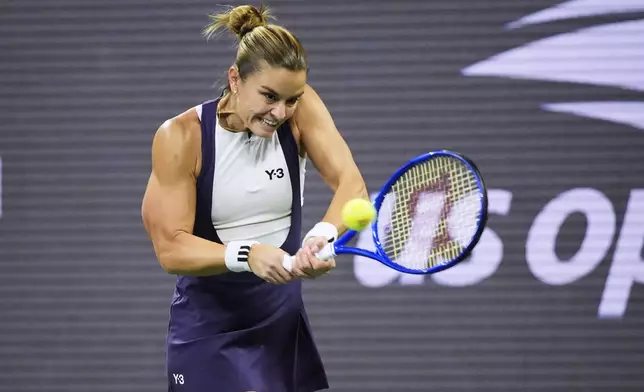
Maria Sakkari, of Greece, returns a shot against Beatriz Haddad Maia, of Brazil, during the third round of the U.S. Open tennis championships, Saturday, Aug. 30, 2025, in New York. (AP Photo/Pamela Smith)
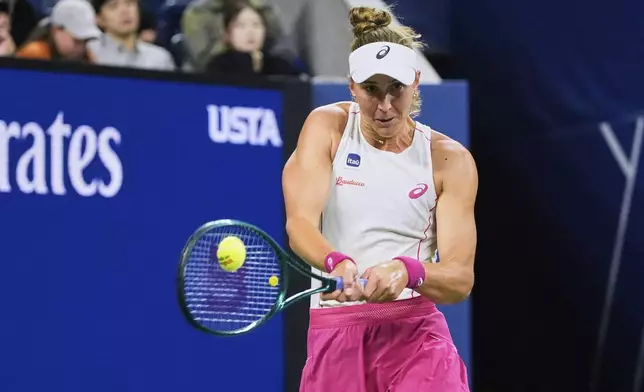
Beatriz Haddad Maia, of Brazil, returns a shot against Maria Sakkari, of Greece, during the third round of the U.S. Open tennis championships, Saturday, Aug. 30, 2025, in New York. (AP Photo/Pamela Smith)
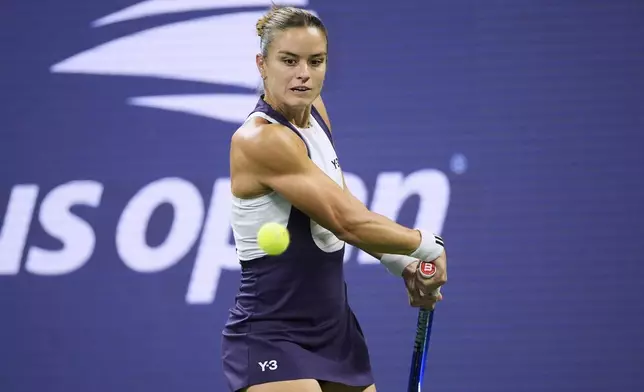
Maria Sakkari, of Greece, returns a shot against Beatriz Haddad Maia, of Brazil, during the third round of the U.S. Open tennis championships, Saturday, Aug. 30, 2025, in New York. (AP Photo/Pamela Smith)
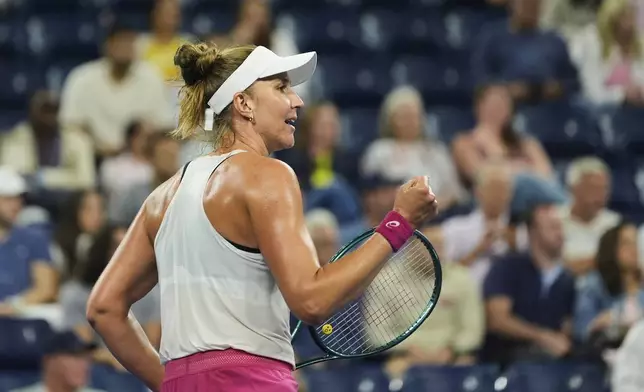
Beatriz Haddad Maia, of Brazil, reacts after winning the first set against Maria Sakkari, of Greece, during the third round of the U.S. Open tennis championships, Saturday, Aug. 30, 2025, in New York. (AP Photo/Pamela Smith)
“Thanks everyone who stayed to the end,” Haddad Maia said in her on-court interview. “I know it’s very, very late and you guys are supporting women's tennis, and this is very, very important for us.”
The American Grand Slam instituted a policy last year that a tournament referee can move any match that hasn’t gone on by 11:15 p.m. to another court. A U.S. Tennis Association spokesperson said the decision had been made after the fourth set of Auger-Aliassime versus Zverev that Sakkari and Haddad Maia would play either on Armstrong as scheduled or another court.
Had Auger-Aliassime and Zverev gone into a fifth set, the Sakkari-Haddad Maia match would have been moved elsewhere, the spokesperson said.
This was the seventh-latest start in Flushing Meadows, and it came a year to the day of the record-setter when Aryna Sabalenka and Ekaterina Alexandrova's night-session match began at 12:07 a.m. — technically on Aug. 31. It was not the latest U.S. Open start for Haddad Maia, who began a match against Bianca Andreescu at 11:38 p.m. in 2022.
Late-night matches and scheduling in majors has become a hot debate in the sport, notably also at the French Open and Australian Open. Wimbledon has an 11 p.m. curfew.
The final men's match of the day, Tommy Paul against Alexander Bublik, was only in the second set in Arthur Ashe Stadium when Sakkari and Haddad Maia started and was still going when they were finished. Iga Swiatek rallied from down 5-1 in the first set to beat Anna Kalinskaya to begin the night session on Ashe.
Paul played a post-midnight marathon match Thursday into Friday in the second round, defeating Nuno Borges in 4 hours, 25 minutes concluding at 1:46 a.m. His U.S. Open ended at 1:16 a.m. Sunday in a 3 1/2-hour, five-set loss to Bublik.
AP tennis: https://apnews.com/hub/tennis
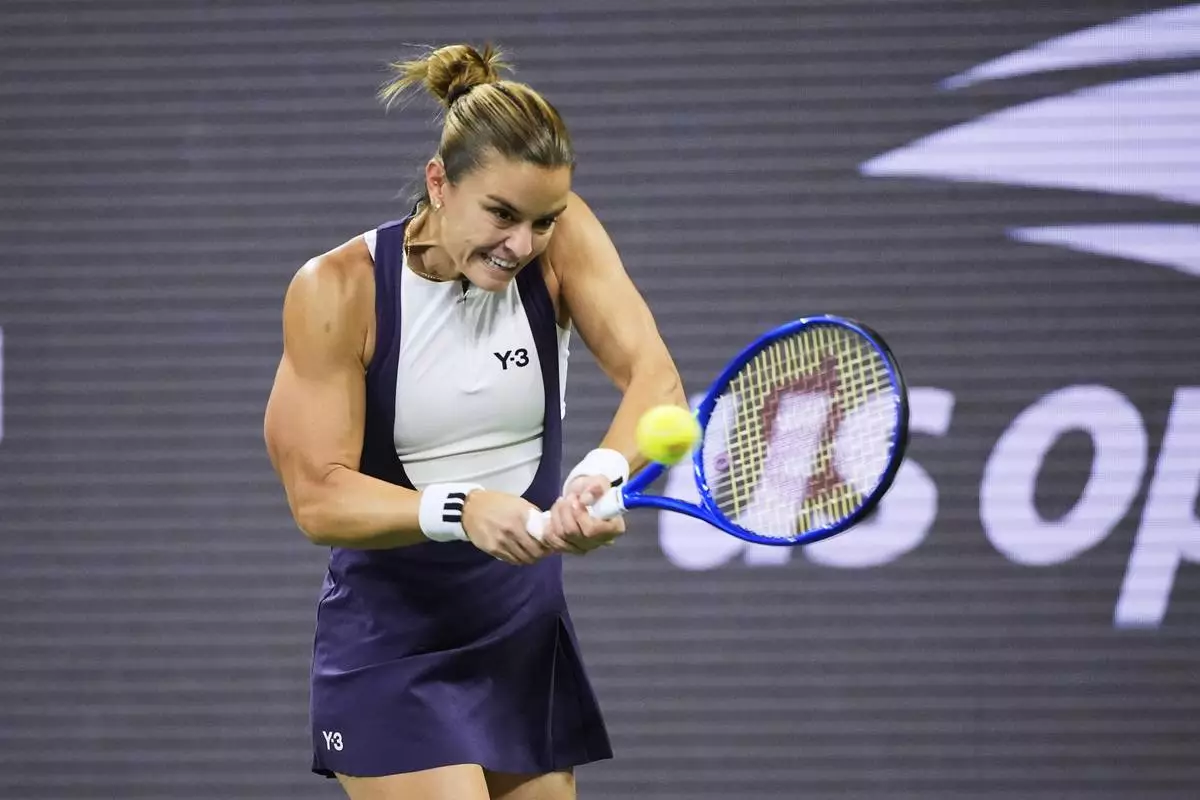
Maria Sakkari, of Greece, returns a shot against Beatriz Haddad Maia, of Brazil, during the third round of the U.S. Open tennis championships, Saturday, Aug. 30, 2025, in New York. (AP Photo/Pamela Smith)
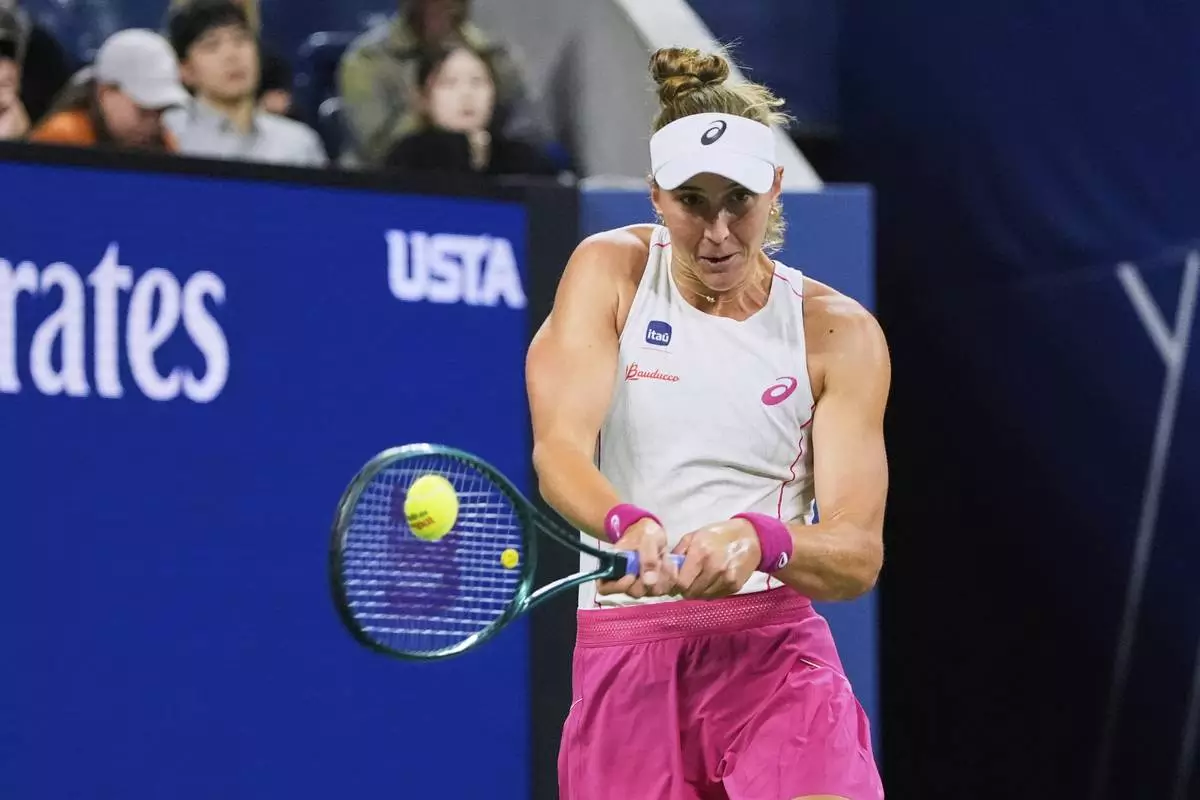
Beatriz Haddad Maia, of Brazil, returns a shot against Maria Sakkari, of Greece, during the third round of the U.S. Open tennis championships, Saturday, Aug. 30, 2025, in New York. (AP Photo/Pamela Smith)
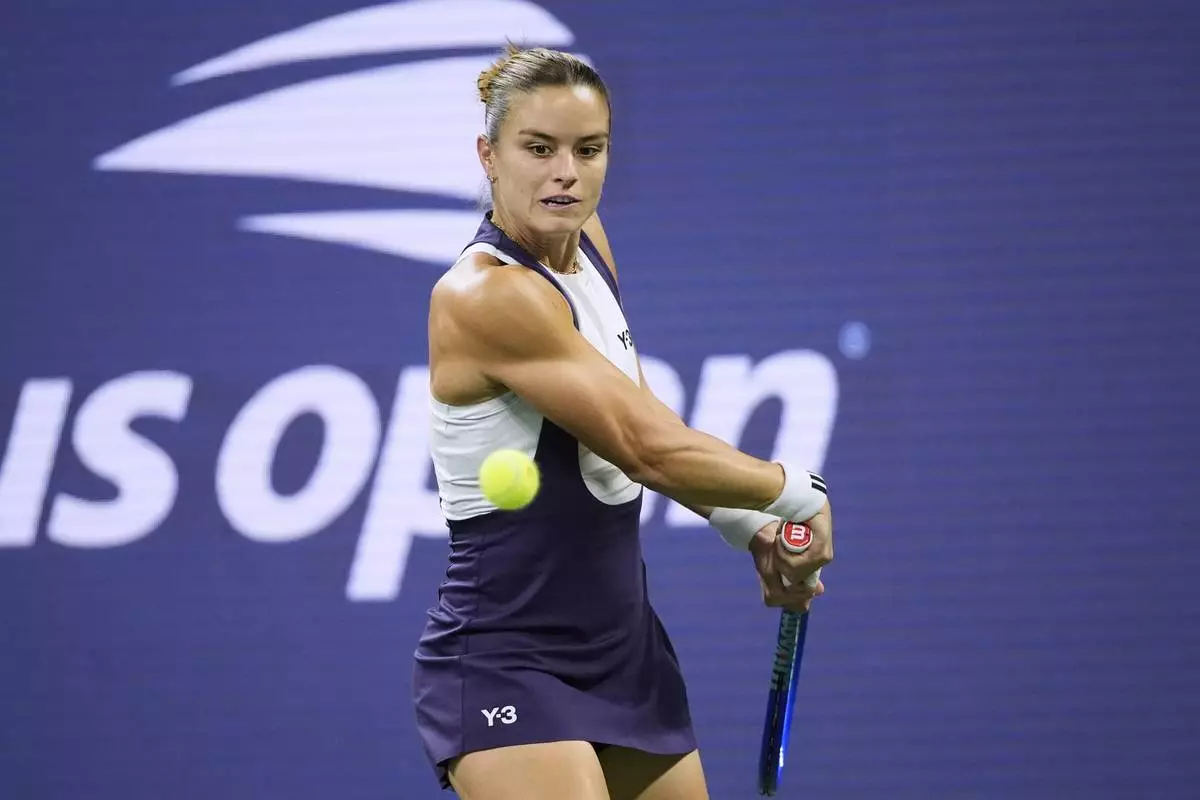
Maria Sakkari, of Greece, returns a shot against Beatriz Haddad Maia, of Brazil, during the third round of the U.S. Open tennis championships, Saturday, Aug. 30, 2025, in New York. (AP Photo/Pamela Smith)
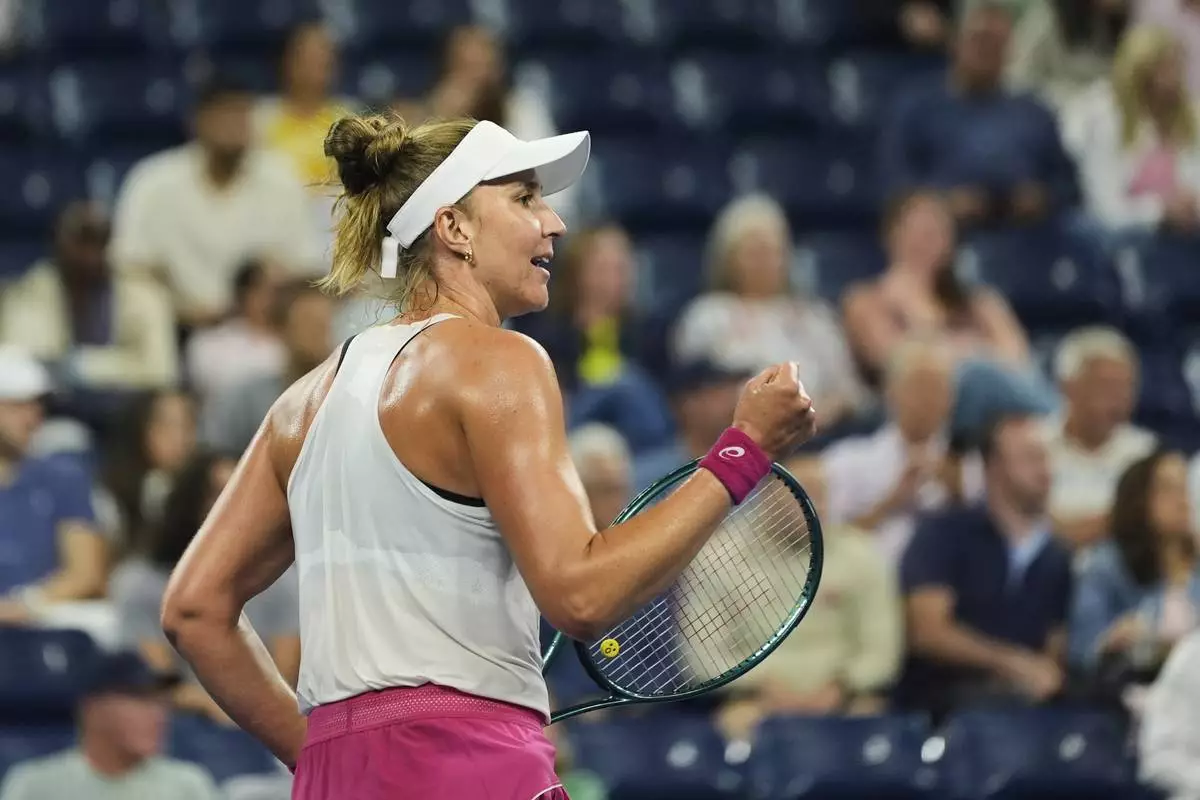
Beatriz Haddad Maia, of Brazil, reacts after winning the first set against Maria Sakkari, of Greece, during the third round of the U.S. Open tennis championships, Saturday, Aug. 30, 2025, in New York. (AP Photo/Pamela Smith)