China has been expanding the scope of its low-altitude equipment from performing traditional general aviation duties to now playing key roles in multiple different scenarios across agriculture, logistics, and in emergency rescue situations.
The country has been making efforts to develop its low-altitude economy, which refers to activities involving both manned and unmanned aircraft operating in airspace ranging from 1,000 meters and 3,000 meters above the ground, recognizing it as a strategic emerging sector which has the huge potential to transform urban mobility.
The deployment of drones has been one such innovation that is already put into practice across several fields such as patrol inspection, mapping, and ecological monitoring.
China currently has over 200,000 agricultural drones operating on more than 27 million hectares of farmland across the country, according to the Ministry of Industry and Information Technology (MIIT), helping farmers cover larger areas via this efficient solution.
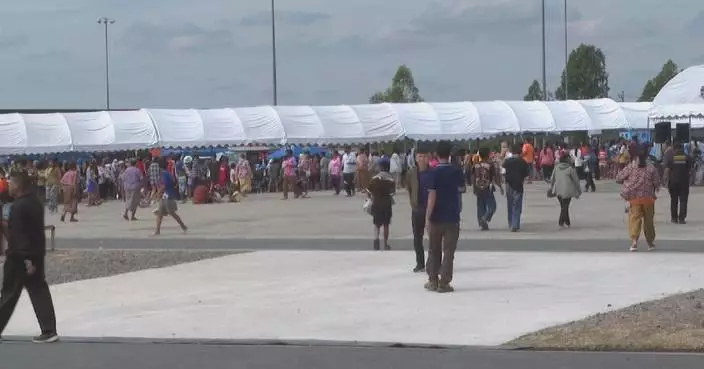
Meanwhile, the adoption of aerial solutions is also having potentially life-changing benefits in Shihezi City of northwest China's Xinjiang Uygur Autonomous Region, where a general aviation company has partnered with a local hospital to supply emergency assistance using medical rescue helicopters, leveraging the region's favorable airspace conditions to save critical time for patients.
"Since late December last year, we have completed 13 medical flight missions and transported 11 critically ill patients," said Huang Zhong, deputy director of the public health department at the First Affiliated Hospital of Shihezi University.
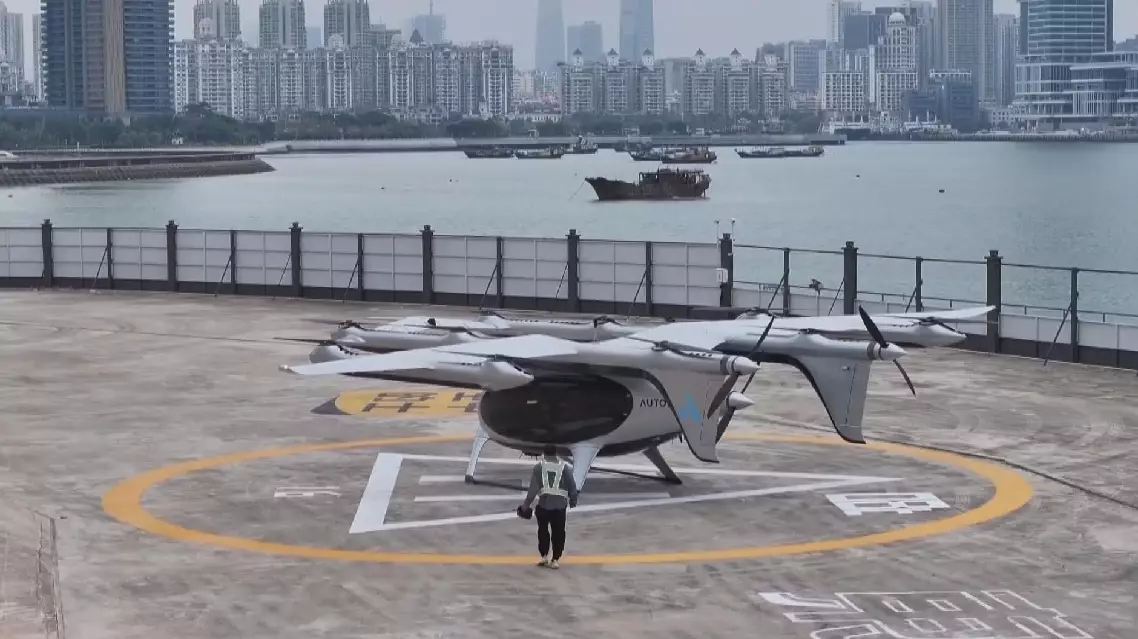
In south China's Guangdong Province, a new unmanned flying car has been undergoing tests as developers look to fine-tune its performance for future use in urban settings. It functions like a regular vehicle on the road, but is capable of completing vertical take-off and landing, all without human intervention.
Additionally, several express companies in the logistics sector are testing new branch freight routes using low-altitude equipment which will better connect their local services, while over 20 cities across China have already set up regular low-altitude logistics routes, according to the MIIT.
Statistics show that low-altitude equipment is now widely used in more than 20 general aviation services, including short-distance transportation, aerial tourism, weather modification, aerial photography, and in spraying pesticides or fertilizer.
According to the Civil Aviation Administration of China, the country's low-altitude economy is expected to reach a market size of 1.5 trillion yuan (about 210 billion U.S. dollars) by the end of the year and soar to 3.5 trillion yuan (487 billion U.S. dollars) by 2035.
China expands use of low-altitude equipment in multiple application scenarios