NEW YORK (AP) — Coping with a sudden loss in federal funding, PBS affiliate KSPS in Spokane, Washington, faced a surprise extra hurdle. Many of its contributing members — at one point almost half — lived in Canada, and they were withdrawing support out of anger at President Donald Trump's desire to make the country the 51st member of the United States.
When Congress decided this summer to eliminate $1.1 billion allocated to public broadcasting, it left some 330 PBS and 246 NPR stations, each with unique issues related to their communities and history, to figure out what that means.
Many launched emergency fund drives and are heartened by the response. The national NPR and PBS networks are reducing expected dues payments, and a philanthropic effort focused on the hardest-hit stations is taking shape. No stations have shut down, but job and programming cuts are already beginning.
In Spokane, KSPS has always tried to keep its requests for member donations separate from appeals for public funding. Not anymore. Congress left the station with a $1.2 million hole to fill, about 18% of its budget, and the station is using that as a pretext to seek help from listeners.
“We have definitely seen some attrition from our Canadian members,” said Skyler Reep, the station's interim general manager.
Long suspicious of a liberal bent to public media news coverage, Republicans in Congress responded to President Donald Trump’s wishes in July and eliminated funding for the systems. The Corporation for Public Broadcasting, which distributes the funding, has taken steps to shut down.
In some parts of the country, the answer to pleas for help have exceeded expectations. Public radio station WHQR in Wilmington, N.C. raised more than $200,000 in three days, filling a $174,000 hole and then some. It's a small community growing fast with an influx of retirees, many who depend on the station's news to learn about their new home, said general manager Kevin Crane.
With $525,000 gone from its budget, Hawaii Public Radio has already raised $650,000 in an emergency fund drive. “It's a validation that what you're doing is essential to the community and is appreciated by the community,” said Meredith Artley, president and CEO. The 2023 wildfires in Maui and their aftermath were covered steadily by Hawaii Public Radio news reporters.
“The initial response in terms of support for both stations and the NPR network has been extraordinary,” said Katherine Maher, NPR president. “People did a lot of work leading up to the vote, in actions and calls. When that did not prove convincing, they turned to direct support.”
Stations across the country have stories that make them smile: the youngster from Florida who collected money for public stations in Alaska, sending a note written in crayon; the regular $300 donor who came in to PBS SoCal with a $100,000 check, one of three six-figure donations the station has received.
Most stations aren't in areas with so many wealthy donors. Most station managers are like Jeff Hanks of PBS' LPTV in Lakeland, Minnesota. He lies awake wondering where he will find $1 million to pay for things like his station's nightly newscast, a primary news source for central and northern Minnesota.
“These are extremely, extremely challenging times,” Hanks said. “We're fighting hard every way we can.”
He knows membership donations won't make up for what is missing. Both PBS and NPR have taken steps to reduce the annual dues that stations pay for programming and other services. At PBS, it's an average 15% reduction, but needy stations get more — in one case, more than half of next year's dues will be forgiven, said PBS president Paula Kerger.
NPR is encouraging donors in wealthier areas to adopt stations in poorer ones, perhaps in an area where a contributor has emotional ties.
Public media leaders are also working with a group of philanthropists led by the Knight and MacArthur foundations that is hoping to raise some $50 million to support stations in areas hardest hit be the cuts. Ed Ulman, president and CEO of Alaska Public Media, which represents nearly two dozen radio and television stations in the largest state, said he'll be seeking money from this fund.
Ulman said he's been buoyed by the response from Alaskans in their effort to raise $15 million through various sources by October. The services their stations provide is free, and citizens see its value.
“I've never been worried about the future of public television or radio because our community needs us,” he said, “and what we've seen in Alaska is an outcry about that.”
Still, Alaska Public Media has suspended the weekly public affairs television show “Alaska Insight,” which isn't returning after a summer hiatus. The future of “Indie Alaska,” a weekly video series highlighting the lives of Alaskans, is also in danger.
Some stations are already making the difficult decisions of cutting staff, In Spokane, for example, 12 of KSPS's 35 staff members have either been laid off, had their hours reduced or pay cut. Reep is also considering that future seasons of local shows like “Northwest Profiles” or the arts showcase “Inland Sessions” will have fewer episodes.
Similar programming decisions are also being weighed on a national level. While several upcoming shows, like Ken Burns' six-part miniseries “The American Revolution” scheduled for November, are completed, PBS will have to consider making shorter seasons of its series, Kerger said.
“We're working very hard so that the public doesn't feel that there's a change,” Kerger said.
Between an increase in donations and “rainy day” resources set aside, the initial impact of the government action may be minimized. But that brings its own worries: It's unlikely public media will be able to count on sympathy donors to the same extent in the future. And there's a risk that some politicians will feel the response proves that public support isn't necessary.
The bigger reckoning may come a year from now, Kerger said. “I am a realist,” she said. “I have to believe that there are some vulnerable stations that are not going to make it.”
The crisis is forcing some public stations to work together, searching for ways to share services in areas not before contemplated, in things like finances, management and programming, said Andy Russell, president and CEO of PBS SoCal. Public stations in Washington are meeting to see if they can get state financing.
In Los Angeles, PBS SoCal has shared some of its templates for fundraising appeals with other stations. Several celebrities — people like Kerry Washington, Jack Black, Ziggy Marley, John Lithgow and John Leguizamo — have volunteered to film pitches, and the station is making them available nationwide, too, said Maura Daly Phinney, senior vice president for membership engagement and strategy.
“We're going to make it,” Phinney said. “The system is going to be different. But we're going to make it.”
This story was first published on Aug. 31, 2025. It was updated on Sept. 9, 2025, to correct that Minnesota’s Lakeland PBS station is located in Lakeland, Minnesota. Its office is in Bemidji. The station has also changed its brand from “Lakeland Public Television” to “Lakeland PBS.”
David Bauder writes about the intersection of media and entertainment for the AP. Follow him at http://x.com/dbauder and https://bsky.app/profile/dbauder.bsky.social.

FILE - Katherine Maher gestures during a speech opening the technology conference, in Lisbon, Nov. 13, 2023. (AP Photo/Armando Franca, file)
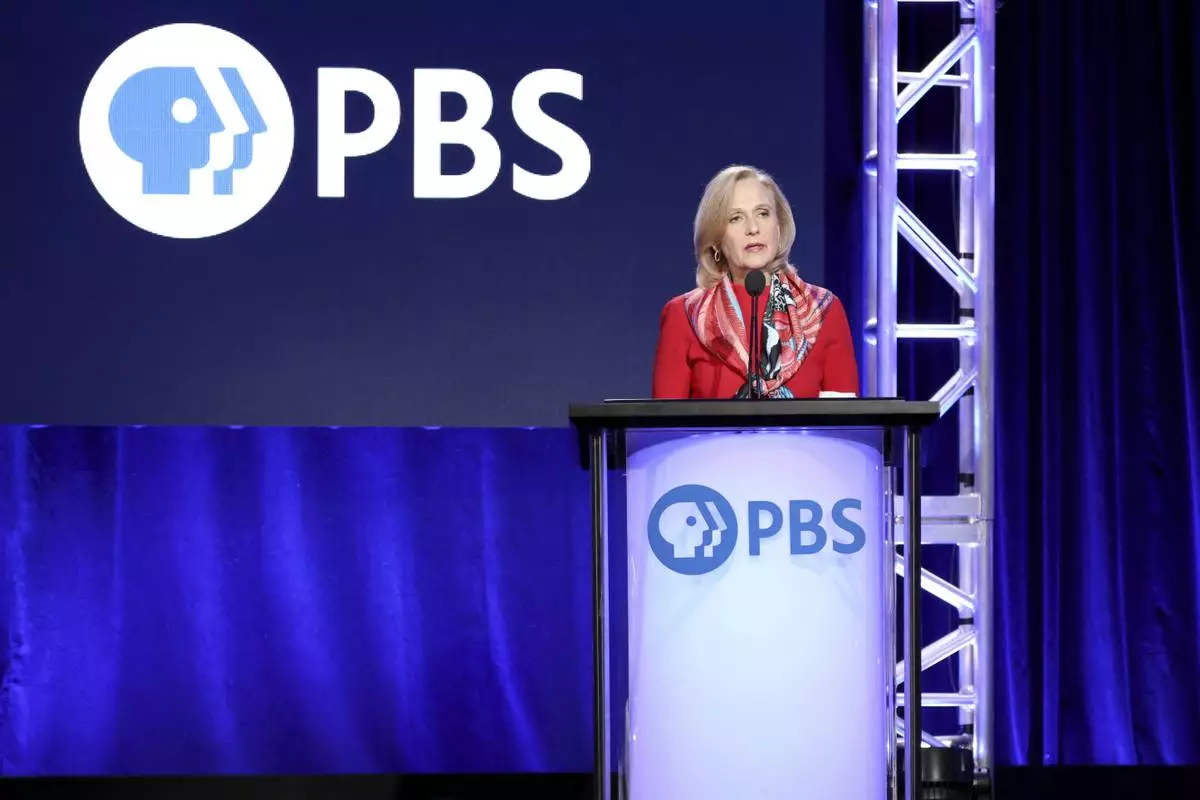
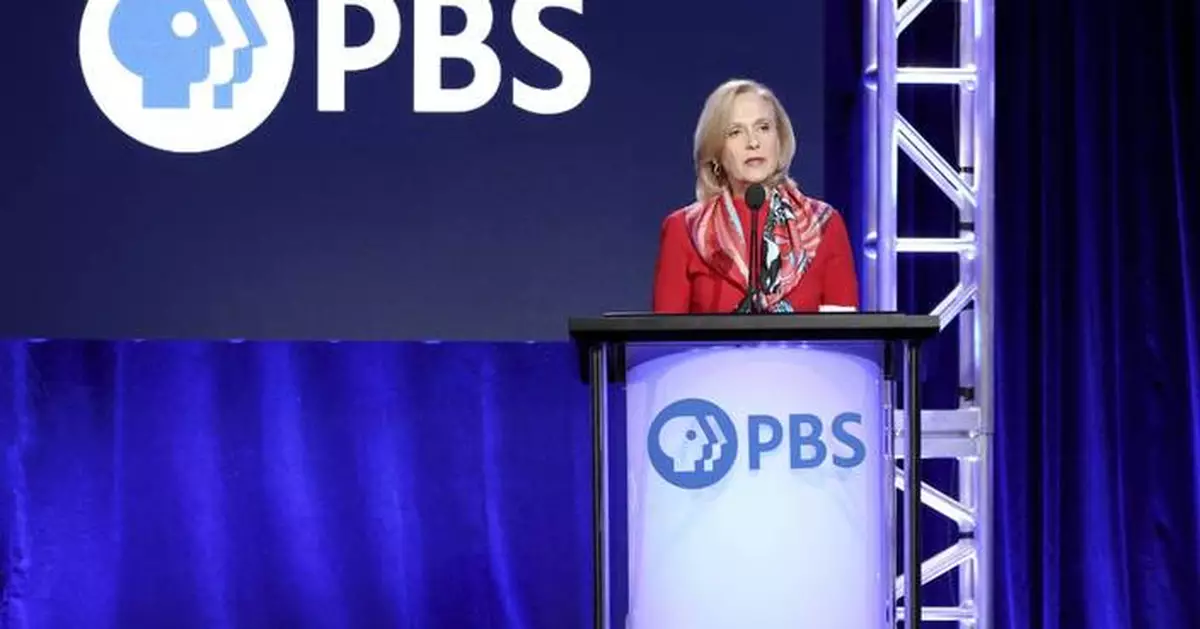
FILE - Paula Kerger, President and CEO at PBS, speaks at the executive session during the PBS Winter 2020 TCA Press Tour at The Langham Huntington, Pasadena, Jan. 10, 2020, in Pasadena, Calif. (Photo by Willy Sanjuan/Invision/AP, File)