Eighty years after the end of World War II, stories of extraordinary courage and solidarity between people of different countries continue to emerge from its darkest hours, illuminating humanity's resilience in the face of brutality.
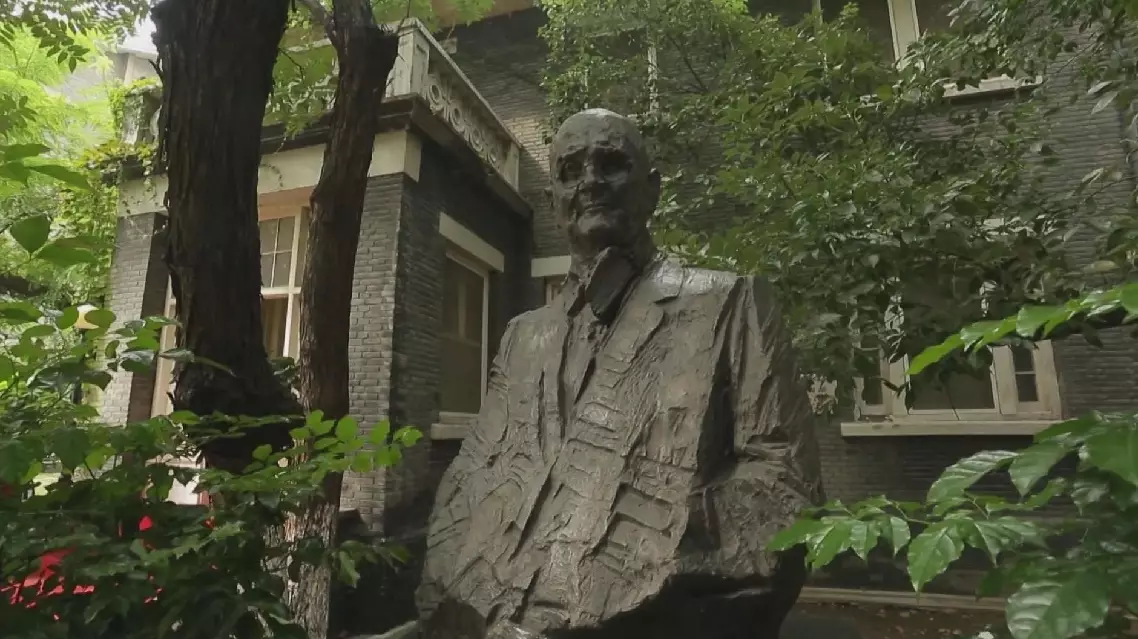
Among these accounts is that of John Rabe, a German businessman who risked his life to shelter thousands of Chinese civilians during the Nanjing Massacre. Today, his legacy is upheld by his grandson, Thomas Rabe, in Heidelberg, Germany.
"We are very proud here in our family about what my grandfather has done in Nanjing," said Thomas Rabe.
John Rabe stayed behind in Nanjing, despite illness, to lead the International Committee for Nanjing Safety Zone. His diaries recount how hundreds took shelter in his home, school, and garden.
"He had no benefit here, financial benefit or something else to stay. He stayed because he was convinced here he is doing the best. And it's Christian love for your neighbor," said Thomas.
In China, John Rabe is honored. But his legacy — and the stories of others like him — are often overlooked elsewhere.
Similarly, in Europe, little-known acts of courage were carried out by Chinese diplomats who issued life-saving visas to Jews and political refugees fleeing Nazi Germany and occupied France, enabling their escape to Shanghai.
"A lot of Chinese diplomats helped so that all those persecuted could leave Germany. So more than 20,000 people fled to Shanghai. Many others have taken other routes — to Beijing, to Harbin, and to Kunming," said Mechthild Leutner, Sinologist and Historian of Free University of Berlin.
Thomas Rabe is committed to keeping this history alive — not only through lectures and publications but also by meeting with survivors rescued by his grandfather.
As China commemorates the anniversary of the end of World War II, these voices bridge generations, serving as powerful reminders that even in times of extreme darkness, ordinary people can perform extraordinary deeds.
Stories of courage, solidarity endure 80 years after WWII