JHANG, Pakistan (AP) — Emergency workers in Pakistan's Punjab province used drones to find people stranded on rooftops by massive floods as the government expanded its rescue operation with more than 900,000 evacuated, officials said Monday.
The Pakistan Meteorological Department warned of more heavy rain in Punjab’s flood-hit districts and elsewhere in the country, where weeks of above-normal rainfall and the release of huge volumes of water from dams in neighboring India last week caused rivers to overflow into low-lying regions.
Click to Gallery
Villagers wade through flood waters following heavy rains at a village near Ajnala, about 35 kilometers (22 miles) from Amritsar, India, Friday, Aug. 29, 2025. (AP Photo)
Villagers shelter after being evacuated from a floods following torrential rains and rising rivers due to sudden water releases from Indian dams in Pindi Bhattian, Pakistan, Sunday, Aug. 31, 2025. (AP Photo/A. Rizvi)
Rescue workers evacuate villagers from a flooded area after torrential rains and rising water level in the rivers due to sudden water releases from Indian dams in Pindi Bhattian, Pakistan, Sunday, Aug. 31, 2025. (AP Photo/A. Rizvi)
Villagers shelter after being evacuated from a flooded area after torrential rains and rising water level in the rivers due to sudden water releases from Indian dams in Pindi Bhattian, Pakistan, Sunday, Aug. 31, 2025. (AP Photo/A. Rizvi)
Authorities say Punjab, the country's most populous province, is facing its biggest floods on record.
In Multan and Jhang districts, residents on Monday waded through floodwaters carrying their belongings to roadsides and higher ground. They said they had waited for rescuers before crossing on their own nearly 5-foot (1 1/2-meter) -deep water to reach safety, while many others remained stranded.
Since last week, rescuers, backed by the military and emergency services, have evacuated more than 900,000 people from more than 3,100 flood-hit villages, said Irfan Ali Kathia, director general of the Punjab Disaster Management Authority. More than 600,000 farm animals were also moved to safety, he told a news conference.
“We are handling an unprecedented situation, and we are responding to Punjab's biggest-ever floods by using the latest technology and all available resources to save lives,” Kathia told The Associated Press. The Punjab government said drones were deployed this week in Multan, Jhang and other districts.
“Our priority is to save lives and ensure a steady supply of essential items to survivors,” Kathia said. The deluge has swamped Narowal, Sialkot and Kasur districts while entire villages have been submerged in Jhang and Multan.
On roadside embankments, displaced families complained of being abandoned.
“We have been destroyed. Everything is gone in the flood,” said Haleema Bibi, 54, who fled her damaged home in Jhang with seven relatives. They now shelter under the open sky without tents or food.
“Whatever we had to eat has nearly finished. You can see how miserably we are living,” she told The Associated Press.
Allah Ditta, a farmer from the same district, said he and his neighbors slept on plastic sheets and carts. “Rescuers came once by boat, but no one has brought us supplies. We keep looking to the road, hoping someone will come with help,” he said.
Farmer Malik Ramzan said authorities advised villagers to move to safer places, but no rescue camps were established. He said robbers often loot abandoned houses, another reason he chose to remain in his flooded home in Rajanpur district.
Authorities in Punjab say they had set up more than 1,000 relief camps, but government figures show that only about 36,550 evacuees are housed in them. It is unclear where the vast majority were staying.
Evacuations also took place in southern Sindh province, where Chief Minister Murad Ali Shah warned of a possible “super flood” of the Indus River if water levels top 900,000 cubic feet per second.
Heavy rains and a sudden cloudburst on Monday inundated several neighborhoods in Islamabad, leaving roads under water and vehicles stranded, according to local media reports. Television footage showed the main streets of the Pakistani capital transformed into streams as cars struggled to move through the floodwaters.
Officials blame the catastrophic flooding on weeks of heavier-than-normal monsoon rains, compounded by cross-border waters released from India’s swollen rivers and dams last week. The Ravi, Chenab and Sutlej rivers rose simultaneously, inundating swaths of farmland and villages.
India had alerted Pakistan about the water release, marking the rivals’ first public diplomatic contact since a military crisis brought them to the brink of war in May.
Punjab, home to some 150 million people and the country’s main wheat-growing region, has recorded 41 flood-related deaths in 10 days — far fewer than the catastrophic 2022 floods — but damage is widespread.
Pakistan’s weather center said Punjab received 26.5% more monsoon rainfall between July 1 and Aug. 27 compared with the same period last year. Nationwide, at least 854 people have died in rain-related incidents since late June.
In India, at least five people were killed in landslides triggered by torrential rain in northern Uttarakhand and Himachal Pradesh states, officials said Monday. Rains lashed several parts of India's Punjab state that borders Pakistan, prompting authorities to shut schools and colleges until Wednesday.
Last month, at least 125 people were killed and scores injured in floods in Indian-controlled Kashmir.
Pakistan’s monsoon season typically lasts until the end of September.
Associated Press writers Munir Ahmed in Islamabad and Asim Tanveer in Multan, Pakistan and Sibi Arasu in Bengaluru, India, contributed to this report.

Villagers wade through flood waters following heavy rains at a village near Ajnala, about 35 kilometers (22 miles) from Amritsar, India, Friday, Aug. 29, 2025. (AP Photo)
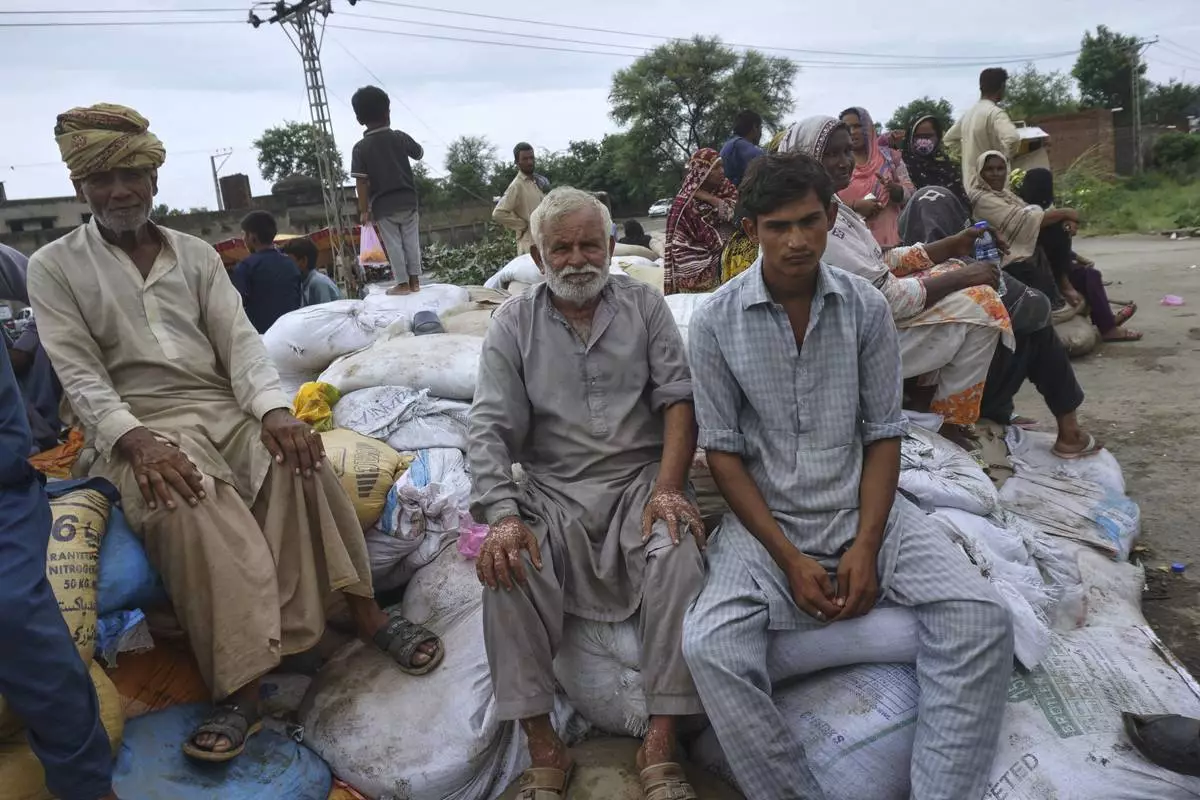
Villagers shelter after being evacuated from a floods following torrential rains and rising rivers due to sudden water releases from Indian dams in Pindi Bhattian, Pakistan, Sunday, Aug. 31, 2025. (AP Photo/A. Rizvi)

Rescue workers evacuate villagers from a flooded area after torrential rains and rising water level in the rivers due to sudden water releases from Indian dams in Pindi Bhattian, Pakistan, Sunday, Aug. 31, 2025. (AP Photo/A. Rizvi)

Villagers shelter after being evacuated from a flooded area after torrential rains and rising water level in the rivers due to sudden water releases from Indian dams in Pindi Bhattian, Pakistan, Sunday, Aug. 31, 2025. (AP Photo/A. Rizvi)
WASHINGTON (AP) — The Food and Drug Administration commissioner's effort to drastically shorten the review of drugs favored by President Donald Trump's administration is causing alarm across the agency, stoking worries that the plan may run afoul of legal, ethical and scientific standards long used to vet the safety and effectiveness of new medicines.
Marty Makary's program is causing new anxiety and confusion among staff already rocked by layoffs, buyouts and leadership upheavals, according to seven current or recently departed staffers. The people spoke to The Associated Press on the condition of anonymity because they were not authorized to discuss confidential agency matters.
At the highest levels of the FDA, questions remain about which officials have the legal authority to sign off on drugs cleared under the Commissioner’s National Priority Voucher program, which promises approval in as little as one month for medicines that support “U.S. national interests.”
Traditionally, approval decisions have nearly always been handled by FDA review scientists and their immediate supervisors, not the agency’s political appointees and senior leaders.
But drug reviewers say they've received little information about the new program's workings. And some staffers working on a highly anticipated anti-obesity pill were recently told they can skip certain regulatory steps to meet top officials' aggressive deadlines.
Outside experts point out that FDA drug reviews — which range from six to 10 months — are already the fastest in the world.
“The concept of doing a review in one to two months just does not have scientific precedent,” said Dr. Aaron Kesselheim, a professor at Harvard Medical School. “FDA cannot do the same detailed review that it does of a regular application in one to two months, and it doesn’t have the resources to do it.”
On Thursday Reuters reported that FDA officials have delayed the review of two drugs in the program, in part due to safety concerns, including the death of a patient taking one of the medications.
Health and Human Services spokesman Andrew Nixon said the voucher program prioritizes “gold standard scientific review” and aims to deliver “meaningful and effective treatments and cures."
The program remains popular at the White House, where pricing concessions announced by the Republican president have repeatedly been accompanied by FDA vouchers for drugmakers that agree to cut their prices.
For instance, when the White House announced that Eli Lilly and Novo Nordisk would reduce prices on their popular obesity drugs, FDA staffers had to scramble to vet new vouchers for both companies in time for Trump's news conference, according to multiple people involved in the process.
That’s sparked widespread concern that FDA drug reviews — long pegged to objective standards and procedures — have become open to political interference.
“It’s extraordinary to have such an opaque application process, one that is obviously susceptible to politicization,” said Paul Kim, a former FDA attorney who now works with pharmaceutical clients.
Many of the concerns around the program stem from the fact that it hasn't been laid out in federal rules and regulations.
The FDA already has more than a half-dozen programs intended to speed up or streamline reviews for promising drugs — all approved by Congress, with regulations written by agency staff.
In contrast, information about the voucher program is mostly confined to an agency website. Drugmakers can apply by submitting a 350-word “statement of interest.”
Increasingly, agency leaders such as Dr. Vinay Prasad, the FDA’s top medical officer and vaccine center director, have been contacting drugmakers directly about awarding vouchers. That’s created quandaries for FDA staffers on even basic questions, such as how to formally award a voucher to a company that didn’t request one.
Nixon, the HHS spokesman, said that voucher submissions are evaluated by “a senior, multidisciplinary review committee,” led by Prasad.
Questions about the legality of the program led the FDA’s then-drug director, Dr. George Tidmarsh, to decline to sign off on approvals under the pathway, according to several people with direct knowledge of the matter. Tidmarsh resigned from the agency in November after a lawsuit challenging his conduct on issues unrelated to the voucher program.
After his departure, Sara Brenner, the FDA’s principal deputy commissioner, was set to have the power to decide, but she also declined the role after looking further into the legal implications, according to the people. Currently the agency’s deputy chief medical officer, Dr. Mallika Mundkur, who works under Prasad, is taking on the responsibility.
Giving final approval to a drug carries significant legal risks, essentially certifying that the medicine meets FDA standards for safety and effectiveness. If unexpected safety problems later emerge, both the agency and individual staffers could be pulled into investigations or lawsuits.
Traditionally, approval comes from FDA drug office directors, made in consultation with a team of reviewers. Under the voucher program, approval comes through a committee vote by senior agency leaders led by Prasad, according to multiple people familiar with the process. Staff reviewers don't get a vote.
“It is a complete reversal from the normal review process, which is traditionally led by the scientists who are the ones immersed in the data,” said Kesselheim, who is a lawyer and a medical researcher.
Not everyone sees problems with the program. Dan Troy, the FDA’s top lawyer under President George W. Bush, a Republican, says federal law gives the commissioner broad discretion to reorganize the handling of drug reviews.
Still, he says, the voucher program, like many of Makary’s initiatives, may be short-lived because it isn't codified.
“If you live by the press release then you die by the press release,” Troy said. “Anything that they’re doing now could be wiped out in a moment by the next administration.”
Initially framed as a pilot program of no more than five drugs, it has expanded to 18 vouchers awarded, with more under consideration. That puts extra pressure on the agency’s drug center, where 20% of the staff has left through retirements, buyouts or resignations over the past year.
When Makary unveiled the program in October there were immediate concerns about the unprecedented power he would have in deciding which companies benefit.
Makary then said that nominations for drugs would come from career staffers. Indeed, some of the early drugs were recommended by FDA reviewers, according to two people familiar with the process. They said FDA staffers deliberately selected drugs that could be vetted quickly.
But, increasingly, selection decisions are led by Prasad or other senior officials, sometimes unbeknownst to FDA staff, according to three people. In one case, FDA reviewers learned from GlaxoSmithKline representatives that Prasad had contacted the company about a voucher.
Access to Makary is limited because he does not use a government email account to do business, according to people familiar with the matter, breaking with longstanding precedent.
Once a voucher is awarded, some drugmakers have their own interpretation of the review timeline — creating further confusion and anxiety among staff.
Two people involved in the ongoing review of Eli Lilly's anti-obesity pill said company executives initially told the FDA they expected the drug approved within two months.
The timeline alarmed FDA reviewers because it did not include the agency's standard 60-day prefiling period, when staffers check the application to ensure it isn’t missing essential information. That 60-day window has been in place for more than 30 years.
Lilly pushed for a quicker filing turnaround, demanding one week. Eventually the agency and the company agreed to a two-week period.
Nixon declined to comment on the specifics of Lilly's review but said FDA reviewers can “adjust timelines as needed.”
Staffers were pushed to keep the application moving forward, even though key pieces of data about the drug's chemistry appeared to be missing, according to one person involved in the process. When reviewers raised concerns about some of the gaps during an internal meeting, the person said, they were told by a senior official: “If the science is sound then you can overlook the regulations.”
Former reviewers and outside experts say that approach is the opposite of how FDA reviews should work: By following the regulations, staffers scientifically confirm the safety and effectiveness of drugs.
Skipping review steps could also carry risks for drugmakers if future FDA leaders decide a drug wasn’t properly vetted. Like other experts, Kesselheim says the program may not last beyond the current administration.
“They are fundamentally changing the application of the standards, but the underlying law remains what it is,” he said. “The hope is that one day we will return to these scientifically sound, legally sound principles.”
The Associated Press Health and Science Department receives support from the Howard Hughes Medical Institute’s Department of Science Education and the Robert Wood Johnson Foundation. The AP is solely responsible for all content.
FILE - The Food and Drug Administration seal is seen at the Hubert Humphrey Building Auditorium in Washington, April 22, 2025. (AP Photo/Jose Luis Magana, File)
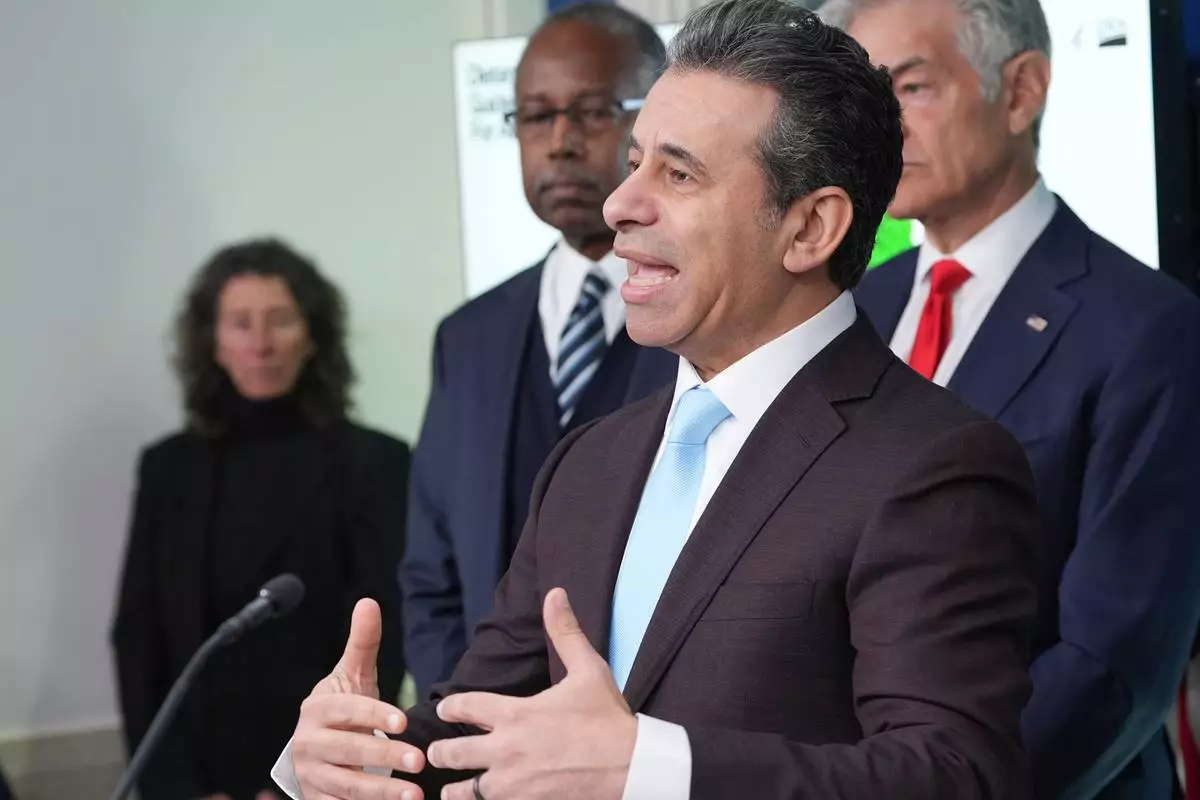
Dr. Marty Makary, commissioner of the Food and Drug Administration, speaks during a press briefing at the White House, Wednesday, Jan. 7, 2026, in Washington. (AP Photo/Jacquelyn Martin)