
Skip to Content Facebook Feature Image

Water Supplies Department Launches Pipeline Robots Joint Laboratory for Smart Water Technologies in Hong Kong.

HK

Water Supplies Department Launches Pipeline Robots Joint Laboratory for Smart Water Technologies in Hong Kong.
HK

HK

Water Supplies Department Launches Pipeline Robots Joint Laboratory for Smart Water Technologies in Hong Kong.

2025-09-01 18:03 Last Updated At:18:18

Water Supplies Department establishes Pipeline Robots Joint Laboratory

The Water Supplies Department (WSD) today (1 September) announced the establishment of the Pipeline Robots Joint Laboratory, which focuses on developing pipeline robotics technologies and promoting the research and development for local technologies of water mains inspection robots, named Intelligent Pipescope. These robots will be used to assess the internal conditions of pressurised water mains of the water supply network. The WSD signed a Memorandum of Understanding with the Hong Kong Polytechnic University and Shenzhen Bwell Technology Co Ltd to jointly develop the relevant technologies.

In his speech at the ceremony, the Director of Water Supplies, Mr Roger Wong, stated that the WSD has committed to collaborating with various institutions to develop and apply advanced technologies in driving the development of smart water in Hong Kong. The WSD is actively exploring innovative methods to enhance the skills and efficiency of water mains inspections. The WSD expects that, through the Pipeline Robots Joint Laboratory, the development of robots for operating in diverse pipeline conditions will be accelerated. This will enable highly accurate inspections, thereby reducing the risks of pipe bursts and leaks, and potentially extending to monitoring water quality.

The core objective of the Pipeline Robots Joint Laboratory is to independently develop multifunctional advanced pipeline robotics technologies, including acoustic sensors, high-definition cameras, and positioning instruments. These robots will also utilise artificial intelligence to analyse relevant data in order to address the unique characteristics of Hong Kong's water supply network, which includes variations in materials, high water pressure, and numerous bends and branches. Taking into account the rapid development and mature applications of robotics technologies on the Mainland in recent years, the WSD considered that robotics technologies that suit Hong Kong's needs will be developed more effectively through close collaboration with a local university and a Mainland pipeline robotics developer. At the same time, the unique complexity of the water supply network in Hong Kong will serve as an ideal testing platform, facilitating the entry of Mainland pipeline robotics technologies into international markets and leveraging Hong Kong's unique position to connect with both the Mainland and the world.

The WSD has consistently strived to optimise water supply services through the efficient use of resources and technologies to meet the needs of Hong Kong's vast population. The establishment of the Pipeline Robots Joint Laboratory represents a significant milestone in the development of smart water. It is anticipated that this initiative will promote more collaboration and application of smart detection technologies between the Mainland and Hong Kong, contributing to positioning both the nation and Hong Kong as global benchmarks in smart water.
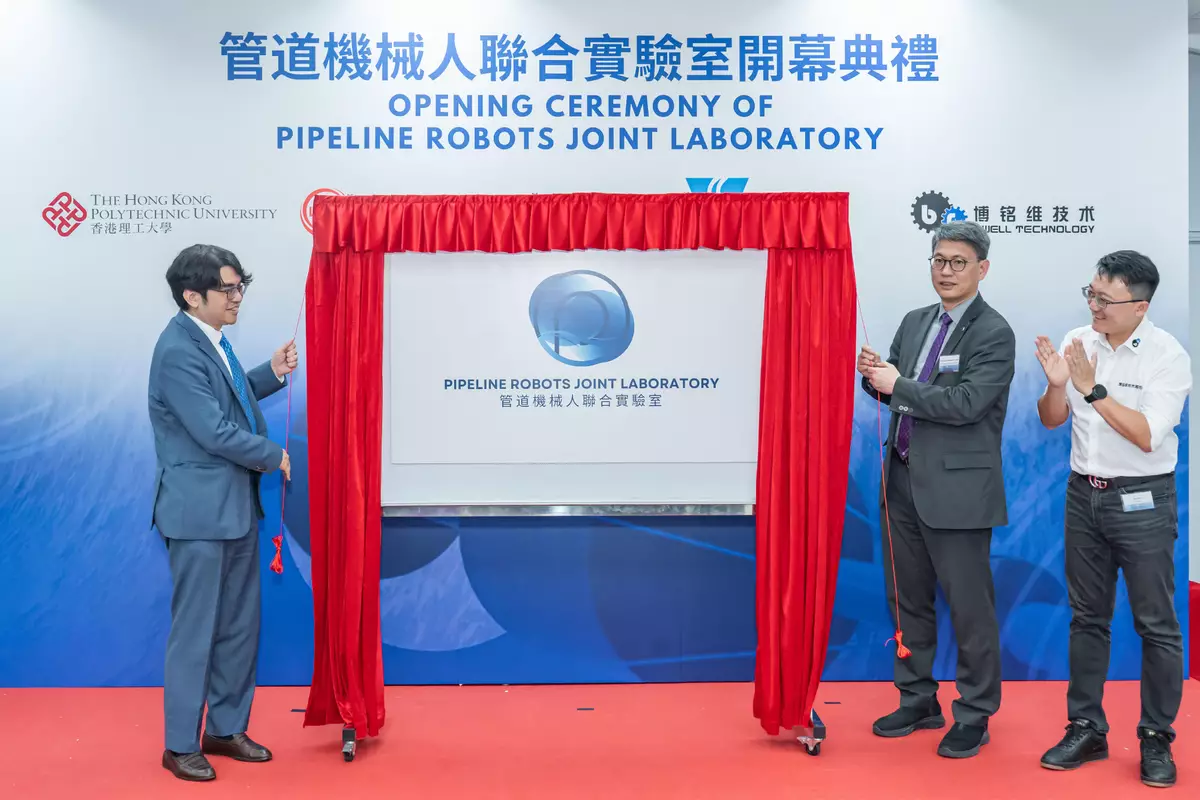
Water Supplies Department establishes Pipeline Robots Joint Laboratory Source: HKSAR Government Press Releases
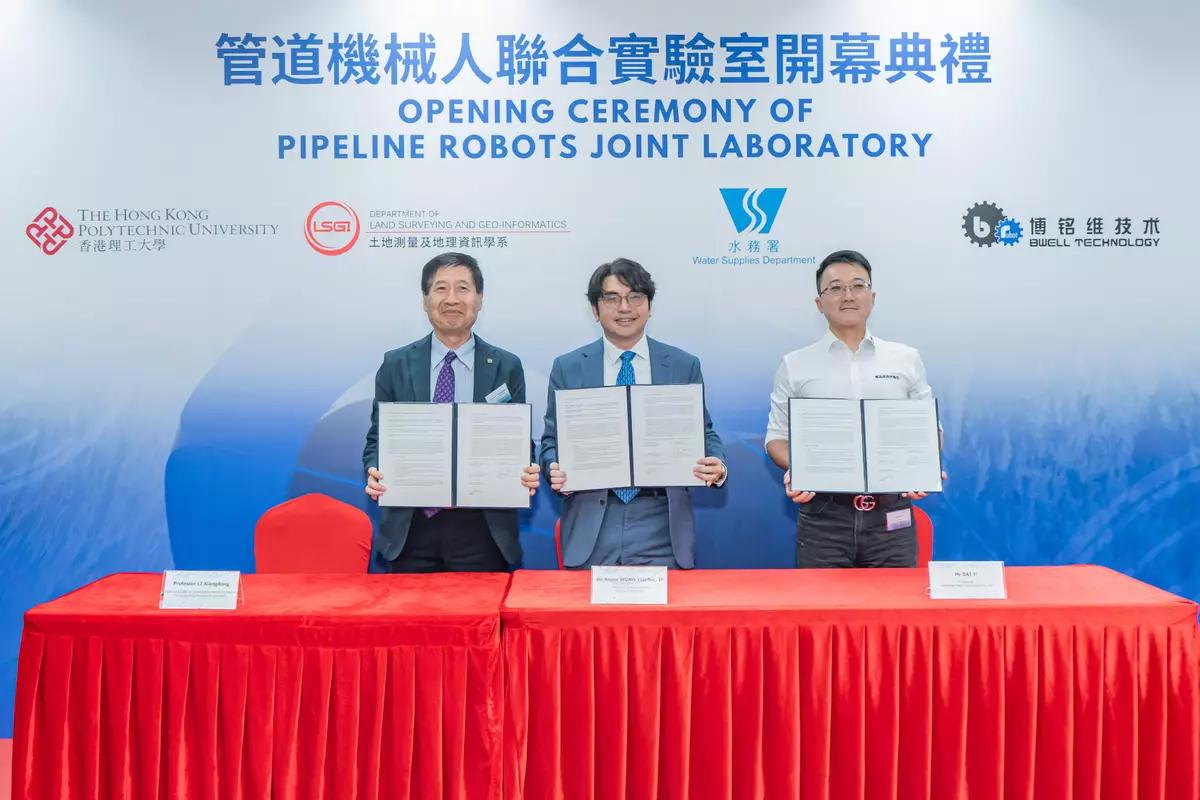
Water Supplies Department establishes Pipeline Robots Joint Laboratory Source: HKSAR Government Press Releases
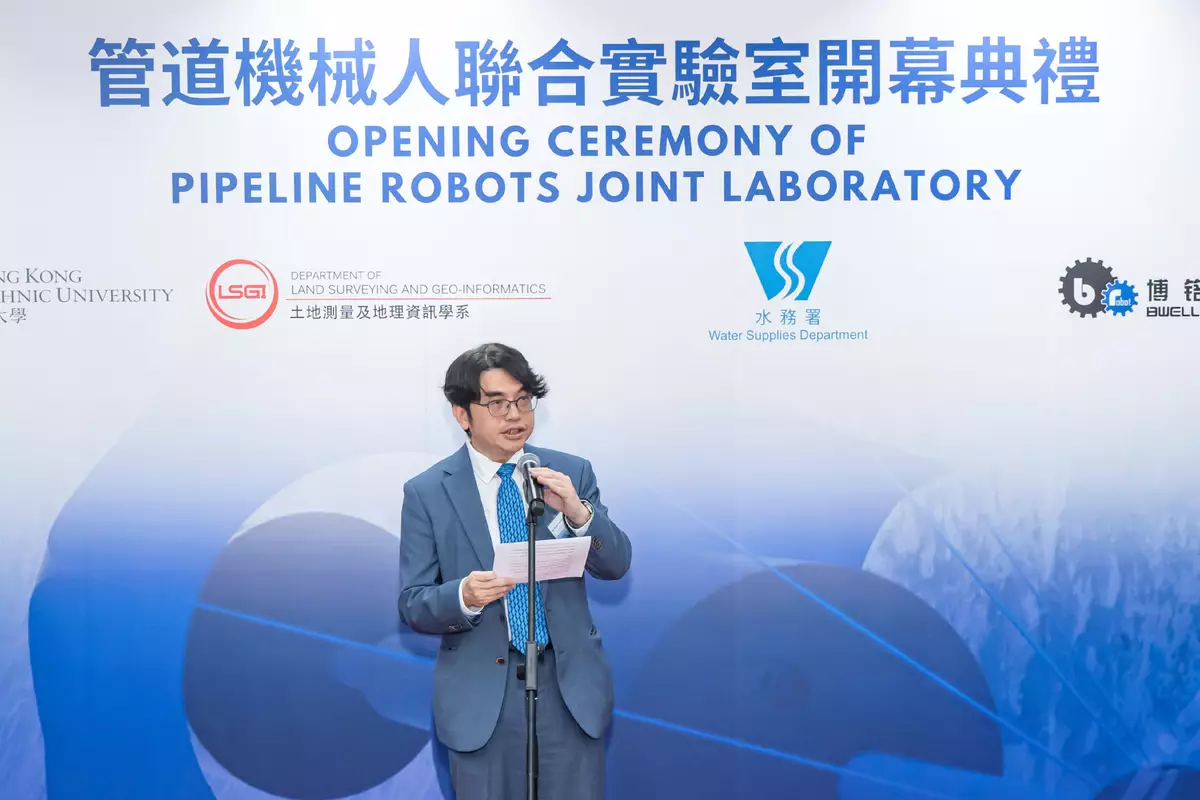
Water Supplies Department establishes Pipeline Robots Joint Laboratory Source: HKSAR Government Press Releases
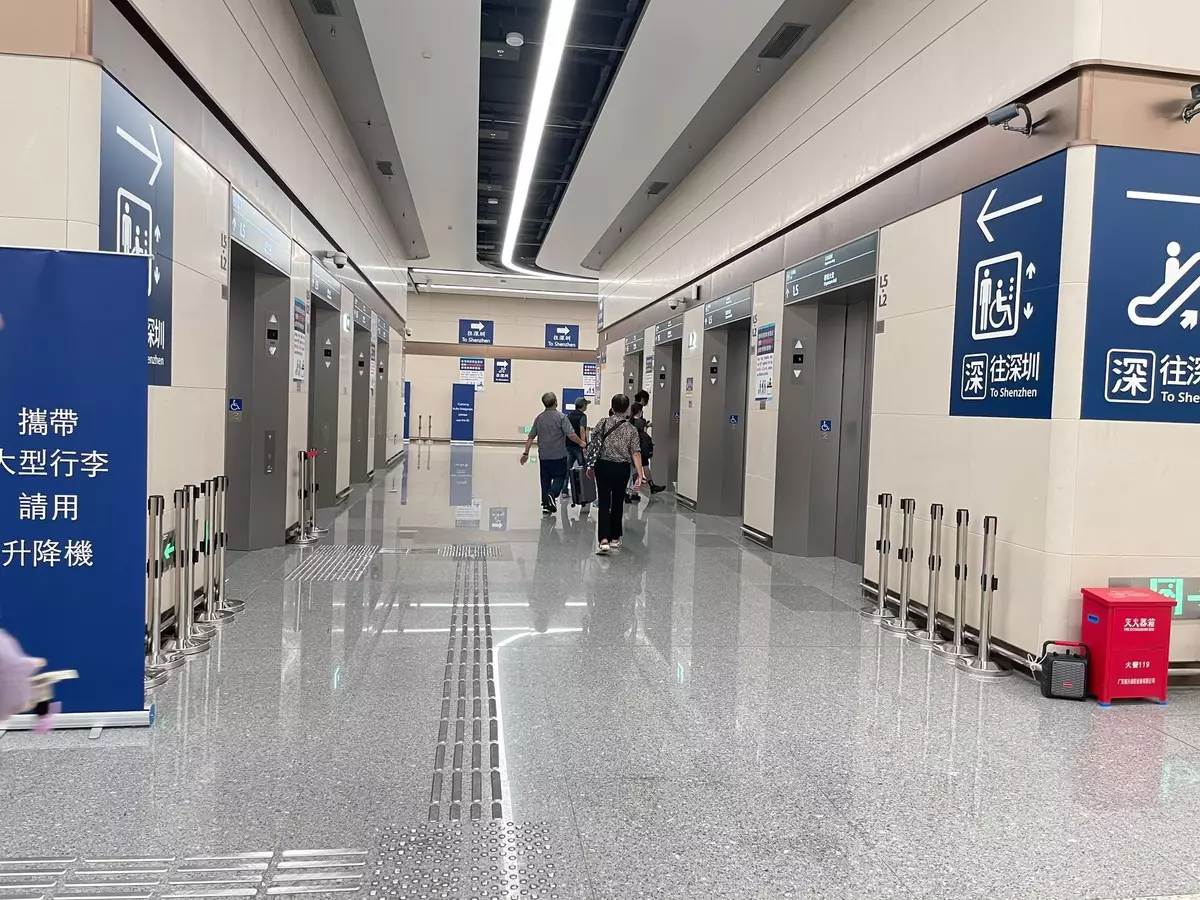
Water Supplies Department establishes Pipeline Robots Joint Laboratory Source: HKSAR Government Press Releases
Water Supplies Department establishes Pipeline Robots Joint Laboratory Source: HKSAR Government Press Releases
Water Supplies Department establishes Pipeline Robots Joint Laboratory Source: HKSAR Government Press Releases

Latest updates on passenger traffic at Huanggang Port

The Security Bureau (SB) today (October 18) said that outbound passenger flow at the Huanggang Port had increased significantly since around 11am this morning. Around 19 000 passengers departed for the Mainland via the Huanggang Port between 12 noon and 2pm, representing an increase of 835 per cent (over eight times) compared with the same period in the past at the Huanggang Port/Lok Ma Chau Control Point. During the peak hour between 1pm and 2pm, as many as 9 728 outbound passenger trips were recorded within one hour, representing an increase of 899 per cent (nearly nine times) compared with the same period in the past at the Huanggang Port/Lok Ma Chau Control Point.

In view of this, the Immigration Department (ImmD) immediately opened all clearance channels and counters at the departure hall on L5 to expedite passenger flow, and implemented crowd diversion and control measures on L2 and L5 in collaboration with the Police. For passengers entering the Huanggang Port during the peak hours mentioned above, the waiting time for crowd diversion arrangements on L2 was about 30 to 45 minutes, while the waiting time inside the departure hall on L5 was maintained within 30 minutes.

The ImmD has disseminated the latest waiting time information via the "Easy Boundary" platform, and advised members of the public and travellers to plan their journeys in advance and consider using other boundary control points for departure.

The outbound peak gradually subsided from around 2pm today. Crowd diversion and control measures on L2 were lifted at 2.10pm, and the waiting time at the departure hall on L5 had dropped to under 15 minutes by 2.40pm.

In fact, relevant departments had already assessed the potential surge in passenger flow during peak hours and formulated plans for diversion, queue management and inter-departmental co-ordination during an earlier large-scale drill at the Huanggang Port involving around 20 000 participants. Faced with this sudden surge in passengers, the various contingency plans were activated promptly and overall operations remained generally smooth.

The SB will continue to work with the ImmD, the Police and other relevant departments to closely monitor the situation at the port and passenger flow. Timely reviews will be conducted and corresponding contingency measures will be adopted in light of actual circumstances to ensure the smooth operation of clearance arrangements and public services.

Latest updates on passenger traffic at Huanggang Port Source: HKSAR Government Press Releases

Latest updates on passenger traffic at Huanggang Port Source: HKSAR Government Press Releases
Latest updates on passenger traffic at Huanggang Port Source: HKSAR Government Press Releases

Latest updates on passenger traffic at Huanggang Port Source: HKSAR Government Press Releases

Recommended Articles