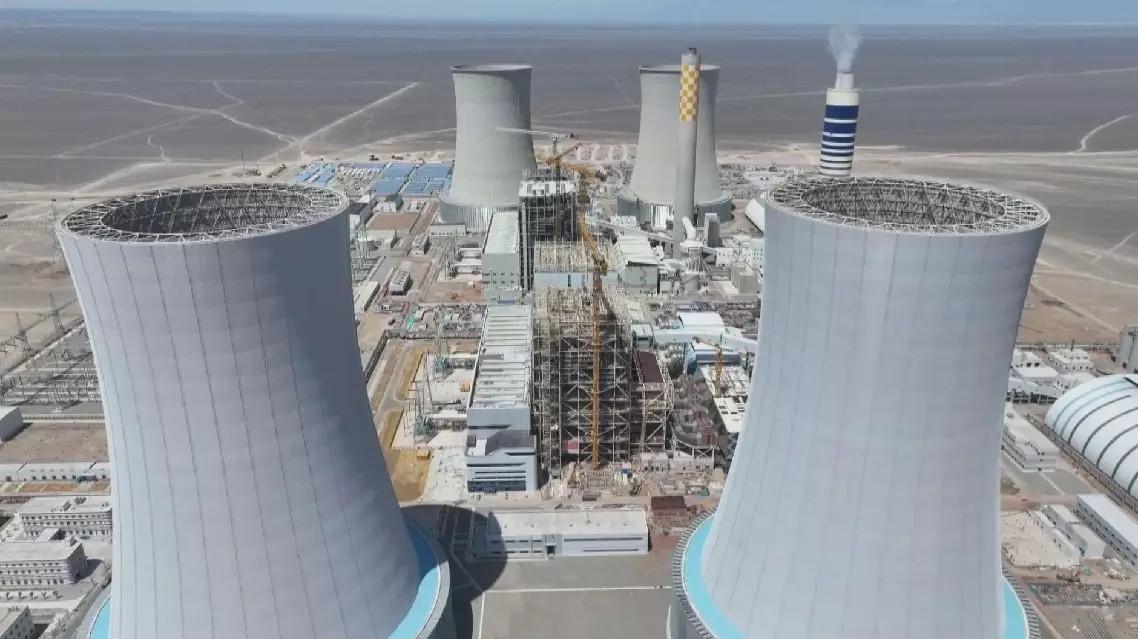
China's energy investment has surged during the 14th Five-Year Plan (2021–2025), driven by record spending on renewables and strong private sector momentum, according to the National Energy Administration (NEA).
During this period, China's energy sector posted an average annual growth rate of over 16 percent, with investment in electricity and thermal power production surpassing 20 percent, NEA data showed.
Renewable energy has become the dominant investment focus. In 2024, key projects accounted for over 80 percent of total power supply investment, while renewable energy storage, charging and battery swap infrastructure, and other key programs attracted nearly 200 billion yuan (about 28 billion U.S. dollars), marking a shift toward new growth engines.
Meanwhile, market vitality continues to build, with private enterprises sustaining double-digit annual investment growth across major energy projects. They now account for over 85 percent of power facility builders and more than 80 percent of large-scale charging service providers, underscoring their central role in China's energy transformation.
China’s energy investment surges under 14th Five-Year Plan
The Chinese Academy of Sciences (CAS) announced major RISC-V achievements at a sub-forum during the 2026 Zhongguancun Forum (ZGC Forum) on Thursday, highlighting a new path for open-source chip industrial application.
RISC-V is an open-source, flexible and efficient processor architecture that has gained global attention.
Two landmark achievements were introduced at the forum. Xiangshan, an open-source high-performance RISC-V processor system, has set a new international record and includes the world's first open-source network-on-chip IP.
"The Xiangshan processor core now ranks among the global top tier in performance. Several companies are already developing actual chips based on it. Real market demand, high-level expertise, and high quality are the core elements for open-source chip projects to transition from the lab to industrial deployment," said Bao Yungang, a researcher at the Institute of Computing Technology, CAS.
While Ruyi, a native RISC-V operating system, became the first to support the RVA23 high-performance international standard.
Together, Xiangshan and Ruyi have formed two RISC-V open-source communities led by China.
Currently scientific research teams in China have constructed a full-chain RISC-V development system, strengthening China’s voice in shaping global open-source technology standards.
The 2026 ZGC Forum, running in Beijing through Sunday, is focused on the theme of "Full Integration Between Technological and Industrial Innovation". Since its founding in 2007, this forum has become a major international event for advancing science and technology innovation.
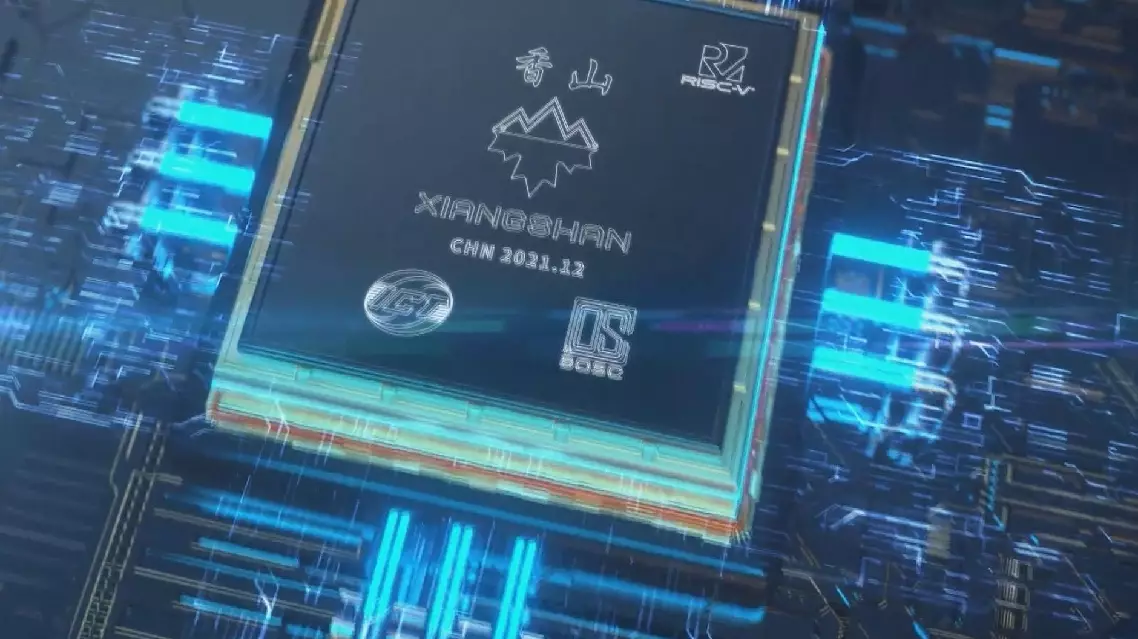
China unveils major RISC-V achievements, opens new path for open-source chip industry