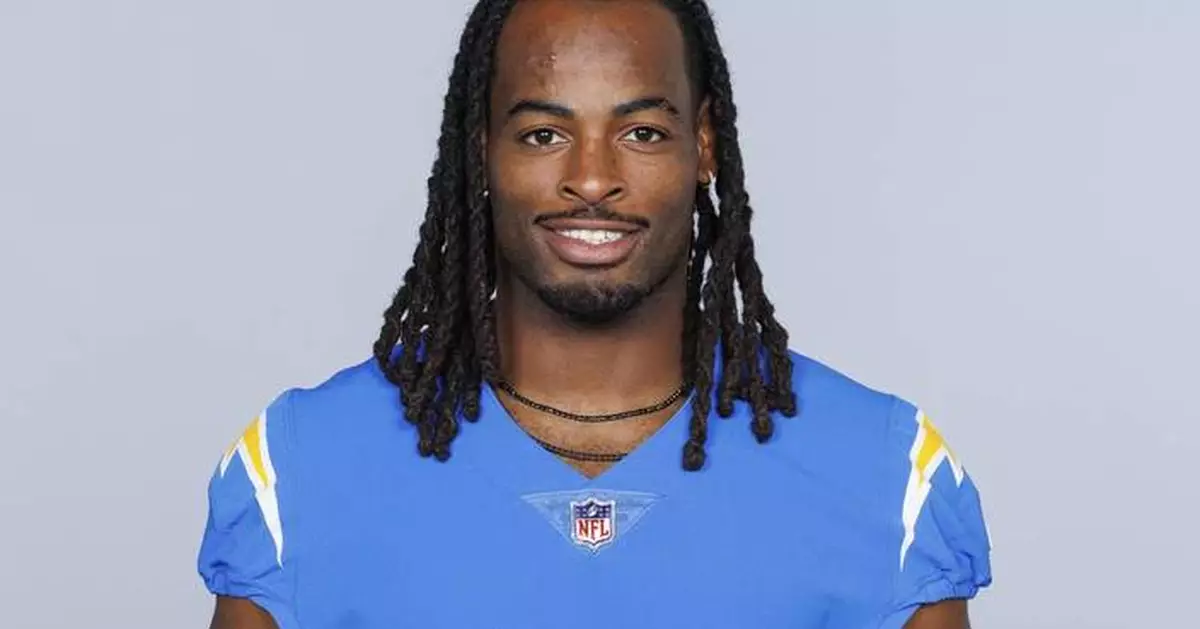
EL SEGUNDO, Calif. (AP) — Najee Harris has been cleared to participate in full-contact practice, leaving the running back a possibility to play in the Los Angeles Chargers' season opener Friday against the Kansas City Chiefs in Brazil.
Harris injured his eye in a July 4 fireworks mishap, putting him on the non-football injury/illness list ahead of training camp. As a result, he couldn't be on the field with the team. Instead, he worked on the sideline with a personal trainer.
Harris said Monday after practice that his vision wasn't affected by the mishap and called the injury “superficial.”
Asked if he would play Friday, he said, “I’m ramping up to it. I'm feeling good though, and we'll just see where it leads.”
He's never missed a game in his NFL career.
Coach Jim Harbaugh said Harris has “looked really good in practice. We'll just take it one day at a time. Has a really good awareness of what we're doing.”
Harris declined to provide details about the mishap that occurred in Northern California. He called it “a humbling experience.”
“Just that whole situation, it just shows you how things can change in just the snap of a finger,” he said. “It’s a blessing every day that we wake up, and I’m just happy that everybody is safe and we’re alive.”
Harris didn't wear a visor while playing for the Pittsburgh Steelers. He's kept his eyes protected during workouts, leading to speculation that he's hiding something. He wore sunglasses while speaking outside Monday.
“It's not my job to care what other people think,” he said. “It's my job to do what I got to do.”
Harbaugh said wide receiver Quentin Johnston has cleared concussion protocol. He suffered a concussion in the team's second preseason game against the Los Angeles Rams, which left him motionless on the field for several seconds.
“I did all the tests and everything was cool, so I got up and moved on from it,” he said.
AP NFL: https://apnews.com/hub/nfl
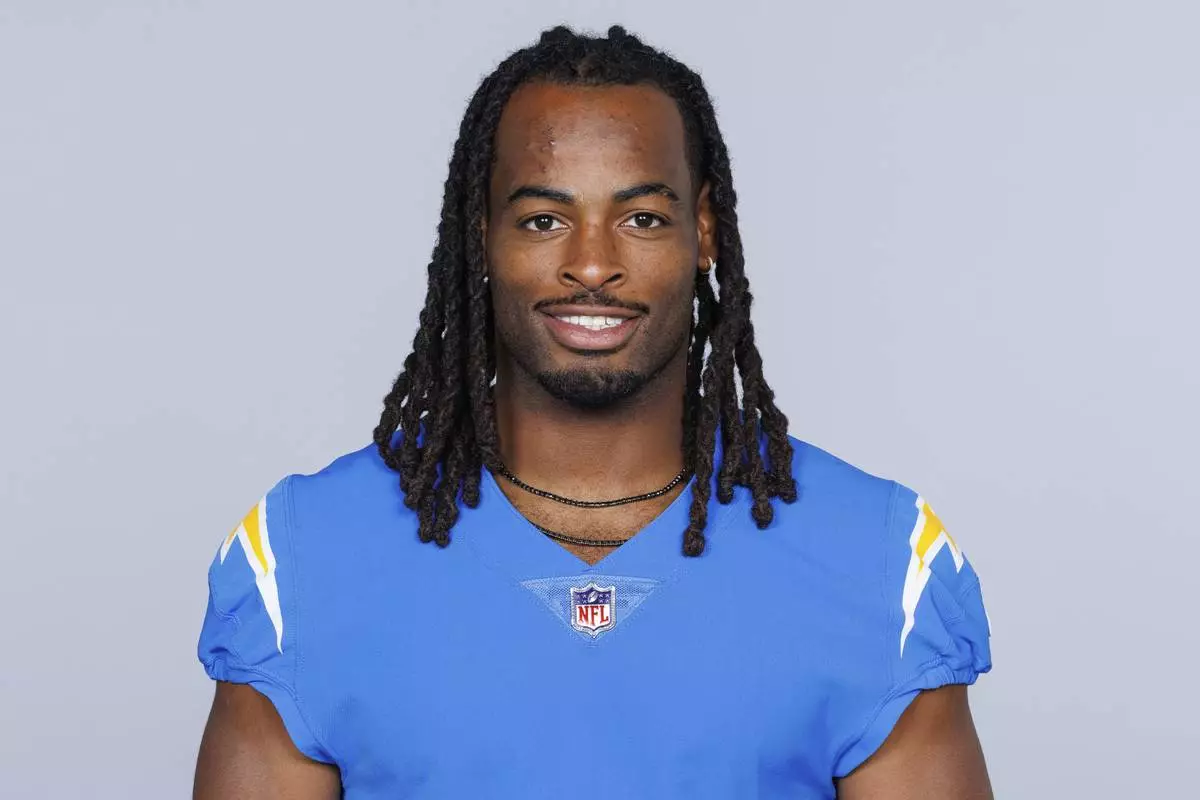
FILE - This is a 2025 photo of Najee Harris of the Los Angeles Chargers NFL football team. (AP Photo,File)
OpenAI says it will soon start showing advertisements to ChatGPT users who aren't paying for a premium version of the chatbot.
The artificial intelligence company said Friday it hasn't yet rolled out ads but will start testing them in the coming weeks.
It's the latest effort by the San Francisco-based company to make money from ChatGPT's more than 800 million users, most of whom get it for free.
Though valued at $500 billion, the startup loses more money than it makes and has been looking for ways to turn a profit.
“Most importantly: ads will not influence the answers ChatGPT gives you,” said Fidji Simo, the company’s CEO of applications, in a social media post Friday.
OpenAI said the digital ads will appear at the bottom of ChatGPT's answers “when there’s a relevant sponsored product or service based on your current conversation.”
The ads “will be clearly labeled and separated from the organic answer,” the company said.
Two of OpenAI’s rivals, Google and Meta, have dominated digital advertising for years and already incorporate ads into some of their AI features.
Originally founded as a nonprofit with a mission to safely build better-than-human AI, OpenAI last year reorganized its ownership structure and converted its business into a public benefit corporation. It said Friday that its pursuit of advertising will be “always in support” of its original mission to ensure its AI technology benefits humanity.
But introducing personalized ads starts OpenAI “down a risky path” previously taken by social media companies, said Miranda Bogen of the Center for Democracy and Technology.
“People are using chatbots for all sorts of reasons, including as companions and advisors," said Bogen, director of CDT’s AI Governance Lab. “There’s a lot at stake when that tool tries to exploit users’ trust to hawk advertisers’ goods.”
OpenAI makes some money from paid subscriptions but needs more revenue to pay for its more than $1 trillion in financial obligations for the computer chips and data centers that power its AI services. The risk that OpenAI won’t make enough money to fulfill the expectations of backers like Oracle and Nvidia has amplified investor concerns about an AI bubble.
“It is clear to us that a lot of people want to use a lot of AI and don’t want to pay, so we are hopeful a business model like this can work,” said OpenAI CEO Sam Altman in a post Friday on social platform X. He added that he likes the ads on Meta's Instagram because they show him things he wouldn't have found otherwise.
OpenAI claims it won't use a user's personal information or prompts to collect data for ads, but the question is “for how long,” said Paddy Harrington, an analyst at research group Forrester.
“Free services are never actually free and these public AI platforms need to generate revenue,” Harrington said. “Which leads to the adage: If the service is free, you’re the product.”
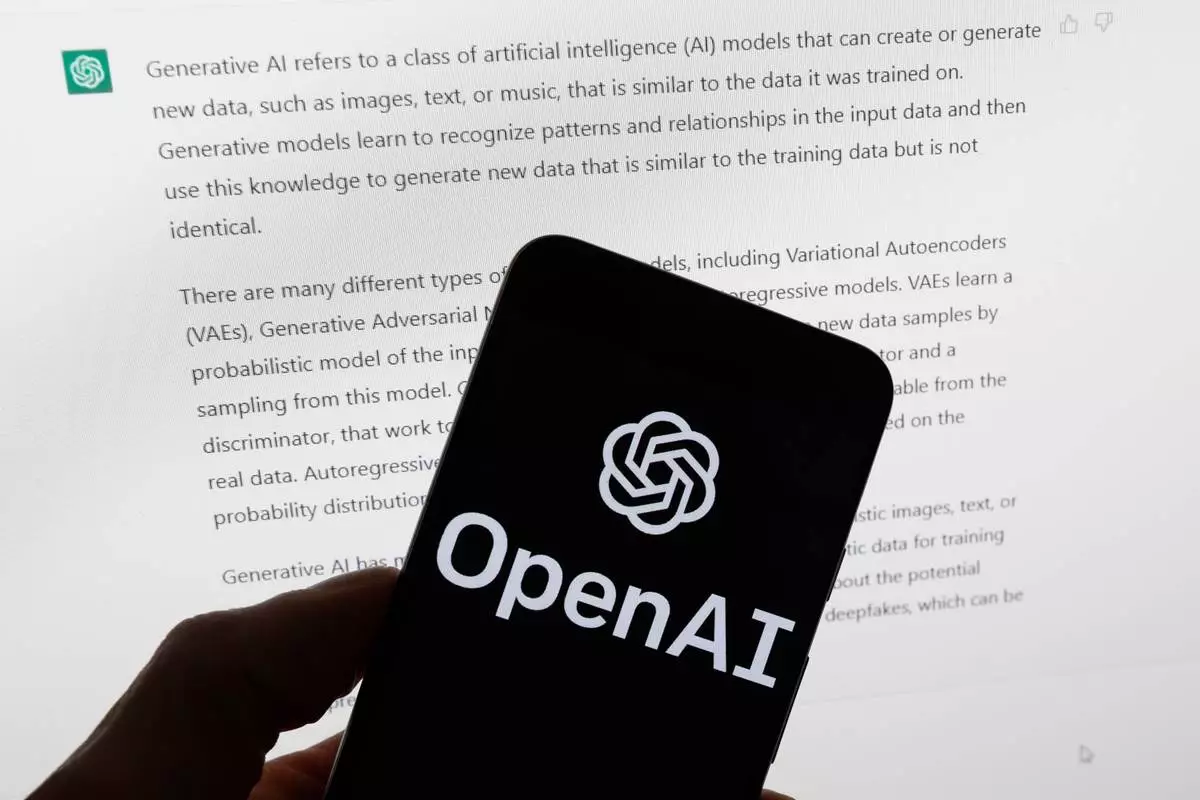
FILE - The OpenAI logo is displayed on a mobile phone in front of a computer screen with output from ChatGPT, March 21, 2023, in Boston. (AP Photo/Michael Dwyer, File)