NABALANGA, Uganda (AP) — His father died when he was a little boy, his mother when he was a young man. His grandparents, save but one, never made it to old age either. His wife is gone now, too, in the ground with four of their children, so forgive Yafesi Nakyanga’s surprise that he is still breathing.
Long past an age when the farmer could make out a visitor’s face, much less still bend in the fields, Nakyanga is still living at 86, part of a swell of the old in the land of the young.
“I never expected,” he says softly, “to live this long.”
Across Africa, a stunning success story has quietly taken hold: Decades of progress have begun delivering a wave of longevity that promises to reshape the demographics of the continent. But as lifespans lengthen and villages begin to fill with the old, pensions and social safety nets are minimal, medical care is lacking and routine problems of age are so commonly unaddressed that cataracts turn to blindness and minor infections end in death.
Longer lives, time and again, come with more suffering.
“They’re living in poverty. They’re living in pain,” says Kenneth Mugayehwenkyi, who founded Reach One Touch One Ministries to help older people. “That’s the old people that I see.”
In just 15 years, the number of people 60 and older has ballooned by an estimated 50 percent in sub-Saharan Africa, to about 67 million people. Even more dramatic growth awaits, with the World Health Organization projecting 163 million older people in the region by 2050.
Respect for older people is deeply ingrained in African cultures and the presence of an elder is a source of joy for many families and a point of pride for many villages. But on this continent known for its staggering number of the young, the challenges of growing old never before arrived in a large-scale way. Scores of interviews across a dozen African countries and a review of research and data make clear how few resources await those who reach old age and how much festering poverty disrupts their final years.
“Everything is lacking,” says Dr. Mie Rizig, a Sudanese-born neurologist at University College London who researches aging and dementia across Africa.
Falling birthrates and rising life expectancies have combined to bring the aging revolution nearly everywhere in the world. As the number of older people has multiplied, even the richest countries have stumbled to meet their needs, triggering warnings of catastrophe when the same challenges are heaped on some of the globe’s poorest places.
Rzig concedes Africa’s challenges are steep but remains hopeful it can learn from other regions’ mistakes and capitalize on what she sees as its innate advantages: Cultural values that make tending to the vulnerable second nature; a network of public health programs for communicable diseases that provide a framework for addressing problems related to aging; and an unrivaled population of young people offering economic promise and a strong ratio of potential caregivers.
“The continent has a kind of inherent power,” says Rzig, part of an Africa task force for the Davos Alzheimer’s Collaborative. “Africa could be a model for the rest of the world.”
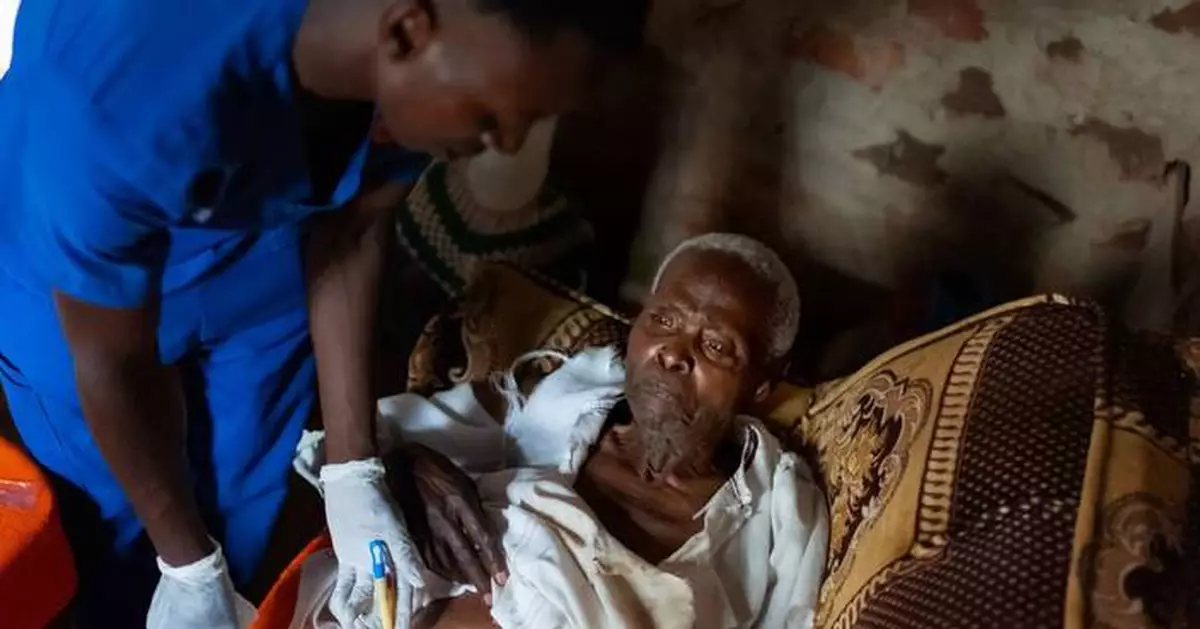
Here in Uganda, Mugayehwenkyi has built one of the country’s only organizations dedicated solely to supporting the elderly, and this day, a Reach One Touch One team has arrived at Nakyanga’s small home on a dirt road in a village about a 90-minute drive from the capital. A 26-year-old nurse, Derrick Ssemanda, in royal blue scrubs, hustles inside and sits beside Nakyanga. The man’s catheter has been causing pain and Ssemanda pulls white surgical gloves from a camouflage backpack and gets to work changing it.
“Are you strong enough?” he asks Nakyanga.
“I’m a strong man,” he replies. “I can handle it.”
Nakyanga sweated in the fields just to grow enough to feed children who would later die of AIDS and laid the bricks and poured the cement to build a house he nearly lost to medical bills.
He has no electricity or running water. His bathroom is an outdoor pit.
To make it to this age in a place like this seemed impossible to Nakyanga. It’s made all the more an oddity by the fact that it is a country with one of the youngest populations in the world.
“You’re surrounded by young people,” Nakyanga says, “and you’re standing next to death.”
Nakyanga is thin and in tattered clothes and his hair is short and gray. His medical file is thick but he makes little chatter and offers no complaints.
Ssemanda keeps making small talk, trying to distract his patient from the procedure. He pushes a syringe’s plunger, sending an arc of saline in the air, then peels open the packaging to a new catheter, and before Nakyanga knows, it’s over, and Ssemanda rises from his seat.
The list of people clamoring for Reach One’s help is long. It is just one small aid group in one African nation, but to shadow its workers is to see themes that repeat across the continent.
The nurse bounds for the door. There are so many seniors to see.
Matt Sedensky can be reached at msedensky@ap.org and https://x.com/sedensky
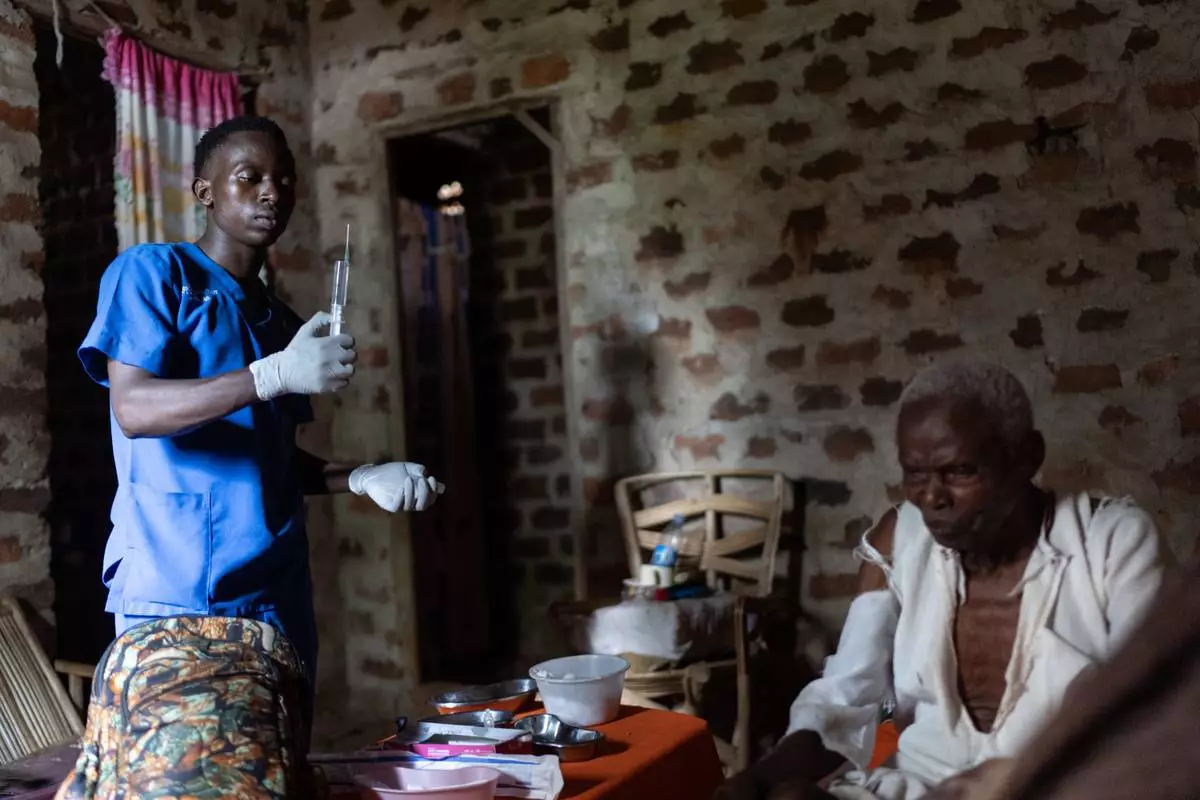
Field nurse Derrick Ssemanda, left, with Reach One Touch One Ministries, prepares to change the catheter of Yafesi Nakyanga, 86, during a visit to his home, Saturday, Nov. 16, 2024, in Nabalanga, Uganda. (AP Photo/David Goldman)
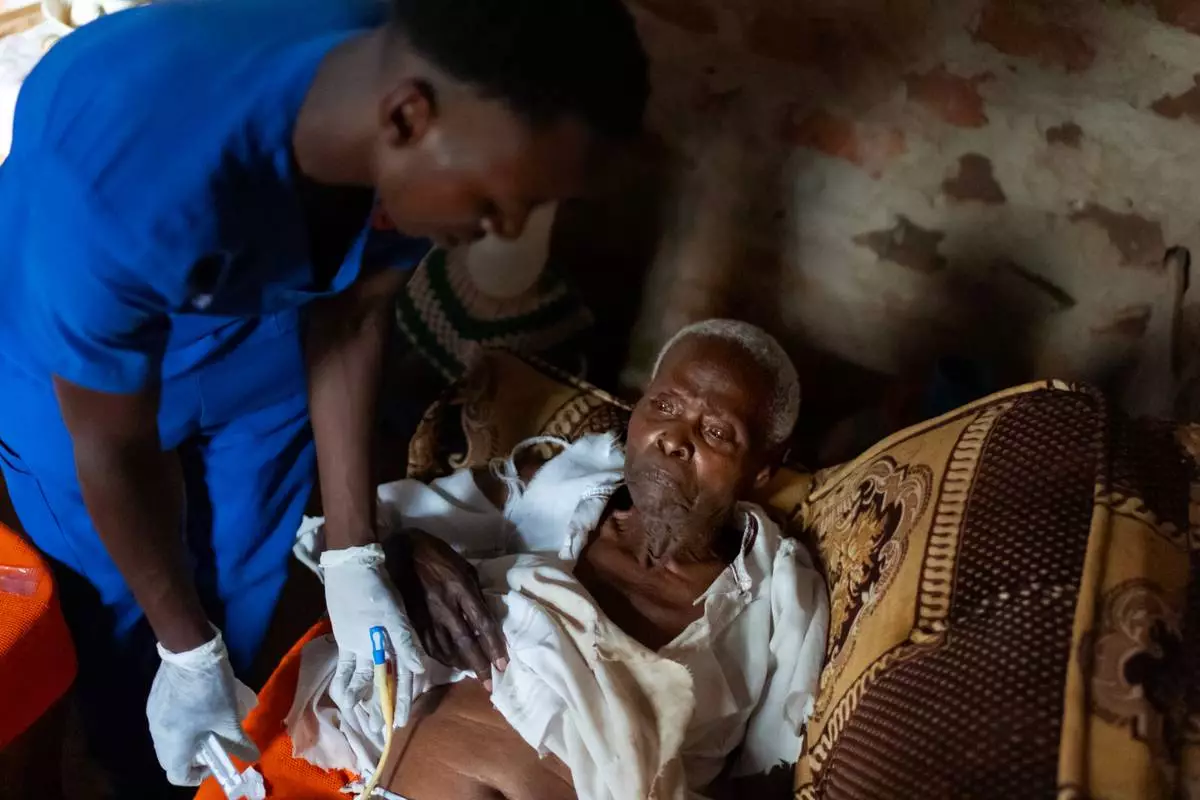
Field nurse Derrick Ssemanda, left, with Reach One Touch One Ministries, changes the catheter of Yafesi Nakyanga, 86, during a visit to his home, Saturday, Nov. 16, 2024, in Nabalanga, Uganda. (AP Photo/David Goldman)
CHERNIHIV, Ukraine (AP) — Young athletes in northern Ukraine spend their days cross-country skiing through a scorched forest, focused on their form — until a siren inevitably shatters the silence.
They respond swiftly but without panic, ditching their skis and following coaches to an underground bomb shelter.
It’s an ordinary training session at the complex that produced Ukraine’s first Olympic medalist.
Sleeping children no longer dream of Olympic glory in the facility's bombed-out dormitories, and unexploded ordnance has rendered nearby land off limits. But about 350 kids and teens — some of the nation's best young cross-country skiers and biathletes — still practice in fenced-off areas amid the sporadic buzz of drones passing overhead then explosions as they're shot down.
“We have adapted so well — even the children — that sometimes we don’t even react,” Mykola Vorchak, a 67-year-old coach, told The Associated Press in an interview on Oct. 31. “Although it goes against safety rules, the children have been hardened by the war. Adapting to this has changed them psychologically.”
War has taken a heavy toll on Ukrainian sport. Athletes were displaced or called up to fight. Soccer matches are often interrupted by air raid sirens so attendance is capped by bomb shelter capacity. Elite skaters, skiers and biathletes usually train abroad, with attacks and frequent blackouts shuttering local facilities.
But the government-run Sports Ski Base of the Olympic Reserve is open for cross-country skiing and biathlon, the event which combines skiing with shooting. The sprawling complex is on the outskirts of Chernihiv, a city two hours north of Kyiv along the path of destruction Russia's army left in its 2022 attempt to capture the capital. Chernihiv remains a regular target for air attacks aimed at the power grid and civilian infrastructure.
Several temporary structures at the sports center serve as changing rooms, toilets and coaches’ offices. Athletes train on snowy trails during the winter and, throughout the rest of the year, use roller skis on an asphalt track pocked by blast marks.
Biathletes aim laser rifles at electronic targets and, between shooting drills, sling skis over their shoulders and jog back to the start of the course, cheeks flushed from the cold.
Valentyna Tserbe-Nesina spent her adolescence at the Chernihiv center performing these same drills, and won bronze at the 1994 Winter Games in Lillehammer. It was Ukraine’s first Olympic medal as an independent country.
“The conditions weren’t great, but we had nothing better. And for us, it was like a family — our own little home,” she said inside her apartment, its shelves and walls lined with medals, trophies and souvenirs from competitions around the world.
Tserbe-Nesina, 56, was shocked when she visited the complex in 2022. Shelling had torn through buildings, fire had consumed others. Shattered glass littered the floors of rooms where she and friends once excitedly checked taped-up results sheets.
“I went inside, up to my old room on the second floor. It was gone — no windows, nothing,” she said. “I recorded a video and found the trophies we had left at the base. They were completely burned.”
Tserbe-Nesina has been volunteering to organize funerals for fallen Ukrainian soldiers in her hometown while her husband, a retired military officer, returned to the front. They see each other about once a year, whenever his unit allows him brief leave.
One adult who in 2022 completed a tour in a territorial defense unit of Ukraine’s army sometimes trains today alongside the center's youngsters. Khrystyna Dmytrenko, 26, will represent her country at the Milan Cortina Winter Olympics that start Feb. 6.
“Sports can show that Ukraine is strong,” Dmytrenko said in an interview next to the shooting range. “We represent Ukraine on the international stage, letting other countries, athletes and nations see our unity, strength and determination.”
The International Olympic Committee imposed bans and restrictions on Russian athletes after the invasion of Ukraine, effectively extending earlier sanctions tied to state‑sponsored doping. But a small group of them will participate in the upcoming Winter Games.
After vetting to ensure no military affiliation, they must compete without displaying any national symbols — and only in non-team events. That means Russian and Ukrainian athletes could face one another in some skating and skiing events. Moscow’s appeal at the federation level to allow its biathletes to compete is pending.
That's why many Ukrainians view training for these events as an act of defiance. Former Olympic biathlete Nina Lemesh, 52, noted that some young Ukrainians who first picked up rifles and skis at the Chernihiv ski base during wartime have become international champions in their age groups.
“Fortunately, Ukrainians remain here. They always will,” she said, standing beside the destroyed dormitories. “This is the next generation of Olympians.”
AP writer Derek Gatopoulos in Kyiv contributed to this report.
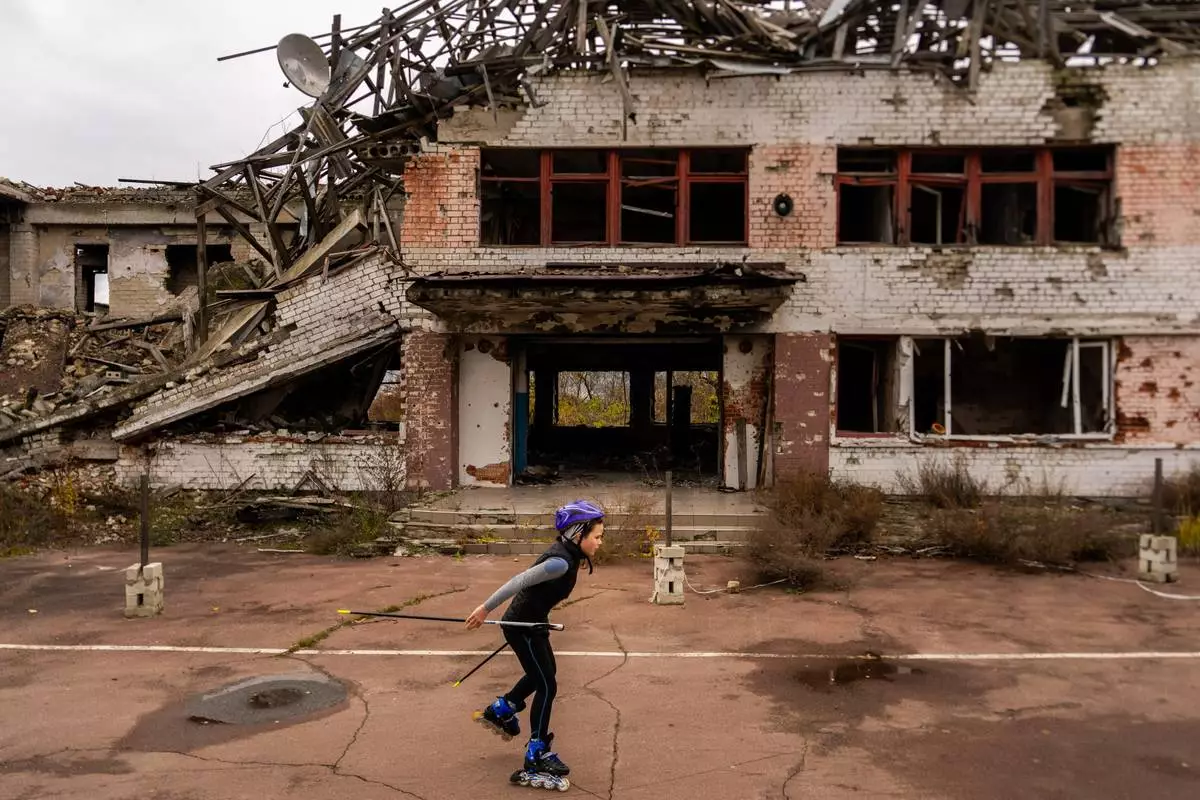
A young biathlete trains outside the destroyed ski base in Chernihiv, Ukraine, Thursday, Oct. 30, 2025. (AP Photo/Julia Demaree Nikhinson)
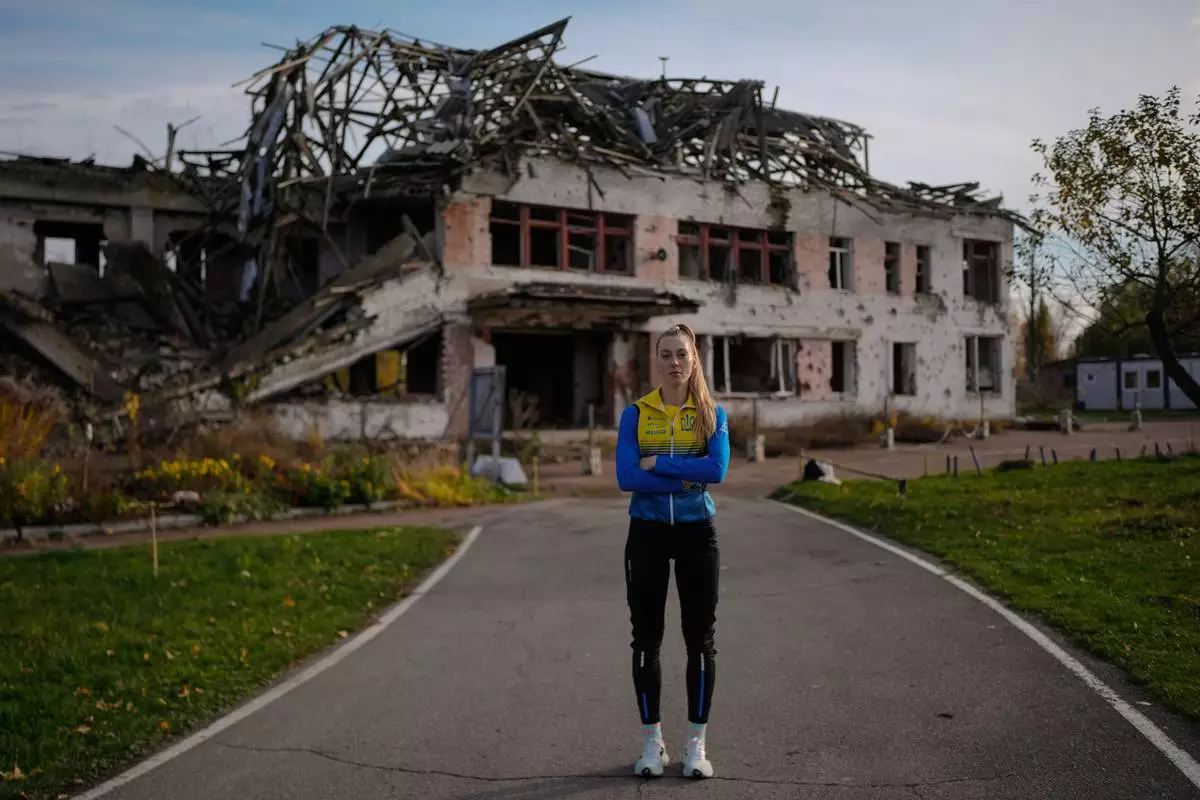
Biathlete Khrystyna Dmytrenko poses for photos outside the destroyed ski base in Chernihiv, Ukraine, Thursday, Oct. 30, 2025. (AP Photo/Julia Demaree Nikhinson)
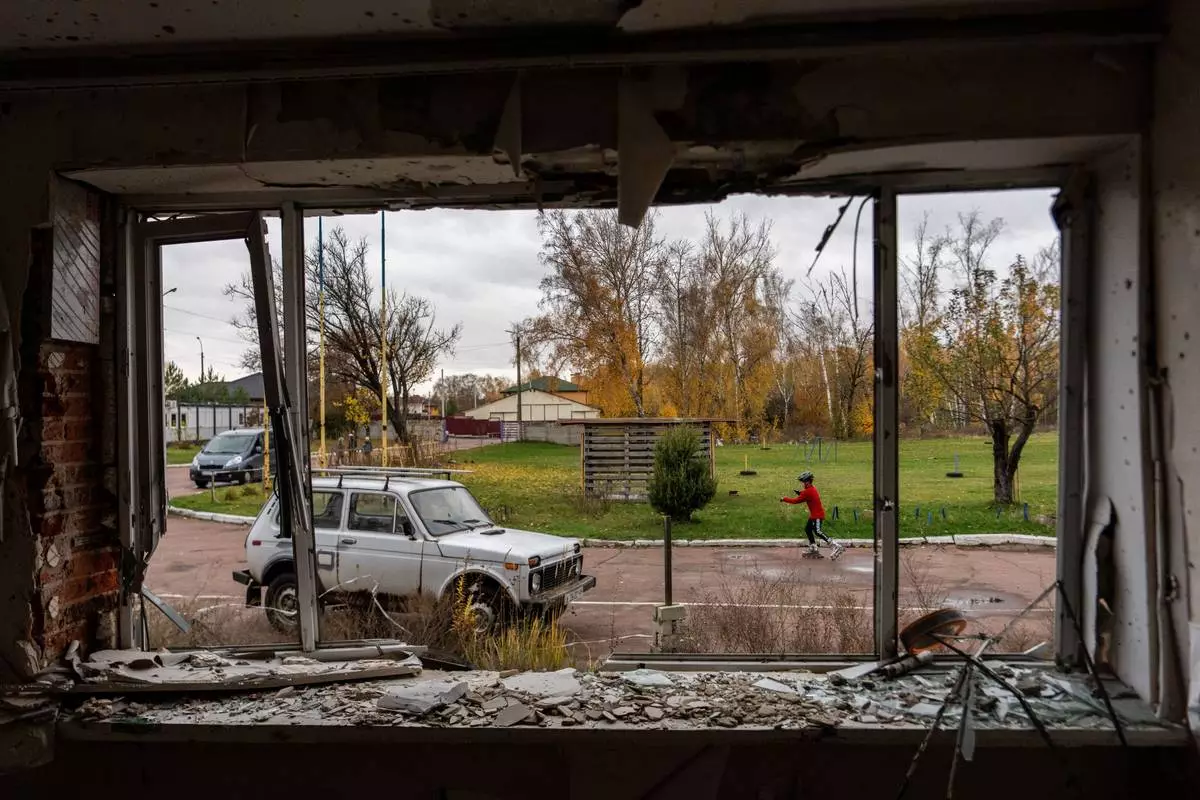
A young biathlete trains outside the destroyed ski base in Chernihiv, Ukraine, Thursday, Oct. 30, 2025. (AP Photo/Julia Demaree Nikhinson)
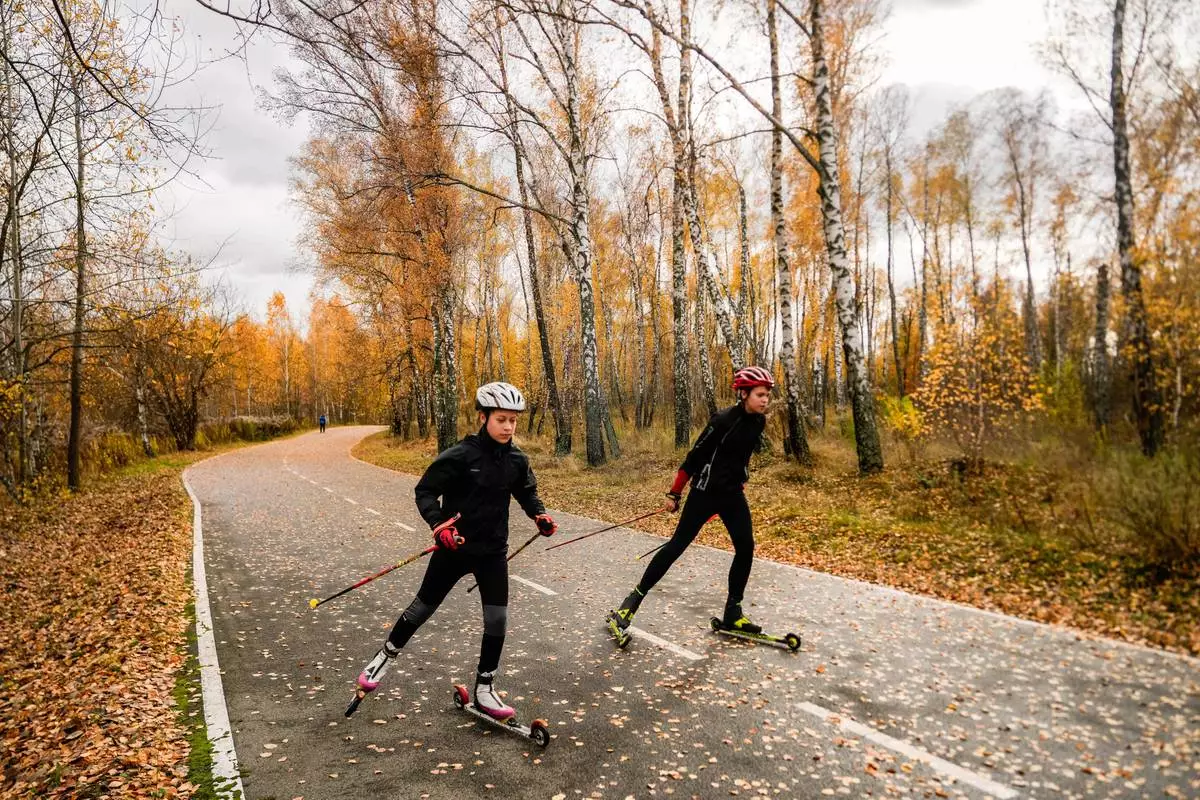
Biathletes Mykola Dorofeiev, 16, and Nazar Kravchenko, 12, left, train at the ski base in Chernihiv, Ukraine, Thursday, Oct. 30, 2025. (AP Photo/Julia Demaree Nikhinson)
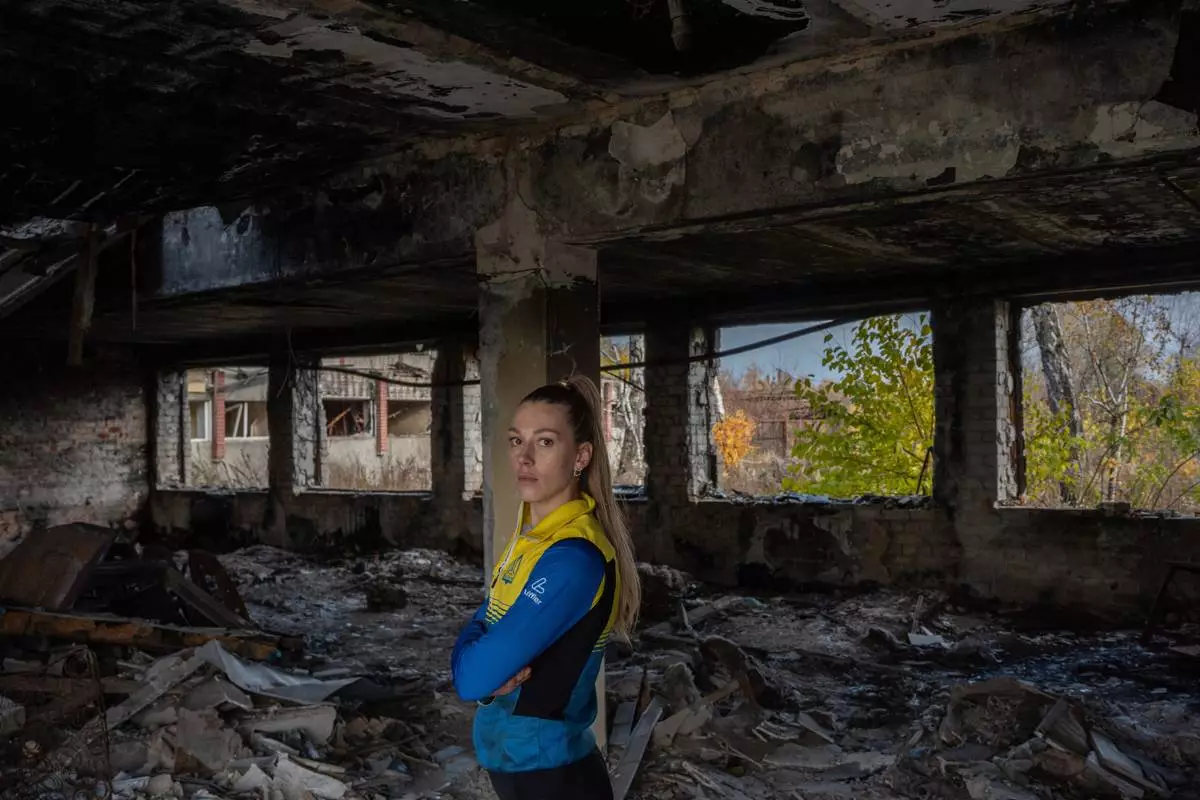
Biathlete Khrystyna Dmytrenko poses for photos inside the destroyed ski base in Chernihiv, Ukraine, Thursday, Oct. 30, 2025. (AP Photo/Julia Demaree Nikhinson)
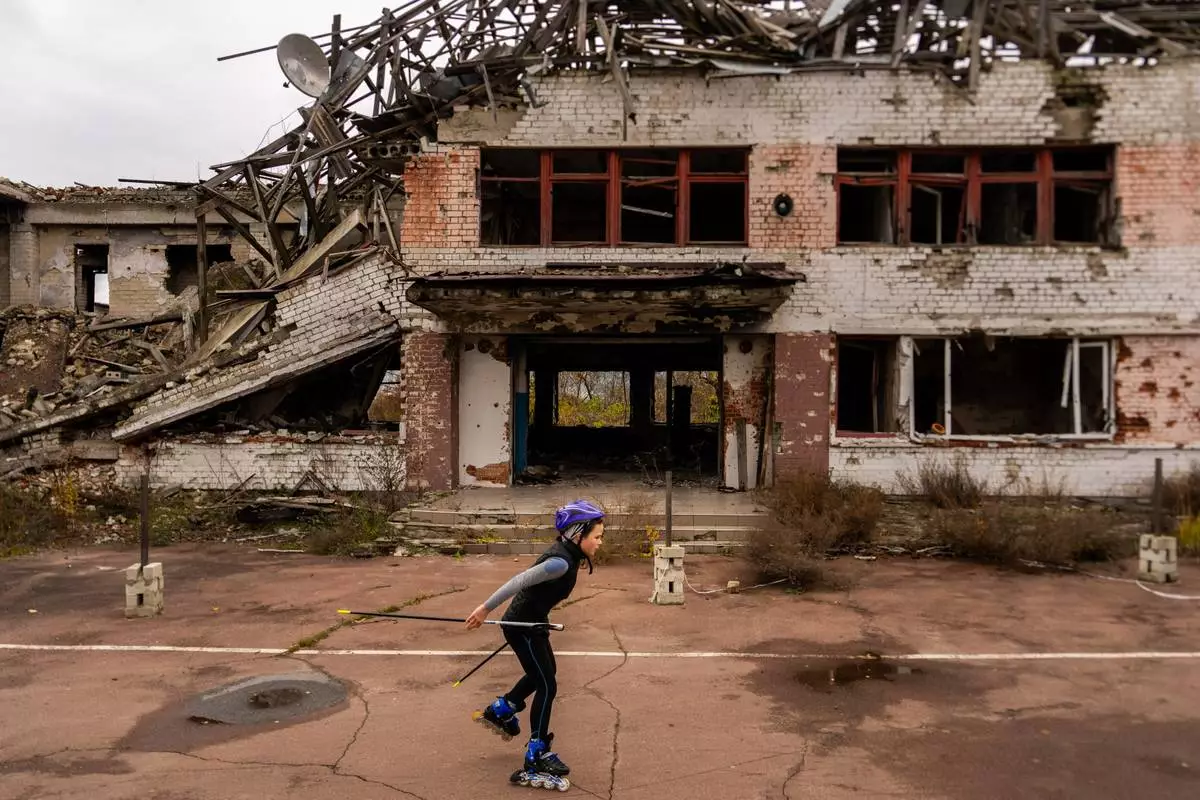
A young biathlete trains outside the destroyed ski base in Chernihiv, Ukraine, Thursday, Oct. 30, 2025. (AP Photo/Julia Demaree Nikhinson)