Actor Chloë Grace Moretz and model and photographer Kate Harrison are married.
The two, who began dating in 2018, got hitched in a private ceremony over the Labor Day weekend. No location was revealed. Both wore gowns by Nicolas Ghesquière for Louis Vuitton, Moretz in baby blue and Harrison in traditional white.
Moretz shared the news on Instagram, and Vogue had followed along on their fashion journey during fittings in Paris for their looks. Moretz, a Louis Vuitton ambassador, thanked Ghesquière and the fashion house as she showed off their designer duds:
“Thank you doesn’t even begin to cut it, but, thank you. Your vision made our day all the more meaningful. x”
Moretz wore long blue gloves and a matching veil with her look featuring spaghetti straps and a bodice ruffle. Harrison's gown included a bit of sparkle in all-over flowing embroidery. She wore a birdcage veil around her face that went long at the back.
Moretz got her start as a child star. She went on to star in “Carrie” and “The Miseducation of Cameron Post.” Harrison has modeled for J. Crew and Topshop.
They confirmed their engagement on New Year's Day by showing off their diamond rings, choosing a Victorian vibe for both from Elizabeth Potts at Moon Stone.
“We are overwhelmed in a good way,” Moretz told Vogue while sitting in a hair and makeup chair in Paris just before seeing her completed wedding gown and the couple's white after-party looks for the first time.
Moretz wore a custom jacket and trousers for the after-party, a white cowboy hat on her head. The ensemble was inspired by a 2019 Louis Vuitton runway look. She explained to Vogue:
“I remember seeing the runway version, and it had this cowboy hat, and to (now) see it created to my proportions, it’s just so beautiful. And a little bit of ‘Yee-haw, baby!’”

FILE - Chloe Grace Moretz attends the Louis Vuitton Spring/Summer 2024 womenswear fashion collection presented Monday, Oct. 2, 2023 in Paris. (AP Photo/Vianney Le Caer)
TORONTO--(BUSINESS WIRE)--Apr 4, 2026--
Kraft Heinz, in partnership with the National Hockey League (NHL®) and the National Hockey League Players' Association (NHLPA), is pleased to announce that Taber, Alberta has been named the winner of Kraft Hockeyville 2026.
This press release features multimedia. View the full release here: https://www.businesswire.com/news/home/20260404356082/en/
Taber, Alberta will receive $250,000 for rink upgrades, plus the opportunity to host an NHL® Pre-Season game for their community in the fall of 2027. The runner-up, Tumbler Ridge, British Columbia , will be awarded $100,000 for rink upgrades—four times the runner-up prize of previous years, as part of the initiative’s expanded prize pool to mark its 20th anniversary year. In total, Kraft Hockeyville 2026 represents more than $1 million in total prizing: the largest investment in program history. Both Taber, Alberta and Tumbler Ridge, British Columbia, along with the 11 Provincial and Territorial finalists, will also receive $10,000 in brand-new hockey equipment to help more children play the game, courtesy of NHLPA Goals & Dreams and the NHL/NHLPA Industry Growth Fund.
Through a nationwide vote, Canadians selected Taber, Alberta, as the winner of Kraft Hockeyville 2026, with the town earning the title for its powerful story of resilience, pride, and the central role its rink plays in bringing the community together. Sportscaster Ron MacLean and NHL Commissioner Gary Bettman announced the news on Sportsnet’s Hockey Night in Canada broadcast earlier tonight.
For more than 50 years, the Taber Community Centre has been a cornerstone of local life. The arena is home to teams like the Oil Kings and AA Golden Suns, and is a hub for games, tournaments and local events. After a December 2025 explosion left the arena inoperable, the town lost a vital gathering place. Winning Kraft Hockeyville 2026 will support critical repairs and help restore the rink as a space where the community can come together once again.
“Congratulations to Taber, Alberta on being named the winner of Kraft Hockeyville 2026, and to all of this year’s first-ever Provincial & Territorial Winners,” said Simon Laroche, President, Kraft Heinz Canada. “For more than a century, Kraft Heinz has been enriching Canadians’ lives through food and the moments of connection it brings—both at the table and in communities across the country. Now, in our milestone 20th anniversary year of Kraft Hockeyville, we’ve seen just how deeply local rinks matter—not only as places to play, but as the heart of communities. From stories of resilience to moments of connection, this year’s communities reminded us that hockey is about far more than the game—it’s about showing up for one another. We’re proud to help bring this spirit to life in rinks across Canada.”
The announcement of the 2026 winning community officially concludes the 20th-anniversary year of the Kraft Hockeyville program. This year introduced an all-new Top 13 phase, awarding funding to one community from every province and territory—meaning more Canadian communities than ever before could benefit from critical rink upgrade funding. Communities from coast to coast to coast showed up in full force, reinforcing the vital role of local rinks.
Kraft Hockeyville will continue to support Canadian communities and the rinks that help keep them connected. For complete program details, please visit krafthockeyville.ca.
About Kraft Heinz Canada
Kraft Heinz Canada's heritage can be traced back over a century to when James Lewis Kraft of Stevensville, Ontario began selling cheese from a horse-drawn wagon in 1903. Heinz Canada was established in 1909 in Leamington, Ontario where its first products were pickles sourced from local growers. Following the 2015 merger between Kraft Foods Group and H.J. Heinz Company, Kraft Heinz Canada became a subsidiary of the newly formed Kraft Heinz Company (NASDAQ: KHC). Now the country's second largest food and beverage company, iconic Kraft Heinz Canada products like Kraft Peanut Butter, Heinz Ketchup, KD, Philadelphia Cream Cheese, Renées Dressing, Jell-O, Classico, Kool-Aid and Maxwell House are found in over 97 per cent of Canadian households.
Kraft Heinz Canada is driving transformation inspired by Kraft Heinz's global purpose, Let's Make Life Delicious, by creating memorable community moments through local initiatives and the impactful program we're celebrating here, Kraft Hockeyville, while also supporting food banks across Canada through Kraft Heinz Groceries for Good program. Learn more about our journey by visiting kraftheinz.com or following us on LinkedIn.
NHL and the NHL Shield are registered trademarks of the National Hockey League. © 2026 NHL. All Rights Reserved.
NHLPA and the NHLPA logo are registered trademarks of the National Hockey League Players’ Association. © NHLPA. All Rights Reserved.
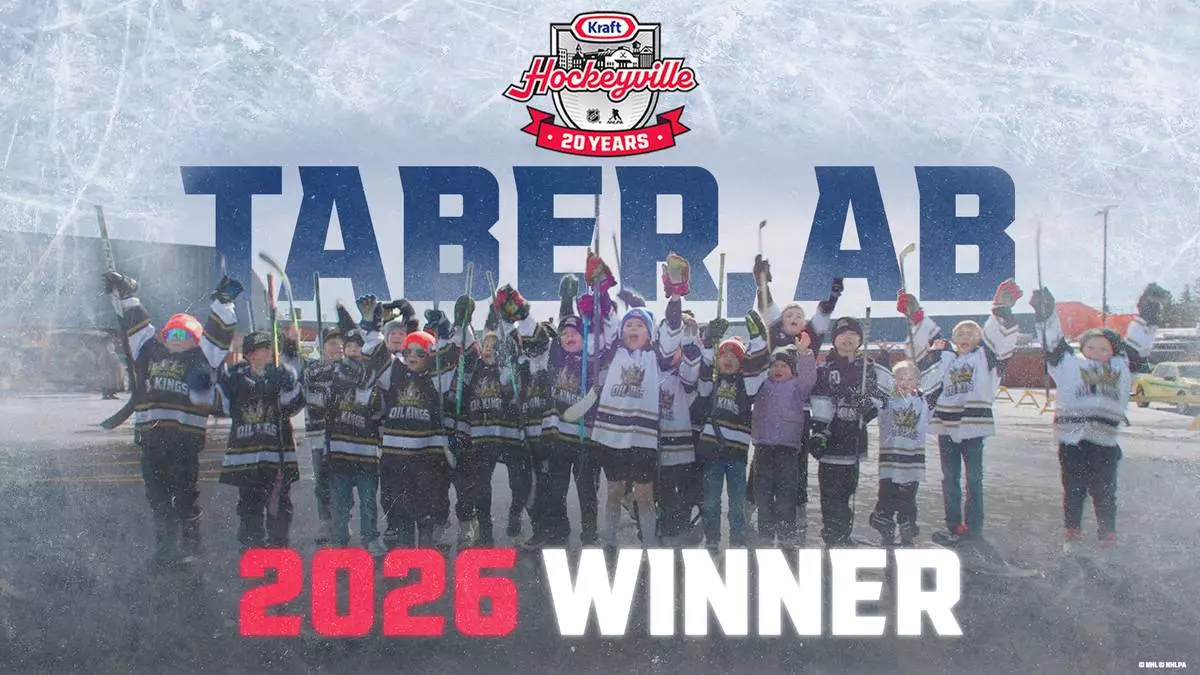
Taber, AB named winner of Kraft Hockeyville 2026