MIAMI (AP) — Don Garber remembers the earliest days of David Beckham's plans to bring Major League Soccer to Miami, the quest that started more than a dozen years ago.
There were twists. There were turns. Eventually, there was Lionel Messi, too.
Click to Gallery
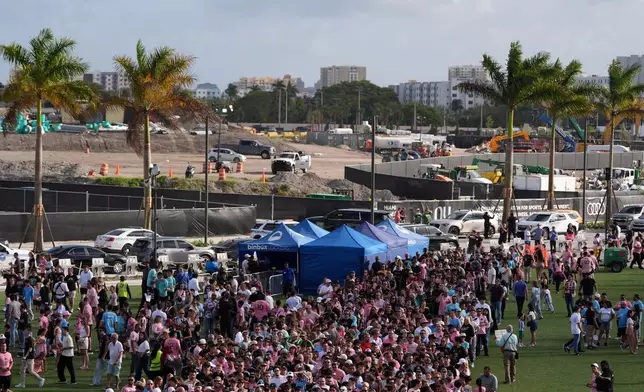
Fans wait in line to enter Nu Stadium, as signs of ongoing work are seen behind, ahead of the team's first MLS soccer match in their new stadium, against Austin FC, Saturday, April 4, 2026, in Miami. (AP Photo/Rebecca Blackwell)
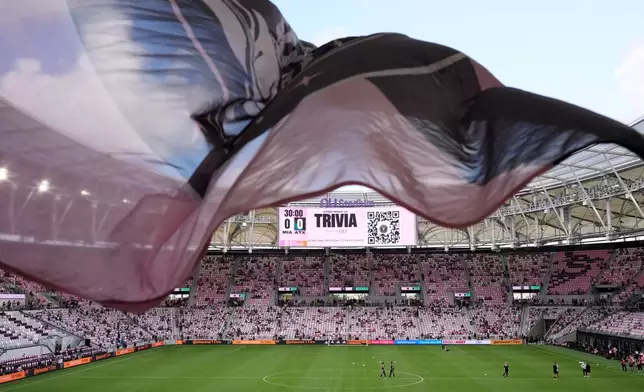
Inter Miami fans wave a flag in Nu Stadium ahead of the team's first MLS soccer match in their new stadium, against Austin FC, Saturday, April 4, 2026, in Miami. (AP Photo/Rebecca Blackwell)
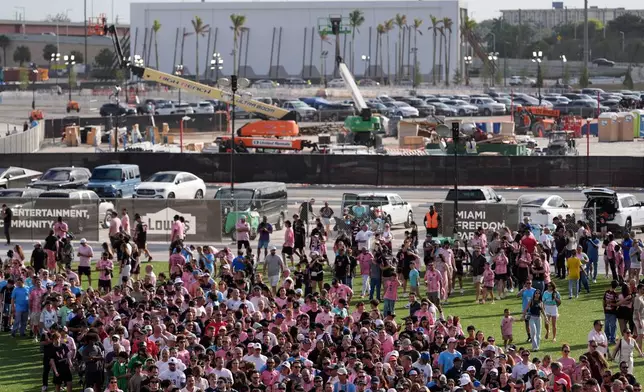
Fans wait in line to enter Nu Stadium, as signs of ongoing work are seen behind, ahead of the team's first MLS soccer match in their new stadium, against Austin FC, Saturday, April 4, 2026, in Miami. (AP Photo/Rebecca Blackwell)
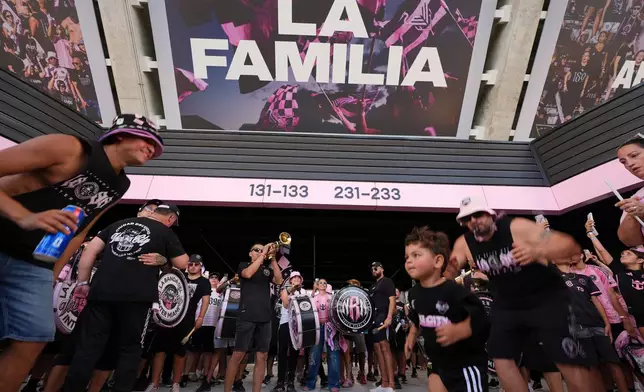
Inter Miami fans dance and play music ahead of the team's first MLS soccer match in their new stadium, against Austin FC, Saturday, April 4, 2026, in Miami. (AP Photo/Rebecca Blackwell)
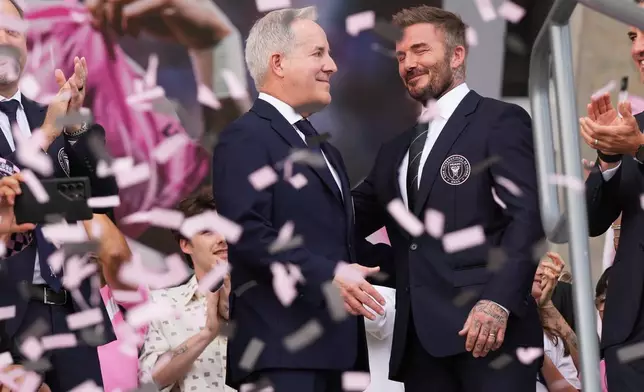
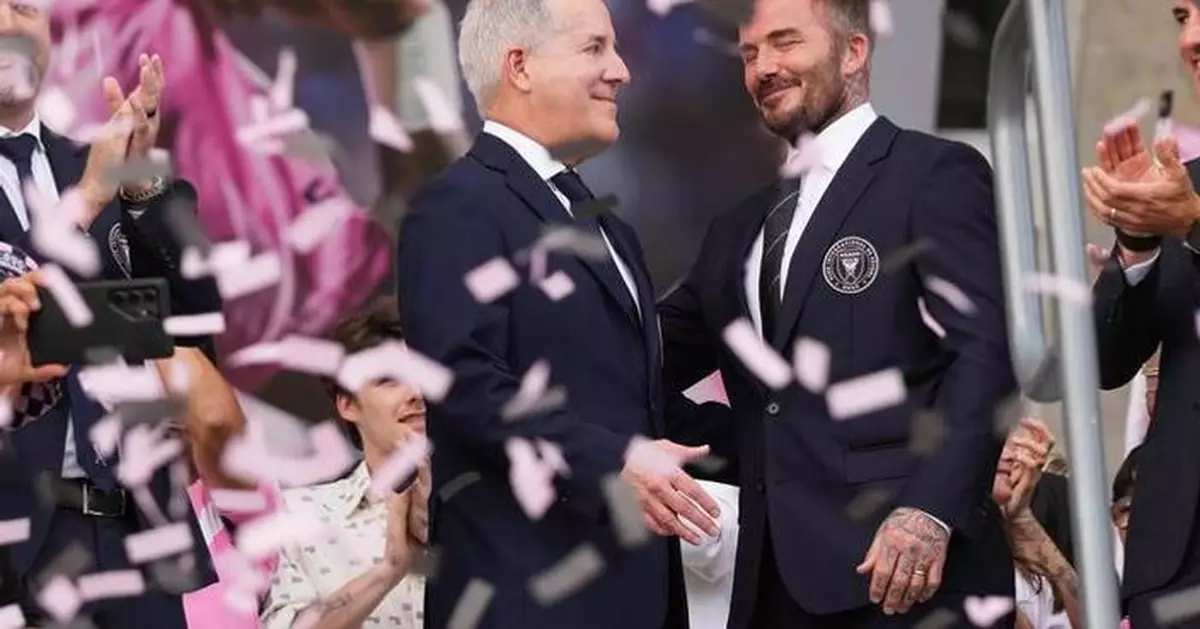
Inter Miami CF managing owner Jorge Mas, left, and co-owner David Beckham, right, stand together during a ribbon cutting ceremony before Inter Miami's first MLS soccer match in Nu Stadium against Austin FC , Saturday, April 4, 2026, in Miami. (AP Photo/Lynne Sladky)
But there was never Miami — until now.
“We believed in Miami,” Beckham said. “And Miami believed in us.”
Inter Miami finally played a game in its namesake city on Saturday night, hosting Austin FC after more than six years of calling Fort Lauderdale its home. Garber — the MLS Commissioner — was there for the ribbon-cutting of Miami Freedom Park, a complex with construction still very much in progress and one that needed temporary approvals from civic officials just so Saturday's match could be held.
Beckham picked Miami as his spot in 2013, the league made it official in 2014 when he formally exercised his option for an expansion franchise, and now, there's a home.
“We made a commitment to him that he would have an option on the team, and he exercised that in Miami," Garber said. "And it was a journey. And that journey, in many ways, didn’t end when Leo Messi joined the club. The journey really came to its conclusion today with the opening of this building.”
The team says the stadium holds 26,700 seats. A public golf course near Miami International Airport was plowed under to make room for the stadium, and tons of construction equipment — from cranes to hard hats and everything in between — is still scattered all over the site. The lack of certain aesthetics didn't stop some fans from spending more than $1,000 on the resale markets for the best seats on Saturday, which was Inter Miami's first “home” match since winning last season's MLS Cup championship.
“It's a great day for the club,” Inter Miami coach Javier Mascherano told Apple TV before the match. “It's our dream day."
By the time Messi came onto the field for warmups, most of the seats were filled. Beckham and the rest of Inter Miami's ownership group came out to applaud the fans moments earlier, even mingling with some in the most ardent supporters' section behind one of the goals. It was an event, with pink glow sticks being waved in the stands and music icon Marc Anthony performing “The Star-Spangled Banner.”
Let the record show that Messi didn't score the first goal in the stadium; that distinction went to Austin defender Guilherme Biro. Messi got the first Inter Miami goal, a header four minutes after Biro's goal.
“There were times of trouble, you know, but David, he’s an optimist," Garber said. "I think he was an optimist as a player. Again, he’s got a lot of courage. You’ve seen that throughout his career. He has that same courage as a businessperson.”
Beckham is a global icon when it comes to soccer, entertainment and fashion — and in many ways, MLS changed forever when he came to the U.S. to play for the LA Galaxy. It was through that deal that he got the option for an expansion franchise, which ultimately meant Miami.
“When I came to America and the MLS 20 years ago, my dream was to win championships, help raise the game of soccer that I love so much and to build my own team,” Beckham said. “Thirteen years ago, I announced Miami was my choice. We had no name. We had no fans. We had no stadium. Today, I stand in our new home. We are champions of the MLS. We have the best player in the history of the game playing in Miami. Dreams really can come true.”
Beckham's celebrity level got things started. Messi put the team onto a global stage. And others now will try to replicate it — including Austin, which has actor and producer Matthew McConaughey as part of its ownership group.
McConaughey wrote an open letter of sorts to Beckham on Saturday.
"As Austin visits Miami today for a little shindig on your new pitch, I want to first shout out a sincere “thank you” — you didn’t create soccer over here in the US, but you damn sure supercharged it,” McConaughey wrote. “When you came to the Galaxy you gave MLS fresh legitimacy, you turned games into events, and essentially changed MLS from a proving ground to a premier destination. THANK YOU.”
Much work remains, both in terms of finishing the construction, all the surrounding areas — the team has promised parks, soccer fields, retail shops and more as part of the complex — and there's still final certifications to obtain from various governmental agencies. Garber said he isn't worried about any of that affecting Inter Miami's home schedule going forward.
MLS gave Inter Miami several road matches to start the season, buying the team time to get closer to finishing construction. And though outside was a traffic nightmare, things seemed to go off without a hitch inside the stadium.
Garber said his initial assessment Saturday was that the stadium was “breathtaking.”
“What’s happened in the last 30 days to where they are today is just remarkable," Garber said. “It’s way further along than I expected it to be. And I’ve learned a lesson that when people tell you things are going to get done, sometimes you've just got to trust them.”
AP soccer: https://apnews.com/hub/soccer
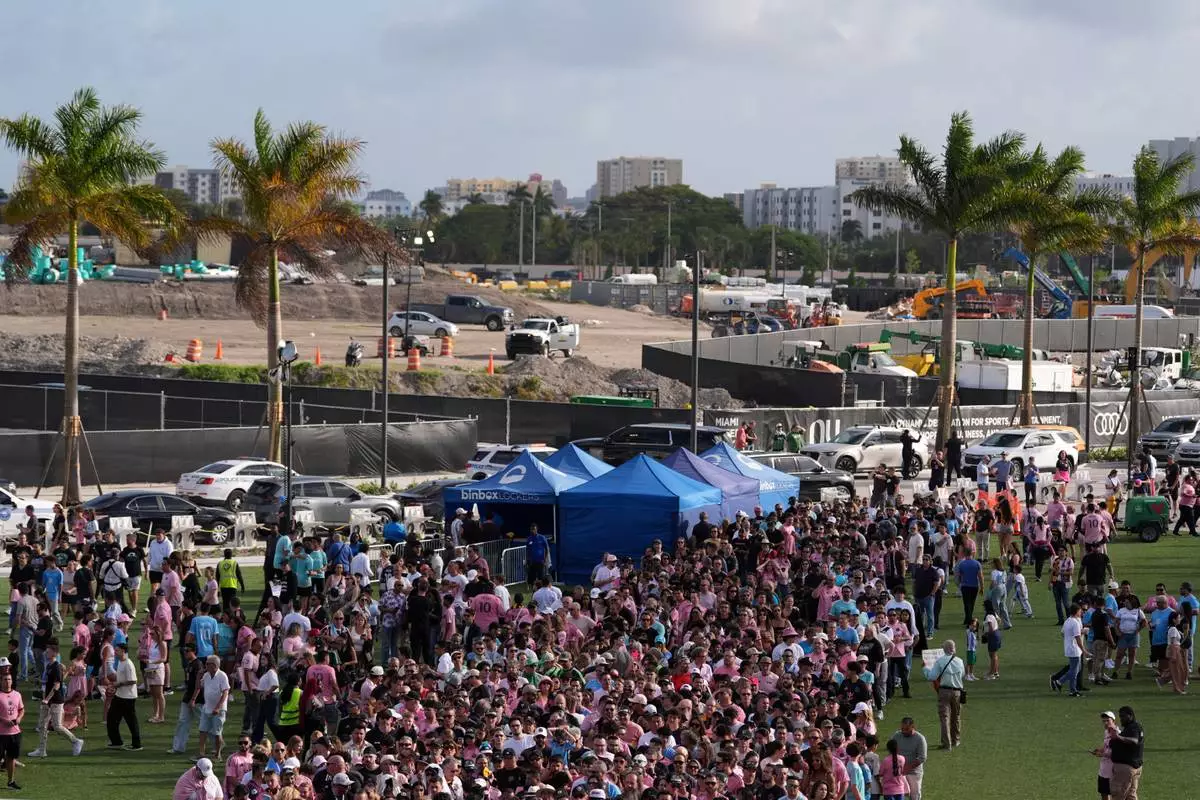
Fans wait in line to enter Nu Stadium, as signs of ongoing work are seen behind, ahead of the team's first MLS soccer match in their new stadium, against Austin FC, Saturday, April 4, 2026, in Miami. (AP Photo/Rebecca Blackwell)
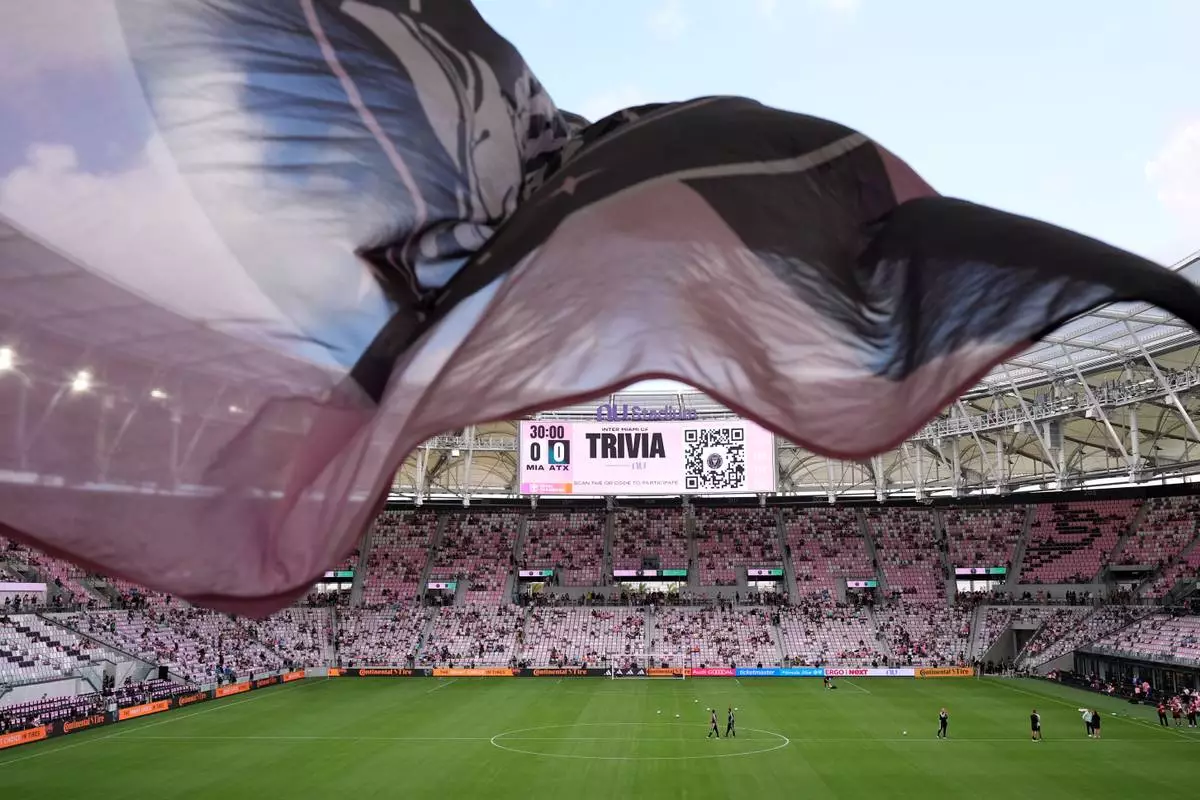
Inter Miami fans wave a flag in Nu Stadium ahead of the team's first MLS soccer match in their new stadium, against Austin FC, Saturday, April 4, 2026, in Miami. (AP Photo/Rebecca Blackwell)
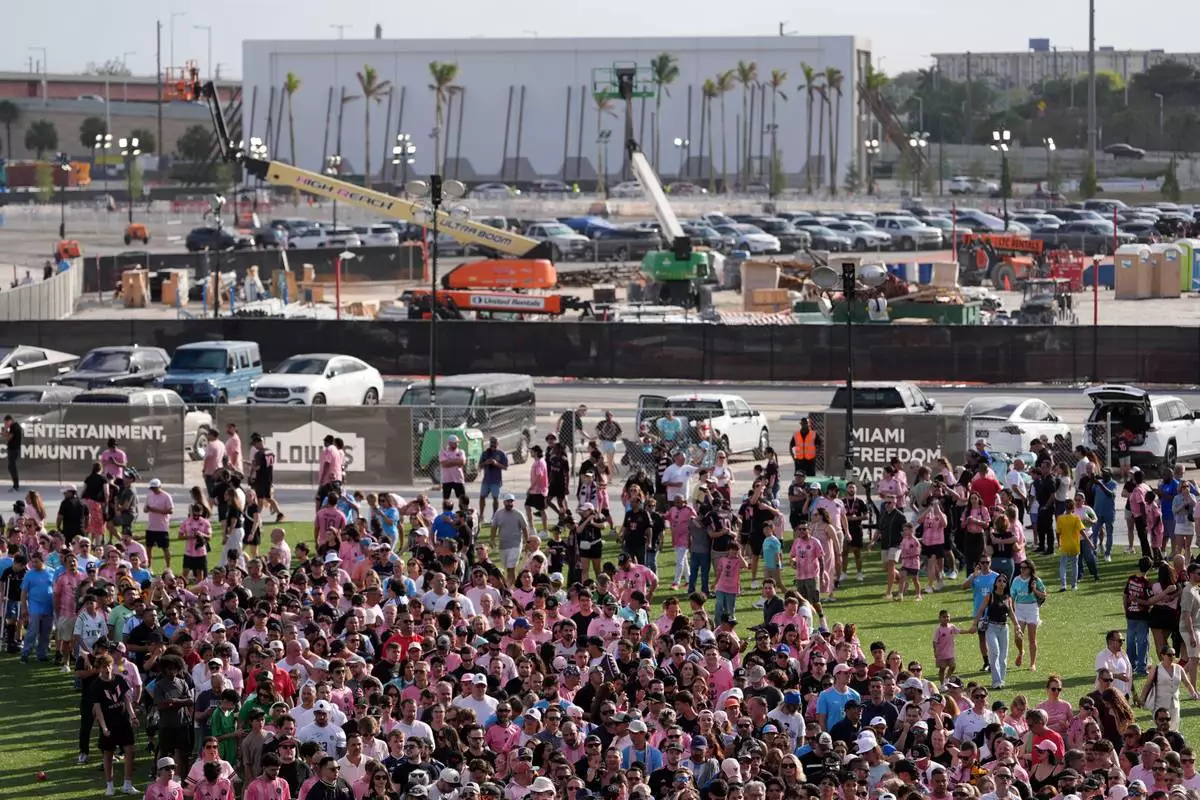
Fans wait in line to enter Nu Stadium, as signs of ongoing work are seen behind, ahead of the team's first MLS soccer match in their new stadium, against Austin FC, Saturday, April 4, 2026, in Miami. (AP Photo/Rebecca Blackwell)
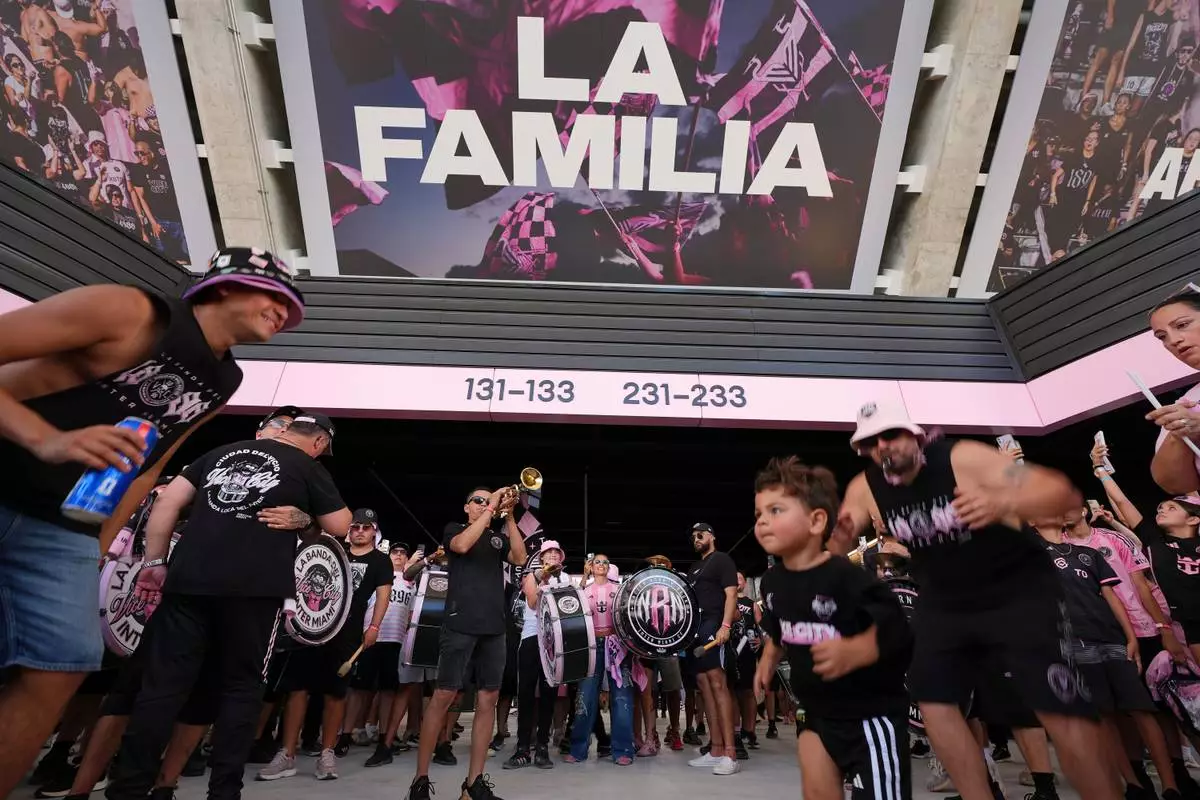
Inter Miami fans dance and play music ahead of the team's first MLS soccer match in their new stadium, against Austin FC, Saturday, April 4, 2026, in Miami. (AP Photo/Rebecca Blackwell)
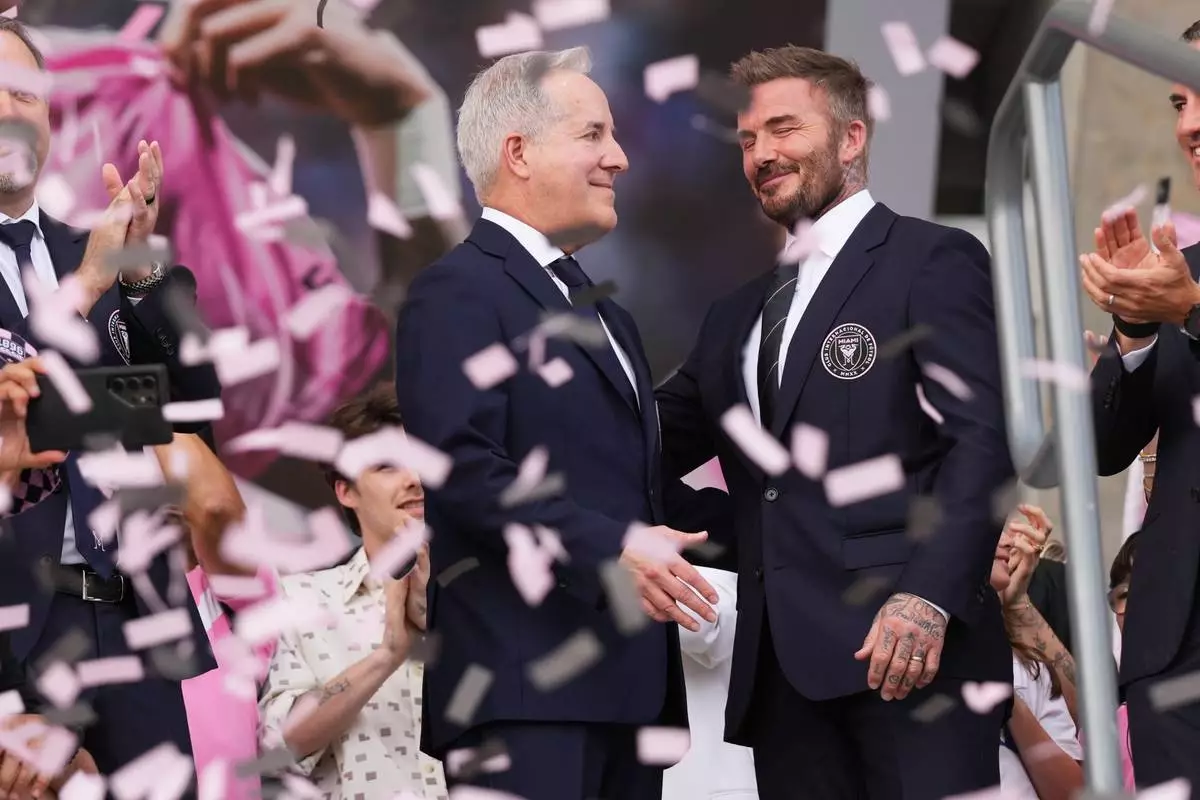
Inter Miami CF managing owner Jorge Mas, left, and co-owner David Beckham, right, stand together during a ribbon cutting ceremony before Inter Miami's first MLS soccer match in Nu Stadium against Austin FC , Saturday, April 4, 2026, in Miami. (AP Photo/Lynne Sladky)