Activist investor Elliott Investment Management is taking a $4 billion stake in PepsiCo, saying there's an opportunity to revive the snack and drinks company.
Years of double-digit price increases from PepsiCo and changing customer preferences has weakened demand for its drinks and snacks, the company said in February. In July PepsiCo said that it is trying to combat perceptions that its products are too expensive by expanding distribution of value brands like Chester’s and Santitas.
Stubborn inflation has had an impact on consumer behavior and many people have cut back on the discretionary purchases that they make.
PepsiCo lowered its full-year earnings expectations in April, citing increased costs from tariffs and a pullback in consumer spending. The company reaffirmed that guidance three months later. Its tariff costs have risen since then. In June, the Trump administration hiked the tariff on imported aluminum from 25% to 50%.
In a letter to PepsiCo's board, Elliott said that the company is being hurt by a lack of strategic clarity, decelerating growth and eroding profitability in its North American food and beverage businesses. But the firm still believes in PepsiCo's potential, particularly noting its growing international business.
“While unfortunate, this disappointing trajectory has created a historic opportunity: With the right mindset and an appropriately ambitious turnaround plan, PepsiCo today represents a rare chance to revitalize a leading global enterprise and unlock significant shareholder value,” Elliott said.
Shares of PepsiCo climbed 2% Tuesday. The stock is down nearly 10% over the past 12 months, according to FactSet, but it is up almost 12% over the past month as Elliott has purchased shares.
Elliott said that it wants to work with PepsiCo's board and management on ways to improve performance.
“Elliott’s goals at PepsiCo are straightforward: help the company sharpen focus, drive innovation, become more efficient and unlock the value that its leading brands, unmatched scale and world-class employees deserve,” it said. “The path back to winning is clear and achievable.”
PepsiCo will review Elliott's recommendations.
“PepsiCo maintains an active and productive dialogue with our shareholders and values constructive input on delivering long-term shareholder value,” it said in a statement Tuesday.
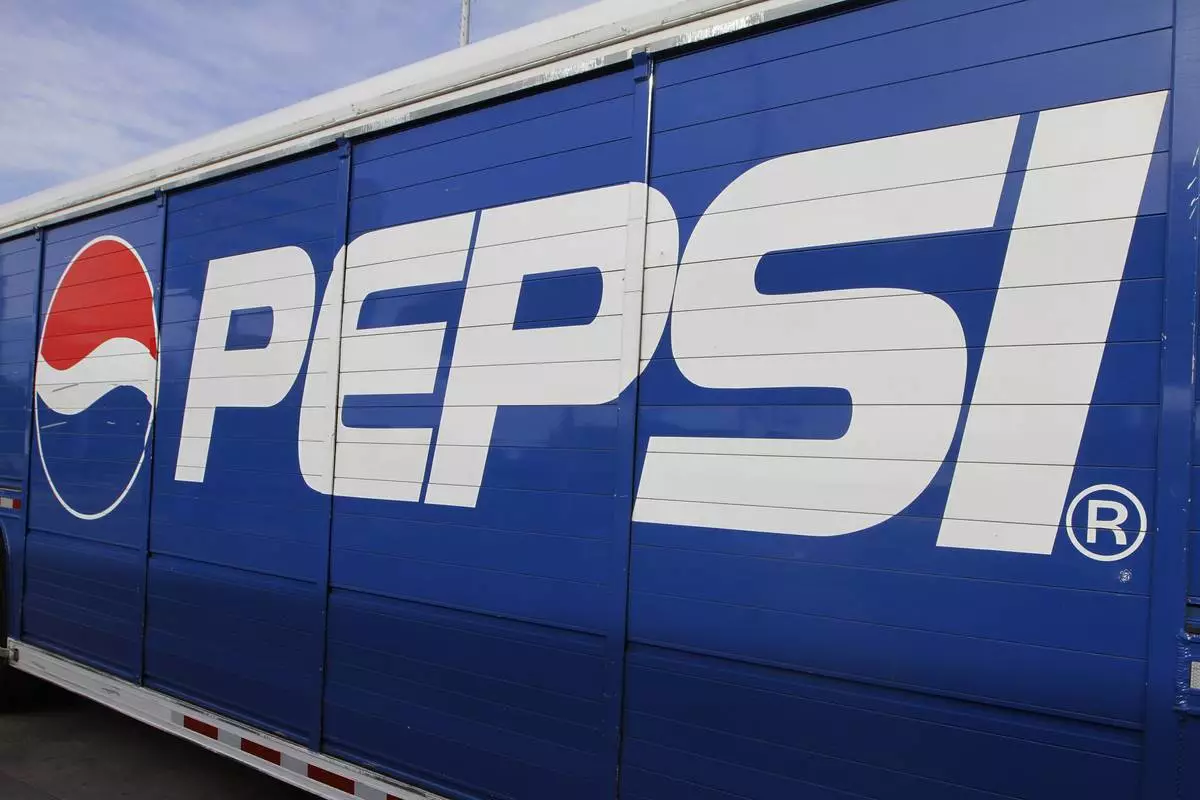
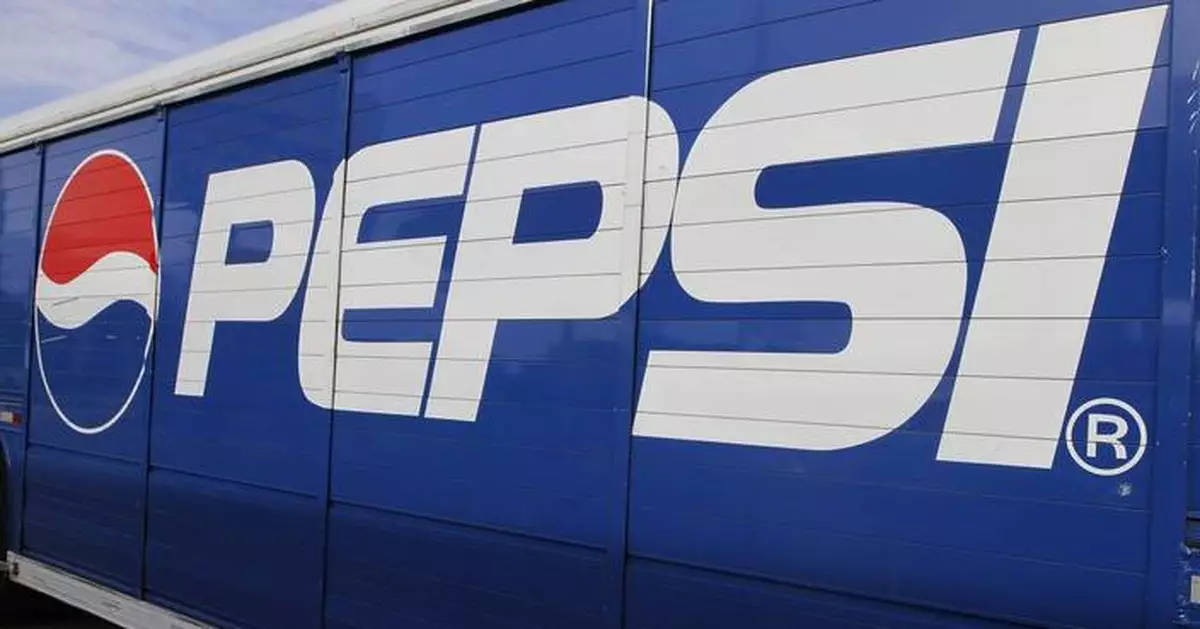
FILE - In this May 30, 2012, file photo, a Pepsi logo is seen on a delivery truck in Springfield, Ill. PepsiCo Inc. on Thursday, July 9, 2015, reported second-quarter net income of $1.98 billion. (AP Photo/Seth Perlman, File)
CARACAS, Venezuela (AP) — President Donald Trump is set to meet Thursday at the White House with Venezuelan opposition leader María Corina Machado, whose political party is widely considered to have won 2024 elections rejected by then-President Nicolás Maduro before the United States captured him in an audacious military raid this month.
Less than two weeks after U.S. forces seized Maduro and his wife at a heavily guarded compound in Caracas and brought them to New York to stand trial on drug trafficking charges, Trump will host the Nobel Peace Prize laureate Machado, having already dismissed her credibility to run Venezuela and raised doubts about his stated commitment to backing democratic rule in the country.
“She’s a very nice woman,” Trump told Reuters in an interview about Machado. “I’ve seen her on television. I think we’re just going to talk basics.”
The meeting comes as Trump and his top advisers have signaled their willingness to work with acting President Delcy Rodríguez, who was Maduro’s vice president and along with others in the deposed leader's inner circle remain in charge of day-to-day governmental operations.
Rodríguez herself has adopted a less strident position toward Trump and his “America First” policies toward the Western Hemisphere, saying she plans to continue releasing prisoners detained under Maduro — a move reportedly made at the behest of the Trump administration. Venezuela released several Americans this week.
Trump, a Republican, said Wednesday that he had a “great conversation” with Rodríguez, their first since Maduro was ousted.
“We had a call, a long call. We discussed a lot of things,” Trump told reporters. “And I think we’re getting along very well with Venezuela.”
In endorsing Rodríguez, Trump has sidelined Machado, who has long been a face of resistance in Venezuela. She had sought to cultivate relationships with Trump and key advisers like Secretary of State Marco Rubio among the American right wing in a political gamble to ally herself with the U.S. government. She also intends to have a meeting in the Senate on Thursday afternoon.
Despite her alliance with Republicans, Trump was quick to snub her following Maduro’s capture. Just hours afterward, Trump said of Machado that “it would be very tough for her to be the leader. She doesn’t have the support within or the respect within the country. She’s a very nice woman, but she doesn’t have the respect.”
Machado has steered a careful course to avoid offending Trump, notably after winning last year’s Nobel Peace Prize, which Trump coveted. She has since thanked Trump and offered to share the prize with him, a move that has been rejected by the Nobel Institute.
Machado’s whereabouts have been largely unknown since she went into hiding early last year after being briefly detained in Caracas. She briefly reappeared in Oslo, Norway, in December after her daughter received the Nobel Peace Prize on her behalf.
The industrial engineer and daughter of a steel magnate began challenging the ruling party in 2004, when the nongovernmental organization she co-founded, Súmate, promoted a referendum to recall then-President Hugo Chávez. The initiative failed, and Machado and other Súmate executives were charged with conspiracy.
A year later, she drew the anger of Chávez and his allies again for traveling to Washington to meet President George W. Bush. A photo showing her shaking hands with Bush in the Oval Office lives in the collective memory. Chávez considered Bush an adversary.
Almost two decades later, she marshaled millions of Venezuelans to reject Chávez’s successor, Maduro, for another term in the 2024 election. But ruling party-loyal electoral authorities declared him the winner despite ample credible evidence to the contrary. Ensuing anti-government protests ended in a brutal crackdown by state security forces.
Janetsky reported from Mexico City. AP Diplomatic Writer Matthew Lee in Washington contributed to this report.
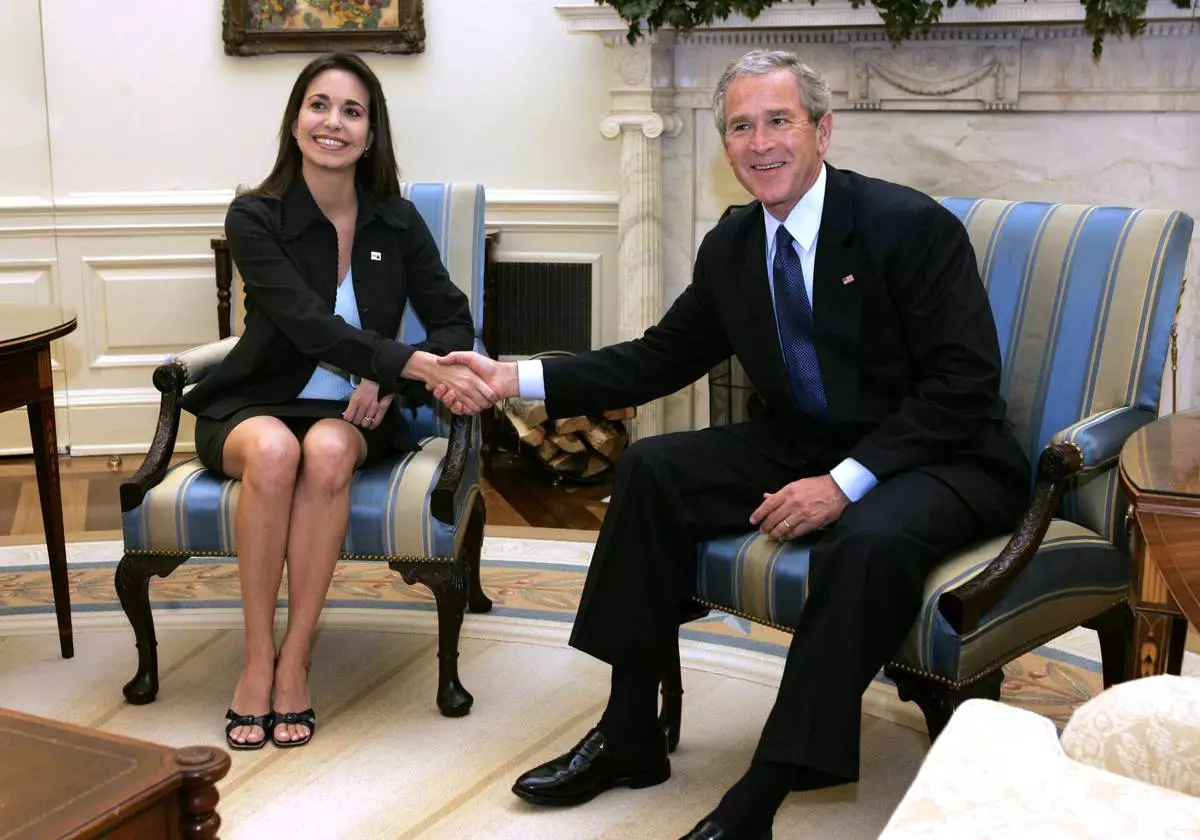
FILE - U.S. President George Bush, right, meets with Maria Corina Machado, executive director of Sumate, a non-governmental organization that defends Venezuelan citizens' political rights, in the Oval Office of the White House, Washington, May 31, 2005. (AP Photo/Charles Dharapak, File)
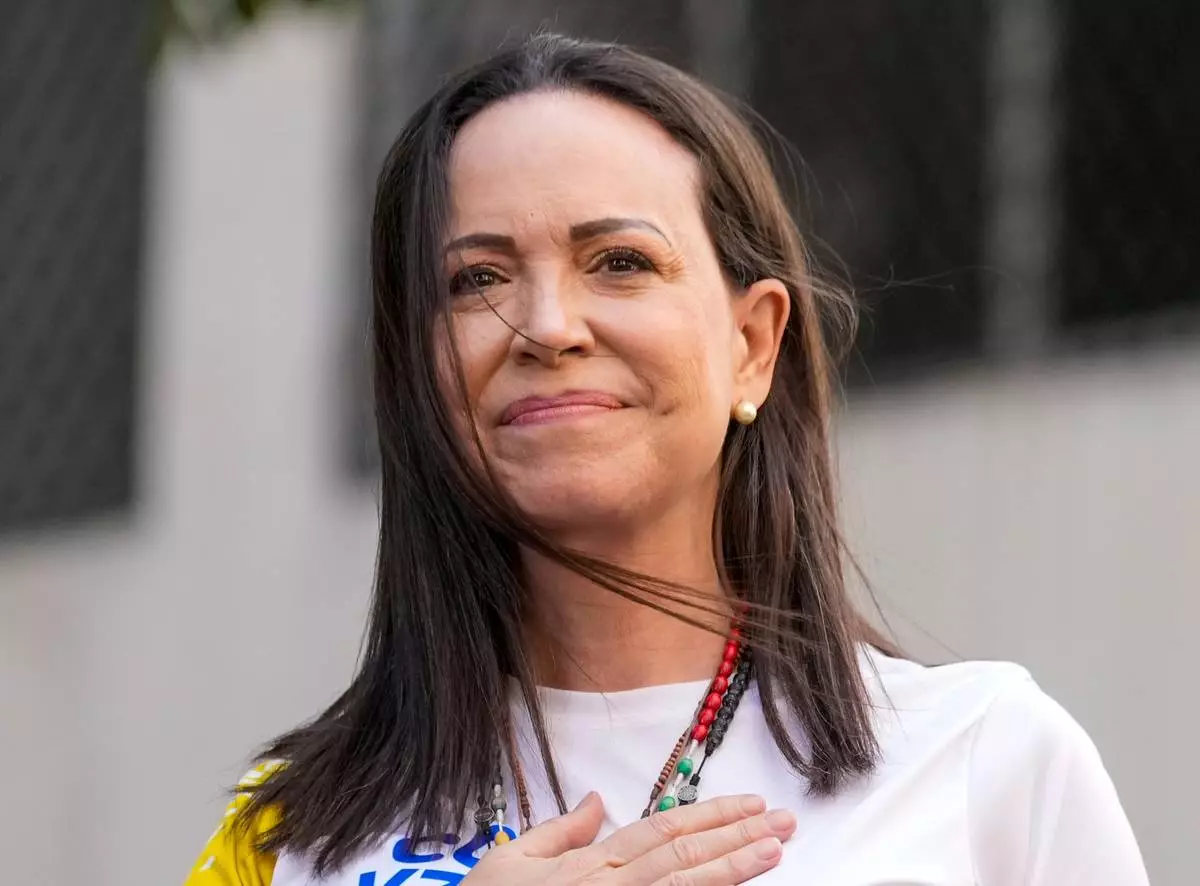
FILE - Opposition leader Maria Corina Machado gestures to supporters during a protest against President Nicolas Maduro the day before his inauguration for a third term, in Caracas, Venezuela, Thursday, Jan. 9, 2025. (AP Photo/Ariana Cubillos, file)