WASHINGTON (AP) — President Donald Trump said Tuesday the U.S. has carried out a strike in the southern Caribbean against a drug-carrying vessel that departed from Venezuela and was operated by the Tren de Aragua gang.
The president said in a social media posting that 11 people were killed in the rare U.S. military operation in the Americas, a dramatic escalation in the Republican administration's effort to stem the flow of narcotics from Latin America. Trump also posted a short video clip of a small vessel appearing to explode in flames.
“The strike occurred while the terrorists were at sea in International waters transporting illegal narcotics, heading to the United States,” Trump said on Truth Social. “No U.S. Forces were harmed in this strike. Please let this serve as notice to anybody even thinking about bringing drugs into the United States of America.”
The video appears to show a long, multi-engine speedboat traveling at sea when a bright flash of light bursts over the craft. The boat is then briefly seen covered in flames.
The video, which is largely in black and white, is not clear enough to see if the craft is carrying as many as 11 people. The video also did not show any large or clear stashes of drugs inside the boat.
Tren de Aragua originated more than a decade ago at an infamously lawless prison with hardened criminals in Venezuela’s central state of Aragua. The gang has expanded in recent years as more than 7.7 million Venezuelans fled economic turmoil and migrated to other Latin American countries or the U.S.
Trump and administration officials have repeatedly blamed the gang for being at the root of the violence and illicit drug dealing that plague some cities. And the president on Tuesday repeated his claim — contradicted by a declassified U.S. intelligence assessment — that Tren de Aragua is operating under Venezuelan President Nicolás Maduro's control.
The White House did not immediately explain how the military determined that those aboard the vessel were Tren de Aragua members. The size of the gang is unclear, as is the extent to which its actions are coordinated across state lines and national borders.
After Trump announced the strike, Venezuelan state television showed Maduro and first lady Cilia Flores walking the streets of his childhood neighborhood. A television presenter said Maduro was “bathing in patriotic love” as he interacted with supporters.
“In the face of imperialist threats, God (is) with us,” Maduro told supporters.
Maduro did not address the strike directly, but charged that the U.S. is “coming for Venezuela’s riches,” including oil and gas. The South American country has the world’s largest proven oil reserves.
“From the neighborhoods of Caracas ... I tell you, there will be peace in Venezuela, with sovereignty,” he said.
Communications Minister Freddy Ñáñez questioned the veracity of the video. “Based on the video provided, it is very likely that it was created using Artificial Intelligence,” he said on his Telegram account. He couldn’t say what tools would have been used to create the video, but said it showed an “almost cartoonish animation, rather than a realistic depiction of an explosion.”
Trump and Secretary of State Marco Rubio first announced the strike earlier Tuesday, shortly before Rubio left on a trip to Mexico and Ecuador for talks on drug cartels, security, tariffs and more.
In a brief exchange with reporters before departing Miami for Mexico City, Rubio deferred questions about the specifics of the strike to the Pentagon. He said the drugs on the vessel were likely headed to Trinidad or elsewhere in the Caribbean.
For years, Rubio has spoken out against Maduro and other Latin American leftist governments and supported opposition leaders. In 2018, during Trump’s first term, Rubio told Univision there was a “strong argument” to be made for the use of the U.S. military in Venezuela. He's also accused Venezuelan officials of aiding drug traffickers.
Asked if Trump would carry out operations on Venezuelan soil, Rubio was opaque. “We’re going to take on drug cartels wherever they are and wherever they’re operating against the interests of the United States,” he said.
The operation came after the U.S. announced plans last month to boost its maritime force in the waters off Venezuela to combat threats from Latin American drug cartels.
Maduro's government has responded by deploying troops along Venezuela's coast and border with neighboring Colombia, as well as by urging Venezuelans to enlist in a civilian militia.
Maduro has insisted that the U.S. is building a false drug-trafficking narrative to try to force him out of office. He and other government officials have repeatedly cited a United Nations report that they say shows traffickers attempt to move only 5% of the cocaine produced in Colombia through Venezuela. Landlocked Bolivia and Colombia, with access to the Pacific and Caribbean, are the world’s top cocaine producers.
The latest U.N. World Drug Report shows that various countries in South America, including Colombia, Ecuador and Peru, reported larger cocaine seizures in 2022 than in 2021, but it does not assign Venezuela the outsize role that the White House has in recent months.
“The impact of increased cocaine trafficking has been felt in Ecuador in particular, which has seen a wave of lethal violence in recent years linked to both local and transnational crime groups, most notably from Mexico and the Balkan countries,” according to the report.
Maduro on Monday told reporters he “would constitutionally declare a republic in arms” if his country were attacked by U.S. forces deployed to the Caribbean.
Garcia Cano reported from Mexico City. AP journalists Matthew Lee in Mexico City, Jorge Rueda in Caracas, Venezuela, Adriana Gomez Licon in Ft. Lauderdale, Florida, and Sagar Meghani in Washington contributed reporting.
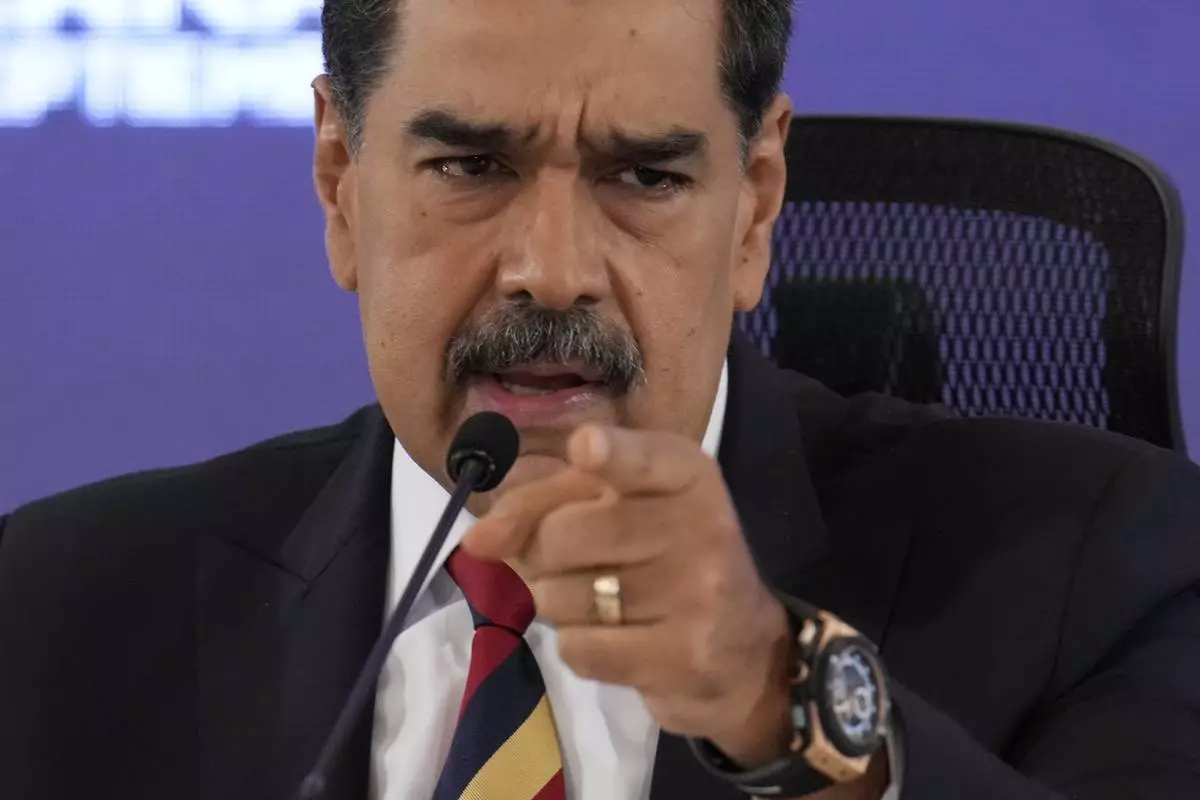
Venezuela President Nicolas Maduro speaks during a press conference in Caracas, Venezuela, Monday, Sept. 1, 2025. (AP Photo/Ariana Cubillos)
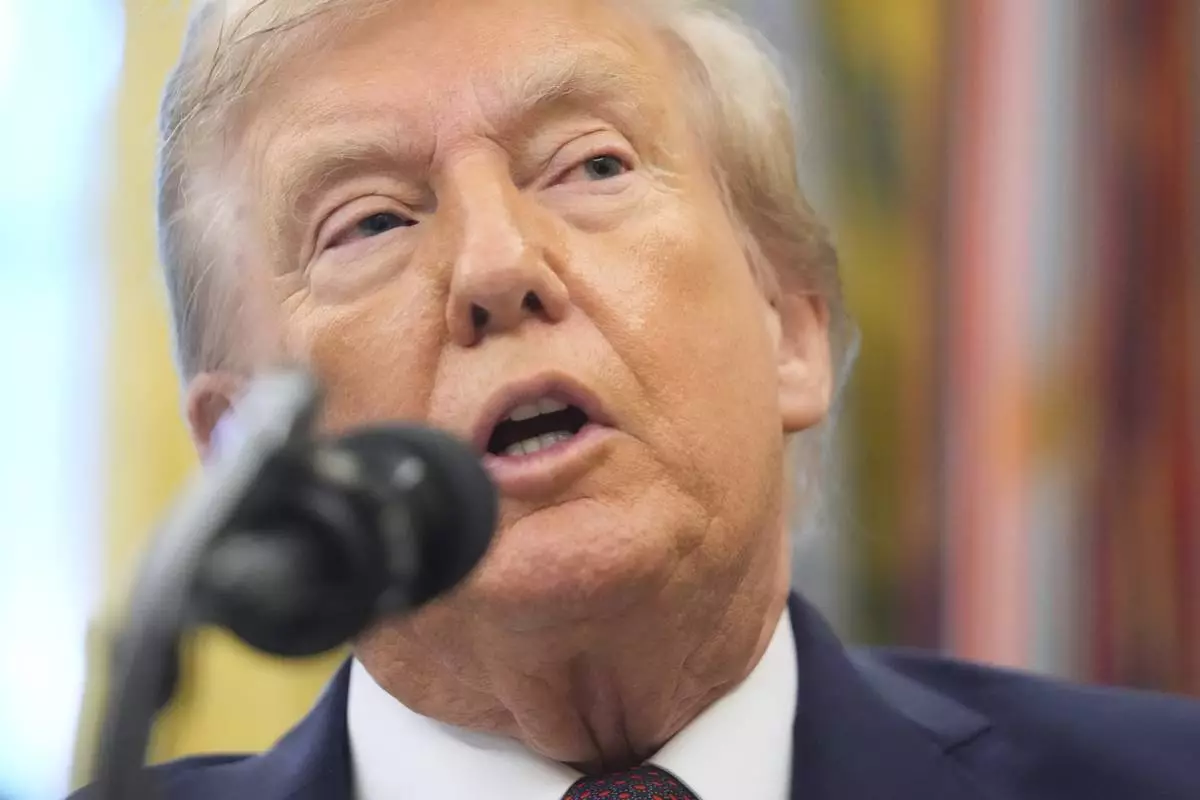
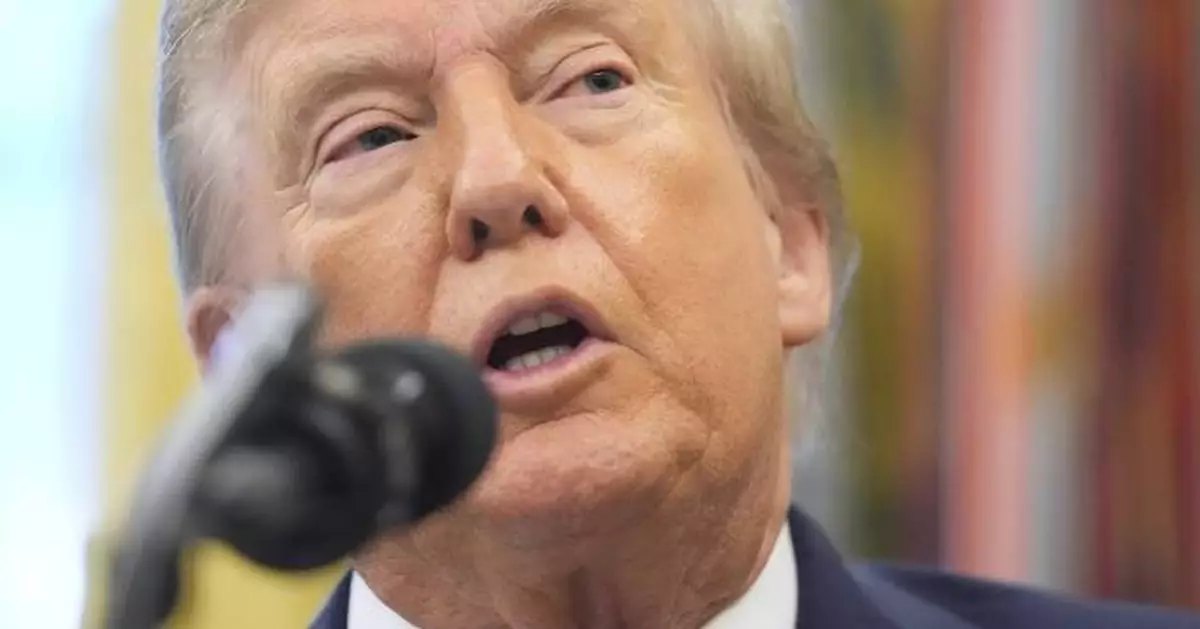
President Donald Trump speaks during an event about the relocation of U.S. Space Command headquarters from Colorado to Alabama in the Oval Office of the White House, Tuesday, Sept. 2, 2025, in Washington. (AP Photo/Mark Schiefelbein)
MADRID (AP) — Pope Leo XIV honored Spain's centuries-old tradition of religious devotion on Sunday as a “school of faith” for today, as he presided over a Mass before a million people and a procession highlighting one of the most iconic expressions of Spanish popular piety: flower carpets.
The crowd cheered and shouted “This is the youth of the pope!” as Leo arrived for the Mass at a central Madrid plaza. He looped around the plaza and surrounding streets in his popemobile to a crowd packed several rows deep of people eager to witness the first papal visit in 15 years.
Sunday’s Mass fell on the Catholic Corpus Domini feast day, which often features processions of faithful through towns and cities led by a priest carrying the Eucharist. In Spain as in other predominantly Catholic countries, the processions often feature elaborate floral carpets arranged along the route.
According to Spanish organizers, the 16 flower carpets decorating the half-kilometer (mile) procession route off Plaza Cibeles were prepared by a Spanish florists association from Galicia. Florists used more than 30,000 flowers, most the yellow and white colors of the Holy See flag, for the carpets that feature decorations such as the Holy See keys.
Leo, who arrived in Spain on Saturday at the start of his weeklong visit, has been keen to highlight the long tradition of Catholic devotion here to encourage especially young generations to find their faith.
In his homily Sunday, Leo honored Spain's tradition of the Corpus Domini processions, saying the floral carpets express the “spiritual sentiments of this country” through “altars erected in the streets.”
“This is not an exhibition, a remnant of folklore or a simple display of beauty,” he said. “It is a profession of faith in the presence of the risen Lord, who is alive and continues to walk among us.”
He said the continued observance of such devotional practices points to what Spain can and should be for the world.
“Herein lies the task of Spain today and in the future: to ensure that the religiosity which has shaped and defined this country for centuries is not a museum of the past to be visited, but a school of faith from which to draw even today,” he said.
At a vigil service Saturday night, an estimated 600,000 young Spaniards knelt for several minutes in silent prayer alongside Leo, suggesting that there is indeed interest among young people despite Spain’s heavily secularized society.
“Let me take the opportunity to tell all of you: Don't ever be afraid of thinking about a vocation to the priesthood or religious life, or other services in the church!” Leo told the crowd.
Irati Valda and Javier Hormazal, a young couple, held up a cardboard sign announcing they are going to get married on June 13 and were ushered up close to receive Leo's blessing during the vigil.
“To see so many young people together, it's incredible. Half a million people in silence, this is something you will only live once," Valda said.
For Sunday's Mass and procession, local organizers said 1.2 million people had turned out on a brilliant spring morning at the central plaza and surrounding streets, with more trying to get in.
The tradition of laying flower carpets — and destroying them when the procession tramples them — dates back two centuries and is popular also in Latin America, where elaborate sand designs are also made. The painstaking displays are considered an offering to the Eucharist.
Poland has already had its tradition of Corpus Domini flower carpets recognized by UNESCO, and Spain's Galicia region is trying to have its tradition listed along with other countries as part of the world’s intangible cultural heritage.
Wildly popular religious processions, pilgrimages and feasts continue to be held in most Spanish regions. The most recognizable are Holy Week processions during the final week of Lent where brotherhoods and robed penitents parade ornate statues of Christ and the Virgin Mary through cities, towns and villages alongside marching bands. Such processions draw the faithful as well as droves of non-believers and tourists.
Spanish towns and cities also regularly honor local patron saints with fiestas. Religious pilgrimages to local shrines mix piety with communal festivities and music. In Andalusia, the El Rocío pilgrimage fetches a million people that make a long, dusty journey over the Pentecost weekend on horseback and decorated covered wagons to venerate an icon of the Virgin Mary.
Leo arrived in Spain on Saturday and urged its people to put an end to polarization and work for unity. Later Sunday he is to meet privately with members of his Augustinian religious order and address cultural leaders.
AP visual journalist Helena Alves contributed.
Associated Press religion coverage receives support through the AP’s collaboration with The Conversation US, with funding from Lilly Endowment Inc. The AP is solely responsible for this content.
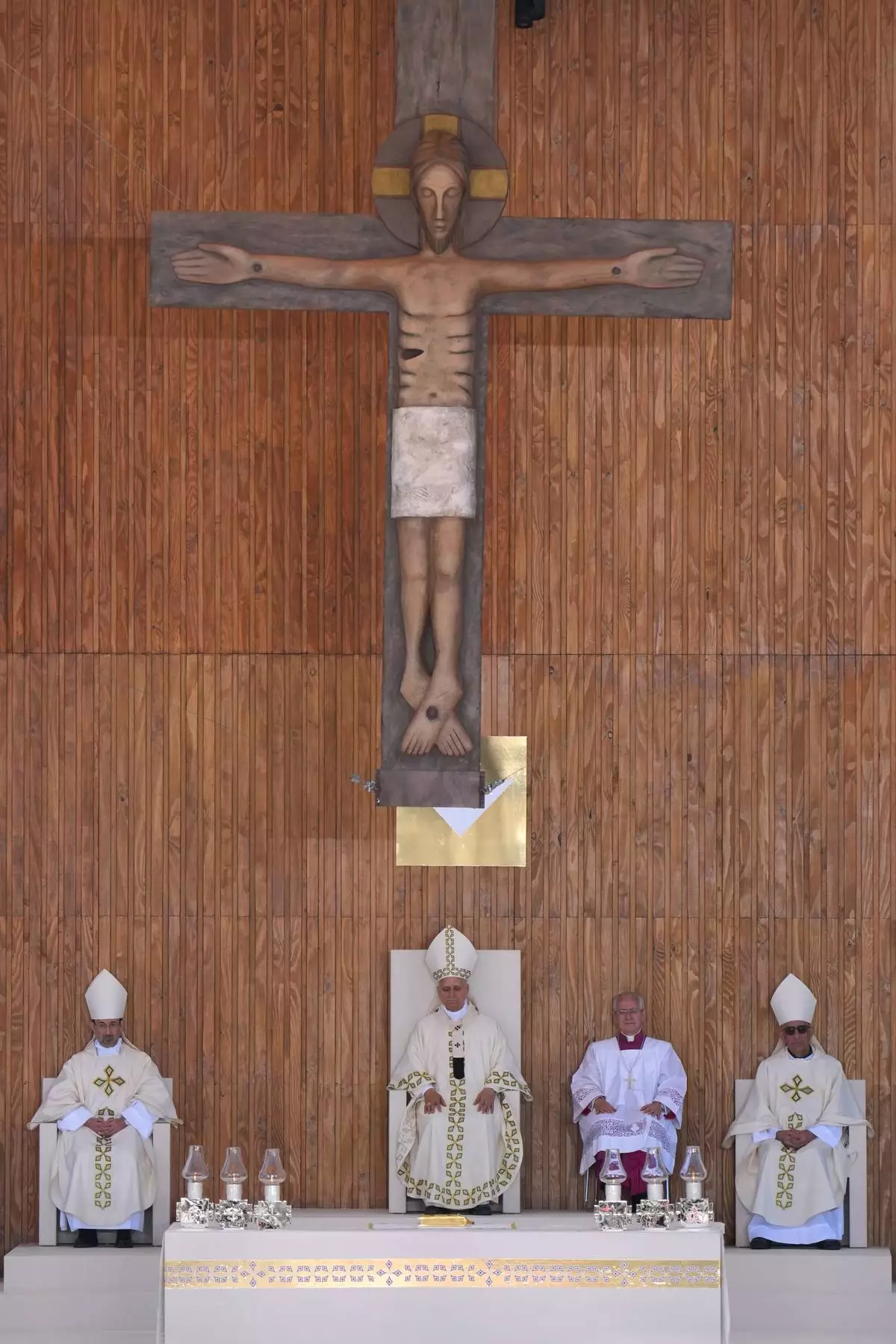
Pope Leo XIV presides over a Mass marking the Catholic feast of Corpus Christi at Plaza de Cibeles in Madrid, Spain, Sunday, June 7, 2026, on the second day of his seven-day apostolic visit to mainland Spain and the Canary Islands. (AP Photo/Manu Fernandez)
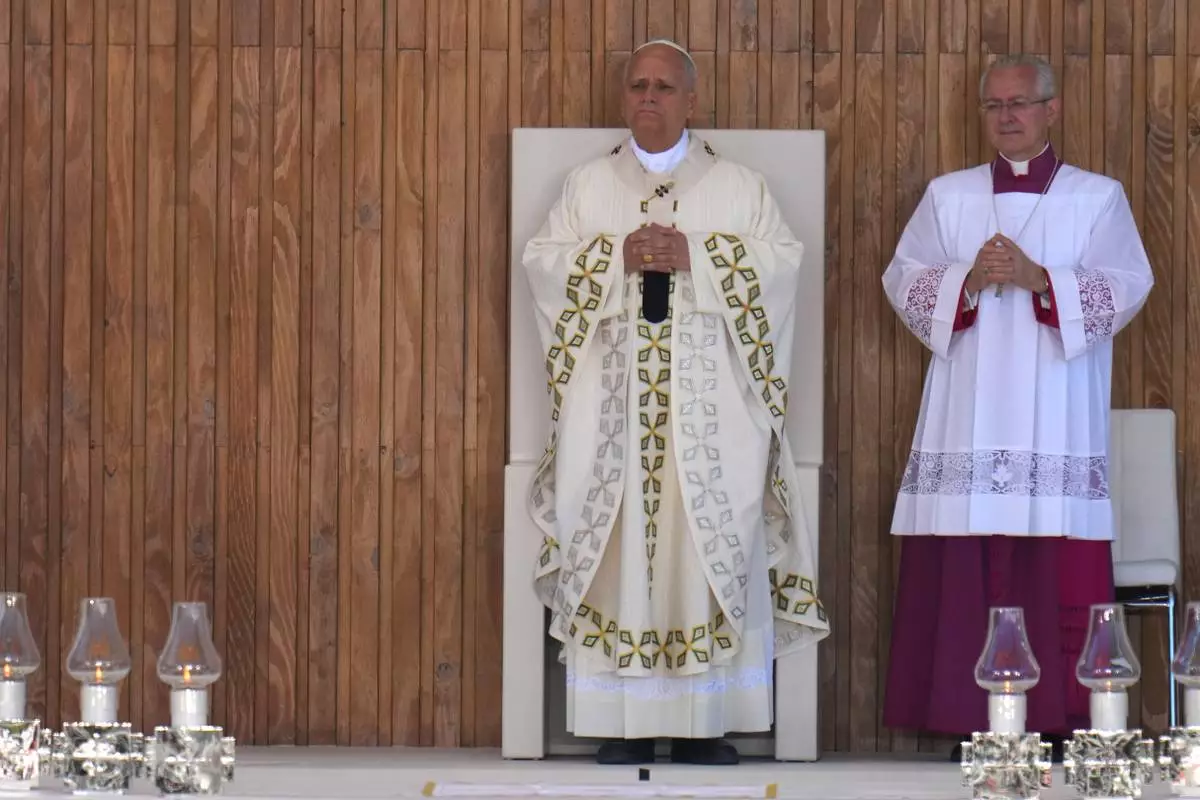
Pope Leo XIV presides over a Mass marking the Catholic feast of Corpus Christi at Plaza de Cibeles in Madrid, Spain, Sunday, June 7, 2026, on the second day of his seven-day apostolic visit to mainland Spain and the Canary Islands. (AP Photo/Manu Fernandez)
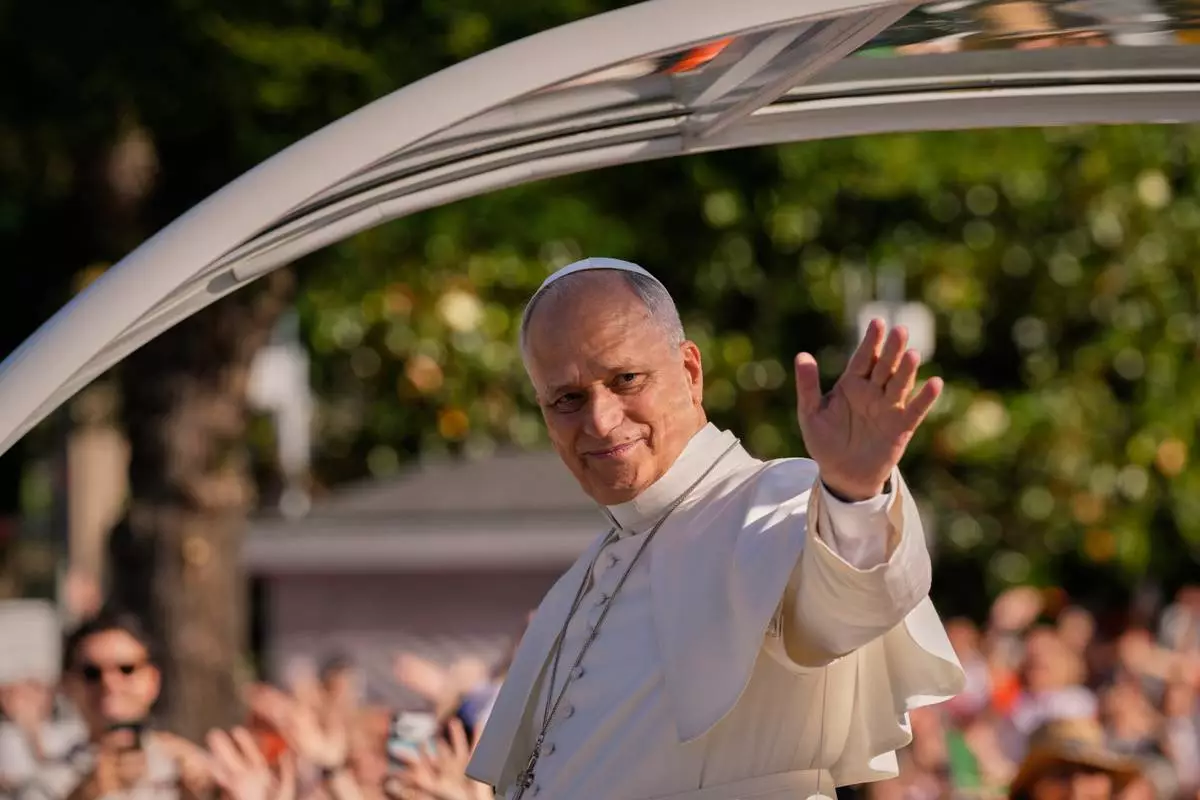
Pope Leo XIV arrives in the popemobile at Plaza de Cibeles for a Holy Mass and Corpus Christi procession in Madrid, Spain, Sunday, June 7, 2026, on the second day of his seven-day apostolic visit to mainland Spain and the Canary Islands. (AP Photo/Bernat Armangue)
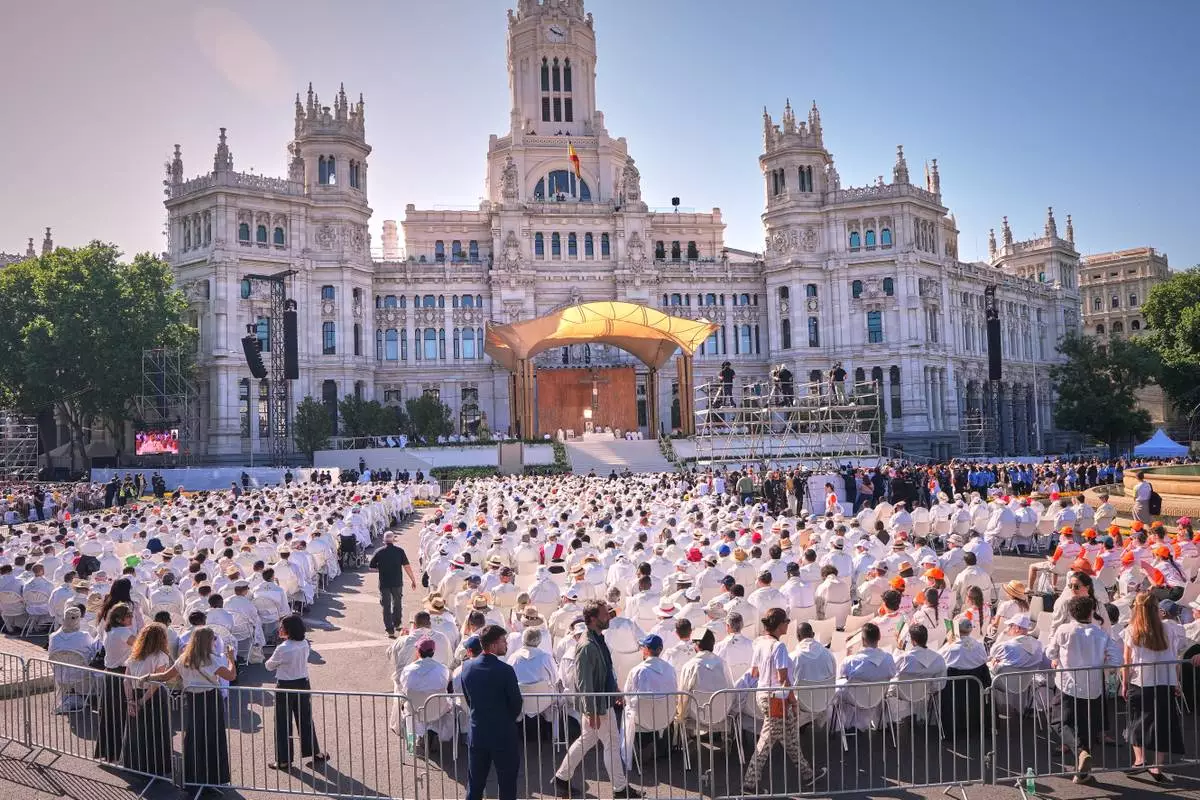
Pope Leo XIV presides over a Mass marking the Catholic feast of Corpus Christi at Plaza de Cibeles in Madrid, Spain, Sunday, June 7, 2026, on the second day of his seven-day apostolic visit to mainland Spain and the Canary Islands. (AP Photo/Manu Fernandez)
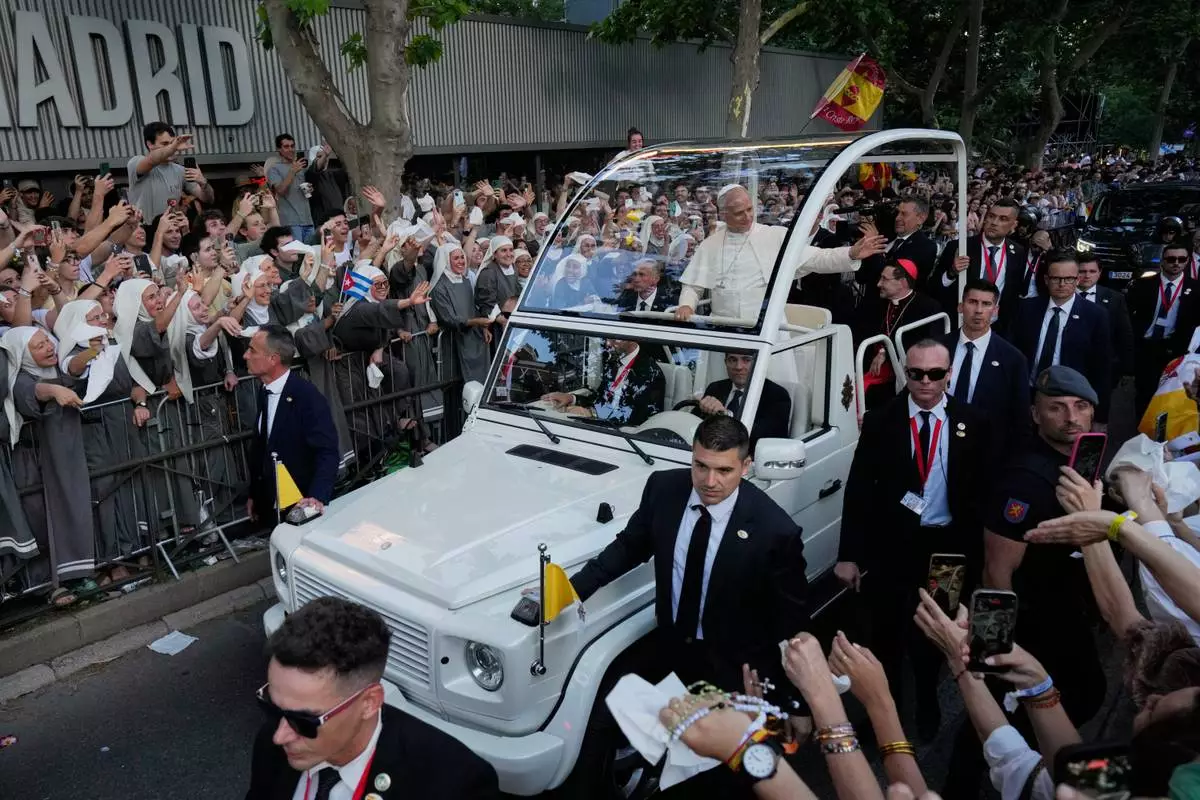
Pope Leo XIV arrives in the popemobile at Plaza de Lima in Madrid, Saturday, June 6, 2026, for a prayer vigil with young people on the first day of a seven-day apostolic journey to mainland Spain and the Canary Islands. (AP Photo/Bernat Armangue)
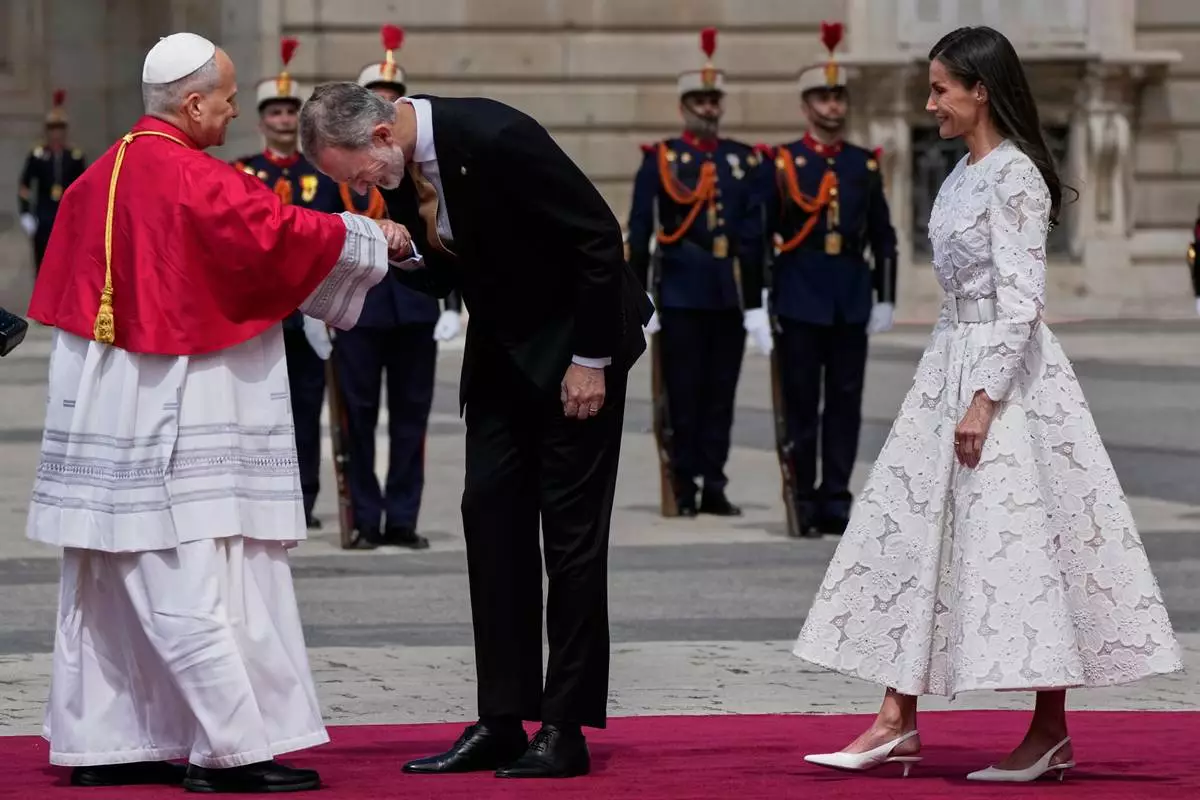
Pope Leo XIV is welcomed by Spain's King Felipe VI and Queen Letizia, as he arrives at the Royal Palace in Madrid, Saturday, June 6, 2026, on the first day of his seven-day apostolic journey to mainland Spain and the Canary Islands. (AP Photo/Alessandra Tarantino)
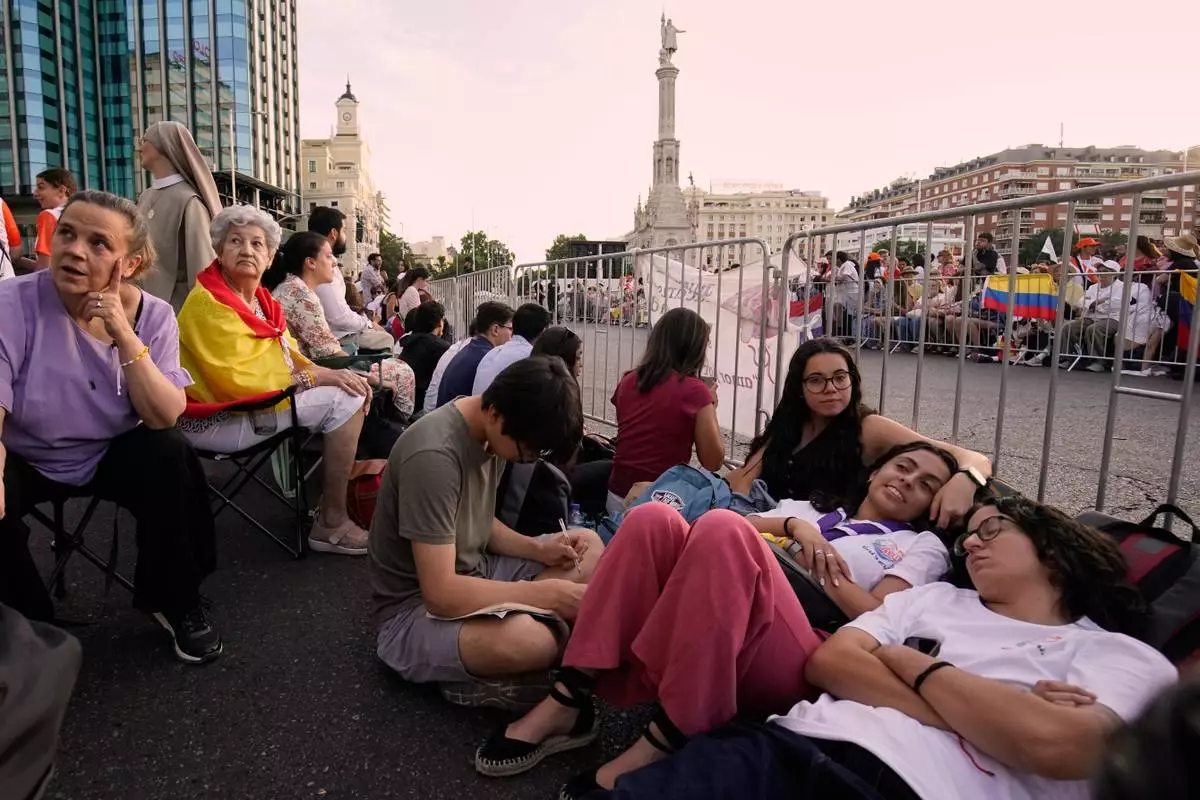
People wait for the arrival of Pope Leo XIV ahead of a Holy Mass and Corpus Christi procession at Plaza de Cibeles in Madrid, Spain, Sunday, June 7, 2026, on the second day of his seven-day apostolic visit to mainland Spain and the Canary Islands. (AP Photo/Andrea Comas)
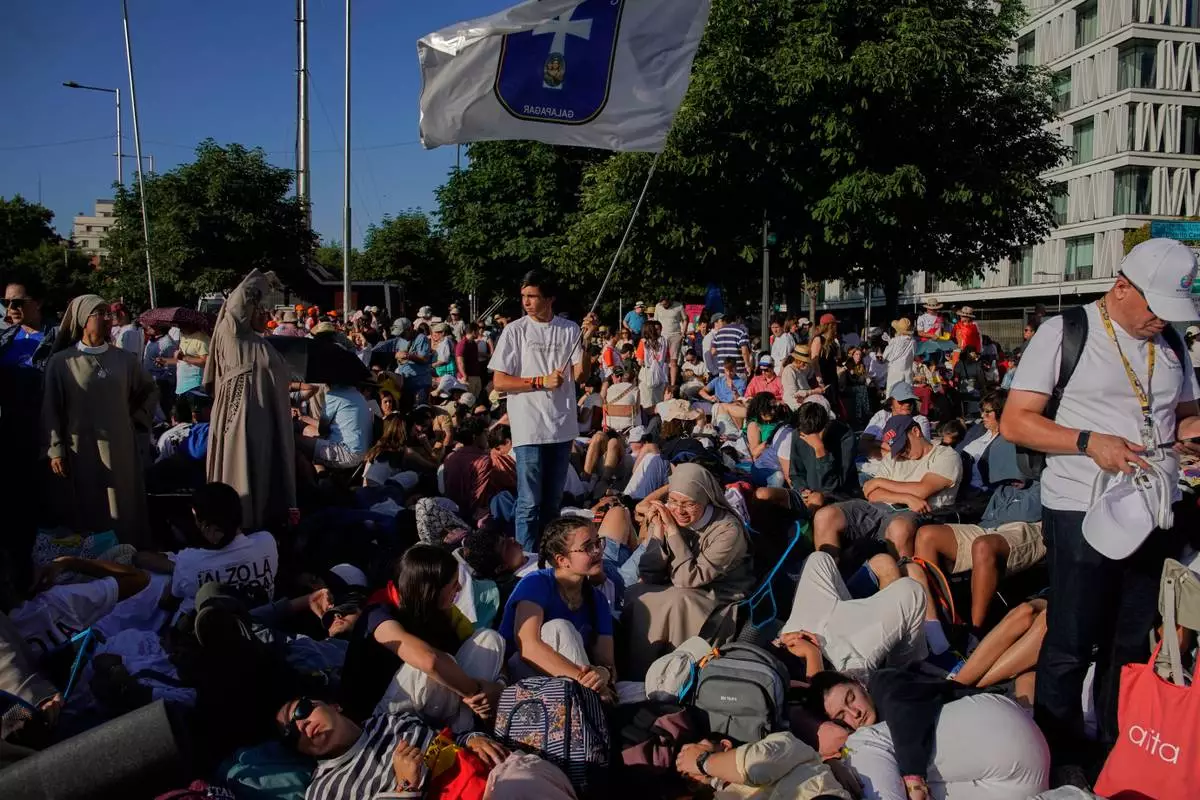
People wait for the arrival of Pope Leo XIV ahead of a Holy Mass and Corpus Christi procession at Plaza de Cibeles in Madrid, Spain, Sunday, June 7, 2026, on the second day of his seven-day apostolic visit to mainland Spain and the Canary Islands. (AP Photo/Andrea Comas)
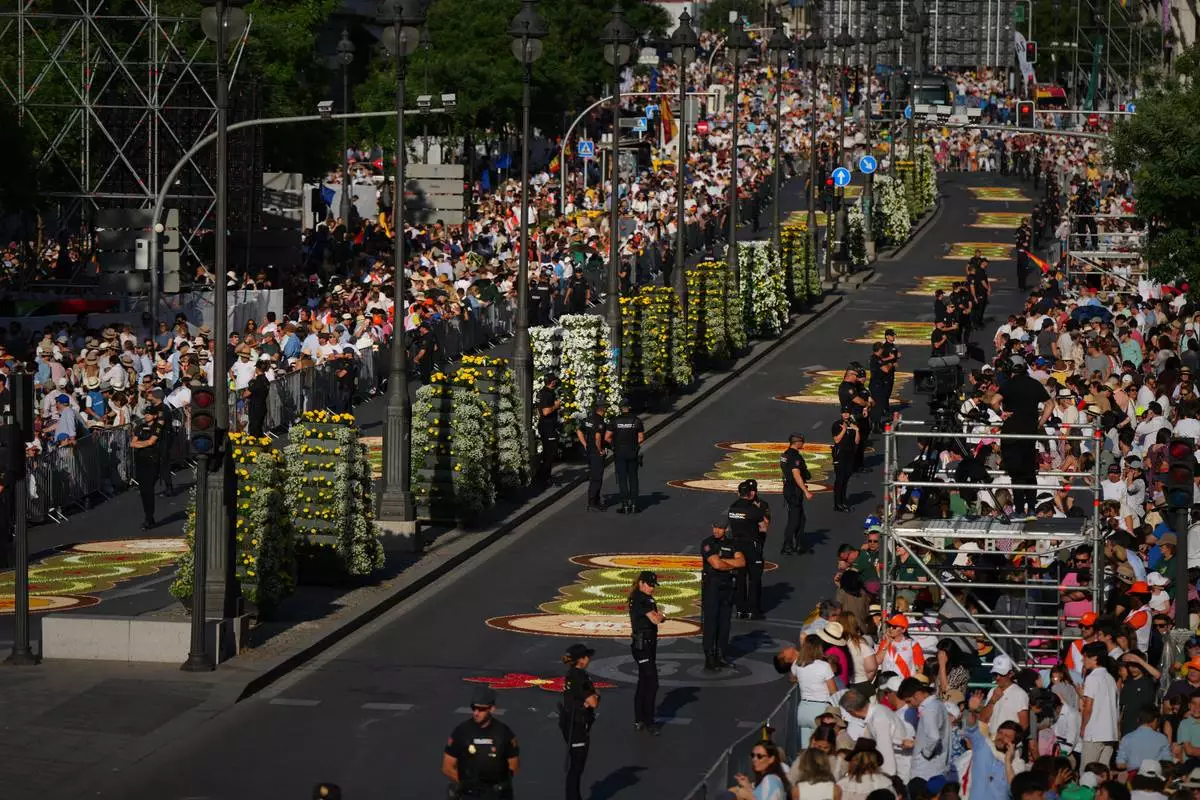
People wait for the arrival of Pope Leo XIV ahead of a Holy Mass and Corpus Christi procession at Plaza de Cibeles in Madrid, Spain, Sunday, June 7, 2026, on the second day of his seven-day apostolic visit to mainland Spain and the Canary Islands. (AP Photo/Manu Fernandez)